





Things to Do in Osaka: Places, Parks, and Shrines Across the City
The best things to do in Osaka fall into a city that rewards specific planning more than wandering.
At 2.7 million people spread across a grid of distinct neighborhoods, Osaka’s attractions don’t cluster politely in one area.
You have the waterfront anchored by Kaiyukan and Tempozan in the west, a thick band of shrines and temples running through the south from Tennoji to Sumiyoshi, the retro neon of Shinsekai sitting right between them, the neon-and-market center of Namba and Shinsaibashi, and a quieter, shinier north around Umeda and Osaka Station.
Knowing which zone holds what saves you from burning two hours in transit between things that could have been a 10-minute walk.
This is the full Explore Osaka list of things to see in Osaka, sorted by area and honest about what’s worth your limited time.
If you’re traveling from Tokyo, it’s worth noting that it’d better to read our comprehensive Osaka from Tokyo travel guide first before continuing.
Osaka Castle and the Chuo Ward Core
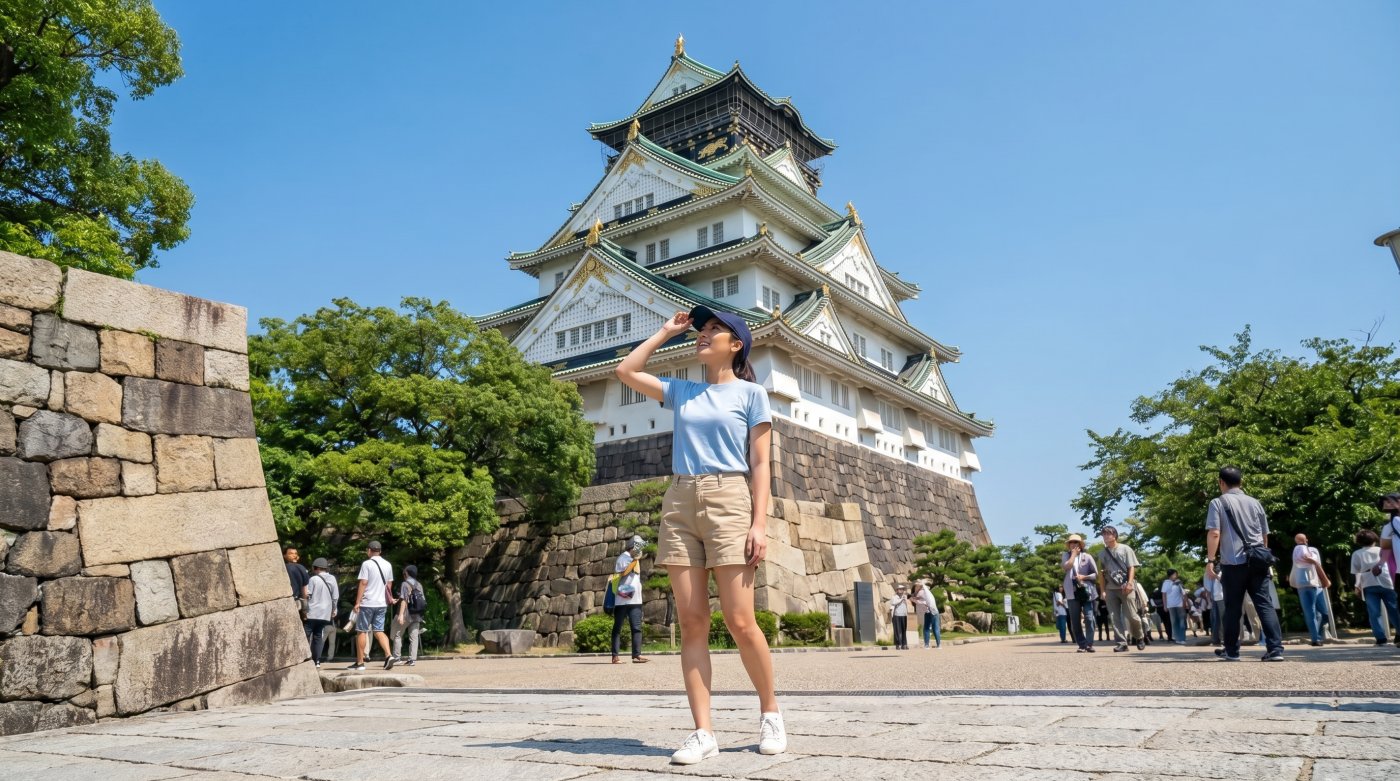
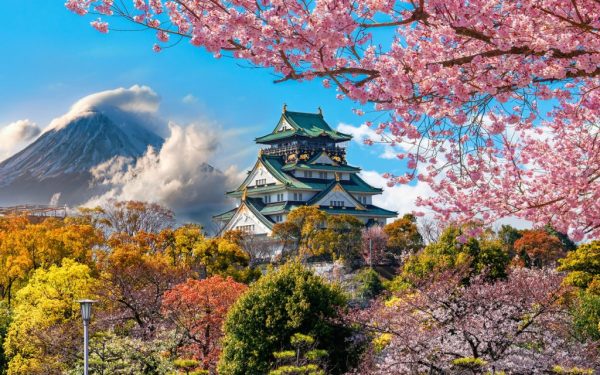
Osaka Castle (大阪城, Ōsakajō) is the clearest starting point for any first visit, and it earns that status.
Toyotomi Hideyoshi ordered its construction in 1583 as a deliberate show of control over a newly unified Japan.
The structure has burned, been rebuilt, bombed, and rebuilt again.
The current ferro-concrete reconstruction dates to 1931, and the eight floors inside function as a museum covering the castle’s history from Hideyoshi’s campaigns to the Meiji era.
Admission to the main keep (tenshu) is ¥1,200 for adults; college and high school students pay ¥600; anyone younger enters free.
The surrounding Osaka Castle Park is open at all hours and costs nothing.
Plan for 90 minutes minimum.
The museum floors are denser than you expect, and the views from the eighth-floor observation deck over the park and Osaka Bay are worth the climb.
On spring weekends, queues for the tower reach 45 to 60 minutes from 11:00 onward.
Go at opening (9:00) or after 15:30.
The park itself contains Nishinomaru Garden, which charges ¥200 to enter and holds around 300 cherry trees.
In late March to early April this is one of Osaka’s best sakura spots with a castle backdrop.
Tennoji: The Southern Temple Quarter
South of the castle, the city’s oldest history clusters again, this time around temples rather than a single fortress.
The area within 15 minutes’ walk of Tennoji Station contains more history per square kilometer than anywhere else in Osaka.
Start here if you have any interest in how the city actually got old.
Shitennoji Temple
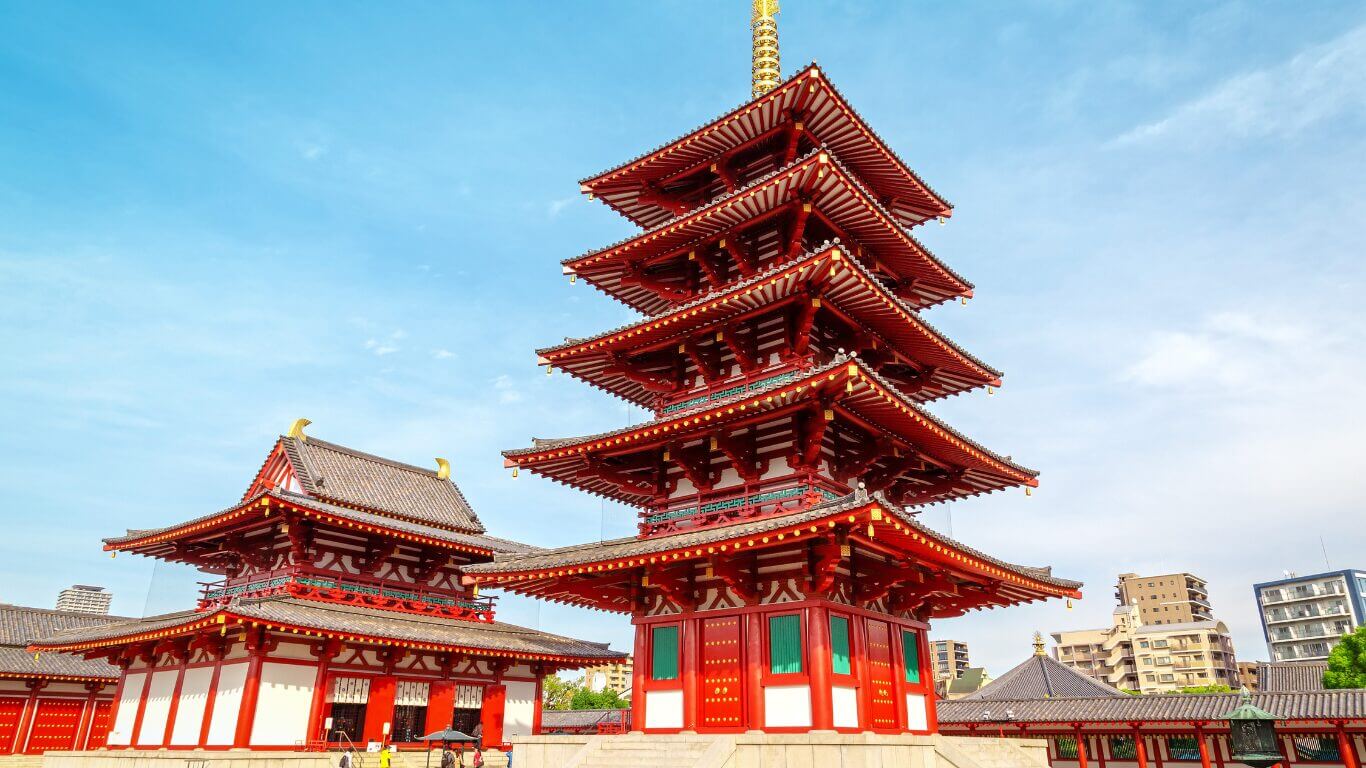
Shitennoji Temple (四天王寺) was founded in 593 CE by Prince Shotoku, making it Japan’s oldest officially established Buddhist temple.
The inner precinct charges ¥300; the main structures were reconstructed after World War II but follow the original 6th-century layout precisely.
The flea market held on the 21st and 22nd of each month draws antique hunters from across Kansai.
Isshinji Temple
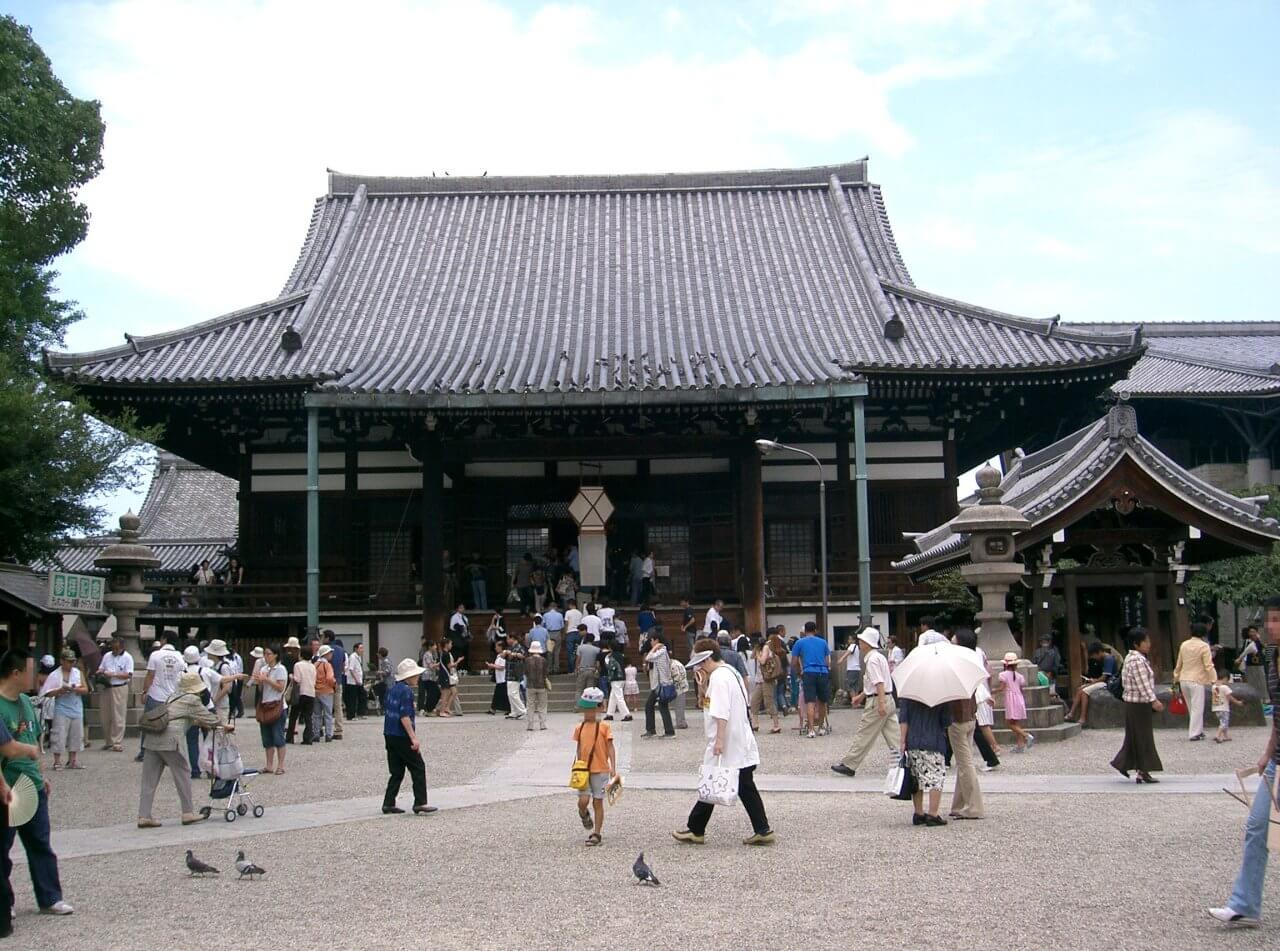
Isshinji Temple stands about 5 minutes north of Shitennoji and is startling in a way that most temple visits are not.
The temple is known for its okotsu butsu, large statues crafted from the ashes and cremated remains of over 200,000 donated to the temple across several decades.
The most recent statue, completed in 2007, represents the donations of the 1990s.
Free to enter the grounds; the interior statues require a modest admission.
Tennoji Park
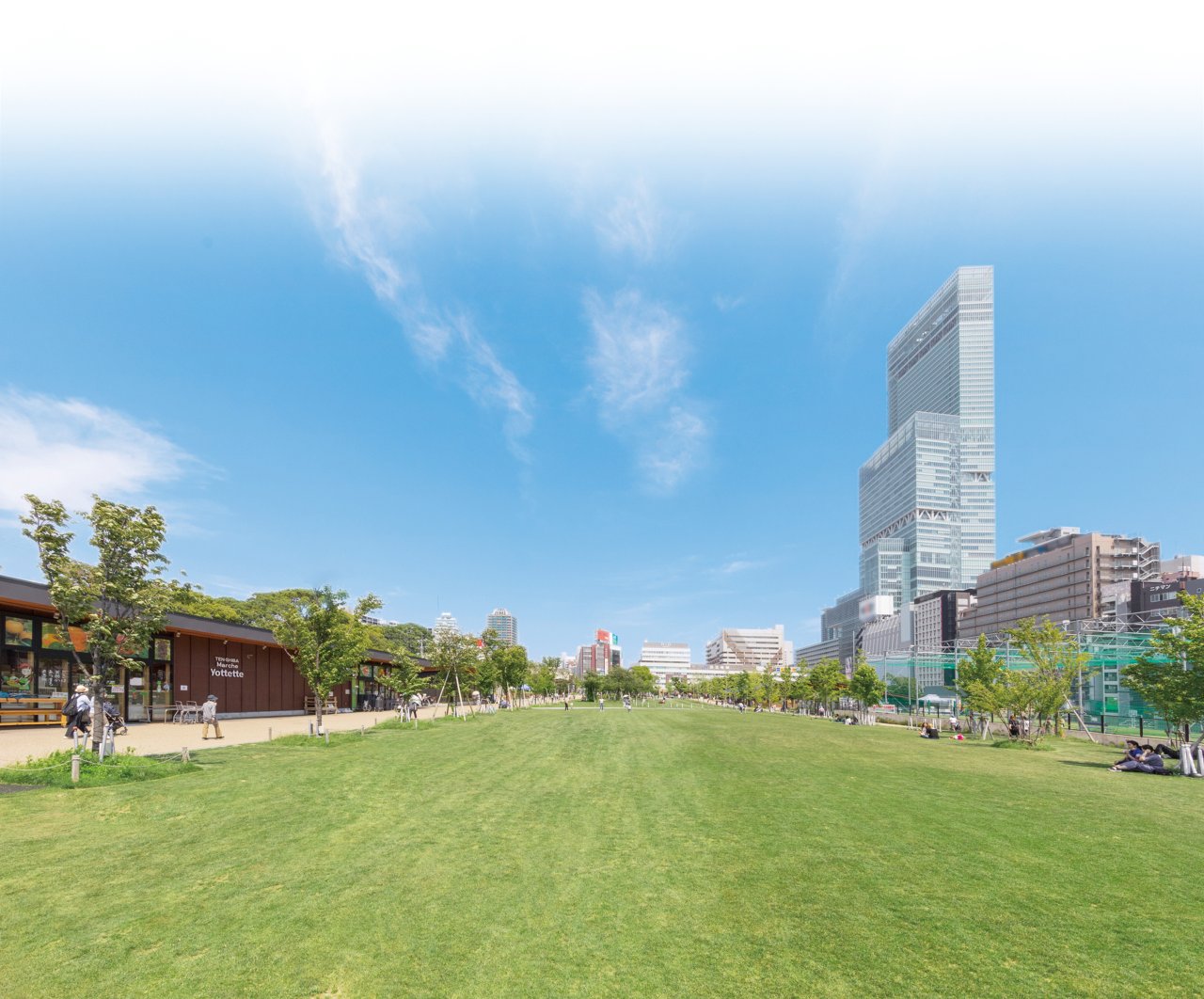
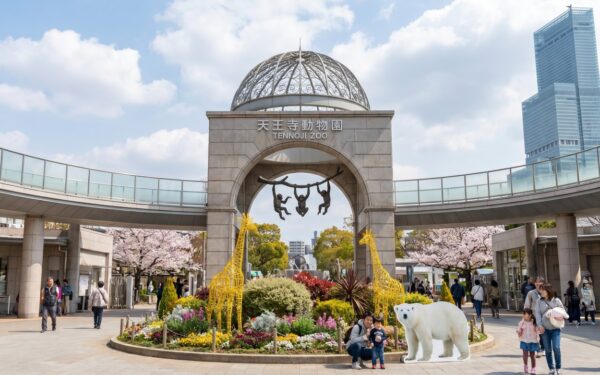
A few minutes’ walk from Isshinji, Tennoji Park charges ¥150 and holds a formal garden, a zoo, and open lawns that locals use on weekends as a straightforward neighborhood park.
Keitakuen, the formal Japanese strolling garden inside the park’s grounds, is quieter and better maintained than the lawns around it, and worth the small separate admission if the temple architecture so far has impressed you.
Harukas 300 Observatory
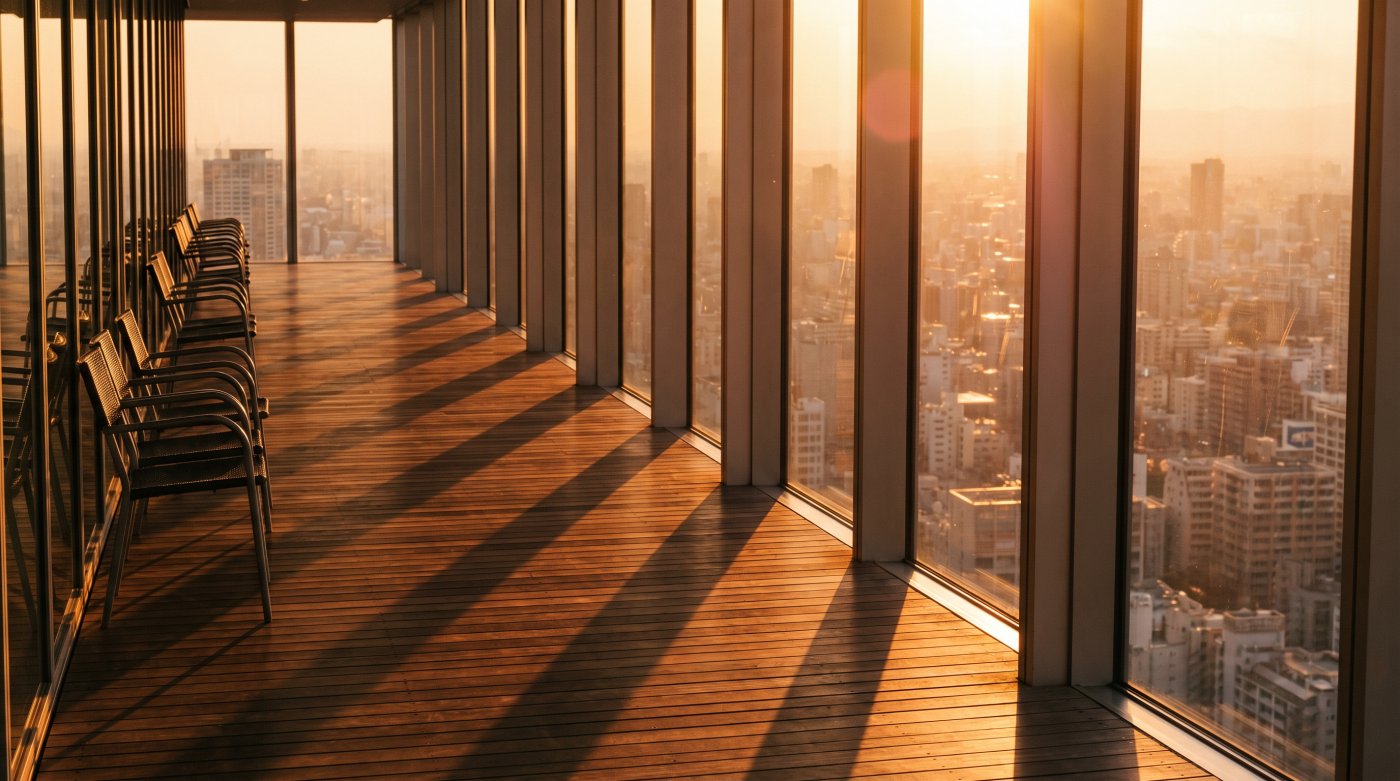
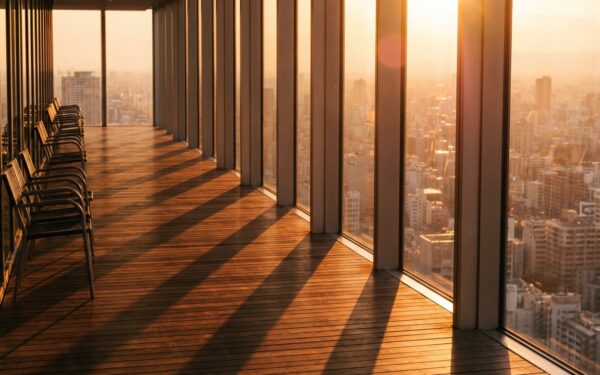
Harukas 300 Observatory sits on top of Abeno Harukas, the tallest building in Osaka and the wider Kansai region at 300 meters, directly above Tennoji Station.
It held the title of Japan’s tallest building from its 2014 opening until 2023, when Tokyo’s Azabudai Hills Mori JP Tower passed it by roughly 25 meters, so it is worth knowing it is no longer the national record holder before you read that claim somewhere else.
Adult admission is ¥2,000.
Open daily 9:00 to 22:00.
The top-floor observation deck gives a 360-degree view over Osaka, Kobe, and on clear winter days, the Ikoma mountains.
You can see the castle from here, which gives you a useful sense of Osaka’s scale before spending the day moving between its parts.
Shinsekai and Tsutenkaku Tower
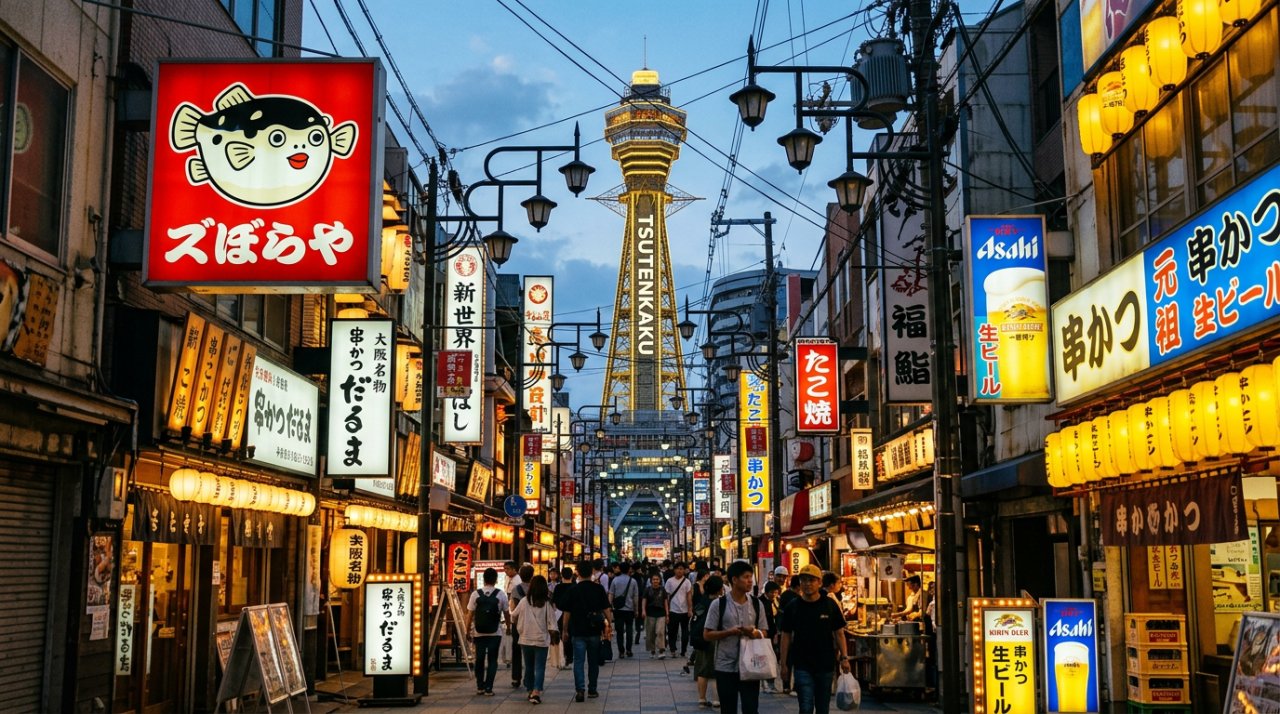
From the Harukas 300 observation deck, the retro skyline immediately northwest is Shinsekai, and it’s an easy walk down from Tennoji Park into a completely different version of Osaka.
Shinsekai (新世界) was built in 1912 around Luna Park, an amusement complex modeled partly on Coney Island, and the neighborhood has spent the century since leaning into that early-20th-century identity rather than modernizing it away.
Retro signage, kushikatsu counters, and pachinko parlors line streets that feel deliberately stuck a few decades behind the rest of the city, which is precisely the point.
Tsutenkaku Tower
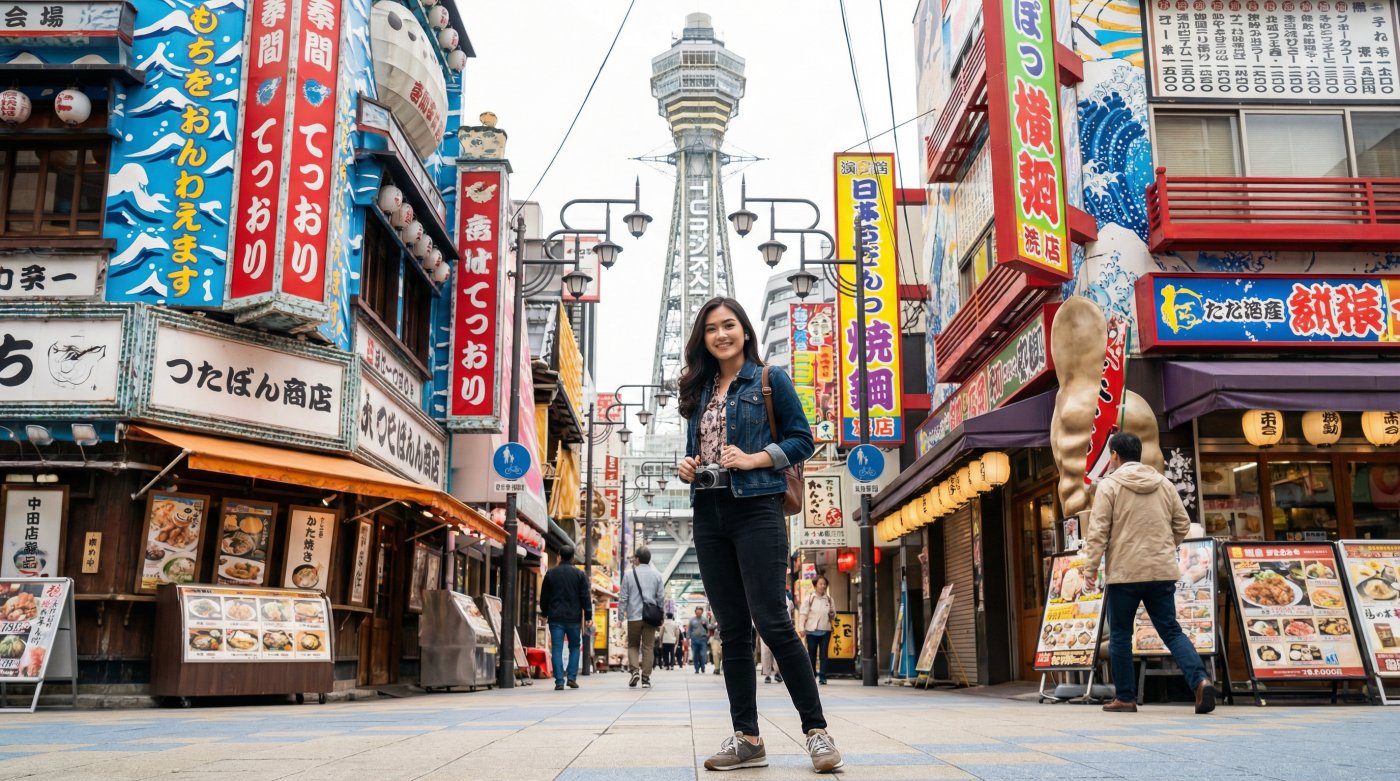
Tsutenkaku Tower (通天閣) is the neighborhood’s anchor and one of Osaka’s most photographed landmarks.
The original 1912 tower, built partly in the style of the Eiffel Tower and the Arc de Triomphe, stood 75 meters tall and was dismantled for its metal during the war; the current second tower, completed in 1956, stands 108 meters.
The general observation deck sits at 87.5 meters, with an additional outdoor platform, Tenbo Paradise, reaching 94.5 meters for an extra fee.
Tickets for the main deck run ¥1,200 for adults and ¥600 for children; the tower is open daily 10:00 to 20:00, with last entry at 19:30.
The mascot waiting at the top, a seated good-luck figure called Billiken, gets his feet rubbed by visitors hoping for fortune, and a large two-tone light near the very top of the tower changes color each evening to forecast the next day’s weather, a tradition locals still genuinely check before deciding whether to bring an umbrella.
The nearest station is Ebisucho, a 3-minute walk; Dobutsuen-mae and Shin-Imamiya both work too and put you closer to Tennoji Park on the way back.
Sumiyoshi and the Far South
Shinsekai sits at the southern edge of central Osaka, and continuing further south by train brings you to a part of the city most visitors skip entirely.
Sumiyoshi Ward sits at the southern end of the Midosuji Line, about 25 minutes from Namba by subway or a short ride on the Nankai Main Line.
Most visitors don’t make it this far south, which is exactly why it’s worth going.
The neighborhood feels noticeably quieter than the city center, and the two stops worth making here are genuinely different from anything in the Tennoji or Namba cluster.
Sumiyoshi Taisha
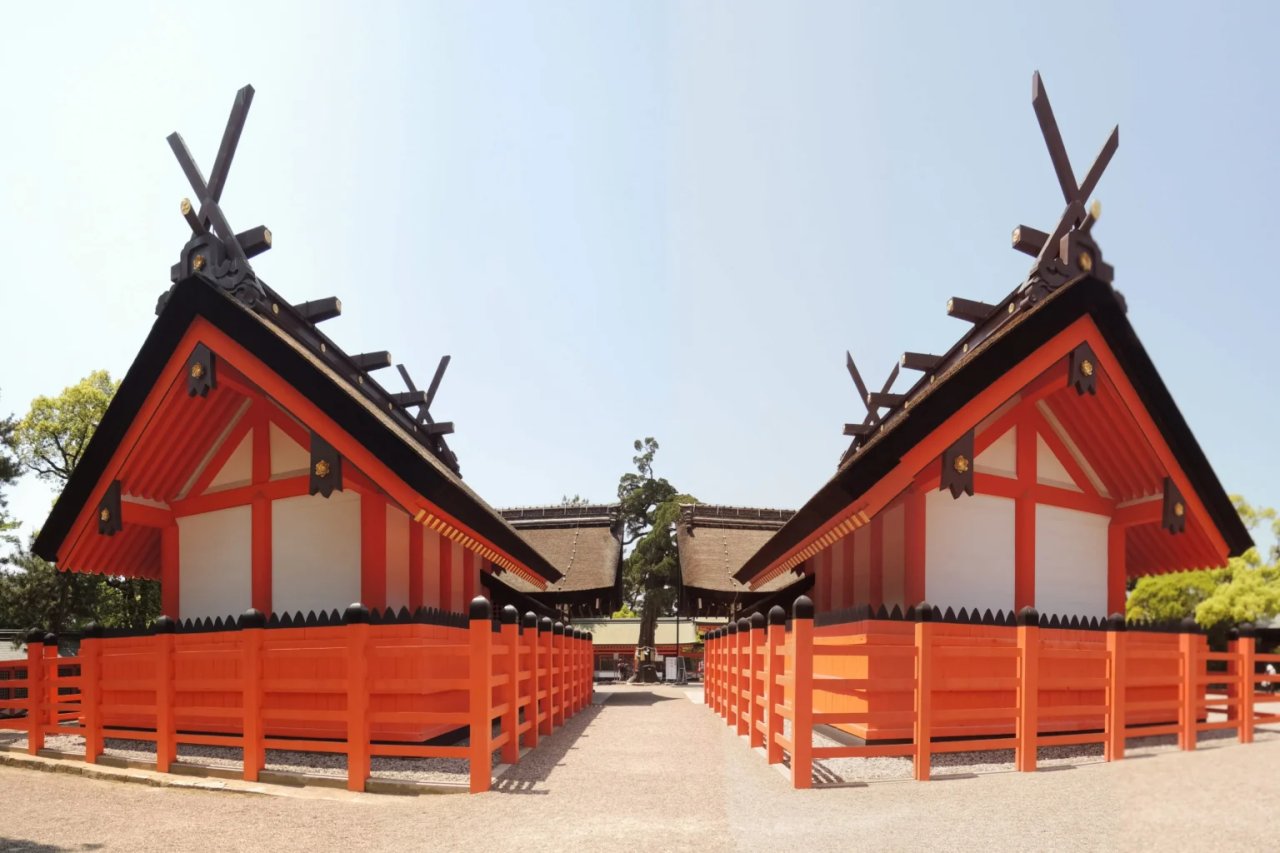
Sumiyoshi Taisha (住吉大社) is one of Japan’s oldest shrines and architecturally unlike almost anything else in the country.
The building style, Sumiyoshi-zukuri, predates Chinese Buddhist influence on Japanese architecture, and the four main halls are National Treasures.
Free entry.
The arched vermilion bridge (sorihashi) over the central pond is steep enough to feel like a physical test and is among the most genuinely striking things to photograph in Osaka.
Take the Nankai Main Line to Sumiyoshitaisha Station or the Hankai Tramway directly to the shrine gate.
Namba Yasaka Shrine
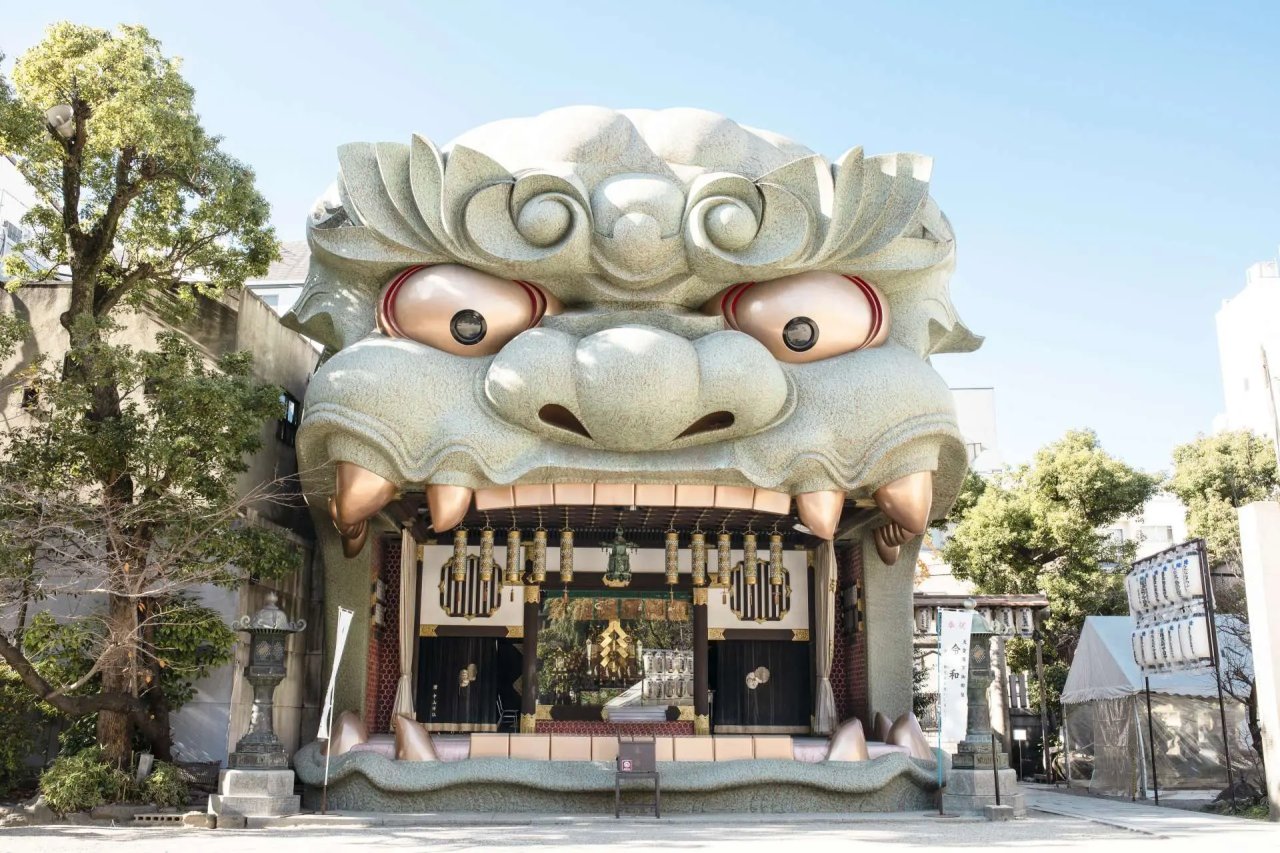
Namba Yasaka Shrine is technically in the center rather than the far south, but it connects logically with a shrine-focused half-day.
Located a few minutes’ walk from Namba Station, the shrine’s main structure is a giant lion-head stage used for festival performances, its eyes the size of windows and its teeth visible from the street.
Free entry, open at all hours.
It surprises people in a way that photographs never fully convey.
Namba, Dotonbori, and the City Center
Namba Yasaka Shrine already put you in Namba; the rest of the neighborhood is built for a different kind of energy entirely.
Central Osaka concentrates the tourist spots in Osaka that appear on every itinerary, and for good reason.
The density of things walkable from Namba Station is genuinely high.
Hozenji Temple and Hozenji Yokocho
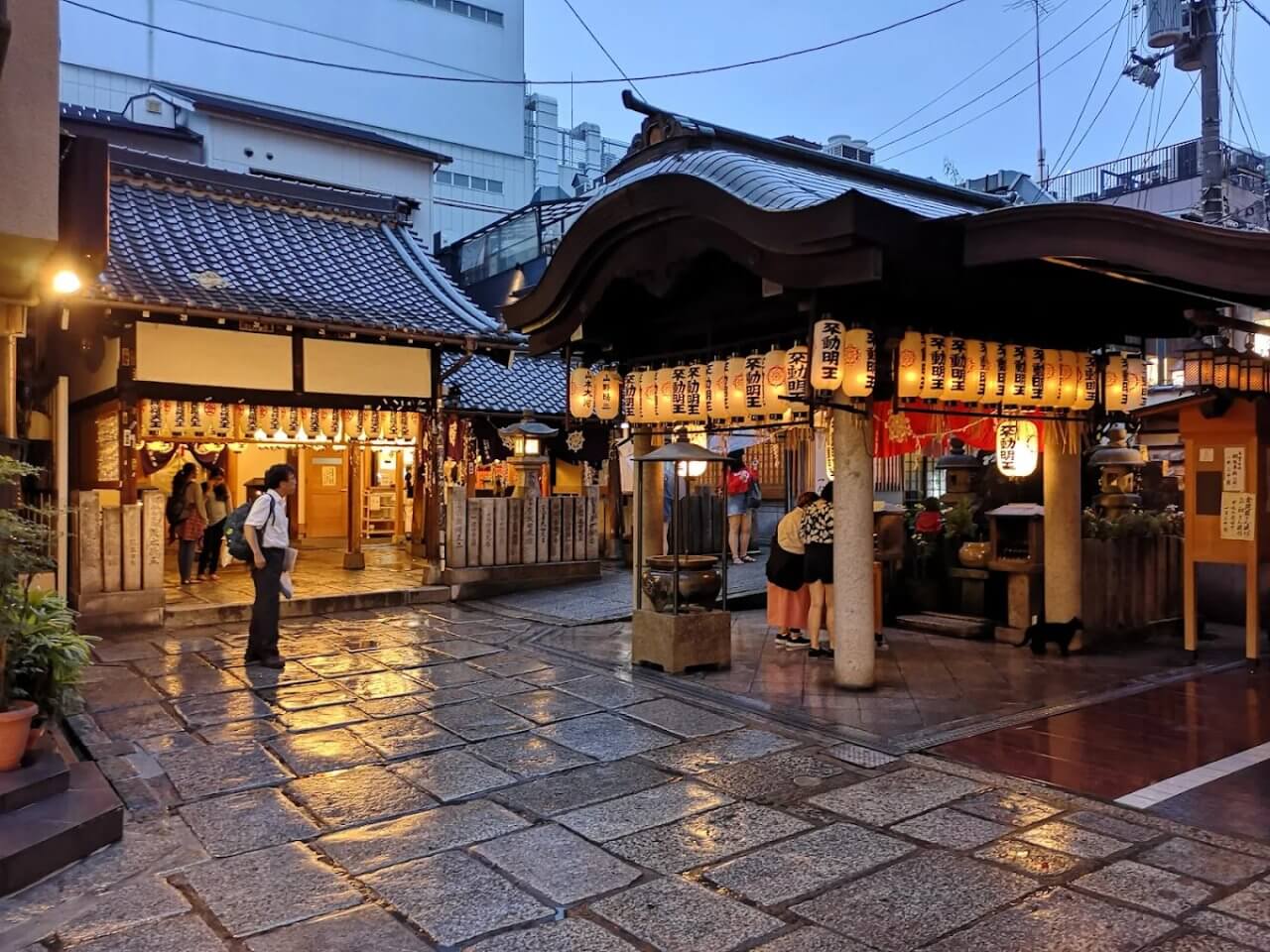
Hozenji Temple and Hozenji Yokocho is a 20-meter alley off Dotonbori that holds a small moss-covered Fudo Myoo statue and, on both sides, a row of intimate restaurants and bars that have been operating in roughly this configuration since the postwar period.
Locals pour water on the statue to make prayers; the moss has grown so thick over decades that the stone underneath has become invisible.
Free entry.
The alley feels separate from the surrounding noise in a way that is disproportionate to its size.
Kuromon Ichiba Market
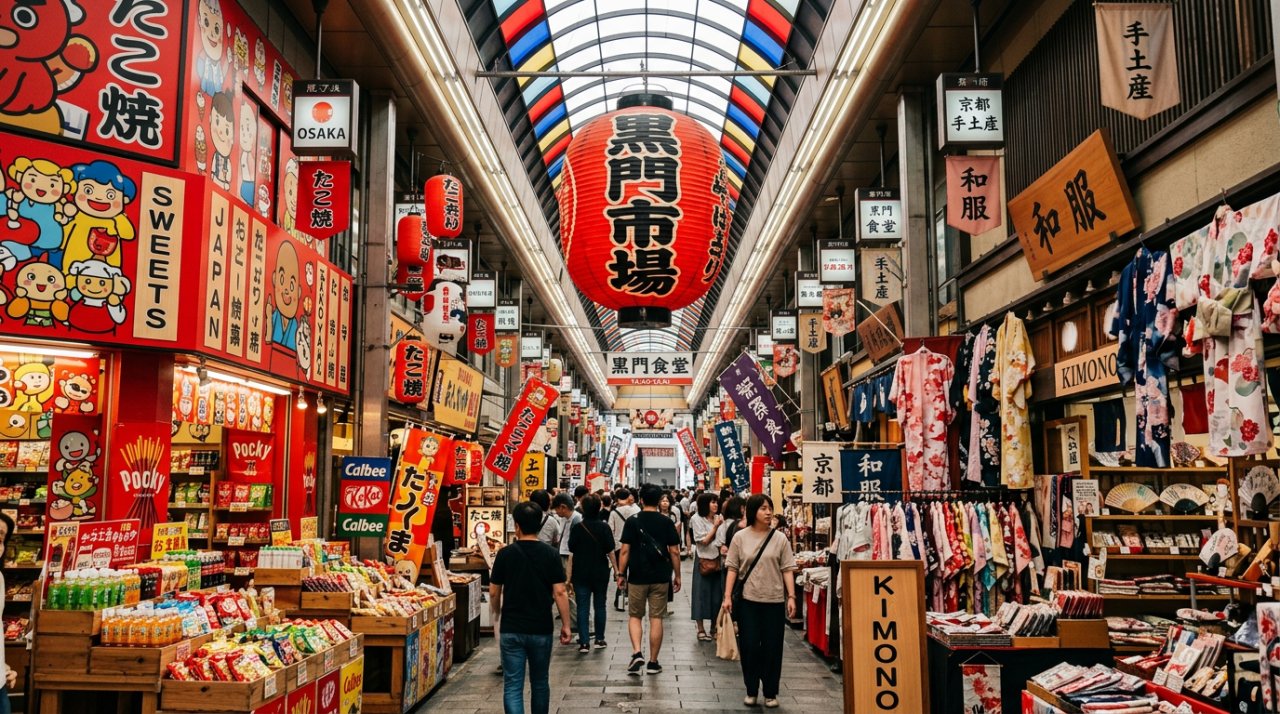
A ten-minute walk east of Hozenji, on the other side of the Dotonbori canal, brings you to a market built for eating rather than browsing.
Kuromon Ichiba Market (黒門市場), Osaka’s kitchen market, runs 580 meters under a covered arcade near Nippombashi Station.
Stalls typically open from 9:00 and close by 18:00.
Mid-morning is the practical window when fresh seafood, Kobe beef skewers, grilled whole scallops, and sea urchin are all available to eat as you walk.
Go on a weekday; weekend crowds in the aisles make it hard to stop.
Shinsaibashi-suji Shopping Arcade
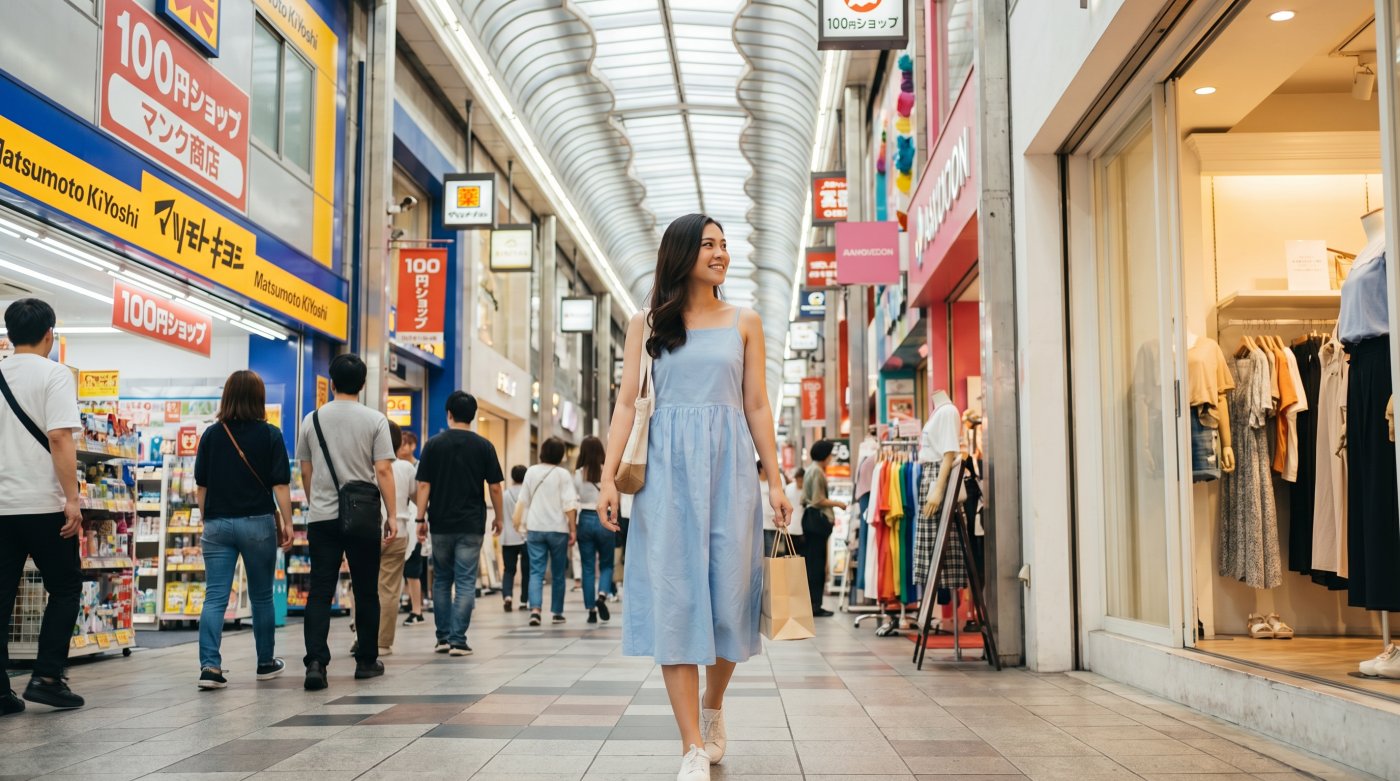
Walk north from Kuromon for about ten minutes and the covered arcades change character entirely, from food stalls to fashion.
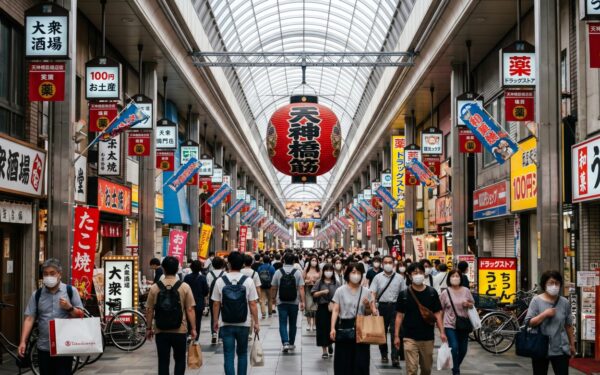
Shinsaibashi-suji Shopping Arcade extends 580 meters between Shinsaibashi Station and Namba, covered, free to walk, and in continuous operation since the Edo period.
The north end near Shinsaibashi Station handles luxury and mid-market fashion.
The south end near Namba leans into street food, drugstores, and souvenir shops.
Both ends stay open late.
Den Den Town
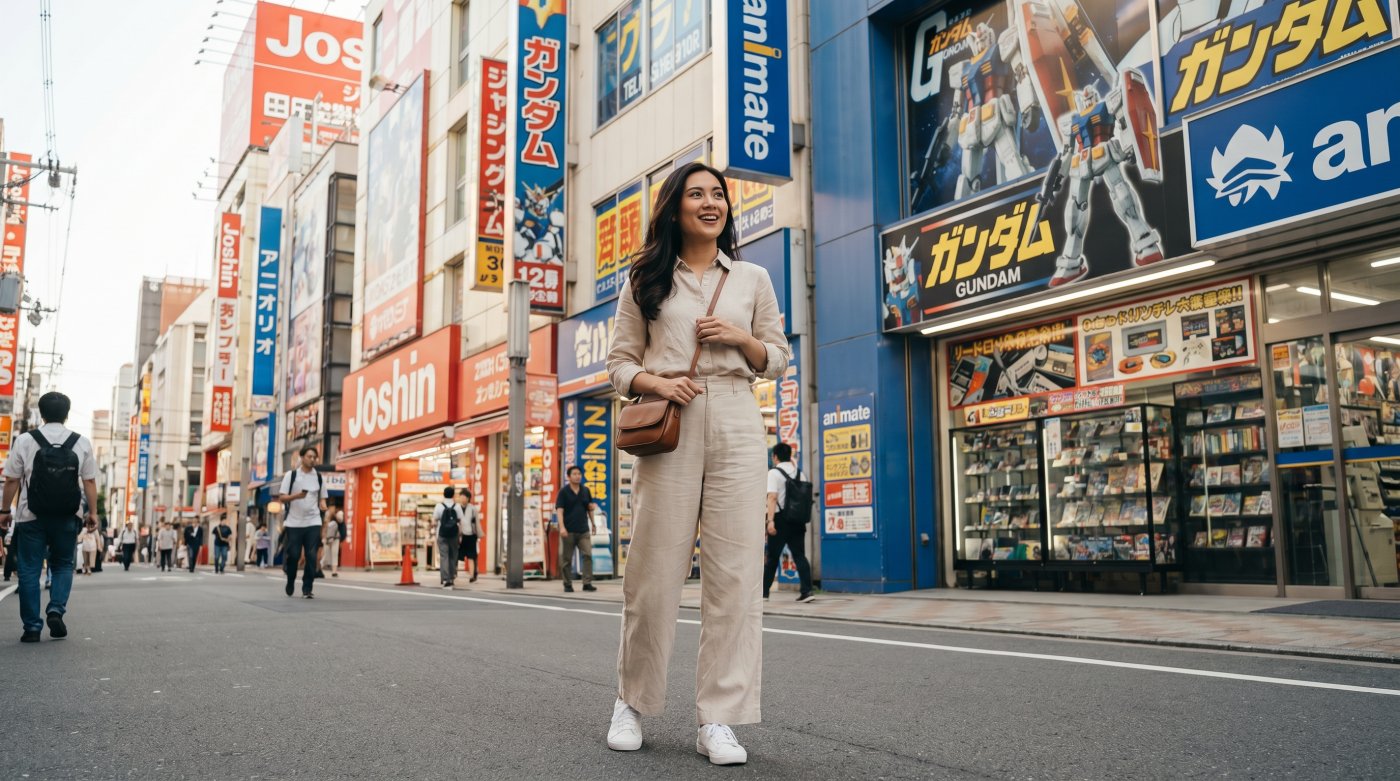
The arcade’s southern end runs almost directly into Nipponbashi, where the character of the street changes again.
Den Den Town (でんでんタウン) in Nipponbashi is Osaka’s electronics and subculture district.
The main stretch runs about 350 meters along Sakaisuji south of Nippombashi Station, branching into side streets with retro game shops, figure stores, maid cafes, and component dealers.
Compared to Tokyo’s Akihabara it is smaller and, some would say, more browsable for that reason.
No entrance cost, obviously.
Tombori River Cruise
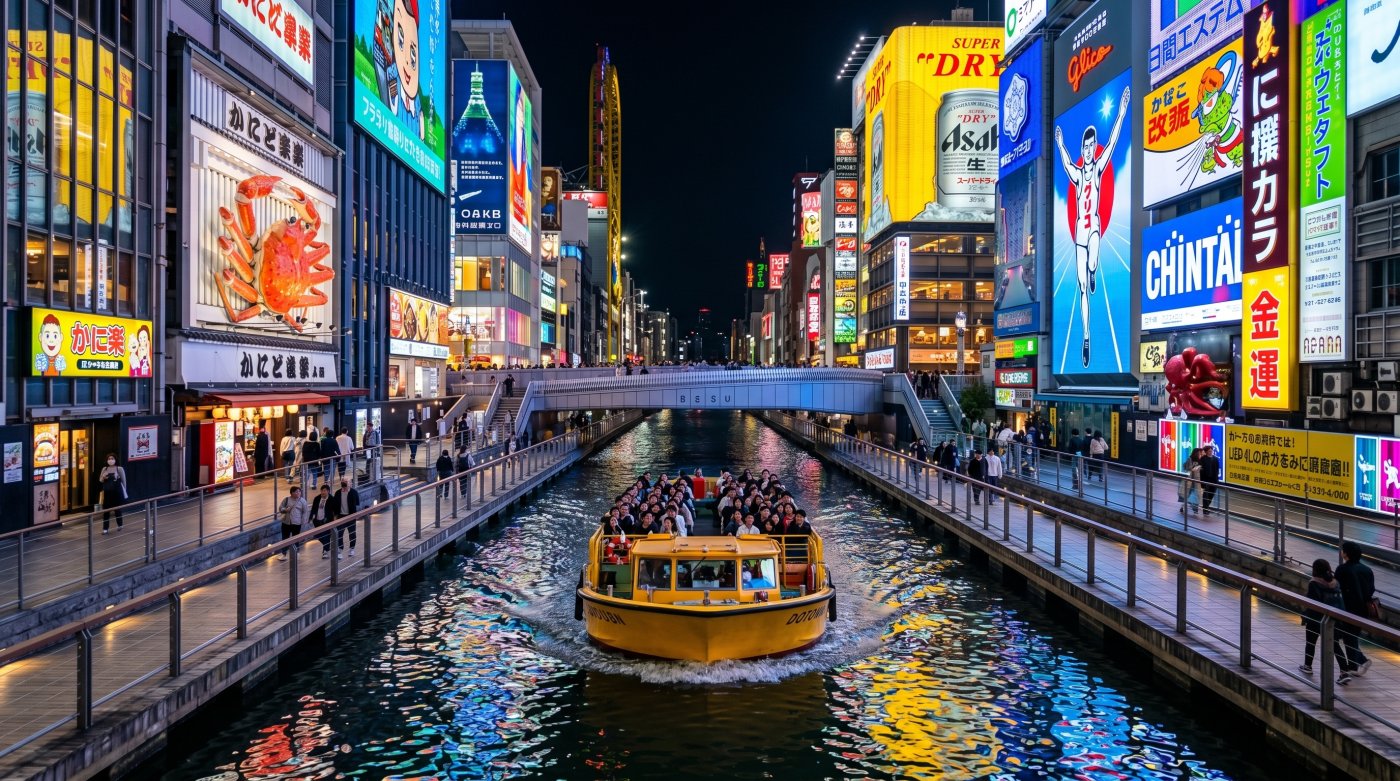
Heading back toward Dotonbori itself, the most relaxed way to see the canal’s famous signage is from the water rather than the bridges above it.
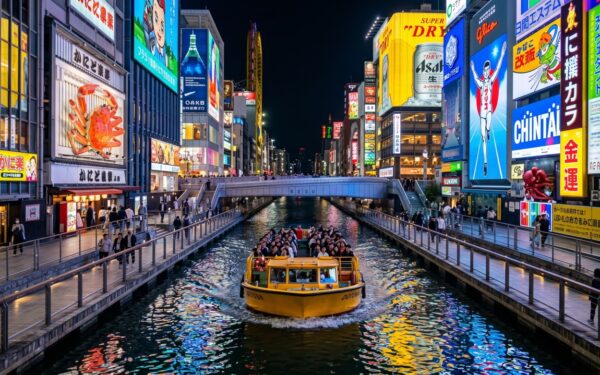
The Tombori River Cruise runs 20-minute boat tours along the Dotonbori Canal, passing the Glico Man sign and neon facades from water level.
Tickets are around ¥1,500 for adults.
Departures run from a dock near Dotonbori-gawa.
The ride is worth more at dusk than at noon when the lights are off.
Nakaza Kuidaore Building
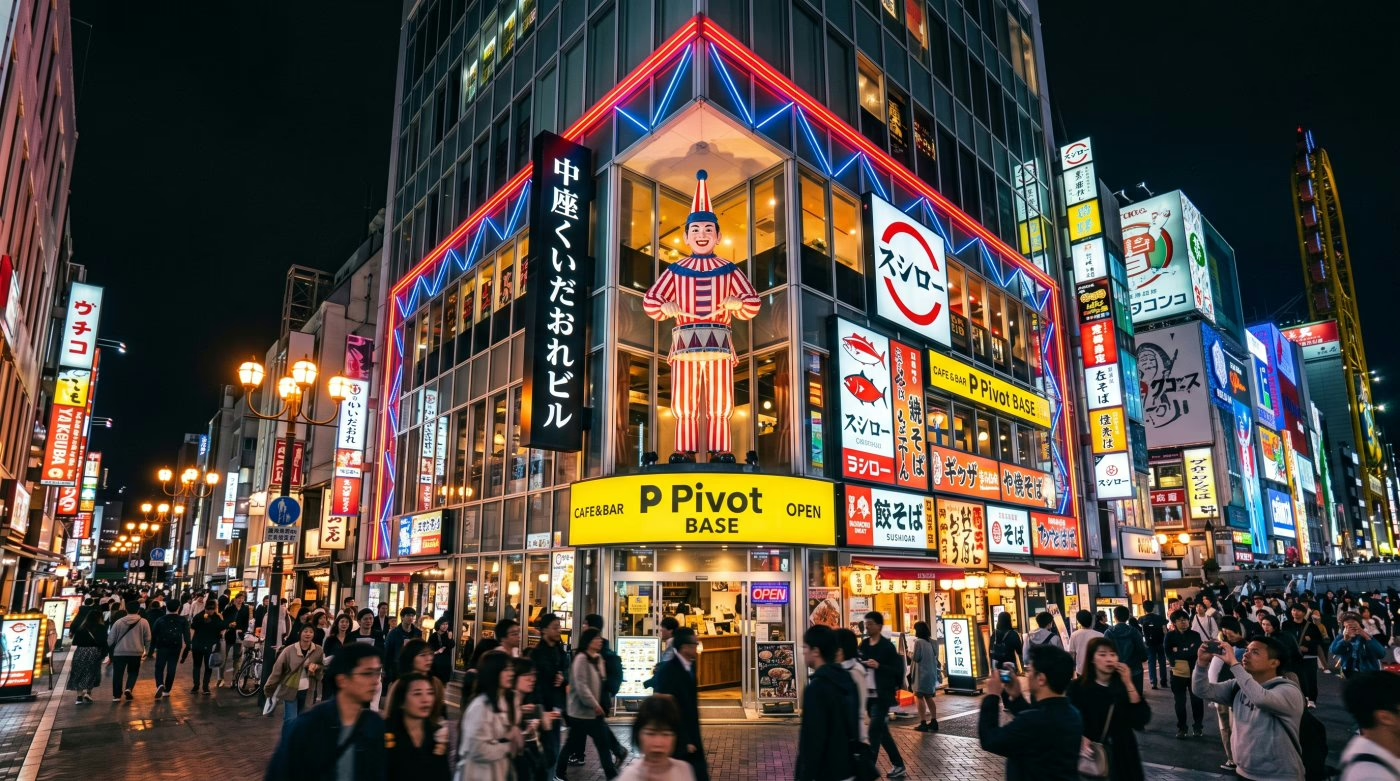
Step back onto dry land near that same stretch of canal and you’ll run into Osaka’s most photographed mascot before you’ve even decided where to eat.
Nakaza Kuidaore Building on Dotonbori marks the site of the original Kuidaore restaurant, whose mechanical drumming clown mascot, Kuidaore Taro, became an accidental symbol of Osaka’s kuidaore (“eat until you drop”) identity.
The building has been redeveloped into a food hall.
Taro remains at the entrance.
Umeda, Kita, and the Station North
North of Dotonbori and Namba, about fifteen minutes by subway, the city changes register entirely.
Kita Ward is where Osaka’s business district and its best transit hub share the same few blocks.
JR Osaka Station, Hankyu Umeda, Hanshin Umeda, and four Osaka Metro lines all converge here, which means you’ll pass through Umeda whether you plan to or not.
That makes it worth knowing what’s actually here beyond the station concourses, because there’s more than the shopping towers suggest.
Umeda Sky Building
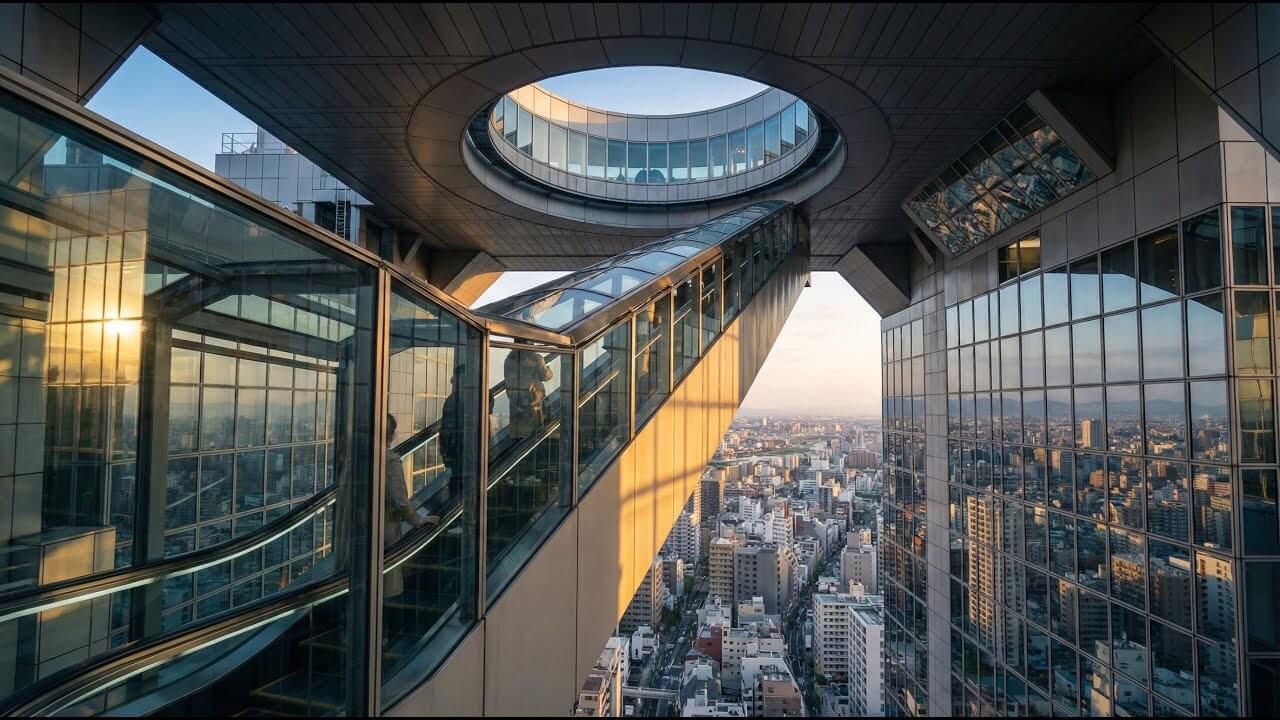
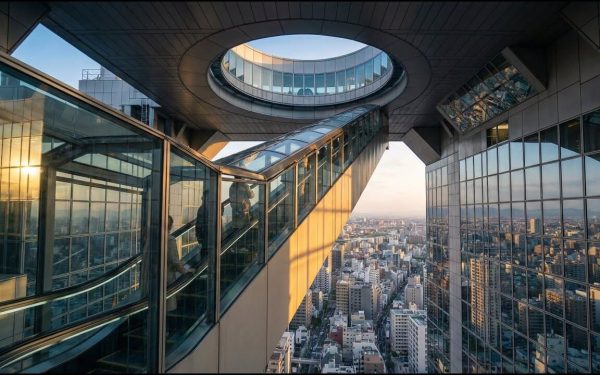
Umeda Sky Building is two towers joined at the top, roughly 10 minutes on foot northwest of JR Osaka Station in Kita Ward.
The Floating Garden Observatory on the 39th floor charges ¥2,000 for adults and ¥500 for children aged 4 to 12, and is open daily 9:30 to 22:30 (last entry 22:00).
At 173 meters it sits lower than Harukas 300, but the structure itself, a ring suspended between two towers with open escalators rising through the gap, is more architecturally distinctive than any other observation point in Osaka.
The Takimi Koji alley in the basement recreates a 1920s-era streetscape with small izakayas and corridor restaurants underneath the building.
LUCUA SOUTH
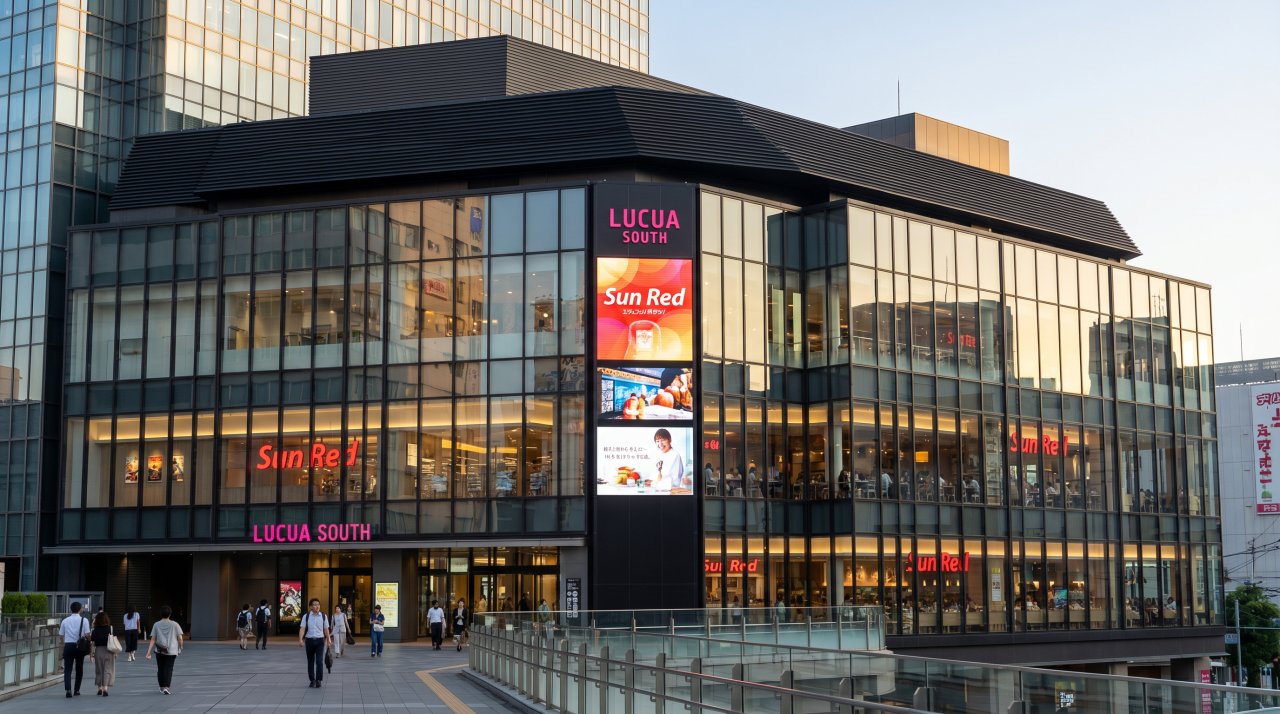
A short walk back toward the station proper, Osaka Station’s own retail complex got a major expansion in 2026.
LUCUA SOUTH is the newest addition to the LUCUA Osaka complex, opened April 5, 2026, on floors 10 through 16 of JR Osaka Station’s South Gate Building, directly connected to the station by covered walkway.
The lower floors, LUCUA Characters World (floors 10 to 13), anchor the building with Nintendo Osaka, Pokemon Center Osaka, and a One Piece Mugiwara Store, with more character shops scheduled through autumn 2026 and full completion planned for 2027.
The upper floors, LUCUA SOUTH DINING (floors 14 to 16), run a 28-restaurant zone consolidated from the former Daimaru Umeda restaurant floors.
Entry is free, and it works just as well as a rain contingency plan as the original LUCUA towers always did, just with considerably better merchandise.
Osaka Tenmangu and the River District
East of Umeda, on the way back toward the castle, the city’s geography turns toward water again.
The Okawa River cuts east to west through central Osaka, and the neighborhood on its southern bank between Temmabashi and Sakuranomiya stations is one of the more underused parts of the city for tourists.
It’s close enough to both the castle and the Namba cluster to fold into a full day without backtracking, and the two main reasons to come here, a major shrine and 4.2 kilometers of riverside cherry trees, don’t overlap with anything else on the standard Osaka circuit.
Osaka Tenmangu Shrine
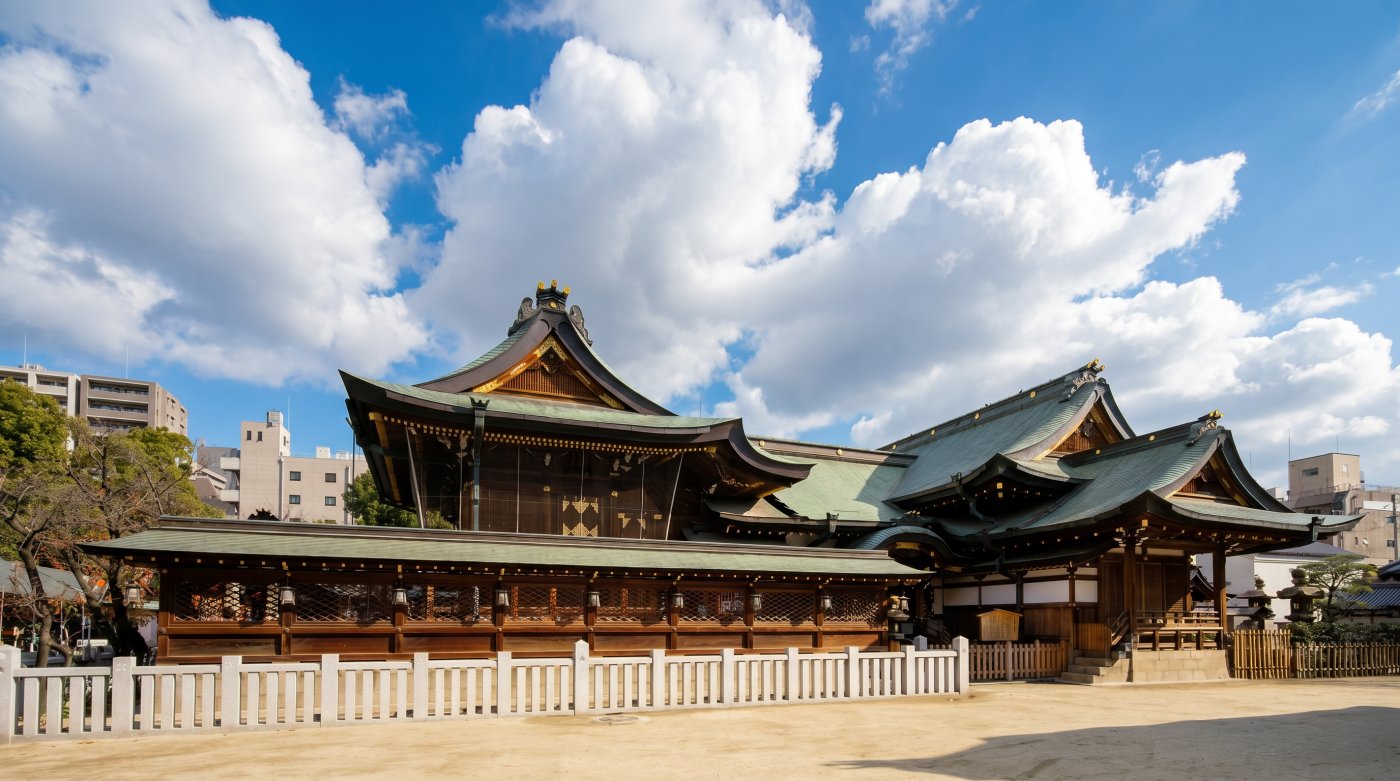
Osaka Tenmangu Shrine (大阪天満宮) near Temmabashi Station in Kita Ward is dedicated to Sugawara no Michizane, the 9th-century scholar and government minister who was deified after death and became the patron of learning and academia.
Free to visit.
The shrine hosts Tenjin Matsuri every July 24 to 25, one of Japan’s three great festivals, drawing an estimated 1.3 million attendees across the two-day event.
The procession includes land and river ceremonies with dozens of illuminated boats on the Okawa.
Outside of the festival period, the precincts are calm and the plum trees in February are an underrated reason to visit.
Kema Sakuranomiya Park
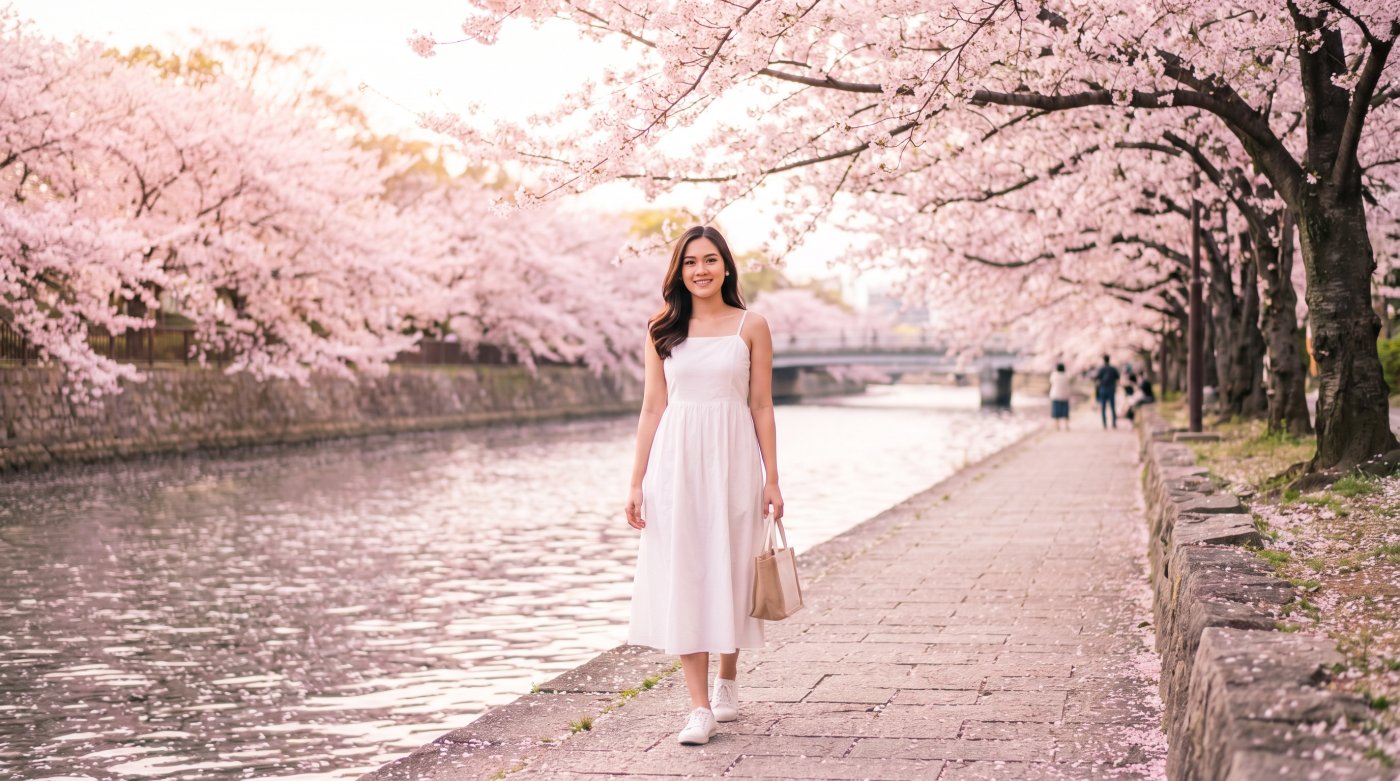
The shrine sits right at the edge of the river district’s other big draw.
Kema Sakuranomiya Park follows 4.2 kilometers of the Okawa riverbank between Temmabashi and Sakuranomiya stations and holds approximately 4,800 cherry trees.
During the last week of March and first week of April the entire stretch becomes a continuous hanami (flower-viewing) corridor.
Free to enter at all hours.
Evenings during peak bloom are particularly worth attending, when paper lanterns are lit along the waterfront.
Tempozan and the Waterfront
If the river district was about water moving through the city, Tempozan is about where that water meets the bay.
Tempozan sits on Osaka Bay in Minato Ward, about 15 minutes from Namba by Chuo Line subway to Osakako Station.
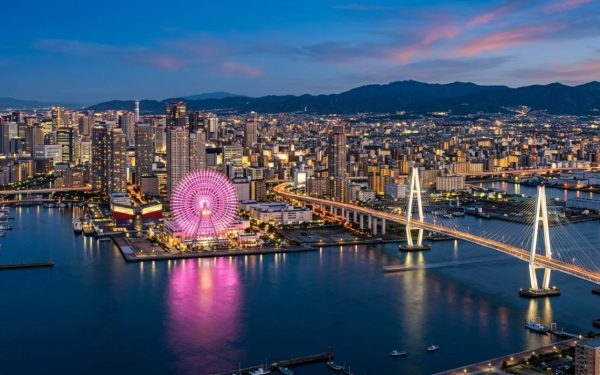
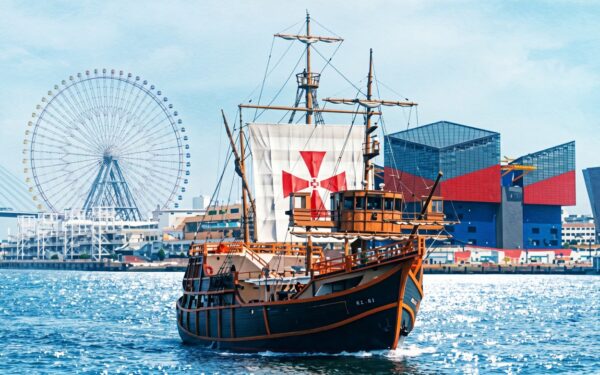
The whole area was redeveloped in the 1990s around the aquarium as a waterfront destination, and it shows in the layout: Kaiyukan, the Ferris wheel, the marketplace, and Legoland all sit within a 5-minute walk of each other.
Group everything here into one half-day block rather than spreading it across two visits.
Osaka Aquarium Kaiyukan
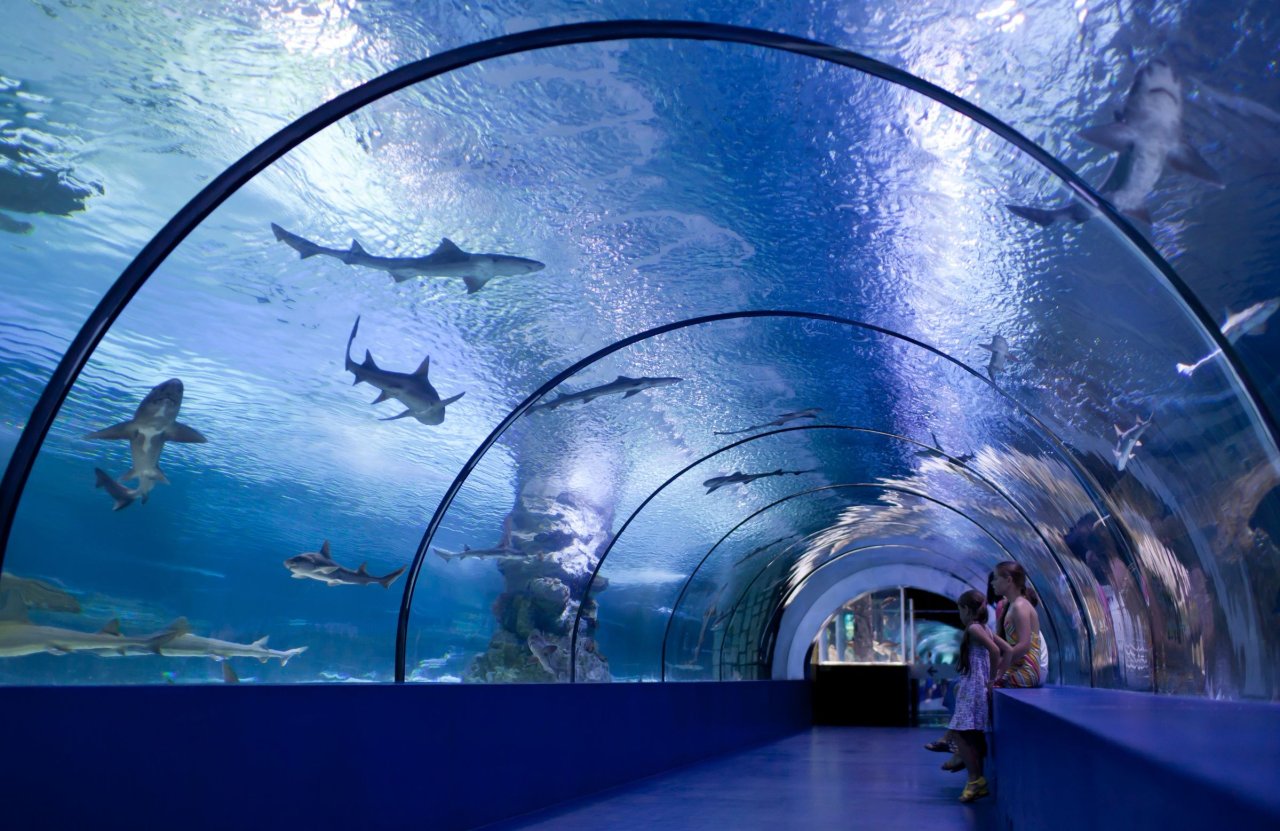
Osaka Aquarium Kaiyukan at Tempozan Harbor Village in Minato Ward is one of the largest aquariums on earth.
The central exhibit is the Pacific Ocean tank, 9 meters deep and 34 meters long, which contains whale sharks, the largest fish in the world.
The building is designed as a spiral descent from the 8th floor down, so you begin above the water and end below it.
Admission is ¥2,700 for adults, ¥1,400 for children aged 7 to 15, ¥700 for children aged 3 to 6.
Open daily 10:00 to 20:00; last admission one hour before closing.
Budget 90 to 120 minutes.
Tempozan Harbor Village
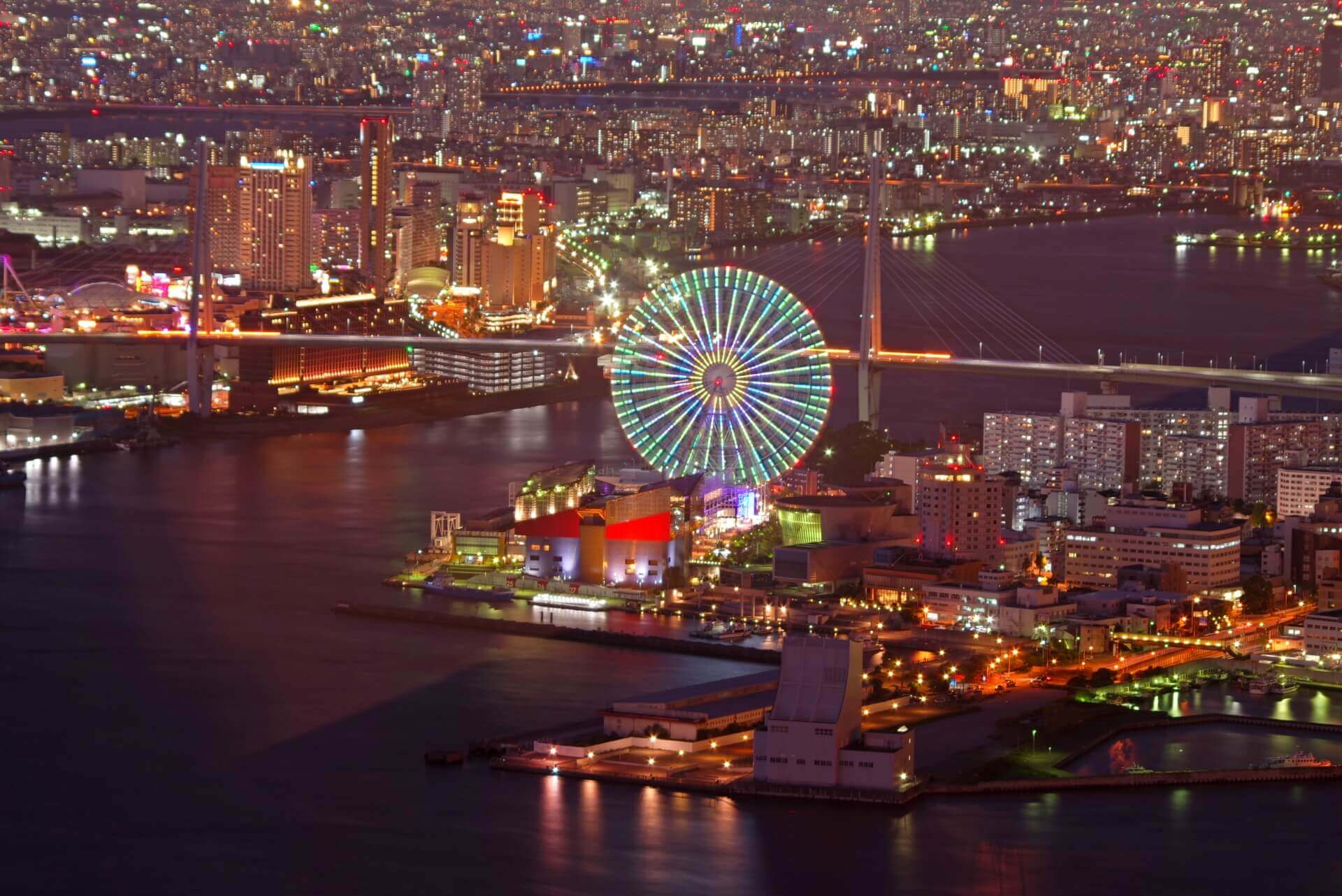
The aquarium sits inside a larger complex that was built specifically around it.
Tempozan Harbor Village is the surrounding complex of marketplace, restaurants, and the Tempozan Ferris Wheel (¥800), which stands 112 meters tall and runs until 22:00.
Clear evenings from the top give views over Osaka Bay toward Kobe.
Nearest station: Osakako on the Chuo Line, 7 minutes’ walk.
Legoland Discovery Center Osaka
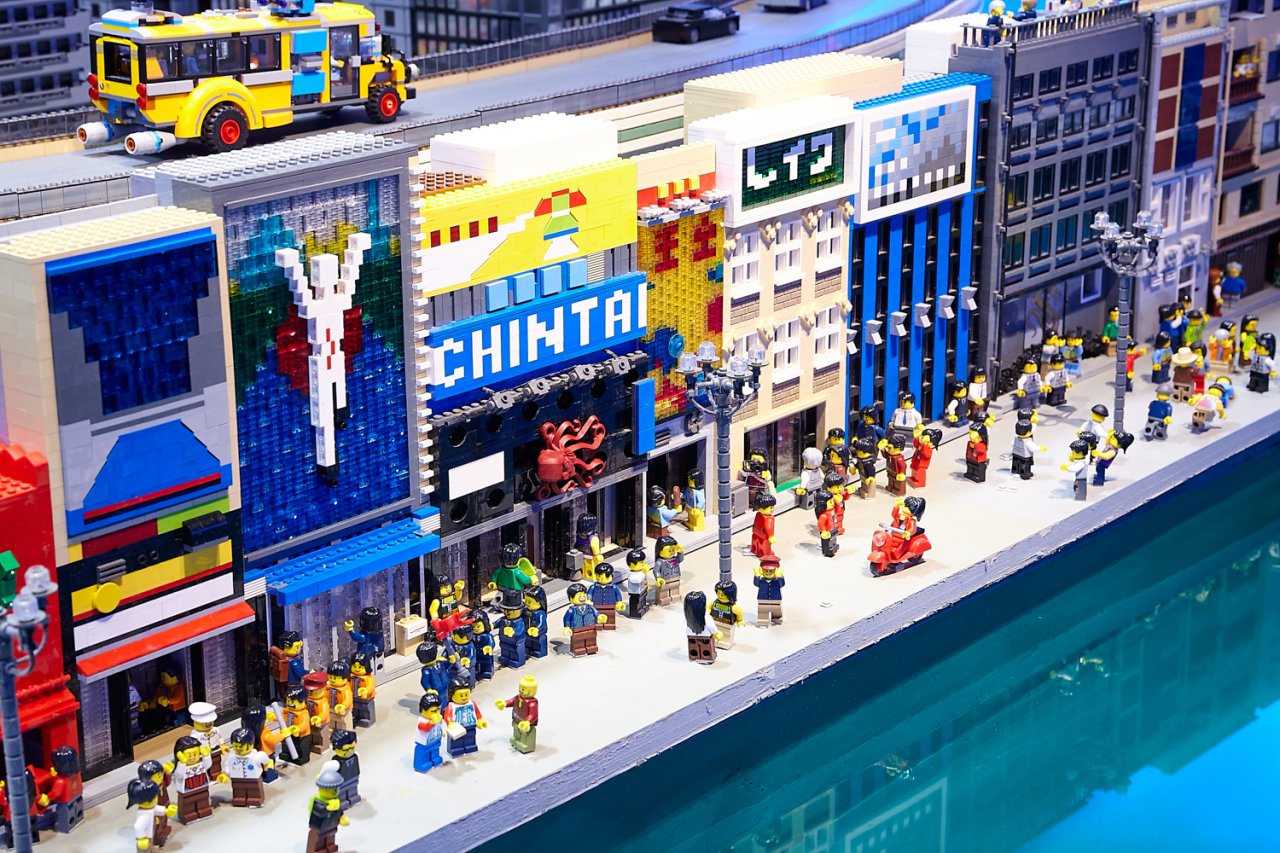
Legoland Discovery Center Osaka occupies the Tempozan district as well.
It is intentionally small, built for children aged 3 to 10, with rides, a 4D cinema, and a LEGO City driving school.
Tickets are around ¥2,600 per person.
Adults without children are not admitted, which is a policy that makes perfect sense once you’re inside.
Temples and Shrines Worth the Train Ride
Every attraction covered so far sits within the main Osaka Metro network and takes 30 minutes or less from the city center.
The places in this section require a bit more effort: a Hankyu train, a bus connection, or a walk through a residential neighborhood with no obvious tourist infrastructure around it.
None of them are difficult to reach, but they reward visitors who have already covered the central cluster and want something that feels less managed.
Katsuo-ji Temple
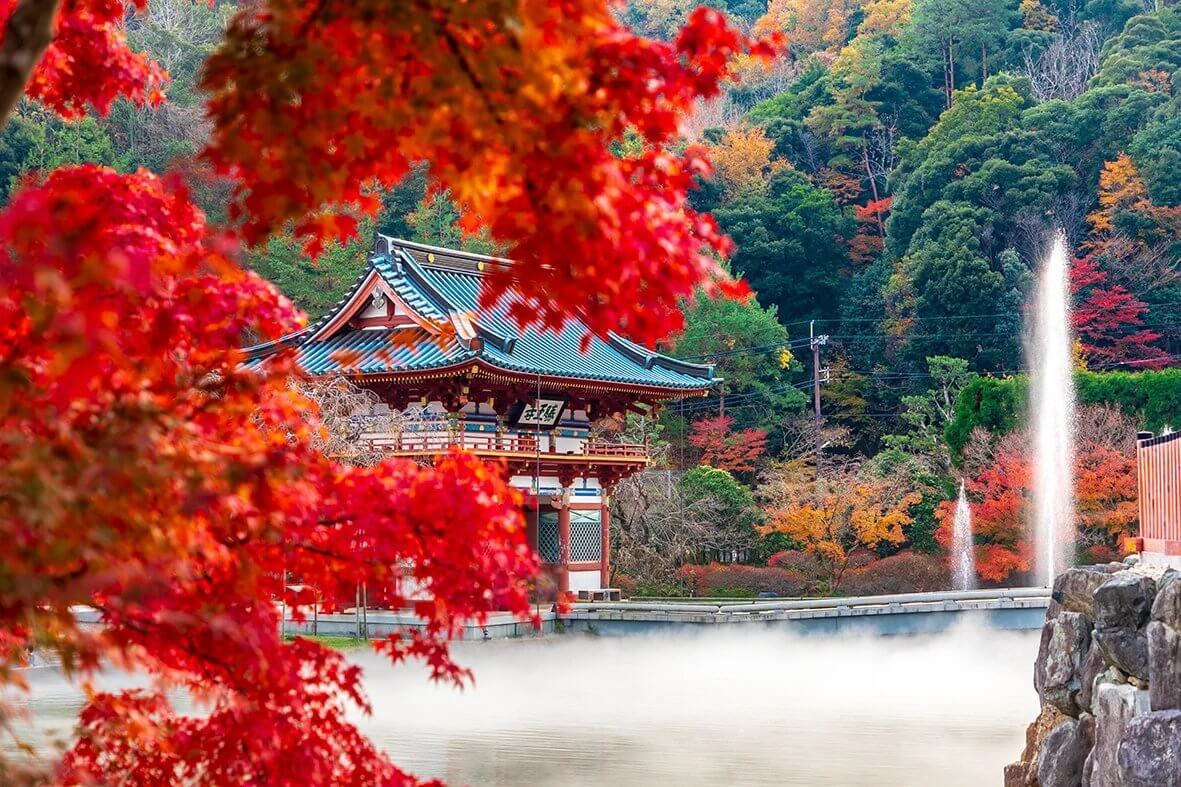
Katsuo-ji Temple in Minoo City sits at the end of a forested hiking trail about 30 minutes from Umeda by Hankyu Minoh Line plus bus.
The temple grounds are covered in daruma dolls, hundreds of red papier-mâché figures left by visitors who came to pray for perseverance or the completion of a goal.
Admission is ¥400 for adults.
The trail approaching from Minoo Station is a legitimate hike through cedar forest, not a paved stroll.
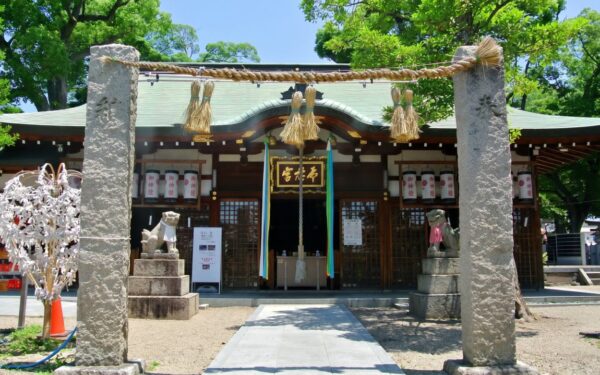
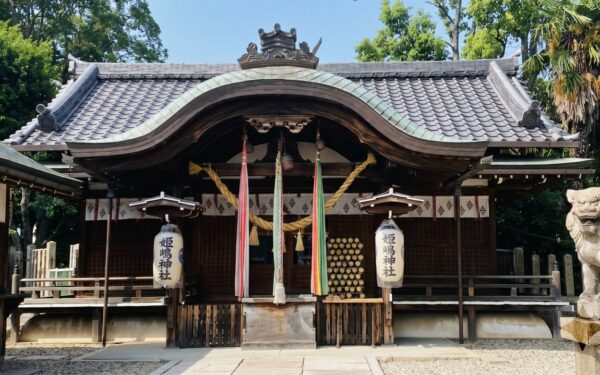
Himejima Shrine
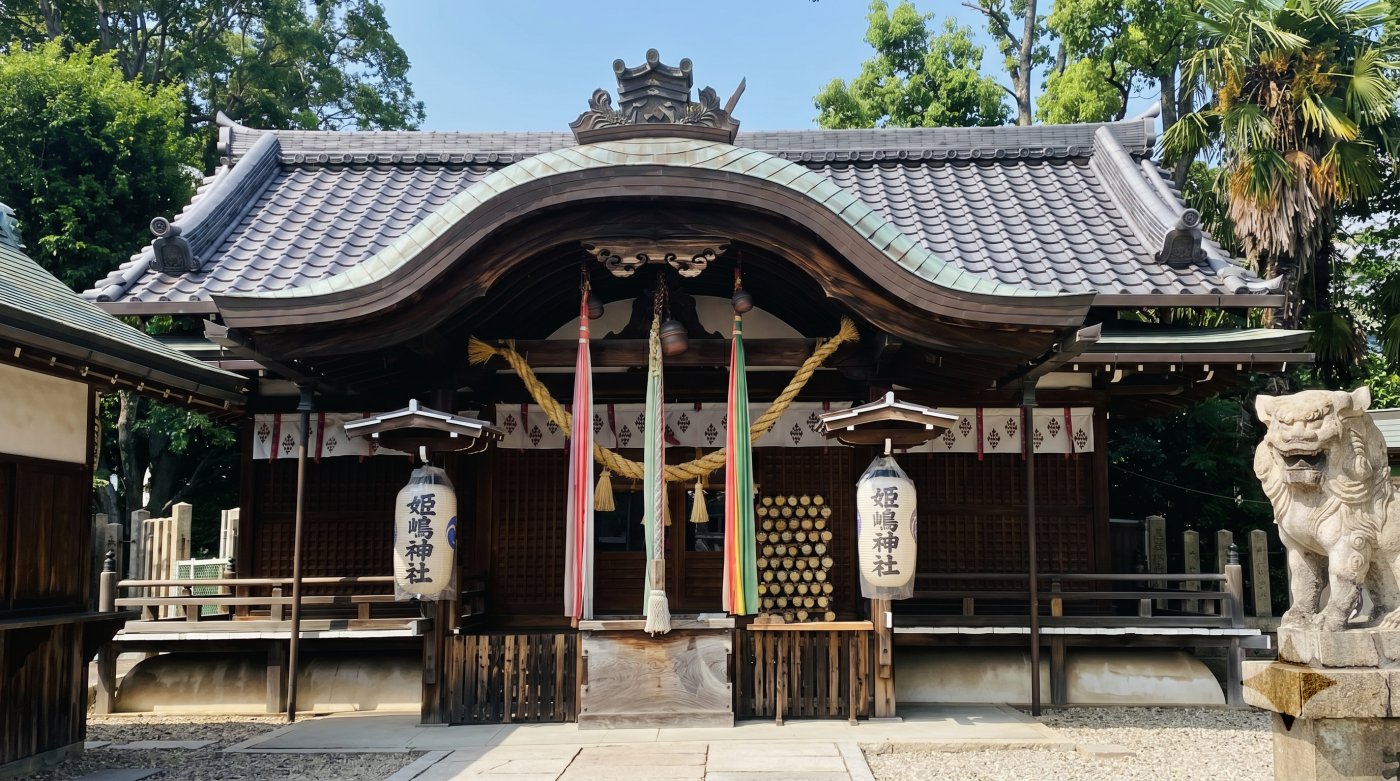
Closer to the city center but still off the main tourist path, four smaller shrines and temples round out this category.
Himejima Shrine in Nishiyodogawa Ward, Nunose Shrine, Ikukunitama Shrine (生國魂神社), and Senkoji Temple each serve their local neighborhoods with their own distinct histories.
Ikukunitama, just east of Shinsaibashi, is one of Osaka’s oldest shrines and sits in a block of residential streets that most tourists walk past without noticing.
The compact grounds are worth 20 minutes.
Tsuyuno Tenjinsya (Ohatsu Tenjin)
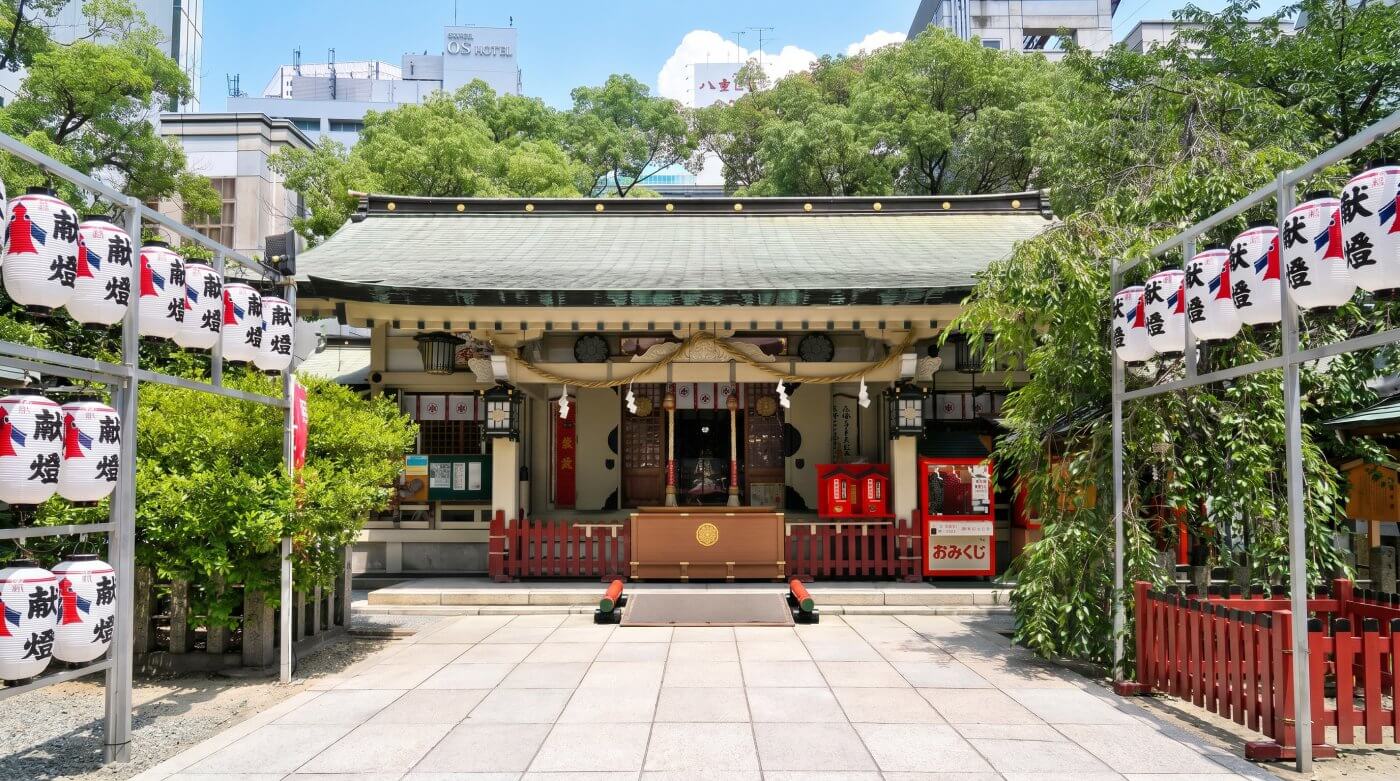
One more shrine in this category sits not in a quiet residential street but in the middle of the city’s biggest nightlife district.
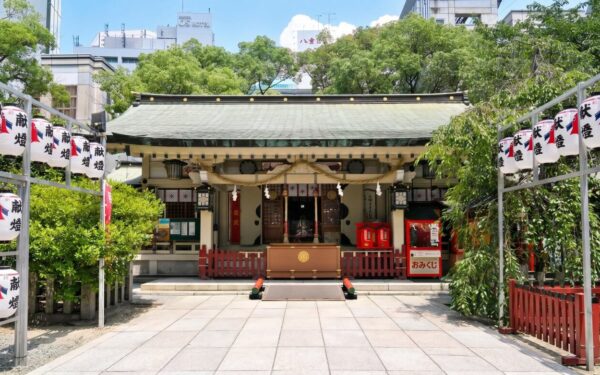
Tsuyuno Tenjinsya (Ohatsu Tenjin) is a shrine in the middle of Umeda’s bar district that is associated with Japan’s most famous love-suicide narrative: the 1703 double death of Tokubei and Ohatsu, which inspired Chikamatsu Monzaemon’s puppet theater play Sonezaki Shinju.
The shrine draws couples today much as it did three centuries ago.
Free entry.
The contrast between the shrine and the surrounding izakayas is part of what makes it worth finding.
Across all of this, the honest answer to which shrines and temples are worth prioritizing depends on your baseline interest in Japanese religious architecture.
If this is a first trip to Japan, Shitennoji (Japan’s oldest officially established Buddhist temple, founded 593 CE), Sumiyoshi Taisha (architecturally unlike anything in Kyoto or Nara), and Namba Yasaka Shrine (genuinely strange and free) cover the range without demanding a religious-architecture habit.
Osaka Tenmangu earns a special trip if the dates line up with Tenjin Matsuri in late July; outside that window it’s pleasant but not essential.
Hozenji is more an atmospheric alley than a formal temple visit, takes fifteen minutes, and is worth it purely for the contrast with the surrounding Dotonbori noise.
Katsuo-ji, out here in Minoo City, is the one to save for a second visit or a slow day with comfortable shoes.
Parks and Nature Inside City Limits
Katsuo-ji isn’t the only reason to make the trip to Minoo City; the area’s other big draw is entirely secular.
Osaka is not a city people associate with green space, and that reputation is mostly earned.
But there are a few parks and trail corridors worth knowing about, particularly if your trip runs longer than three days or you need a half-morning that isn’t another temple or shopping arcade.
The two below are genuinely different from each other in character: one is a mountain gorge trail an hour outside the center, the other is a flat riverside walk that happens to hold nearly 5,000 cherry trees.
Minoo Park
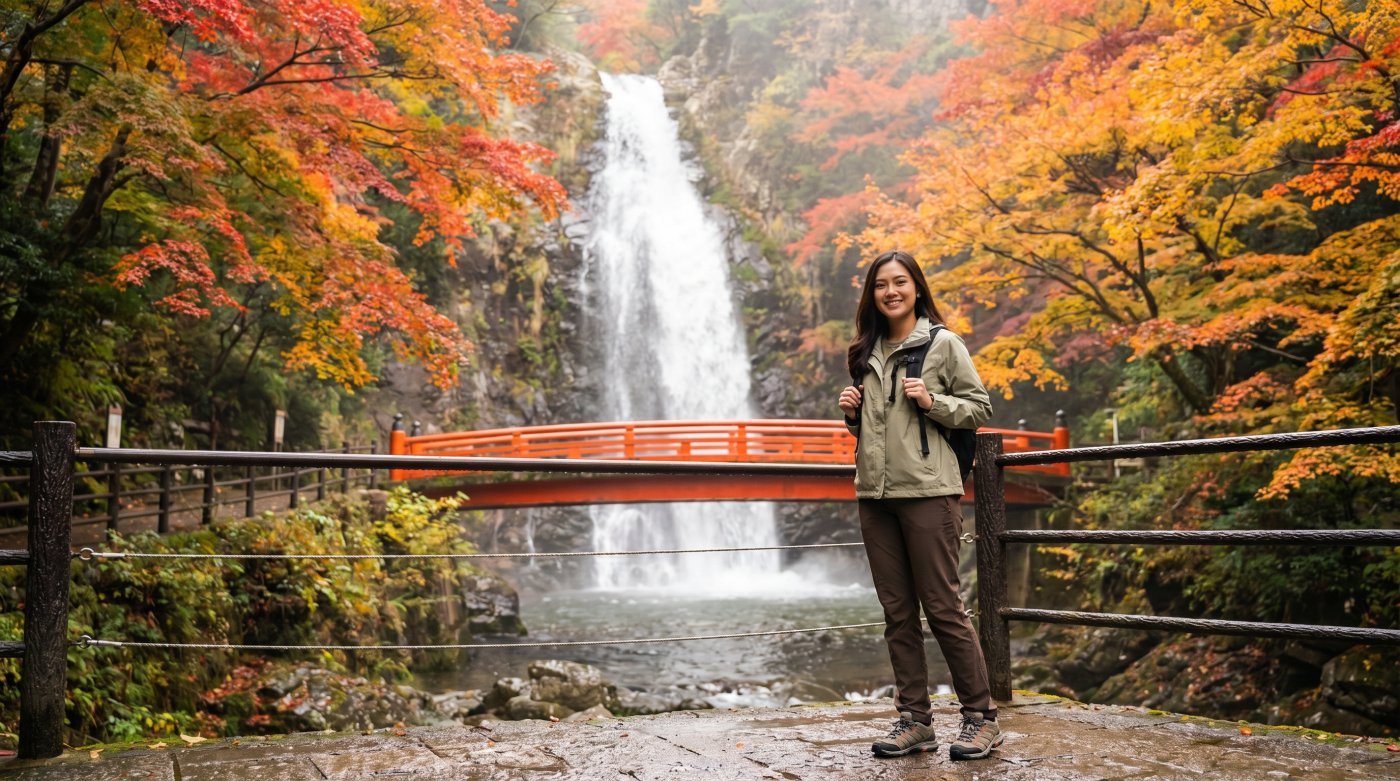
Minoo Park (箕面公園) in Minoo City, accessible by Hankyu Minoh Line in about 28 minutes from Umeda, runs a 2.7-kilometer trail along a stream gorge up to a 33-meter waterfall.
The trail is free to walk, paved for most of its length, and lined with Japanese maple trees (momiji) that turn bright red in early to mid November.
Vendors along the path sell momiji tempura (fried maple leaves in a light batter), a local specialty that has been sold here for over a century.
The park is quiet on weekdays and noticeably crowded on autumn weekends.
Back in the city center, green space looks different but still earns a slower pace.
The Tennoji Park grounds and the connected Chausuyama area serve as the green core of the Abeno neighborhood, and the 5-minute detour between Shitennoji Temple and Isshinji makes the area feel less like a heritage district checklist and more like an actual neighborhood.
Museums and Indoor Experiences
After all that walking outdoors, it’s worth knowing where to go when the weather doesn’t cooperate.
Osaka’s indoor attractions are most useful on two kinds of days: when it’s raining, and when you’re traveling with children who have hit their temple threshold.
The four below cover genuinely different ground, from a night-only digital art installation in a botanical garden to a children’s museum with a working post office.
None of them are substitutes for the outdoor sights, but two of them, teamLab and the Open Air Museum, are specific enough to Osaka that they’re worth planning around rather than treating as backup options.
teamLab Botanical Garden Osaka
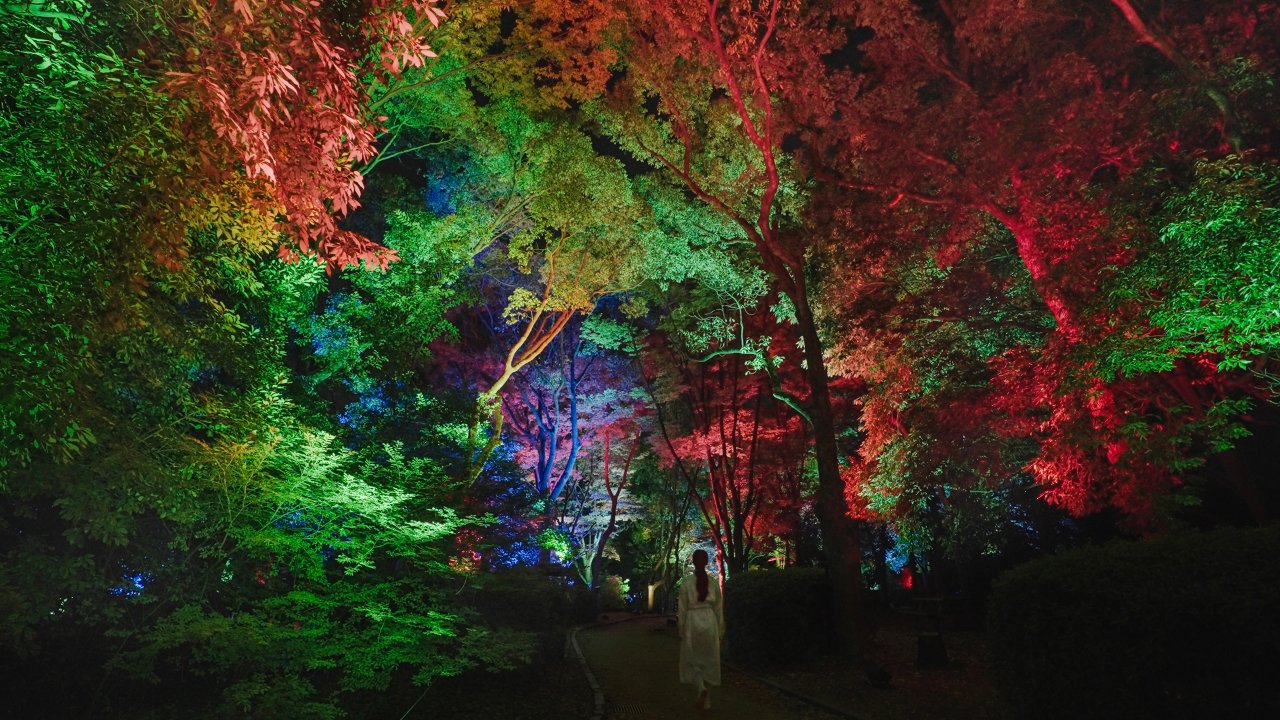
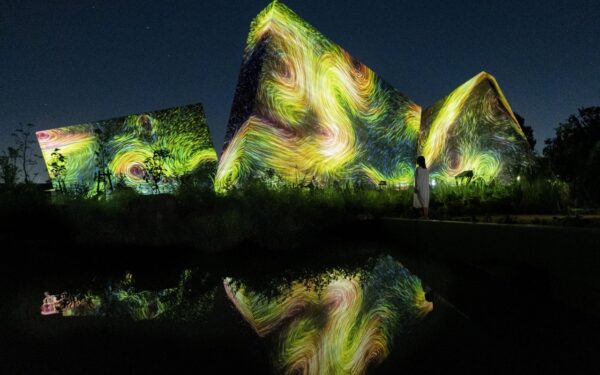
teamLab Botanical Garden Osaka runs evening-only at the Nagai Botanical Garden in Higashisumiyoshi Ward.
The installation uses projected digital light on live plants across the garden’s various sections, operating from 19:00 to 21:30 (last admission 21:00).
Tickets are approximately ¥3,200 for adults.
This is a seasonal event with periods of closure; check the official calendar before booking.
The nearest station is Nagai on the Midosuji Line, about 8 minutes from Tennoji.
Worth a direct comparison if you’ve already done teamLab in Tokyo: the Tokyo venues, Planets and Borderless, are indoor, year-round exhibits, while teamLab Botanical Garden Osaka is an outdoor night event projected onto living plants.
It’s shorter, plan for 60 to 90 minutes against 2 to 3 hours for the Tokyo venues, quieter, and noticeably less crowded.
The experience is less technically dense than Planets but more atmospheric, and it works best as an evening add-on to a day already built around Tennoji rather than a dedicated trip from central Osaka on its own.
Osaka Science Museum
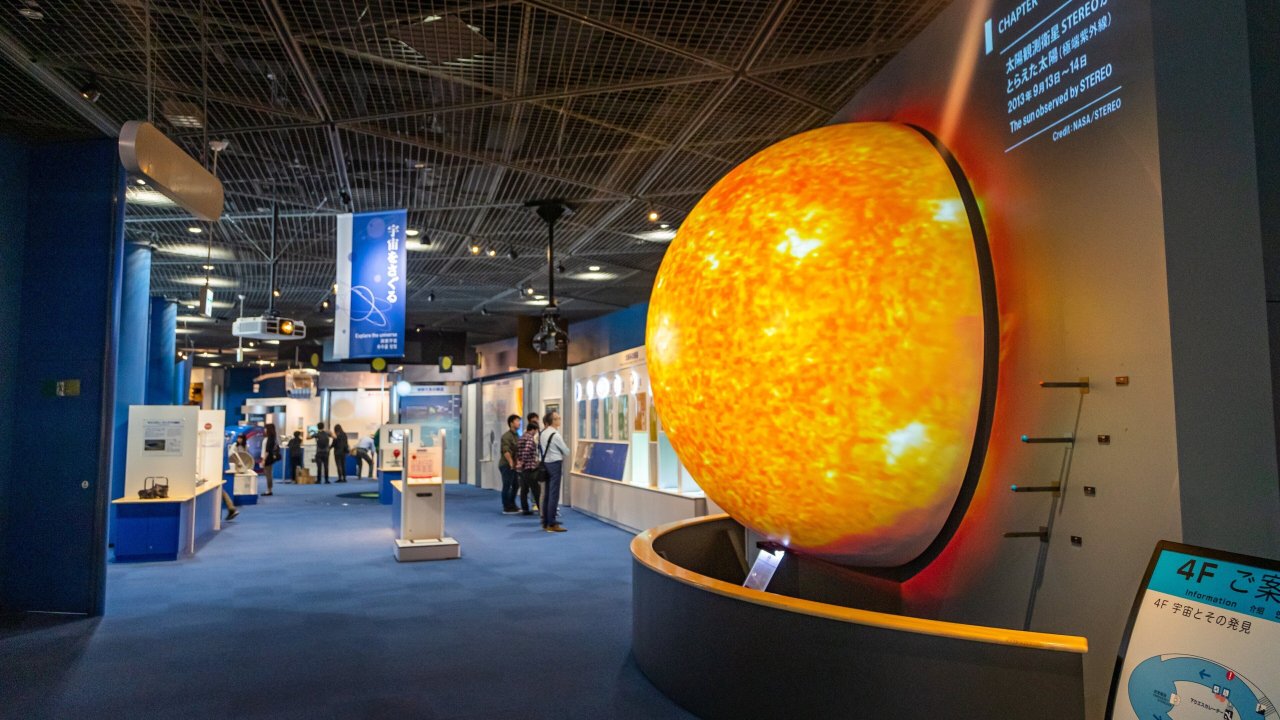
A different kind of indoor experience, built for daytime rather than dusk, sits on Nakanoshima island in the middle of the Okawa River.
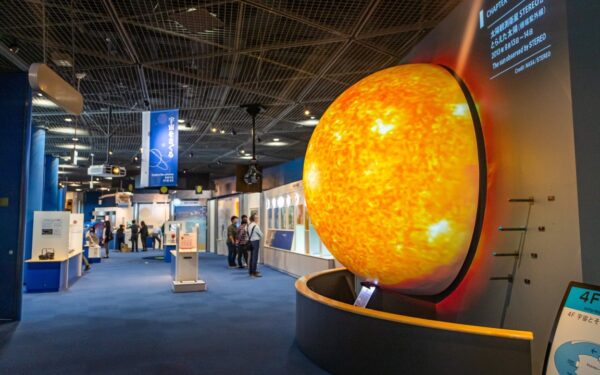
Osaka Science Museum (大阪市立科学館) in Nakanoshima near Higobashi Station holds four floors of hands-on science exhibits and a planetarium.
Exhibit admission is ¥400 for adults; the planetarium is ¥600 extra and programs sell out, so booking in advance or arriving at 9:30 opening is advisable.
Open Tuesday through Sunday, 9:30 to 17:00, closed Monday (or Tuesday when Monday is a public holiday).
Kids Plaza Osaka
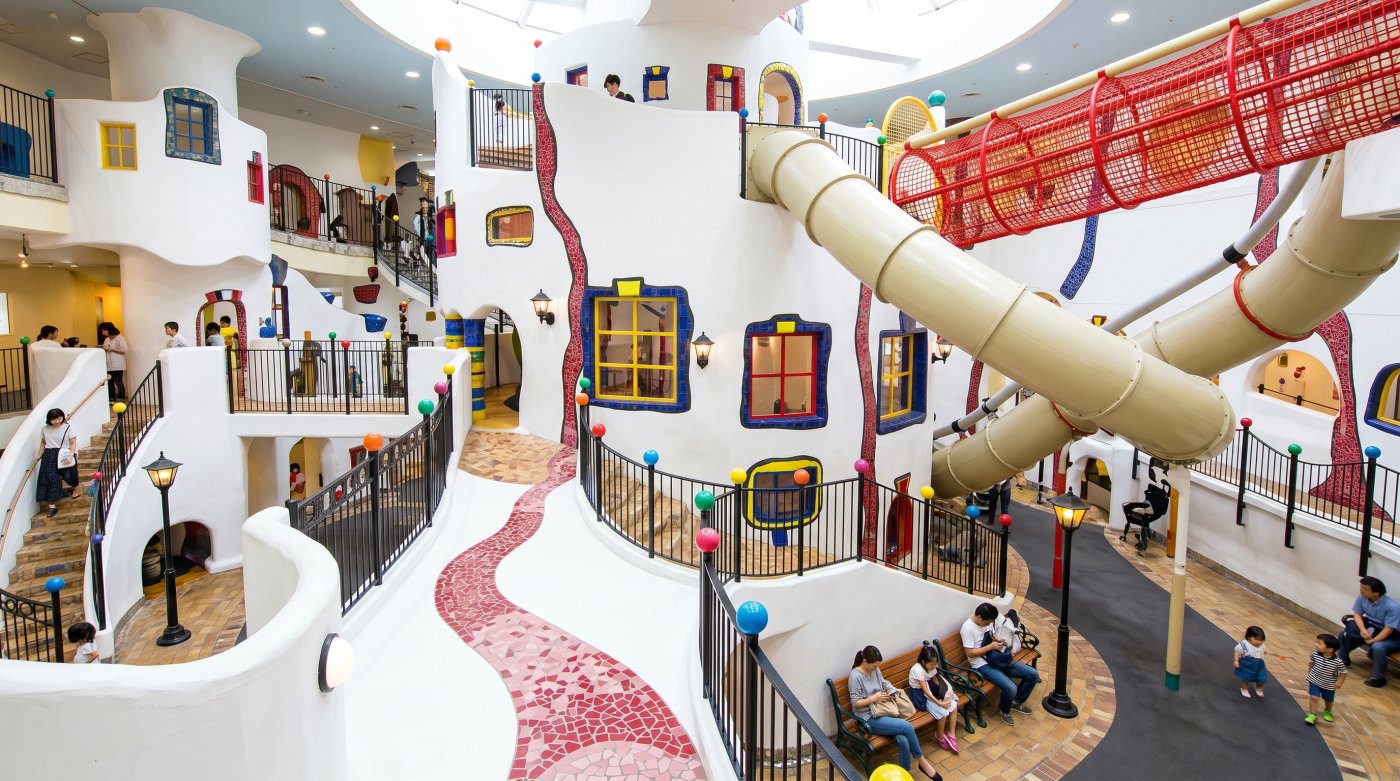
A similar hands-on approach, aimed at a younger age range, sits about fifteen minutes northeast in Ogimachi.
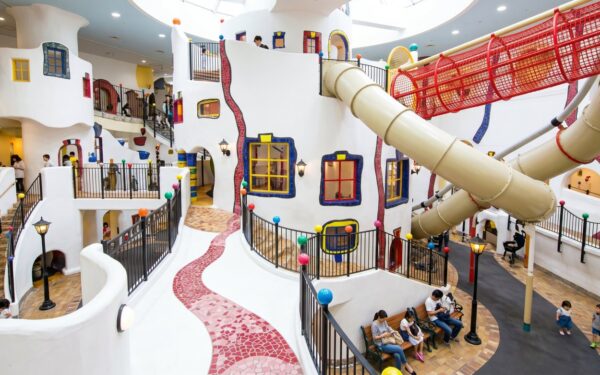
Kids Plaza Osaka in Ogimachi near Tenjimbashisuji Rokuchome Station is a three-floor children’s museum with a working post office, a fire station simulator, and a rooftop activity area.
Admission is ¥1,400 for both adults and children.
Open Tuesday through Sunday, 9:30 to 17:00.
Open Air Museum of Old Japanese Farm Houses
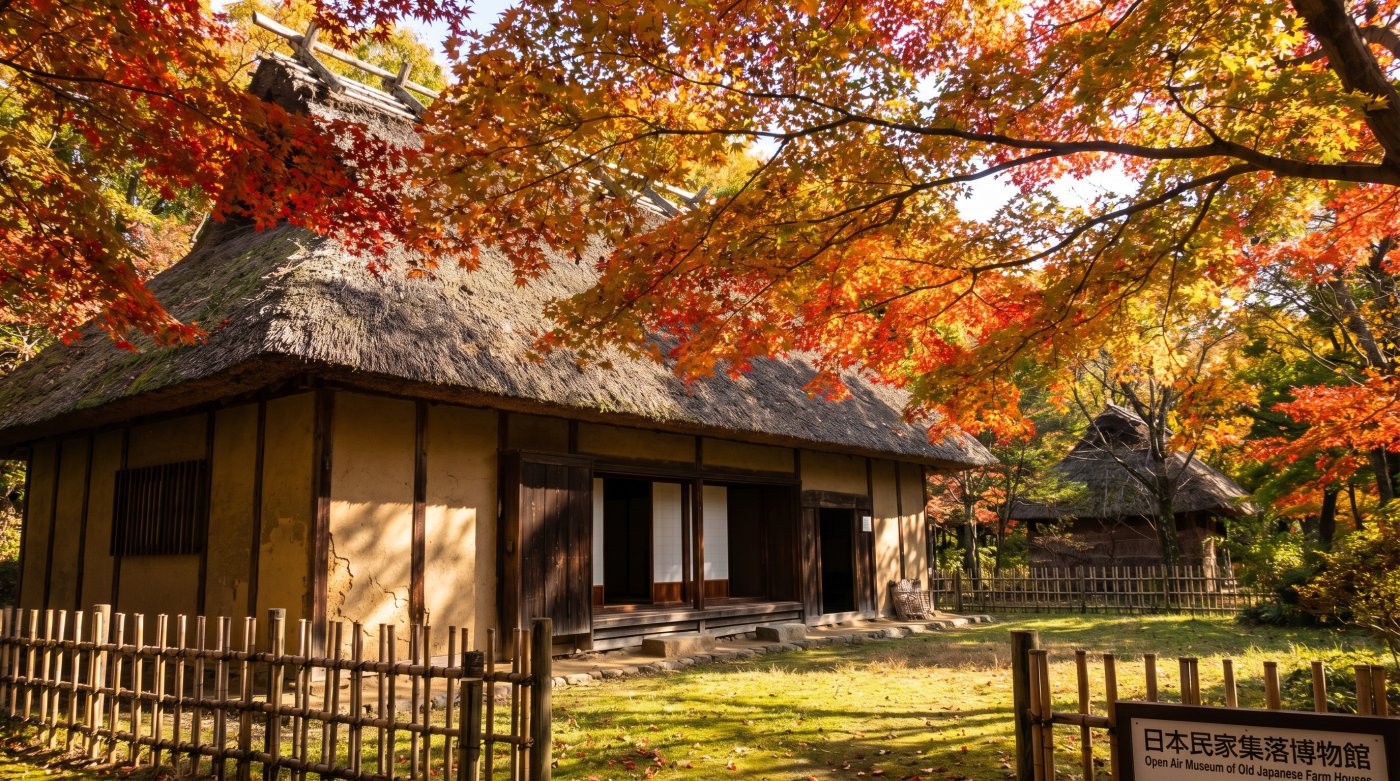
The last indoor-adjacent option on this list takes the opposite approach entirely, trading hands-on technology for actual historic buildings.
Open Air Museum of Old Japanese Farm Houses in Toyonaka preserves 11 minka (traditional farmhouses) relocated from across Japan to a hillside compound.
Admission is ¥500 for adults.
The houses span regional styles from Kyushu to Tohoku, and the comparative view of how different climates shaped vernacular architecture is genuinely interesting if this kind of thing interests you.
The museum is about 30 minutes from Umeda by Midosuji Line to Senri-Chuo, then bus.
Quiet on most days.
Universal Studios Japan: What to Expect
Everything covered so far fits into half-day or full-day blocks that can be mixed and matched.
One attraction on this list doesn’t follow that rule at all.
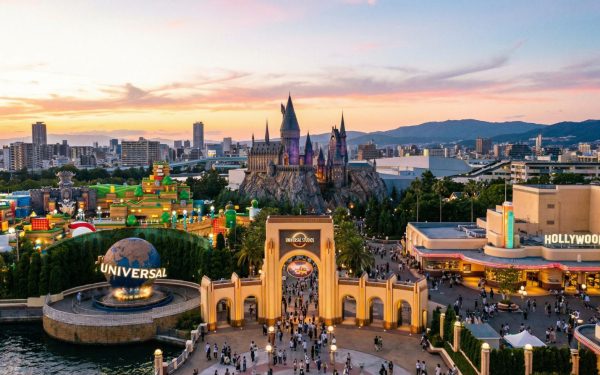
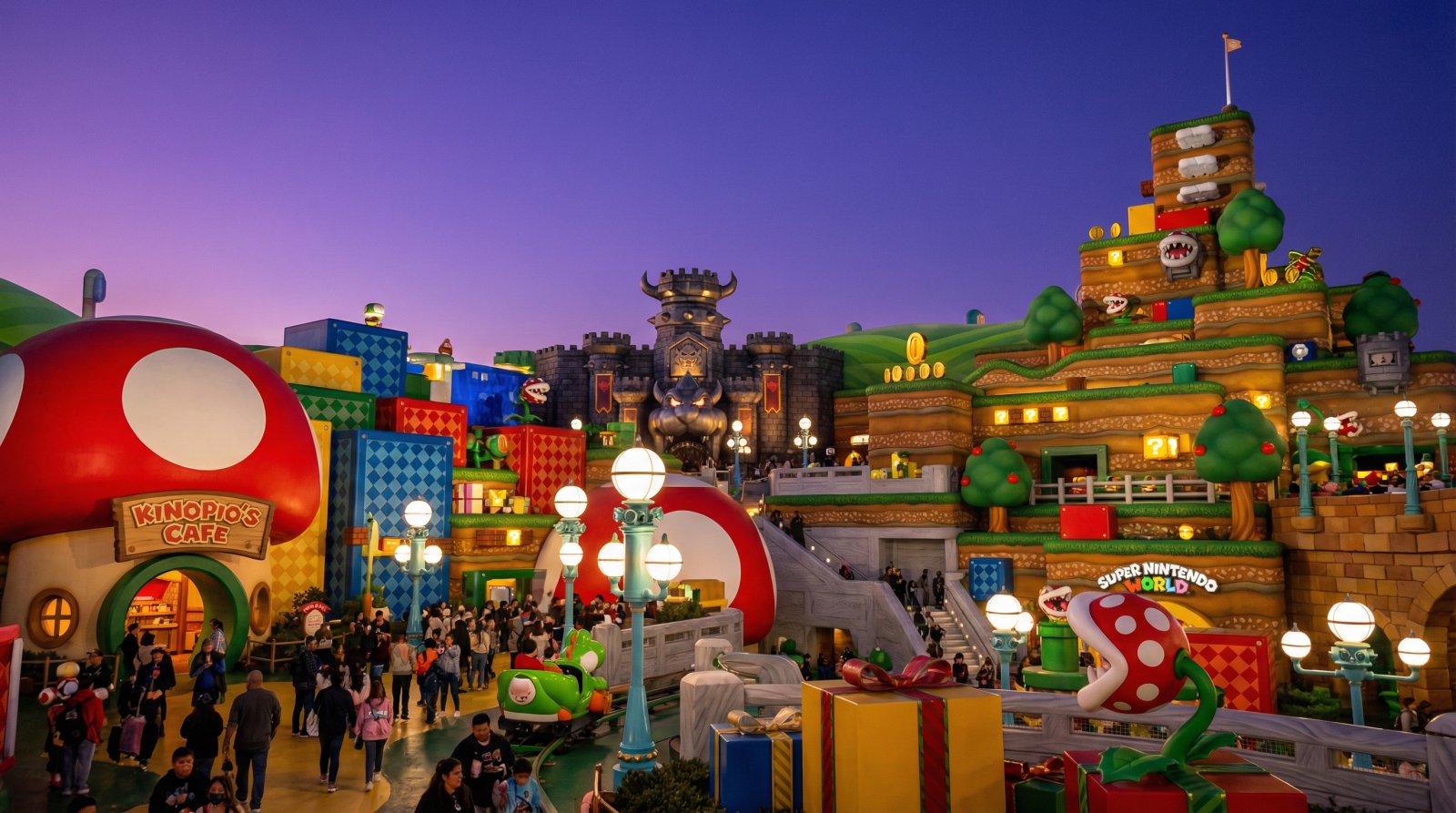
Universal Studios Japan in Sakurajima, Konohana Ward, is a full-day commitment.
Standard adult tickets run between ¥8,900 and ¥10,400 depending on the date; peak-season dates and event periods push above that.
Doors open at 9:00 on most days.
The Wizarding World of Harry Potter and Super Nintendo World both see queues of 60 to 90 minutes on busy weekends even with Express Passes for other rides in hand.
If you are visiting with children under 10, Minion Park and the Sesame Street area run faster.
The park is reached from Sakurajima Station on the JR Yumesaki Line, one stop from Nishikujo.
USJ is not covered by the Osaka Amazing Pass and Kaiyukan gets only a discount rather than free entry.
That affects whether the pass pays off on a waterfront + USJ day.
The Osaka Amazing Pass vs ICOCA card guide runs through the math depending on what you’re visiting.
Things to Do in Osaka: Building a Real Itinerary
With USJ treated as its own day, the rest of this list needs to be sorted into however many days you actually have.
Three days is the practical minimum to reach a reasonable cross-section without feeling rushed.
The three-day Osaka itinerary allocates one full day to USJ, one to the castle and south, and one to the waterfront plus Namba.
If you only have 24 hours, the one-day itinerary sequences the non-negotiables in an efficient order.
Two days covers the non-negotiables without feeling brutal if three isn’t available, splitting roughly into the castle and Tennoji temples on one day and Namba plus Dotonbori on the other; add a fourth day only if USJ is on the list, since it reliably swallows a full day on its own and shouldn’t be squeezed alongside anything else.
One scheduling conflict comes up often enough to flag directly: doing Osaka Castle and Universal Studios Japan on the same day is technically possible but not advisable.
The castle is best done early, before queues build from 11:00 onward, and USJ reliably fills the remaining daylight even without the castle added in.
The two sit on opposite ends of the city, the castle in Chuo Ward and USJ seven kilometers west in Konohana Ward near the bay, which means losing roughly an hour to transit in the middle of the day for no good reason.
Give USJ its own day.
From Osaka, Nara is 45 minutes by Kintetsu Line from Namba, Kyoto is 15 minutes by shinkansen from Shin-Osaka.
Both are easy half-day additions if your Osaka itinerary is running ahead of schedule.
For the transit side, the Osaka Metro guide covers which lines reach which neighborhoods.
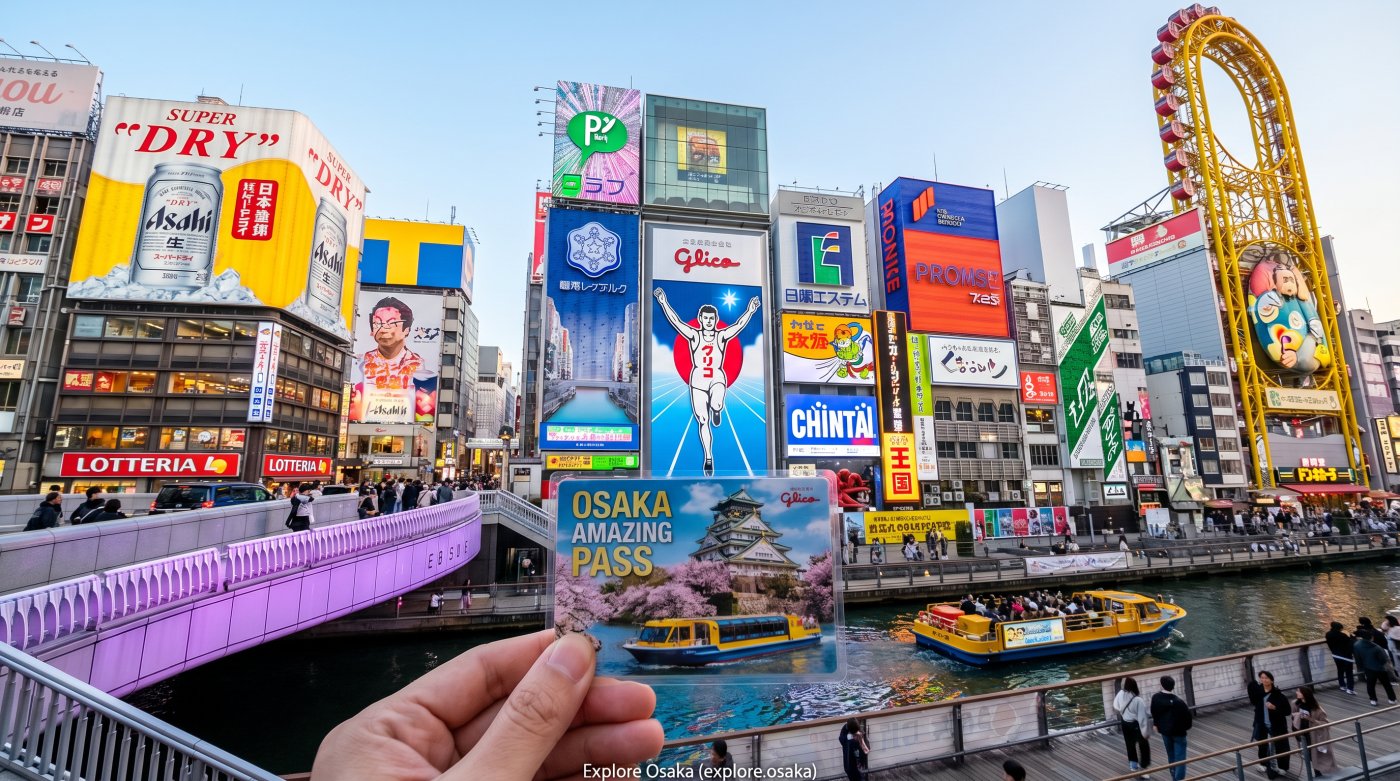
The Osaka Amazing Pass covers unlimited Metro rides plus free entry to around 40 attractions and costs ¥3,500 for one day or ¥5,000 for two.
Klook
City Pass
Osaka Amazing Pass — the one pass worth buying
Unlimited subway rides plus free entry to 40+ attractions including Osaka Castle, Umeda Sky Building, and the Dotonbori River Cruise. If you're spending more than a day sightseeing, it pays for itself before lunch.
¥2,800/ person
Whether it’s worth buying depends entirely on which attractions are already on your list: it includes Harukas 300 (¥2,000 alone) and the Tempozan Ferris Wheel among others, so a day hitting two or more paid sights while moving around by subway usually pays for itself.
A day spent mostly at USJ, or mostly walking between free sights like shrines and parks, won’t see the same value.
Things to Do in Osaka Near Shin-Osaka Station
One more piece of geography trips up first-time visitors more than anything covered above: Shin-Osaka Station.
Shin-Osaka, in Yodogawa Ward, is the city’s shinkansen terminal and a major transit hub, not a sightseeing district in its own right, despite enough visitors booking hotels there on the assumption that it might be.
Every attraction on this list sits south of Shin-Osaka, reachable in well under fifteen minutes on the Osaka Metro Midosuji Line, which connects directly to Umeda and on to Namba.
Treat the station as a gateway for arrival and departure days, and base the rest of the stay around whichever neighborhood from this list matches the plan.
The best time to visit Osaka page covers the tradeoffs by month.
Cherry blossom season in late March to early April and autumn foliage in November are the two periods when the parks and outdoor attractions are at their visual peak, and also when hotel prices and attraction queues reflect that fact.