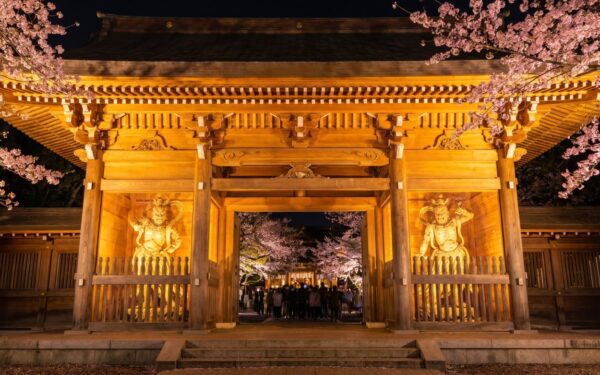
Himejima Shrine
The quiet Nishiyodogawa shrine where writing your fresh start on a scallop shell is treated as a genuinely sacred act.
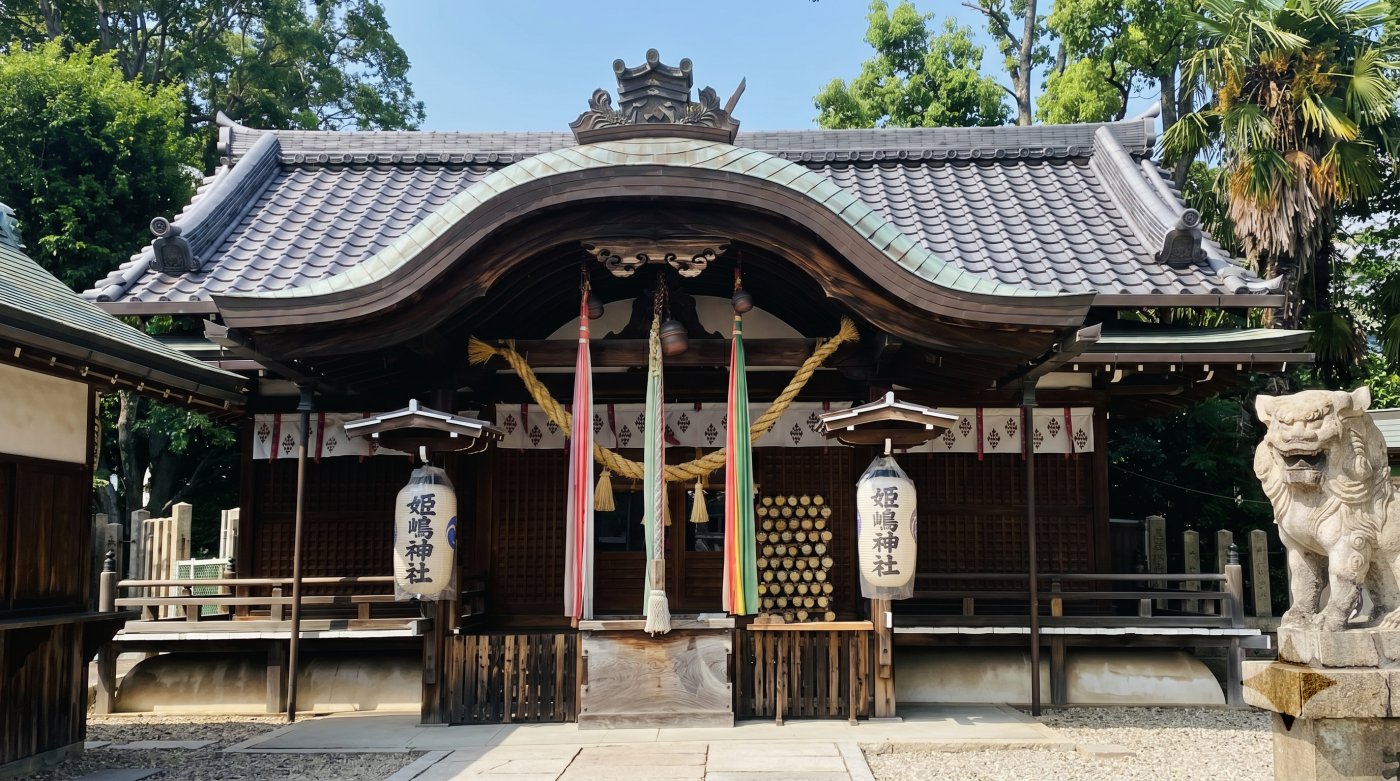





Himejima Shrine — 姫嶋神社 in Japanese — is a Shinto shrine in Nishiyodogawa Ward that has quietly built a devoted following as Osaka’s unofficial sanctuary for second chances.
The deity enshrined here is Akarubihime-no-Mikoto, a goddess whose own legend is a masterclass in reinvention: she left her husband, crossed the sea, landed somewhere new, and proceeded to teach the locals weaving, sewing, pottery, and music.
The shrine earned its popular nickname, the “Yarenaoshi Jinja” (やりなおし神社), which translates roughly as the “Do-Over Shrine,” and that reputation draws a steady stream of visitors who arrive carrying something they’d very much like to leave behind. The rituals here are wonderfully tactile.
You write your wish or intention on a scallop shell — the shape echoing the goddess’s sea crossing — and place it on the offering stand called the Kenfudai.
There’s also a red ball that visitors pass between their hands, a gesture meant to symbolise releasing old burdens before stepping forward.
The shrine grounds feature stone lanterns dating to 1648, confirming that Akarubihime has been venerated here since at least the early Edo period, even if the founding date itself is lost to history.
The shrine office (授与所) is open in two daily windows — 10:00 to 12:00 and 13:00 to 16:00 — and that’s when you can collect goshuin (stamp book entries), omamori, and the limited seasonal ofuda that have made this place something of a collector’s destination.
On the first of each month, the office opens slightly later, from 11:00.
The summer festival, held on the third Saturday and fourth Sunday of July, draws local crowds for ceremonies praying for health through the season.
Getting here takes about six minutes on foot from Himejima Station on the Hanshin Main Line — a short, unremarkable walk through a residential neighbourhood that makes the shrine feel even more like a private discovery when you finally arrive.
Himejima Shrine: Osaka’s Do-Over Shrine Where Fresh Starts Are Taken Seriously (2026)
Himejima Shrine (姫嶋神社) is a free Shinto shrine in Osaka’s Nishiyodogawa Ward, dedicated to a goddess who left her husband, crossed the sea, and built an entirely new life.
That story is the whole point of the place, and it draws visitors who are doing something similar, whether they’re recovering from a breakup, changing careers, or just feeling like the last chapter needs a serious edit.
In this Explore Osaka guide, you’ll find everything you need to visit: the rituals, the access details, the best time to go, and what to realistically expect when you get there.
The shrine’s popular nickname is Yarenaoshi Jinja (やりなおし神社), literally the “Do-Over Shrine,” and that reputation has grown steadily over recent years among both locals and travelers who want something more contemplative than another photo at a vermilion torii gate.
The grounds are compact, the atmosphere is calm, and the staff at the shrine office are known for being genuinely welcoming.
Quick Facts of Himejima Shrine
Hide- Official name: Himejima Shrine (姫嶋神社)
- Address: 4-14-2 Himejima, Nishiyodogawa Ward, Osaka, 555-0033
- Admission: Free
- Shrine office hours: 10:00-12:00 and 13:00-16:00 daily (1st of each month: 11:00-16:00)
- Grounds access: Open at all times
- Nearest station: Himejima Station (Hanshin Main Line), 6-minute walk
- Time needed: 30 to 45 minutes
- Best season: Year-round; summer festival in July
- Phone: 06-6471-5230
- Official website: http://himejimajinja.wixsite.com/himejimajinja
Why Visit Himejima Shrine
Most Osaka shrines you’ll encounter are either enormous and famous (Sumiyoshi Taisha, Namba Yasaka) or so small they barely register.
Himejima sits in interesting middle ground: it’s clearly a working, living shrine with a real congregation, not a heritage-site-turned-selfie-stop, and yet it’s accessible enough that a first-time visitor can walk in, understand what’s happening, and feel genuinely welcome.
The core draw is the deity herself.
Akarubihime-no-Mikoto is recorded in the Nihon Shoki, one of Japan’s oldest chronicles, as a princess who left Korea, arrived on the shores of what is now Nishiyodogawa, and proceeded to teach the local people weaving, sewing, pottery, and music.
She is a goddess associated with women’s empowerment, creative skill, and above all the idea that walking away from something that isn’t working is not failure, it’s sense.
That’s a more interesting theological position than most shrines advertise.
The ritual objects here reinforce that theme in a way that’s tactile rather than abstract.
You don’t just clap twice and toss a coin.
You write, you hold, you release.
That quality of interaction is relatively rare in shrine worship, and it gives the visit a weight that lingers longer than most.
The Goddess Behind the Shrine
Akarubihime-no-Mikoto’s story predates the shrine building itself by centuries.
The stone lanterns within the precinct are dated to 1648, placing the formal shrine structures in the early Edo period, though veneration of the deity at this site is likely older.
The name Himejima (姫島, “princess island”) reflects the legend of her arrival by sea, making the scallop shell ritual something that connects directly back to the origin myth rather than being a modern addition dreamt up for Instagram.
A Power Spot With Real Credentials
The term power spot (パワースポット) gets thrown around loosely in Japan, but Himejima has earned the label through repeat visits rather than marketing.
It’s been featured in regional guides to Osaka’s lesser-known spiritual sites and turns up consistently in Japanese travel writing about places to pray for a change in life direction.
The site’s authority comes from the specificity of its blessing: not general luck, not love, not money, but the clarity and courage to start over.
That precision matters to people who actually need it.
Trip Essentials
Osaka Travel Add-ons
Equip yourself for the ultimate Osaka adventure with the following add-ons, curated just for you.
Flights to Osaka
Airport Transfer
ICOCA IC Card
Suica IC Card
Osaka Tours
Luggage Storage
Travel Insurance
Data Security

Japan eSIM
Japan SIM Card
Pocket WiFi Rental
Japan eSIM
What to See and Do at Himejima Shrine
The grounds are small enough to walk in under ten minutes, but that doesn’t mean there’s nothing to do here.
The most meaningful visit is one where you engage with the rituals rather than simply taking photos of the architecture.
Here’s what you’ll find.
The Scallop Shell Ritual
The signature act of worship at Himejima is writing your wish, intention, or vow on a kaibo (scallop shell) and placing it on the Kenfudai, a dedicated offering stand near the main hall.
The shells are available from the shrine office during opening hours.
The scallop shape echoes Akarubihime’s sea crossing, which gives the ritual a narrative logic that you don’t always find with ema (wooden wishing plaques).
Write what you genuinely want to leave behind, or what you want to build, and place it with intention.
The act of writing matters here.
The shrine encourages visitors to be specific rather than vague, which is unusually good advice for a wishing ritual.
The Red Ball Ceremony
Near the main sanctuary, there’s a madama (red ball) that visitors are invited to hold and pass between their hands.
The gesture represents the physical release of old burdens before stepping forward into something new.
It sounds simple, and it is, but there’s something about the weight and warmth of holding an object and consciously deciding to let go of something that works on a level ordinary prayer doesn’t always reach.
Goshuin and Omamori
If you collect goshuin (shrine stamp-book entries), Himejima has become a notable stop because they offer seasonal and limited-edition designs that are genuinely difficult to find elsewhere.
The office opens at 10:00, so arriving early gives you the best chance at limited stock.
The standard omamori (protective charms) sold here are themed around new beginnings and women’s strength, making them popular as gifts.
Note that on the 1st of each month, the office doesn’t open until 11:00, so adjust your timing if you’re visiting then.
The Historic Lanterns
The stone lanterns lining the approach to the main hall were donated in 1648, making them among the oldest surviving elements of the shrine complex.
They’re not dramatic in the way that a massive torii gate is dramatic, but in context, standing next to something that has been standing in the same spot for nearly 400 years makes the new-beginning theme resonate differently.
People have been bringing their second chances to this exact place since the early Edo period.
The Summer Festival
Every July, the shrine holds its annual matsuri (festival) on the third Saturday and fourth Sunday of the month.
The ceremonies include prayers for health through the summer season, traditional music, and the full atmosphere of a neighbourhood shrine festival: stalls, yukata, and the kind of local crowd that doesn’t expect to find tourists.
If you happen to be in Osaka in July, this is a genuinely lovely event and considerably less overwhelming than larger city festivals.
Getting There
Himejima Shrine sits in a quiet residential pocket of Nishiyodogawa Ward, and getting there requires a short detour from the main tourist circuits, which is exactly why it feels like a discovery.
The easiest route from anywhere in central Osaka is the Hanshin Main Line to Himejima Station (姫島駅), from which the shrine is a 6-minute walk heading southwest.
The Hanshin Line connects through Umeda, so from central Osaka you’re looking at a total journey of under 25 minutes.
Follow the small brown road signs once you exit the station; the neighbourhood is low-rise and easy to navigate.
From Namba or the South
From Namba, take the Hanshin Namba Line to Nishikujo, transfer to the Hanshin Main Line westbound, and ride two stops to Himejima Station.
The whole trip takes around 20 to 25 minutes.
From JR Stations
If you’re coming from a JR station such as Osaka (Umeda) or Tsukamoto on the JR Osaka Loop Line, the walk from Tsukamoto Station to the shrine is approximately 23 minutes on foot.
Tsukamoto is manageable if you enjoy walking, but the Hanshin Line is clearly the better option for most visitors.
Essential Osaka Travel Passes
Powered by KlookThe passes worth buying before you land — curated for first-timers.
Osaka Amazing Pass
Unlimited subway + free entry to 40+ attractions. The only pass most visitors actually need.
Osaka e-Pass
Attractions-only digital pass. Pair with a Metro Pass if skipping the Amazing Pass.
Osaka Metro Pass
1 or 2-day unlimited Metro rides. Best standalone transit value if you already have an attractions pass.
JR West Kansai Area Pass
Unlimited JR trains for 1–4 days. Covers Kyoto, Nara, Kobe, and Himeji from Osaka.
JR Haruka Express
KIX to Umeda/Shin-Osaka in ~50 min. Best if staying in Umeda or heading straight to Kyoto.
Nankai Rapi:t Express
KIX to Namba in 34 min, reserved seat. Better if staying in Namba or Shinsaibashi.
By Bus
There is no direct bus route that deposits you at the shrine entrance.
The train options above are faster and less complicated.
Practical Notes
The shrine does not have parking for tourists in any meaningful sense; there are two or three spaces on site that are realistically reserved for visitors with mobility needs.
Come by train.
The walk from Himejima Station is entirely flat, passes through an ordinary residential street, and is safe at any time of day.
Practical Tips for Visiting Himejima Shrine
The shrine rewards a small amount of planning, mostly around office hours rather than anything complicated.
Shrine Office Hours
The juyo-sho (授与所, shrine office) is open 10:00-12:00 and 13:00-16:00 every day.
The grounds themselves are accessible at any time, so if you arrive before 10:00 you can walk the precinct and visit the main hall, but you won’t be able to buy shells for the ritual, pick up an omamori, or get a goshuin.
On the 1st of each month, the office opens one hour later at 11:00, so account for that if you’re timing a visit.
When to Go
Weekday mornings are the quietest.
You’ll often have the scallop shell ritual area nearly to yourself between 10:00 and 11:00 on a Tuesday or Wednesday.
Weekends bring more visitors, particularly on the 1st of the month when locals come specifically for the slightly extended blessing ceremony.
The shrine is pleasant in every season: there’s no dramatic cherry blossom display to chase, but the compact precinct has a different quality of light in autumn and a cleaner, cooler feel in winter that suits the reflective mood of the place.
What to Bring
- IC card or yen coins: A small offering of 5 yen (the traditional lucky denomination for goen, meaning “connection”) is appropriate at the main hall.
- Your goshuin notebook: If you collect stamps, keep it accessible; the office staff handle the stamps directly rather than using a stamp machine.
- Cash for the shell ritual: The scallop shells are available for a small fee from the office; prices are modest, but the office is cash only.
Photography
Photography of the exterior, grounds, and approaches is fine.
Use judgment inside the main hall; there are no explicit signs prohibiting photography, but it’s a working place of worship and discretion is appropriate, particularly during ritual activity.
Time Needed
Budget 30 to 45 minutes if you’re doing the full visit: the walk-in, the main hall, the scallop shell ritual, and a look at the stone lanterns.
If you’re collecting a goshuin, add another 5 to 10 minutes, since the staff take care with the inscription.
The shrine is not a half-day attraction, but it doesn’t need to be.
Its quality is concentrated.
Nearby Attractions
Nishiyodogawa Ward is not packed with tourist sights, but a few places within reasonable distance are worth considering if you’re making the trip out here.
- Tsukahara Junisho Shrine is a smaller neighbourhood shrine about 10 minutes on foot from Himejima, notable for its end-of-year ceremonies and the local community events held in the adjacent small park. It’s a secondary stop at best, but pairs well with a Himejima visit if you’re interested in the local shrine culture of this part of Osaka rather than the big-name sites.
- Amijima Park and Kyohachiken Yamatoya Zenshichi Residence sits further afield in the Tenma area, connected by Hanshin and Osaka Metro transfers. Amijima is historically significant as the setting for a famous Chikamatsu Monzaemon bunraku play from 1721, and the Yamatoya Zenshichi merchant residence is one of the few surviving examples of Osaka merchant architecture from the Edo period.
For food, the area around Nishikujo, one stop east on the Hanshin Line, has a good selection of local restaurants and casual lunch spots.
Nishikujo is a commuter hub rather than a dining destination, but it’s worth knowing if you’re visiting midday and want to eat before or after the shrine.
For a wider overview of what Osaka’s food culture looks like beyond the obvious Dotonbori circuit, the Osaka food guide covers the options without steering you exclusively toward tourist traps.
If you’re working out where to position this visit within a broader Osaka trip, the best things to do in Osaka covers the full range of districts and attraction types, which helps you see how a Nishiyodogawa detour fits into a multi-day itinerary.
A visit to Himejima Shrine takes less than an hour, but it earns a disproportionate amount of reflection time afterward.
It’s the kind of place that works on you quietly.
If you’re putting together a complete itinerary and want to see how this stop fits alongside Osaka’s bigger attractions, the Osaka itinerary guide maps out full-day and multi-day options that include both the headline spots and the worthwhile detours like this one.
What's Available
Frequently Asked Questions
Yes, entry to the shrine grounds is completely free and the precinct is accessible at any time.
The shrine office — where you can buy omamori, collect a goshuin, or purchase ofuda — operates from 10:00 to 12:00 and 13:00 to 16:00 daily.
On the first of each month, those hours shift slightly to 11:00–16:00, so plan accordingly if you’re visiting on the 1st.
No. The current structure dates from 1931 and is a ferroconcrete reconstruction, not the original Toyotomi-era castle.
The original was destroyed during Japan’s feudal conflicts.
The reconstruction is historically detailed and houses a genuine museum, but it is not a surviving historic structure in the way that, for example, Himeji Castle is.
If original castle architecture matters to you, the day trip to Himeji from Osaka is worth adding to your itinerary.
The easiest route is the Hanshin Main Line to Himejima Station, from which the shrine is a six-minute walk heading west.
From Namba or Osaka Umeda, take the Hanshin Line and you’ll be at the shrine in under 30 minutes total.
If you’re coming from the JR network, Tsukamoto Station on the JR Osaka Loop Line works, though the walk is around 23 minutes.
The Osaka Metro doesn’t serve this area directly, so the Hanshin Line is really your best option.


Editor's Review
Himejima Shrine punches well above its modest footprint.
It’s a small, neighbourhood shrine — don’t come expecting the sweeping stone pathways of Fushimi Inari — but the rituals here feel genuinely purposeful rather than performative.
Writing your intentions on a scallop shell and releasing them at the Kenfudai is quietly affecting, especially if you’re actually going through something.
The staff are known for being warm, which is not always the case at smaller shrines that get unexpectedly busy.
The main drawback is access: you’re looking at a six-minute walk from a Hanshin Line station that most tourists never ride, so this doesn’t slot neatly into a standard Osaka itinerary.
That’s also exactly why it’s worth the detour.
The insider tip: visit on a regular weekday morning, when the grounds are calm and you’ll likely have the scallop shell station almost to yourself.
Related Attractions

Kema Sakuranomiya Park
Nunose Shrine

LUCUA SOUTH
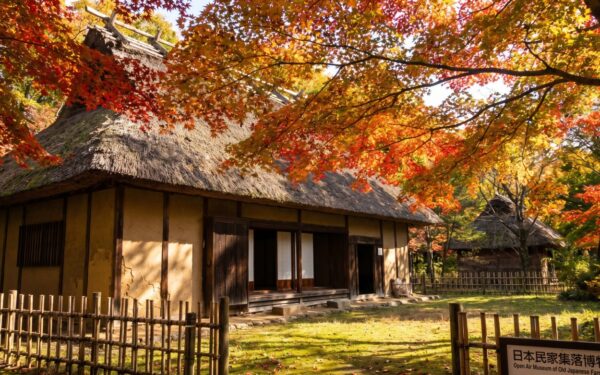
Open Air Museum of Old Japanese Farm Houses
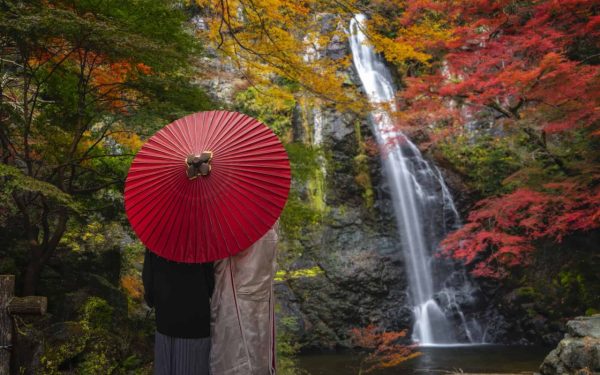
Minoo Park
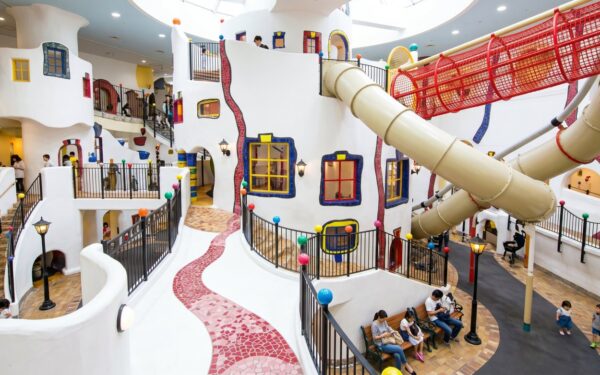
Kids Plaza Osaka

Osaka Science Museum
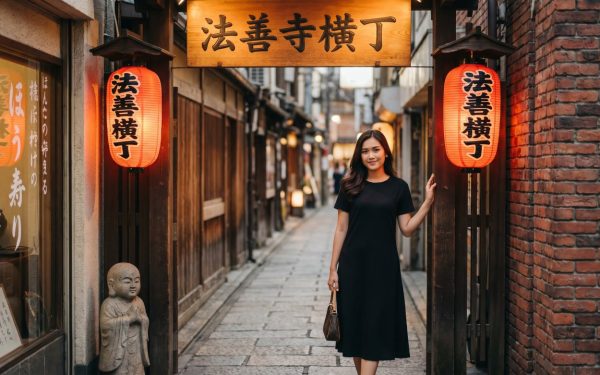
Hozenji Temple and Hozenji Yokocho