Osaka Science Museum
A four-floor interactive science museum on Nakanoshima Island with a 26.5-metre planetarium dome.
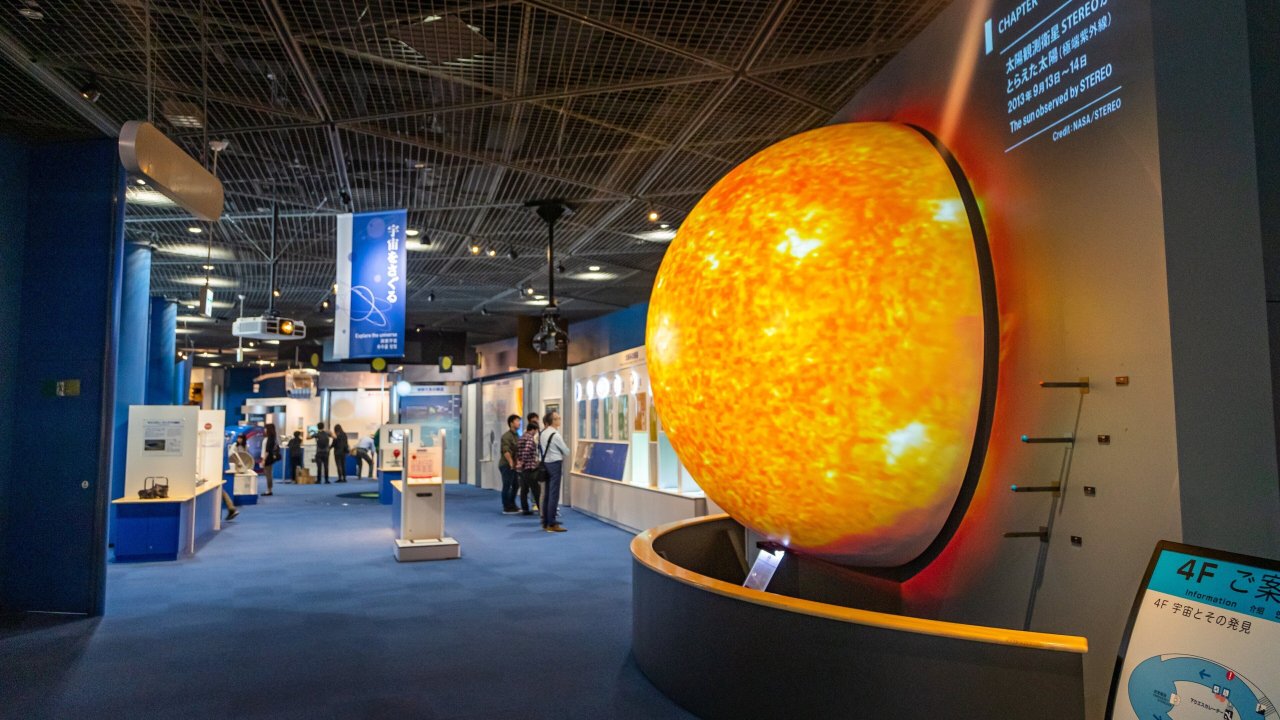







The planetarium here seats 300 people under a 26.5-metre dome, one of the largest projection screens in Japan, and for ¥600 it is the single best-value hour you can spend under a roof on Nakanoshima Island.
That fact alone separates the Osaka Science Museum from the dozens of other museums within walking distance of the Dojima River.
The permanent exhibition costs just ¥400 for adults and covers four floors of content organised around the theme of Space and Energy, with junior high school students and younger entering the exhibition halls for free.
Start on the fourth floor, which handles space and astronomy: scale models of the solar system, displays on electromagnetic radiation, and a timeline of major scientific discoveries with a focus on Japanese researchers.
The third floor drops you into earth sciences, with a mineral and gemstone collection that includes meteorite samples and a display case of rare industrial materials alongside a genuine astronaut suit.
The second floor is the one children charge toward first — hands-on experiments in gravity, centrifugal force, heat transfer, and light, all designed to be operated without staff assistance.
The first floor closes the loop with energy systems, covering solar, wind, hydroelectric, and nuclear power generation.
The museum sits on Nakanoshima Island in Kita Ward, sandwiched between the Dojima River to the north and the Tosabori River to the south.
Watanabebashi Station on the Keihan Nakanoshima Line is a 5-minute walk from the south entrance, and Higobashi Station on the Osaka Metro Yotsubashi Line is 7 minutes on foot.
The museum is closed every Monday, and planetarium tickets for popular show times sell out at the counter, so book online at ticket.osaka.sci-museum.com up to seven days in advance.
If you want one of Osaka’s best-value indoor attractions anchored by a serious planetarium then Osaka Science Museum is a right choice to visit.
The museum sits on Nakanoshima, charges just ¥400 for the permanent exhibition, and adds a separate ¥600 planetarium ticket for a 26.5-metre dome show that feels generous for the price. In this Explore Osaka guide, you get the details that actually shape your visit, not brochure fluff.
Osaka Science Museum: Planetarium, Tickets, and What to Expect
Osaka Science Museum is worth visiting for a simple reason, the 26.5-metre planetarium dome is ridiculously good for what you pay.
Adult admission to the exhibition halls is only ¥400, the planetarium is ¥600, and together they give you a structured, weather-proof half-day on Nakanoshima that feels more thoughtful than many headline attractions.
In this Explore Osaka guide, you get the honest version of Osaka Science Museum, what it does well, where it falls short, and how to plan the visit so you do not waste time or money.
The official Japanese name is 大阪市立科学館, Osaka Shiritsu Kagakukan, and the museum sits at 4-2-1 Nakanoshima, Kita Ward, Osaka 530-0005.
Standard hours are 09:30-17:00 with last admission to the exhibition area at 16:30, and Osaka Science Museum is closed on Mondays, or the following weekday when Monday is a national holiday.
Watanabebashi Station on the Keihan Nakanoshima Line is about a 5-minute walk, Higobashi Station on the Osaka Metro Yotsubashi Line is about 7 minutes, and both keep you off the more confusing bus network.
TL;DR
Hide- Address: 4-2-1 Nakanoshima, Kita Ward, Osaka 530-0005
- Hours: 09:30-17:00, closed Monday, plus New Year and occasional inspections
- Admission: ¥400 exhibition hall, ¥600 planetarium adult ticket
- Nearest stations: Watanabebashi Station 5 minutes, Higobashi Station 7 minutes
- Time needed: 2 to 3 hours
- Best season: Year-round, especially rainy days and summer heat
- Official website: https://www.sci-museum.jp/
- Phone: +81-6-6444-5656
Who actually enjoys Osaka Science Museum, and who can skip it
Osaka Science Museum works best for families, curious adults, and anyone who likes pressing buttons and watching physics behave.
The museum is calm compared to places like Universal Studios Japan or Osaka Aquarium Kaiyukan, the ticket prices are polite, and you can comfortably slot it between other stops on a Nakanoshima or Umeda day.
If you are travelling with school-age kids, the combination of free exhibition entry for junior high students and younger, plus a reasonably priced dome show, is hard to argue with.
Osaka Science Museum is less compelling if you mainly want rich English-language interpretation.
Most exhibit labels and deeper explanations are in Japanese, and while icons and diagrams help, you will not get the same narrative depth you would at a more international-facing museum.
If you care more about architecture, shrines, or city views, you may be better off allocating your limited time to Osaka Castle, Tsutenkaku Tower, or Umeda Sky Building instead.
Trip Essentials
Osaka Travel Add-ons
Equip yourself for the ultimate Osaka adventure with the following add-ons, curated just for you.
Flights to Osaka
Airport Transfer
ICOCA IC Card
Suica IC Card
Osaka Tours
Luggage Storage
Travel Insurance
Data Security

Japan eSIM
Japan SIM Card
Pocket WiFi Rental
Japan eSIM
Why the planetarium drives your itinerary
The planetarium at Osaka Science Museum is not an optional extra, it is the main act.
The dome spans 26.5 metres, seats about 300 people, and the show runs roughly 45 minutes, which is long enough to feel substantial without testing anyone’s attention span too badly.
The narration is in Japanese, but the visuals, star fields, and motion are clear enough that non-Japanese speakers still get a coherent experience.
Adult tickets for the planetarium are ¥600, high school and university students pay ¥450, and children from 3 years old through junior high school pay ¥300.
At those prices, a family of four can see a full-dome show for less than a single adult ticket at many other big-ticket attractions in Japan, which is not a sentence you get to write often.
Osaka Science Museum becomes especially good value once you stack that against what you probably spent the day before on character popcorn at Universal City.
Osaka Science Museum planetarium tickets and showtimes
Osaka Science Museum planetarium tickets are sold per show, and you can buy them online at the official ticket site up to seven days in advance.
On weekdays you can usually walk up and get a same-day ticket for a non-peak show, but weekend and school-holiday seats for the mid-morning and mid-afternoon slots often sell out.
If the planetarium is the reason you are coming, lock in the dome time first and plan the exhibition floors around it.
Showtimes vary slightly, but you can expect several shows across late morning and afternoon, with the final projection starting around 16:00.
You cannot enter late, and ticket sales for each show stop in advance, so do not cut it too fine.
Give yourself at least 20 to 30 minutes before your booked time to collect tickets if needed, navigate the building, and get settled instead of sprinting up the stairs with a melting convenience-store coffee.
What the planetarium show actually feels like
The Osaka Science Museum planetarium feels like a focused, slightly nostalgic experience rather than a high-volume theme-park show.
The room goes properly dark, the projection fills your field of view, and for 45 minutes you can pretend your phone does not exist.
Children usually stop fidgeting after the opening sequence, which tells you the pacing is solid.
If you care about astronomy, you will recognise a lot of the content, but the mix of local night skies, seasonal constellations, and broader space themes keeps it engaging.
If you do not care about astronomy, you still get a calm, immersive break from Osaka’s neon and crowds.
It is the clearest example of Osaka Science Museum punching above its ticket price.
Floor-by-floor: how to tackle the exhibits without getting stuck
Osaka Science Museum spreads its permanent exhibitions across four main floors, themed around space, earth sciences, everyday physics, and energy.
You can absolutely wander aimlessly, but a bit of structure stops you wasting time on the less engaging corners.
Fourth floor: space, astronomy, and the “big” questions
The fourth floor is the most “classic science museum” part of Osaka Science Museum, and it is the best place to start if you care about context for the planetarium.
Here you get scale models of the solar system, displays about electromagnetic waves and light, and exhibits tracing scientific discoveries related to space and observation.
It is text-heavy, but the objects, diagrams, and occasional interactive elements keep it from feeling like homework.
Third floor: earth, minerals, and materials you probably ignore in daily life
The third floor shifts to earth sciences and materials, and this is where Osaka Science Museum quietly gets more interesting than you might expect.
Mineral and gemstone displays, meteorite fragments, and industrial materials sit alongside panels that tie them back to real-world use.
There is also an astronaut suit on display, the kind of object that snaps people out of museum drift and reminds you there are human bodies inside all those dramatic space photos.
Second floor: hands-on physics that actually works across languages
The second floor is the most immediately entertaining level of Osaka Science Museum, especially if you have children or a low tolerance for passive displays.
Experiments on gravity, centrifugal force, sound, heat transfer, and light are set up as physical stations you can touch, spin, or walk through.
Explanations are in Japanese, but the cause-and-effect is so obvious you rarely need to read anything beyond the basic label.
This is also the floor where time disappears fastest.
If you give a curious eight-year-old free rein here, expect to spend a full hour watching them bounce between exhibits like a charged particle.
The upside is that you do not have to nag anyone to “pay attention,” the design does that for you.
First floor: energy systems and the quiet exit
The first floor of Osaka Science Museum focuses on energy generation, from solar and wind to hydroelectric and nuclear power.
Diagrams, models, and small-scale demonstrations anchor big concepts like the power grid in something you can physically see.
It is a solid, if less flashy, end to the visit, and it helps that you are already near the exit when attention spans start to dip.
Reaching Osaka Science Museum without overcomplicating the route
Osaka Science Museum sits on Nakanoshima Island in Kita Ward, between the Dojima and Tosabori rivers, and you have several workable routes.
Watanabebashi Station on the Keihan Nakanoshima Line is about a 5-minute walk, while Higobashi Station on the Osaka Metro Yotsubashi Line is about 7 minutes away.
Both routes involve simple, straight-line walks with clear signage, so you are unlikely to end up in someone’s office lobby by mistake.
If you are coming from Namba, Shinsaibashi, or Tennoji, the easiest approach is usually to ride the Metro and transfer once, in which case Higobashi Station makes more sense.
The Osaka Metro guide lays out the main lines, transfer points, and typical fares, which helps a lot if you are still matching colours to station names.
Once you are comfortable with the network, you can start combining Osaka Science Museum with other stops across the city instead of treating it as a stand-alone errand.
If your trip starts at Kansai Airport, you do not need to rush here on day one.
Sort out your transport into the city first using the options in the KIX to Osaka breakdown, then think about Nakanoshima once you have slept, showered, and met your coffee requirements.
Tickets, timing, and the little details that matter more than brochures admit
Tickets for Osaka Science Museum are bought separately for the exhibition area and the planetarium, which is good for flexibility and bad for anyone who hates decisions.
Exhibition admission is ¥400 for adults and ¥300 for high school and university students, with junior high school students and younger free.
Planetarium tickets are ¥600 for adults, ¥450 for high school and university students, and ¥300 for children aged 3 through junior high school.
Osaka Science Museum opens at 09:30, and the sweet spot for a calmer visit is usually right after opening or in the last couple of hours before closing.
School groups often crowd the late-morning window on weekdays, and families tend to hit the most interactive floors after lunch.
If you dislike crowds, start at the upper floors early, then drop into the second floor once the first wave has washed through.
Bring a translation app if you want to dig into the details behind the exhibits.
Osaka Science Museum is clearly designed first for Japanese visitors, which is fair, but it does mean the deeper written content is harder work if you do not read the language.
The hands-on parts still work fine without translation, so your enjoyment level depends mostly on how much you need text to feel like you learned something.
Osaka Science Museum and the Osaka Amazing Pass

Osaka Science Museum is not included in the Osaka Amazing Pass as of 2026, which surprises a lot of visitors because it feels like exactly the sort of place a city pass would cover.
The nearby National Museum of Art often appears on pass inclusion lists, but the science museum remains a separate, cheap ticket.
That matters if you are trying to cram several “free” attractions into a single day.
If you are still debating ticket options, start with the main Osaka Amazing Pass guide, then read Osaka Amazing Pass vs ICOCA card for a realistic look at how people actually travel.
For many visitors, Osaka Science Museum works better as a no-drama cash purchase than as part of a pass-maximising marathon.
The price is low enough that you do not need to twist your whole itinerary around squeezing it in.
Osaka Amazing Pass — the one pass worth buying
Unlimited subway rides plus free entry to 40+ attractions including Osaka Castle, Umeda Sky Building, and the Dotonbori River Cruise. If you're spending more than a day sightseeing, it pays for itself before lunch.
When Osaka Science Museum fits best into your Osaka plan
Osaka Science Museum is a year-round option, but it shines in specific situations.
Rainy days, humid summer afternoons, and cold winter mornings all become easier to handle when you know you have a structured indoor stop where nobody will try to sell you more souvenirs.
Because the museum is compact by big-city standards, you can slot it into a half-day without sacrificing your headline attractions.
If you are building your first Osaka trip, start with the big-picture view in things to do in Osaka, then decide where Nakanoshima fits.
The broader itinerary planning hub and the dedicated three-day Osaka plan show you how locals and repeat visitors usually sequence the city, including Umeda, Namba, and the bay area.
Osaka Science Museum rarely carries a whole day on its own, but it neatly fills the gaps between heavier stops.
Seasonally, spring brings more pleasant walks along Nakanoshima before or after your visit, while summer makes the museum’s air-conditioning and fixed schedule genuinely valuable.
Autumn and winter can feel grey in Osaka, and an afternoon split between the science museum and somewhere like Umeda Sky Building or LUCUA SOUTH makes good psychological sense.
Nearby places that make Nakanoshima worth the detour
Osaka Science Museum sits next to the National Museum of Art, Osaka, which gives you an easy science-and-art pairing in a single compact zone.
You can move between the two in minutes, which is ideal if your group has different attention spans and different ideas of what counts as “fun.” The contrast between interactive exhibits and curated galleries keeps the day from blurring.
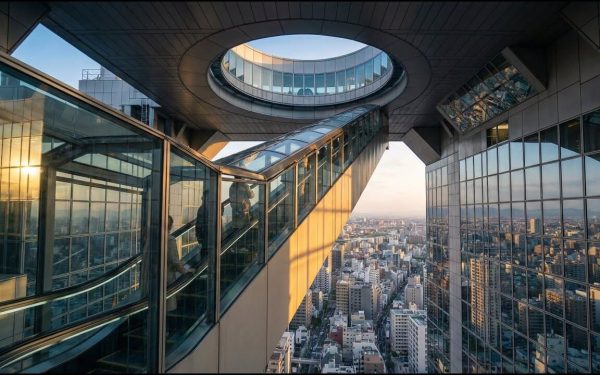
Within one stop or a short transfer, you have several more heavyweight options. Umeda Sky Building
gives you a rooftop view and a sense of Osaka’s scale, which pairs nicely with all the microscopic and cosmic talk you just sat through in the museum.
LUCUA SOUTH adds a shopping-and-food reset near Osaka Station, useful when your group’s patience for science exhibits expires at different times.
If you prefer to keep the day kid-focused, consider pairing Osaka Science Museum with Kids Plaza Osaka, another interactive space that is explicitly designed around children rather than adults.
You will not do both deeply on the same day unless you have heroic energy levels, but even one floor at each can make for a strong, family-friendly city day.
Osaka Science Museum is best treated as a smart half-day, not as a trophy attraction you have to tick off.
Use it to anchor a Nakanoshima or Umeda route, lean into the planetarium as your main event, and let the rest of your Osaka schedule flex around weather, energy levels, and whatever you thought you came to Japan to see.
What's Available
Frequently Asked Questions (FAQs)
The Osaka Science Museum planetarium sells out on weekends and during school holidays, so advance booking is strongly recommended.
Online tickets are available at ticket.osaka.sci-museum.com from up to seven days before your visit.
The ticket counter only sells same-day tickets, and sales stop once seats are gone.
Walk-in availability on a weekday morning is generally fine, but Saturday and Sunday shows fill quickly.
Osaka Science Museum admission to the permanent exhibition is free for junior high school students and younger, making it genuinely cost-free for families with children under 15.
High school and university students pay ¥300, and adults pay ¥400.
The planetarium charges separately: ¥300 for children aged 3 through junior high school, ¥450 for high school and university students, and ¥600 for adults.
The Osaka Science Museum is not included in the Osaka Amazing Pass as of 2026.
The pass covers the nearby National Museum of Art, Osaka, which shares the same Nakanoshima Island location, but the Science Museum requires a separate paid admission.
Check the official Osaka Amazing Pass website at osaka-amazing-pass.com for the current list of participating attractions before your visit.


Editor's Review
The Osaka Science Museum earns its reputation as one of the better-value half-days in the city, and the planetarium is the reason to come.
The 26.5-metre dome delivers a genuinely impressive show, and at ¥600 for adults it is priced like a minor attraction while punching above its weight.
Book the planetarium online before you arrive; weekend morning slots fill up, and the ticket counter only sells same-day tickets.
The real limitation is language.
Exhibition labels throughout all four floors are almost entirely in Japanese, which blunts the experience for non-Japanese-speaking adults considerably.
The second-floor hands-on zone works fine without reading anything, and children will not notice the gap, but adult visitors expecting to absorb explanatory content should bring a translation app.
If you pair it with a visit to the National Museum of Art directly next door, the two institutions together make for a full and genuinely satisfying afternoon on Nakanoshima Island.
Related Attractions
HEP FIVE Ferris Wheel
Osaka Tenmangu Shrine
teamLab Botanical Garden Osaka
Osaka Museum of Housing and Living
Kids Plaza Osaka

Tenjinbashisuji Shopping Street

Kema Sakuranomiya Park
Umeda Sky Building