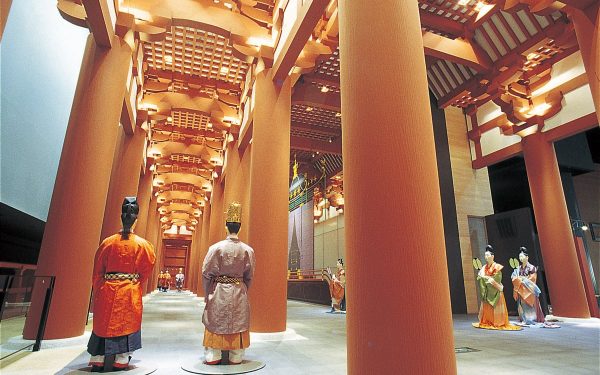
Katsuo-ji Temple
A 1,300-year-old mountain temple famed for its victory Daruma dolls and vivid seasonal scenery.









Katsuo-ji (勝尾寺) is a Koyasan Shingon Buddhist temple tucked inside Meiji no Mori Minoh Quasi-National Park, about 30 minutes north of central Osaka.
Founded in the 8th century during the Nara period, it earned the epithet “temple of winning luck” after a prayer for an ailing emperor was answered — a reputation that drew veneration from feudal warlords including the Minamoto, Ashikaga, Toyotomi, and Tokugawa clans.
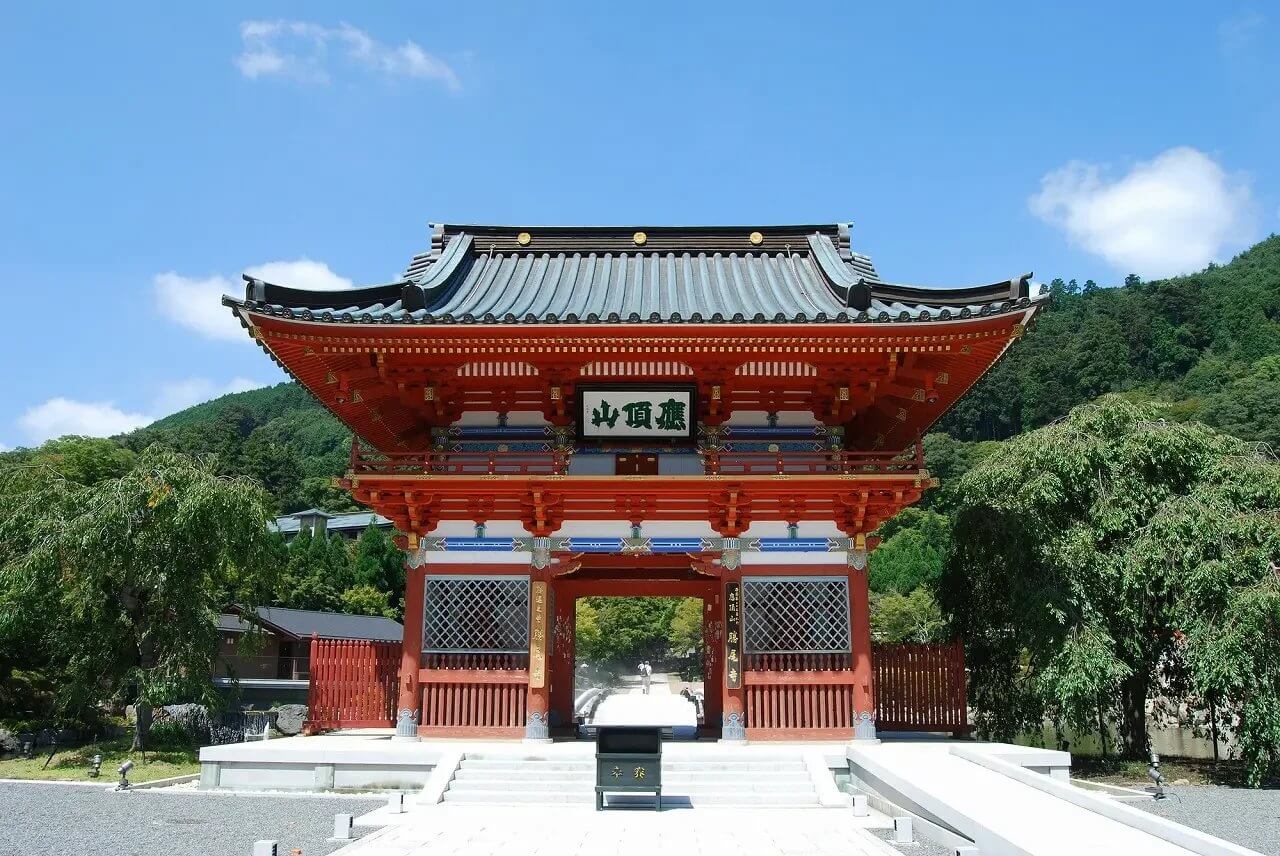
The main hall and temple gate you see today were rebuilt by Toyotomi Hideyori, giving the complex an authentic layer of history that most city-centre temples simply cannot match.
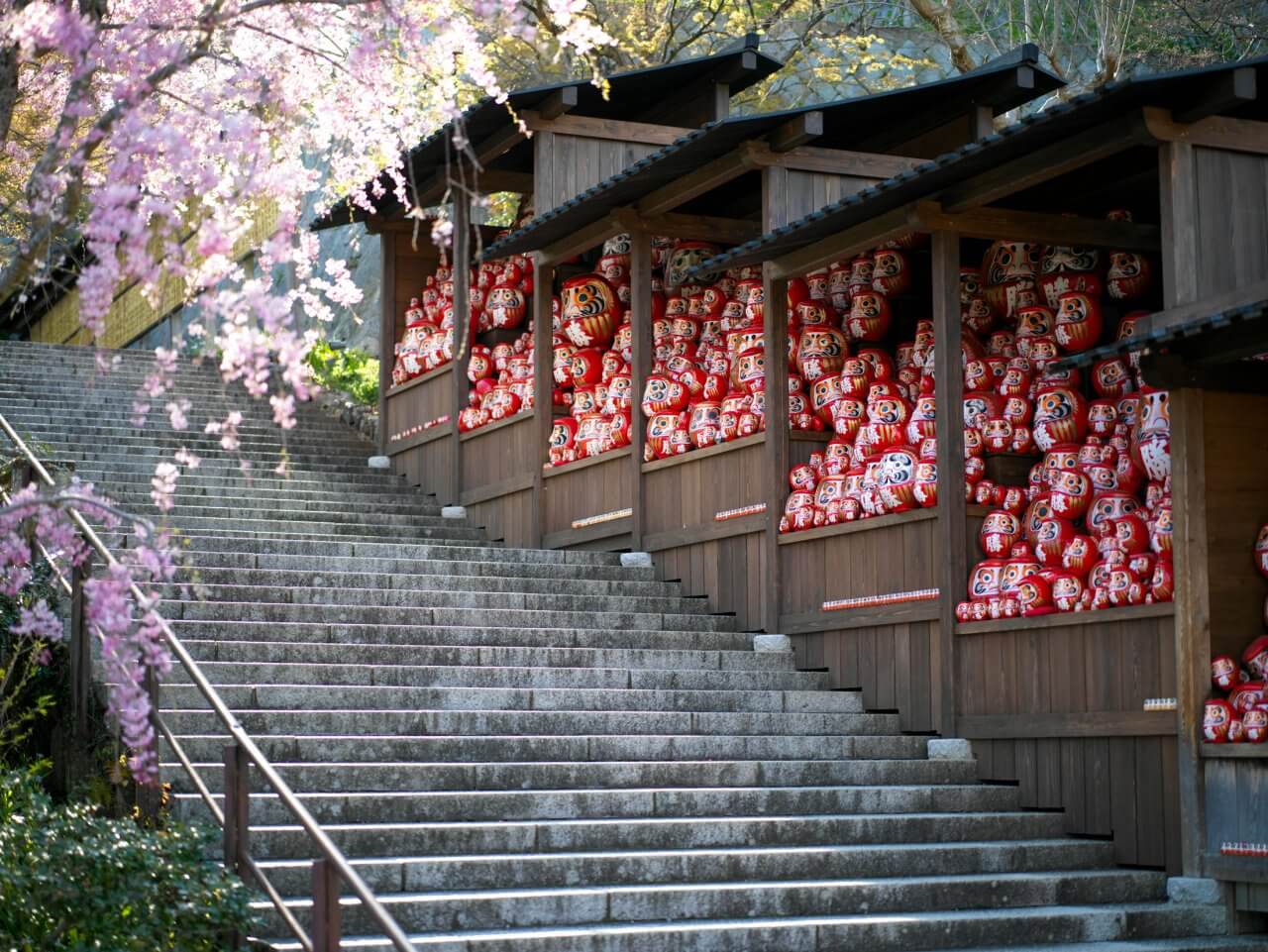
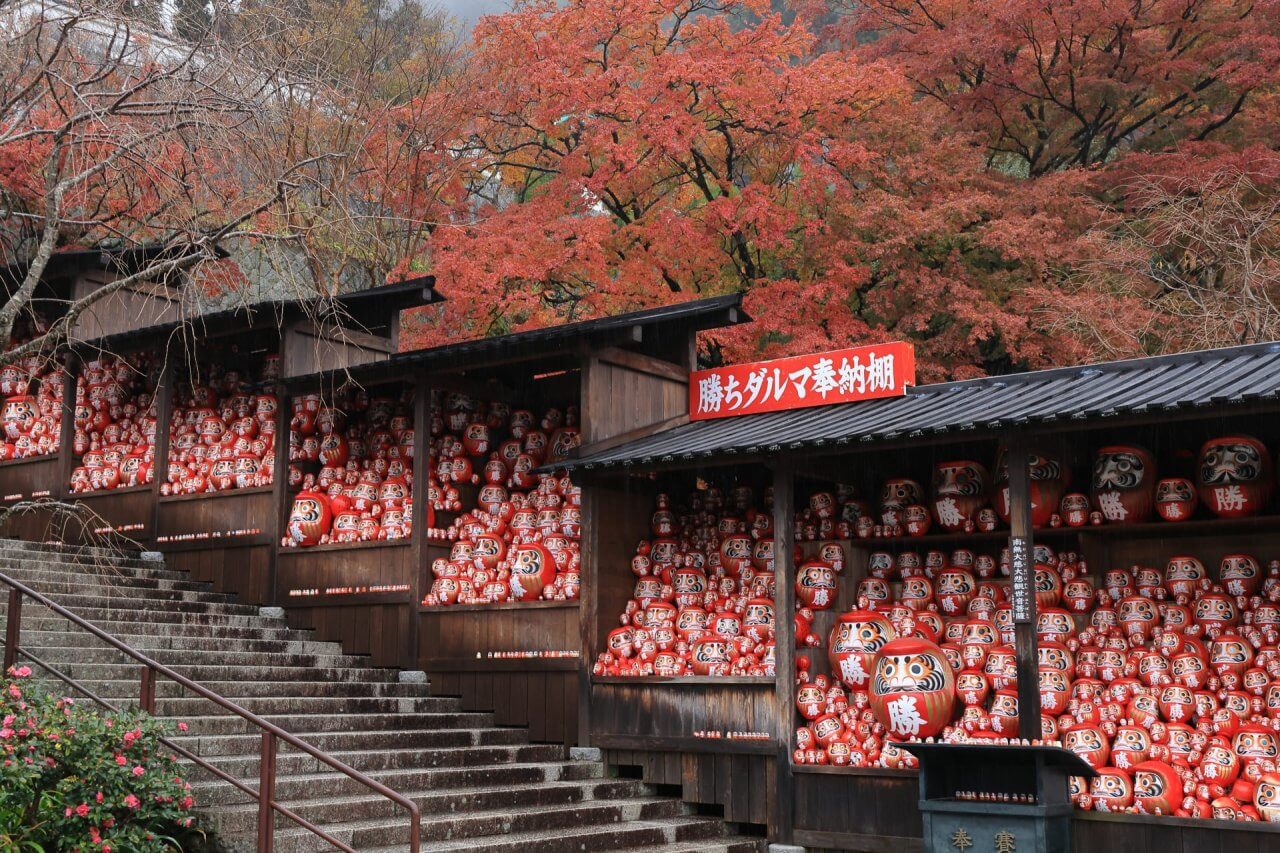
What makes a visit genuinely memorable is the sheer volume of Kachi-Daruma dolls that cover every surface, ledge, and votive shelf across the 80,000-square-metre grounds.
Worshippers purchase a Daruma, fill in one eye as a personal commitment to a goal, and return to fill in the second eye once the goal is achieved.
The resulting sea of half-eyed and fully-eyed dolls creates a visual experience unlike anything else in the Kansai region.
Beyond the Daruma ritual, you can try the Daruma-Mikuji fortune telling — a unique I Ching-based oracle available only here — and collect stamps along a designated clockwise walking route that takes around 90 minutes at a relaxed pace.
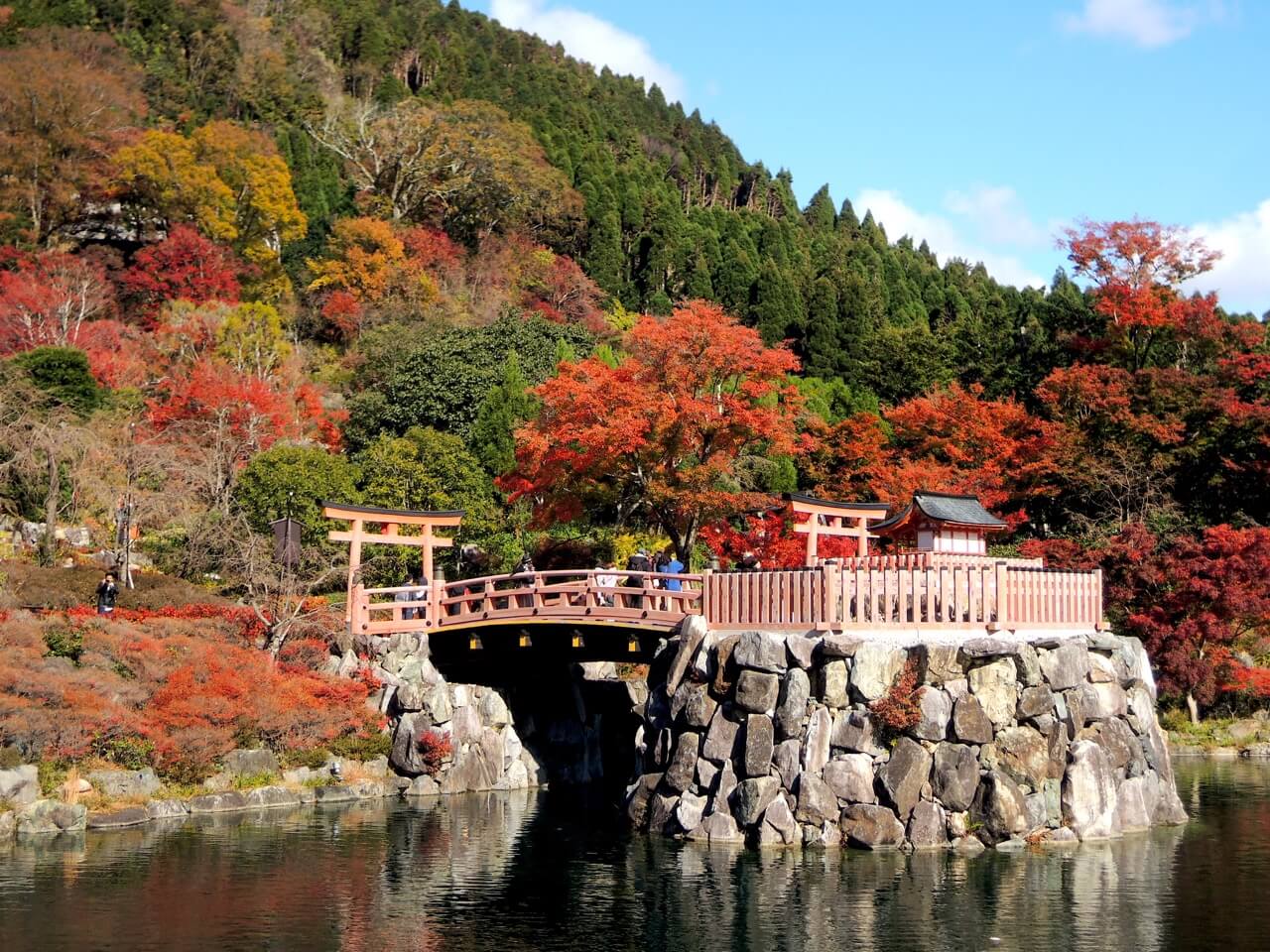
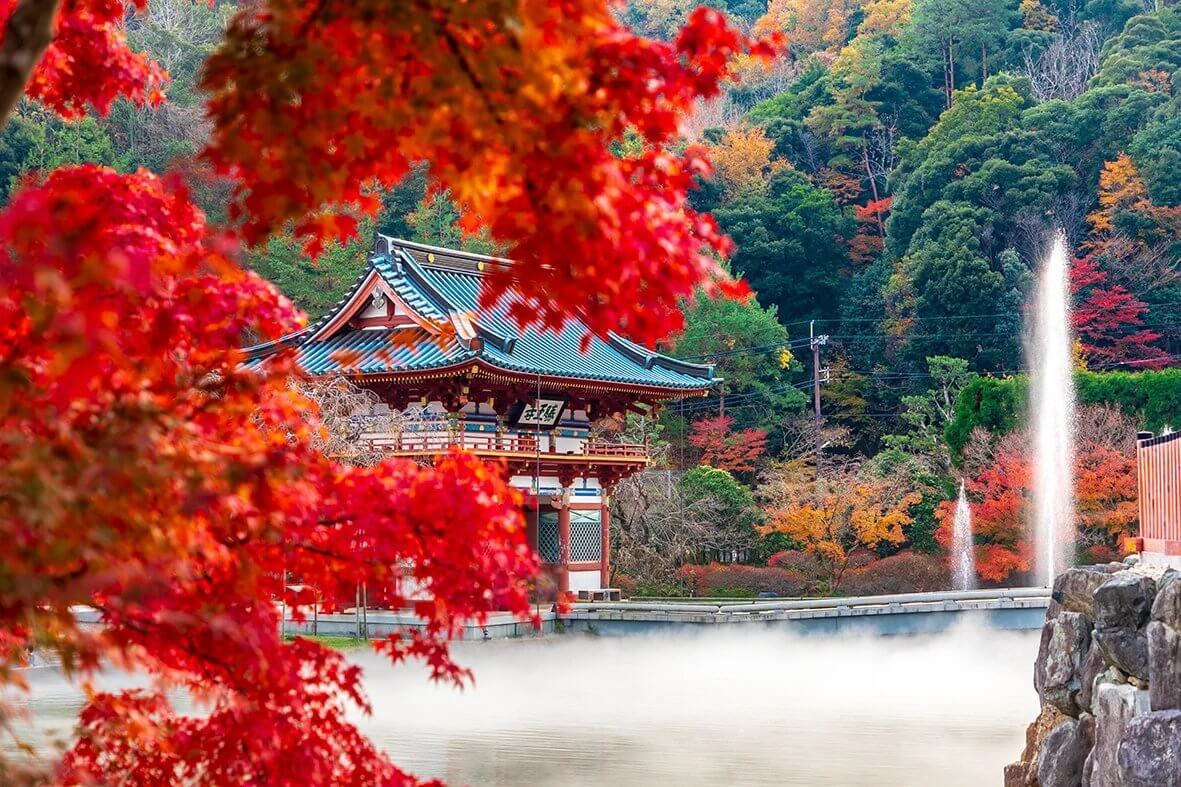
Seasonally, the temple is one of Minoh’s top spots for cherry blossoms (late March to late April, blooming later than in the city due to the elevation), hydrangeas in summer, and spectacular autumn foliage from mid-November to early December.
Night illuminations during the autumn leaf season transform the atmosphere entirely.
The grounds are accessible to wheelchair users via ramps along the main route, and English signage and an audio guide are available throughout.
Katsuo-ji Temple is one of the most visually striking and genuinely atmospheric temples in the Osaka region, and most visitors don’t find it until their second or third trip to Japan.
Perched inside Meiji no Mori Minoh Quasi-National Park, about 30 minutes north of the city, it’s famous for its Kachi-Daruma ritual, spectacular seasonal scenery, and a mountain setting that feels a world away from central Osaka.
Budget at least two hours on the grounds, combine it with a visit to Minoh Falls, and you’ll have one of the most memorable days of your entire trip.
Katsuo-ji Temple: Victory Daruma, Ancient History, and Osaka’s Best Autumn Scenery (2026)
Katsuo-ji Temple (勝尾寺) is one of the most visually striking and genuinely atmospheric temples in the Osaka region.
Set inside Meiji no Mori Minoh Quasi-National Park, about 30 minutes north of central Osaka, it draws visitors year-round with its famous Kachi-Daruma dolls, mountain cedar scenery, and a history stretching back 1,300 years.
In this Explore Osaka guide, you’ll find everything you need to visit confidently: how to get there, what to expect, and the tips that actually make a difference on the day.
Key Highlights
Hide- Address: 2914-1 Aomadani, Minoh City, Osaka 562-8508
- Opening hours: Daily 08:00 to 17:00 (Saturdays until 18:00; extended to 20:30 during autumn illumination events on weekends in November)
- Admission: ¥500 adults
- Nearest station: Minoh-Kayano Station (Osaka Metro Midosuji Line / Kita-Osaka Kyuko Line)
- Nearest bus stop: Katsuo-ji Bus Stop, Hankyu Bus No. 30 from Minoh-Kayano Station (approx. 20-25 min, ¥800 one way)
- Time needed: 1.5 to 2.5 hours
- Best seasons: Spring (cherry blossoms, late March to late April), Summer (hydrangeas), Autumn (foliage and illuminations, mid-November to early December)
- Official website: katsuo-ji-temple.or.jp
Why Visit Katsuo-ji Temple
There are hundreds of temples in the Kansai region, and plenty of them are easy to brush off as “just another old building with incense.” Katsuo-ji is different, and it earns that distinction through sheer specificity of atmosphere.
The grounds are populated by thousands of Kachi-Daruma dolls, placed on every ledge, shelf, stone step, and votive stand you can find.
Some have two filled-in eyes, some have one, some are brand new with none.
Each one represents a personal goal that a real person committed to, which gives the whole place an unusually human energy for a religious site.
You’re not just looking at architecture.
You’re walking through 1,300 years of collective human effort.
The mountain setting inside the national park adds a physical dimension that flat urban temples simply can’t offer.
The air is noticeably cooler and cleaner than the city.
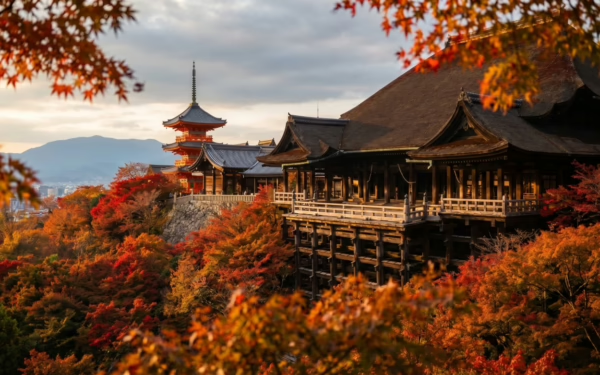
In autumn, the maple foliage turns the surrounding hillsides into a layered canvas of red, orange, and yellow that frames the temple’s blue-tiled roofs and red pagoda in a way that photographs have a hard time capturing accurately.
Even in summer, the cedar canopy provides enough shade to make a long walk genuinely comfortable.
A Temple with Real History
Katsuo-ji’s origins trace back to 727 CE, during Japan’s Nara period, when twin brothers Zenchu and Zensan built a hermitage here and devoted themselves to copying the Daihannya-kyo sutra.
In 765, Prince Kaijo, son of Emperor Konin, helped formally establish the temple on the site.
The temple earned its association with victory after prayers here were credited with the recovery of an ailing emperor, and the name “Katsuo-ji” essentially means “temple of winning luck.”
That reputation traveled far.
Feudal warlords including the Minamoto, Ashikaga, Toyotomi, and Tokugawa clans all made pilgrimages here seeking battle blessings.
Toyotomi Hideyori, son of the legendary Toyotomi Hideyoshi, sponsored a major reconstruction of the main hall and sanmon gate in the early 17th century.
Those structures are what you see today, which makes them genuinely old, not reconstructed-in-1960s old.
What to See and Do at Katsuo-ji Temple
The grounds cover roughly 80,000 square metres and the designated walking route takes about 90 minutes at a relaxed pace.
There’s an official clockwise circuit marked by stone lanterns and goshuin (temple stamp) stations, which helps you move through the site without missing anything significant.
The Kachi-Daruma Ritual
The Kachi-Daruma, or “winning Daruma,” is Katsuo-ji’s defining ritual.
You purchase a Daruma doll at the temple, write your goal or wish on it, and fill in one eye as a physical commitment to seeing it through.
When the goal is achieved, you return, fill in the second eye, and leave the completed Daruma on the temple’s dedication shelves.
The philosophy behind the ritual is subtle and worth understanding: at Katsuo-ji, “winning” doesn’t mean defeating others.
It means overcoming yourself, facing your own fear or weakness, and following through.
You can also try the Daruma-Mikuji, a fortune-telling ritual exclusive to this temple that draws on I Ching principles rather than the standard random-draw fortune papers found at most shrines.
It’s a small, thoughtful experience that takes about 15 minutes and costs a few hundred yen.
The Sanmon Gate and Main Hall
The sanmon (main gate) is the first major structure you encounter after passing the ticket booth.
Built with support from Toyotomi Hideyori in the early 17th century, it’s detailed, well-preserved, and sets the visual tone for the entire visit.
The main hall (hondo) sits higher up the path, surrounded by Daruma dolls on every available surface.
The combination of formal Buddhist architecture and hundreds of small staring dolls is genuinely unlike anything else in Japan.
Seasonal Highlights
Seasonal-wise, here’s everything you need to know:
Spring Cherry Blossoms
Cherry blossoms typically arrive at Katsuo-ji about one to two weeks later than in central Osaka, due to the elevation.
That means late March to late April is your window, and if you’ve already seen the city’s blossoms peak and fall, the temple gives you a second chance.
The blossoms along the approach path and around the main hall are particularly dense.
Summer Hydrangeas
June and July bring a wave of hydrangeas across the grounds, with the best clusters found along the lower paths near the pond.
The mountain temperature also runs several degrees cooler than Osaka’s humid summer flatlands, which makes this a genuinely pleasant mid-summer escape.
Autumn Foliage and Night Illumination
Autumn is the main event.
The foliage season at Katsuo-ji typically peaks between mid-November and early December, running later than in central Osaka.
On weekends and public holidays throughout November, the temple opens for special evening illumination sessions until 20:30 (last entry 20:00), during which coloured lights play across the maple trees, the pond, and the temple buildings.
The effect is dramatic and worth the extra planning.
Check the official website before your trip to confirm that year’s dates.
Also, if you need detailed guide on what season is the best to travel to Osaka, read our guide on the best time to visit Osaka.
Getting to Katsuo-ji Temple
There’s no direct train to the temple, and that’s the main thing first-time visitors don’t account for.
You need both a train and a bus.
Take the Osaka Metro Midosuji Line northbound to its terminus at Esaka Station, then transfer to the Kita-Osaka Kyuko Railway for two more stops to Minoh-Kayano Station (also the final stop on that line).
Total journey from Namba is approximately 30 minutes and costs around ¥370 with an IC card (ICOCA, Suica, or any equivalent).
From the ground-floor bus terminal outside Minoh-Kayano Station, take Hankyu Bus No. 30 bound for Katsuo-ji.
The ride takes 20 to 25 minutes and costs ¥800 one way.
Buses run every 30 minutes on weekdays and every 20 minutes on weekends and public holidays.
Cash accepted; IC cards are also accepted on Hankyu buses.
The Osaka Amazing Pass does not cover the Kita-Osaka Kyuko extension beyond Esaka, and it does not cover the Hankyu Bus. You’ll need to pay both fares separately regardless of which pass you carry.
If you’re driving, the temple has its own parking lot.
Expect it to fill quickly on autumn weekends, with arrivals as early as 8:30am filling the main lot by 10:00.
If you’re planning a full day in Minoh, an alternative return route involves walking the forest trail from Katsuo-ji to Minoh Falls (approximately 4.5km, about one hour), then taking the Hankyu Mino Line from Minoh Station back toward Umeda and central Osaka.
It’s a genuinely enjoyable combination and one of the best-structured day trips in the Osaka region.
Essential Osaka Travel Passes
Powered by KlookThe passes worth buying before you land — curated for first-timers.
Osaka Amazing Pass
Unlimited subway + free entry to 40+ attractions. The only pass most visitors actually need.
Osaka e-Pass
Attractions-only digital pass. Pair with a Metro Pass if skipping the Amazing Pass.
Osaka Metro Pass
1 or 2-day unlimited Metro rides. Best standalone transit value if you already have an attractions pass.
JR West Kansai Area Pass
Unlimited JR trains for 1–4 days. Covers Kyoto, Nara, Kobe, and Himeji from Osaka.
JR Haruka Express
KIX to Umeda/Shin-Osaka in ~50 min. Best if staying in Umeda or heading straight to Kyoto.
Nankai Rapi:t Express
KIX to Namba in 34 min, reserved seat. Better if staying in Namba or Shinsaibashi.
Practical Tips for Your Visit to Katsuo-ji Temple
Getting the logistics right here matters more than at most Osaka attractions, so it’s worth spending a few minutes on these before you go.
- Arrive before 10:00am on weekends. Katsuo-ji is not obscure, and the bus fills up fast on autumn weekends. The 08:00 first bus is rarely full, the 09:00 bus often is. Arriving early also means you’ll have the main hall and Daruma shelves to yourself for at least 30 minutes, which is the best possible way to experience them.
- Bring cash for the bus. While IC cards are accepted, having coins or small notes ready speeds up boarding. The ¥800 bus fare is not change-friendly if you’re carrying large bills.
- Wear comfortable shoes. The route involves stone steps, sloped paths, and uneven ground throughout. Sandals are technically possible, but you’ll regret them on the upper sections after the first 20 minutes.
- Photography. Photography is freely permitted across the grounds and there are no restricted zones for standard handheld cameras. The Daruma doll shelves are positioned near the main hall for maximum photographic opportunity, and the red bridge over the central pond is the most-photographed single spot on the grounds.
- English resources. English signage is available throughout the grounds, and a free English audio guide is accessible via the official website. The temple staff at the ticket booth generally speak some English and are helpful with basic directional questions.
- Ticket purchase. You can buy admission tickets at the gate (cash only at the physical booth), or in advance through Asoview. There’s no meaningful queue advantage to pre-purchasing unless you’re visiting with a large group.
For broader planning, the Osaka itineraries section has several ready-built day trips that work well alongside a Katsuo-ji visit, including routes that combine the temple with a half-day in Minoh.
Nearby Attractions
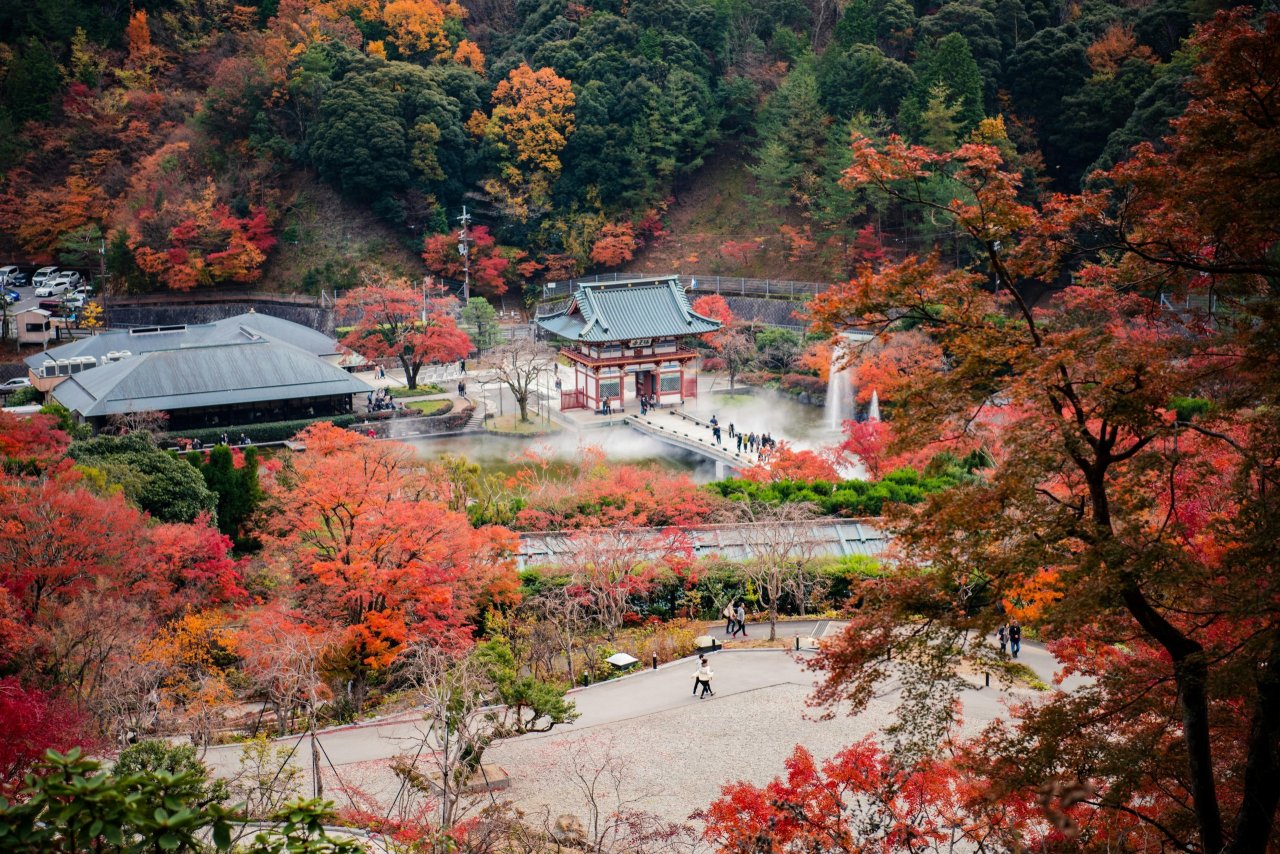
Katsuo-ji sits inside a broader day-trip area that rewards spending a full day rather than a rushed two-hour stop.
- Minoh Falls (Minoo-taki) is the most logical pairing. The 33-metre waterfall sits at the end of a well-marked 2.7km forest trail from Minoh Station, and the trail passes through a park (Minoo Park) that produces extraordinary autumn colour. If you visit Katsuo-ji in the morning, you can walk the forest trail to the falls in the afternoon and end the day at Minoh Station for the train home.
- Minoo Park forms the natural backdrop of the entire area. Technically a quasi-national park (a Japanese designation for ecologically significant areas managed with lighter restrictions than full national parks), it offers hiking trails ranging from gentle 30-minute loops to 3-hour ridge routes. The maple canopy along the main trail to the falls is the park’s signature visual.
- Senri Expo Park sits further south on the bus route between Minoh-Kayano Station and central Osaka, about 20 minutes by train from Minoh-Kayano. It’s the site of the 1970 World Exposition and now a large park with a science museum, art museum, Japanese garden, and the original Tower of the Sun sculpture by Taro Okamoto. It’s worth a separate half-day rather than a rushed add-on.
For other things to do in Osaka beyond the city’s northern reaches, the full guide covers everything from bayside attractions to the entertainment districts in the south.
Katsuo-ji is the kind of place that rewards visitors who come with a bit of patience and leave the city timetable behind.
Get there early, walk the full circuit slowly, try the Daruma-Mikuji, and if your timing aligns with November, stay for the evening illumination.
It genuinely earns the journey.
If you’re still building your Osaka schedule around it, the where to stay in Osaka guide can help you pick a base that makes the northern day trips easy without compromising your access to the city centre.
What's Available
Frequently Asked Questions
Take the Osaka Metro Midosuji Line to Minoh-Kayano Station (the final stop, M06) — the journey from central Osaka takes around 25 minutes.
From the station’s ground-floor bus terminal, board Hankyu Bus No. 30 bound for Katsuo-ji; the ride takes approximately 20–25 minutes and costs ¥800 one way.
Buses run every 30 minutes on weekdays and every 20 minutes on weekends and public holidays, so check the Hankyu Bus timetable in advance, especially on busy autumn weekends when buses can fill up quickly.
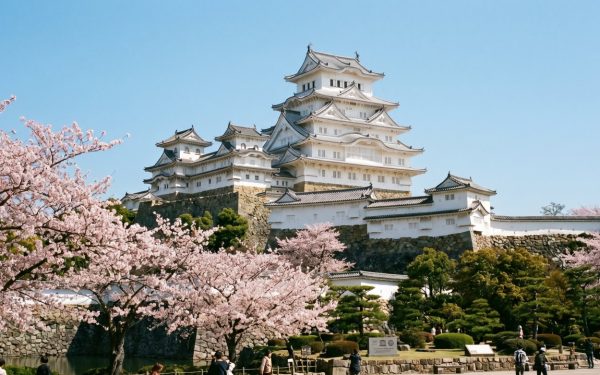
No. The current structure dates from 1931 and is a ferroconcrete reconstruction, not the original Toyotomi-era castle.
The original was destroyed during Japan’s feudal conflicts.
The reconstruction is historically detailed and houses a genuine museum, but it is not a surviving historic structure in the way that, for example, Himeji Castle is.
If original castle architecture matters to you, the day trip to Himeji from Osaka is worth adding to your itinerary.
Autumn (mid-November to early December) is the peak season, when the mountain setting produces vivid red and yellow maple foliage across the entire temple complex, capped by evening illuminations that run during the foliage period.
Spring is also excellent — cherry blossoms bloom here later than in central Osaka due to the elevation, often extending into late April.
Summer brings hydrangeas and a cooler mountain temperature that makes the 90-minute walking circuit far more comfortable than exploring flat urban Osaka in the heat.
Editor's Review
Katsuo-ji earns its reputation.
The journey out to Minoh already signals that you’re going somewhere deliberately, and the temple rewards that effort with grounds that feel genuinely alive — hundreds of Daruma dolls staring back at you from every corner, incense drifting through cedar-scented mountain air, and a walking route that keeps revealing new details at every turn.
The autumn foliage season is particularly spectacular here; the mountain setting means the colour comes in slightly later than the city, which is actually useful if you’ve missed the main rush elsewhere.
The honest caveat: the bus connection from Minoh-Kayano adds time and cost (¥800 each way), and on weekends the buses fill up fast — arriving early is less of a suggestion and more of a survival strategy.
This is a temple for anyone who genuinely wants to engage with a living religious site rather than just photograph a landmark.
Bring cash, wear comfortable shoes, and give yourself at least two hours.
Related Attractions
Tennoji Park
Harukas 300 Observatory
Tennoji Zoo
Tsuyuno Tenjinsya (Ohatsu Tenjin)
Himejima Shrine
Ikukunitama Shrine
Osaka Castle
Hozenji Temple and Hozenji Yokocho