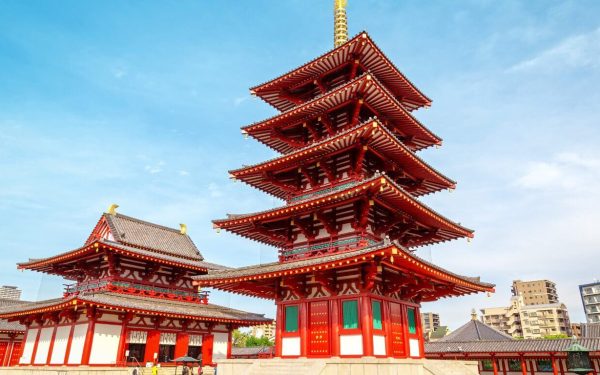
Tennoji Park
Osaka's historic 26-hectare urban park with a zoo, Japanese garden, and art museum.









Tennoji Park, known in Japanese as 天王寺公園 (Tennōji Kōen), has been one of Osaka’s most cherished public spaces since it opened in 1909 on the former site of the 5th National Industrial Exhibition.
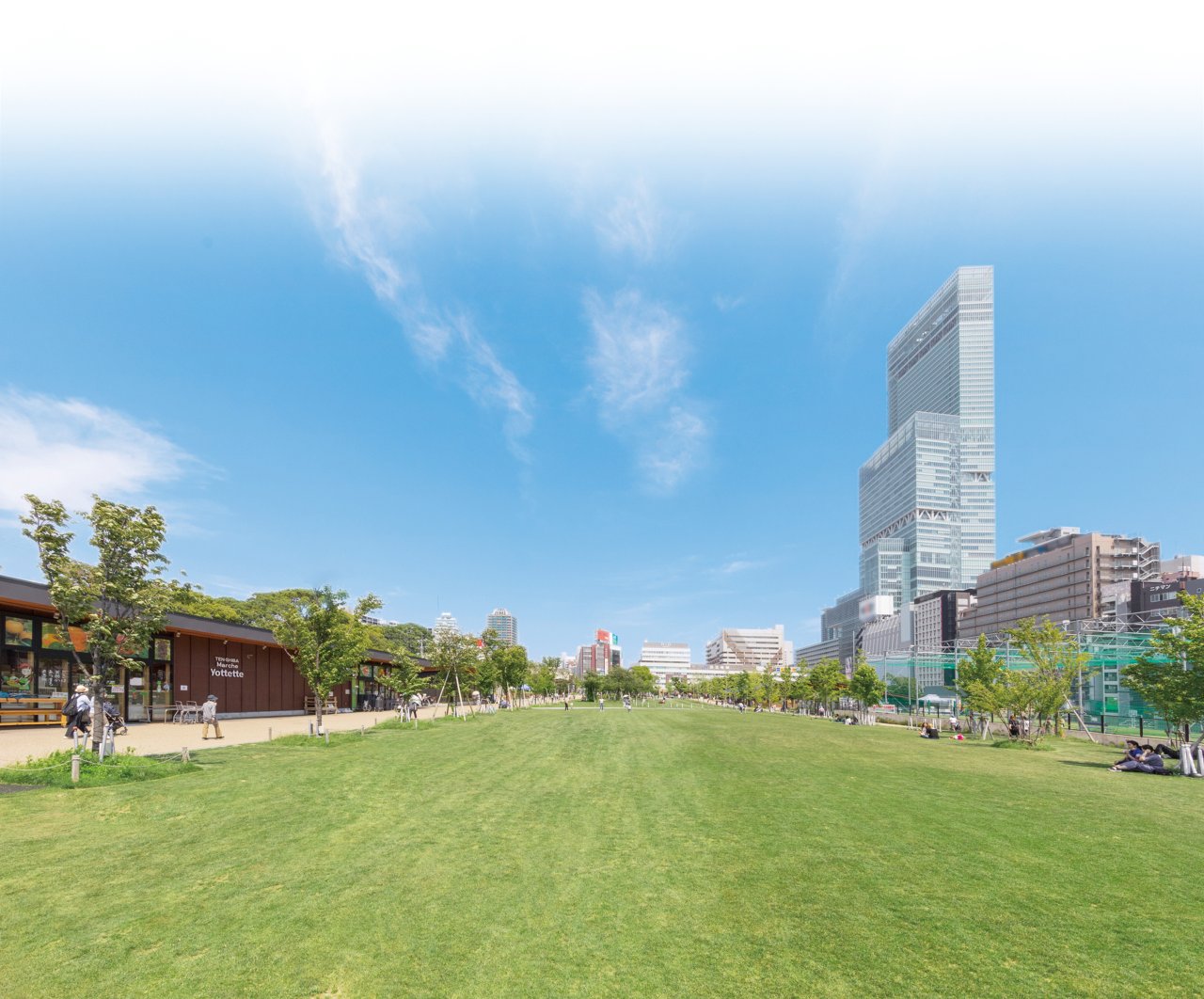
Spanning 26 hectares in the heart of Tennoji Ward, it is the kind of place where the city exhales — wide lawns, mature trees, and the distant silhouette of Abeno Harukas towering overhead.
Inside the park, you will find a genuinely impressive roster of attractions.
Tennoji Zoo houses around 170 species across well-designed enclosures.
Keitakuen Garden, a traditional strolling garden that once belonged to the Sumitomo family, features a tranquil central pond, plum blossoms in late winter, iris in early summer, and fiery maple leaves in autumn.
The Osaka City Museum of Fine Arts rounds out the cultural offerings with roughly 8,700 works including National Treasures.
The Tenshiba entrance area is the park’s lively gateway — a 7,000-square-metre lawn plaza ringed by cafes, a Tully’s Coffee, a FamilyMart, and a children’s play facility by Bornelund.
It draws locals on weekday lunches and families on weekends, and it hosts seasonal festivals and outdoor markets throughout the year.
Spring, when the lawns fill with picnic blankets under soft skies, is arguably its finest hour.
Chausuyama Hill, tucked deeper inside the park, carries real historical weight — this is where the warlord Sanada Yukimura established his main camp during the Summer Siege of Osaka in 1615.
The park is free to enter, making it an exceptionally accessible anchor for a full day of sightseeing in the Tennoji and Shinsekai area.
Tennoji Park Osaka: Free Urban Escape Worth Exploring (2026)
Tennoji Park is one of Osaka’s most practical green spaces, and yes, that sounds less romantic than cherry blossoms and temple bells, but practicality matters when your feet are tired.
Sitting in Tennoji (天王寺) beside Tennoji Station and just north of Shinsekai, this broad public park combines lawns, cafes, a historic garden, a zoo, and a museum zone in one place that is genuinely easy to use.
If you want a break from shopping arcades and train transfers without disappearing to the edge of the city, this is where the plan starts to make sense.
The official Japanese name is Tennoji Koen, written as 天王寺公園, and the park traces its public history back to 1909.
Today, most visitors enter through the Tenshiba lawn area, a redeveloped open space with restaurants, family facilities, and clean sightlines that make the whole place feel much more organized than many urban parks.
On Explore Osaka, this is the kind of attraction that works best when you understand what it is, what it is not, and how to pair it with the surrounding district.
Key Highlights
Hide- Address: 1-108 Chausuyamacho, Tennoji Ward, Osaka 543-0063
- Hours: 7:00 to 22:00 daily for the main park
- Admission: Free for the park, Keitakuen Garden has a small separate fee
- Nearest station: Tennoji Station, about 3 minutes on foot from the Tenshiba entrance
- Time needed: 1 to 3 hours, depending on whether you add the zoo or garden
- Best season: Spring and autumn, though it works year-round
- Official website: https://www.tennoji-park.jp/
- Good pairing nearby: Shinsekai, Abeno Harukas, and Shitennoji
Why Visit Tennoji Park
Tennoji Park is worth your time because it gives you several different Osaka experiences without forcing a full-day commitment.
You can sit on the grass with a coffee, step into a formal Japanese garden, wander toward the zoo, then head straight back onto major train lines in a matter of minutes.
That convenience is not glamorous, but in Osaka, convenience often decides whether a place becomes part of your real itinerary or just a tab you close later.
It also helps that the setting feels more layered than many first-time visitors expect.
To the west, you are close to the rough-around-the-edges appeal of Shinsekai, with retro signs, kushikatsu shops, and Tsutenkaku looming nearby.
To the east and south, the wider Tennoji area opens up with department stores, station links, museums, and one of the city’s most useful bases if you’re deciding where to stay in Osaka.
The honest case for going is simple.
If you expect wild nature, you will be underwhelmed.
If you want a clean, central, flexible place to pause, picnic, let children run around, or reset between heavier sightseeing blocks, it does the job extremely well.
What to See and Do at Tennoji Park
Tennoji Park is not one single attraction with one single mood.
It is more like a cluster of experiences stitched together by lawns, pathways, and the kind of easy navigation that saves you from unnecessary wandering in circles.
Tenshiba lawn area
Most people begin in Tenshiba, the large entrance zone on the west side of the park.
This is where you get the broad grass plaza, low-rise cafes, convenience-store support for your snack emergencies, and plenty of open space with Abeno Harukas rising behind it.
It feels contemporary, social, and intentionally designed for lingering, which is a polite way of saying someone finally realized people enjoy sitting down.
If the weather is good, this is the easiest place to simply do nothing for twenty minutes and enjoy the city around you.
Families spread picnic sheets, office workers escape for lunch, and visitors use it as a soft landing before choosing what comes next.
In spring, the atmosphere gets especially pleasant, with blossoms nearby and a lighter, more celebratory mood across the grounds.
Tennoji Park views and photo spots
For photos, the contrast is the point.
You have open green lawn in the foreground, modern high-rise architecture behind it, and enough space to frame people without that compressed, shoulder-to-shoulder Osaka crowd look.
Come in the morning for softer light and fewer people cutting across your shot with iced coffee and urgent purpose.
Keitakuen Garden
Keitakuen Garden is the quiet counterweight to Tenshiba.
Designed in the early twentieth century as a traditional strolling garden, it centers on a pond, curved paths, bridges, stone placements, and carefully arranged plantings that reward slower movement.
The separate entry fee is low, and if your trip has been all shopping streets, neon, and station interiors, this shift in rhythm lands well.
The garden is especially strong in autumn, when the maples color up and the reflections across the water sharpen the whole composition.
Spring also works well, though not in the same all-out cherry blossom way as Osaka Castle Park.
If your time is short, I would choose Keitakuen over extra lawn time every single time.
Tennoji Park Japanese garden details
You do not need to know garden design theory to enjoy this space, but a little context helps.
This is a classic circuit-style garden, so the scenery changes as you walk, and small turns in the path reveal new framed views instead of one giant vista all at once.
Slow down, circle the pond fully, and resist the urge to treat it like a quick photo checkpoint.
Tennoji Zoo and museum zone
Tennoji Zoo sits within the wider park grounds and is one of the oldest zoos in Japan, first opened in 1915.
If you are visiting with children, it can turn the park into a half-day outing rather than a short stop.
If you are not especially interested in zoos, you may prefer to focus on the open park and garden, then spend the rest of your afternoon on other things to do in Osaka.
Nearby, the Osaka City Museum of Fine Arts adds another cultural layer to the area.
Depending on current exhibitions, this can be a rewarding add-on, especially on rainy or cold days when you want an indoor break without relocating across the city.
The museum’s presence also explains why the park feels more civic and composed than a simple neighborhood green.
Tennoji Park with kids
If you are visiting as a family, this area is easy to manage because facilities are concentrated, paths are broad, and food options are close by.
You can alternate active time with rest, which is useful when younger children begin the classic travel ritual of melting down exactly when you were about to enjoy yourself.
Chausuyama and historic traces
One of the park’s less obvious features is Chausuyama, a low hill with real historical significance.
During the Summer Siege of Osaka in 1615, Sanada Yukimura is said to have used the area as part of his defensive position, which gives the park a deeper connection to the city’s late feudal history.
You are not coming here for epic ruins, so set expectations properly, but it adds texture if you like places with layered pasts.
This matters because Tennoji is not only a transport and shopping district.
It also sits close to older religious and historical sites, including Shitennoji, and that gives the neighborhood more range than people often assume from the station frontage alone.
Tennoji Park history in context
If you like historical continuity, pair this stop mentally with Osaka’s broader urban story.
A former battlefield edge became a planned public park, then a modern leisure and cultural complex tied directly into one of the city’s busiest transport hubs.
Cities love reinventing themselves, and Osaka rarely bothers to be subtle about it.
Transportation Options to Getting to Tennoji Park
Getting to Tennoji Park is refreshingly easy, which is one of its strongest practical advantages.
The closest major access point is Tennoji Station, served by JR lines, Osaka Metro’s Midosuji and Tanimachi lines, and the nearby Kintetsu Osaka-Abenobashi Station.
From Tennoji Station, the walk to the Tenshiba entrance is usually about 3 minutes, depending on which exit you use and how distracted you get by station signage.
From Namba, the Midosuji Line gets you there in roughly 6 minutes.
From Umeda, expect around 15 to 20 minutes by Osaka Metro, making this an easy add-on whether you are staying in Namba, the Umeda area, or central south Osaka.
Best station exits and approach
The west side approach is the simplest for first-time visitors because it brings you straight toward Tenshiba.
If you are arriving from JR, follow signs for Tennoji Park or Tenshiba rather than overthinking it.
Osaka stations can create the illusion that a wrong turn will send you into another prefecture, but this route is straightforward.
Tennoji Park from Shinsekai
If you are already in Shinsekai, you can walk to the park in about 10 to 15 minutes.
This is one of the best ways to combine older Osaka street scenery with a calmer open-space break, especially if you have just had a heavy lunch and need a gentler pace before continuing.
Practical Tips When Visiting Tennoji Park
A little planning makes Tennoji Park much better.
The main park is free and open daily from 7:00 to 22:00, which gives you flexibility, but the individual facilities inside, especially Keitakuen Garden, Tennoji Zoo, and the museum, operate on their own schedules and may close earlier or take weekly rest days.
Best time of day
Morning is the sweet spot if you want photos, cooler weather, and a quieter lawn.
Late afternoon can also be pleasant, especially when the light softens around the grass and the city skyline, but weekends naturally bring more families and local gatherings.
If you are visiting in summer, go early.
Osaka humidity is not character-building, despite what your itinerary may be trying to prove.
In spring and autumn, you have much more freedom to linger.
Tennoji Park in cherry blossom season
Spring is one of the best times to come, but the park’s cherry blossom appeal is more relaxed than the major sakura frenzy at Osaka Castle Park.
That is good news if you want seasonal atmosphere without committing to one of the city’s most crowded hanami scenes.
Bring a drink, sit near the lawn, and let other people do the rushing.
What to bring and what to skip
Bring water, sunscreen, and a light picnic if the weather is good.
A ground sheet is useful if you want to sit on the lawn, though nearby cafes make it easy to keep things simple.
If you are planning to visit only the main park and Tenshiba, there is no need for specialized gear or advance booking.
Skip the idea that this needs a complicated strategy.
You are not conquering a mountain.
You are walking through a well-connected urban park, ideally with enough free time left to eat something good afterward, which brings us neatly to Osaka’s larger food scene.
Tickets, timings, and realistic pacing
For a simple park visit, budget about 60 to 90 minutes.
Add Keitakuen Garden and you reach roughly 2 hours.
Add the zoo or museum, and the area can comfortably fill half a day, particularly if you stop for coffee or lunch around Tenshiba.
Tennoji Park as part of a wider day plan
This is not usually the headline stop of a full Osaka trip, and that is perfectly fine.
It works best as part of a wider day in south Osaka, paired with nearby streets, food, observation decks, or temple visits.
If you are structuring a full day, an Osaka itinerary can help you decide whether Tennoji fits better as a morning reset, an afternoon breather, or a post-lunch walk.
Nearby Attractions
Tennoji Park sits in one of the city’s most useful sightseeing clusters, so you do not need to travel far for your next stop.
This is where the park quietly overperforms, because the surroundings give you a lot of range within a short walk.
Shinsekai
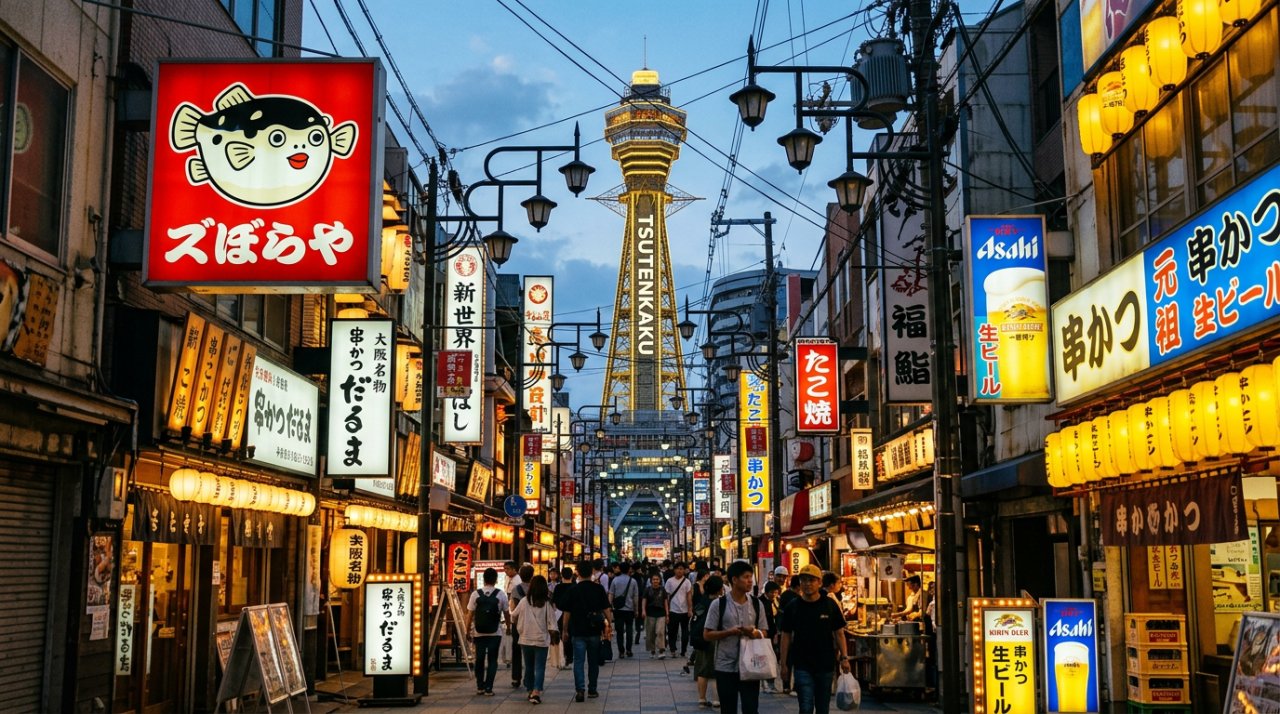
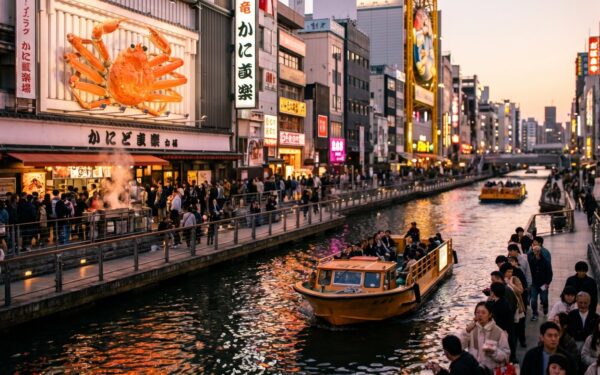
Just northwest of the park, Shinsekai delivers retro Osaka with a slightly scruffy charm, bright signs, old-school game arcades, and a steady supply of kushikatsu.
It is touristy, yes, but it still has character, and the contrast with the park’s open lawns works nicely in one afternoon.
Abeno Harukas
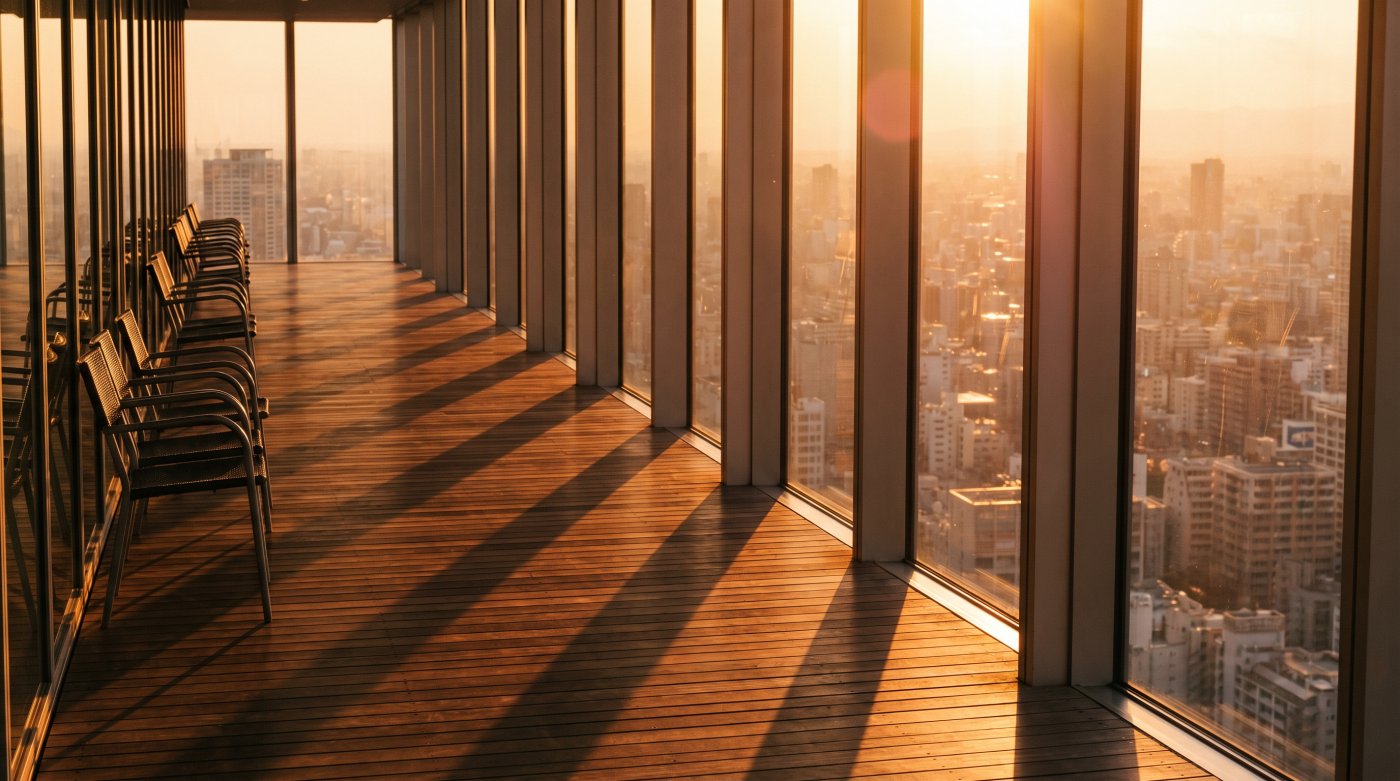
Abeno Harukas is the skyscraper that dominates the skyline near Tennoji Station, and the Harukas 300 observation deck gives you one of the clearest city views in Osaka.
If you want to move from grass-level calm to panoramic scale in under fifteen minutes, this pairing is almost absurdly efficient.
Shitennoji
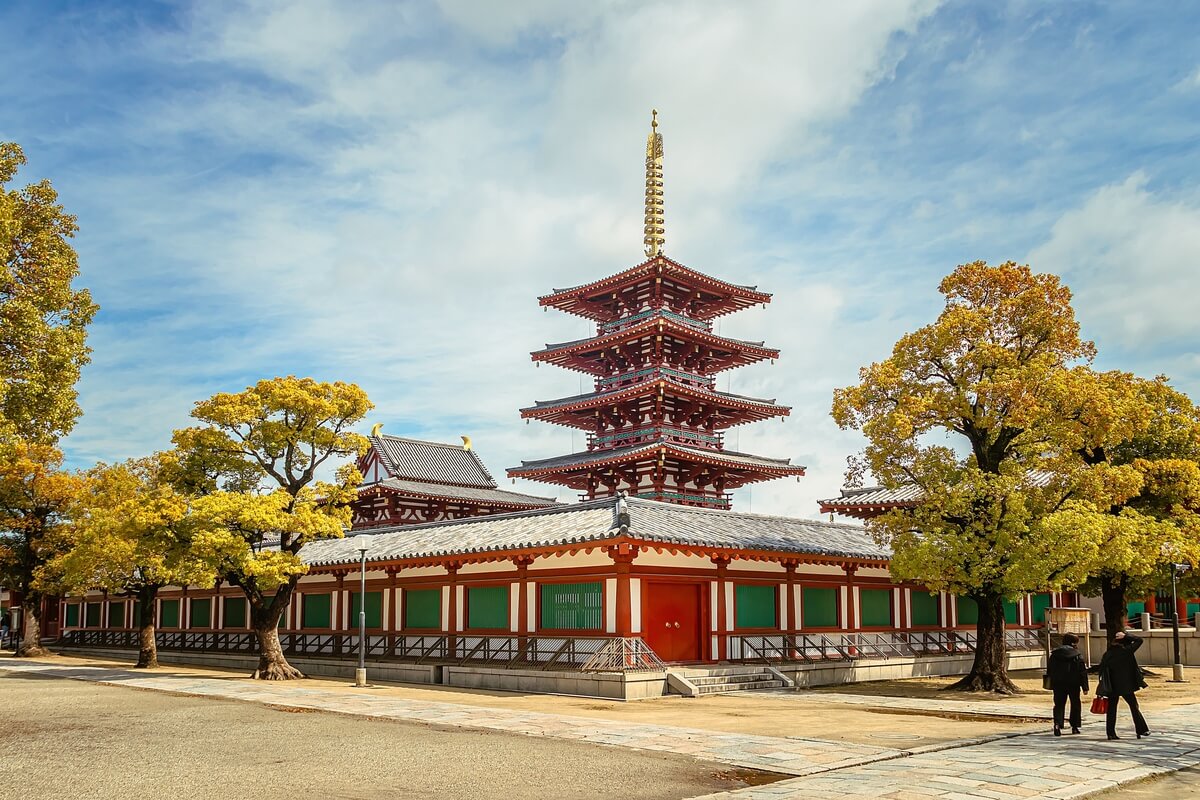
Shitennoji, one of Japan’s oldest Buddhist temples, lies within walking distance to the northeast.
The temple grounds add a completely different atmosphere, more ordered and contemplative, and they pair especially well with Keitakuen Garden if you are in the mood for a slower, more reflective route through the district.
Tennoji and the wider south city
If the park leaves you wanting more context, spend extra time in the surrounding district rather than rushing elsewhere immediately.
The wider area has department stores, station dining, museums, temple history, and practical transport connections, all of which make it a smart stop in a broader Osaka travel guide.
Tennoji Park works best when you treat it as a flexible anchor rather than a grand standalone spectacle.
Pair it with Shinsekai, Abeno Harukas, or Shitennoji, use it to create breathing room in your day, and you will get far more out of the district.
For planning the rest of that day, start with our Osaka neighborhood guide and map out how Tennoji fits the shape of your trip.
What's Available
Frequently Asked Questions
Yes, the main park is completely free to enter and open daily from 7:00am to 10:00pm.
Individual attractions within the park charge separately; Tennoji Zoo costs ¥500 for adults, and Keitakuen Garden is ¥150 for adults (free with the Osaka Amazing Pass).
The Osaka City Museum of Fine Arts charges per exhibition.
No. The current structure dates from 1931 and is a ferroconcrete reconstruction, not the original Toyotomi-era castle.
The original was destroyed during Japan’s feudal conflicts.
The reconstruction is historically detailed and houses a genuine museum, but it is not a surviving historic structure in the way that, for example, Himeji Castle is.
If original castle architecture matters to you, the day trip to Himeji from Osaka is worth adding to your itinerary.
Spring (late March to early April) is exceptional — the park fills with cherry blossoms and picnicking locals, and the atmosphere is hard to beat.
Autumn (mid-November) is equally rewarding, when Keitakuen Garden’s maples turn deep red and gold.
The park is perfectly enjoyable year-round since it is mostly outdoors and free, but summers in Osaka are genuinely brutal, so early mornings are your best bet if you visit in July or August.
Editor's Review
Tennoji Park earns its reputation as one of Osaka’s most well-rounded free spaces.
The Tenshiba entrance area is genuinely pleasant — good coffee, clean lawns, and the kind of easy, unhurried energy that makes you want to linger.
The juxtaposition of Abeno Harukas looming above while locals stretch out on the grass below is a very Osaka kind of visual.
The park works best when you treat it as a base rather than a standalone destination.
Pair Keitakuen Garden (especially in autumn) with the art museum next door, and you have a quietly excellent cultural afternoon for well under ¥1,000.
Weekends can get busy around Tenshiba, so if crowds annoy you, a Tuesday morning stroll to Chausuyama is your move — you will almost certainly have the hill to yourself.
Related Attractions
Katsuo-ji Temple
Open Air Museum of Old Japanese Farm Houses
Osaka Castle
Osaka Museum of History
Isshinji Temple
Kema Sakuranomiya Park
Nunose Shrine
Senkoji Temple