Isshinji Temple
A Pure Land Buddhist temple famous for its remarkable Bone Buddha statues made from cremated devotees.
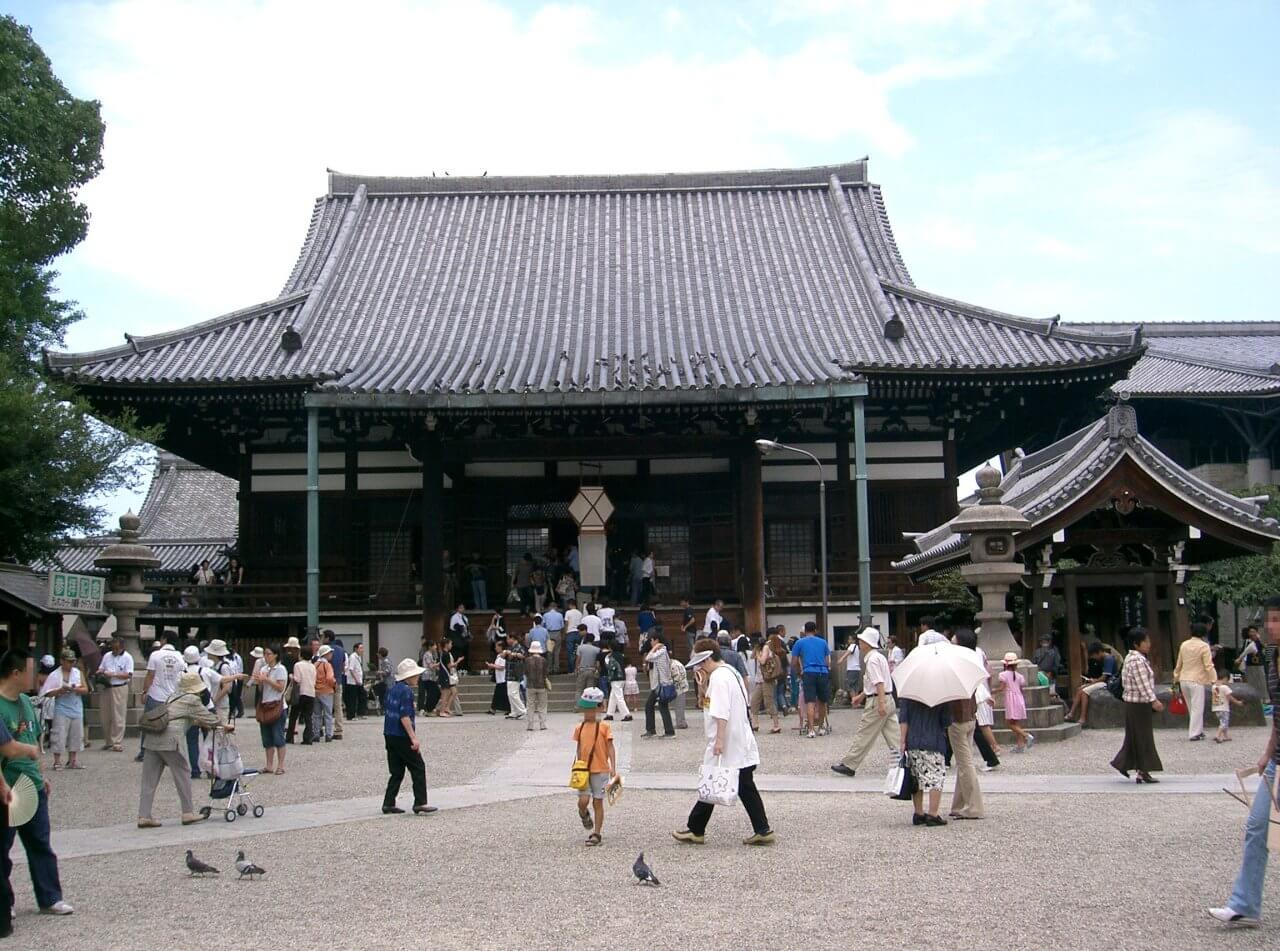
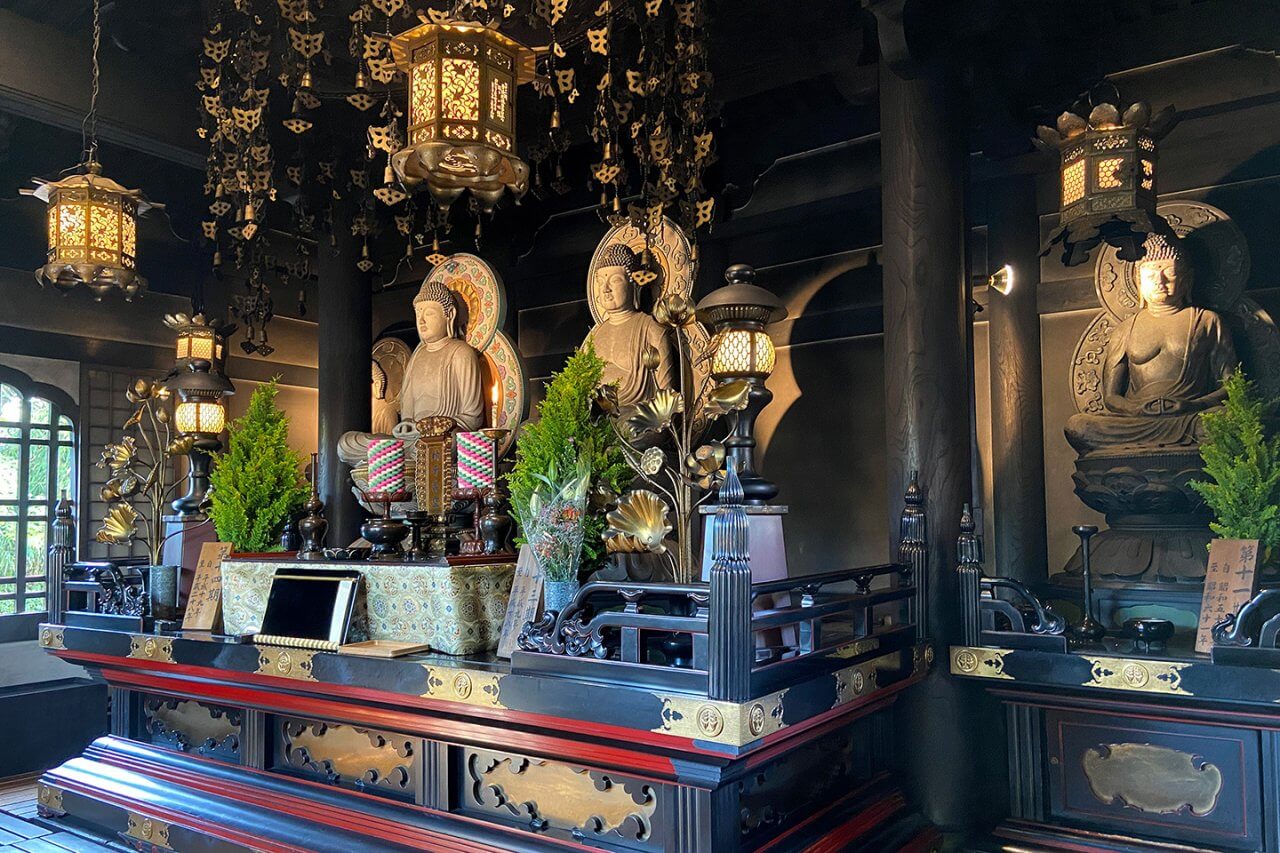
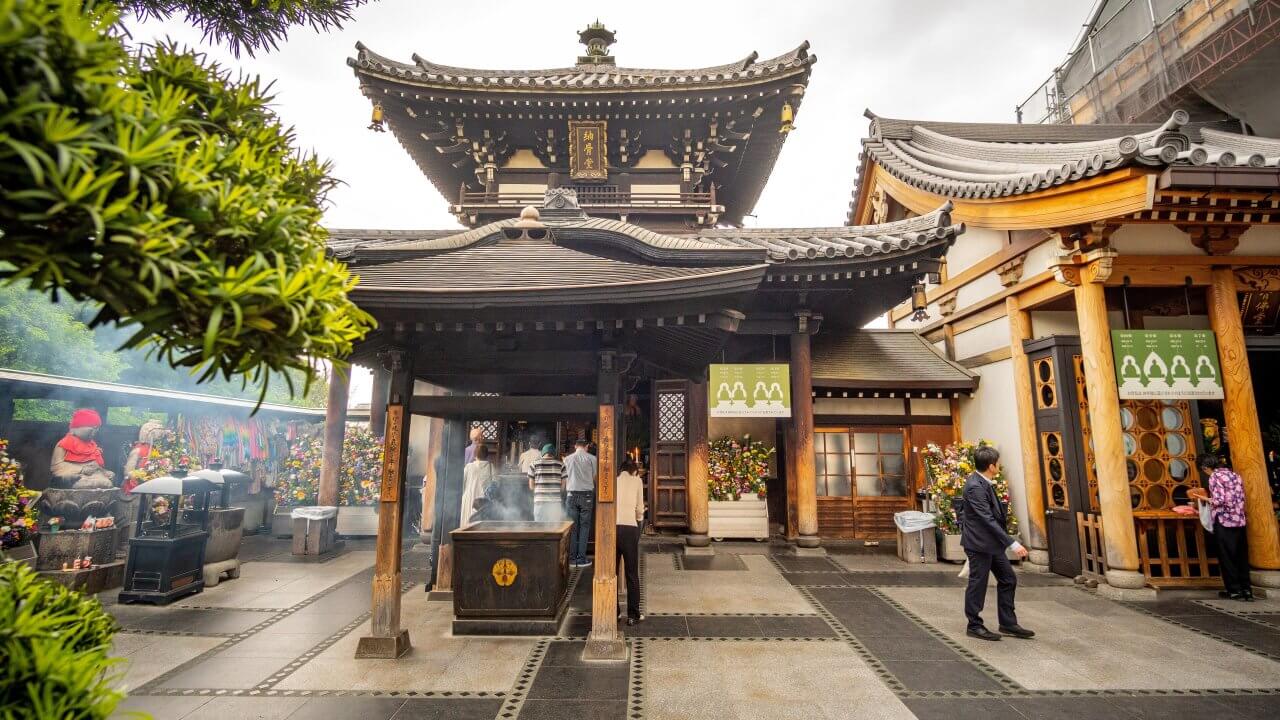





Isshinji (一心寺) is a Pure Land Buddhist temple founded in 1185 by the monk Honen, sitting on a gentle rise in Tennoji that once offered an unobstructed view of the setting sun.
For over 800 years, ordinary Osaka residents have been entrusting their ashes here, and since the Meiji period the temple has been crafting those remains into a series of monumental Buddha statues — thirteen in total — each one incorporating the bones of tens of thousands of devotees.
It is, without question, one of the most singular acts of collective remembrance anywhere in Japan.
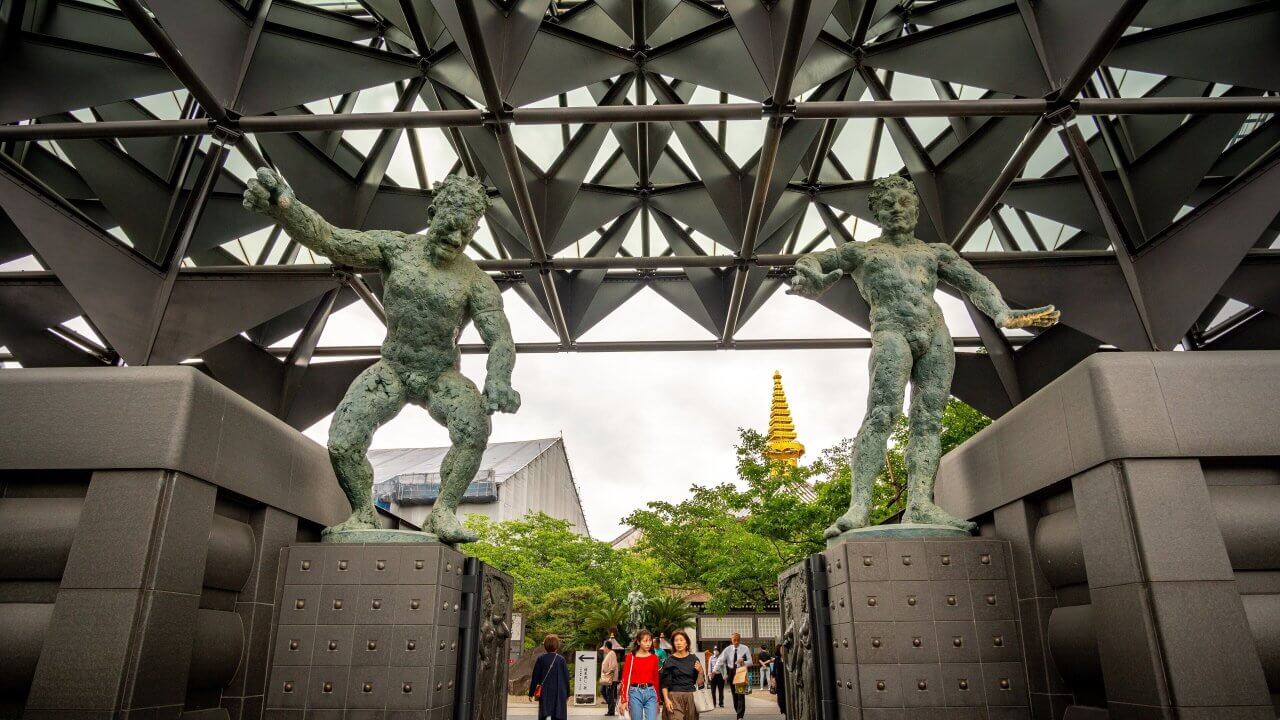
Walking through the main gate is your first genuine surprise: forget the weathered cedar and subdued earthen tones you expect from ancient temples.
This gate is a striking work of modern art — steel beams, bold geometric forms, and massive swing doors embossed with intricate bas-reliefs — all designed by the current head priest, who also happens to be a trained architect.
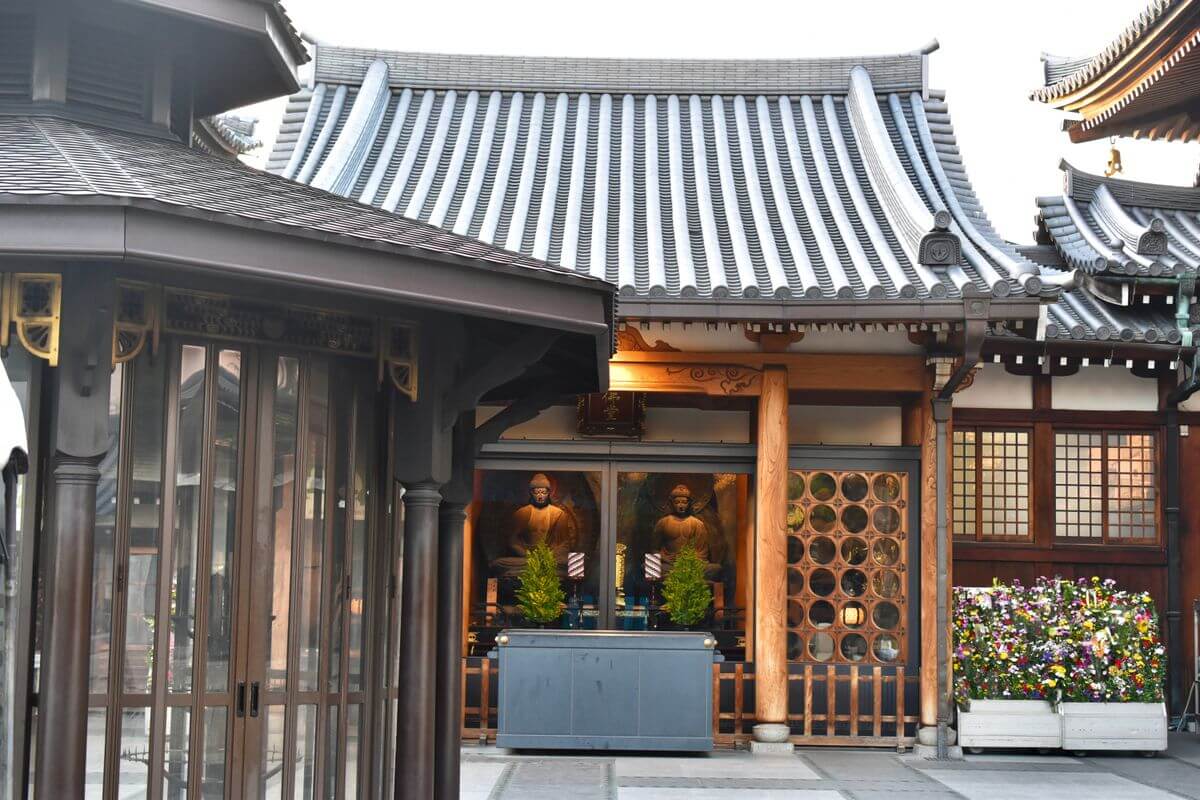
Inside, the compound opens into a contemplative space of paved paths, a distinctly Thai-influenced octagonal pagoda, stone Buddha figures, incense burners trailing pale smoke, and the Sanzenbutsudo hall where the Bone Buddhas reside.
The Sanzenbutsudo is open for visits between 09:00 and 16:00, and that is where the real weight of the place settles in.
The hall houses thousands of smaller votive statues alongside the great Bone Buddhas, and on any given day you will find locals arriving quietly to pray for their ancestors.
Visit on a weekday morning to experience the temple at its most reflective — it draws considerable crowds during Obon in August and around the spring cherry blossom season, when the grounds take on an entirely different, more festive character.
Admission to the grounds is completely free, and the temple sits in easy walking distance of Tennoji Station, making it a natural add-on to any southern Osaka itinerary that already includes Shitennoji or a wander through Shinsekai.
Isshinji Temple Osaka: The Bone Buddha Shrine Guide (2026)
Isshinji Temple is one of Osaka’s most compelling and unusual places of worship, and this in-depth Explore Osaka guide covers everything you need to plan a visit with confidence.
The temple sits inside the Tennoji district, just a short walk from Tennoji Station, and admission is completely free.
Whether you are drawn by the extraordinary Okotsubutsu (Bone Buddha) statues, the striking modernist architecture, or simply a quiet hour away from Osaka’s commercial buzz, Isshinji earns every minute you give it.
Key Highlights
Hide- Official name: Isshinji (一心寺), Pure Land Buddhist temple
- Address: 2-8-69 Osaka (Osaka), Tennoji Ward, Osaka, 543-0062
- Admission: Free
- Grounds open: 05:00 to 18:00, daily, year-round
- Sanzenbutsudo hall (Bone Buddhas): 09:00 to 16:00 daily
- Nearest station: Ebisucho Station (Osaka Metro Sakaisuji Line), approx. 7-minute walk
- Time needed: 45 minutes to 1.5 hours
- Best seasons: Spring (cherry blossoms), Autumn (foliage), but genuinely rewarding year-round
- Official website: http://www.isshinji.or.jp/
- Phone: +81-6-6771-0444
Why Visit Isshinji Temple
Osaka rewards travellers who look beyond the obvious circuit of neon and takoyaki, and Isshinji is exactly the kind of place that makes a trip feel layered rather than superficial.
Founded in 1185 by the monk Honen, the patriarch of Pure Land Buddhism in Japan, the temple has been a working place of community devotion for over 800 years.
It was rebuilt after it was largely destroyed in the closing years of World War II, but the historical roots and religious practice running through it are completely intact.
The reason most first-time visitors come is the Okotsubutsu, the Bone Buddhas.
Since the Meiji period, Isshinji has been creating monumental Buddha statues from the cremated remains of devotees who entrust their ashes to the temple.
Each statue uses the bones of approximately 150,000 people and takes ten years to complete.
There are now thirteen of these figures spanning generations of Osaka residents, which makes the Sanzenbutsudo hall something between a museum exhibit, a memorial hall, and a living place of worship.
It is, by any measure, unlike anything else in the city.
A Temple With Its Own Architectural Philosophy
There is a second reason to come, and most visitors discover it the moment they reach the main gate.
Instead of the worn cedar and traditional vermilion you expect from an ancient temple, you are confronted by a sculptural work of raw steel and bold geometric forms, its massive swing doors covered in intricate bas-relief carvings.
The gate was designed by the current head priest, who is also a trained architect, and it signals immediately that this temple is not trying to be anyone else’s idea of what an old Buddhist institution should look like.
The Thai-influenced octagonal pagoda, the contemporary stone carvings, and the mix of ancient and aggressively modern structures throughout the compound carry that same confident, idiosyncratic energy.
Trip Essentials
Osaka Travel Add-ons
Equip yourself for the ultimate Osaka adventure with the following add-ons, curated just for you.
Flights to Osaka
Airport Transfer
ICOCA IC Card
Suica IC Card
Osaka Tours
Luggage Storage
Travel Insurance
Data Security

Japan eSIM
Japan SIM Card
Pocket WiFi Rental
Japan eSIM
What to See and Do at Isshinji Temple
The compound is not large, but it rewards slow walking.
Give yourself at least 45 minutes to take it seriously, and closer to 90 minutes if you want to sit, observe the rhythm of local worshippers arriving, and really absorb what the Sanzenbutsudo hall contains.
The Sanzenbutsudo Hall and the Bone Buddhas
The Sanzenbutsudo is the centrepiece of any visit, open daily between 09:00 and 16:00.
Inside, the Bone Buddhas are arranged in a dedicated hall alongside thousands of smaller votive statues placed by families memorialising their ancestors.
The statues range from the first, completed in the Meiji era, through to the most recent, and the cumulative effect of seeing them lined up is genuinely striking.
You will often find local families arriving quietly to pray, sometimes in formal funeral attire, and that context makes the hall feel far more meaningful than a typical tourist sight.
It is an active, living memorial, not a display.
The statues themselves are physically commanding.
Each one is a large-scale rendering of Amida Nyorai (Amitabha Buddha) formed from compressed bone, and the texture and tone of the figures differs noticeably from stone or bronze.
If you go in already knowing what they are made of, the visual weight of the hall lands differently.
The Gate, the Grounds, and the Pagoda
Before you even reach the Sanzenbutsudo, the main sanmon (temple gate) is worth stopping in front of for a few minutes.
Designed by the current priest, the gate combines solid steel construction with intricate surface carving depicting Buddhist imagery.
It is polarising, in the best possible way.
Some visitors find it jarring against the older compound; others think it is exactly right for a temple that has always done things on its own terms.
The grounds themselves are compact but well maintained, with stone lanterns, incense burners, small garden plantings, and several additional smaller halls and shrines.
The octagonal pagoda, influenced by Thai Buddhist architecture rather than the standard Japanese five-tiered form, is visually distinctive and worth circling to see from different angles.
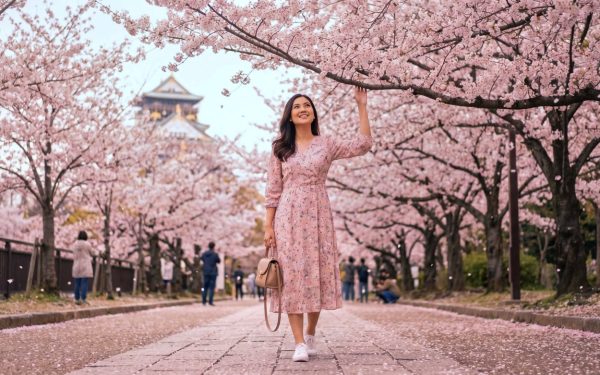
In spring, the compound gets a wash of colour from cherry blossom trees, and in autumn the maple foliage turns the paths into something worth photographing.
Seasonal Highlights
Spring is the most popular time to visit, when the cherry blossoms bloom in and around the temple grounds, typically in late March through early April.
Autumn, from mid-November through early December, brings maple foliage that softens the harder modernist lines of the architecture in a way that feels genuinely pleasant.
During the Obon season in mid-August, the temple draws particularly large numbers of local families observing ancestral rites, which makes the atmosphere more charged with devotion than usual.
That period is worth experiencing, but expect crowds. For more comprehensive details, read our guide on the best time to visit Osaka to better plan when to visit it.
Getting to Isshinji Temple
Isshinji sits on the Uemachidai plateau in Tennoji Ward, within comfortable walking distance of several stations and a natural addition to any southern Osaka itinerary.
By Train and Subway
The closest option is Ebisucho Station on the Osaka Metro Sakaisuji Line, which puts you roughly a 7-minute walk from the temple gate.
Tennoji Station, served by JR lines and the Osaka Metro Midosuji and Tanimachi Lines, is approximately 8 to 15 minutes on foot depending on which exit you use; Exit 20 on the Tanimachi Line side is the most efficient.
Shitennoji-mae Yuhigaoka Station on the Tanimachi Line is around 9 minutes away on foot and makes logical sense as a starting point if you plan to visit Shitennoji first and then walk south to Isshinji.
Walking Between Attractions
If you are coming from Shinsekai to the west, Isshinji is about a 15-minute walk through the back streets of Tennoji Ward.
The walk is flat and straightforward.
Tennoji Park, Abeno Harukas, and Shitennoji Temple are all within 10 to 15 minutes on foot, which makes it easy to build a half-day loop that covers several very different attractions without doubling back.
There is no need to take a taxi for any of these connections.
Essential Osaka Travel Passes
Powered by KlookThe passes worth buying before you land — curated for first-timers.
Osaka Amazing Pass
Unlimited subway + free entry to 40+ attractions. The only pass most visitors actually need.
Osaka e-Pass
Attractions-only digital pass. Pair with a Metro Pass if skipping the Amazing Pass.
Osaka Metro Pass
1 or 2-day unlimited Metro rides. Best standalone transit value if you already have an attractions pass.
JR West Kansai Area Pass
Unlimited JR trains for 1–4 days. Covers Kyoto, Nara, Kobe, and Himeji from Osaka.
JR Haruka Express
KIX to Umeda/Shin-Osaka in ~50 min. Best if staying in Umeda or heading straight to Kyoto.
Nankai Rapi:t Express
KIX to Namba in 34 min, reserved seat. Better if staying in Namba or Shinsaibashi.
Practical Tips When Visiting Isshinji Temple
Being free and open year-round, Isshinji has no gatekeeping to manage your expectations, which means the practical details are mostly about timing and context.
When to Arrive
Arrive between 09:00 and 10:00 on a weekday morning for the quietest experience.
The Sanzenbutsudo closes at 16:00, so arriving after 15:30 leaves you very little time inside the hall.
Weekend mornings in spring can feel crowded, particularly during cherry blossom season when the surrounding Tennoji Park also draws large numbers of visitors.
Midweek visits in late November are about as close to ideal as it gets: autumn colour, manageable crowds, and the full 09:00 to 16:00 window in the Sanzenbutsudo.
What to Keep in Mind
Isshinji is a working temple and active memorial site, not a heritage exhibit.
Families come here to grieve and honour their dead.
Keeping your voice low inside the Sanzenbutsudo hall costs nothing and matters a great deal.
Photography on the grounds is generally acceptable, but be attentive to the situation inside the hall; if families are in the middle of a memorial rite, holding off on the camera is just basic courtesy.
English signage inside the compound is limited, so arrive with some context already loaded.
There is no audio guide, no gift shop staffed for international visitors, and no English-language staff at the reception desk.
The experience rewards independent, informed visitors rather than those expecting a curated tourist infrastructure.
What to Bring
Comfortable walking shoes are all you need.
The paths are paved and flat, and wheelchair access within the main compound is largely viable, though some older secondary paths are narrower.
There are no coin lockers on-site, so if you are carrying luggage, store it at Tennoji Station’s coin locker facilities (readily available at both the JR and subway sections of the station) before making the walk.
Cash is useful for making a small offering at the incense burners or the donation boxes near the main hall, though there is no admission fee to pay.
Nearby Attractions
Isshinji sits in one of southern Osaka’s most rewarding walkable clusters.
You can realistically combine it with two or three other significant stops in a single half-day outing.
- Shitennoji Temple is the most natural pairing, located roughly 10 minutes north on foot. Founded in 593 AD by Prince Shotoku, Shitennoji is Japan’s oldest Buddhist temple and a UNESCO-recognized heritage site. Unlike Isshinji, it charges admission for the inner precinct (around ¥300 for adults), and its scale and visual presentation are far more conventional, which makes the contrast between the two temples genuinely interesting rather than repetitive.
- Tennoji Park and Osaka Municipal Museum of Art sit immediately adjacent to the temple grounds to the southeast. The park covers 26 hectares, includes a botanical garden and a zoo, and provides a natural decompression space if you want to follow the intensity of the Sanzenbutsudo hall with some open air. The Osaka Municipal Museum of Art, housed inside the park, holds a strong collection of Japanese and Chinese classical art and is worth 45 minutes if that interests you.
- Abeno Harukas stands about 15 minutes south and is Japan’s tallest skyscraper at 300 metres, with an observation deck on the upper floors offering a clear read of Osaka’s full urban geography. Entry to the Harukas 300 Observatory costs ¥2,000 for adults. If you want to understand how the older, lower-rise Tennoji streetscape fits into the wider city, looking down on it from up there provides useful context.
- Tsutenkaku Tower in Shinsekai is about a 15-minute walk west, and the neighbourhood around it, all retro signage, kushikatsu counters, and elderly locals playing shogi in the afternoon sun, offers the most atmospheric food and people-watching stop after a morning of temple-visiting. For more on eating in this part of the city, the Osaka food guide covers the southern neighbourhoods in detail.
Isshinji deserves a proper place in your southern Osaka day.
Pair it with Shitennoji, give the Sanzenbutsudo the quiet attention it earns, and you will have a half-day that most visitors to the city never experience.
If you are still putting together your overall route, the Osaka itinerary guide at Explore Osaka lays out how to structure your time across different trip lengths, with southern Osaka options that fit Isshinji in naturally.
For the broader picture of things to do in Osaka across the whole city, that archive is the best starting point once you have this corner of Tennoji covered.
What's Available
Frequently Asked Questions
Yes, entry to the temple grounds is completely free and the site has no closing days.
The Sanzenbutsudo hall, which houses the celebrated Bone Buddha statues, is open for visits between 09:00 and 16:00 daily.
You can wander the wider grounds from as early as 05:00 right through to 18:00.
No. The current structure dates from 1931 and is a ferroconcrete reconstruction, not the original Toyotomi-era castle.
The original was destroyed during Japan’s feudal conflicts.
The reconstruction is historically detailed and houses a genuine museum, but it is not a surviving historic structure in the way that, for example, Himeji Castle is.
If original castle architecture matters to you, the day trip to Himeji from Osaka is worth adding to your itinerary.
The most direct route is from Ebisucho Station on the Osaka Metro Sakaisuji Line, which puts you about a 7-minute walk from the temple gate.
From Tennoji Station — served by JR, the Midosuji Line, and the Tanimachi Line — the walk is roughly 8 to 15 minutes depending on which exit you use; Exit 20 on the Tanimachi Line is most efficient.
Shitennoji-mae Yuhigaoka Station on the Tanimachi Line is also a solid option at around 9 minutes on foot, and makes sense if you plan to visit both temples on the same outing.

Editor's Review
Isshinji earns its reputation not through grandeur but through genuine strangeness.
The modern gate alone — all steel and sculptural ambition — will stop you dead in your tracks before you’ve even entered.
It signals immediately that this is a place with its own ideas about what a Buddhist temple can be, and that confidence carries right through to the Bone Buddhas inside the Sanzenbutsudo: thirteen statues composed from the ashes of millions of Osaka residents, spanning generations from the Meiji era to the present day.It is sobering in the best possible way, and it is also, it must be said, completely free.
The main weakness is the same thing that makes it compelling: because it functions as a working place of worship for local families, tourist-facing amenities are minimal and English signage is limited.
Go with a little context already loaded and you will get far more out of it.
If you are combining it with Shitennoji to the north, visit Isshinji first — its intimacy makes a thoughtful contrast to Shitennoji’s more expansive, tourist-ready presentation.
Related Attractions
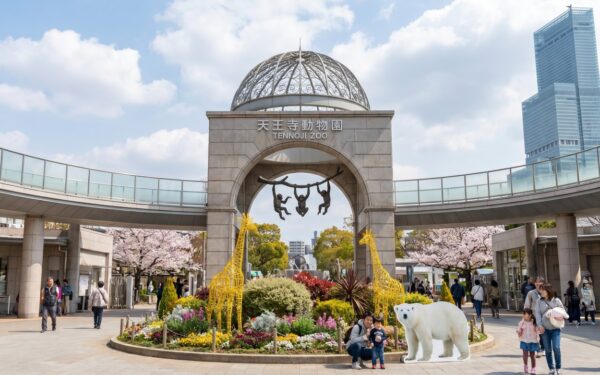
Tennoji Zoo
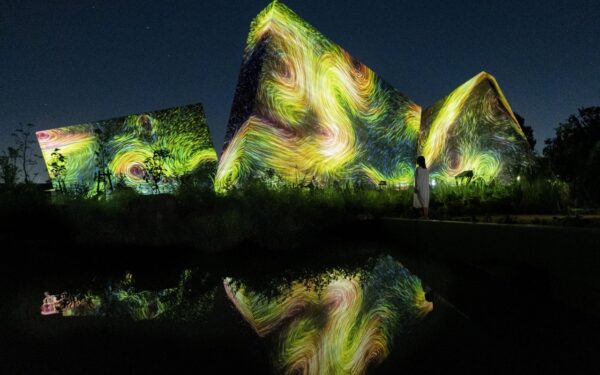
teamLab Botanical Garden Osaka
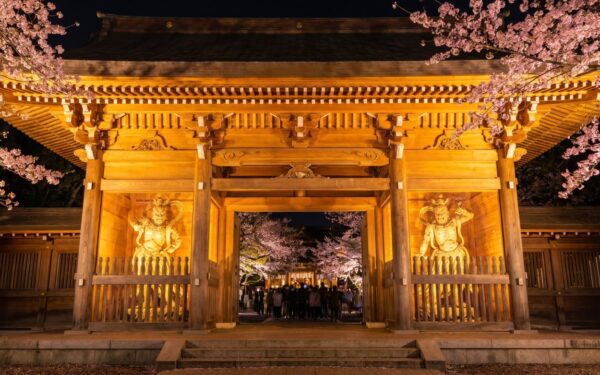
Ikukunitama Shrine
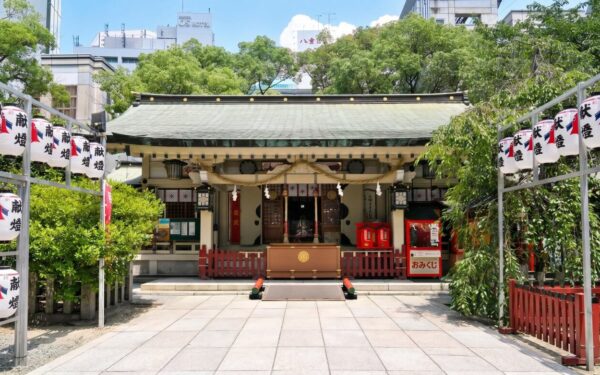
Tsuyuno Tenjinsya (Ohatsu Tenjin)
Nunose Shrine
Osaka Tenmangu Shrine
Sumiyoshi Taisha
Kema Sakuranomiya Park