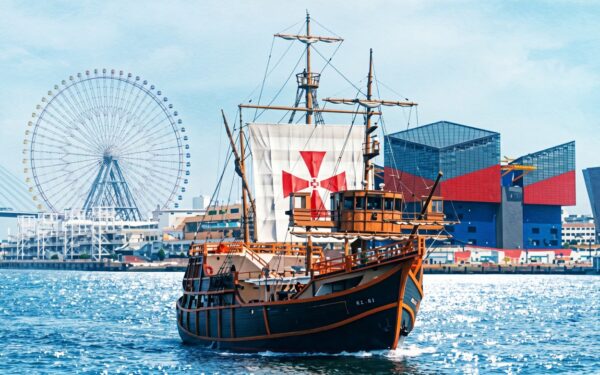
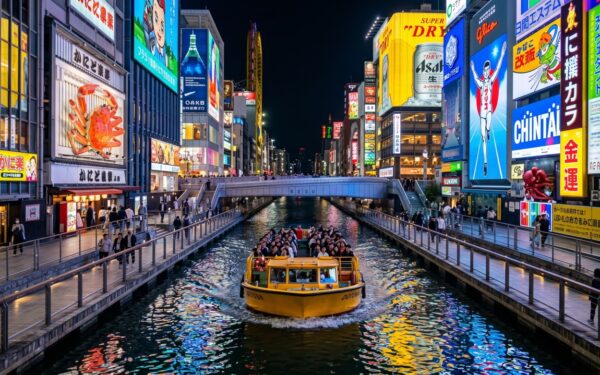
Osaka is built on water. The city sits at the mouth of the Yodo River where it meets Osaka Bay, and a network of rivers, canals, and waterways runs through almost every neighbourhood.
This gives Osaka a waterfront character that is easy to overlook when you’re navigating the transit system and the covered shopping arcades, but becomes immediately apparent when you choose to walk along the river rather than take the metro.
The Okawa River running north of the city centre through Umeda and toward Osaka Castle is the most scenic of these waterways and comes into its own during cherry blossom season, when the banks are lined with flowering trees and the combination of castle, water, and blossoms is one of the most photographed scenes in western Japan.
Green Space Within the City
Osaka Castle Park, surrounding the castle itself, functions as the city’s most visited green space — it absorbs the tourist traffic while the surrounding moat and secondary gardens remain quieter.
Namba Parks in Namba is a counterintuitive find: a rooftop terraced garden built above a shopping complex that provides genuine greenery in the middle of the city’s most commercial district.
Tsurumi Ryokuchi in the eastern suburbs holds the Expo Commemoration Park, a large expanse of lawns, Japanese garden, and seasonal flower displays. It’s further from the city centre but justified for visitors who want extended green space rather than an urban park.
Osaka Bay and the Coast
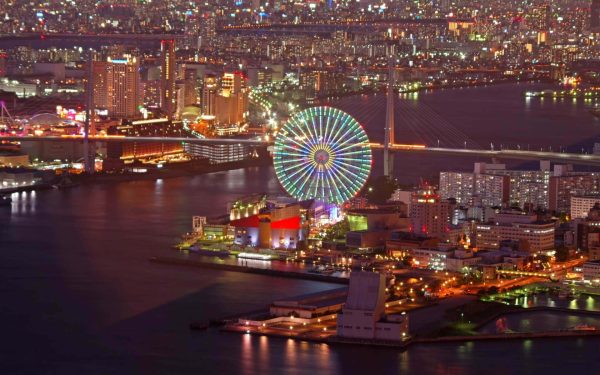
Osaka Bay offers a different kind of waterfront from the river and canal network — open water, salt air, and the kind of scale that reminds you this is a port city.
The bay area around Sakishima is walkable and significantly less crowded than central Osaka, with views across the water and back toward the city skyline that are best at dusk.