Ikukunitama Shrine
Ikukunitama Shrine is the oldest Shinto shrine in Osaka, with 2,700 years of history. Hours, access, tips, and what to expect when you visit.
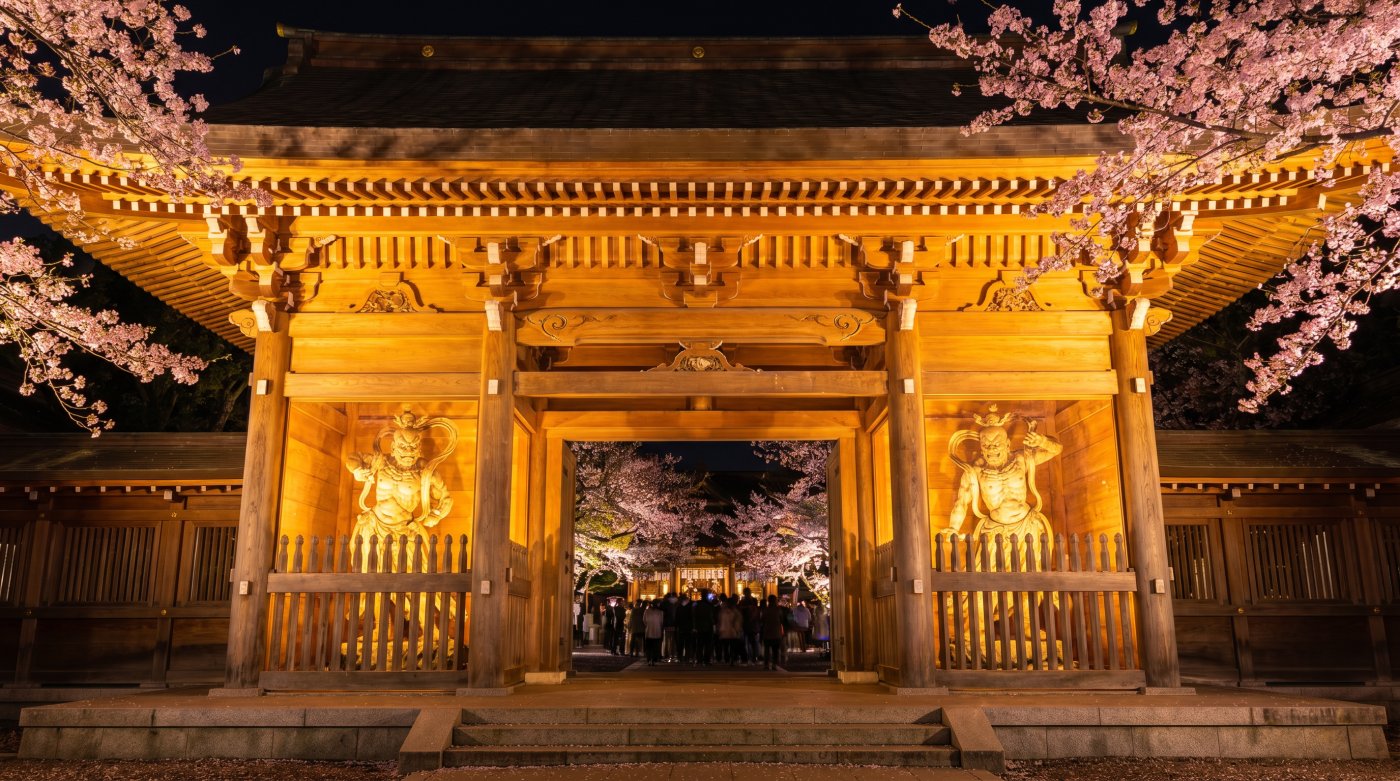






Ikukunitama Shrine — known affectionately to locals as “Ikutama-san” — is the oldest shrine in Osaka, tracing its origins back roughly 2,700 years to when Emperor Jinmu, Japan’s legendary first emperor, is said to have enshrined the deities Ikushima Okami and Ashijima Okami here to pray for peace across the land.
That’s not just old by Japanese standards; that’s ancient by any measure.
The shrine was originally located on the Uemachi Plateau where Osaka Castle now stands, and was relocated to its current site in Tennoji Ward in 1583 when Toyotomi Hideyoshi commissioned the castle.
What greets you on arrival is a compound that rewards slow exploration.
The main hall’s striking roof — built in the distinctive Ikukunitama-zukuri style, a tiered, layered architectural form unique to this shrine — rises 20 metres and instantly sets it apart from the standard Shinto template.
Scattered around the grounds are more than a dozen subsidiary shrines, each dedicated to different deities, with Shigino Shrine particularly revered for blessings related to love, marriage, and women’s wellbeing.
You’ll find a forested walking path called Ikugyoku no Mori lined with zodiac stone statues, a dragon-adorned chozuya (purification fountain), and a ceiling painting of a dragon inside the haiden that most visitors walk right past without looking up.
The shrine holds a monthly flea market on the 8th of every month — vendors set up from around 7am and pack down by early afternoon, offering genuinely old ceramics, vintage photographs, and curiosities that feel like they belong in a museum.
The annual Ikutama Summer Festival on July 11th and 12th transforms the normally serene grounds into one of Osaka’s three great summer festivals, with portable shrine processions, lion dances, taiko drumming, and rows of food stalls.
Visit early morning on any ordinary day, though, and you’ll have the place almost entirely to yourself.
Ikukunitama Shrine: Your Complete Guide to Osaka’s Oldest Shinto Site (2026)
Osaka’s guardian shrine for 2,700 years, standing quietly where the city’s deepest roots run.
Ikukunitama Shrine is the oldest Shinto shrine in Osaka, and it earns that title with genuine weight.
In this Explore Osaka guide, you’ll get everything you need to visit confidently: opening hours, directions from the nearest station, what to actually look at once you’re inside the gates, and the one time of year when this otherwise serene compound transforms into one of the city’s great summer spectacles.
Admission is free, the grounds reward slow exploration, and the crowd level on an ordinary weekday morning hovers somewhere between quiet and almost completely empty.
Ikukunitama Shrine at a Glance
Hide- Address: 13-9 Ikutamacho, Tennoji Ward, Osaka 543-0071
- Opening hours: 06:30 to 17:00, daily (shrine office: 09:00 to 16:30)
- Admission: Free
- Nearest station: Tanimachi 9-chome Station (Osaka Metro Tanimachi Line, Exit 3), 4-minute walk
- Time needed: 45 to 90 minutes
- Best seasons: Late March to early April (cherry blossoms); July 11 to 12 (summer festival)
- Official website: ikutamajinja.jp
- Phone: +81-6-6771-0002
- Osaka Amazing Pass: Not included
Why Visit Ikukunitama Shrine
Most visitors to Tennoji head straight for Shitennoji Temple or the Abeno Harukas skyscraper and walk past the two-minute detour that would bring them here.
That’s a real shame, because what they’re skipping is one of the most quietly compelling shrine complexes in the city.
Ikukunitama Shrine carries a founding legend tied to Emperor Jinmu, Japan’s mythological first emperor, who is said to have enshrined the deities Ikushima Okami and Ashijima Okami here as protectors of the nation’s people.
That places the shrine’s origins at roughly 2,700 years ago, which is remarkable even by Japan’s already long historical standards.
The shrine’s original location was on the Uemachi Plateau where Osaka Castle now stands, but the feudal lord Toyotomi Hideyoshi relocated it to its current grounds in 1583 when he commissioned the castle’s construction.
You’re looking at a place that predates the city of Osaka as most people understand it.
What you actually get from visiting is harder to summarize in a single sentence.
The compound is large, architecturally singular, and genuinely still functioning as a site of active daily worship.
Local residents come here to pray on ordinary Tuesday mornings.
Salarymen stop by the main hall on their commute.
This is not a heritage museum with incense.
It’s a working Shinto shrine that happens to be historically extraordinary, and the difference is palpable from the moment you pass through the outer torii gate.
Trip Essentials
Osaka Travel Add-ons
Equip yourself for the ultimate Osaka adventure with the following add-ons, curated just for you.
Flights to Osaka
Airport Transfer
ICOCA IC Card
Suica IC Card
Osaka Tours
Luggage Storage
Travel Insurance
Data Security

Japan eSIM
Japan SIM Card
Pocket WiFi Rental
Japan eSIM
The Honest Case: What This Shrine Is and Isn’t
Ikukunitama Shrine does not draw the kind of international foot traffic that Fushimi Inari or Sumiyoshi Taisha attract.
There are no Instagram queues at the gates.
The signage is primarily in Japanese.
If you want explanation boards in English at every turn, you will find only a few.
What you will find instead is a compound that hasn’t been arranged for tourism, which is increasingly rare in Osaka’s most-visited areas.
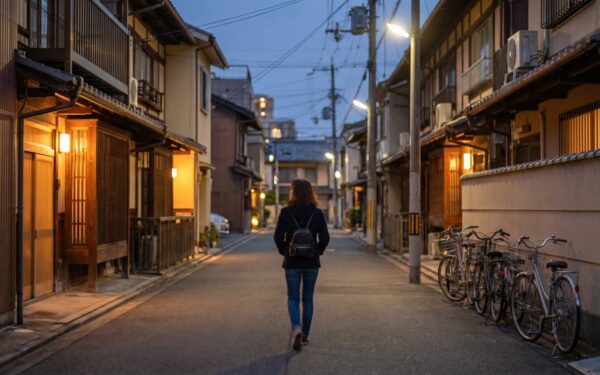
The shrine also sits within a genuine residential neighborhood, surrounded by narrow streets, small family-run businesses, and local life that continues at its own pace regardless of whether any visitors show up.
That context matters.
It means that when you arrive early in the morning and have the stone courtyard to yourself, it doesn’t feel like a crowd management miracle.
It just feels like a Tuesday morning in Tennoji.
What to See and Do at Ikukunitama Shrine
The grounds here reward a slow pace.
Rush through in 15 minutes and you’ll leave with a photo of the gate and a vague impression of having seen something old.
Take your time, and you’ll find a compound with more layers than its modest tourist profile suggests.
The Main Hall and Ikukunitama-zukuri Architecture
The honden (main hall) is the obvious focal point and worth real attention.
The architectural style here, called Ikukunitama-zukuri, is classified as a nationally important cultural property and is found at no other shrine in Japan.
The roofline stacks and layers in a tiered, gabled formation that rises approximately 20 metres above the stone courtyard, creating a silhouette that reads as different from virtually every other main hall you’ll encounter in the Kansai region.
The current structure dates to 1845, rebuilt following a fire, but closely replicates the original design.
Step inside the haiden (worship hall) when ceremonies are not in progress and look up at the ceiling: a full-scale ink painting of a dragon in brushwork that spans the entire beamed surface.
Most visitors miss it entirely because they’re focused straight ahead at the altar.
Don’t make that mistake.
The Subsidiary Shrines
More than a dozen smaller shrines are distributed across the compound, each dedicated to different deities for different kinds of petitions.
Knowing which ones are which makes the wandering more rewarding.
- Shigino Shrine (鴫野神社) is the most visited. Dedicated to female deities, it’s regarded as particularly effective for blessings related to love, marriage, and women’s health. The ema hooks outside are densely packed with wooden wishing plaques, most of them written in careful handwriting, and the atmosphere here is noticeably more intimate and personal than the main hall.
- Dojo Snake Shrine links the compound to Osaka’s historic pharmaceutical district, Doshomachi, which was the center of Japan’s medicine trade during the Edo period. The shrine is dedicated to a deity of medicine, and during the annual Kanro-sai festival each November, small paper cats and dogs are distributed as protective talismans against illness. It’s an unusual piece of history embedded quietly into the corner of a compound most people visit for other reasons.
Ikugyoku no Mori Forest Path
Running along the eastern edge of the grounds is a short forested walking path called Ikugyoku no Mori (生玉の杜).
It’s lined with stone statues representing the twelve animals of the Japanese zodiac, and the overhead tree canopy makes it noticeably cooler than the open courtyard during Osaka’s humid summer months.
The path takes about ten minutes to walk end to end at a comfortable pace.
In late March and early April, the trees along this stretch carry cherry blossoms that catch the morning light in a way that the busier spots in the city can’t replicate because you’ll actually have room to stand still and look.
Monthly Flea Market
On the 8th of every month, the shrine hosts an antique and flea market that sets up from around 07:00 and packs down before noon.
Vendors line the approach path and the outer courtyard, selling old ceramics, lacquerware, vintage photographs, hand-carved wooden objects, pre-war illustrated books, and the kind of accumulated curiosities that feel like they’re still carrying the story of whoever owned them last.
Prices are negotiable, particularly in the final hour before vendors start packing up.
Cash is essential here as very few stalls have card terminals.
Goshuin Stamp Collection
If you collect goshuin (shrine calligraphy stamps), the office at Ikukunitama Shrine is open daily from 09:00 to 16:30.
The stamp design uses the shrine’s name and deity crests and costs around ¥300 to ¥500.
Bring your own goshuincho (stamp book), though the shrine does sell them on-site when stock is available.
The staff will ask to see your book before stamping, so have it ready rather than buried at the bottom of your bag.
How to Get There
Ikukunitama Shrine sits on the eastern slope of the Uemachi Plateau in Tennoji Ward, and reaching it by public transport is straightforward from most parts of central Osaka.
By Train
The fastest route from most central locations is the Osaka Metro Tanimachi Line to Tanimachi 9-chome Station.
Use Exit 3, turn left out of the exit, and the shrine’s outer torii gate appears after about a 4-minute walk heading south along the main street.
The station name is also written as T27 on the Osaka Metro map if you’re navigating by line codes.
From Nipponbashi Station on the Sennichimae Line or Sakaisuji Line, it’s a 9-minute walk heading northeast.
From Uehonmachi Station on the Kintetsu Osaka Line, the walk heading west takes approximately 10 minutes through a quiet residential area.
Essential Osaka Travel Passes
Powered by KlookThe passes worth buying before you land — curated for first-timers.
Osaka Amazing Pass
Unlimited subway + free entry to 40+ attractions. The only pass most visitors actually need.
Osaka e-Pass
Attractions-only digital pass. Pair with a Metro Pass if skipping the Amazing Pass.
Osaka Metro Pass
1 or 2-day unlimited Metro rides. Best standalone transit value if you already have an attractions pass.
JR West Kansai Area Pass (WEST QR)
Unlimited JR trains for 1 to 4 days. Covers Kyoto, Nara, Kobe, and Himeji from Osaka.
JR Haruka Express
KIX to Umeda/Shin-Osaka in ~50 min. Best if staying in Umeda or heading straight to Kyoto.
Nankai Rapi:t Express
KIX to Namba in 34 min, reserved seat. Better if staying in Namba or Shinsaibashi.
From Namba or Shinsaibashi
From Namba or the Shinsaibashi shopping district, the Tanimachi Line connection at Nipponbashi is your best option.
One stop from Nipponbashi to Tanimachi 9-chome puts you 4 minutes from the gate.
Total door-to-gate travel time from the Shinsaibashi area is roughly 15 to 20 minutes including platform wait time, which makes this a very easy addition to a day spent anywhere in the Minami (south Osaka) corridor.
By Car
From the Hanshin Expressway, take the Yuhigaoka ramp and it’s approximately 5 minutes to the shrine by car.
The surrounding streets in Ikutamacho are narrow residential lanes, and parking options near the shrine are limited.
Public transport is genuinely the more practical choice unless you are already driving across the Tennoji area for another reason.
Practical Tips When Visiting Ikukunitama Shrine
A few specific details will make your visit smoother and more rewarding than the generic advice you’ll find on most travel sites.
Best Time to Visit
Early morning, any day of the week.
The gates open at 06:30, and the hour between opening and 08:00 is the best version of this shrine: incense drifting from the altar, the occasional local resident coming to offer a quiet prayer, the stone courtyard largely free of other visitors.
If early morning is not feasible, arriving after 15:00 on weekdays catches a secondary lull after any midday visitors have moved on.
For more information on when to visit Osaka, read our detailed guide on the best time to visit Osaka.
Seasonal Timing
Spring offers the cherry blossom trees along Ikugyoku no Mori path, typically peaking in late March to early April depending on the year’s temperatures.
Autumn (October to November) brings cooler temperatures and the occasional maple color through the forested sections of the compound.
Summer is manageable in the early morning before heat builds, and the July 11 to 12 festival is an active reason to come during the hottest part of the year.
The July Summer Festival: Specific Timing
The Ikutama Natsu Matsuri runs on July 11th and 12th annually.
Portable shrine processions typically begin around 18:00 on both evenings, so arriving by 17:00 gives you time to find a good position along the approach route before the streets fill.
Food stall vendors set up from around 15:00 onward, and the area around the shrine’s outer approach gets crowded from roughly 16:00 as locals arrive after work.
This is one of three festivals considered among Osaka’s great summer events, alongside the Tenjin Matsuri and Sumiyoshi Matsuri.
What to Bring and What to Know
Wear shoes you can walk comfortably in: the compound is mostly flat and paved, but the path toward the subsidiary shrines includes uneven stone surfaces.
There’s no food or drink available on regular non-festival days, so bring water especially between June and September when Osaka’s humidity is at its most unforgiving.
The shrine office counter is cash-only for goshuin, omamori (protective charms), and any other purchases.
IC card payment is not accepted at the counter.
Photography is permitted throughout the grounds, including inside the haiden when no ceremonies are underway.
The best angle for the main hall’s architecture is from the far end of the inner courtyard in the morning, when low-angle eastern light falls across the layered roofline and throws the tiered gable lines into sharp relief.
Nearby Attractions
The area around Ikukunitama Shrine in southern Osaka is denser with worthwhile stops than its relatively low tourist profile suggests.
- Shitennoji Temple (四天王寺) is a 12-minute walk northwest and is one of Japan’s oldest Buddhist temples, founded in 593 CE by Prince Shotoku. The central compound charges ¥300 entry and includes a five-storied pagoda and a golden main hall rebuilt in their original seventh-century layout. It’s a logical pairing with Ikukunitama Shrine for anyone spending a morning in the Tennoji area.
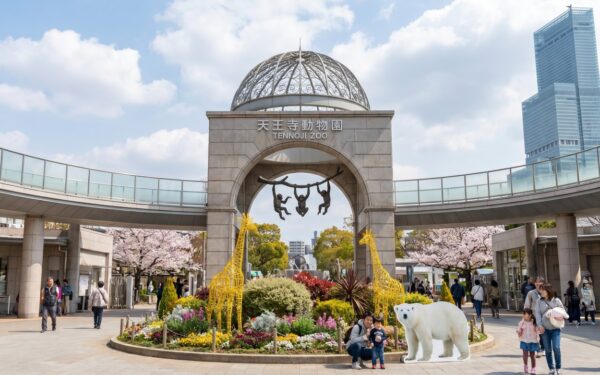
- Tennoji Zoo sits about 15 minutes southwest. Established in 1915, it is one of Japan’s oldest zoos. Admission is ¥500 and the grounds are pleasant for an afternoon walk, particularly if you’re traveling with children. It’s not a high-priority stop for most adult visitors, but it pairs well with Tennoji Park, which connects to it and is free to enter.
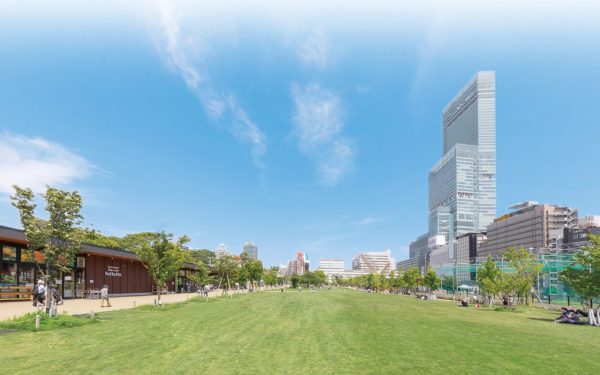
- Abeno Harukas is a 12-minute walk south. At 300 metres, it is Japan’s third-tallest building, and the observation deck spanning the 58th to 60th floors charges ¥1,500 for entry. On a clear day, the panorama extends to Awaji Island in the west and the Ikoma and Rokko mountains to the north and east.
- Shinsekai is roughly 20 minutes on foot or one subway stop southwest. It’s the old entertainment district built in the early twentieth century around a model of the Eiffel Tower, now home to concentrated rows of kushikatsu (deep-fried skewer) restaurants, old pachinko parlours, and a retro cityscape that genuinely delivers on what its reputation promises. If you haven’t had kushikatsu in Osaka yet, Shinsekai is where to start.
If Ikukunitama Shrine fits into a broader day across southern Osaka, the Tennoji neighborhood guide lays out the full picture of what this part of the city has to offer.
For a day-by-day structure that works Ikutama and the surrounding area into a logical Osaka route, the Osaka itinerary archive covers options at every pace.
And if you want a broader sweep of what the city holds beyond any one neighborhood, the things to do in Osaka guide covers the range.
What's Available
Frequently Asked Questions (FAQs)
Yes, admission to Ikukunitama Shrine is completely free.
You can walk through the torii gate, explore the main hall and all subsidiary shrines, and stroll the Ikugyoku no Mori forest path without paying anything.
The shrine office charges a small fee for goshuin (shrine stamps), typically around ¥300–500, and these are available daily from 09:00 to 16:30.
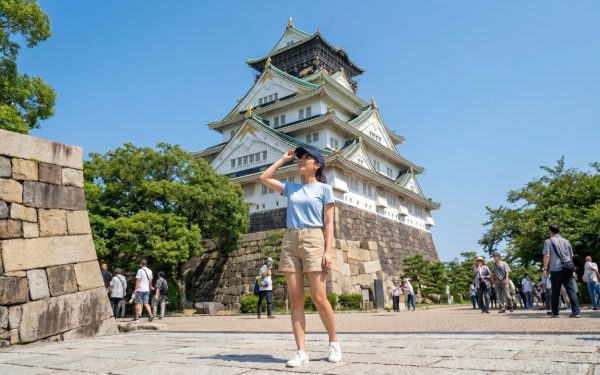
No. The current structure dates from 1931 and is a ferroconcrete reconstruction, not the original Toyotomi-era castle.
The original was destroyed during Japan’s feudal conflicts.
The reconstruction is historically detailed and houses a genuine museum, but it is not a surviving historic structure in the way that, for example, Himeji Castle is.
If original castle architecture matters to you, the day trip to Himeji from Osaka is worth adding to your itinerary.
The easiest approach is the Osaka Metro Tanimachi Line to Tanimachi 9-chome Station, using Exit 3 — the shrine is about a 4-minute walk from there.
From Namba, you can also take the Metro Sennichimae or Sakaisuji Line to Nipponbashi Station and walk roughly 9 minutes.
If you’re coming from the Kintetsu lines, Uehonmachi Station puts you about 10 minutes away on foot.
The shrine’s address is 13-9 Ikutamacho, Tennoji Ward, Osaka (postal code 543-0071).

Editor's Review
Ikukunitama Shrine does something most tourist-circuit shrines in Osaka fail to do: it actually feels lived-in.
Locals come here to pray on ordinary Tuesday mornings.
The grounds are genuinely expansive, with over a dozen subsidiary shrines to wander through, and the main hall’s Ikukunitama-zukuri roof architecture is quietly unlike anything else you’ll encounter in the city.
It’s a free attraction where you genuinely get more than you’d expect to pay for.
The weakness is visibility — this shrine sits a couple of blocks off the major tourist corridors, so most visitors on a tight Osaka schedule never find it.
That’s arguably its greatest asset if you go.
The July summer festival is a legitimate spectacle worth timing your trip around.
For everyone else, an early-morning visit gives you the stone-paved paths and incense-scented air almost entirely to yourself, which, honestly, is the best version of any shrine in Japan.
Related Attractions
Osaka Tenmangu Shrine
Nunose Shrine
Senkoji Temple

Kema Sakuranomiya Park
Osaka Museum of History
Himejima Shrine
Tennoji Zoo
Namba Yasaka Shrine