Osaka Travel Planning: How to Plan Your First Trip to Osaka
Planning a trip to Osaka doesn’t require a travel agent or a spreadsheet with 40 tabs, but it does reward a bit of structured thinking upfront. The city is easy to navigate, the transport works, and the food is forgiving of spontaneity.
What catches first-time visitors off guard is usually the things they didn’t book early enough, the budget items they didn’t account for, or a trip structure that tries to cover too much ground. This guide works through each of those in order.
How Long to Spend in Osaka
Three days is the most common answer and it’s a reasonable baseline, but the honest answer is that it depends on what you’re combining Osaka with.
If Osaka is your only Japan destination, four to five days gives you enough time to cover the main sights without rushing, do one day trip, eat your way through more than one neighborhood, and actually slow down enough to enjoy the city rather than just check it off.
Three days works if your trip is tightly structured and you’re comfortable covering a lot of ground quickly.
If you’re pairing Osaka with Kyoto or Tokyo travel, three days in Osaka is standard. Kyoto works well as a day trip from an Osaka base, or as a two to three day extension before or after.
Many visitors fly into Kansai International Airport, spend three to four days in Osaka, take the shinkansen to Tokyo, and fly home from Narita or Haneda.
The Osaka itinerary guide covers structured plans for one, two, three, and four-day visits, including which attractions cluster well by geography so you’re not criss-crossing the city unnecessarily.
Osaka as a base vs. Osaka as a stop
Osaka makes an excellent base for the wider Kansai region. Kyoto is 15 to 28 minutes by train, Nara is 39 to 50 minutes, Kobe is 22 to 28 minutes, and Himeji is under an hour.
Staying in Osaka and doing day trips to these cities is usually cheaper than splitting nights between multiple cities, and Osaka’s accommodation options and food scene are strong enough that the base city is never a consolation choice.
The counterargument for splitting your stay is immersion: an overnight in Kyoto gives you the city before and after the day-trip crowds arrive and depart. That’s a real difference if Kyoto is high on your priority list.
For Nara and Kobe, day trips from Osaka cover everything comfortably without needing an overnight.
When to Book and What to Book First
Japan’s booking culture rewards planning ahead, and Osaka is no exception during peak periods. The sequence below applies broadly, with timing adjusted to whether you’re visiting during high season or off-peak.
Flights
Book international flights to Kansai International Airport (KIX) at least eight to twelve weeks ahead for reasonable fares. For travel during Golden Week (late April to early May) or cherry blossom season (late March to early April), twelve to sixteen weeks is a more realistic target.
Budget carriers including Jetstar, Scoot, and AirAsia serve KIX from multiple Southeast Asian hubs. Full-service carriers including Japan Airlines, ANA, Singapore Airlines, and Cathay Pacific operate direct or one-stop routes from most major Western markets.
Itami Airport (ITM) handles domestic flights only. If you’re arriving from Tokyo or another Japanese city, Itami is closer to central Osaka and easier to transit from than KIX.
Accommodation
Accommodation books out earlier than most visitors expect for peak periods. During cherry blossom season, Golden Week, and the New Year period, well-located mid-range hotels in Namba and Shinsaibashi can be fully committed two to three months in advance.
Book accommodation before flights if your dates are fixed and your destination neighborhood matters.
For off-peak travel (June, September through early October, January through February), availability is rarely a problem and booking two to four weeks ahead is sufficient. Last-minute bookings during off-peak are often possible, but you lose access to the best-value rooms.
The where to stay in Osaka guide covers which neighborhoods suit which types of travelers and what to expect at each price point from capsule hotels to four-star properties.
Experiences and tours
Universal Studios Japan sells out on peak days. Book USJ tickets online at least two weeks ahead if you’re visiting on a weekend or during school holidays.
Express Passes, which allow skip-the-line access to major attractions, sell out even faster.
Teamlab Planets in Tokyo and Teamlab Botanical Garden Osaka (in Tsurumi Ryokuchi Park) both require advance booking and regularly sell out weeks ahead. Book as soon as your dates are confirmed.
High-end and Michelin-recognized restaurants in Osaka, particularly kaiseki restaurants and omakase sushi counters, typically require reservations one to three months in advance. For casual dining, including the ramen shops, okonomiyaki spots, and izakayas that make up the bulk of Osaka eating, no reservation is needed.
Walk in, queue if necessary, and eat.
Structuring Your Trip Around Osaka’s Geography
Osaka’s tourist areas are spread across a roughly north-south axis. Understanding the basic layout prevents the common mistake of scheduling visits that require crossing the full length of the city multiple times in a day.
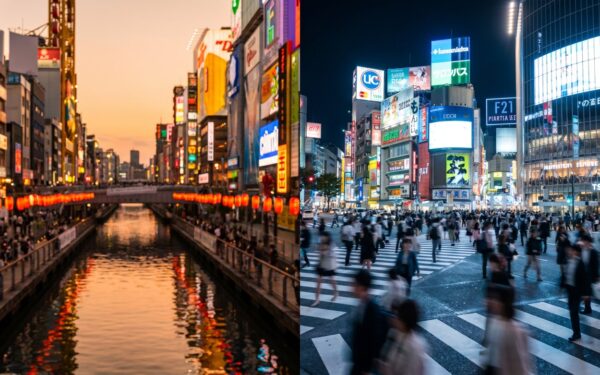
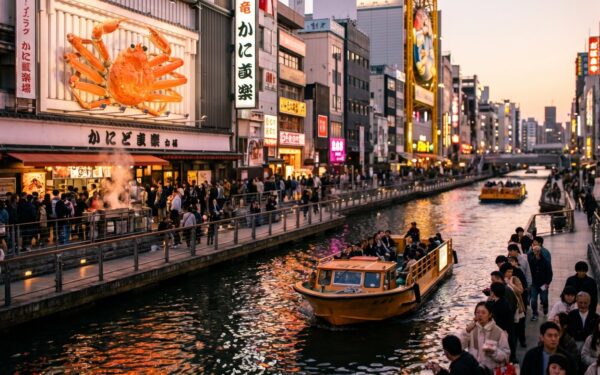
- The south (Minami) covers Namba, Dotonbori, Shinsaibashi, Kuromon Market, and Shinsekai. This is where most first-time visitors spend the majority of their time. It’s the food and nightlife core, and most of it is walkable within a 30 to 40 minute radius.
- The north (Kita) covers Umeda, the area around Osaka Station, and the Nakatsu and Fukushima neighborhoods. Umeda is the city’s business and shopping hub, and the Umeda Sky Building observatory sits here. It’s a 15-minute Metro ride from Namba on the Midosuji Line.
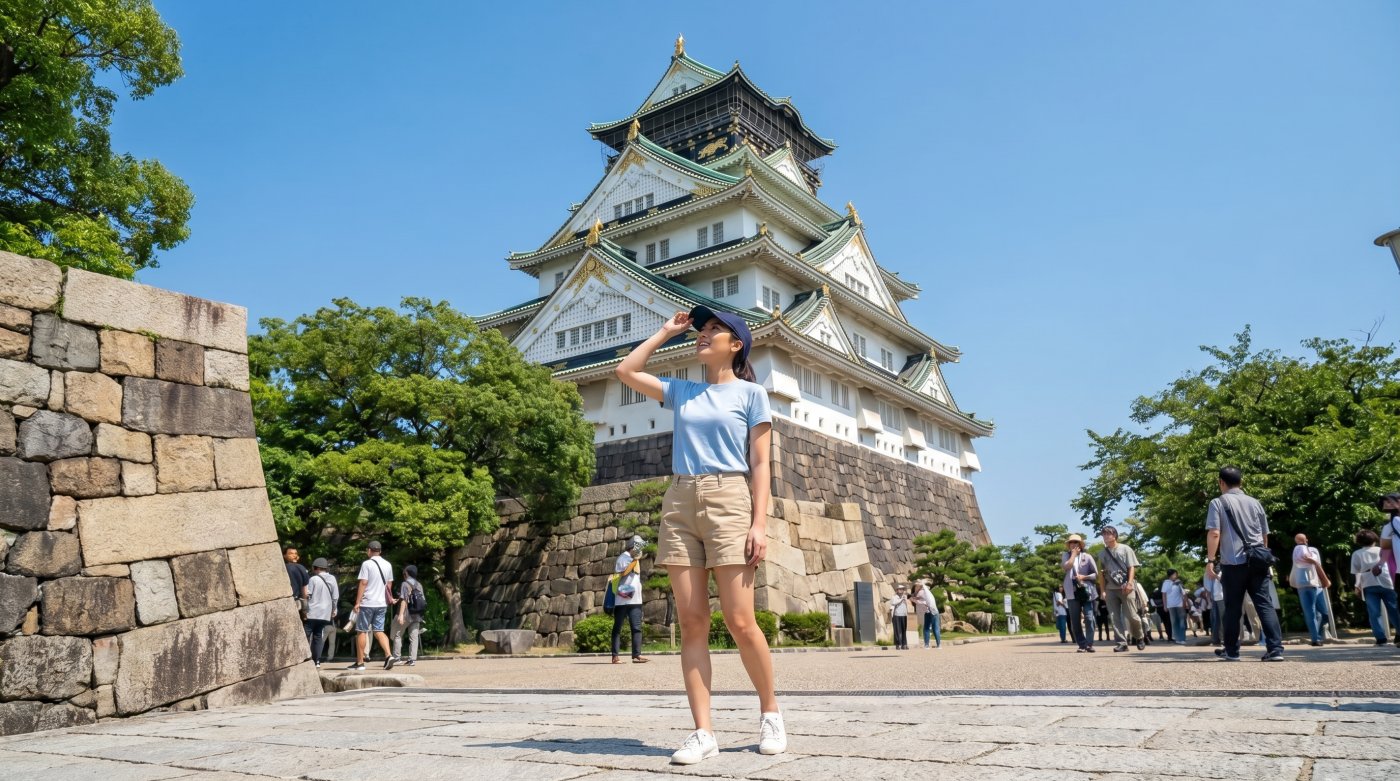
- The east covers Osaka Castle and the surrounding park, the Tanimachi area, and Kyobashi. The castle is a standalone half-day visit that combines well with the riverside walk along the Okawa.
- The west and bay area covers Osaka Bay, Universal Studios Japan, and the Osaka Aquarium Kaiyukan. These require deliberate planning rather than casual detours; they’re not on the way to anything else.
The most efficient trip structure for three days groups these areas by day: one day in Minami (south), one day covering the castle and north, and one day for a specific interest or day trip. The Osaka neighborhoods guide covers what each area actually looks and feels like at street level, which helps when deciding how to allocate time between them.
Building a Realistic Budget

Osaka is one of Japan’s more affordable major cities for day-to-day expenses, but the total cost of a trip depends heavily on accommodation choices and how much you spend on experiences and longer travel.
Accommodation costs
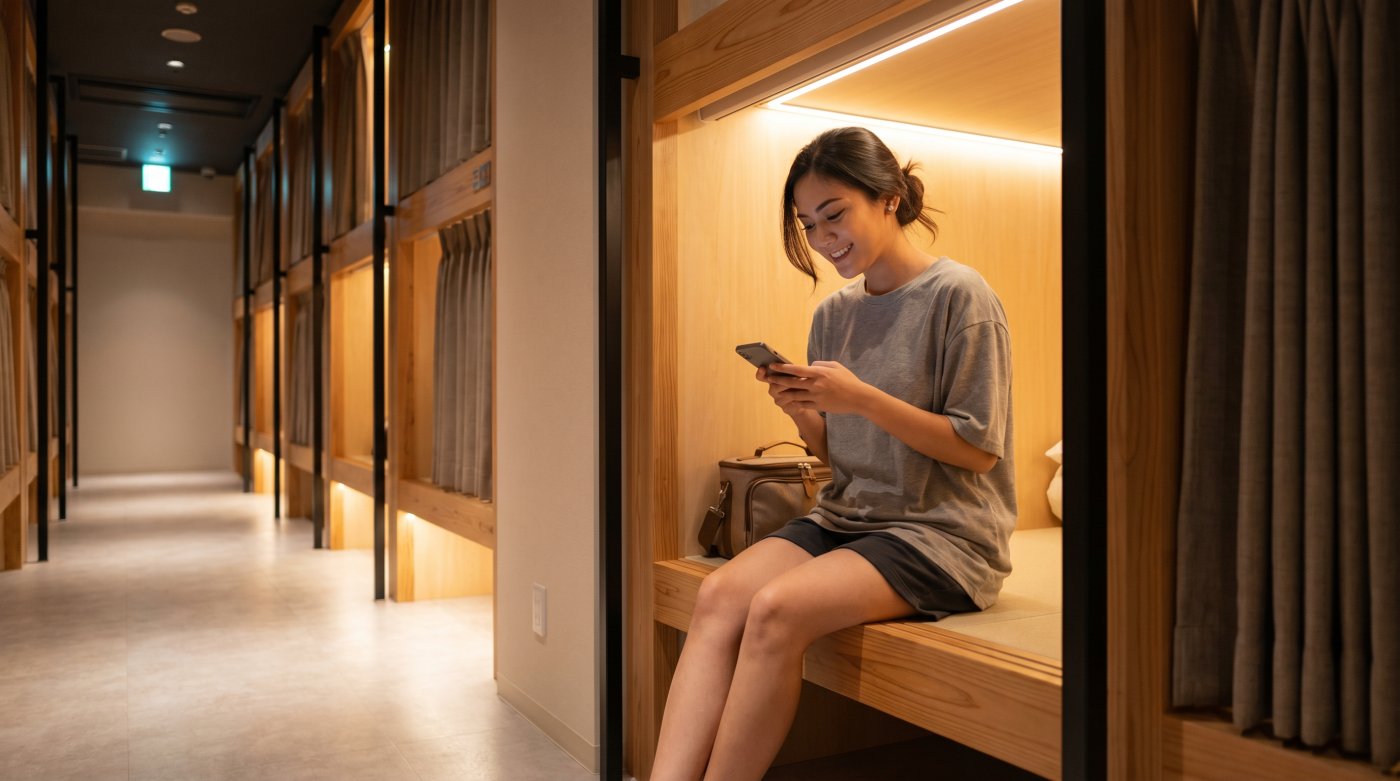
Capsule hotels in Namba start from 2,500 to 4,000 yen per night. They’re functional, often well-designed, and the right choice for solo travelers on tight budgets.
Private rooms in hostels run 4,000 to 7,000 yen per night. Business hotels, which make up the mid-range backbone of Osaka’s accommodation market, range from 8,000 to 16,000 yen per night for a clean, well-located private room.
Boutique hotels and four-star properties in Shinsaibashi and Umeda run 18,000 to 35,000 yen per night. The Waldorf Astoria Osaka and The Ritz-Carlton sit above that range.
Food costs
Osaka’s food economy is one of the main reasons to visit and one of the main reasons the city is genuinely affordable for travelers who embrace it. A full day of eating well costs far less here than in most comparable cities.
Breakfast at a convenience store (onigiri, sandwiches, hot coffee) runs 400 to 700 yen. A bowl of ramen for lunch costs 900 to 1,400 yen.
Takoyaki from a street stall is 400 to 600 yen for a standard portion. A sit-down dinner at a good mid-range restaurant costs 1,500 to 3,500 yen per person.
A full day of eating, including snacks and drinks, typically lands between 2,000 and 4,500 yen per person depending on how many sit-down meals you have.
The Osaka food guide covers what to eat and where across every price point, from 200-yen street bites to the neighborhood izakayas where a long dinner and several drinks runs under 4,000 yen per person.
Transport costs
Daily transport within Osaka on the Metro costs approximately 600 to 1,200 yen for a typical tourist day, depending on how many rides you take. The Osaka Amazing Pass (2,800 yen for one day) bundles unlimited Metro rides with free entry to over 40 attractions and pays off if you’re visiting three or more paid sights in a single day.
Day trip transport adds meaningfully to your budget. A return train to Kyoto costs around 1,160 yen on the slow JR Shinkaisoku.
A return shinkansen from Osaka to Hiroshima runs approximately 18,480 yen without a JR Pass.
Attractions and experiences
Most of Osaka’s major outdoor spaces, including Osaka Castle Park, Sumiyoshi Taisha, and the riverfront areas, are free to walk through. Paid attractions include the castle tower interior (600 yen), Umeda Sky Building observatory (1,500 yen), Tsutenkaku Tower (800 yen), and the Osaka Aquarium Kaiyukan (2,700 yen for adults).
Universal Studios Japan day tickets start from 9,400 yen.
A realistic three-day budget for a solo mid-range traveler, covering accommodation, food, transport, and two or three paid attractions, lands between 45,000 and 75,000 yen (approximately 290 to 490 USD at current rates), not including flights.
Entry Requirements and Visa
Japan’s entry requirements vary by nationality and change periodically. As of early 2026, visitors from most Western countries including the United States, United Kingdom, Australia, Canada, and EU member states can enter Japan visa-free for stays of up to 90 days.
Citizens of most Southeast Asian countries including Singapore and Thailand also qualify for visa-free entry, while Indonesian and Filipino passport holders require a visa in advance.
Japan introduced the Visit Japan Web pre-registration system for customs and immigration, which allows you to complete arrival paperwork digitally before landing and use dedicated fast-track lanes at the airport. Registration is free and takes about ten minutes.
It is not mandatory but meaningfully reduces airport processing time, particularly at KIX which handles high international arrival volumes.
Always verify current entry requirements with the Japanese Embassy or the Japan Tourism Agency website before travel, as visa policies update without extended notice.
What to Pack for Osaka
Packing for Osaka follows the standard Japan travel logic with a few city-specific additions.
- Walking shoes that you can slip off easily are more important than people expect. Removing shoes at restaurant entrances, ryokan lodgings, and some temple interiors happens regularly. Shoes with multiple buckles or tight laces slow you down and cause minor embarrassment at the entrance of a busy restaurant.
- A small day bag or backpack is useful for carrying water, an umbrella, your IC card, and cash. Osaka summers require water at all times. Convenience stores sell 500ml bottles for 100 to 150 yen on every block, but having water on you during the walk between Metro stations matters in July and August.
- A compact umbrella belongs in your bag year-round. Summer afternoon downpours and the rainy season both arrive quickly. Convenience stores sell cheap umbrellas for around 700 yen if you’re caught without one, but having your own is better.
- Cash in yen should be sorted before you leave the airport. Withdraw 20,000 to 30,000 yen at the KIX ATMs before exiting arrivals. Reload as needed from 7-Eleven ATMs throughout the city.
- Portable phone charger matters on long sightseeing days when you’re using Google Maps continuously. A 10,000 mAh battery bank covers two full phone charges comfortably.
First 24 Hours: A Simple Arrival Sequence
The first day in Osaka sets the tone for everything that follows. Jet lag and decision fatigue are real, and trying to see too much on day one usually means seeing everything badly.
A practical arrival sequence: land at KIX, clear customs using Visit Japan Web fast-track, pick up your tourist SIM or pocket Wi-Fi at the arrivals counter, withdraw yen from the airport ATM, purchase your ICOCA card at the JR ticket machine, take the Nankai Rapi:t to Namba (38 minutes), check in, eat something close to your hotel, and sleep.
Day one proper should stay within walking distance of wherever you’re staying. For most visitors that means the Dotonbori canal walk, Kuromon Market if you arrive early enough, and dinner at a sit-down okonomiyaki or ramen restaurant nearby.
The ambition to see Osaka Castle, Shinsekai, and Umeda on day one is understandable and consistently results in exhausted visitors who remember very little of any of it.
For the full itinerary from day one onward, the three-day Osaka itinerary is the most practical starting point for first-time visitors building their schedule from scratch.