Tenjinbashisuji Shopping Street
Japan's longest covered shopping arcade, stretching 2.6 kilometres through Osaka's Kita Ward.
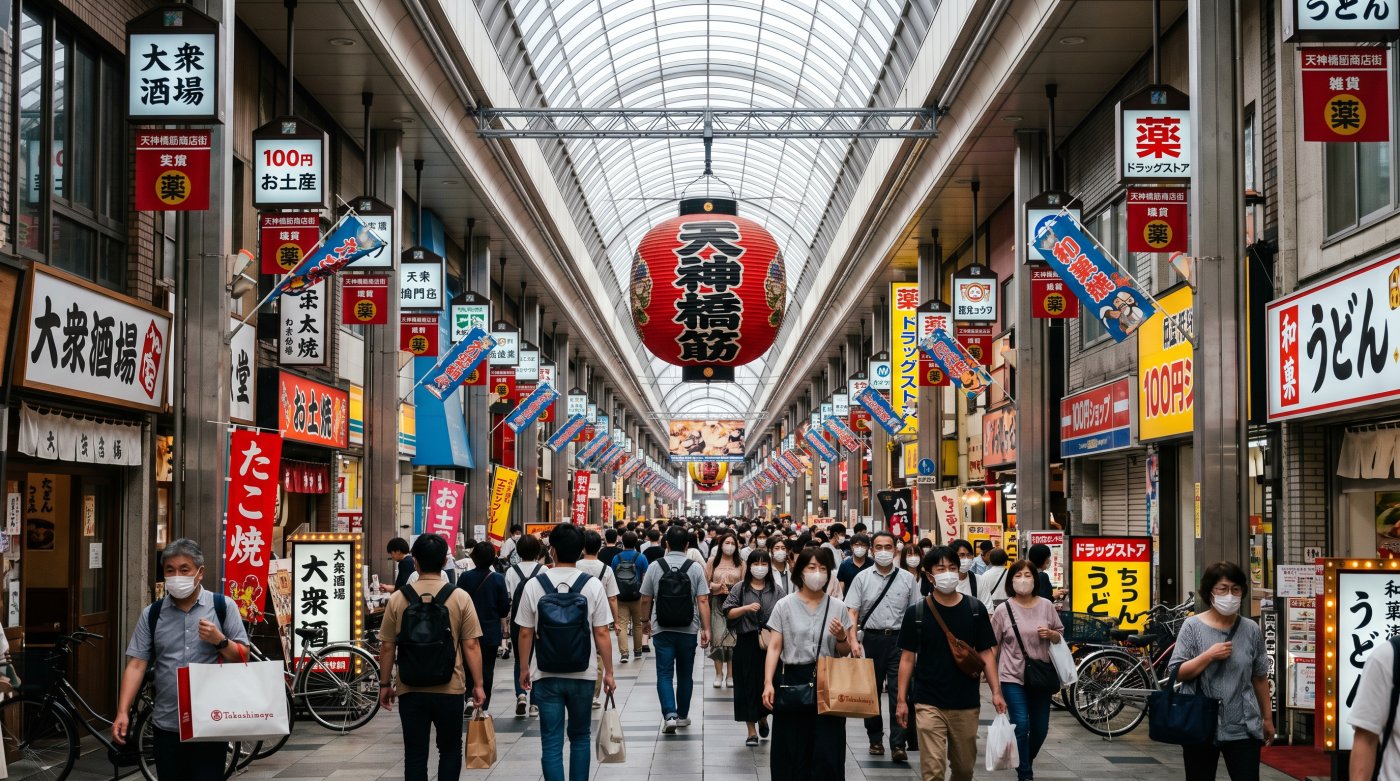









Tenjinbashisuji Shopping Street runs 2.6 kilometres from Tenjinbashi 1-chome near Tenjinbashi Bridge in the south all the way to 7-chome in the north, making it the longest covered shotengai in Japan.
Walking the full length without stopping takes roughly 40 minutes.
Most visitors spend two to three hours, which is still not enough to cover every section properly.
The street divides naturally by character.
The southern 1- to 3-chome block, grouped under the tenjin123.com section, sits closest to Osaka Tenmangu Shrine and carries a denser concentration of food stalls, confectionery shops and old-school restaurants.
Sections 4 to 5-chome broaden into clothing, daily goods and pharmacy chains.
By 6-chome the arcade opens into a slightly younger mix, with the Osaka Metro Tenjinbashisuji 6-chome Station entrance pulling in a different crowd from the southern end.
Each chome has its own shopkeepers association, which is why the atmosphere shifts noticeably as you walk north.
Over 600 shops line the arcade under a continuous roofed canopy, which means the street is genuinely comfortable in rain and in Osaka’s humid August heat.
Grocery stores, shoe shops, 100-yen stores, kushikatsu counters, takoyaki stands and izakayas open from around 17:00 all sit within the same covered strip.
Most retail shops open at 10:00; food options become reliable around 11:00 to 11:30, and the lunch rush peaks between noon and 13:30.
The roofed arcade does not close at a fixed hour since each tenant sets its own schedule, but most retail shutters come down by 19:00 to 20:00.
Tenjinbashisuji Shopping Street is the longest covered shopping arcade in Japan, stretching 2.6 kilometers through the Kita Ward of Osaka from Tenjinbashi 1-chome down to 6-chome.
More than 600 shops line the route, ranging from old-school greengrocers and confectionery makers to izakayas and 100-yen clothing racks.
Entry is free, the roof keeps the rain off, and the crowd is mostly locals doing their daily shopping rather than tourists hunting for souvenirs.
Tenjinbashisuji Shopping Street: Japan’s Longest Covered Arcade
Shotengai (商店街) is Japan’s word for a traditional covered shopping arcade, the kind that grew up around shrines and train stations over centuries of urban life.
Tenjinbashisuji Shopping Street (天神橋筋商店街), stretching 2.6 kilometers through Osaka’s Kita Ward, is the longest of them in Japan — and in this Explore Osaka guide, we’ll walk you through every section so you know exactly what you’re getting into before you lace up your walking shoes.
TL;DR
Hide- Address: Tenjinbashi, Kita-ku, Osaka 530-0041
- Hours: Shops vary; roughly 10:00–20:00 for retail, 11:00–22:00 for restaurants
- Admission: Free entry (individual shops charge normally)
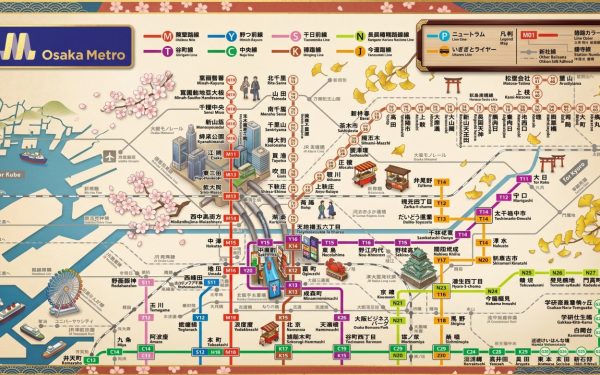
- Nearest stations: Tenjimbashisuji Rokuchome Station (Osaka Metro Sakaisuji / Tanimachi Line), Ogimachi Station (Sakaisuji Line), Minamimorimachi Station (Sakaisuji / Tanimachi Line), Temma Station (JR Osaka Loop Line)
- Time needed: 40 minutes to walk through without stopping; 2–3 hours to properly browse and eat
- Best season: Year-round; covered roof means rain is never a problem
- Official website: http://www.tenjin123.com/
That historical logic still holds today.
The southern end of the arcade, near 1-chome and 2-chome, sits right beside the shrine precinct.
Walk far enough north and you’re deep in a neighborhood where the customer base is almost entirely local residents.
That’s the real reason this street feels different from, say, the Shinsaibashi-suji shopping arcade further south: it was never built for tourists.
The Seven Chomes, and What’s Actually In Each One
The arcade is organized into numbered sections called chome (丁目), running from 1-chome at the southern end near Minamimorimachi Station up to 6-chome (and technically 7-chome) at the northern end near Tenjimbashisuji Rokuchome Station.
The character of the street shifts noticeably as you walk.
The Southern End (1-chome to 2-chome)
The first two sections are the most tourist-aware without being touristy.
Osaka Tenmangu Shrine sits just off 2-chome, and the surrounding blocks lean into that heritage — you’ll find traditional wagashi (Japanese confectionery) shops, gift items associated with the shrine, and food stalls selling taiyaki (fish-shaped pastries filled with red bean paste) and dango (skewered rice dumplings).
Kunkundo, a Japanese confectionery shop at 3 Chome-2-27, opens Monday through Saturday from 10:00 to 19:00 and is worth a pause.
The Middle Stretch (3-chome to 4-chome)
The third and fourth sections are the densest part of the arcade.
Clothing shops dominate here, many of them selling inexpensive everyday fashion rather than anything fast-fashion branded.
You’ll find a functional mixture of household goods, pharmacies, 100-yen shops, and small restaurants.
This is where you start to feel the shift from heritage district to working neighborhood.
Takoyaki Umaiya, a well-regarded takoyaki stall at 4-21 Naniwacho, serves from 11:30 on weekdays for around 1,000–2,000 yen.
The Northern End (5-chome to 6-chome)
By the time you reach 5-chome and 6-chome, the tourist ratio has dropped noticeably.
Izakayas become more prominent, especially after 17:00 when they open for the evening rush.
Kushikatsu Shichifukujin at 5 Chome-7-29 runs from 11:30 to 22:00 Monday through Saturday with a price range of 2,000–3,000 yen — a reasonable number for kushikatsu (deep-fried skewers), which is Osaka’s contribution to the canon of foods that should not be double-dipped.
The northern end also connects directly to the Osaka Museum of Housing and Living, which is built into the Tenjimbashisuji Rokuchome Station building.
The Honest Case For Going (and Who Can Skip It)
Tenjinbashisuji is genuinely worth your time if you want to see how Osaka actually lives rather than how it performs for visitors.
The food is good and cheap, the covered roof means you can walk it in any weather, and the atmosphere in the evenings, with izakaya signs lit up and the smell of grilled skewers in the air, is the closest thing to a functioning Osaka neighborhood that’s still accessible to a newcomer.
Skip it, or cut it short, if you’ve already spent time in a similar local arcade and are tight on hours.
It’s 2.6 kilometers, which is a full walk by any standard.
People who want curated design shops, high-end fashion, or concentrated sightseeing will find their time better spent at Shinsaibashi-suji or around Osaka Castle.
The arcade is also not particularly photogenic in the way Dotonbori is, so if your priority is visually striking content, manage those expectations accordingly.
What and Where to Eat
The food along Tenjinbashisuji Shopping Street is some of the most affordable you’ll find in Osaka, and it’s oriented around the kind of thing locals actually eat for lunch and dinner.
Takoyaki is everywhere, as it should be in this city.
Look for shops that are cooking to order rather than displaying pre-cooked balls under a heat lamp — the texture difference is significant.
Kushikatsu shops are concentrated in the northern sections, which is where the street’s evening character is strongest.
You’ll also find okonomiyaki (savory pancakes), fresh fish shops that double as lunch counters, and old-school Japanese set meal (teishoku) restaurants offering rice, miso, and a main for under 1,000 yen.
Restaurants and food stalls generally start filling up at noon and again from around 18:00.
If you want to eat without waiting, 11:00–11:30 is the sweet spot for lunch, when most restaurants are open but the main crowd hasn’t arrived yet.
Getting There from Central Osaka
Tenjinbashisuji Shopping Street is accessible from three Osaka Metro stations on the Sakaisuji Line: Tenjimbashisuji Rokuchome at the north end, Ogimachi in the middle, and Minamimorimachi at the south, each roughly a 2–3 minute walk from the arcade entrance.
The JR Temma Station (Osaka Loop Line) drops you a short walk from the middle section and is useful if you’re coming from Osaka Station or Kyobashi.
From Namba, take the Sakaisuji Line north to Minamimorimachi (about 12 minutes).
From Umeda/Osaka Station, the Tanimachi Line to Minamimorimachi takes around 8 minutes, or you can walk from Higashi-Umeda Station in roughly 15 minutes on foot.
The Osaka Metro guide has the full line-by-line breakdown if you’re still figuring out which card or pass to use before you arrive.
Visiting Osaka Tenmangu Shrine
Osaka Tenmangu Shrine (大阪天満宮) sits at 2-1-8 Tenjinbashi, a 4-minute walk from Minamimorimachi Station Exit 4-B.
Entry is free, and the shrine is open daily from 9:00 to 17:00.
The shrine hosts the Tenjin Matsuri every July 24–25, one of Japan’s three great festivals, when the surrounding streets and the Okawa River fill with processions, mikoshi (portable shrines), and traditional music.
Outside of festival season, the shrine is quiet and takes about 20–30 minutes to walk through properly.
The shrine’s association with Sugawara Michizane makes it a pilgrimage point for students before exams, and you’ll often see ema (wooden votive plaques) with academic wishes written on them.
It’s a short detour off the main shopping street and gives the whole neighborhood a context that makes the 600 shops around it feel less random.
Nearby Places Within Easy Reach
- Osaka Museum of Housing and Living sits inside the Tenjimbashisuji Rokuchome Station building and reconstructs an Edo-period Osaka townscape at life scale. Admission is 600 JPY, hours are 10:00–17:00 (entry ends 16:30), and it closes Tuesdays. A full visit takes around an hour and it’s one of the more specific and unpretentious museums in the city.
- Kids Plaza Osaka is at Ogimachi 2-1-7, a 2-minute walk from Ogimachi Station Exit 2. It’s a hands-on children’s museum open 9:30–17:00 on weekdays and until 19:00 on weekends, closed Mondays. Adult admission is 1,400 JPY, children 500–800 JPY. If you’re traveling with kids, this makes Tenjinbashisuji a natural half-day pairing.
- Ogimachi Park is a small public park directly beside the arcade, good for a rest mid-walk if the 2.6 kilometers is starting to feel earned.
Timing, Crowds, and Practical Notes
The street is covered, which makes it genuinely weather-proof — the roof runs the full length of the arcade.
Rain is not a reason to change plans.
The street gets busiest at lunch (noon–13:30) and in the early evening (18:00–20:00).
Mornings before 10:00 are quiet, with some shops still shuttered, though a few greengrocers and food stalls open earlier.
Most shops accept cash; card acceptance has improved in recent years but is not universal, especially in smaller and older establishments. Having some yen on hand is the practical default.
Japanese shop etiquette applies throughout: eating while walking is frowned upon (though food stalls often have a small standing area just outside), and keeping to the left in narrower sections when the crowd thickens is basic common sense.
Tenjinbashisuji is most atmospheric in the evenings from October through March, when the air is cool and the lit storefronts and cooking smells layer together in a way that’s hard to plan for but easy to enjoy.
If you’re building a longer trip, the three-day Osaka itinerary works this area into a northern Osaka half-day that pairs it with Osaka Tenmangu and the Museum of Housing and Living, keeping the day from feeling fragmented.
What's Available
Frequently Asked Questions (FAQs)
Walking Tenjinbashisuji Shopping Street from one end to the other without stopping takes roughly 40 minutes, covering the full 2.6-kilometre length. Most visitors who browse shops and stop to eat spend two to three hours.
If you plan to enter Osaka Tenmangu Shrine or the Osaka Museum of Housing and Living (located above Tenjinbashisuji 6-chome Station), budget at least half a day.
The best entry point depends on which section you want. For the food-dense southern block around Osaka Tenmangu Shrine, use Minamimorimachi Station (Osaka Metro Tanimachi or Sakaisuji Line, Exit 3 or 4-A), which drops you directly at the 1- to 3-chome end.
For the mid-section, exit at Ogimachi Station (Sakaisuji Line, Exit 1) to reach 4- to 5-chome. Tenjinbashisuji 6-chome Station covers the northern end.
Arriving between 11:00 and 11:30 is the best time for lunch, when restaurants along the arcade are open but the midday rush has not yet peaked. Noon to 13:30 and early evening are the busiest periods.
Weekends bring noticeably heavier foot traffic throughout the day. Izakayas and evening food stalls typically open from around 17:00, making a late-afternoon visit a second viable window if you want to eat rather than shop.
Editor's Review
Tenjinbashisuji is the most convincingly local long walk you can take in Osaka, and that is both its main appeal and its main limitation.
The shops are overwhelmingly aimed at residents: daily groceries, cheap household goods, neighbourhood pharmacies.
If you are hunting for polished souvenirs or premium food gifts, the southern 1- to 3-chome block near Osaka Tenmangu Shrine is the section worth your time, and even there you will need to pick carefully.
The food options are the real reason to come.
Kushikatsu at Kushikatsu Shichifukujin (5-chome), takoyaki at Umaiya (4-chome), and the izakayas that open from 17:00 across multiple blocks give you an honest Osaka meal without a tourist markup.
Arrive at 11:00 to 11:30 for lunch and you will typically walk straight in.
Come at 13:00 and expect to queue.
The covered arcade also makes this a practical rainy-day option when other Osaka attractions become unpleasant.
Related Attractions
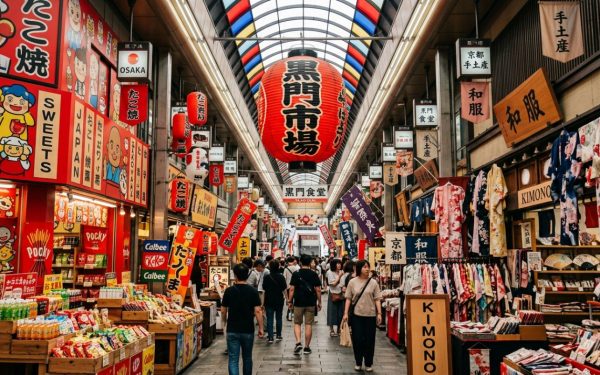
Kuromon Ichiba Market
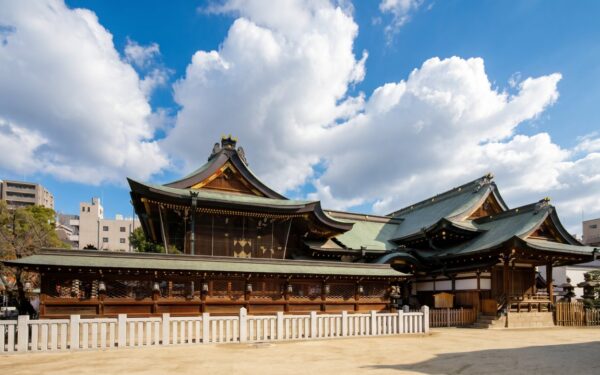
Osaka Tenmangu Shrine
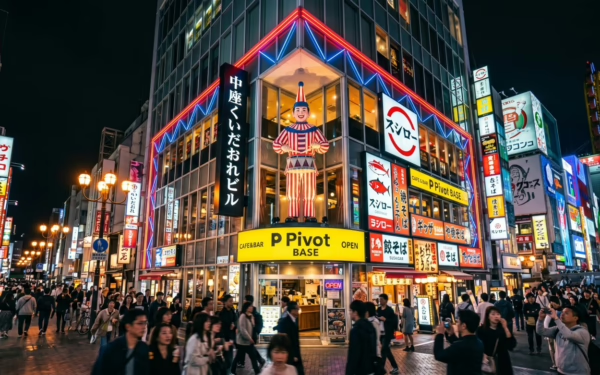
Nakaza Kuidaore Building
Kema Sakuranomiya Park
HEP FIVE Ferris Wheel
Shinsaibashi-suji Shopping Arcade
Umeda Sky Building
LUCUA SOUTH