
Getting Around Osaka: Subway, Trains, IC Cards and Taxis Explained
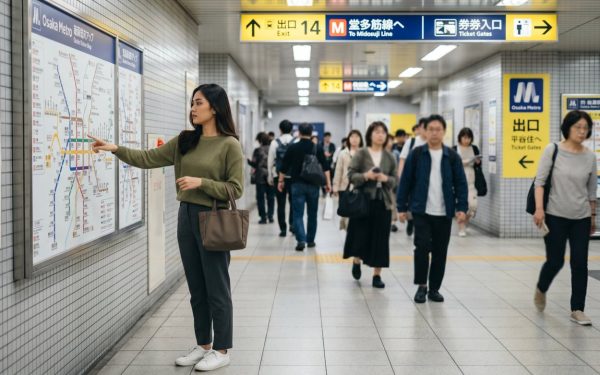
Osaka has one of Japan’s most efficient public transport networks, and most first-time visitors find it far less intimidating than they expected once they’re actually in it. The city’s eight subway lines, combined with JR and private rail, cover every major tourist area.
Get an IC card at the airport, load it with cash, and tap in and out of every train and bus without touching a ticket machine again.
If you’re still in the planning stage, the Osaka itinerary guide covers how transport fits into a day-by-day visit, including which neighborhoods cluster well together to minimize backtracking.
The IC Card: The Only Thing You Actually Need
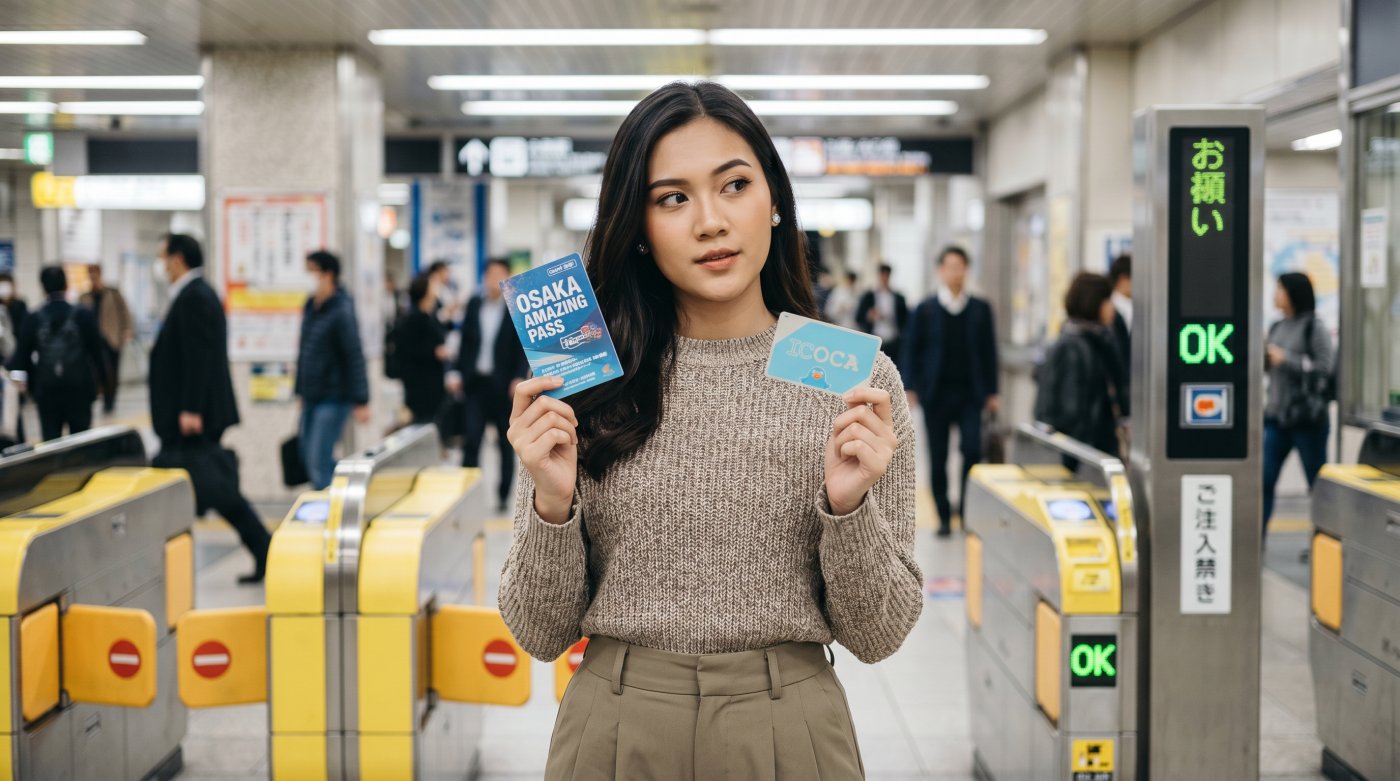
Before anything else: get an IC card. This is a reloadable prepaid card that works on the Osaka Metro, JR lines, Hankyu, Kintetsu, Nankai, and virtually every bus in the city.
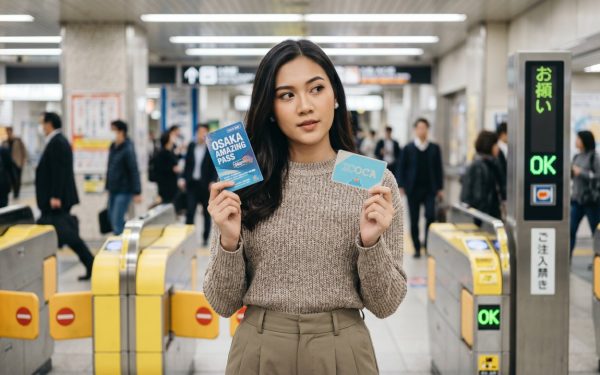
The two most common options in Kansai are the ICOCA (issued by JR West) and the PiTaPa (issued by Osaka Metro). For tourists, ICOCA is the right choice because it’s available at JR ticket machines and Kansai International Airport without requiring a Japanese bank account.
ICOCA costs 2,000 yen to purchase. That breaks down as 500 yen deposit (refundable) and 1,500 yen loaded credit.
Load additional credit at any green JR ticket machine or station ATM. Cards work nationwide on most transit networks, so they’re useful beyond Osaka as well.
What the IC card covers
The ICOCA card works on all of the following in Osaka and the wider Kansai region: Osaka Metro all lines, JR West local and rapid services, Hankyu Railway, Keihan Railway, Kintetsu Railway, Nankai Railway, and most city buses. It also works at convenience stores, vending machines, and some restaurants, so you can use the remaining balance on food.
The one thing it does not cover is shinkansen. For bullet train travel, you need a separate shinkansen ticket or a JR Pass.
Osaka Metro: The Main Network
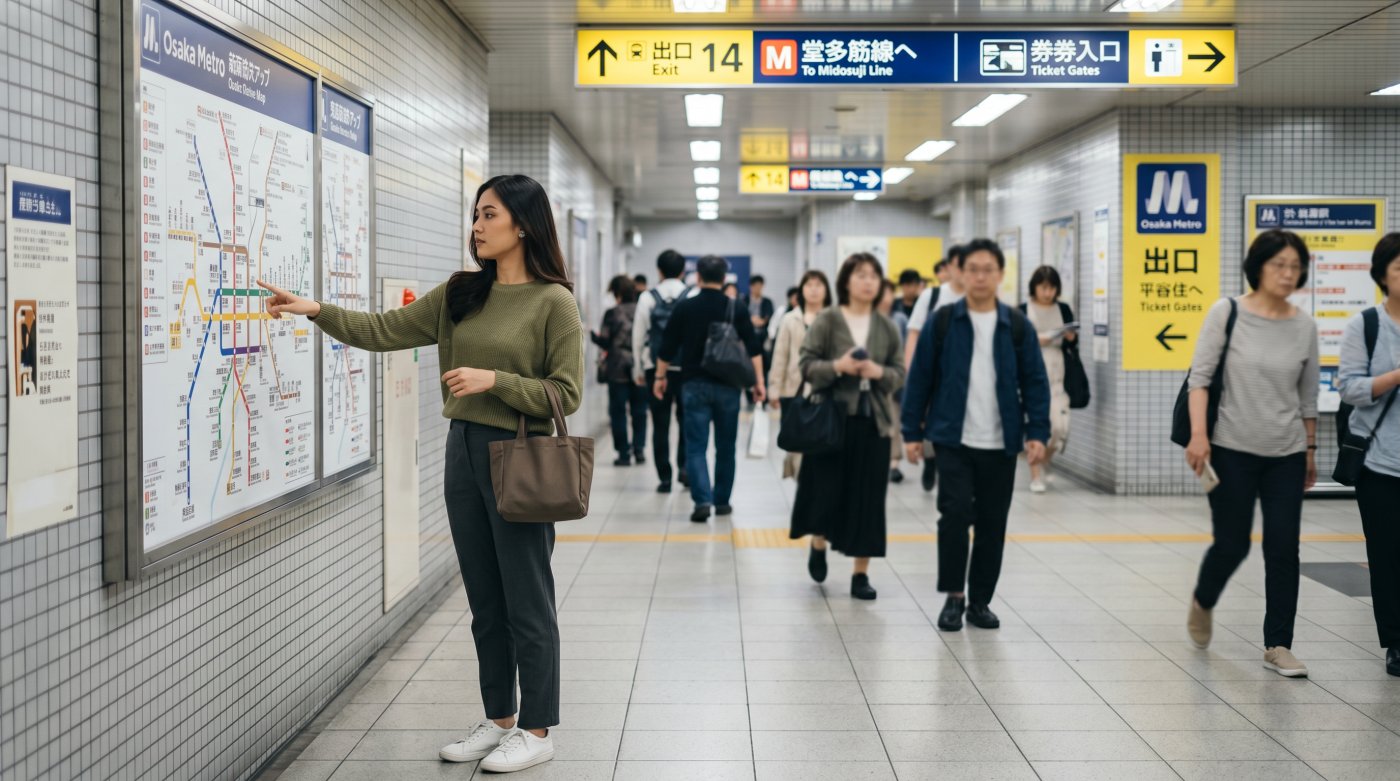
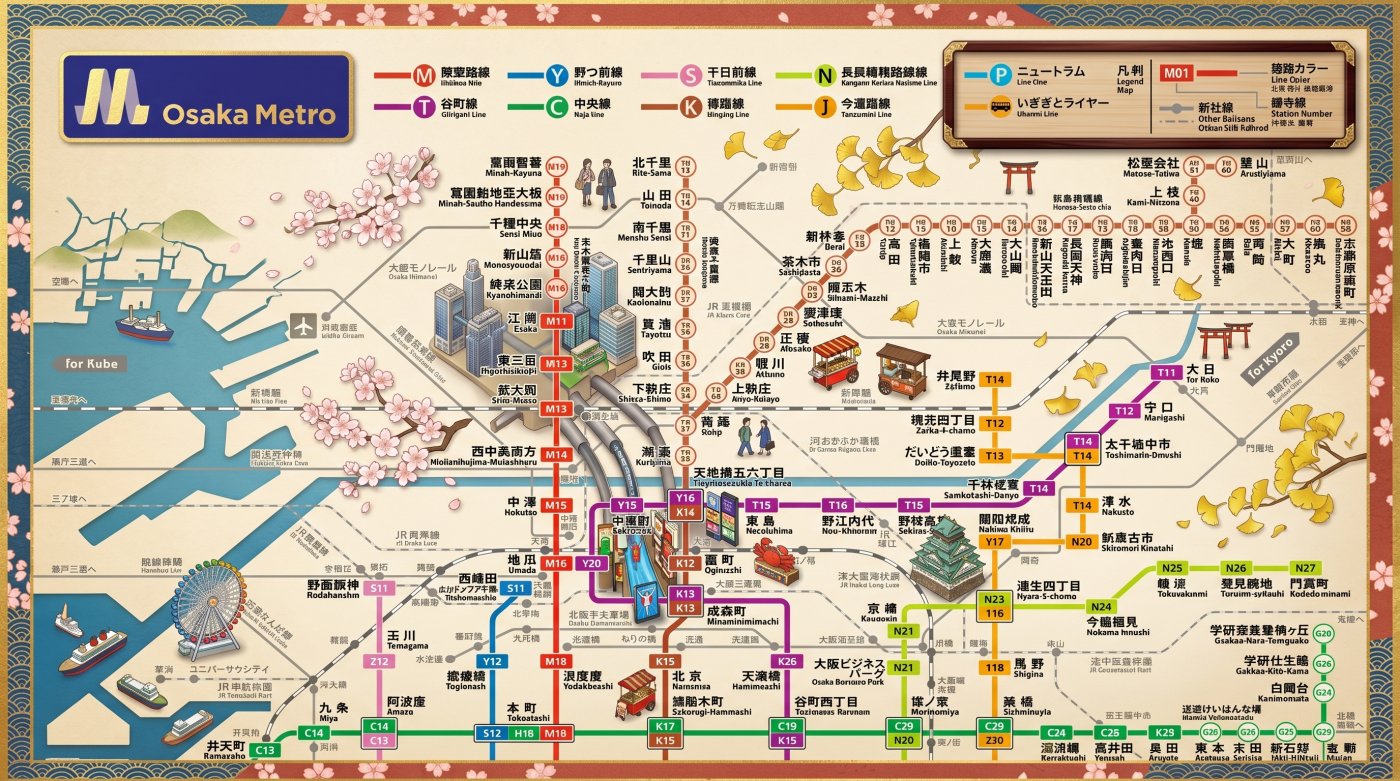
The Osaka Metro (formerly Osaka Municipal Subway) runs eight lines across the city. For tourists, four lines do most of the work.
The Midosuji Line (red) is the spine. It runs north to south through the city’s core, connecting Umeda in the north to Namba, Shinsaibashi, and Tennoji in the south.
If you’re staying near Namba or Shinsaibashi and heading to Umeda, this is your line.
The Tanimachi Line (purple) runs parallel to the Midosuji and serves Osaka Castle at Tanimachi 4-chome Station. It connects to the Midosuji at Higobashi, Namba, and other interchange points.
The Chuo Line (green) runs east to west and connects Osaka Bay and the aquarium area (Cosmosquare Station) to Osaka Business Park near the castle.
The Sennichimae Line (pink) connects Namba with Tsuruhashi (for Dotonbori access from the east) and runs through central Osaka.
Fares and frequency
Standard single fares start at 190 yen for short trips and top out at 380 yen for longer journeys within Osaka city. Trains run every three to five minutes on major lines during the day, and every eight to ten minutes after 10:00pm.
The last trains on most lines run around midnight. The first trains depart around 5:00am.
JR Lines in Osaka
JR West operates several lines that overlap with the Metro network and become relevant for specific journeys. The most useful for tourists are the Osaka Loop Line (JR Kanjo-sen) and the Osaka-Higashizaki Line serving Universal Studios Japan.
The Osaka Loop Line circles the city in both directions, stopping at Osaka Station (Umeda area), Tennoji, Tsuruhashi, and several other useful points. Fares are 160 to 220 yen for most rides within the loop.
Universal Studios Japan is reached via the JR Sakurajima Line from Osaka Station, a 12-minute ride for 180 yen. There is no direct Metro connection to USJ; JR is the standard option.
JR lines are also the route for most day trips to Kyoto, Nara, Kobe, and Himeji. Trains leave from Osaka Station (in Umeda, also called JR Osaka) rather than Umeda Metro Station, which is a separate station on a different platform a short walk away.
This is a common source of confusion for first-time visitors.
Private Rail Lines: Hankyu, Kintetsu, Nankai, Keihan
Osaka is also served by four major private railways. They’re cheaper than JR on several routes and the ICOCA card works on all of them.
Hankyu Railway departs from Osaka-Umeda Station (not the same building as JR Osaka, but adjacent). It serves Kobe’s Sannomiya in 28 minutes for 320 yen and Kyoto’s Kawaramachi in 47 minutes for 410 yen.
If you’re not using a JR Pass, Hankyu is the better-value option for both destinations.
Kintetsu Railway departs from Osaka-Namba Station (connected to Namba Metro). It serves Nara in 39 minutes for 680 yen and is the most convenient route from central Osaka to Nara without JR.
Nankai Railway also departs from Namba and is the only rail link to Kansai International Airport (KIX). The Nankai Rapi:t express reaches the airport in 38 minutes for 1,430 yen.
The regular Nankai Kuko Line takes 48 minutes for 930 yen.
Keihan Railway departs from Yodoyabashi or Tenmabashi and serves the Kyoto waterfront (Gion-Shijo, Demachiyanagi). It’s a useful alternative to JR when staying in eastern Osaka.
Getting from Kansai International Airport to Osaka
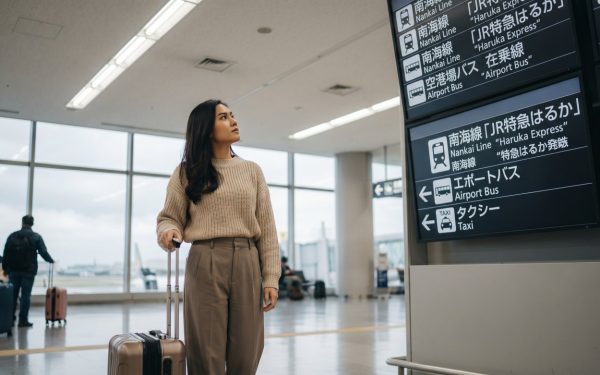
Kansai International Airport (KIX) is on an artificial island in Osaka Bay, 50 kilometers from the city center. There are four main options.
- Nankai Rapi:t (recommended): Express train to Namba Station. 38 minutes, 1,430 yen. Runs every 30 minutes. This is the fastest and most direct option if you’re staying in Namba, Shinsaibashi, or Dotonbori. The distinctive black train with circular windows is hard to miss at the airport station.
- JR Haruka Express: Runs to Shin-Osaka and Kyoto, with a stop at Tennoji. Takes 50 minutes to Shin-Osaka. The standard fare is 1,800 yen, but a discounted IC card fare of 1,740 yen applies for foreign visitors using ICOCA. This is the better option if you’re staying in Umeda or catching a shinkansen connection.
- Airport Limousine Bus: Serves hotels and areas the trains don’t reach directly. Runs to Namba, Umeda, and Tennoji for 1,100 to 1,600 yen. Takes 50 to 75 minutes depending on traffic. Useful if you have heavy luggage and are staying somewhere bus-accessible.
- Taxi: Costs approximately 15,000 to 20,000 yen from KIX to central Osaka. Use only if sharing the cost across three or four people with significant luggage.
Getting from Itami Airport (ITM) to Osaka
Itami Airport handles domestic flights and is much closer to the city center, about 15 kilometers north.
The Airport Limousine Bus from Itami is the standard option. It serves Osaka Station (Umeda), Namba, and other city points.
Journey time is 25 to 40 minutes for 640 yen. The Monorail from Itami connects to Osaka Monorail stations and then to the Hankyu and Midosuji lines, but the bus is simpler for most visitors.
The Osaka Amazing Pass
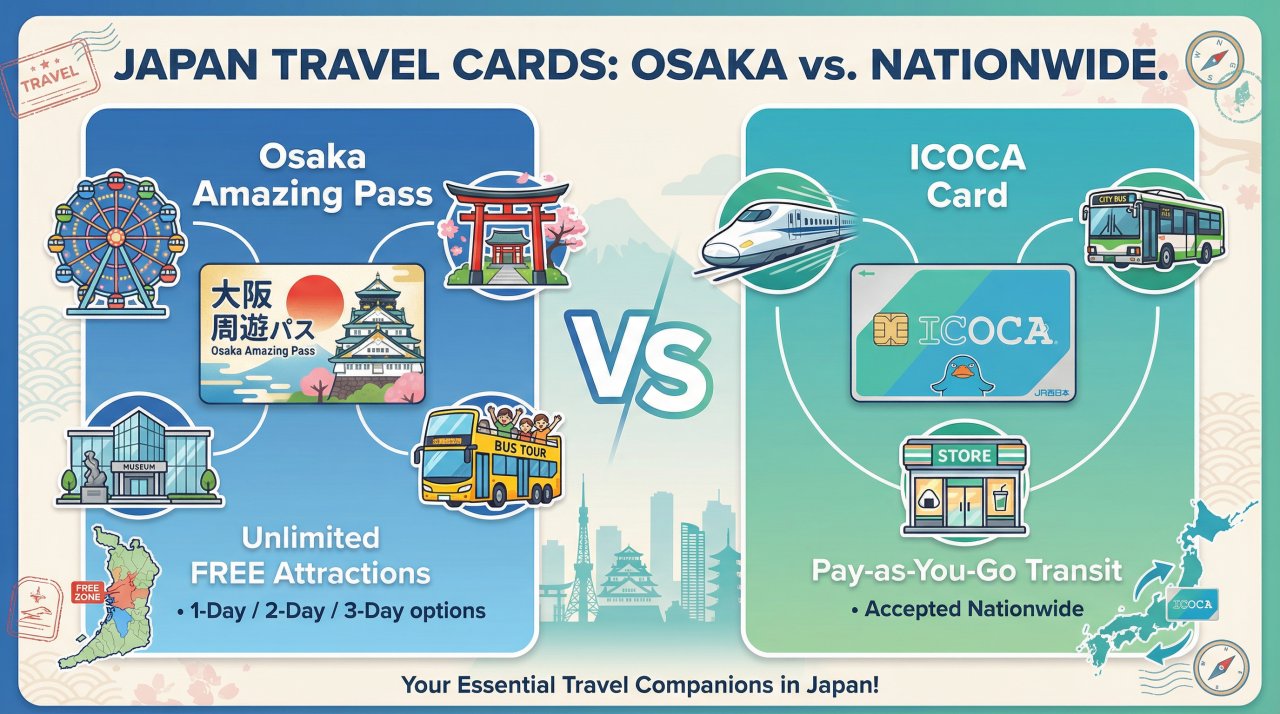
The Osaka Amazing Pass is a combined transport and attraction pass worth considering if you’re planning to visit multiple paid attractions in a short period. It comes in one-day (2,800 yen) and two-day (3,600 yen) versions.
Osaka Amazing Pass — the one pass worth buying
Unlimited subway rides plus free entry to 40+ attractions including Osaka Castle, Umeda Sky Building, and the Dotonbori River Cruise. If you're spending more than a day sightseeing, it pays for itself before lunch.
The pass includes unlimited rides on Osaka Metro and city buses, plus free entry to over 40 attractions, including Osaka Castle Tower (600 yen normally), Umeda Sky Building (1,500 yen), Tsutenkaku Tower (800 yen), and several others. The math works in your favor if you’re visiting three or more paid attractions in a single day.
It does not cover JR trains, shinkansen, or private railways. Buy it at major Metro stations, Kansai Airport, or at tourist information counters.
Taxis and Ride Hailing

Taxis in Osaka start at 730 yen for the first 1.5 kilometers and increase by around 80 yen every 280 meters. They’re reliable, clean, and the drivers are honest, but they get expensive fast.
For late-night trips after the Metro closes at midnight, taxis are the main option. Most can be hailed from the street; there are also taxi ranks at major stations and outside large hotels.
GO is the main taxi-hailing app in Japan, equivalent to Uber. It’s available in English and works across Osaka.
You can pay by card through the app, which avoids the cash-only awkwardness of some drivers. Download it before arrival.
Ride-sharing apps like Uber function in Osaka but use licensed taxi drivers rather than private drivers, so pricing is similar to street taxis.
Cycling in Osaka
Osaka is reasonably cycle-friendly by Japanese city standards, and rental bikes are available across the city through the Docomo Bike Share network (also called Osaka City Cycle Share). Docking stations are spread through the central wards.
Pricing: 165 yen per 30 minutes. A monthly pass is available for 2,200 yen if you’re staying longer.
Cycling works well for getting between neighborhoods in central Osaka, particularly around the flat areas connecting Namba, Shinsaibashi, and Horie. The riverside cycling paths along the Okawa River are also pleasant for a morning or evening ride.
Helmets are not legally mandatory for adults in Japan but are recommended. Riding on pavements is technically prohibited but extremely common and generally tolerated.
Navigating Without Japanese
Japan’s transit signs use both kanji and Roman script (romaji) at all major stations. In Osaka, station names on platform signage, train maps, and automated announcements are in English as well as Japanese.
First-time visitors usually find the system manageable without any Japanese language knowledge.
Google Maps works accurately for transit routing in Osaka and shows train line colors, platform numbers, and transfer instructions. It’s reliable enough that most visitors use it as their sole navigation tool.
Japan Official Travel App (by JNTO) includes offline transit maps for when you don’t have data. Useful as a backup.
The main confusion point for new arrivals is distinguishing between Metro stations and JR stations with similar names. Umeda (Metro Midosuji Line) and Osaka Station (JR) are adjacent but separate. Namba
(Metro/Kintetsu/Nankai) and JR Namba are different stations 400 meters apart. Keep that in mind when Google Maps gives you directions.
Which Area Makes the Best Transport Base
Where you stay in Osaka shapes how easy everything else is. The where to stay in Osaka guide covers this in detail, but from a pure transport standpoint, staying within walking distance of Namba Station puts you on the Midosuji Line, the Kintetsu Nara Line, and the Nankai Airport Line simultaneously.
That means direct access to every direction and the airport without changing trains.
Staying in Umeda gives you JR Osaka, Hankyu, and the northern end of the Midosuji. It’s better positioned for day trips to Kyoto and Kobe via Hankyu.
Either area works well; the choice comes down to which part of the city you want to explore more of. The Osaka neighborhoods guide covers what each area is actually like to stay in day-to-day.