Tombori River Cruise
A guided 20-minute boat ride along the Dotonbori River beneath nine bridges in Osaka's Minami.

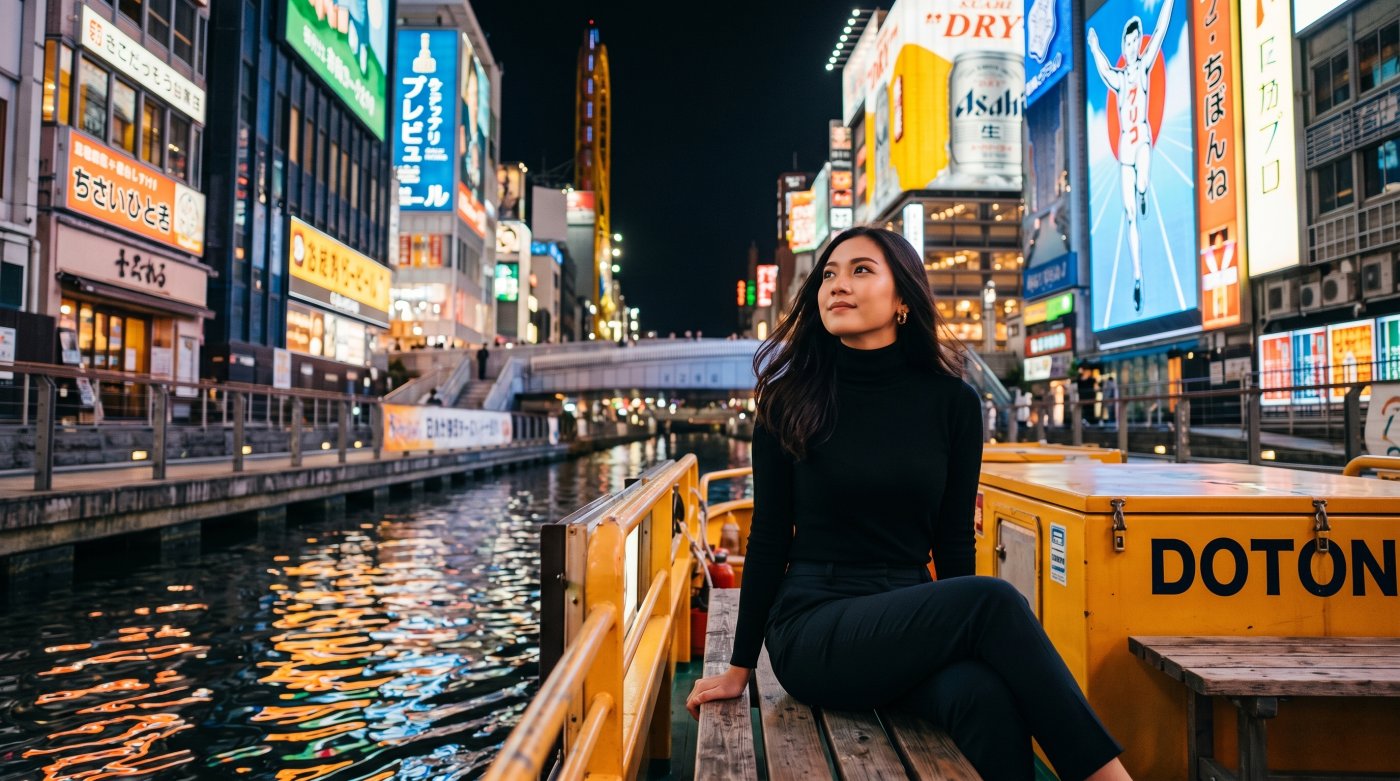
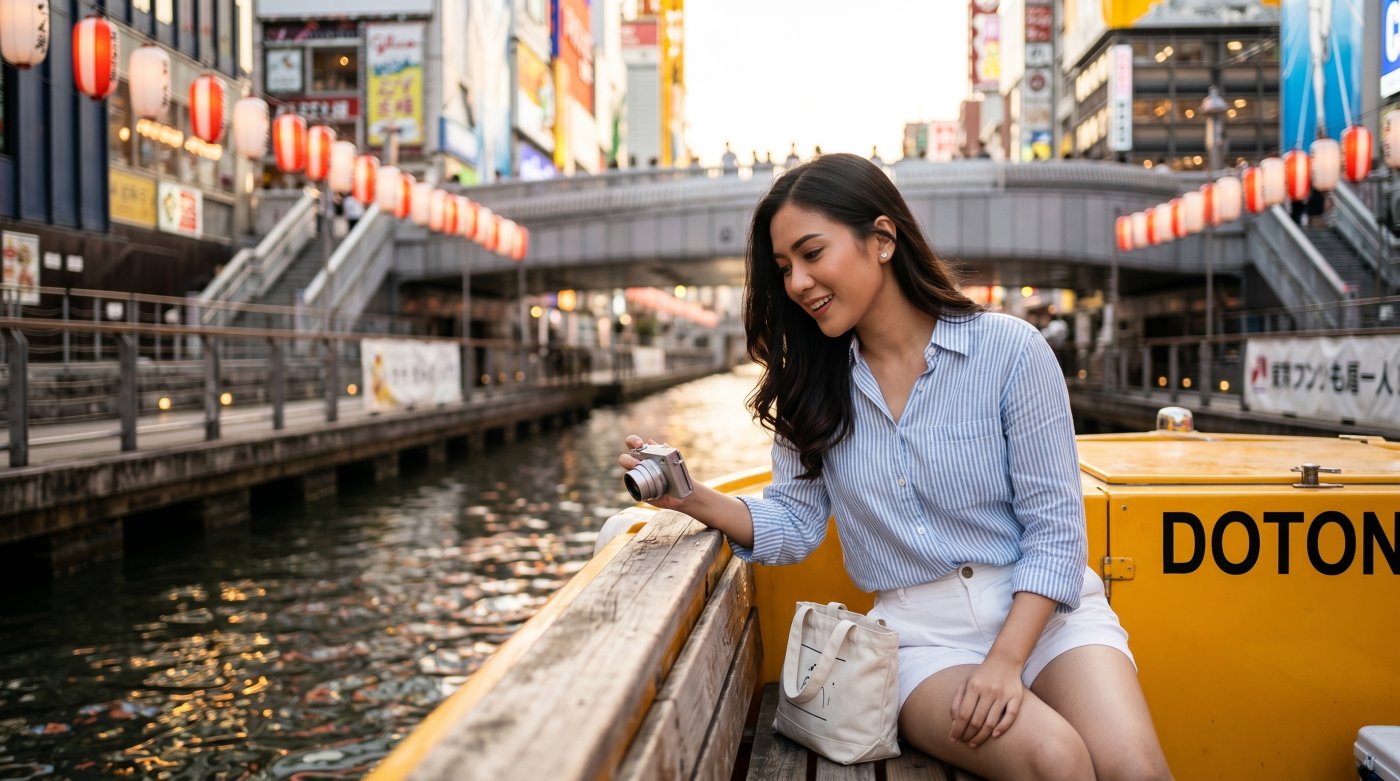
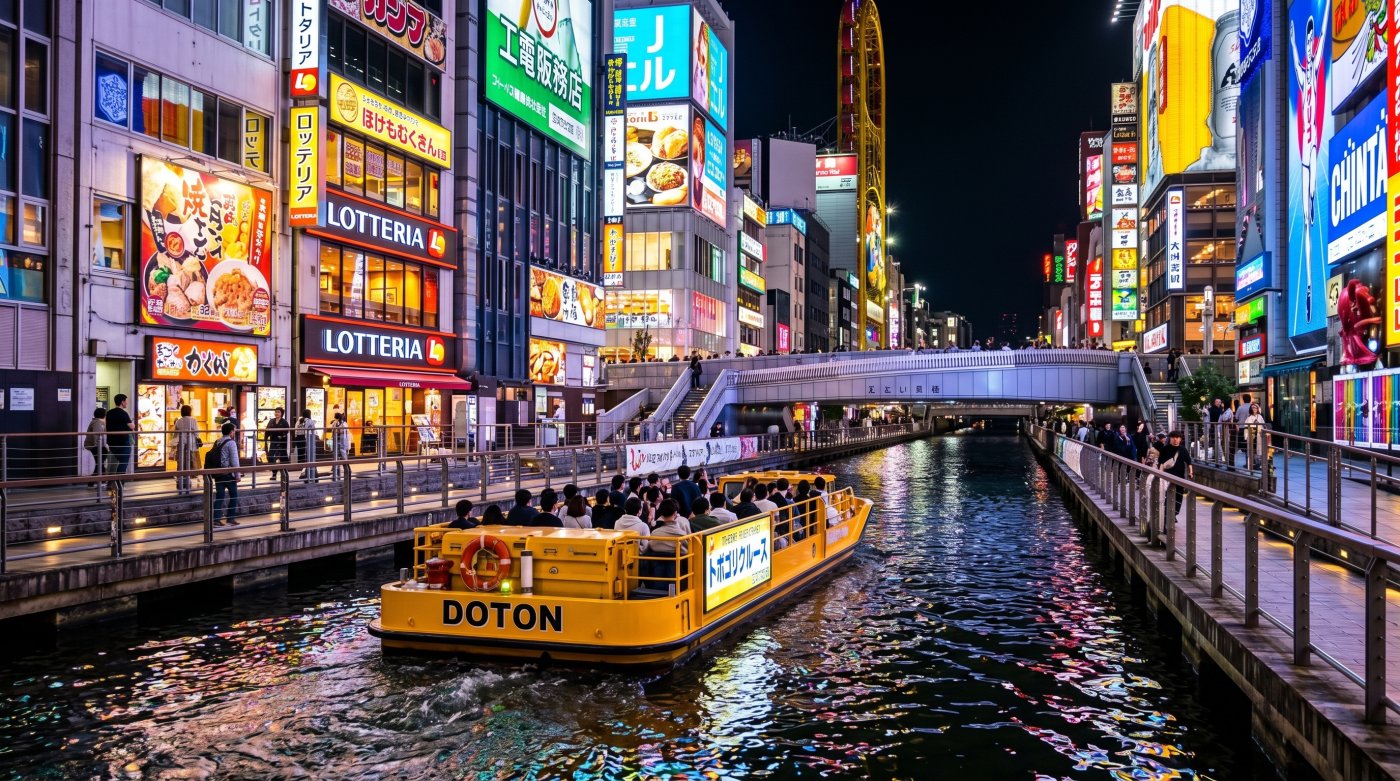
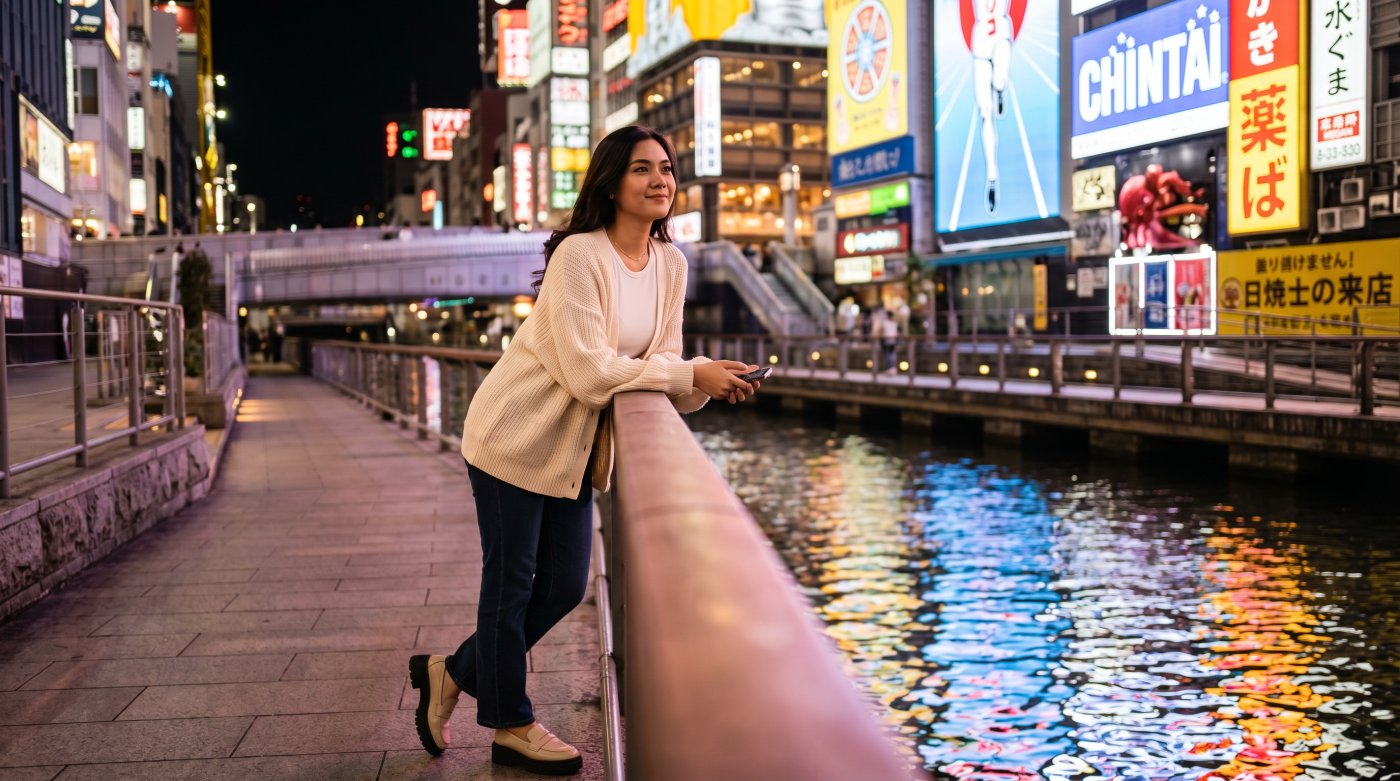
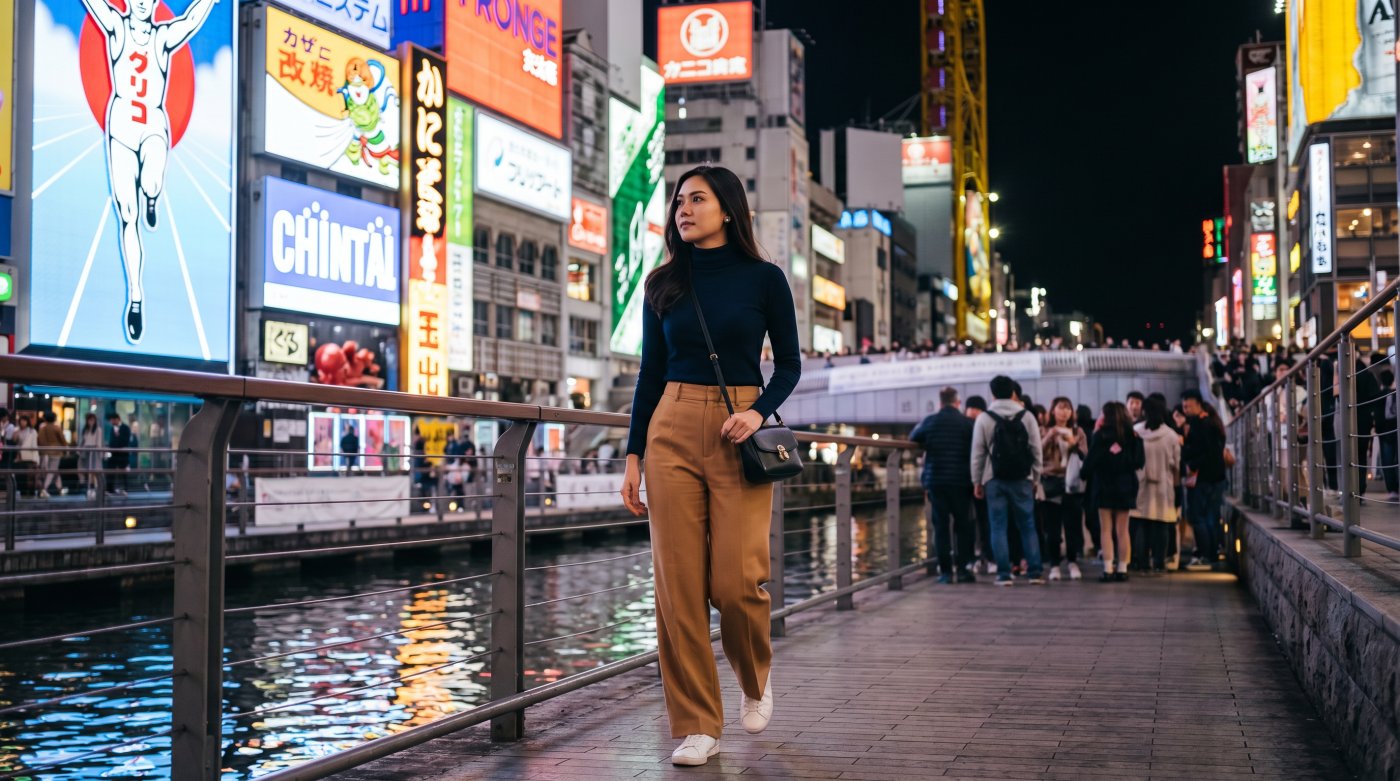
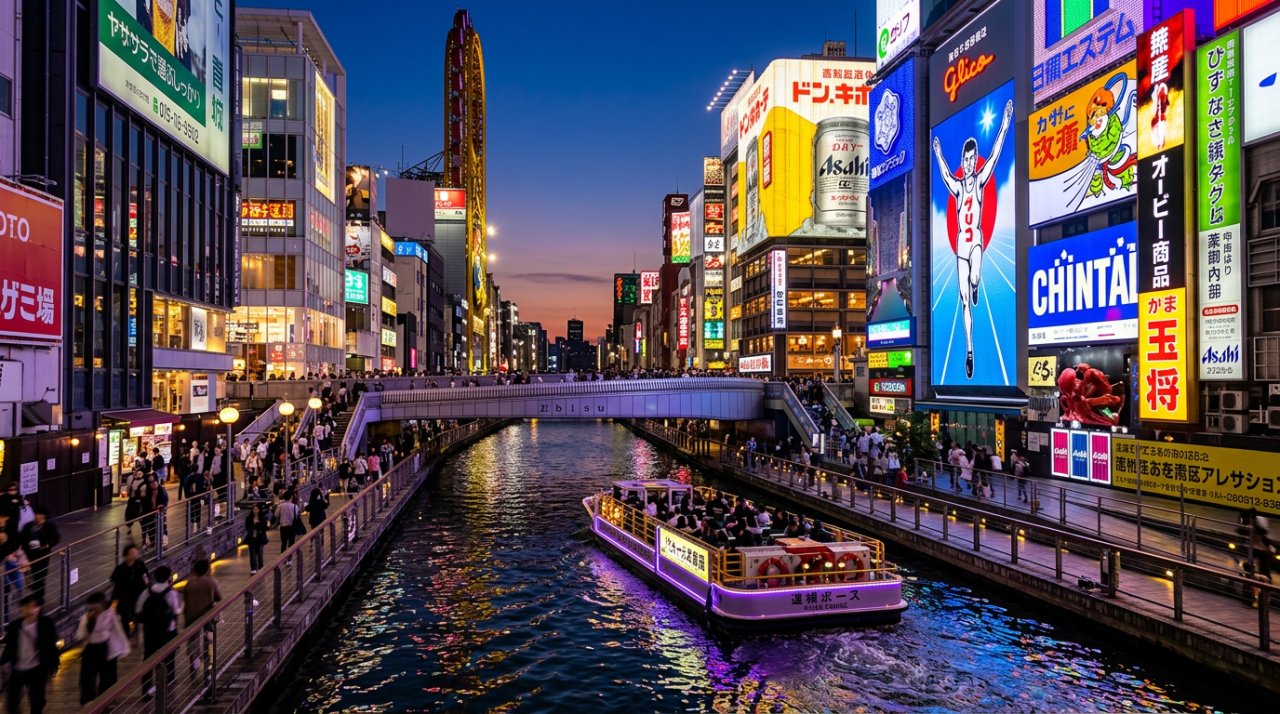
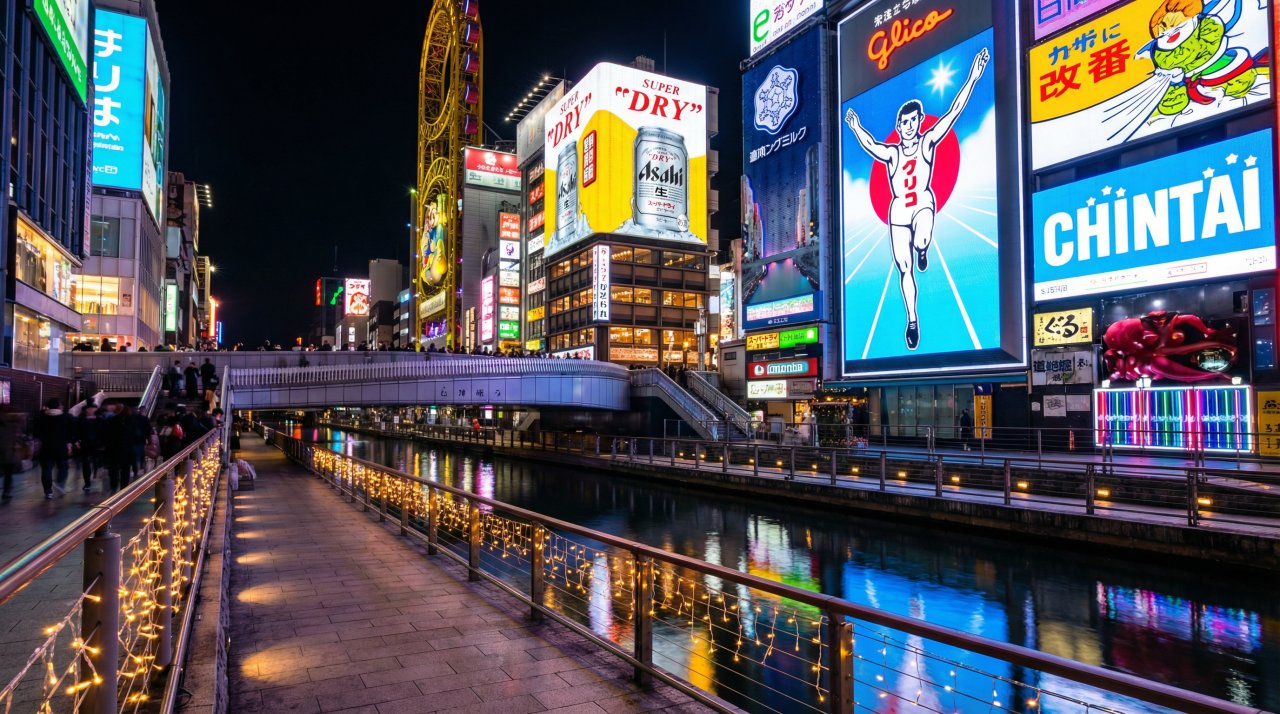









The Tombori River Cruise — とんぼりリバークルーズ — is a 20-minute guided sightseeing boat operated by the Naniwa Community Tourism Consortium through Ipponmatsu Shipping Co., Ltd.
Your vessel departs from Tazaemonbashi Pier, right beside the Don Quijote store on the north bank of the Dotonbori River, and loops under nine distinctive bridges while a local guide delivers commentary in full Osaka theatrical style.
From water level, Dotonbori reveals a perspective the crowds on the footbridge above never get.
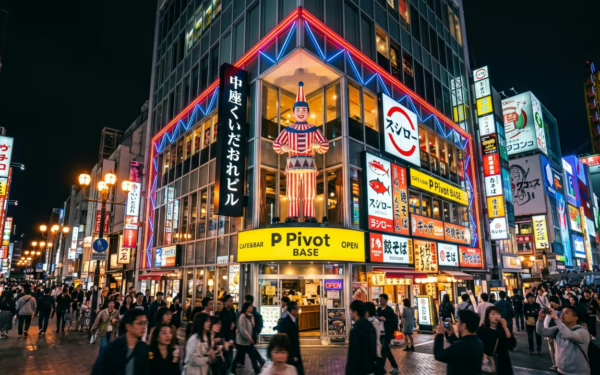
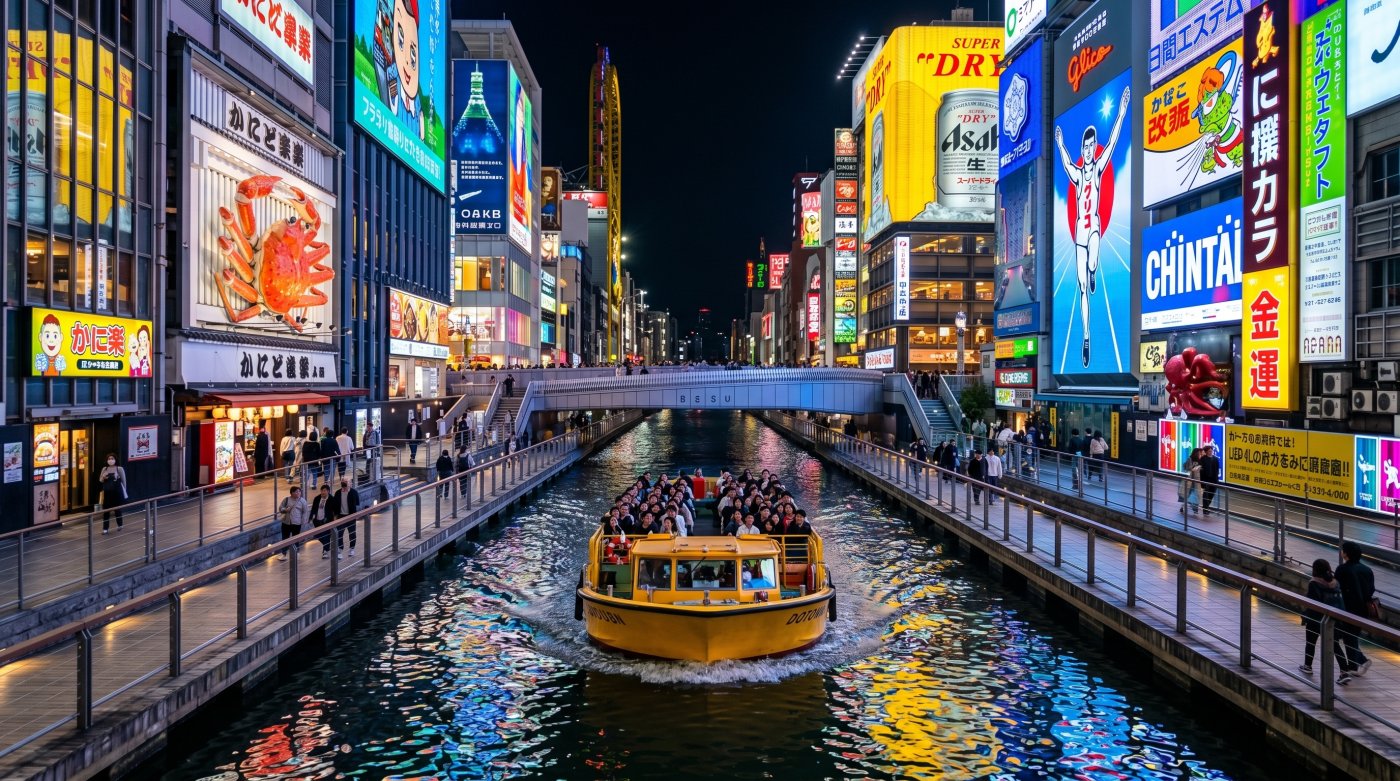
You’ll drift past the Glico Running Man, the mechanical crab at Kani Doraku, and the stacked neon signage of Minami-Osaka, all framed by the river’s surface in a way that makes the visual chaos suddenly feel composed.
Evening cruises are where the experience peaks — the neon reflects off the canal at dusk in a way that feels almost cinematic.Departures run every 30 minutes from 11:00 to 21:00, every day of the week.
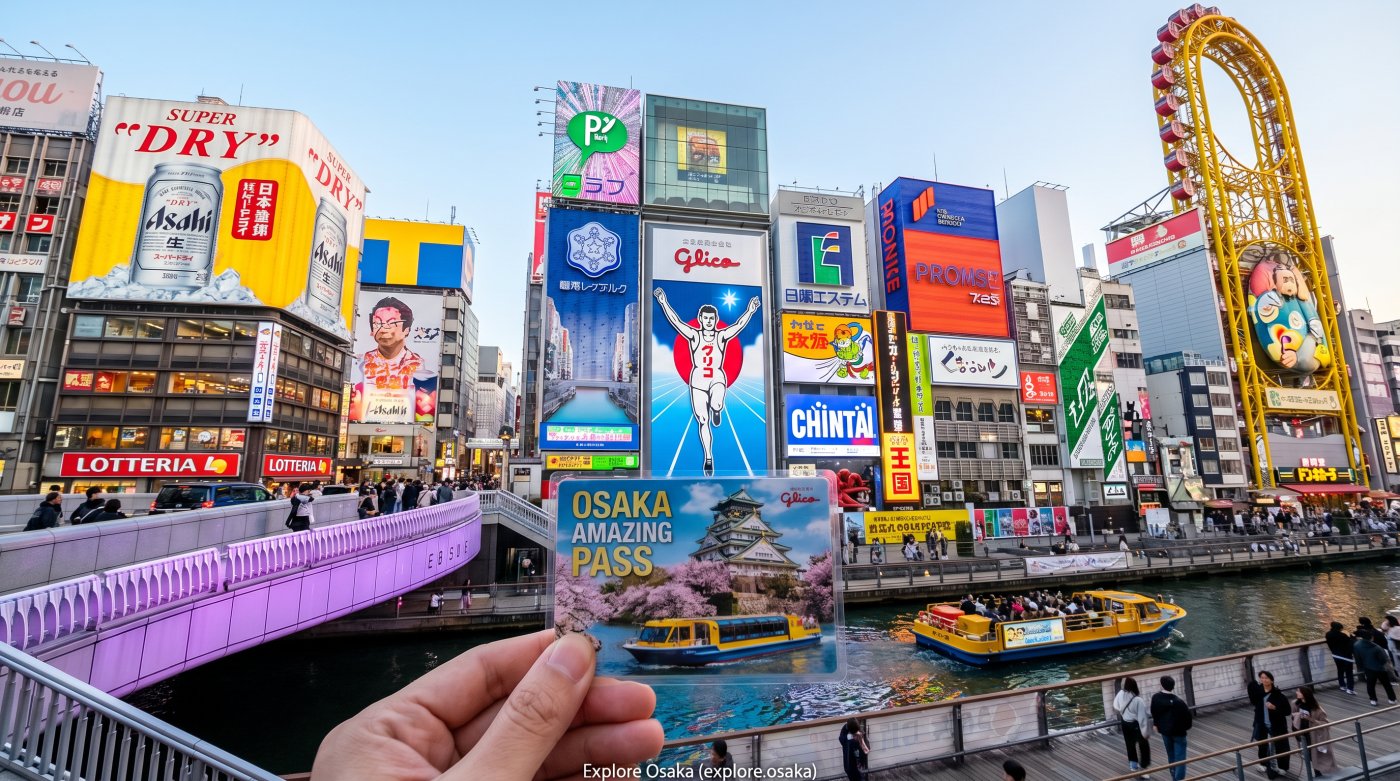
The ticket counter opens one hour before the first departure; if you’re using the Osaka Amazing Pass, exchange it during the daytime since evening slots go fast.
Online reservations opened in November 2025 through the official Cloud Pass system, so you can now lock in your departure time up to three months ahead without stopping at the counter at all.
The cruise is suspended annually on July 13, 24, and 25, and may be cancelled without notice due to high water levels, strong winds, or local events.
Light rain is not a problem — the boats run regardless, and ponchos are provided if needed.
Children under elementary school age ride free at one per accompanying adult.
Tombori River Cruise Osaka: Prices, Hours and What to Expect (2026)
The Tombori River Cruise puts you on the Dotonbori River for 20 minutes with a live guide, a slow-moving boat, and a completely different view of one of the most photographed streets in Japan.
In this Explore Osaka guide, you’ll find everything you need to plan your visit: verified hours, current prices, how to use the Osaka Amazing Pass, what you’ll actually see from the water, and how to time your slot so the neon is doing its full job after dark.
Quick Facts
Hide- Official name: Tombori River Cruise (とんぼりリバークルーズ)
- Operated by: Ipponmatsu Shipping Co., Ltd. / Naniwa Community Tourism Consortium
- Boarding point: Tazaemonbashi Pier, 7-13 Soemoncho, Chuo Ward, Osaka 542-0084
- Operating hours: Daily 11:00 to 21:00, departures every 30 minutes
- Admission: 2,000 yen adults / 1,000 yen students (junior high to university, with ID) / 500 yen children (elementary school) / Free for children under school age (one per adult)
- Nearest station: Namba Station (Osaka Metro Midosuji Line M20, Yotsubashi Line S16, Sennichimae Line, Nankai, JR, Hanshin/Kintetsu) - 2 min walk
- Duration: Approximately 20 minutes per departure
- Osaka Amazing Pass: Included free on both 1-day and 2-day passes
- Advance booking: Available via Cloud Pass at cloud-pass.jp (up to 3 months ahead)
- Suspended: July 13, 24, and 25 annually; year-end/new year period (check official site)
- Official website: ipponmatsu.co.jp/cruise/tombori.html
Why Visit the Tombori River Cruise
You’ve almost certainly already walked Dotonbori.
You’ve stood on Ebisubashi, squeezed past tour groups under the Glico Running Man, maybe eaten something on a stick.
The street makes a strong impression.
But it’s a flat impression, experienced at eye level with several thousand other people who arrived at the same time.
The river is different.
From water level, the bridges frame each landmark in sequence, the neon signage reads as a single layered composition rather than a scattered jumble, and the reflection of the canal surface after dark pulls the whole corridor into something that feels almost cinematic.
It’s the same street, seen from below, and that shift in angle changes the way you understand it.
The Honest Case for Buying a Ticket
At 2,000 yen without the Osaka Amazing Pass, this is an experience you’re paying for, not a destination.
Whether it earns its price depends on what you want from it.
If you’re in Dotonbori for the evening and you want twenty minutes of genuine calm inside the visual energy of Minami, the cruise delivers that well.
If you’re expecting a long scenic journey or detailed historical commentary in English, it won’t fully satisfy.
For pass holders, the calculation is easier: it’s included at no extra cost, it takes 20 minutes, and the worst outcome is confirming that the view from the footbridge is fine too.
That’s a low-risk proposition by any measure.
A View That Photographs Differently
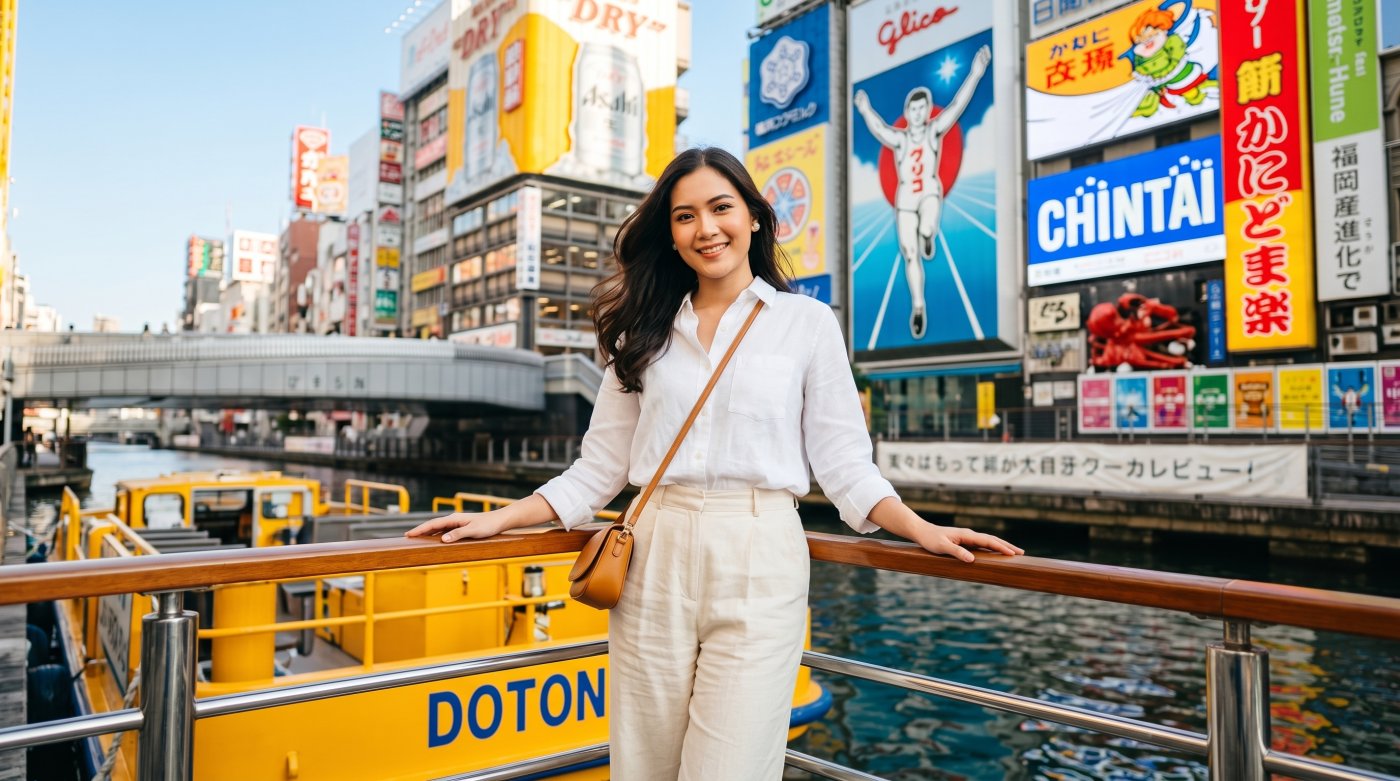
One thing consistent across visitor reviews is that photographs taken from the boat look noticeably different from the hundreds of Dotonbori photographs taken from the bridge above.
The angle is lower, the bridges become foreground elements rather than background clutter, and the reflection of neon on the water adds a layer that street-level photography simply can’t replicate.
If you’re spending time in Osaka and planning to photograph the Dotonbori corridor anyway, the cruise slot is worth securing on that basis alone.
What to See and Do on the Tombori River Cruise
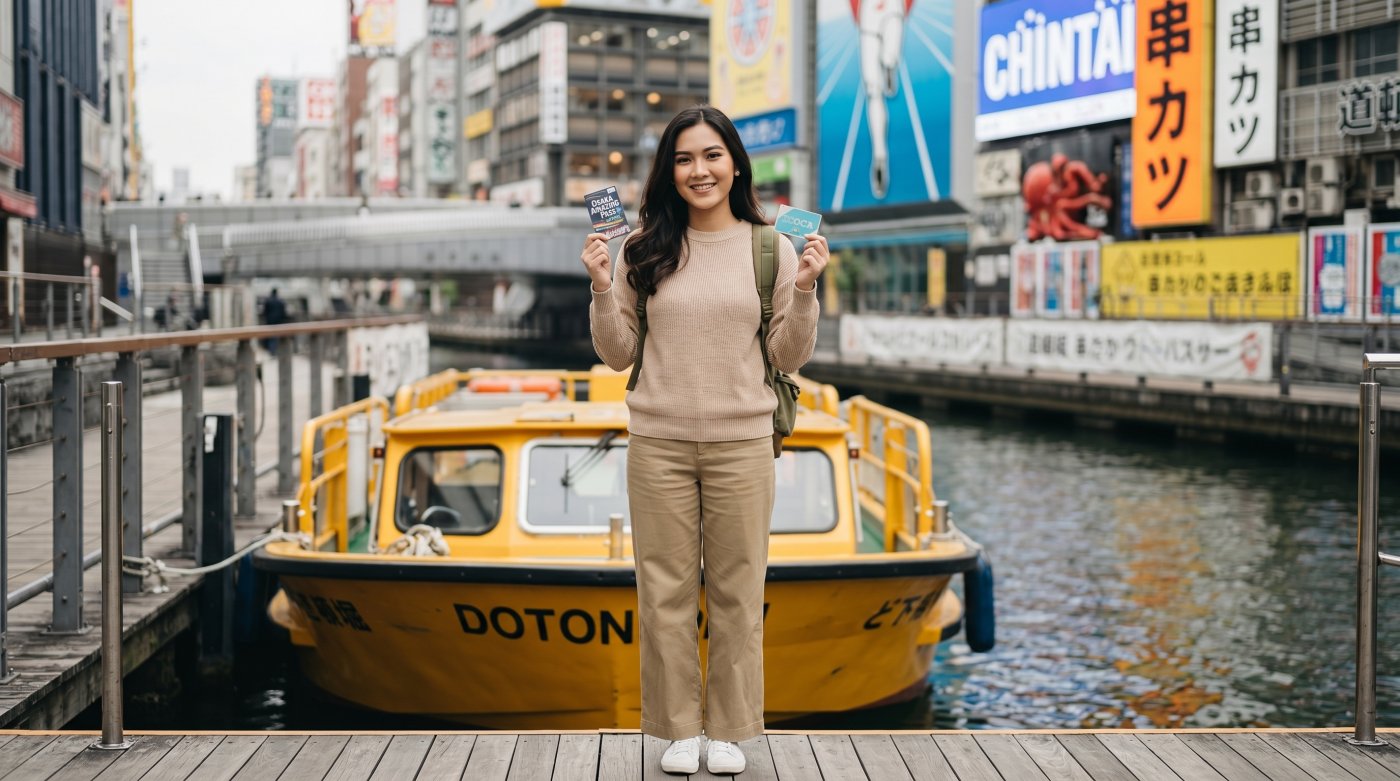
The boarding area is at Tazaemonbashi Pier on the north bank of the Dotonbori River.
Look for the large yellow oval Ferris wheel above the Don Quijote store building as your landmark.
The ticket counter is one floor up from the riverside path, clearly signposted in English, Japanese, Korean, and Chinese.
Once on board, you’ll find bench seating in a flat-bottomed sightseeing vessel.
The guide position is at the front.
The cruise moves at a slow, steady pace and covers the river in both directions beneath nine bridges before returning to the pier.
The Landmarks Along the Route
Dotonbori packs an unreasonable amount of visual information into a short stretch of water.
From the boat, the landmarks don’t blur into background noise the way they do at street level — each one arrives with its own framing, its own reflection, its own moment before the next bridge cuts the view.
Nine bridges in twenty minutes means the scenery changes at a pace that keeps you genuinely attentive.
Glico Running Man and the Dotonbori Icons
The Glico Running Man neon sign is the image most associated with Dotonbori, and the cruise puts you directly below it rather than across a crowd from it.
From the water, the scale reads differently and the angle eliminates the usual problem of photographing through a sea of raised phones.
This alone is the moment most passengers are waiting for.
Beyond Glico, the route passes the Kani Doraku mechanical crab, the Kinryu Ramen dragon sculpture, and the layered wall of neon food signage that makes up the north bank of the canal.
The guide provides commentary on each of these, pointing out historical context around landmarks including the Nihombashi Bridge, which served as a major trading hub during the Edo period in the 17th and 18th centuries.
The Nine Bridges
The guide counts and names each of the nine bridges as you pass beneath them, and this small ritual gives the ride a satisfying structure that prevents it from feeling aimless.
Each bridge has a different profile, a different light situation, and a different frame on the buildings behind it.
The most photographed bridge passage is the narrow one closest to the Glico sign, where the canal feels especially contained and the building facades crowd in from both sides.
Evening on the Dotonbori River
Evening departures are where the cruise earns its strongest reviews, and the visual reason is clear.
After approximately 18:00, the neon on both canal banks reflects cleanly off the water surface, and the overhead bridge lighting adds depth to the canal corridor that simply doesn’t exist in daylight.
The whole stretch becomes a different experience after dark, and the boat gives you 20 minutes to sit inside it.
Why Evening Slots Fill First
The practical consequence of this is that evening departures are the first to reach capacity.
The official advice from the Osaka Amazing Pass website is explicit: exchange your pass during the daytime and secure your specific time slot, then go explore the area and return for your boarding time.
This is genuinely useful advice.
The counter opens at 10:00, one hour before the first 11:00 departure, so you can lock in an evening slot early and have the whole day free before boarding.
Online Booking via Cloud Pass
Since November 2025, advance reservations are available through the Cloud Pass system at cloud-pass.jp.
You can book a specific departure time up to three months ahead, and on the day of your cruise you proceed directly to the boarding gate without stopping at the counter at all.
Same-day walk-up tickets remain available at the pier, but the online option removes the uncertainty around popular time slots, particularly on weekends and public holidays.
Phone reservations are not accepted.
All bookings are either online through Cloud Pass or in person at the Tazaemonbashi Pier counter on the day.
Getting There
The Tombori River Cruise operates from one of the most centrally accessible locations in all of Osaka.
If you’re based anywhere in the Namba or Shinsaibashi corridor, you’re already within walking distance.
From Namba Station
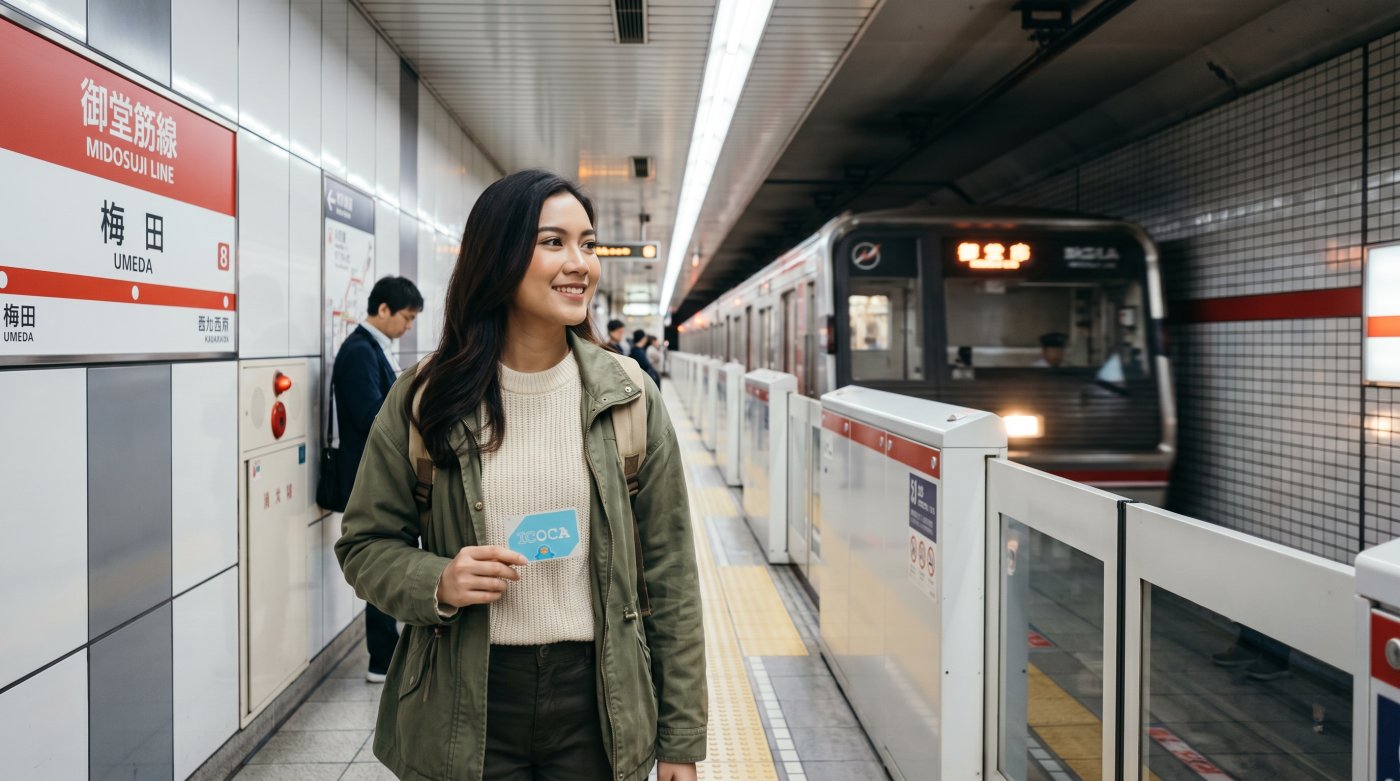
From Namba Station, use Exit 14 on the Osaka Metro Midosuji Line (M20) and follow the riverside path west along the Dotonbori canal.
The walk takes under two minutes.
The yellow oval Ferris wheel on the Don Quijote building is visible from the exit and serves as a reliable landmark.
Namba Station is served by five separate rail lines: Osaka Metro Midosuji, Yotsubashi, and Sennichimae lines, plus Nankai Namba, JR Namba, and Hanshin/Kintetsu Osaka Namba Station, making it reachable from virtually every part of the city.
From Shinsaibashi
Walking south from Shinsaibashi Station along Shinsaibashisuji shopping arcade takes approximately ten minutes to reach the Dotonbori canal.
From there, the pier is immediately visible on the north bank, just west of Ebisubashi Bridge.
From Nippombashi Station
Nippombashi Station, served by the Osaka Metro Sennichimae Line and Kintetsu, is about a seven-minute walk from the pier via Exit 2.
This is a useful approach if you’re coming from Kuromon Market to the east.
IC Cards and Transport
All Osaka Metro lines accept IC cards including Suica, ICOCA, and PiTaPa.
If you’re using the Osaka Amazing Pass, it already includes unlimited subway rides on the day of use, so your travel to and from the pier costs nothing beyond the cruise experience itself.
Practical Tips for the Tombori River Cruise
Most things about this cruise are straightforward, but a few details will make your visit noticeably smoother.
Using the Osaka Amazing Pass
Present your Osaka Amazing Pass at the Tazaemonbashi Pier counter to exchange it for a boarding pass with a designated time slot.
Osaka Amazing Pass — the one pass worth buying
Unlimited subway rides plus free entry to 40+ attractions including Osaka Castle, Umeda Sky Building, and the Dotonbori River Cruise. If you're spending more than a day sightseeing, it pays for itself before lunch.
The counter opens at 10:00, one hour before the first 11:00 departure.
Once you have your slot, you’re free to leave and return for your boarding time.
You do not need to wait at the pier.
The priority is evening slots.
On weekends and public holidays, the 19:00 to 21:00 departures can be fully claimed by early afternoon.
If you have any flexibility, secure your slot in the morning, explore the Dotonbori and Namba area during the day, and come back for the evening light.
Buying Tickets Without the Pass
Standard adult tickets are 2,000 yen.
Student tickets for junior high school, high school, university, and vocational school students with valid ID are 1,000 yen.
Elementary school children pay 500 yen.
Children under elementary school age board free, with one free place per accompanying adult.
A second young child in the same group is charged the child rate.
Tickets can be purchased at the pier counter or booked in advance through cloud-pass.jp.
Payment at the counter accepts both cash and IC cards.
What to Wear and Bring
The boat has no covered roof, so dress for the weather.
In summer, the canal retains heat and the boat can feel warm even in the evening.
In winter, the water amplifies the cold air, and evening cruises below 10 degrees Celsius are genuinely chilly without an extra layer.
A small bag is fine.
There’s no storage area for large luggage, and the boarding walkway is narrow enough that large rolling suitcases would be impractical.
The cruise operates in light rain, and ponchos are provided on board if needed.
Heavy rain or strong winds may lead to cancellation without advance notice, so it’s worth confirming operational status via the official phone line (050-1807-4118, staffed 09:00 to 17:00) on days with uncertain weather.
Suspension Dates and Seasonal Notes
The cruise is suspended annually on July 13, 24, and 25.
It also closes for a year-end and new year period, with specific dates varying each year and posted on the official Ipponmatsu website.
Beyond these scheduled closures, operations can be suspended without notice due to high water levels, strong winds, river maintenance works, or local festivals in the Dotonbori area.
The cruise runs year-round and is worthwhile in every season.
Spring brings mild temperatures and clear evening light.
Summer is humid but the neon reflection on the water is at its most saturated.
Autumn brings lower crowds on weekday slots and cooler boarding temperatures.
Winter evening cruises are the coldest but also the sharpest visually, with the neon cutting cleanly through the cold air above the canal.
Nearby Attractions Around Tombori River
The boarding pier at Tazaemonbashi puts you in the middle of the Minami entertainment district, surrounded by some of the most concentrated sightseeing and dining in Osaka.
Everything below is within easy walking distance.
- Dotonbori Strip: The full length of the Dotonbori entertainment corridor stretches roughly two kilometres from Nippombashi in the east to Daikoku Bridge in the west, along both banks of the canal. After the cruise, walking the full length slowly from one end to the other is a worthwhile thirty-minute activity. For specific food recommendations in this stretch, the Osaka food guide covers the best options without the guesswork of picking randomly from the options along the bank.
- Hozenji Temple: A five-minute walk south and slightly east of the pier, Hozenji Temple (Houzenji / 法善寺) is one of the most atmospheric free stops in Namba. The grounds are open 24 hours, and the centrepiece is the Mizukake Fudo, a Fudo Myo-o statue coated in moss from centuries of water offerings poured over it by worshippers. The adjacent Hozenji Yokocho alley, lined with traditional restaurants and warm lantern light, is one of the most distinctively Osaka-feeling streets in the whole Minami area.
- Shinsaibashi Shopping Arcade: A ten-minute walk north along the canal and then east puts you at the southern end of Shinsaibashisuji, the covered shopping arcade running north toward Shinsaibashi Station. The arcade mixes chain stores with independent boutiques and runs for over half a kilometre under a glass roof, making it a practical option before or after the cruise on days with unpredictable weather.
- Kuromon Ichiba Market: About ten minutes east along the canal and then south, Kuromon Market is Osaka’s primary covered food market, running along a 580-metre arcade packed with fresh seafood, grilled skewers, fruit stalls, and prepared foods from early morning. Most vendors close by early afternoon, so plan this as a morning visit rather than an evening add-on to the cruise. It pairs well with a daytime slot on the Tombori River Cruise, with the market first and the canal after.
The Tombori River Cruise is twenty minutes that fit cleanly into any Namba or Dotonbori day without disrupting the rhythm of everything around it.
Secure your evening slot early, use the hours before boarding to eat and explore, and come back when the canal light is doing what it does best.
If you’re building a broader plan around this part of the city, the Dotonbori strip, Shinsaibashi shopping arcade, and Kuromon Ichiba Market are all within easy walking distance — a natural orbit that requires no transit and no particular planning.
The cruise drops you back exactly where you started, so continue south toward Namba or double back north toward Shinsaibashi without missing a beat.
What's Available
Frequently Asked Questions
The cruise operates daily from 11:00 to 21:00, with departures every 30 minutes on the hour and half-hour. Each trip takes approximately 20 minutes.
The first and last departure times can occasionally change, and the service is suspended annually on July 13, 24, and 25, as well as during the year-end/new year period — always check the official Ipponmatsu website for the latest schedule before you go.
No. The current structure dates from 1931 and is a ferroconcrete reconstruction, not the original Toyotomi-era castle.
The original was destroyed during Japan’s feudal conflicts.
The reconstruction is historically detailed and houses a genuine museum, but it is not a surviving historic structure in the way that, for example, Himeji Castle is.
If original castle architecture matters to you, the day trip to Himeji from Osaka is worth adding to your itinerary.
The boarding pier is at Tazaemonbashi Bridge on the north bank of the Dotonbori River, directly beside the Don Quijote store in Dotonbori — look for the yellow oval Ferris wheel as a landmark.
From Namba Station (Osaka Metro, Nankai, JR, or Hanshin/Kintetsu lines) it’s roughly a 2-minute walk.
If you’re arriving by Osaka Metro, use Exit M20 on the Midosuji Line and follow the canal signage west along the Dotonbori riverfront.
Editor's Review
For twenty minutes on a slow-moving boat, this delivers a disproportionate amount of atmosphere.
The river-level view of Dotonbori is genuinely different from what you get on the footbridge above — the bridges frame the neon, the reflections do their thing, and the guide keeps up a running commentary that’s energetic enough to be entertaining even if your Japanese is nonexistent. It’s not a deep cultural experience, but it’s not trying to be.
The honest caveat: at ¥2,000 without the Amazing Pass, you’re paying for a perspective rather than a destination.
Best suited for first-timers, families, and anyone who wants twenty minutes off their feet without losing the atmosphere of Minami.
Book the evening slot, get to the counter early in the day, and come back when the light is right — that sequence makes the whole thing significantly better.