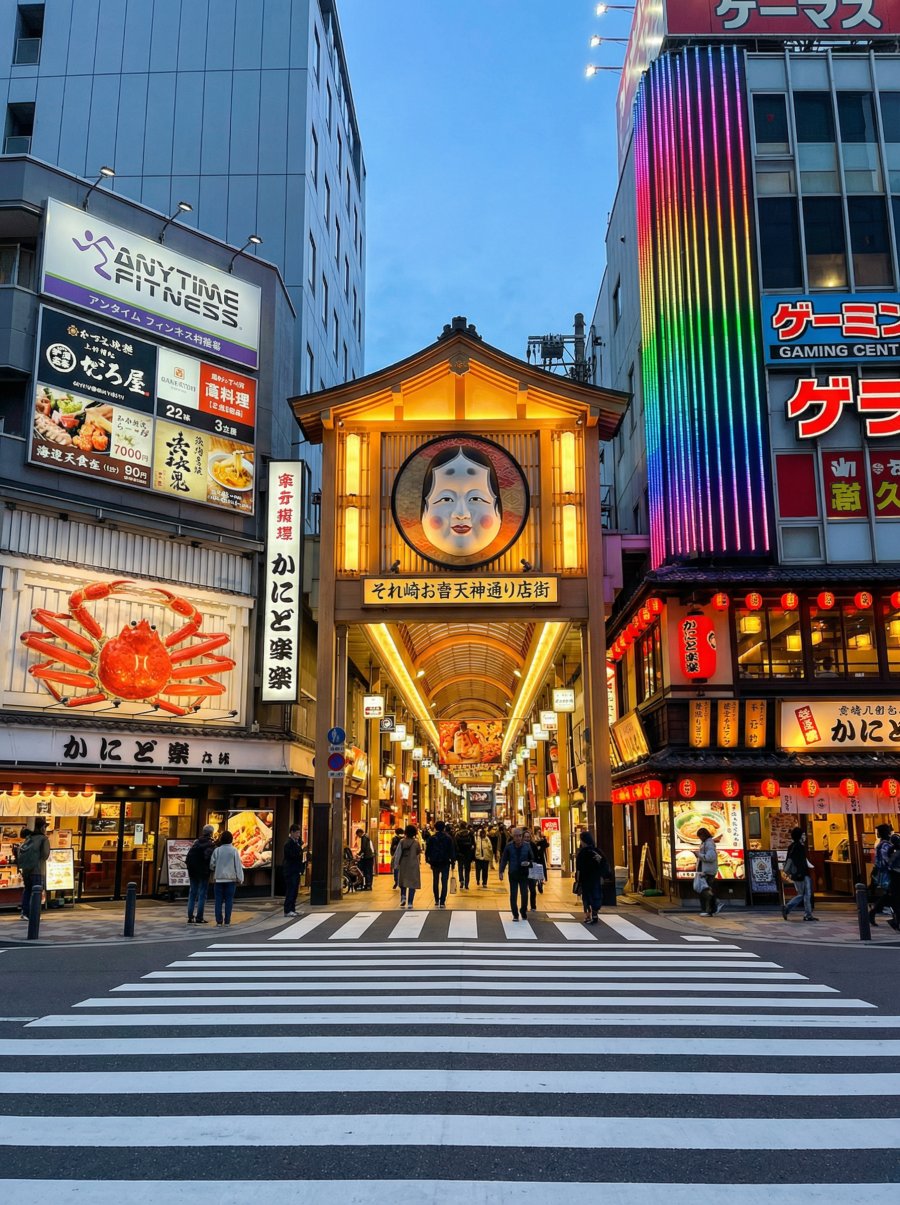
Explore Osaka by Neighborhood: Your Complete Guide to the City’s Most Distinct Districts (2026) – Osaka’s neighborhoods are the real story of the city.
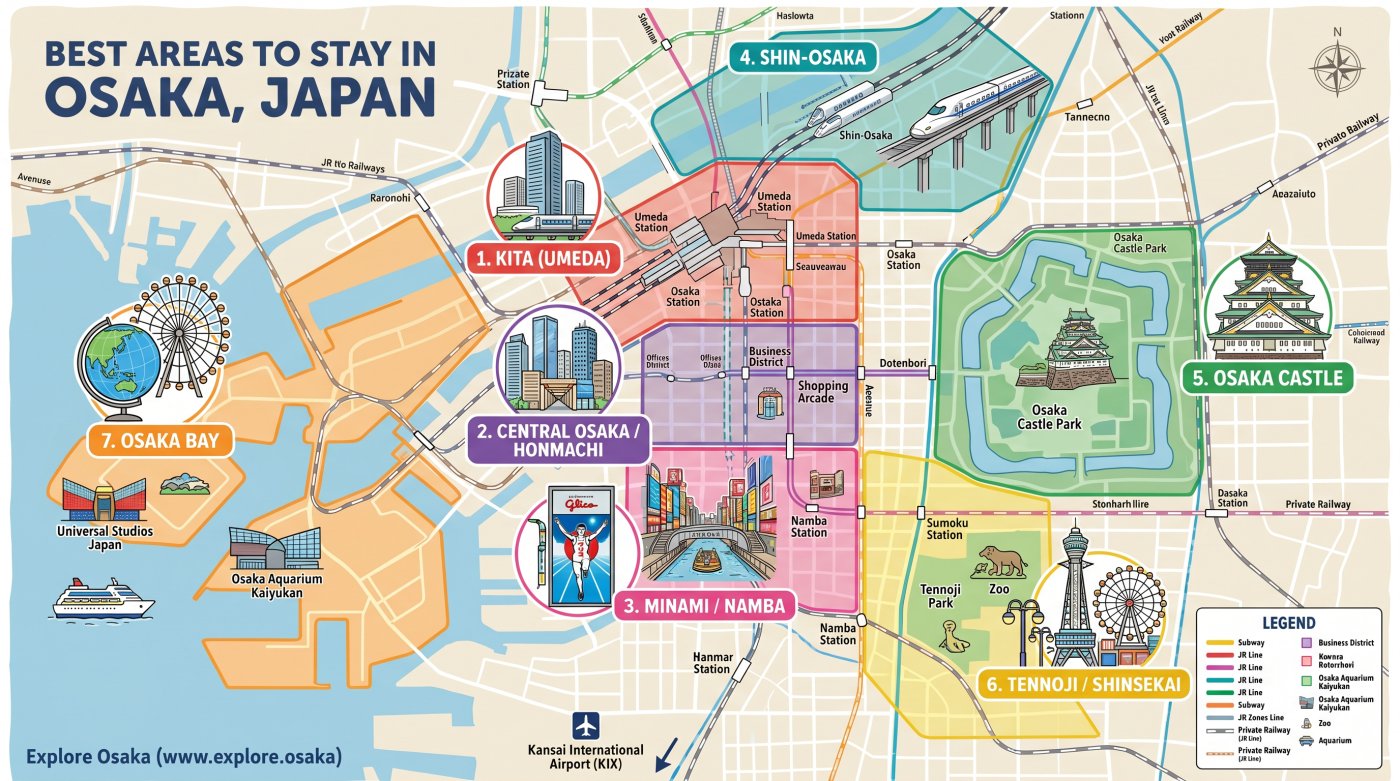
While most first-time visitors spend their entire trip within a 10-minute radius of Dotonbori canal, the city spreads across a grid of completely different districts, each with its own personality, food scene, and reason to visit.
In this Explore Osaka guide, you’ll find honest, neighborhood-by-neighborhood breakdowns covering all nine areas worth knowing, so you can stop wandering aimlessly and start making actual decisions about where to spend your time.
Osaka Neighborhoods at a Glance
Hide- Best for: First-time and repeat visitors planning a self-guided Osaka trip
- Nearest station hub: Namba (south), Umeda/Osaka Station (north), Tennoji (southeast)
- Walkability: High within individual neighborhoods; subway connections needed between northern and southern districts
- Best time to visit: Year-round; spring (March to April) and autumn (October to November) offer the most comfortable conditions for neighborhood walking
Understanding Osaka’s Layout For Every District
Osaka isn’t shaped the way most visitors expect.
Unlike Tokyo, which sprawls in every direction from a central core, Osaka has two main commercial poles: the northern hub of Umeda (also called Kita, meaning “north”) and the southern entertainment district anchored by Namba (part of the Minami, or “south” area).
Between and around these two poles, a collection of distinct neighborhoods fills in the map with dramatically different characters.
The Osaka Metro Midosuji Line, the city’s main north-south subway spine, connects Umeda and Namba in about five minutes.
Most of the neighborhoods covered in this guide cluster within a 20-minute radius of that central corridor.
The exceptions are Osaka Bay, which sits on the western waterfront and requires a separate journey, and Tennoji, which anchors the southeastern edge of the city near the Abeno Harukas tower.
Understanding this basic north-south structure saves you significant time when planning your itinerary.
If you’re based in Namba, you can reach Dotonbori, Shinsaibashi, Shinsekai, and Kuromon market on foot.
A short subway ride gets you to Tennoji and Horie. Umeda
is five minutes north by metro.
Only Osaka Bay demands serious planning.
The 9 Osaka Neighborhoods You Should Know
Before deciding which Osaka area to visit, read the following:
1. Dotonbori: Neon, Noise, and Non-Stop Street Food
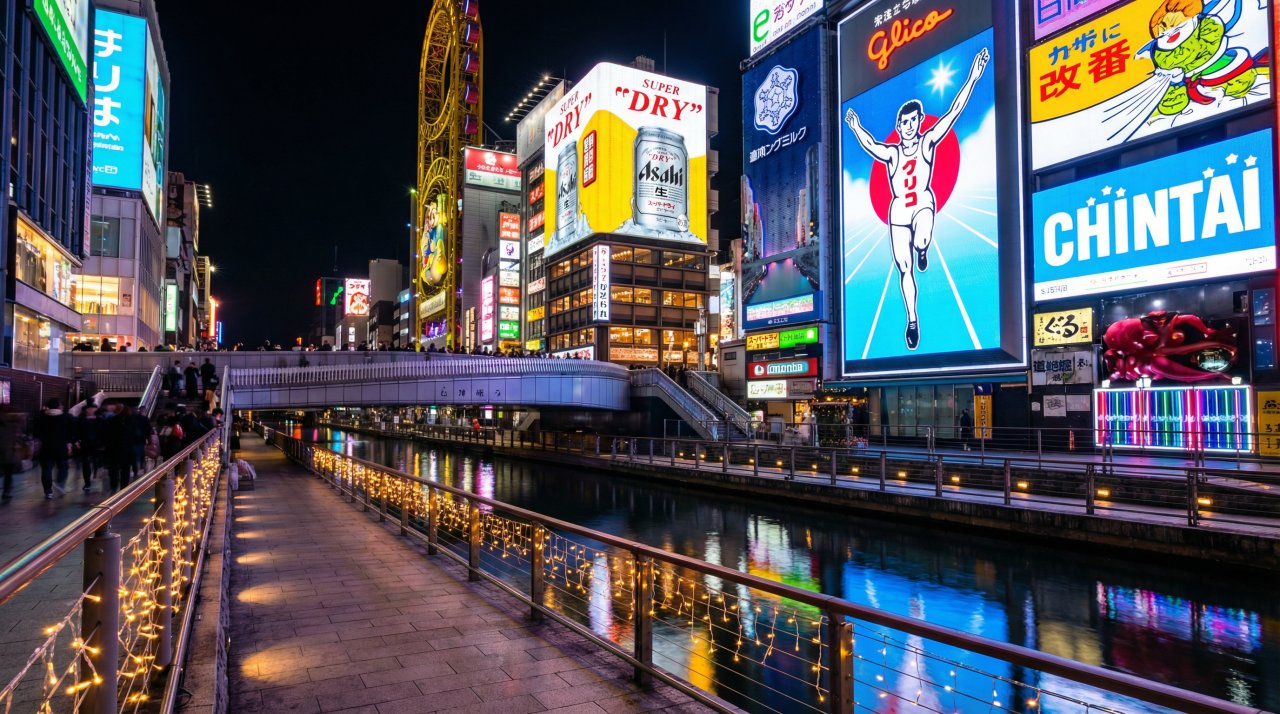
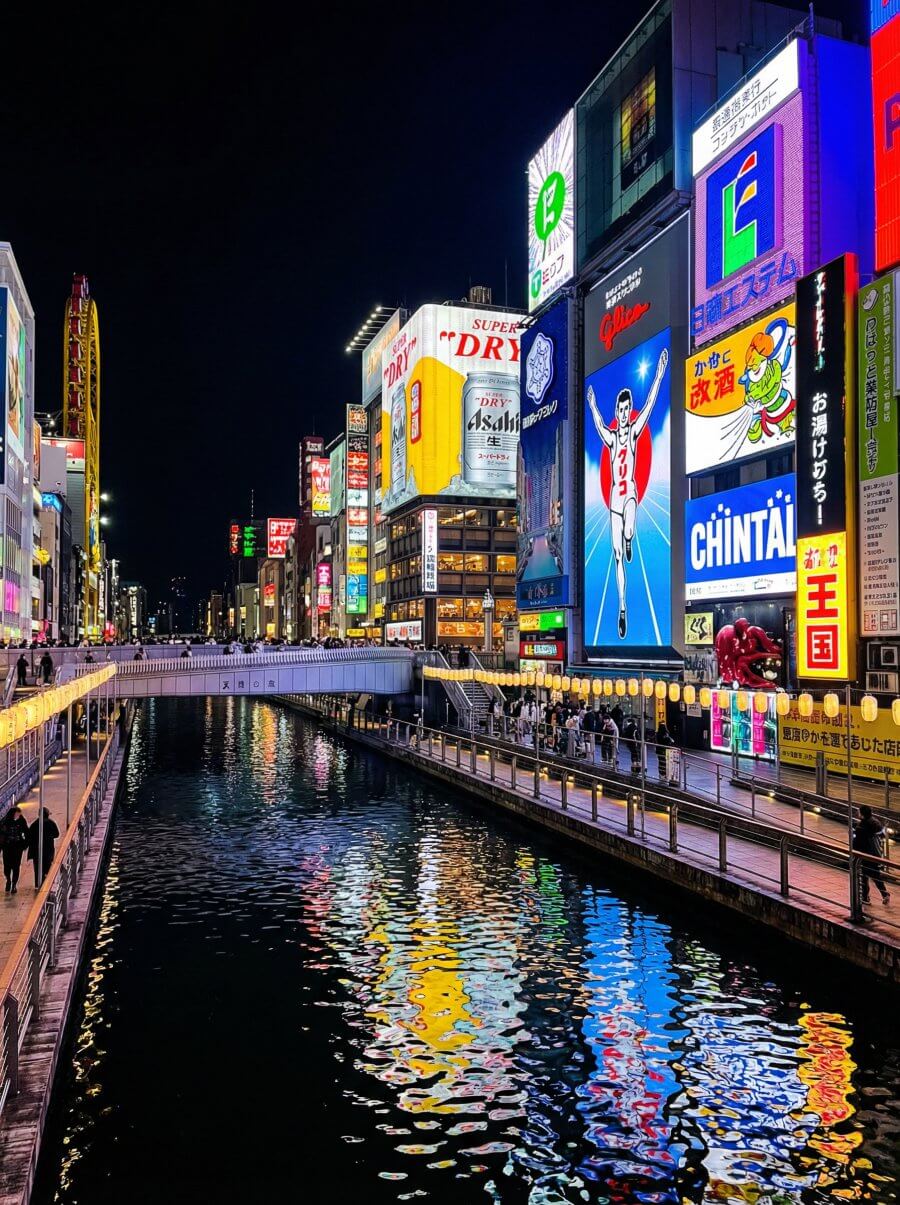
Dotonbori is the image that comes to mind when most people picture Osaka.
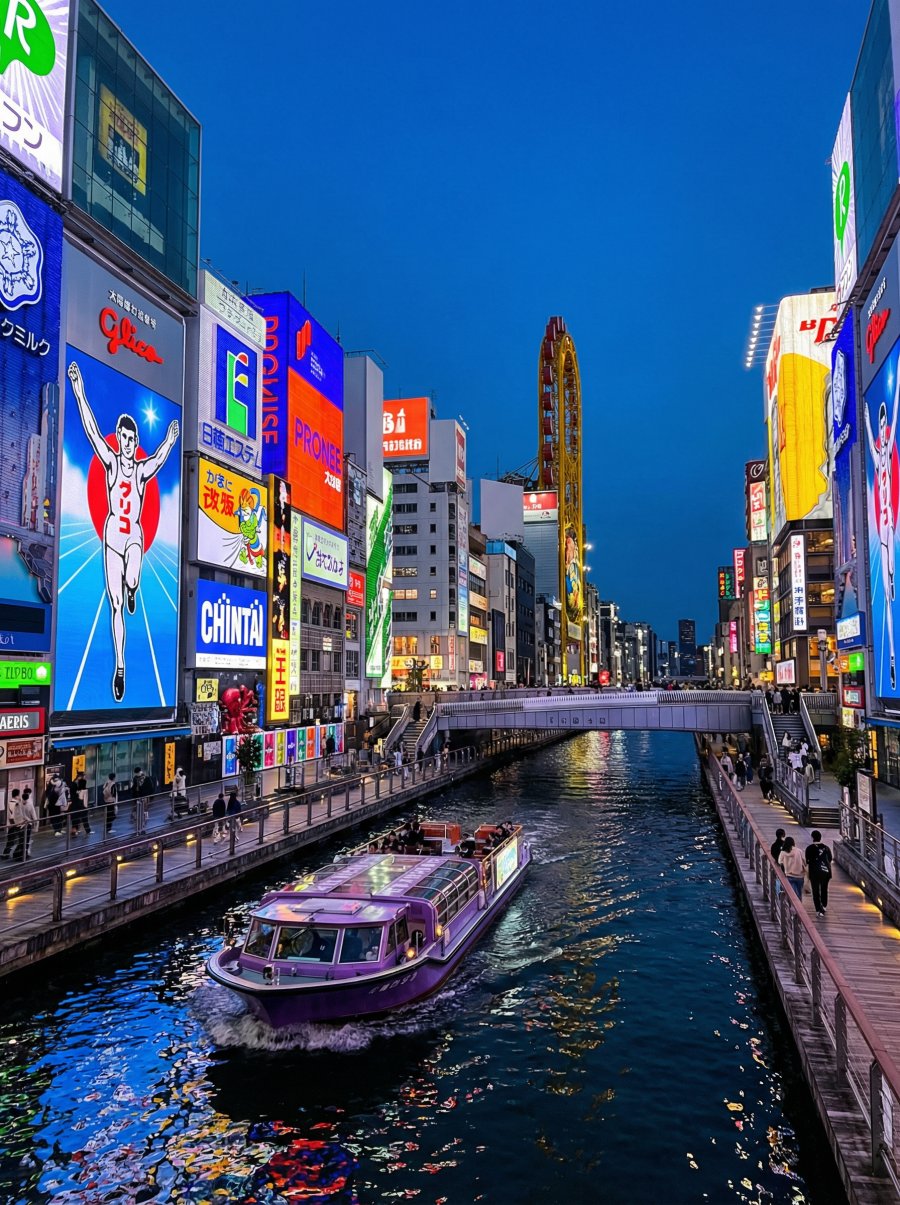
The canal-side strip running through Chuo Ward is lined with giant mechanical crab signs, illuminated restaurant facades, and the Glico Running Man billboard that has been a fixture since 1935.
It draws millions of visitors every year, and there’s a straightforward reason for that: the concentration of atmosphere, street food, and things to look at is genuinely extraordinary.
The area is best experienced after dark, when the neon reflects off the canal surface and the takoyaki stalls reach peak activity.
During the day it’s still worth walking, but the full effect requires night.
Ebisubashi bridge is the social center of the district, and Hozenji Yokocho, a narrow moss-covered alley two minutes’ walk south of the main canal, provides a quiet counterpoint to the main strip.
Don’t miss: The Glico Running Man at night, a canal boat cruise (approximately 900 yen per person), and at least one paper tray of takoyaki from a street stall.
2. Namba: The City’s Commercial and Transit Core
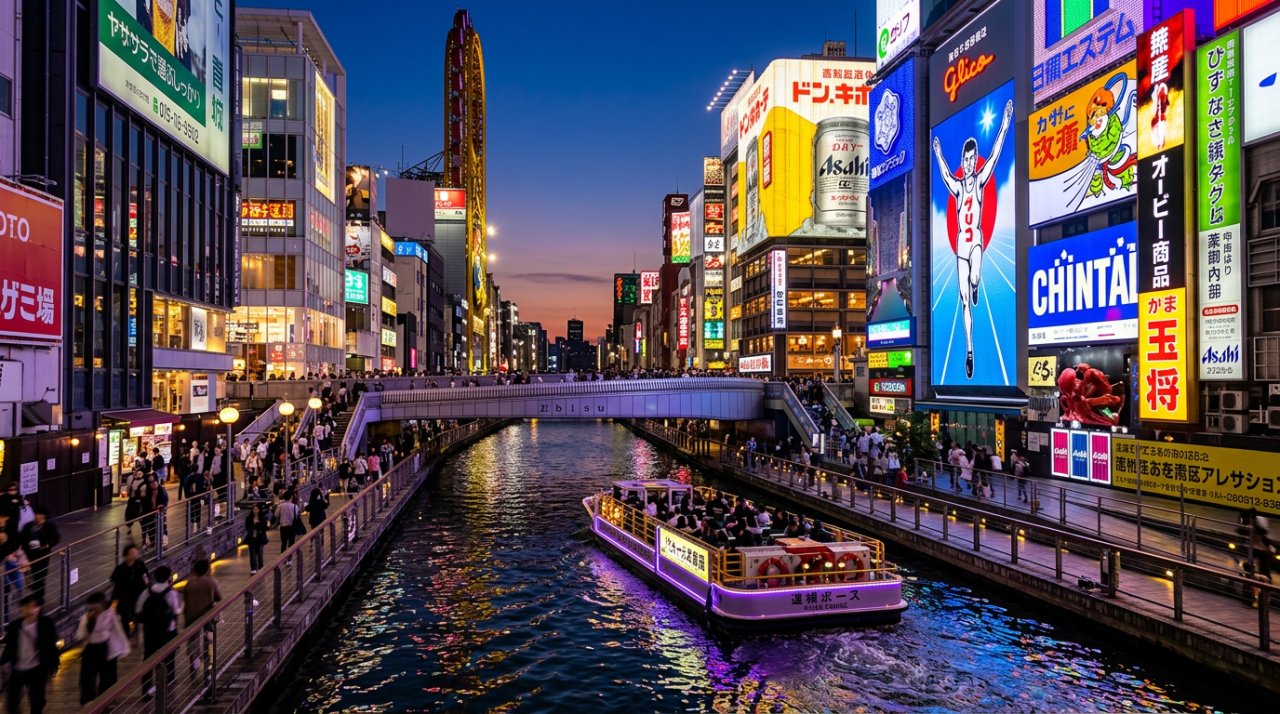
Namba is where Osaka functions.
It’s the transit hub that connects the city’s south to Kansai International Airport via the Nankai Railway, and it’s the neighborhood with the highest density of restaurants, shops, izakayas, and accommodation options relative to any other district.
First-time visitors almost always base themselves here, and it’s genuinely the most practical choice if you’re working from a single fixed location.
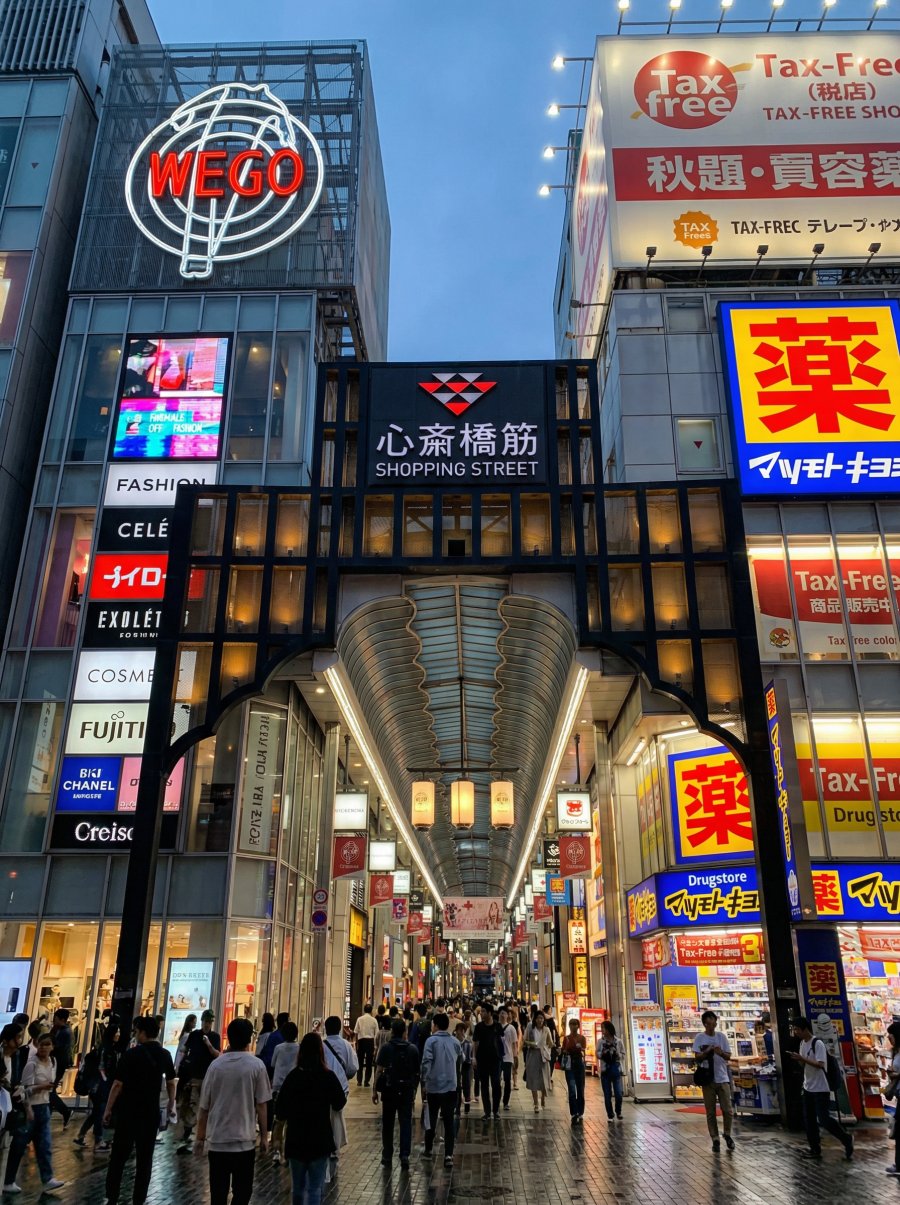
The Shinsaibashi-suji covered arcade stretches north from Namba toward Shinsaibashi, and Kuromon Ichiba Market sits a 10-minute walk to the east.
Den Den Town, Osaka’s electronics and anime retail district, occupies the area around Nipponbashi Station just south of the market.
Namba Parks, a shopping and garden complex built around a former baseball stadium site, adds a more contemporary retail dimension to the southern edge of the neighborhood.
Best for: First-time visitors, budget travelers, anyone arriving via KIX airport.
3. Shinsaibashi: Shopping Arcade to Boutique Backstreet
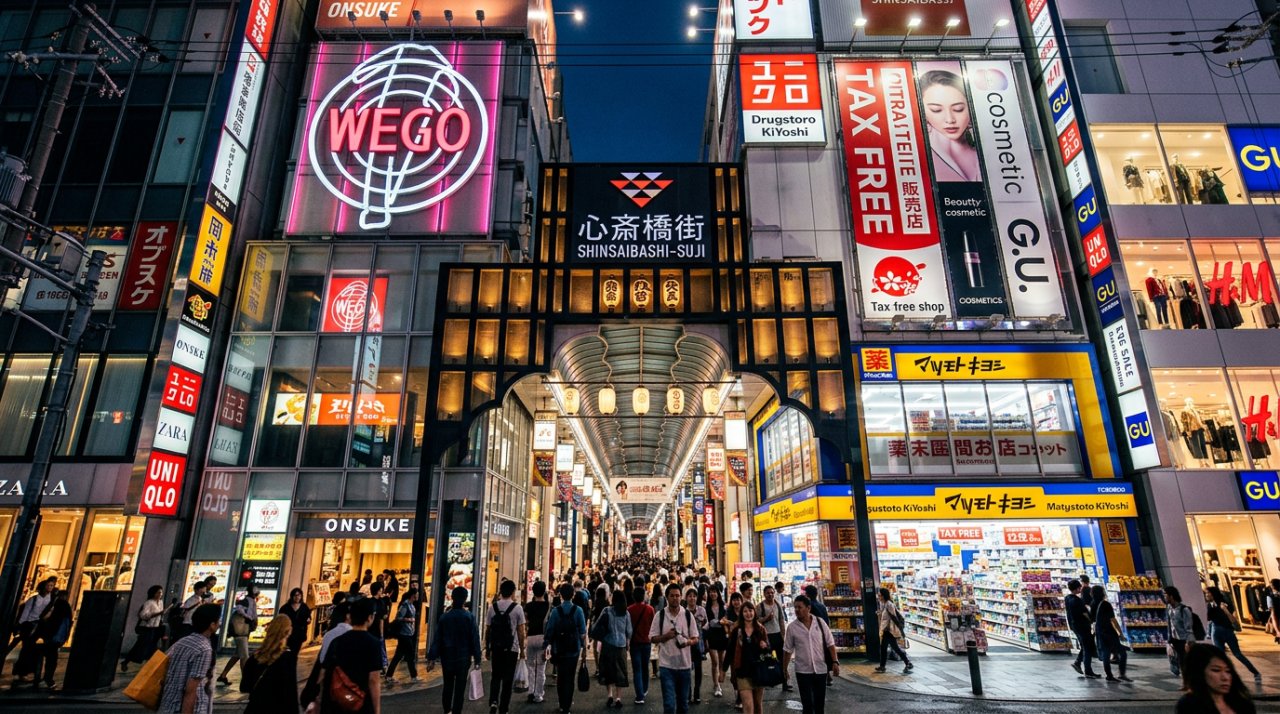
Shinsaibashi sits directly between Dotonbori to the south and Umeda to the north, connected to both by the Midosuji Line and, in the case of Dotonbori, by the covered arcade itself.
The Shinsaibashi-suji arcade, one of Japan’s oldest commercial streets with roots in the Edo period, forms the main axis of the neighborhood.
At its northern end, the arcade transitions into the more upscale retail of Midosuji Boulevard.
At its western edge, it gives way to Amerika-Mura (American Village), a compact area of streetwear shops, vintage stores, and record stalls centered around Triangle Park.
The range here is wider than the “shopping district” label suggests.
Luxury flagships, 200-yen accessory stalls, serious vintage clothing, and some genuinely good casual restaurants all exist within the same 10-minute walking radius.
Allocate at least two hours and resist the urge to stay exclusively on the main arcade.
Best for: Shoppers of all budgets, anyone combining a Dotonbori visit with a longer afternoon.
4. Horie: Osaka’s Creative and Cafe Quarter
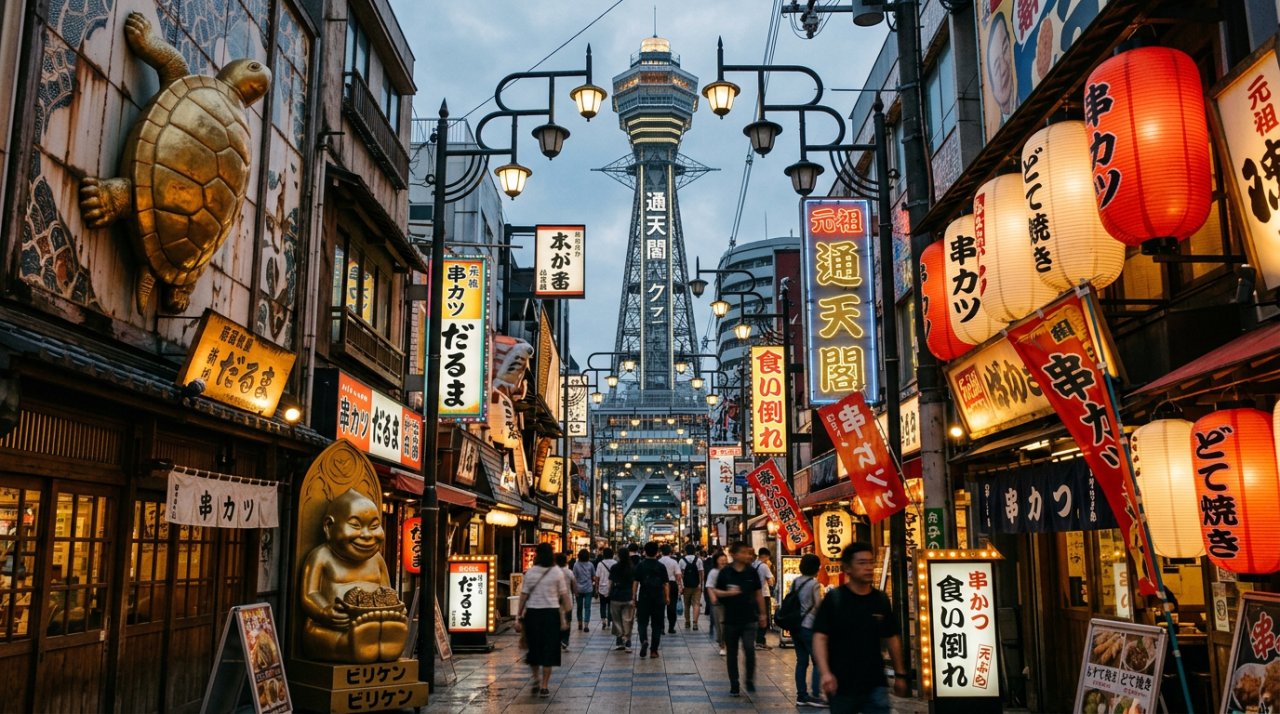
Horie is the neighborhood that Osaka locals quietly recommend to people they trust.
Located in Nishi Ward, roughly a 15-minute walk west of Shinsaibashi, it has the character of a creative residential district that happened to accumulate some of the city’s best independent coffee shops, design studios, and low-key dinner spots without ever becoming aggressively trendy about it.
The aesthetic leans toward understated: low-rise buildings, wide-ish streets by Osaka standards, and a pace noticeably slower than the Namba corridor.
Minami-Horie is the most concentrated part of the neighborhood for cafes and boutiques.
Yotsubashi Station on the Osaka Metro Yotsubashi Line is the easiest access point, or you can walk west from Shinsaibashi through the backstreets in about 15 minutes.
Best for: Second-time visitors, travelers who find Dotonbori overwhelming, anyone who takes coffee seriously.
5. Shinsekai: The Retro District Osaka Forgot to Update
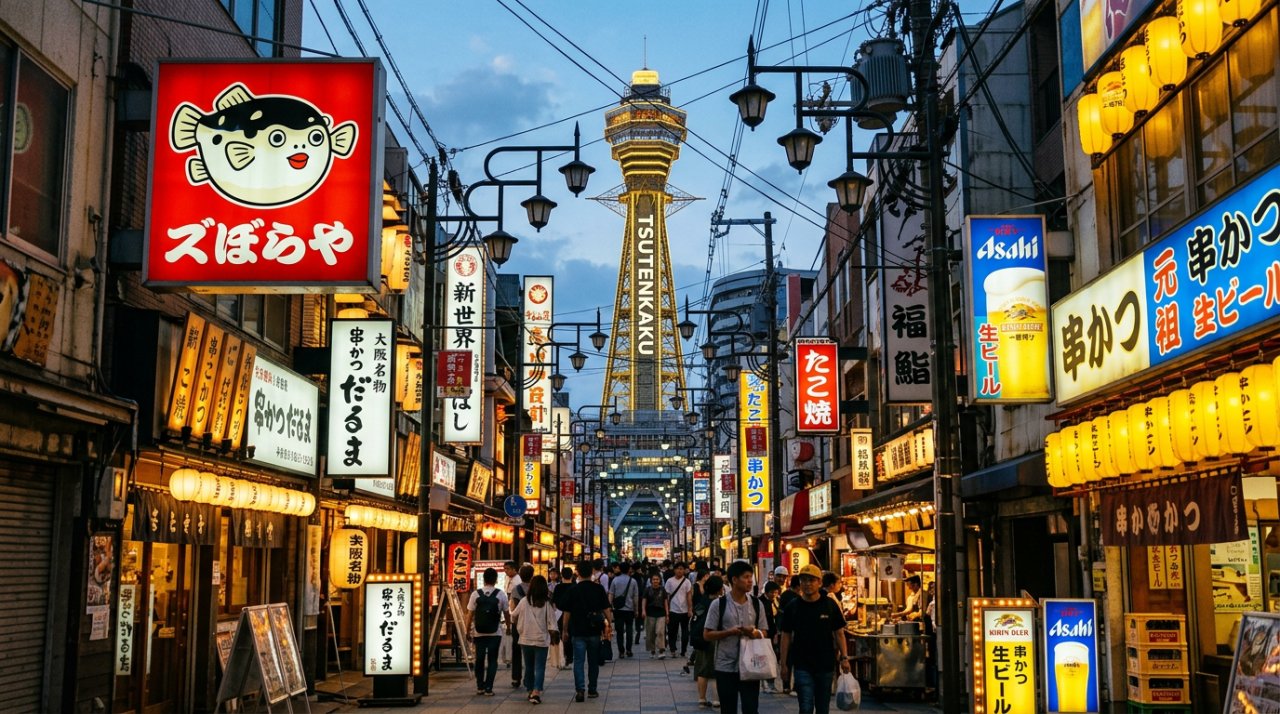
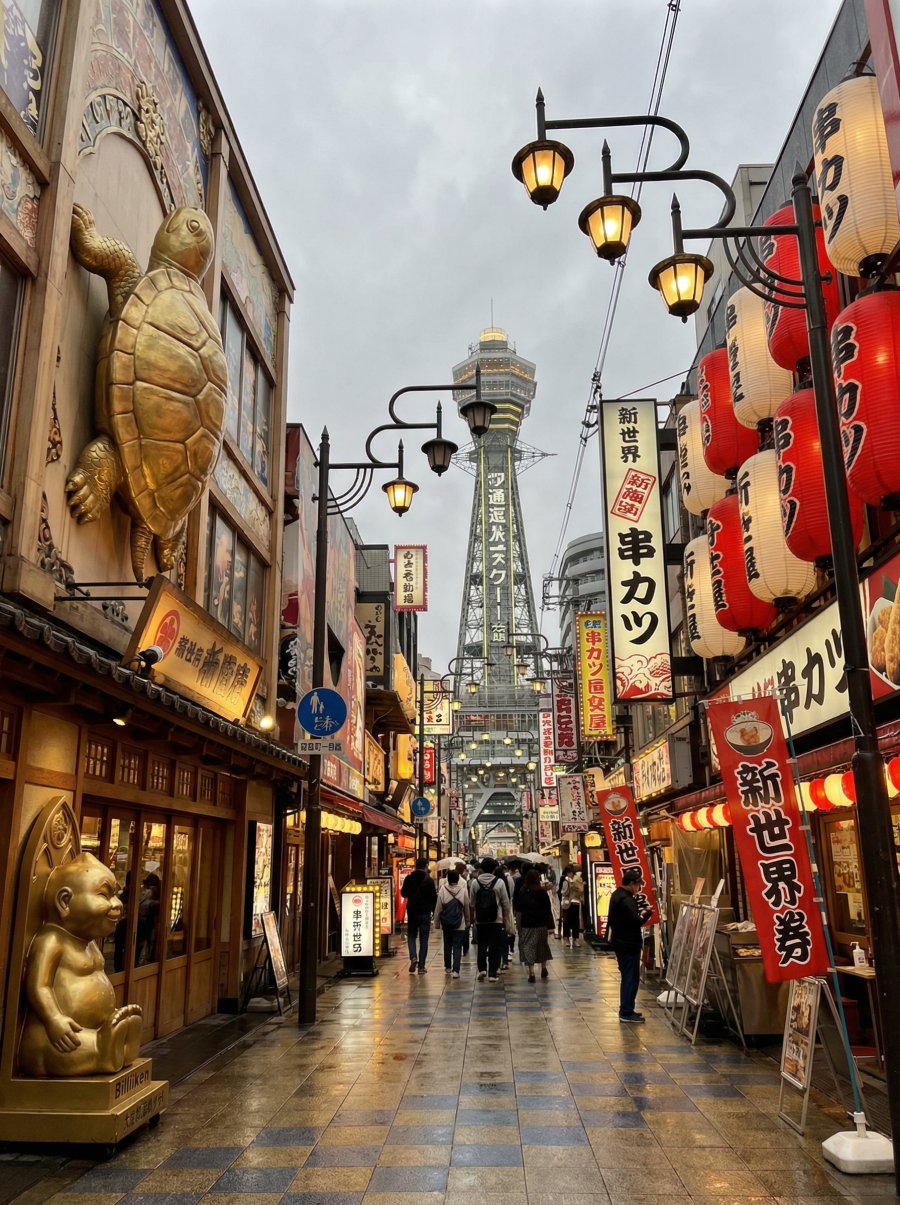
Shinsekai was built in 1912 as a modern entertainment zone, modelled partly on Paris and partly on Coney Island.
That ambition collapsed over the following decades, leaving behind a neighborhood that is now defined by its deliberate refusal to modernize.
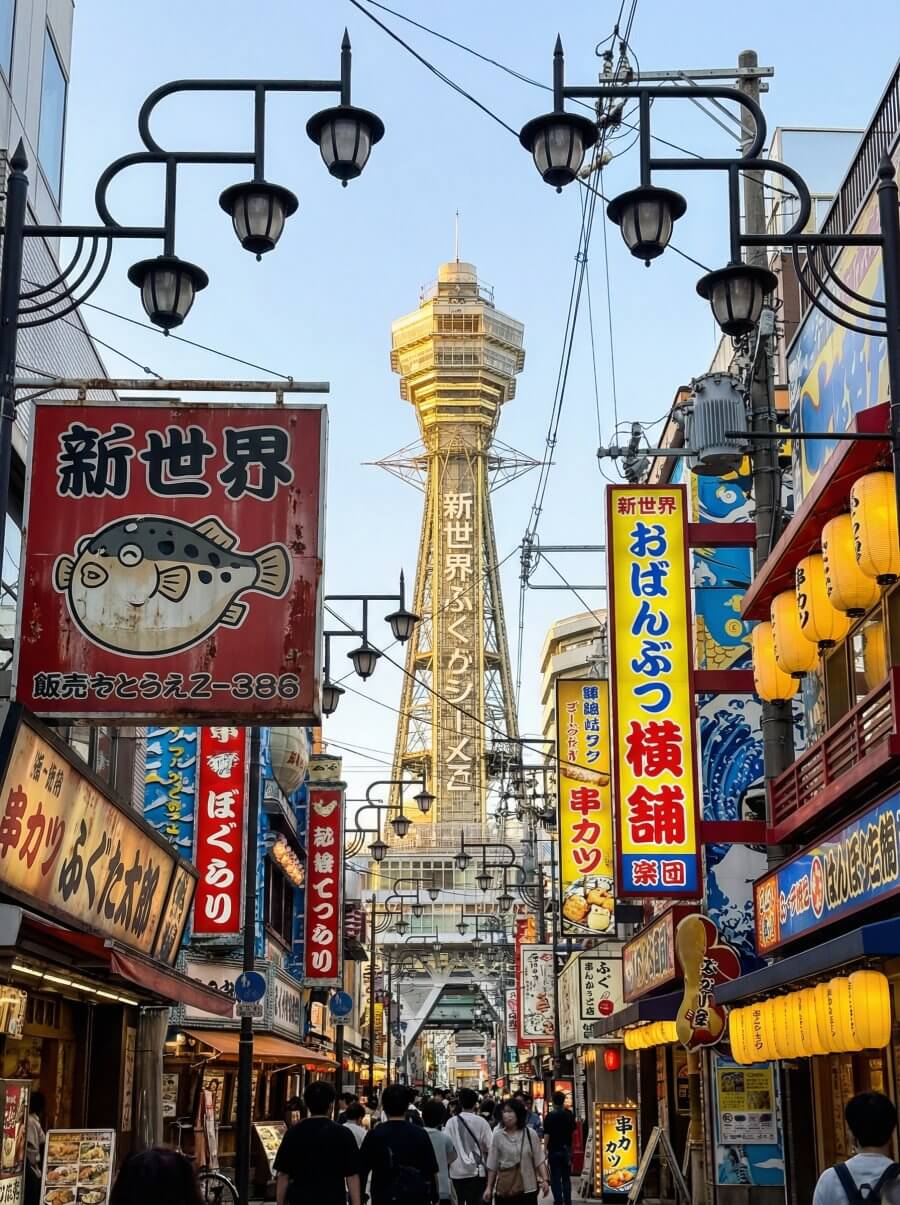
The streets beneath Tsutenkaku Tower are lined with kushikatsu restaurants, vintage game parlors, and shopfronts that look largely unchanged since the postwar period.
It’s legitimately atmospheric in a way that Dotonbori, for all its spectacle, isn’t.
The kushikatsu here, deep-fried skewers of meat, seafood, and vegetables dipped in a communal sauce (one dip only, no double-dipping, this rule is enforced), is as good as anywhere in Osaka.
Tsutenkaku Tower, reconstructed in 1956, offers an observation deck at 91 metres with views across the southern city.
The neighborhood connects naturally with Tennoji for a combined half-day itinerary.
Best for: Food-focused travelers, those who want to see a part of Osaka that doesn’t cater primarily to tourists.
6. Tennoji: Osaka’s Underrated Southern Anchor
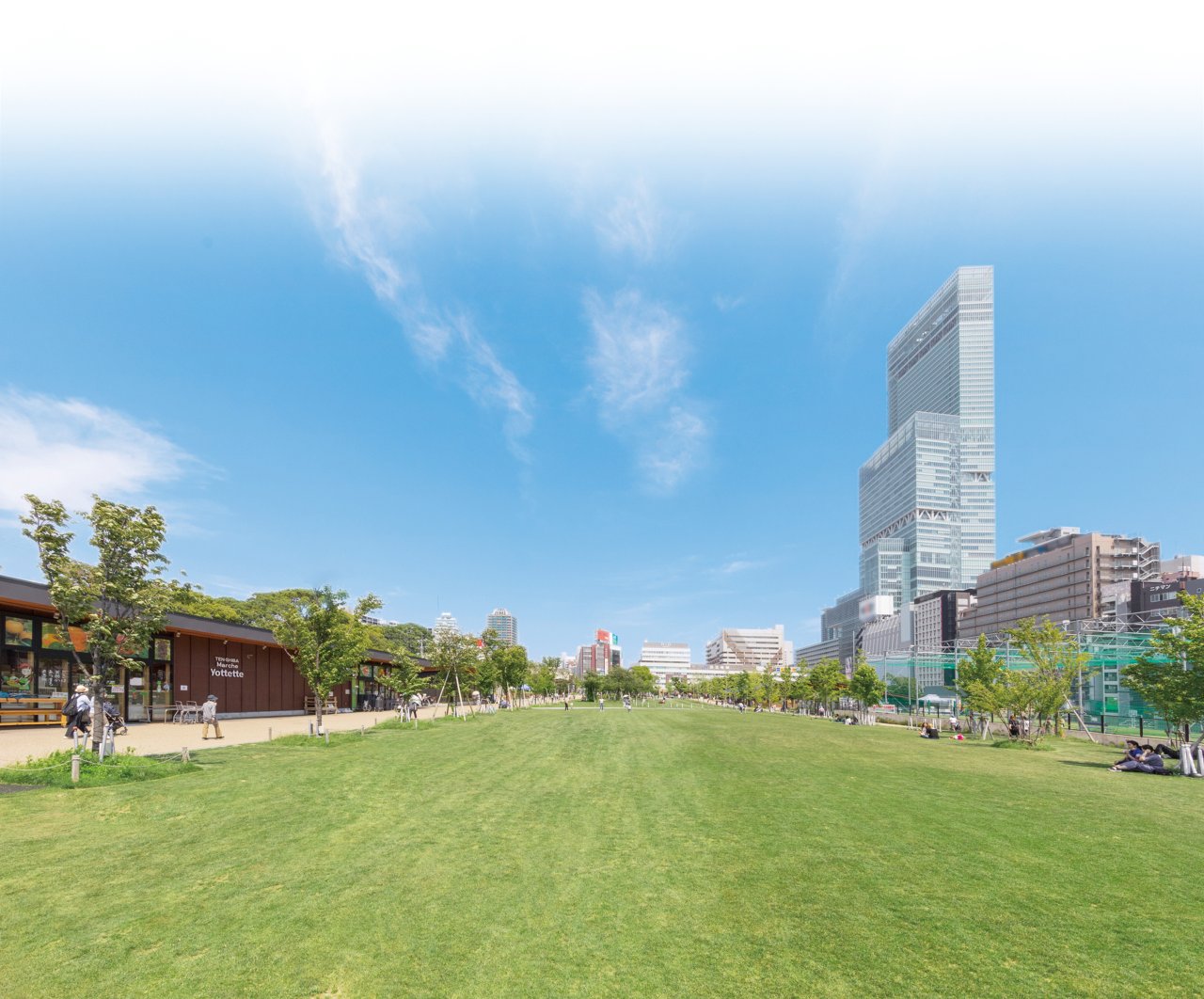
Tennoji is the neighborhood most first-time visitors treat as a transfer stop and most repeat visitors wish they had explored the first time.
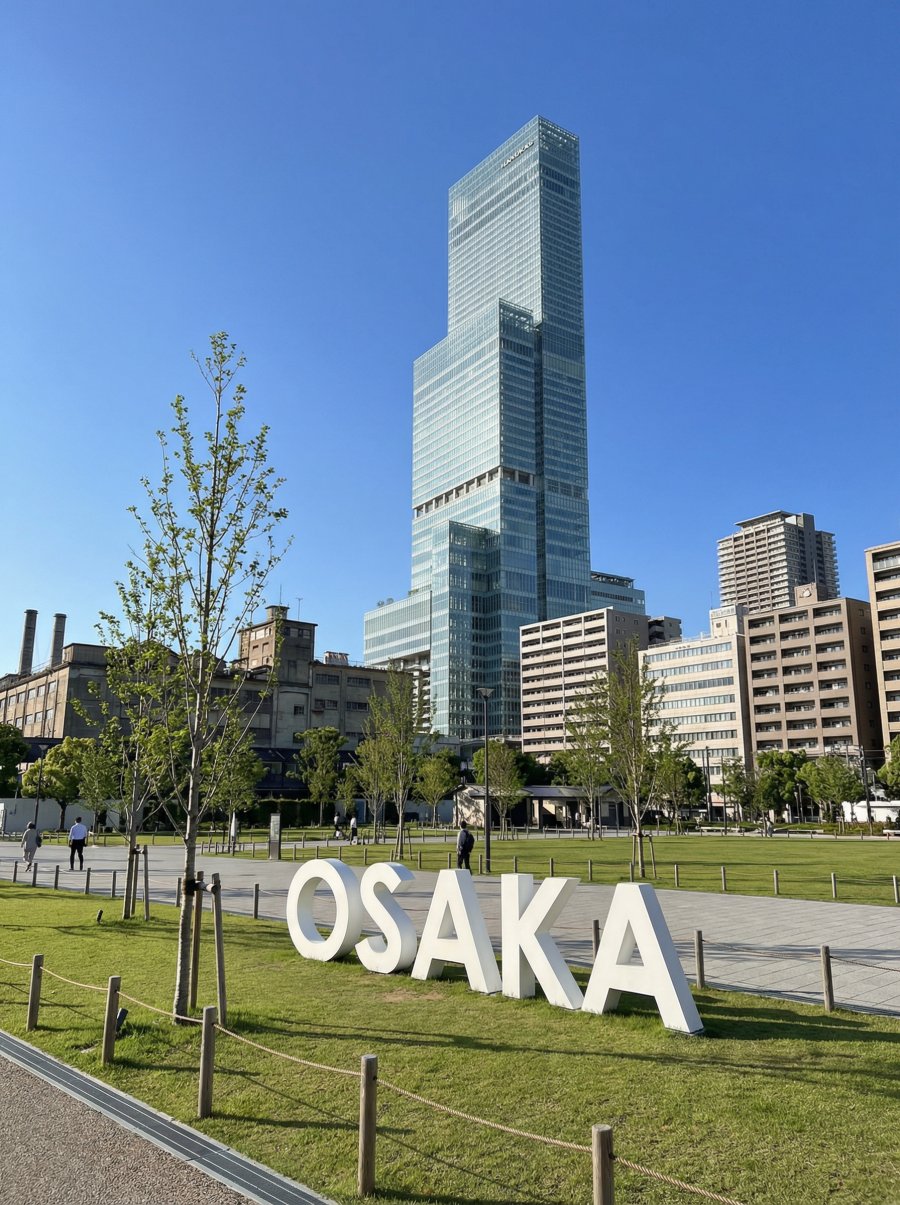
The district is anchored by Tennoji Station, one of western Japan’s busiest interchanges, and within a 15-minute walk of the station you’ll find Tennoji Zoo (open since 1915, housing over 180 species), the Osaka City Museum of Fine Arts inside Tennoji Park, and Abeno Harukas at 300 metres, Japan’s tallest building with a top-floor observation deck on floors 58 to 60.
The park is a genuine green space by Osaka standards and draws a local crowd on weekends that has nothing to do with tourism.
Abeno Harukas houses a Marriott hotel, a dedicated art museum on floors 16 and 17, and a Kintetsu department store filling the lower floors, which means the building alone can function as a half-day destination if you’re inclined.
Best for: Families, culture-focused travelers, anyone combining a visit with Shinsekai next door.
7. Kuromon: Osaka’s Kitchen Market District
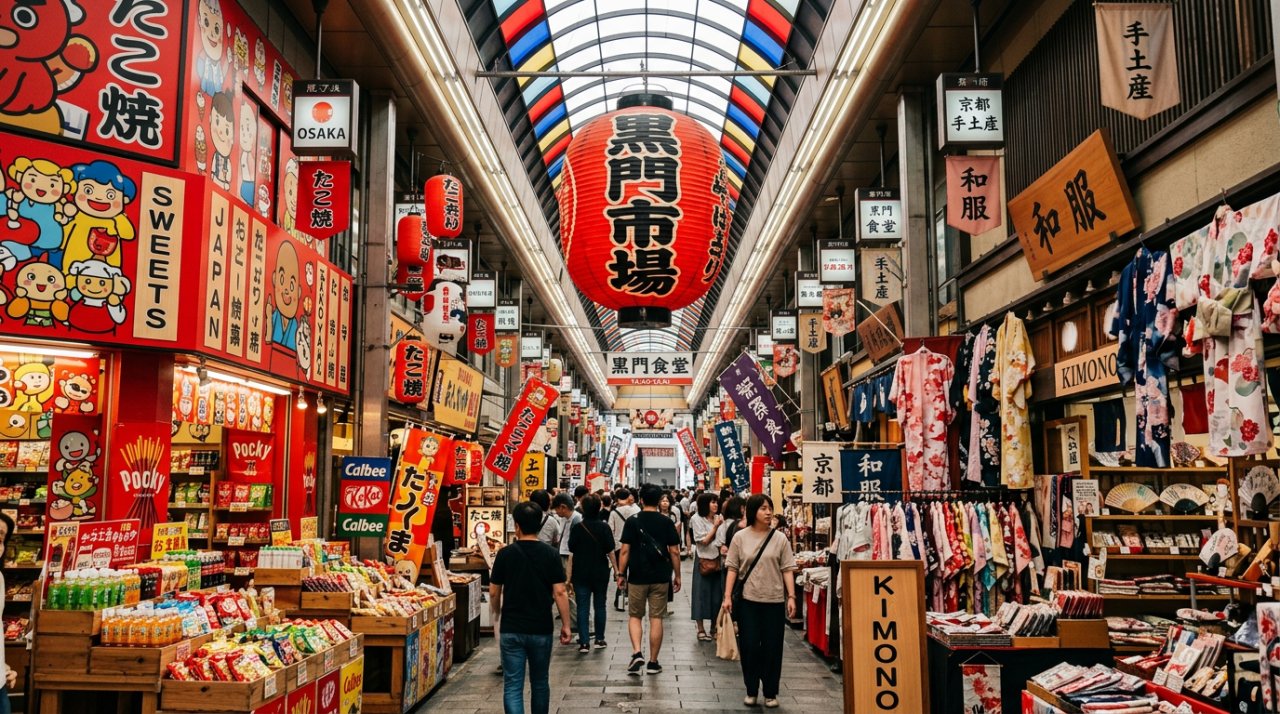
Kuromon is best understood as a destination with a postcode rather than a conventional neighborhood.
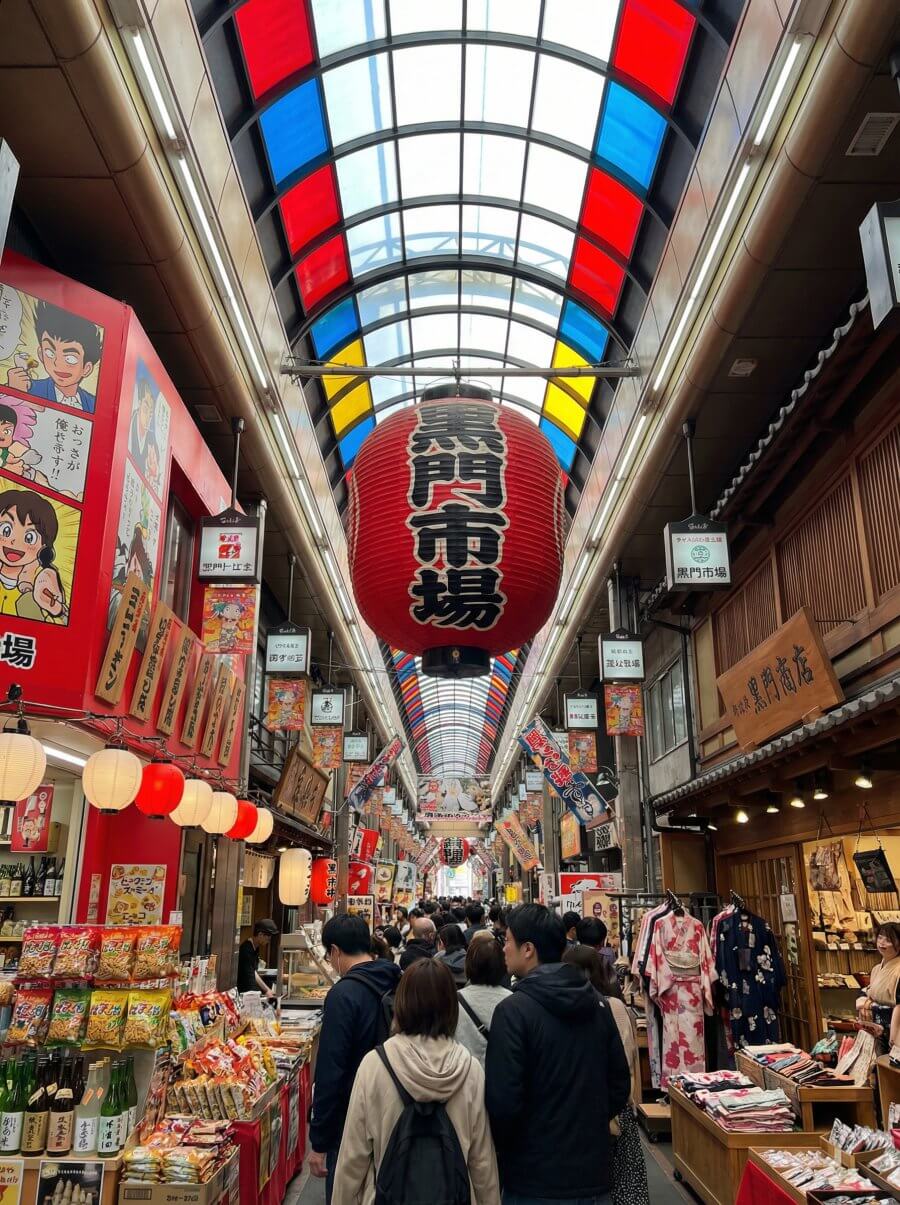
The 580-metre Kuromon Ichiba Market covered arcade in Nipponbashi, Chuo Ward, has supplied Osaka’s professional kitchens and home cooks since the early 1900s and earns its reputation as “Osaka’s Kitchen” honestly.
Around 180 stalls sell fresh tuna, wagyu beef skewers, sea urchin, live shellfish, matcha soft serve, and a rotating cast of prepared street food served directly to walk-and-eat visitors.
The surrounding Nipponbashi area adds some broader context: Den Den Town, Osaka’s electronics and anime retail district, sits immediately to the south.
The market itself is most alive between 9am and 1pm on weekdays, when the tourist and local kitchen buyer crowds overlap.
Most stalls begin closing from 5pm.
Nipponbashi Station on the Osaka Metro Sakaisuji Line puts you at the market entrance in under two minutes.
Best for: Food lovers, morning visitors, anyone who wants a direct taste of Osaka’s food supply culture.
8. Umeda: The Northern Commercial Engine
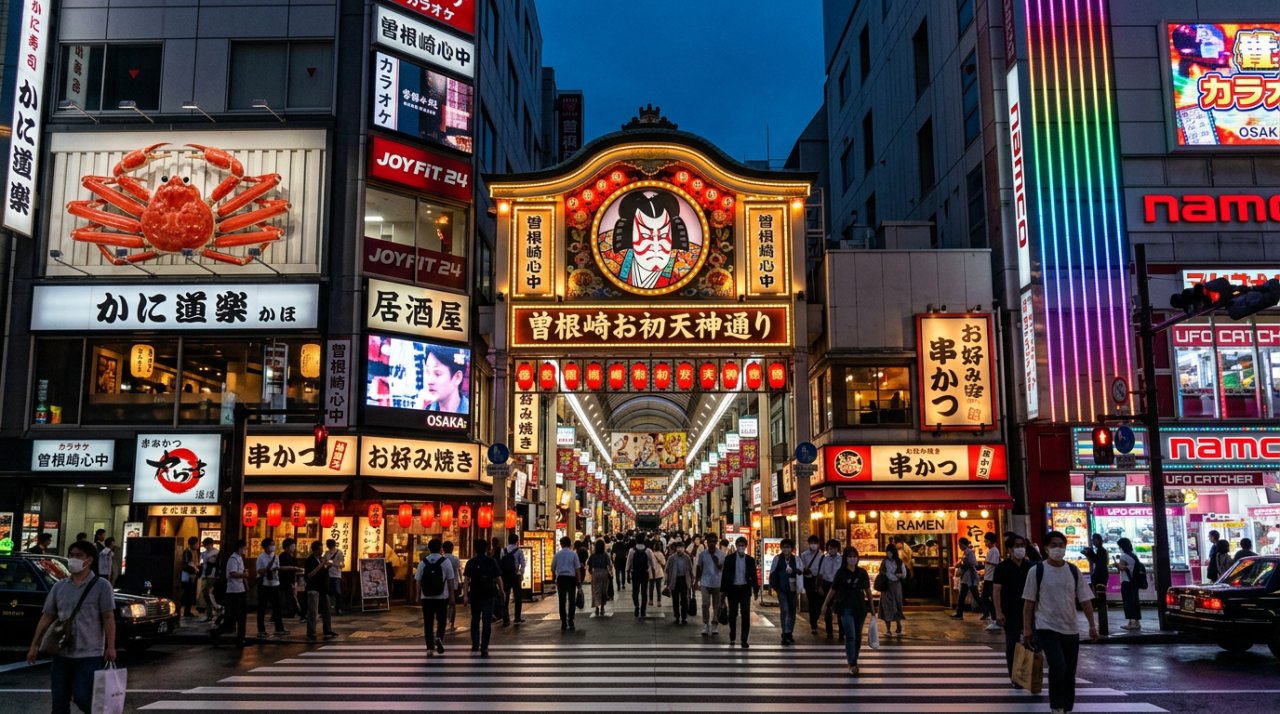
Umeda is Osaka’s northern anchor, a dense stack of department stores, underground malls, and railway terminals built around one of the most complicated station complexes in Japan.
Osaka Station (JR), Umeda Station (Osaka Metro), Hankyu Umeda, and Hanshin Umeda all operate within the same interconnected zone, making Umeda the main arrival point for visitors coming by Shinkansen from Tokyo or Kyoto.
The Umeda Sky Building is the neighborhood’s architectural landmark, a paired-tower structure in neighboring Fukushima Ward with a Floating Garden Observatory at 173 metres.
Open until 10:30pm and costing around 1,500 yen for adults, it makes a compelling evening alternative to the canal-side options in Namba.
Underground, the shopping network of Whity Umeda, Diamor Osaka, and the LUCUA towers integrated into Osaka Station itself will genuinely disorient you the first time.
Allow extra time and don’t trust your internal compass.
Best for: Shoppers, Shinkansen arrivals, anyone wanting a northern base for exploring the Kansai region.
9. Osaka Bay: Waterfront Attractions and Family Days Out
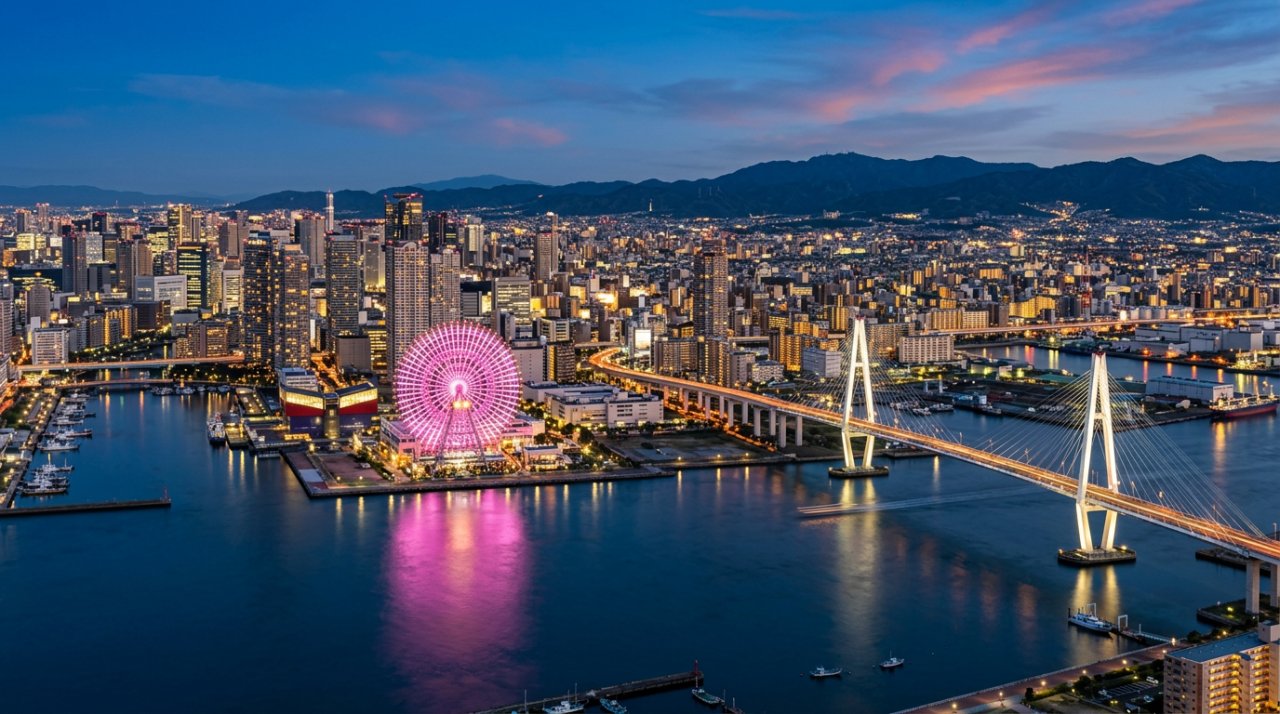
Osaka Bay is the outlier in this list.
It’s not a walkable urban neighborhood in the conventional sense; it’s a purpose-built waterfront entertainment zone spread across reclaimed land on the city’s western edge.
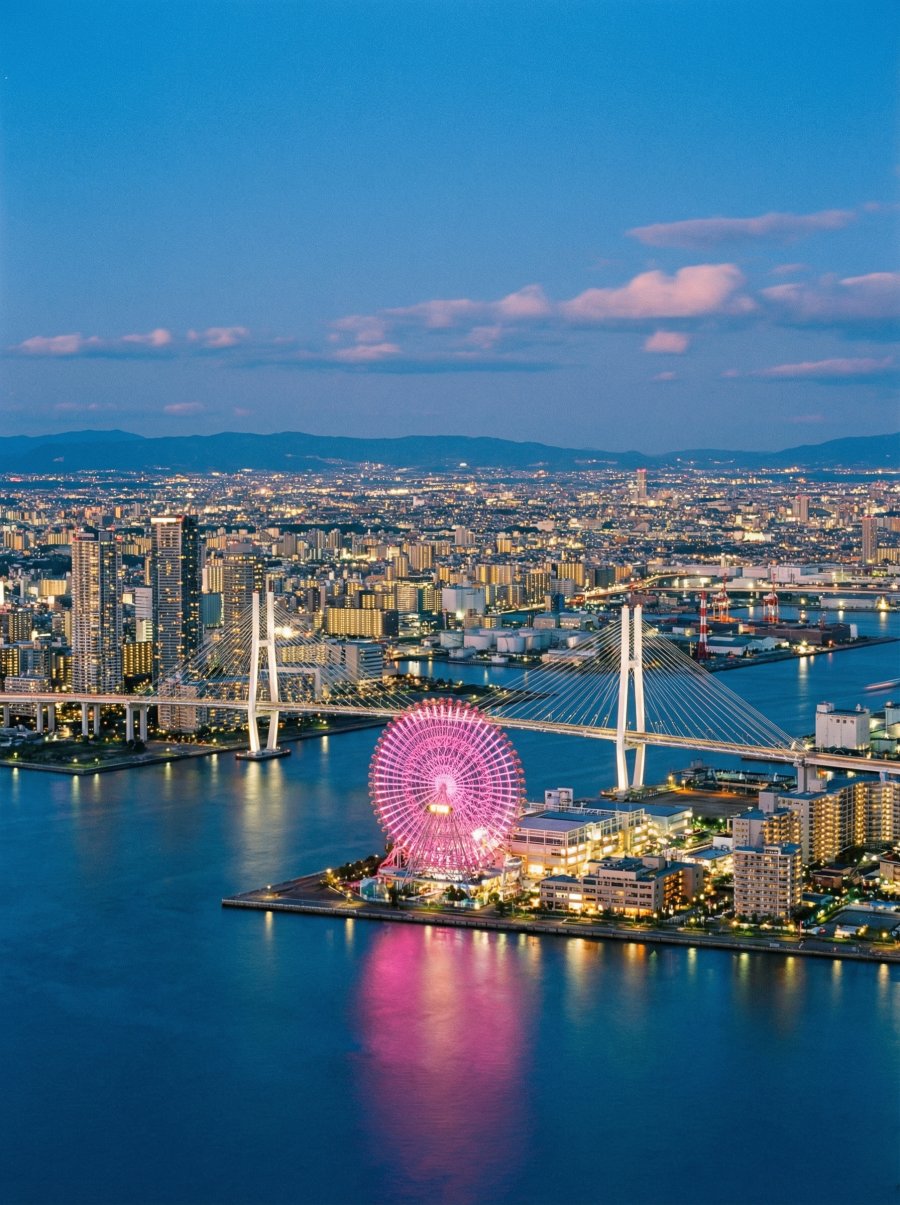
The two headline attractions are Universal Studios Japan (USJ) on the northern shore in Konohana Ward, and Osaka Aquarium Kaiyukan at Tempozan Harbour Village, consistently ranked among the best aquariums in Asia.
Supporting options include the Tempozan Giant Ferris Wheel, the Santa Maria harbour cruise, and Legoland Discovery Center Osaka.
Getting here requires deliberate planning.
For Kaiyukan, take the Osaka Metro Chuo Line to Osakako Station.
For USJ, take the JR Yumesaki Line from Osaka Station to Universal City Station, a direct 15-minute journey.
The two attractions are not within walking distance of each other, so combining both in a single day means committing to public transport or a taxi between them.
Best for: Families with children, theme park visitors, aquarium enthusiasts.
How to Choose Your Base Osaka Neighborhood
Where you stay shapes the entire trip.
Here’s a direct breakdown by traveler type.
If this is your first time in Osaka and you have three days or fewer, base yourself in Namba or Shinsaibashi.
Everything in the southern half of the city is either walkable or one metro stop away, and the Nankai Railway gives you a direct 38-minute connection to KIX airport via the Rapi:t limited express.
The where to stay in Osaka guide covers the full range of options across all neighborhoods and budget tiers.
If you’re spending more than three days or returning for a second trip, consider splitting your time between Namba for the first half and a quieter area like Horie or Tennoji for the second.
The city opens up considerably once you move past the main tourist corridor.
For families with Universal Studios Japan as a priority, a hotel in the Osaka Bay area or near Konohana Ward cuts the morning commute significantly and lets you arrive at USJ when the gates open rather than 40 minutes after.
Getting Between Neighborhoods in Osaka
The Osaka Metro is the most efficient way to move between districts.
Day passes cost 800 yen for adults and cover unlimited rides across the entire metro network, which makes them worth buying if you plan to cross the city more than three times in a day.
The Osaka Amazing Pass, at 2,800 yen for one day, includes unlimited metro rides plus free entry to over 40 attractions, including the Umeda Sky Building observatory, Tempozan Ferris Wheel, and others.
Whether it pays off depends on which attractions you plan to visit.
Taxis are available throughout the city and are metered; the flag-fall is around 680 yen.
They’re most practical late at night when metro frequency drops.
Walking between adjacent neighborhoods is consistently more pleasant than visitors expect, especially in the Namba-to-Shinsaibashi-to-Dotonbori corridor, where the streets are pedestrian-friendly and densely interesting.
For a structured way to use all of this, the Osaka itinerary section organizes the city’s neighborhoods into workable day plans ranging from one to four days.
Practical Tips for Exploring Osaka’s Neighborhoods
A few things worth knowing before you start walking.
Most of Osaka’s street food culture is cash-based, especially at market stalls and smaller neighborhood restaurants.
Keep yen in your pocket rather than relying on cards alone.
The best food in Osaka guide covers what to eat and where across every neighborhood if you want to plan your meals in advance rather than wandering hopefully.
Osaka’s neighborhoods are safe at all hours.
The crime rate is extremely low by international standards, and solo travelers of all genders consistently report feeling comfortable walking after midnight in the main entertainment areas.
Exercise the same basic urban awareness you would anywhere and you’ll have no issues.
For a broader overview of what the city offers beyond just the neighborhoods, the Osaka travel guide on the homepage covers everything from transport passes to seasonal events in one place.