When to Visit Osaka: Seasons, Events, and What to Expect Each Month
The best time to visit Osaka depends on what you’re after. Spring delivers cherry blossoms and the city’s most photogenic two weeks, autumn offers cooler temperatures and far fewer crowds, winter is cheap and underrated, and summer is hot enough to be genuinely uncomfortable but alive with festivals and late-night energy.
Every season has a legitimate case. This guide breaks down what each one actually looks like on the ground.
If you’re pairing seasonal timing with attraction planning, the things to do in Osaka guide covers which experiences are most affected by season, from castle gardens to rooftop observatories.
Spring in Osaka: Cherry Blossoms and Peak Crowds
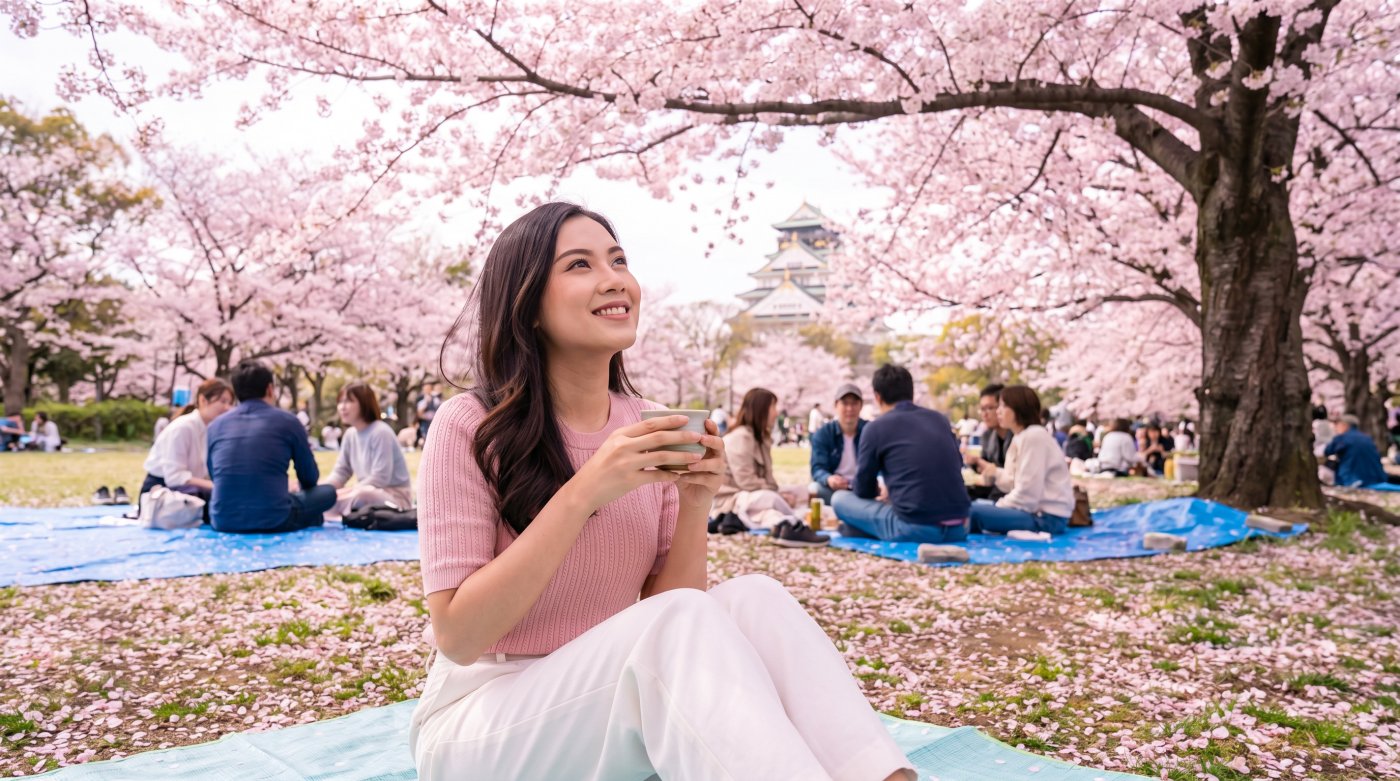
Spring runs from late March through May and is the most visited season in Osaka by a significant margin.
The main draw is hanami (cherry blossom viewing), which typically peaks between late March and the first week of April, though the exact timing shifts by one to two weeks depending on the year.
Cherry blossom season
- Osaka Castle Park is the city’s most popular hanami location, with approximately 600 cherry trees surrounding the castle grounds. On peak weekend days during blossom season, the park fills with people from mid-morning and stays busy until evening. The blossom walks around the castle moat are genuinely spectacular when the trees are at full bloom, but the crowds on the best days are dense enough to make photography difficult before 8:00am or after 6:00pm.
- Kema Sakuranomiya Park runs along the Okawa River between Sakuranomiya and Tenmabashi stations and has a more relaxed atmosphere than the castle. The 4.2-kilometer riverside path is lined with approximately 4,700 cherry trees. Evening illuminations along the river run during peak blossom weeks. This stretch is the better choice if you want hanami without fighting for space.
- Nagai Park in the south of the city is a local favorite that international visitors rarely reach. It has roughly 600 cherry trees, open lawns, and a botanical garden within the same grounds. If crowds matter to you more than the famous backdrop, Nagai is worth the extra Metro stop.
The cherry blossom forecast is published annually by the Japan Meteorological Corporation. For Osaka, full bloom (mankai) typically falls between March 25 and April 5.
Trees hold their blossoms for approximately one week in ideal conditions. Rain shortens that window to two or three days.
Golden Week
Golden Week runs from late April through early May, covering four national holidays clustered together: Showa Day (April 29), Constitution Day (May 3), Greenery Day (May 4), and Children’s Day (May 5). It is the busiest domestic travel period in Japan.
Hotel prices in Osaka increase by 30 to 80 percent and some properties are fully booked months in advance. Train services are crowded but running.
Most tourist attractions remain open. If Golden Week is unavoidable, book accommodation six to eight weeks ahead and expect queues at every popular site.
Spring temperatures and clothing
March in Osaka averages 10 to 15 degrees Celsius during the day, dropping to 5 to 8 degrees in the evening. April is 14 to 20 degrees.
May warms to 18 to 25 degrees with some humid days toward the end of the month. Light layers work for March and April; a light jacket in the evening is necessary through mid-April.
Summer in Osaka: Heat, Humidity, and Festivals
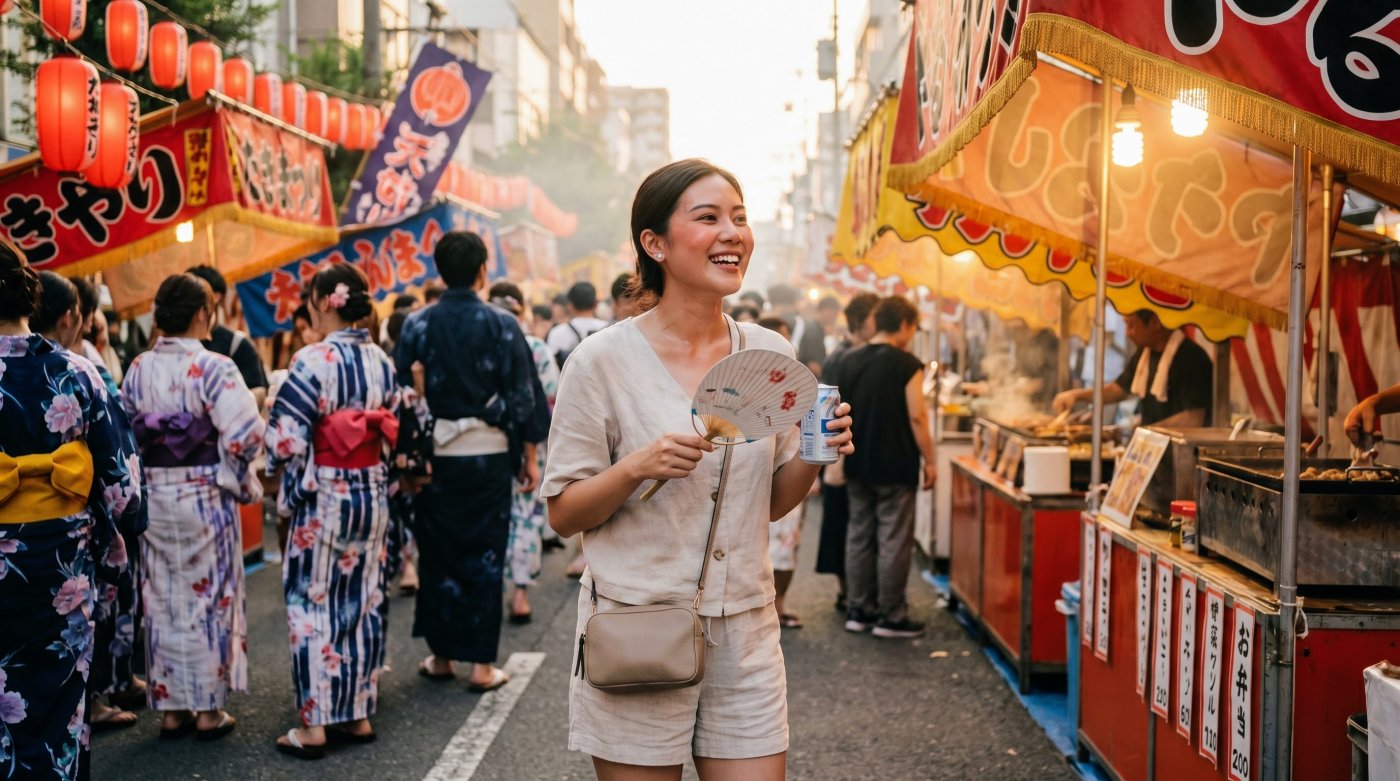
Summer in Osaka is honest about what it is. June brings the tsuyu rainy season, July and August are hot and genuinely humid, and September carries the tail end of typhoon season.
None of this stops people from visiting, and the city’s summer calendar is packed with festivals that don’t exist in any other season.
Tenjin Matsuri
Tenjin Matsuri is one of Japan’s three great festivals and Osaka’s defining summer event. Held on July 24 and 25 each year, it centers on Osaka Tenmangu Shrine in Umeda and involves a procession of over 3,000 participants in traditional court dress, followed by a river procession of decorated boats on the Okawa.
Fireworks launch from the riverbanks after dark on July 25. The street procession route fills hours before it begins; arriving by early afternoon secures a reasonable viewing position.
Sumiyoshi Matsuri
Sumiyoshi Matsuri is held at Sumiyoshi Taisha Shrine in late July and early August, culminating on August 1 with a ceremony marking the end of summer. Sumiyoshi Taisha is one of Japan’s oldest shrines, predating the influence of Chinese architecture on Japanese religious buildings, and its distinctive straight-roofed taisha-zukuri style is worth seeing on any visit to the south of the city.
Managing the heat
July and August daytime temperatures in Osaka average 30 to 35 degrees Celsius, with humidity regularly pushing the feels-like temperature above 38 degrees. This is not exaggeration for effect.
Outdoor sightseeing between 11:00am and 3:00pm in August is physically draining.
Practical adjustments that help: start sightseeing before 9:00am, retreat to air-conditioned spaces (department stores, museum interiors, covered shopping arcades like Shinsaibashi-suji) during peak heat hours, and resume outdoor activity after 4:00pm. Carry a small towel, drink cold green tea from convenience stores constantly, and accept that you will sweat through your clothes.
Typhoon season
Typhoons affect the Kansai region primarily in August and September. Most storms weaken before reaching Osaka, but direct hits do occur.
When a typhoon warning is issued, train services including the shinkansen are suspended. Keep travel insurance that covers trip disruption if visiting in late summer.
Autumn in Osaka: The Understated Best Season
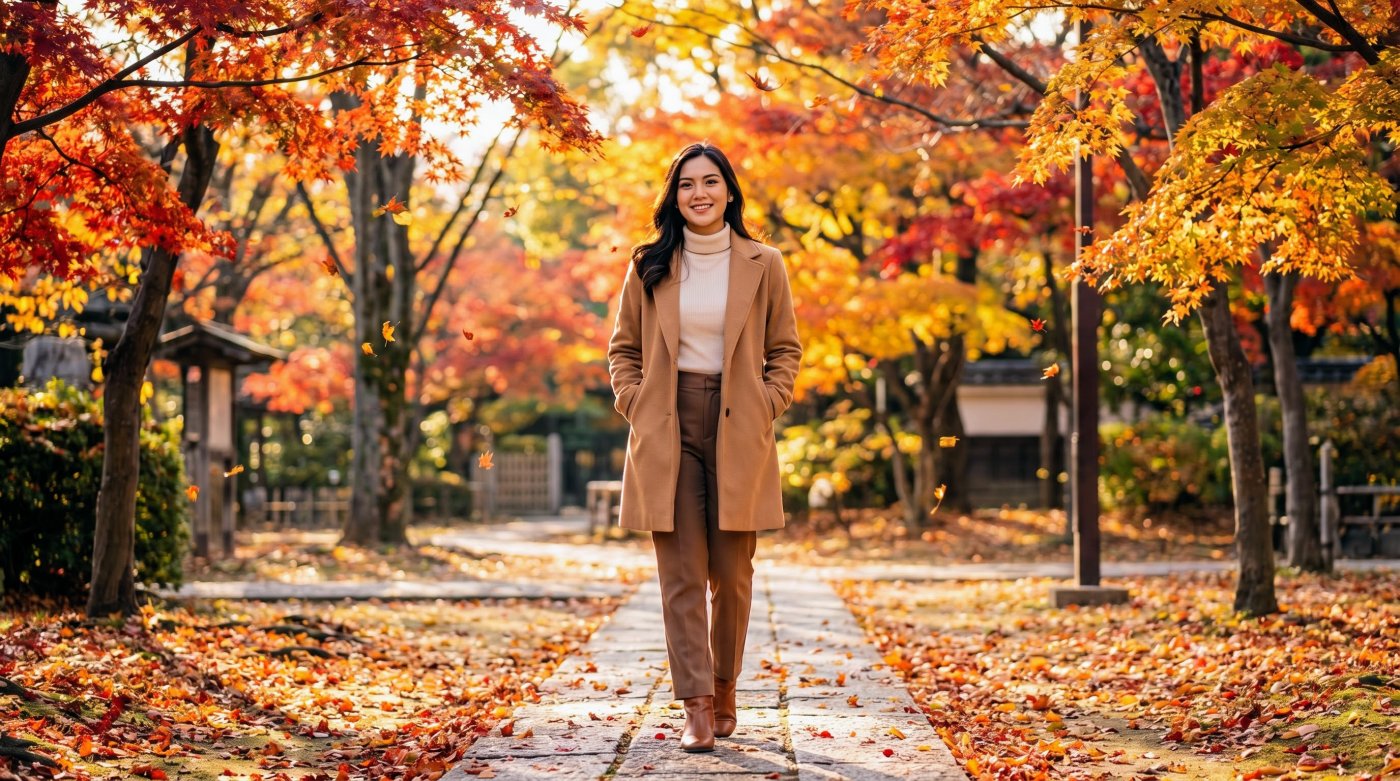
October and November represent Osaka at its most comfortable. Humidity drops, temperatures settle into a consistent 15 to 22 degrees Celsius range, and the city’s parks and temple gardens shift into the red and amber tones of koyo (autumn leaf season).
Autumn draws fewer international visitors than spring, which means shorter queues, more breathing room at popular sites, and hotel prices that haven’t been inflated by peak season demand. If you have flexibility on when to visit and don’t specifically need cherry blossoms, late October through mid-November is the strongest overall choice.
Autumn foliage in Osaka
Peak koyo in Osaka typically falls between mid-November and early December, running about six weeks behind the northern Honshu timing. The color change happens later in the Kansai region due to its milder climate.
- Osaka Castle Park transitions from summer green to autumn color across its mix of ginkgo, cherry, and maple trees from mid-November onward. The ginkgo trees along the castle approach turn a clean yellow and are one of the most visually satisfying autumn displays in the city.
- Minoo Park (Mino Park), in the hills north of Osaka, is the premier autumn foliage destination in the greater Osaka area. A 2.7-kilometer forest trail leads to Minoo Waterfall, lined on both sides with Japanese maple trees that turn deep crimson in November. The park is accessible from central Osaka in about 30 minutes via the Hankyu Mino Line from Osaka-Umeda.
- Shitennoji Temple, Osaka’s oldest Buddhist temple (founded 593 AD, though the current buildings are reconstructions), has a garden that opens to the public for a special autumn admission period during peak koyo.
October events
Kishiwada Danjiri Matsuri falls in early October in Kishiwada city, about 25 minutes south of Namba on the Nankai Line. It is one of the most intense festivals in Japan: teams of hundreds pull enormous wooden floats called danjiri through narrow streets at full running speed, turning corners at high velocity with a combination of teamwork and genuine risk.
The energy of the event is difficult to describe without seeing it. Watching from a designated viewing area rather than street level is strongly recommended.
Winter in Osaka: Low Season, Low Prices, High Value
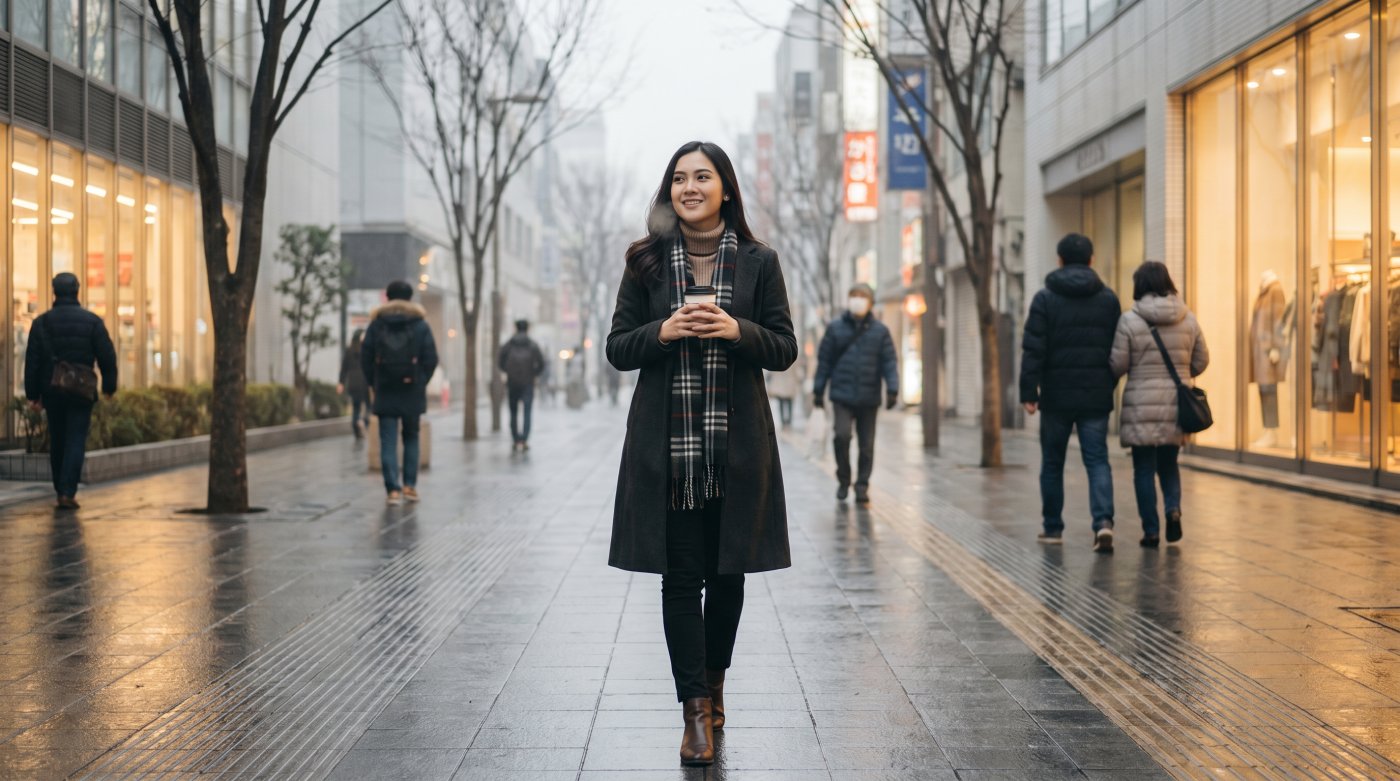
December through February is Osaka’s quietest season for international tourism and, as a direct result, its most affordable. Hotel prices drop, queues disappear at most attractions, and the city carries a different, more local atmosphere once the peak-season visitor volumes recede.
Osaka winters are mild by Japanese standards. December averages 8 to 13 degrees Celsius; January and February drop to 4 to 9 degrees during the day with occasional sub-zero nights.
Snowfall in the city itself is rare and usually light. The cold is entirely manageable with a proper winter jacket and layering.
Midosuji Illumination
The Midosuji Illumination runs from November through January along Osaka’s main boulevard, Midosuji, which connects Umeda in the north to Namba in the south. LED lighting covers the full 4-kilometer stretch of ginkgo trees and lampposts in shifting colors.
It’s one of the larger winter illumination events in western Japan and draws significant evening crowds in December. The closest Metro stops are Umeda, Shinsaibashi, and Namba on the Midosuji Line.
New Year in Osaka
The New Year period (Oshogatsu) runs from December 29 through January 3. It is one of the only times in the year when Osaka visibly quiets down.
Many local restaurants, small shops, and businesses close during this period. However, temples and shrines are at their busiest: hatsumode (the first shrine visit of the new year) draws millions of visitors across Japan, and Sumiyoshi Taisha and Shitennoji both see enormous crowds on January 1, 2, and 3.
If you’re visiting over New Year, plan for reduced restaurant options outside of department stores and convenience stores, but expect the shrine experience to be genuinely memorable.
Winter food culture
Osaka’s food culture thrives regardless of season, but winter brings specific dishes worth seeking out. Fugu (puffer fish) is considered a winter delicacy and Osaka is one of Japan’s top cities for licensed fugu preparation. Nabe
(hot pot) in various forms appears on menus across the city from November onward. Convenience stores stock warm foods from their heated displays year-round, but the selection expands noticeably in winter.
The Osaka food guide covers what to eat by category and neighborhood if you want to plan meals around seasonal specialties.
Month-by-Month Quick Reference
A fast overview of what each month offers, from a visitor’s perspective.
- January: Quiet post-New Year city, cold but manageable, low hotel prices, good for unhurried exploration. Midosuji Illumination continues through mid-January.
- February: Coldest month, very few tourists, lowest accommodation prices of the year. Plum blossoms begin in late February at Osaka Temmangu and Osaka Castle Park.
- March: Cherry blossom anticipation builds. Early blooms possible from mid-March. Temperatures still cool in the evenings; pack layers.
- April: Peak cherry blossom season in early April. Golden Week crowds arrive late April. Book accommodation and popular restaurants well in advance.
- May: Post-Golden Week lull in the first two weeks offers pleasant weather with reduced crowds. Temperatures warm toward summer but remain comfortable.
- June: Rainy season (tsuyu) begins. Frequent heavy showers but not constant rain. Humidity starts climbing. Hydrangeas bloom at several temple gardens.
- July: Hot and humid. Tenjin Matsuri on July 24 and 25. Evening street food and outdoor events are a genuine draw if you can handle the heat.
- August: Peak summer heat. Sumiyoshi Matsuri in early August. Typhoon risk increases from mid-August. Fireworks festivals (hanabi taikai) at multiple locations.
- September: Still hot and humid, typhoon risk continues. Crowds thin compared to July and August. Temperatures begin easing in late September.
- October: Excellent weather, moderate crowds, Kishiwada Danjiri Matsuri in early October. Autumn color begins in the hills north of the city.
- November: Peak autumn foliage from mid-month. Comfortable temperatures, manageable crowds, strong value for money. One of the two strongest months to visit.
- December: Midosuji Illumination. Christmas in Japan is observed as a commercial event rather than a public holiday, so the city stays open. New Year closures begin December 29.
Planning Around Osaka’s Seasons
The most important practical takeaway from all of this is that Osaka’s worst-value periods for a first-time visitor are Golden Week (late April to early May) and the peak of summer (July to August). Both are manageable but require more planning, more patience, and more budget.
The highest-value windows are early May (post-Golden Week), the first two weeks of June before the rainy season fully arrives, and all of October and early November. These periods combine good weather with lower demand and genuine breathing room at the city’s main sights.
For building a full trip plan around the season you’re visiting, the Osaka itinerary guide covers day-by-day structures for different trip lengths. The neighborhoods guide is useful for understanding which parts of the city have the most seasonal character, particularly in spring and autumn when outdoor spaces matter most.