Osaka has a deeper shopping culture than almost any city its size.
This is historically a merchant city — commerce has been central to Osaka’s identity since the Edo period — and that heritage shows in the variety, density, and quality of its retail landscape.
The city has everything from massive department stores and brand flagship locations to hyper-specific independent shops that would be hard to find anywhere else in Japan.
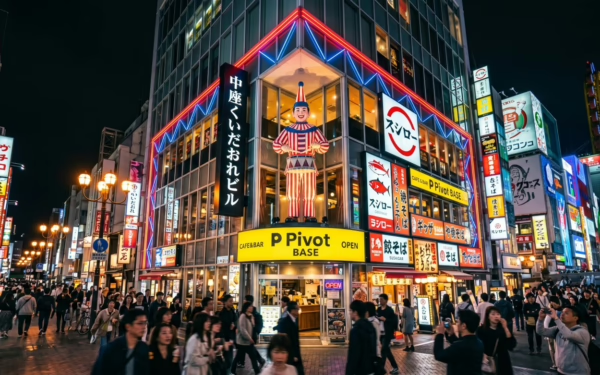
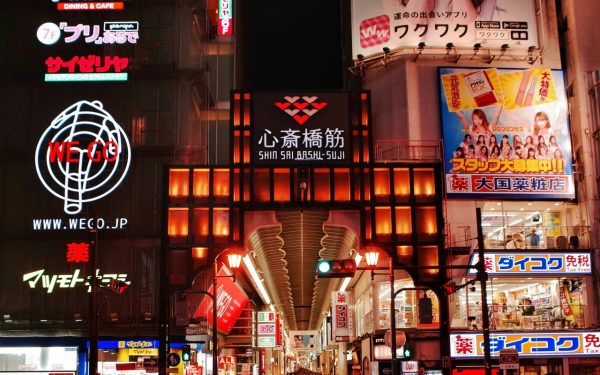
Shinsaibashi is the main shopping spine, running from the Shinsaibashi-suji covered arcade southward through Dotonbori and connecting to Namba.
The covered arcade is approximately 600 metres of continuous retail — international brands, Japanese fashion chains, cosmetics, food, and a few surviving older shops that predate the current commercial intensity.
Amerikamura and Horie — Character Shopping
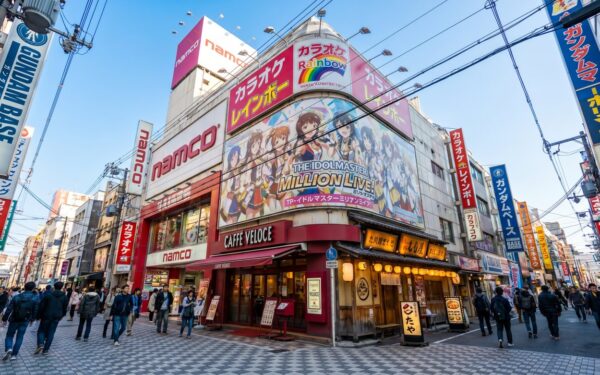
Amerikamura, the compact block west of Shinsaibashi, developed as an import culture hub in the 1970s and still functions as Osaka’s streetwear and subculture retail district.
Vintage American clothing, independent sneaker shops, and youth fashion labels operate alongside record stores and small cafes. The triangle park at its centre is a useful landmark and a reliable people-watching location.
Horie immediately to the west is Osaka’s most design-conscious neighbourhood and has the independent boutique concentration to match.
Interior design shops, concept stores, slow-fashion labels, and specialist food retailers line the streets. It’s a quieter, more considered shopping experience than the arcades and is worth the short walk from Shinsaibashi.
Tenjinbashisuji — Everyday Osaka
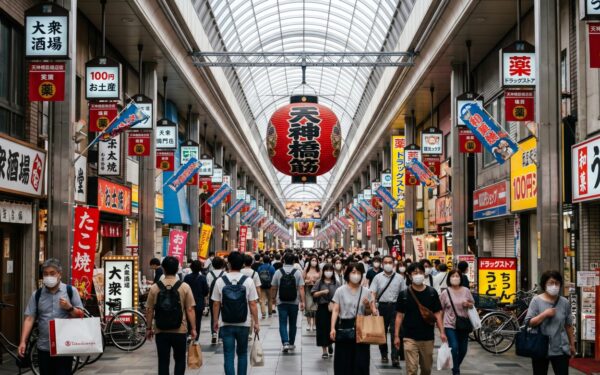
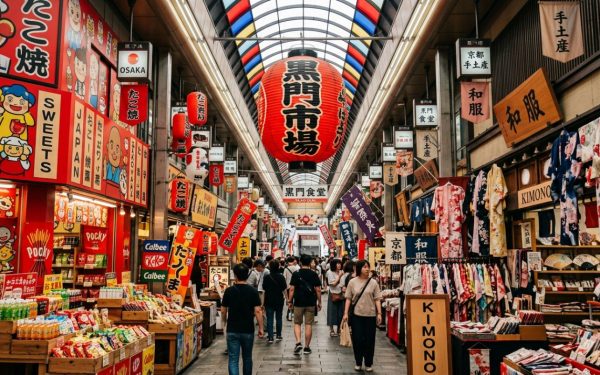
Tenjinbashisuji covered arcade in northern Osaka is reputedly Japan’s longest shotengai at roughly 2.6 kilometres.
Unlike the tourist-oriented arcades of Namba, Tenjinbashisuji is a functioning everyday shopping street for local residents — pharmacies, greengrocer stalls, family-run clothing shops, old-school kissaten coffee houses.
It’s a more authentic slice of Osaka commercial life than anything in the city centre.