Osaka Museum of History
Ten floors charting 1,350 years of Osaka's past, with Osaka Castle directly in the window.
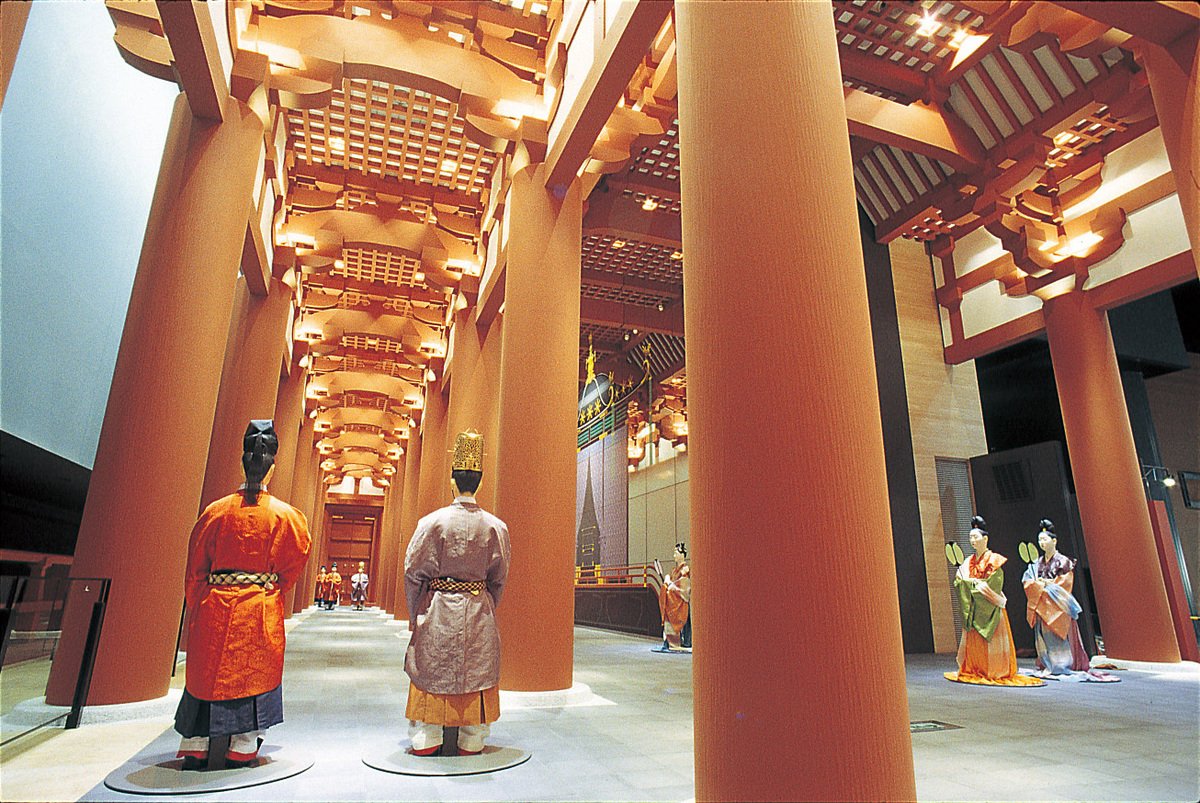








Step out of the lift on the 10th floor of the Osaka Museum of History (大阪歴史博物館) and the first thing you see is not an exhibit case — it is a forest of vermillion pillars, each 70 centimetres in diameter, standing in a full-scale recreation of the Daigokuden ceremonial hall of Naniwa Palace, the 7th-century imperial court that sat on this very ground before modern Osaka existed.
The museum was deliberately built on the palace ruins, and excavated sections of the original structure are visible through basement-level windows.
That overlap of past and present is the whole argument of the building.
The permanent exhibition runs across floors 7 to 10, each devoted to a distinct period.
The 10th floor covers ancient Osaka as Japan’s first administrative capital; the 9th takes you through the medieval and early-modern merchant city; the 8th focuses on excavation and archaeological process, with hands-on research stations and a working dig replica; and the 7th floor brings things into the Meiji, Taisho, and early Showa eras, including a recreated covered shopping arcade from the 1920s.
The route runs top-down, so take the elevator to 10 first.
Plan for 90 minutes to two hours for the permanent collection alone.
Adults pay ¥600 for the permanent exhibition; children in junior high school and below enter free.
The museum is free with the Osaka Amazing Pass.
Tanimachi 4-chome Station on the Osaka Metro Tanimachi and Chuo lines is a three-minute walk from Exit 9, making this an efficient pairing with a visit to Osaka Castle directly across the road.
The top floors also give you a clean aerial view of the castle keep without paying the castle’s ¥600 admission.
Four floors, 1,350 years of history, and a direct view of Osaka Castle from the top — all for ¥600.
Osaka Museum of History: Tickets, Hours, and What to See on Each Floor
The Osaka Museum of History (大阪歴史博物館) was built on the ruins of Naniwa Palace, Japan’s 7th-century imperial capital, and the building does not let you forget it.
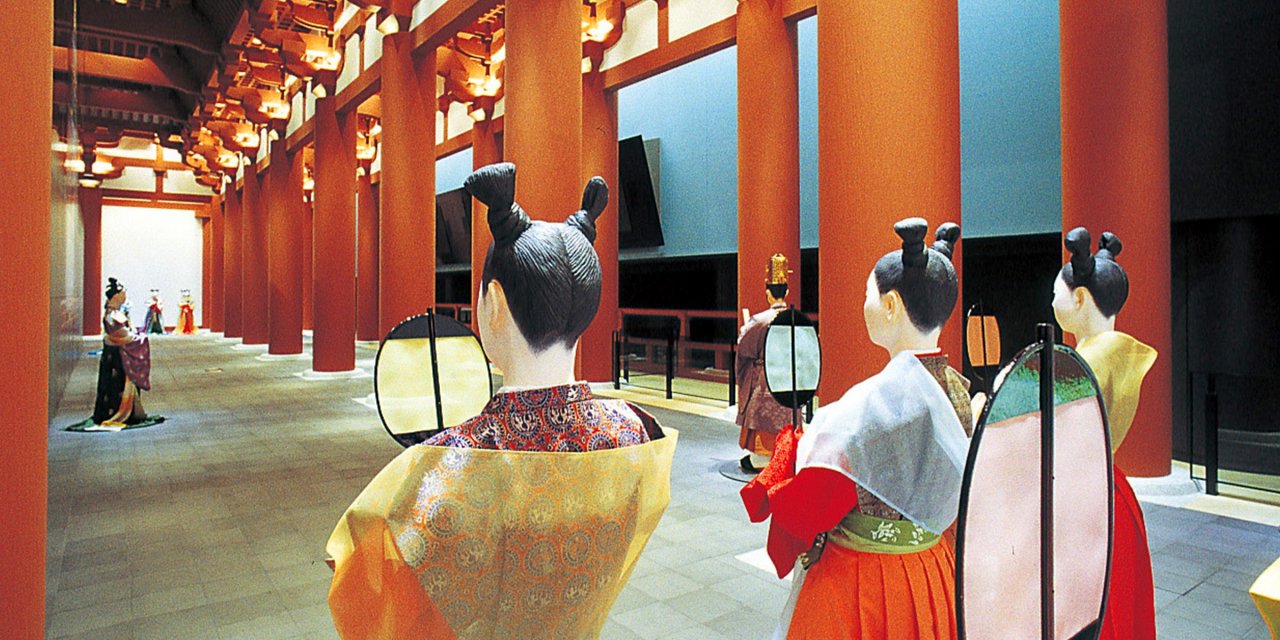
Step out of the elevator on the 10th floor and you are standing inside a life-size recreation of the Daigokuden ceremonial hall, surrounded by vermillion pillars 70 centimetres in diameter, with mannequins in Heian court dress and the actual palace excavation site visible through the windows below.
That is not a thing most city history museums can arrange.
In this Explore Osaka guide, you’ll find everything you need to plan the visit well: what is on each floor, how long to budget, and the honest case for when to skip it.
Quick Facts
Hide- Address: 4-1-32 Otemae, Chuo-ku, Osaka City, 540-0008
- Hours: 09:30–17:00 (last entry 16:30), closed Tuesday — and the following Wednesday when Tuesday is a national holiday — plus 28 December–4 January
- Admission: Adults ¥600 | High school and university students ¥400 | Junior high and below free | Osaka Amazing Pass accepted
- Nearest station: Tanimachi 4-chome (谷町四丁目駅, Osaka Metro Tanimachi Line / Chuo Line), Exit 9, 3-minute walk
- Time needed: 90 minutes to 2 hours for the permanent exhibition; add 30–45 minutes if a special exhibition is running
- Best season: Year-round; spring adds cherry blossoms in adjacent Osaka Castle Park
- Official website: osakamushis.jp
What Makes the Osaka Museum of History Worth Visiting
Most city history museums tell you about the place you are already standing in.
This one is different, because the place you are standing in is the point.
The 10th-floor Daigokuden reconstruction works precisely because the Naniwa Palace foundations are directly beneath the building, and excavated sections are visible from the lower floors.
You are not reading about imperial Osaka from a distance; you are physically on top of it.
The four permanent exhibition floors cover roughly 1,350 years, from ancient Osaka as Japan’s first administrative centre through the merchant city of the Edo period and on into the early 20th century.
The scale models are large enough to be genuinely impressive, the chronological layout is clear, and English labelling is present throughout, though it thins out on the middle floors.
The 7th-floor recreation of a 1920s covered shopping arcade (shotengai), complete with storefronts and period merchandise, is specific enough to be memorable rather than decorative.
The honest limitation: interpretive depth in English on floors 8 and 9 is uneven, and some display cases look their age.
If you arrive knowing nothing about Japanese history and hoping the museum will build the framework from scratch, the signage may move faster than you can follow.
Come with a rough sense of the chronology — Naniwa Palace to Toyotomi-era castle city to Edo merchant capital to modern port city — and the exhibits click into place.
At ¥600 for adults, roughly the cost of a convenience store lunch, the permanent exhibition earns its price easily.
The museum is also included in the Osaka Amazing Pass, which covers free entry to over 40 city attractions.
If you are holding the pass and already in the Osaka Castle area, this is a straightforward addition that adds genuine context to the castle visit across the road.
Osaka Amazing Pass — the one pass worth buying
Unlimited subway rides plus free entry to 40+ attractions including Osaka Castle, Umeda Sky Building, and the Dotonbori River Cruise. If you're spending more than a day sightseeing, it pays for itself before lunch.
What to See on Each Floor at Osaka Museum of History
The permanent exhibition occupies floors 7 to 10.
The route is intentionally top-down, so take the elevator to the 10th floor first and work your way down.
Floors 1 to 6 hold the museum offices, restaurant, gift shop, and lobby; there is nothing visitor-facing there.
10th Floor: Ancient Osaka and the Naniwa Palace Reconstruction
This is the floor that justifies the museum.
The Daigokuden hall recreation fills the central space with life-size vermillion pillars, court figures in period dress, and video installations depicting the ceremonial life of the 7th and 8th centuries, when Osaka served as Japan’s seat of government under the name Naniwa-kyo.
The windows here frame a direct view down to the actual Naniwa Palace ruins at ground level, a physical connection that most period reconstructions cannot offer.
Budget at least 30 minutes on this floor alone.
9th Floor: The Merchant City of the Edo Period
The 9th floor covers the centuries when Osaka became Japan’s commercial capital, from roughly the 15th through the 19th century.
Detailed scale models show Osaka Castle and the surrounding city at its Edo-period peak, and the displays on the Dojima Rice Exchange explain how the city’s commodity markets functioned as the financial backbone of the whole country.
English labelling is adequate but less thorough than on the floor above.
8th Floor: Excavation and Archaeological Process
The 8th floor is the most hands-on of the four, focusing on how urban archaeology is conducted rather than on any particular historical era.
Replica dig sites, recovered artifacts, and explanatory panels on excavation methodology make this floor more rewarding for visitors with a specific interest in the subject.
The interactive area works well for children, and the displayed finds from digs beneath central Osaka are genuinely interesting if you take the time to read the context.
7th Floor: Meiji, Taisho, and Early Showa Osaka
The final permanent exhibition floor covers Osaka’s transformation from feudal city to modern industrial and commercial centre.
The set-piece here is a recreated shotengai arcade from the 1920s, with intact shop fronts selling period goods.
The surrounding displays on early modern urban life, from the growth of the textile trade to the spread of electric tram networks, are among the best-presented in the building.
This is where the museum feels most alive.
The Osaka Castle View You Do Not Need to Pay Twice For
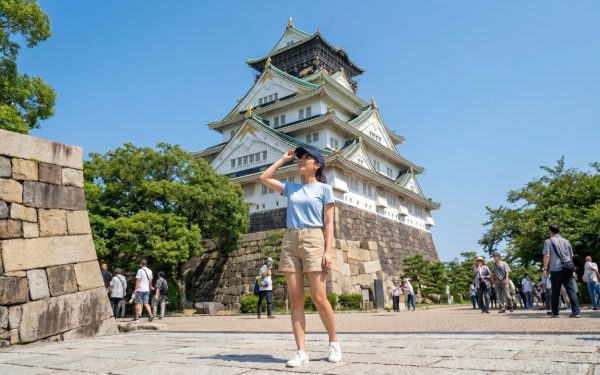
The upper floors of the museum building look directly at Osaka Castle.
From the 10th floor especially, the castle keep sits in the middle distance against the moat and the park’s tree canopy.
The castle’s own observation deck charges ¥600 admission; the view from the museum is included in your museum ticket and, for photography purposes, is arguably better composed, since you are looking across at the keep rather than down from inside it.
If your goal is a clean exterior photograph of the castle rather than the castle’s interior museum, the Osaka Museum of History’s upper windows give you exactly that without the queues that build up at the castle tower entrance on weekends.
The two make a natural pair: the museum for context and a composed view, the castle for the interior exhibits and the park grounds.
Getting to the Osaka Museum of History: Transportation Options
Tanimachi 4-chome Station on the Osaka Metro Tanimachi Line and Chuo Line is the correct stop.
Use Exit 9, which brings you out within 100 metres of the museum’s main entrance on flat ground.
The walk from Exit 9 to the front door is three minutes.
Exit 2 is slightly longer at around five minutes and is on the opposite side of the building.
From Namba, take the Midosuji Line one stop north to Honmachi, then transfer to the Chuo Line east to Tanimachi 4-chome.
Total journey is around 15 minutes.
From Umeda, the Tanimachi Line runs south directly to Tanimachi 4-chome in about 12 minutes; no transfer required.
The Osaka Metro guide covers fares, IC card basics, and a full line map if you are still getting your bearings on the network.
Essential Osaka Travel Passes
Powered by KlookThe passes worth buying before you land — curated for first-timers.
Osaka Amazing Pass
Unlimited subway + free entry to 40+ attractions. The only pass most visitors actually need.
Osaka e-Pass
Attractions-only digital pass. Pair with a Metro Pass if skipping the Amazing Pass.
Osaka Metro Pass
1 or 2-day unlimited Metro rides. Best standalone transit value if you already have an attractions pass.
JR West Kansai Area Pass (WEST QR)
Unlimited JR trains for 1 to 4 days. Covers Kyoto, Nara, Kobe, and Himeji from Osaka.
JR Haruka Express
KIX to Umeda/Shin-Osaka in ~50 min. Best if staying in Umeda or heading straight to Kyoto.
Nankai Rapi:t Express
KIX to Namba in 34 min, reserved seat. Better if staying in Namba or Shinsaibashi.
Timing, Tuesday Closures, and Practical Details
The Osaka Museum of History is notably quieter than the castle across the road, even on peak weekends.
Weekday mornings are the calmest.
The museum is a useful fallback on days when the castle grounds are packed, or when rain makes outdoor sightseeing difficult.
Tuesday closures catch visitors more often than they should.
If your visit falls on a Monday public holiday, the museum stays open on Monday but closes the following Tuesday and sometimes Wednesday — double-check the official website if your trip includes a national holiday.
The museum is also closed from 28 December through 4 January for the New Year period.
Last entry is at 16:30, 30 minutes before closing.
If you are combining the museum with Osaka Castle in the same afternoon, go to the castle first: castle queues run longer and the museum can be completed efficiently in under two hours.
The museum’s restaurant on the lower floors is a reasonable lunch option if you want to eat before or after the exhibition without leaving the building.
Special exhibitions run on the upper floors alongside the permanent collection and require a separate ticket, priced and listed individually on the official website.
Check in advance if a particular show is the reason for your visit.
Photography is permitted throughout the permanent exhibition.
Individual display cases may carry no-flash signs, but the 10th-floor Daigokuden reconstruction is fully photographable.
Is the Osaka Amazing Pass Worth Using Here?
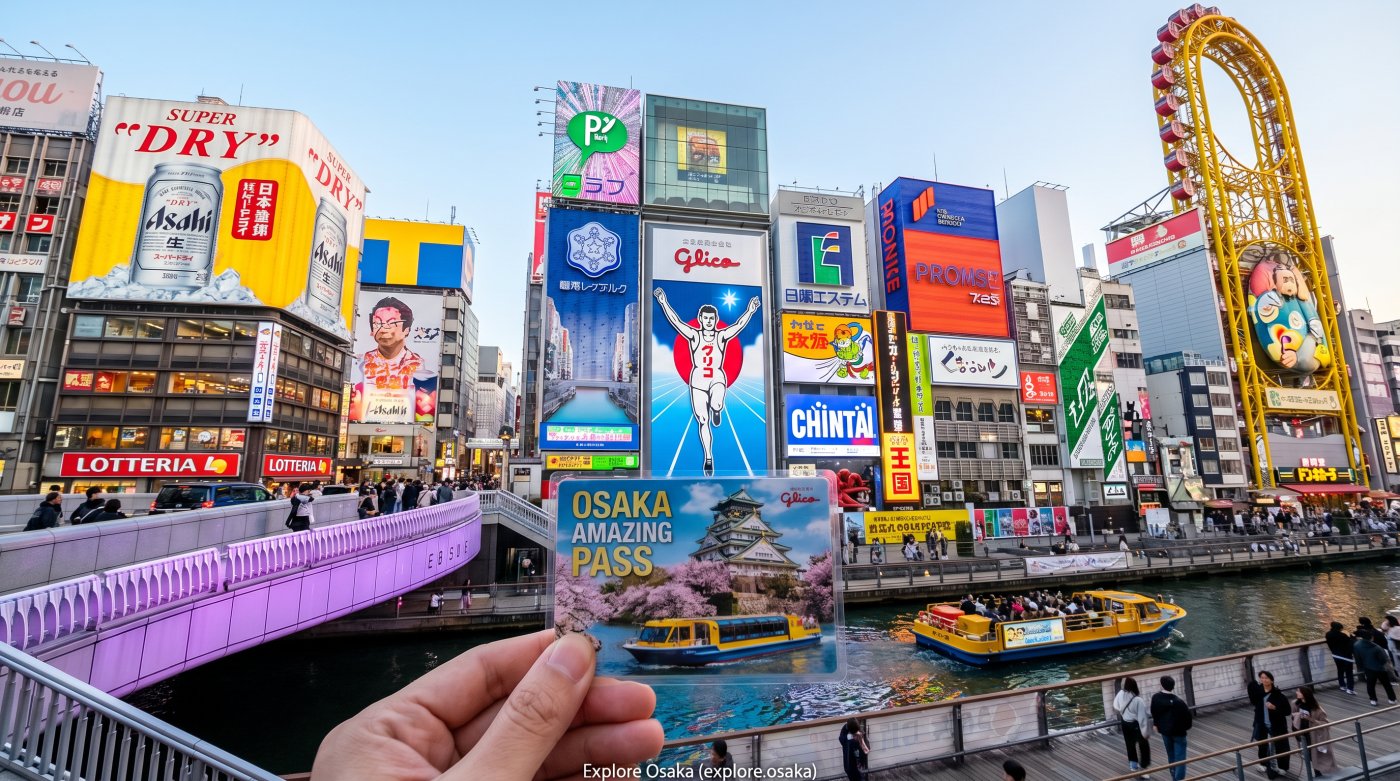
The Osaka Amazing Pass covers the standard adult admission of ¥600 in full.
Present the pass at the ground-floor ticket counter before heading to the elevators.
The pass does not cover special exhibition tickets; those require a separate purchase regardless of which pass you hold.
Whether the Amazing Pass makes financial sense overall depends on how many covered attractions you visit across your trip.
The detailed comparison of the Osaka Amazing Pass and the ICOCA card works through the numbers by trip length and daily plan, which is the clearest way to decide before you buy.
Osaka Amazing Pass — the one pass worth buying
Unlimited subway rides plus free entry to 40+ attractions including Osaka Castle, Umeda Sky Building, and the Dotonbori River Cruise. If you're spending more than a day sightseeing, it pays for itself before lunch.
Nearby Attractions Worth to Visit Around Osaka Museum of History
- Osaka Castle Park is directly across the road, a five-minute walk from the museum entrance. The park is free to walk through year-round; the castle keep costs ¥600 to enter. In spring, the park’s several hundred cherry trees make it one of the better blossom spots in the city.
- Naniwanomiya Site Park (難波宮跡公園) adjoins the museum to the south and preserves excavated remnants of the original Naniwa Palace at ground level. Entry is free and the site is open at all hours. It puts concrete (literally) under the context you just absorbed on the 10th floor.
- Osaka Prefectural Government Building (大阪府庁) is directly to the west. Its rooftop observation area is occasionally open to the public and free; check signage on arrival.
- Kids Plaza Osaka (キッズプラザ大阪), an interactive children’s museum with hands-on exhibits across multiple floors, is about a 15-minute walk north. If you are travelling with younger children for whom the Osaka Museum of History’s content is too text-heavy, Kids Plaza Osaka is a more engaging option and handles the three-to-twelve age range well.
The Osaka Castle area rewards a morning spent deliberately.
The museum runs well as the first stop, leaving the castle park and keep for midmorning once you have context for what you are looking at.
If you are building a multi-day plan that sequences this neighbourhood alongside Dotonbori, Shinsaibashi, and the southern wards, the two-day Osaka itinerary maps out the logical order so you are not crossing the city twice.
The museum and castle fill a first morning cleanly, with the afternoon free.
What's Available
Frequently Asked Questions
The Osaka Museum of History is fully included in the Osaka Amazing Pass, covering the standard adult admission of ¥600 for the permanent exhibition.
Pass holders should present their pass at the ground-floor ticket counter.
Note that special temporary exhibitions require a separate ticket, even for pass holders.
Start on the 10th floor. The Osaka Museum of History is designed as a top-down route: take the elevator directly to floor 10 (ancient Osaka and the Naniwa Palace reconstruction), then walk down through floors 9, 8, and 7 chronologically to the Showa era.
Going bottom-up reverses the intended sequence and makes the timeline harder to follow.
Most visitors spend 90 minutes to two hours at the Osaka Museum of History for the permanent exhibition across floors 7 to 10. Add 30 to 45 minutes if there is an active special exhibition on the upper floors.
The museum pairs efficiently with Osaka Castle directly across the road — both together typically fill a half-day.

Editor's Review
Osaka Museum of History earns its admission on the strength of one floor alone: the 10th, where life-size vermillion pillars from the Daigokuden reconstruction and a wall of windows framing Osaka Castle deliver something genuinely hard to find elsewhere in the city — a spatial sense of how ancient this place actually is.
The exhibition route from floors 10 down to 7 is well-paced, and the recreated Showa-era arcade on the 7th floor is a legitimate highlight rather than a crowd-pleasing afterthought.
The honest caveat: English interpretation on floors 8 and 9 is thinner than on the top floor, and some display cases feel dated for a museum opened in 2003.
If you are arriving without any prior knowledge of Japanese history, the panels can feel dense.
Come with at least a rough sense of the timeline from Naniwa Palace through the Edo merchant period, and the exhibits click into place.
At ¥600 — or free with the Osaka Amazing Pass — it is easy to justify, especially paired with Osaka Castle across the road, which you can also photograph from above without paying twice.
Related Attractions
Ikukunitama Shrine
teamLab Botanical Garden Osaka
Isshinji Temple
Open Air Museum of Old Japanese Farm Houses
Osaka Museum of Housing and Living
Kema Sakuranomiya Park
Tennoji Park
Tennoji Zoo