





DAY TRIP
Day Trip to Tottori from Osaka: The Complete Guide 2026
Just 2.5 hours from Osaka and you're standing on Japan's only sand dunes with the Sea of Japan behind you
Read more →Thirty minutes on the JR Special Rapid and you're standing in front of 1,600 years of Japanese history.
Kyoto is the most obvious day trip from Osaka, and for good reason. The JR Special Rapid from Osaka Station drops you at Kyoto Station in 30 minutes for ¥580, putting 17 UNESCO World Heritage Sites within reach before most of your hotel's breakfast buffet has even been cleared. A single day is enough to cover three or four of the city's best areas - Fushimi Inari, the Higashiyama district, Kinkaku-ji, or Arashiyama - depending on how far you want to walk and how early you're willing to leave.
JR Tokaido-Sanyo Shinkansen (Hikari/Kodama): 15 min from Shin-Osaka, ¥1,450
JR Kyoto Line Special Rapid: 30 min from Osaka Station, ¥580
Hankyu Kyoto Line Limited Express: 45 min from Osaka-Umeda, ¥410
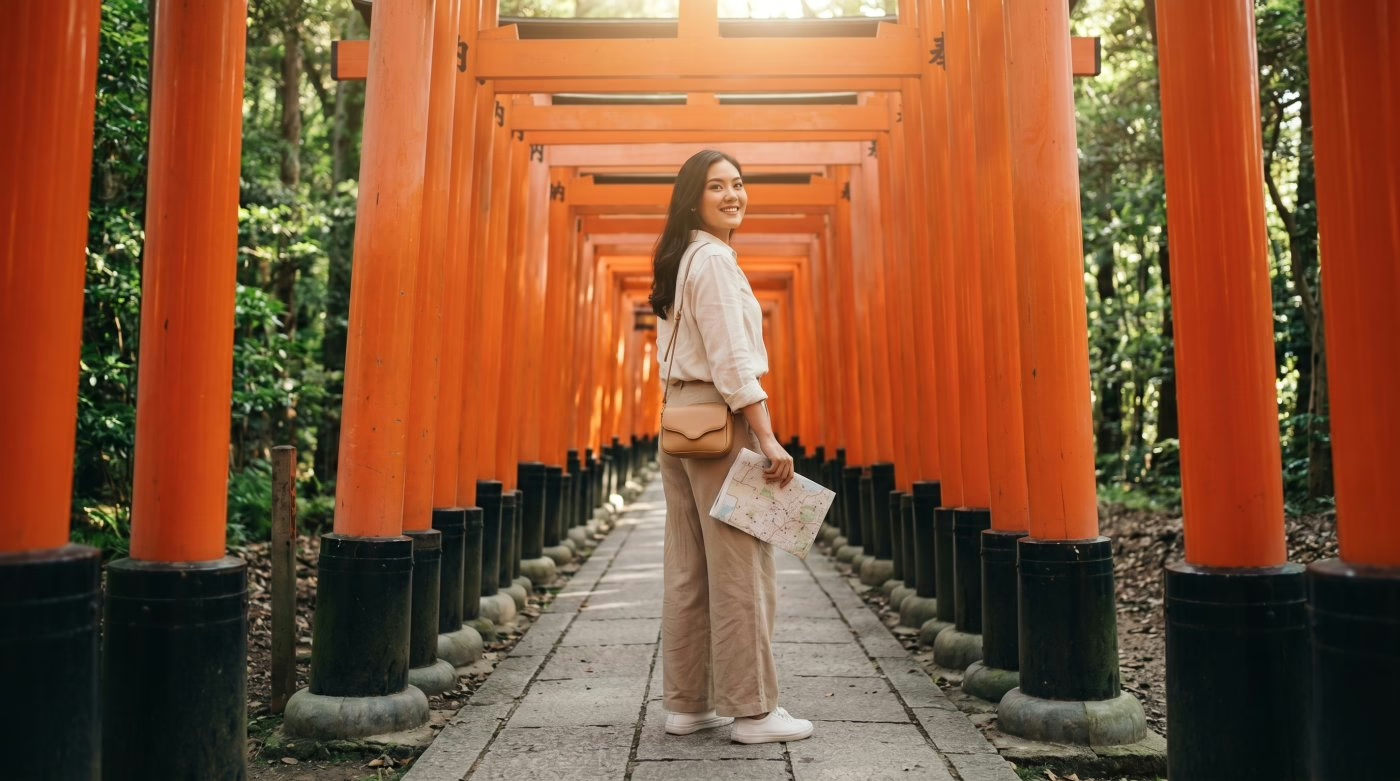
Get here early - the thousands of vermilion torii gates look considerably less magical with 500 other tourists walking through them. The main lower trail takes about 30-45 minutes; if you want to reach the summit of Mt. Inari, budget 2-3 hours. Entry is free and the shrine is open 24 hours. Take the JR Nara Line from Kyoto Station to Inari Station, a 5-minute ride.
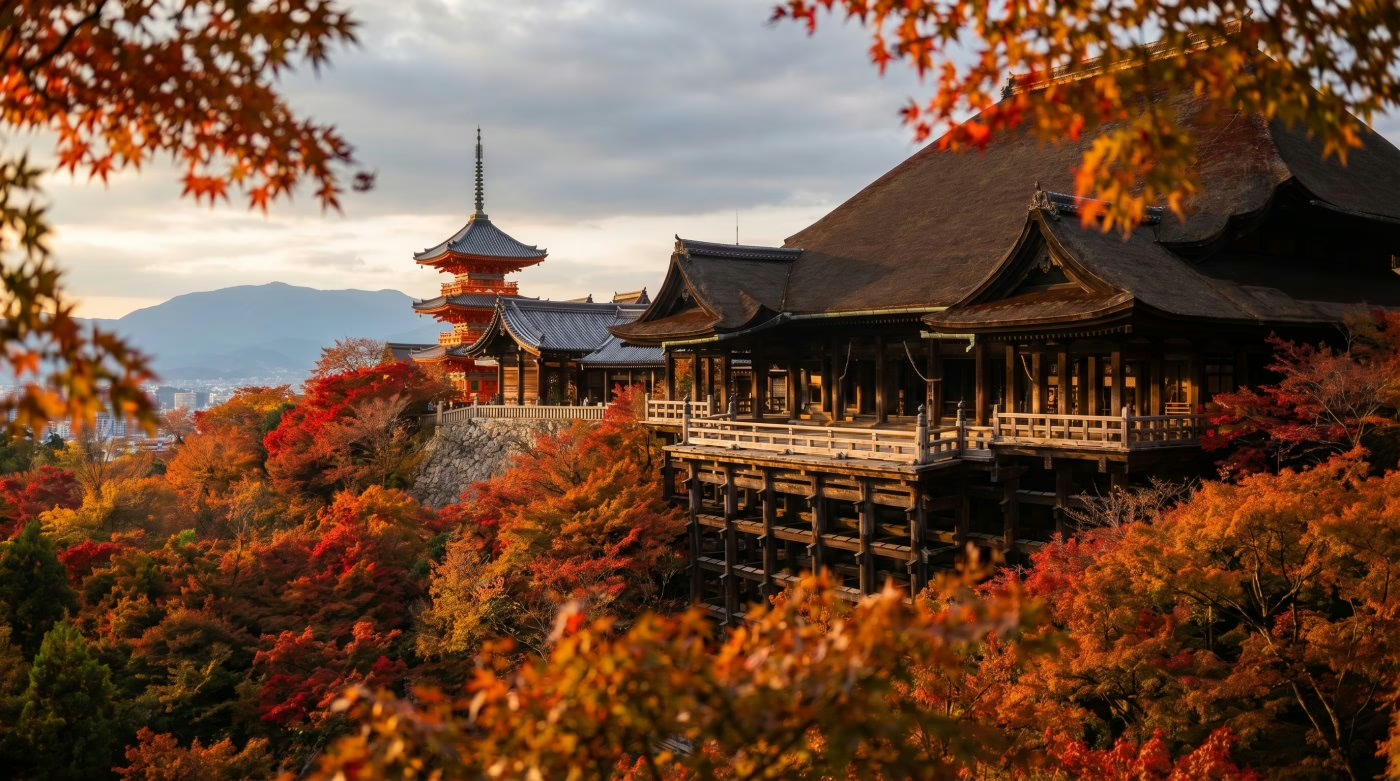
The wooden stage jutting out from the main hall over the hillside is the defining image of Kyoto, and the view across the city holds up. Entry is ¥500. From Kyoto Station, take city bus No. 206 to the Kiyomizumichi stop, then walk 10 minutes uphill. Budget 60-90 minutes for the temple grounds and Otowa Waterfall below.
The stone-paved lanes leading down from Kiyomizu-dera into the Higashiyama district are among the most intact preserved streetscapes in Japan. It takes about 20-30 minutes to walk through at a relaxed pace. The stretch connects naturally toward Yasaka Shrine and Gion if you keep heading north.
Either eat near Gion along Hanamikoji-dori (kaiseki set lunches are available at more manageable prices at lunch than dinner), or head to Nishiki Market - a narrow covered arcade near Shijo-Karasuma known as Kyoto's Kitchen. Nishiki is best for walking-and-eating: skewers, tofu, pickles, and tamagoyaki are all in ¥200-500 range per item.
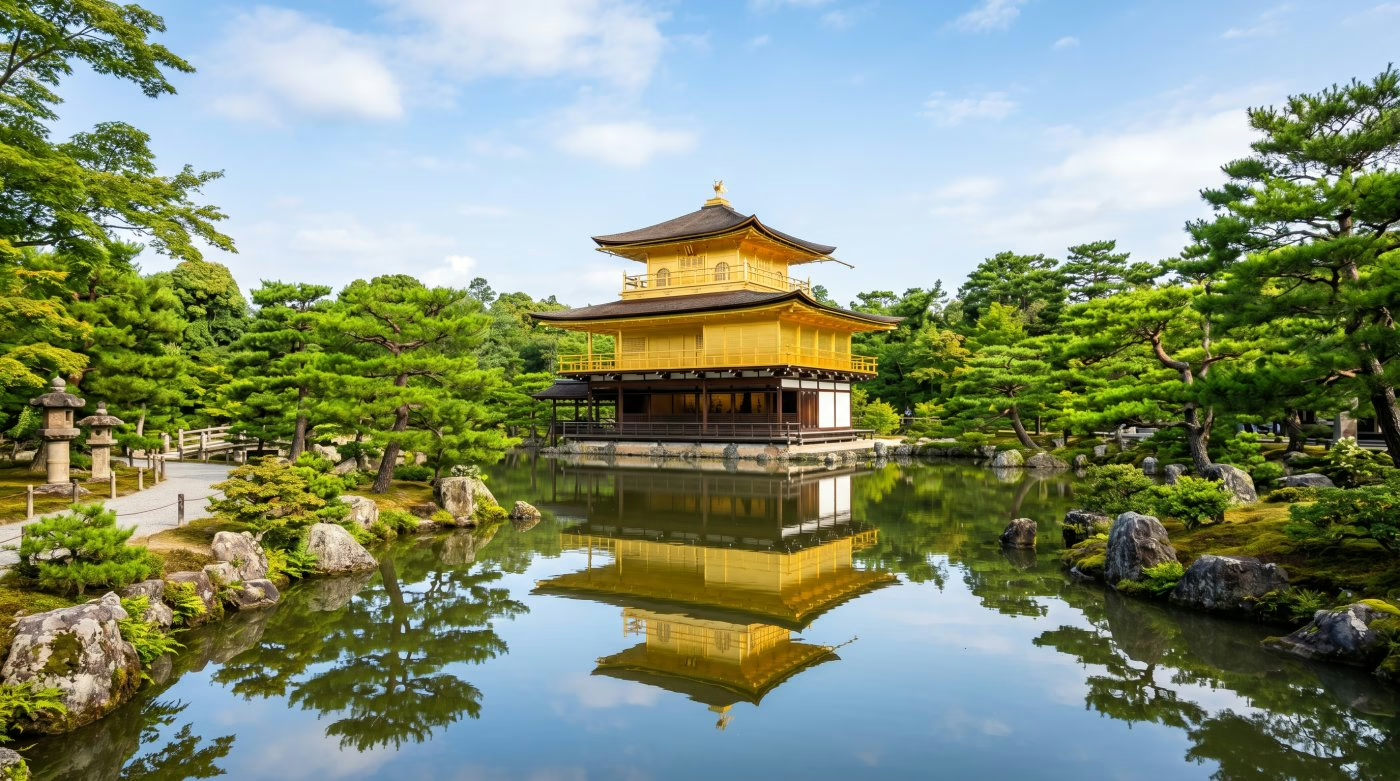
Kinkaku-ji is exactly as gold as the photos suggest, and the reflection in Kyoko-chi Pond gives you the standard shot within about 90 seconds of entering. Entry is ¥500. The grounds are compact - most visitors spend 30-45 minutes here. Take Kyoto City Bus No. 205 from Shijo-Kawaramachi to Kinkakuji-michi, approximately 25 minutes.
The bamboo path itself is free and short - about 500 meters long, walkable in 15 minutes. The appeal is the scale and sound of it, not the length. Combine with a walk through the adjacent grounds of Tenryu-ji (¥500 garden entry) and down to the Togetsukyo Bridge over the Oi River. From Kinkaku-ji, take city bus No. 204 to Ryoanji-michi, then transfer to the No. 11 to Arashiyama.
Take the JR Sagano Line from Saga-Arashiyama Station to Kyoto Station (about 15 minutes), then the JR Kyoto Line Special Rapid back to Osaka Station (30 minutes). Trains run frequently until late evening, so there's no rush - though avoiding the 18:00-19:00 commuter peak makes the ride more comfortable.
| Route | Line | Duration | Cost | Book |
|---|---|---|---|---|
| JR Kyoto Line Special Rapid RECOMMENDED | JR West | 30 min | ¥580 | |
| JR Tokaido-Sanyo Shinkansen (Hikari / Kodama) | JR Central / JR West | 15 min | ¥1,450 | |
| Hankyu Kyoto Line Limited Express | Hankyu Railway | 45 min | ¥410 | |
| Keihan Main Line Limited Express | Keihan Electric Railway | 50 min | ¥430 |
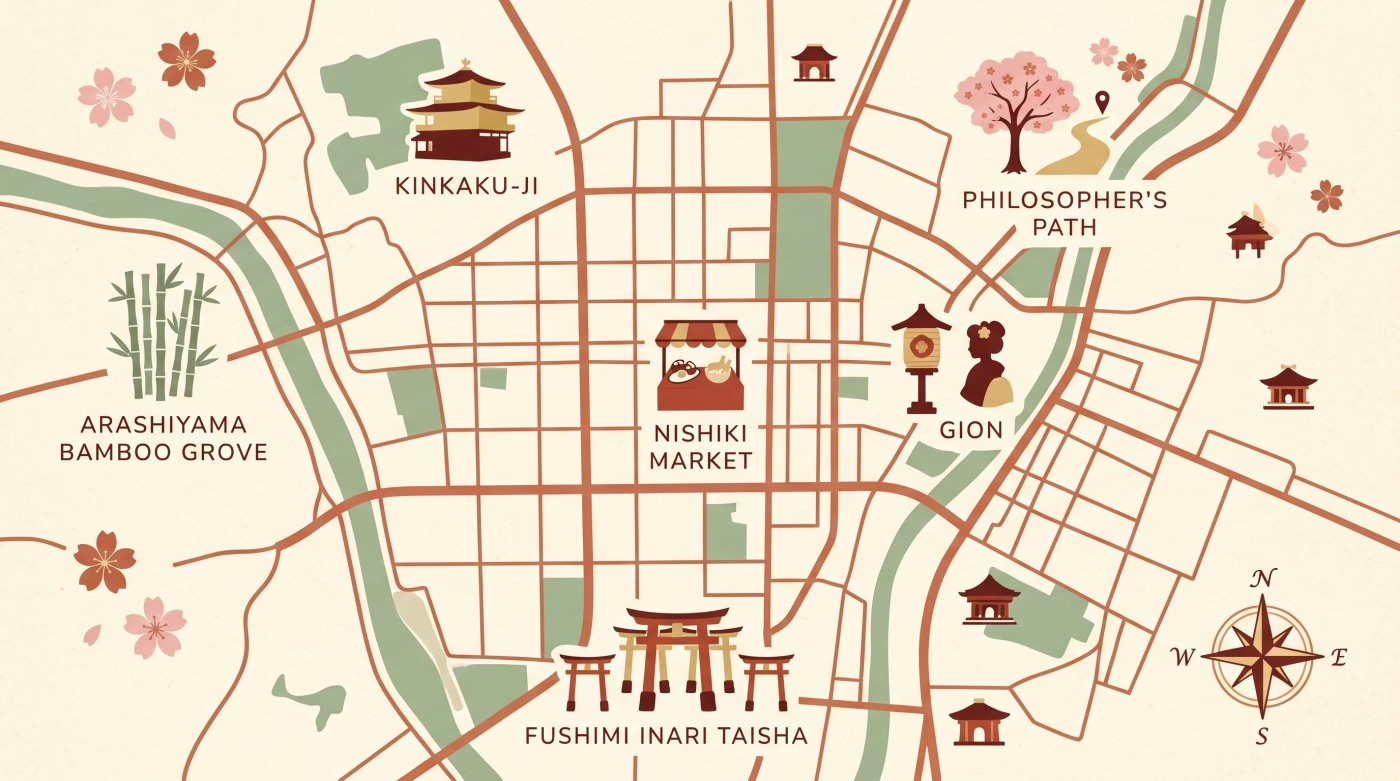
All stops on this itinerary pinned for easy reference.
Kyoto is the most obvious day trip from Osaka, and for good reason.
The JR Special Rapid from Osaka Station drops you at Kyoto Station in 30 minutes for ¥580, putting 17 UNESCO World Heritage Sites within reach before most of your hotel’s breakfast buffet has even been cleared.
A single day is enough to cover three or four of the city’s best areas – Fushimi Inari, the Higashiyama district, Kinkaku-ji, or Arashiyama – depending on how far you want to walk and how early you’re willing to leave.
Kyoto works as a day trip because the rail connection is almost absurdly easy.
From Osaka Station, the JR Kyoto Line Special Rapid gets you to Kyoto Station in about 30 minutes for less than the price of a forgettable airport sandwich, and if you are starting near Shin-Osaka with a Japan Rail Pass, the JR Tokaido-Sanyo Shinkansen cuts that to about 15 minutes.
That kind of travel time changes the math.
Kyoto stops feeling like a separate trip and starts acting like an extension of your Osaka stay.
The city also gives first-time visitors a very clean payoff.
If your idea of Japan includes shrine gates, temple precincts, old wooden streets, tea shops, stone lanes, and the faint suspicion that everyone else woke up earlier than you did, Kyoto delivers all of that in a single day.
It suits travelers who like culture, photography, food with a quieter style than Osaka, and neighborhoods that reward walking rather than bar-hopping.
Not everyone will be equally charmed, and that is worth saying plainly.
If you hate crowds, move slowly in the mornings, or want a day trip with one headline sight and very little planning, Kyoto can feel like hard work because the city is spread out and buses fill up fast.
In that case, a simpler outing might suit you better, while Kyoto becomes more enjoyable if you treat it as a carefully plotted mission rather than a lazy wander.
Kyoto sits close enough to Osaka that you have a real choice rather than one default answer.
The right route depends on where you are staying, whether you hold a JR Pass, and whether you care more about speed or about being dropped near the places you actually want to see.
For most readers, the decision comes down to the JR Kyoto Line Special Rapid versus the shinkansen.
For most travelers, this is the sweet spot.
The JR Kyoto Line Special Rapid runs between Osaka Station and Kyoto Station in about 30 minutes, costs ¥580 one way, and leaves often enough that you do not need military-grade timing.
If you are staying in Umeda, this is especially convenient because Osaka Station is right there, which saves you the extra hop to Shin-Osaka.
The line is easy to understand even if it is your first trip to Japan.
You board at Osaka Station, stay on, and get off at Kyoto Station with no transfer drama and no fare shock waiting at the gate.
During weekday rush hours it can get packed, so an early departure makes the whole day feel calmer.
This is the fastest option and the one that makes rail nerds quietly happy.
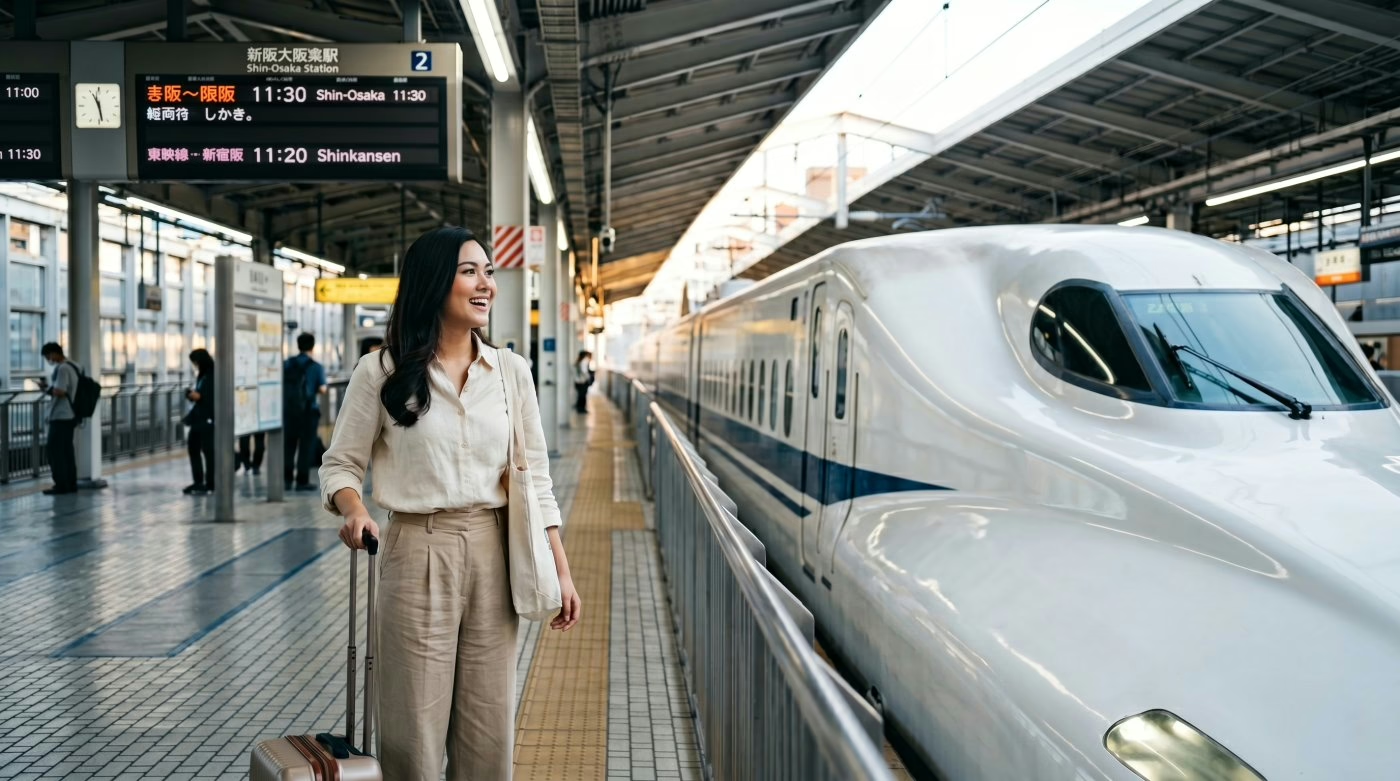
The JR Tokaido-Sanyo Shinkansen covers Shin-Osaka Station to Kyoto Station in about 15 minutes, with an unreserved one-way fare of around ¥1,450, and it is fully covered by the standard Japan Rail Pass on Hikari and Kodama services.
If you already hold the pass, the shinkansen is the obvious flex.
Without a pass, the time savings are real but smaller than they first look.
You still need to reach Shin-Osaka Station, get to the shinkansen platform, and then continue from Kyoto Station to wherever you are actually going in Kyoto.
For many travelers starting around Umeda or the Namba area, that extra hassle wipes out part of the speed advantage.
If you are paying out of pocket and starting around Osaka Station or Kita, take the JR Kyoto Line Special Rapid.
It is cheap, fast, frequent, and simple, which is a rare four-way win in travel.
If you hold a JR Pass or you are already beside Shin-Osaka Station, take the shinkansen and enjoy your wildly unnecessary but very satisfying 15-minute intercity sprint.
A third option exists for travelers who are heading straight to central Kyoto shopping streets rather than Kyoto Station.
The Hankyu Kyoto Line Limited Express from Osaka-Umeda to Kyoto-Kawaramachi takes about 45 minutes and costs ¥410, which makes it attractive if you want to start near Gion, Shijo, or Nishiki Market.
If you are still figuring out your base in the city before any of this starts, the where to stay in Osaka guide breaks down which districts make day trips like Kyoto much easier.
Kyoto is at its best in spring and autumn, and yes, everyone else has noticed.
Late March to mid-April brings cherry blossoms along temple grounds, canals, and old lanes, while mid-November into early December turns the hills and gardens red, orange, and gold.
These are the seasons when Kyoto looks most like the version living in people’s heads before they board the plane.
The trade-off is crowds, and Kyoto handles crowds in a very Kyoto way by making you queue politely in beautiful places.
Fushimi Inari gets busy early, Kiyomizu-dera’s approach streets become shoulder-to-shoulder by late morning, and buses can feel like rolling test chambers for patience.
If you are visiting in either peak season, start early and keep the route tight.
Summer is hot, humid, and a little relentless, though the city does have the Gion Matsuri atmosphere in July if you want festival energy.
Winter is calmer, with crisp air, lower crowd levels, and occasional clear days that make temple views feel almost sharpened.
If your schedule is flexible and you value breathing room over postcard foliage, winter is an underrated pick.
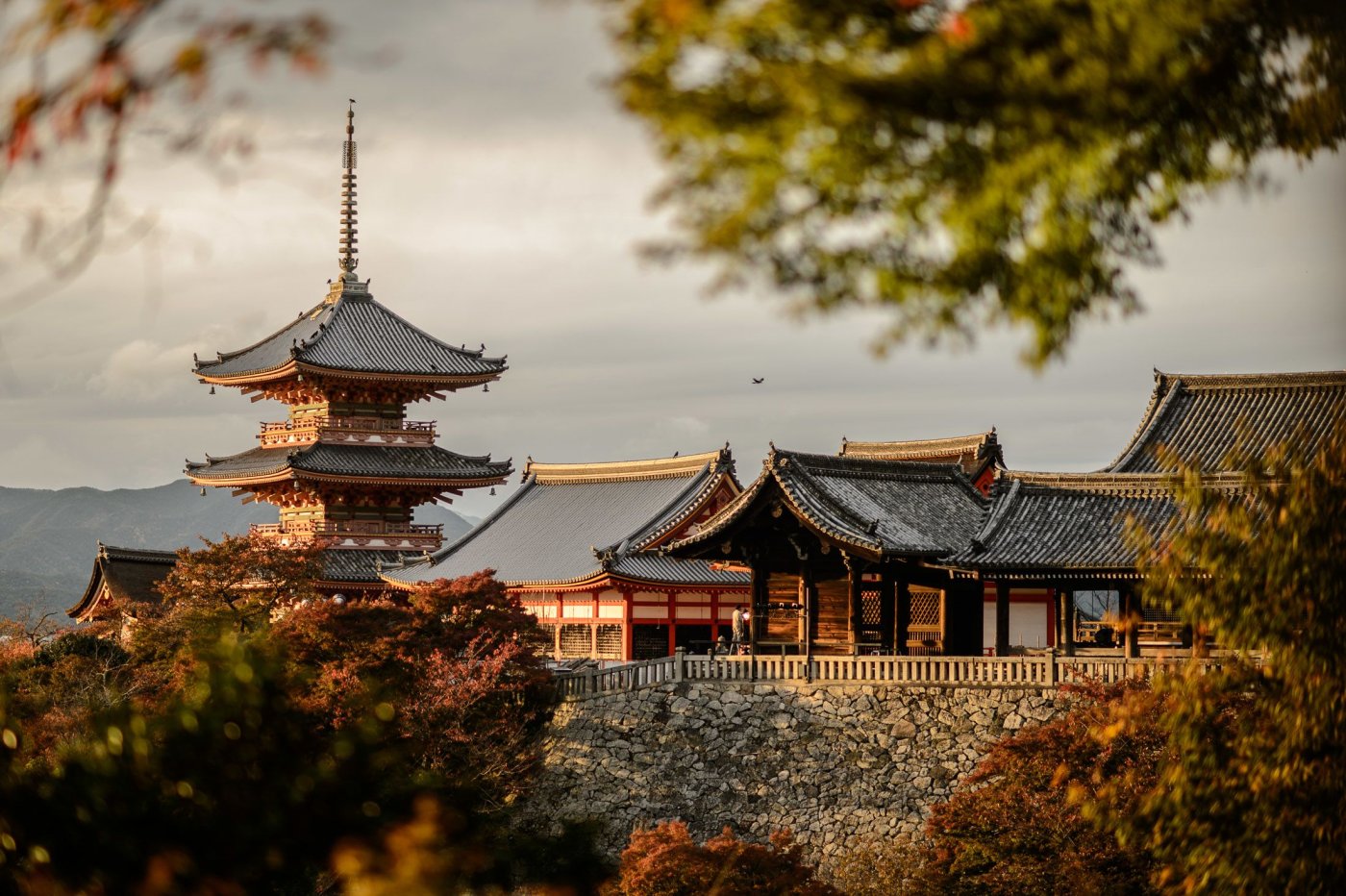
A good Kyoto day trip is less about how many sights you can tick off and more about how cleanly you link neighborhoods without wasting half the day on buses.
The route below starts early at Fushimi Inari, then moves north into Higashiyama before lunch, swings across to Kinkaku-ji, and ends in Arashiyama.
It is a full day with real walking, but it stays realistic for first-timers who want a proper sample of Kyoto rather than one shrine and a lot of dead time.
Leave Osaka around 7:00 and aim to be at Fushimi Inari Taisha by 7:45 or a little before.
This is the moment when Kyoto still feels half asleep, and the famous vermilion torii tunnels look more atmospheric than chaotic.
You do not need to hike all the way to the summit unless you want the workout; the lower and middle stretches already give you the classic experience, and about 45 minutes to 1 hour is enough for most first-time visitors.
From there, head back toward central Kyoto and make for Kiyomizu-dera.
The temple’s wooden stage and hillside setting are the sort of scene that survives overexposure for a reason.
Entry is ¥500, and the approach climb reminds you, politely but firmly, that Kyoto was not designed with rolling suitcases or weak calves in mind.
After the temple, let the route slow down slightly as you walk down through Ninenzaka and Sannenzaka.
These preserved lanes are full of old facades, small shops, snack counters, and that old-Kyoto texture people cross oceans to find.
Go gently here.
The point is not speed.
The point is to let the neighborhood work on you for a bit.
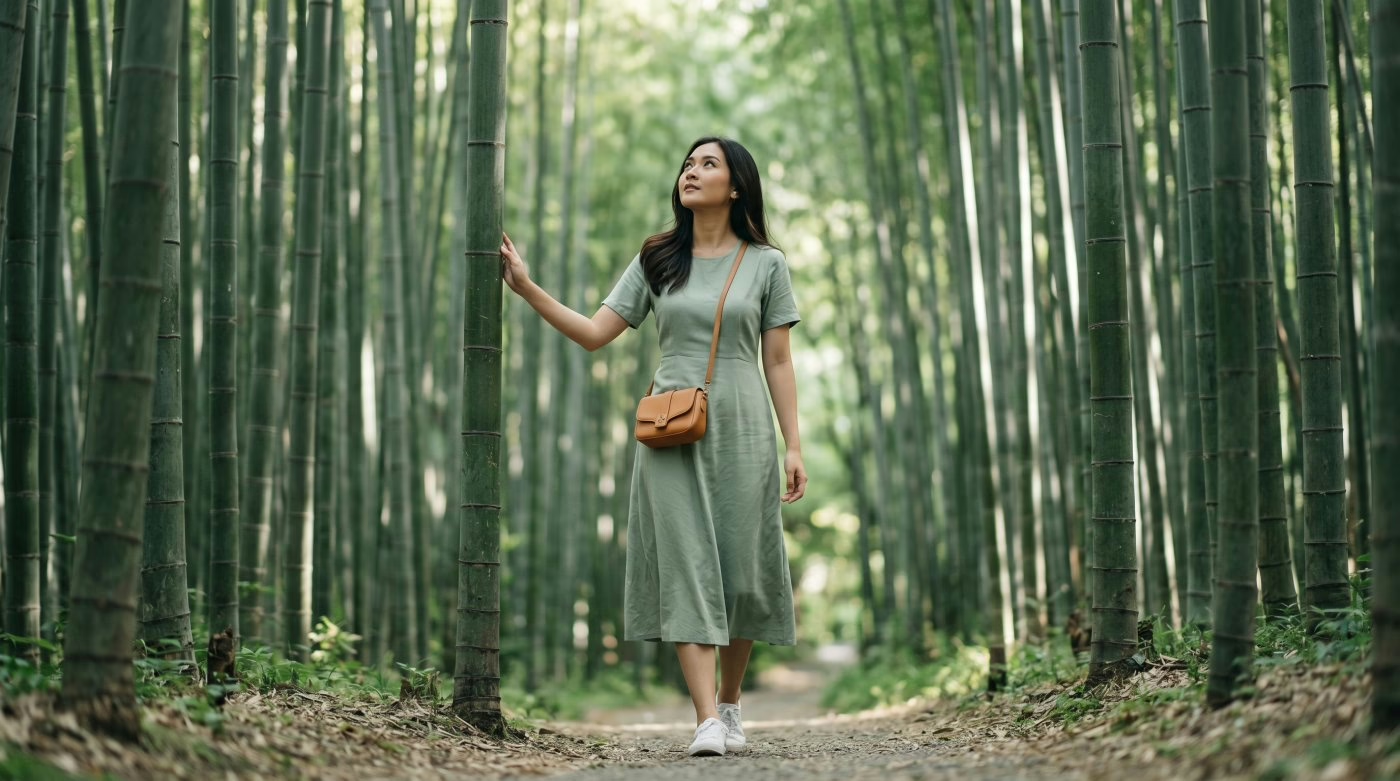
By lunch, you have earned the right to sit down.
If you want a more polished midday meal, head into Gion for a set lunch where Kyoto cooking feels restrained, seasonal, and far less likely to be covered in sauce than what you ate in Osaka the night before.
If you would rather keep the pace casual, Nishiki Market is a better fit, with small bites like tamagoyaki, tofu dishes, pickles, grilled skewers, and sweets that let you assemble lunch one stop at a time.
This is also where Kyoto starts to separate itself from Osaka in a pleasingly petty way.
Osaka food tends to be louder and more playful, all about heat, sauce, batter, and late-night appetite, which is exactly why an Osaka food guide usually reads like a challenge.
Kyoto goes the other direction.
The city likes refinement, balance, and things served in small bowls that look like they came with instructions from a tea master.
After lunch, make your way to Kinkaku-ji.
The Golden Pavilion is one of those places that sounds too obvious until you see it in person, at which point the gold leaf, the mirror-like pond, and the tidy framing of the garden admit that yes, the obvious sight sometimes wins.
Entry is ¥500, the route inside is short, and you rarely need more than 45 minutes unless you are the kind of traveler who can spend half an hour negotiating with one reflection angle.
From Kinkaku-ji, continue to Arashiyama for the final sightseeing push of the day.
The bamboo grove itself is shorter than many people expect, and that is fine because the point is the sensation of moving through it, the filtered light, the creak of stalks in the wind, the odd calm that appears whenever the crowd momentarily thins.
Pair it with a wander around the area near Tenryu-ji and Togetsukyo Bridge, and the afternoon lands on a softer note than the busier temple districts.
By around 17:30, it is time to turn back toward Osaka before fatigue starts making every staircase feel like an insult.
From Saga-Arashiyama Station, take the JR Sagano Line back to Kyoto Station, then hop on the JR Kyoto Line Special Rapid for the 30-minute ride to Osaka Station.
If you started early, you should still be back in Osaka in time for dinner and one more round of city life.
That return matters more than it sounds.
Kyoto can be beautiful, absorbing, and a little exhausting in the same breath, so coming back to Osaka’s easier evening rhythm is part of the appeal.
If you still have energy, the things to do in Osaka page is useful for finding a low-effort night plan that does not involve more temple steps.
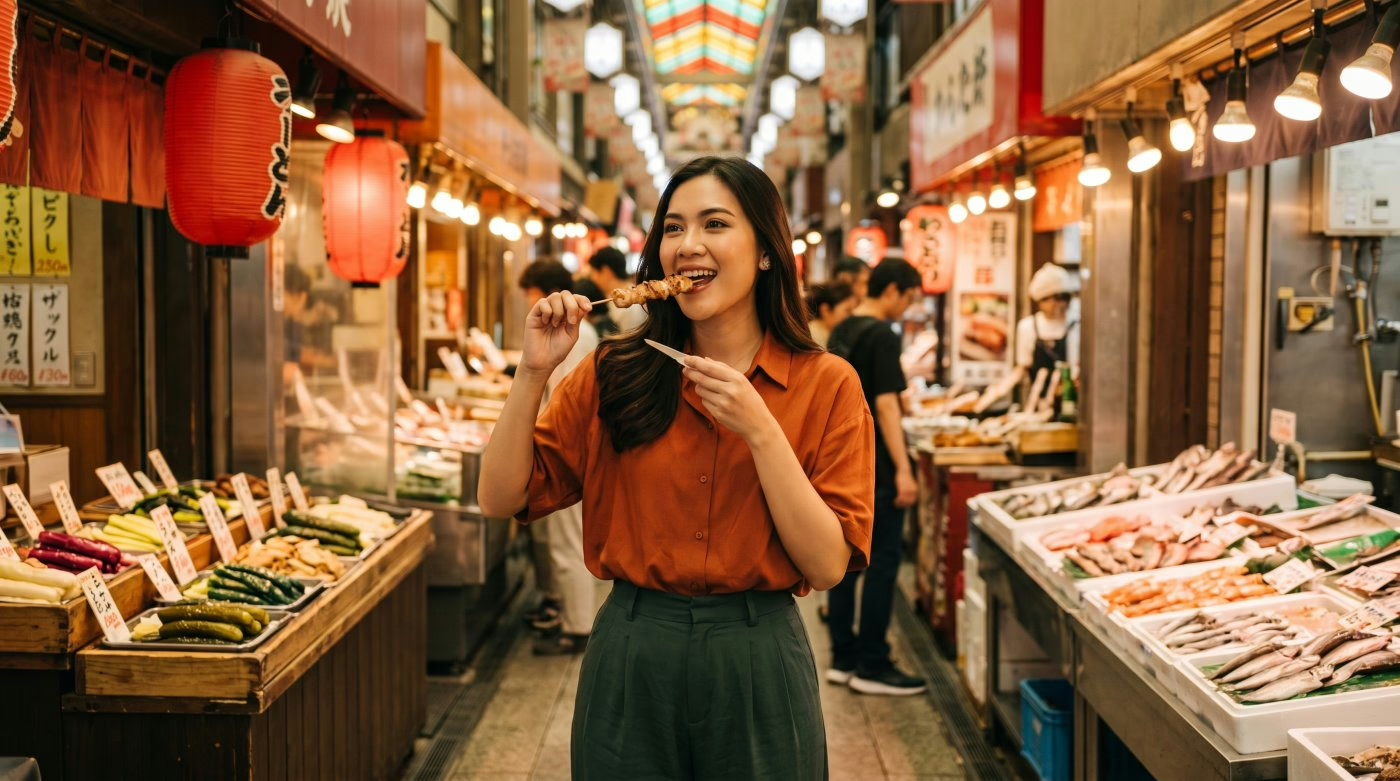
Kyoto’s food is less boisterous than Osaka’s and much more interested in restraint.
You will notice it in the seasoning, in the portioning, and in the way many meals feel built around seasonality rather than around the goal of making you gloriously overfull.
For a day trip, that works in your favor because you can eat well without crashing halfway through the afternoon.
A few specialties fit neatly into a one-day route.
Obanzai refers to Kyoto-style home cooking, usually a small spread of vegetables, tofu, simmered dishes, and rice that feels balanced rather than flashy.
Yudofu, especially if the weather is cool, is another strong pick, while matcha sweets, warabi mochi, and soft-serve give you an easy excuse to pause between neighborhoods.
Nishiki Market is the easiest low-commitment food stop for first-time visitors.
You can snack your way through tamagoyaki, pickles, soy milk doughnuts, skewers, and seasonal sweets without locking yourself into a long lunch.
If you want one sit-down meal instead, lunch is the smart time to try kaiseki-style dining in Kyoto, because dinner pricing can become a fast lesson in why your budget had hopes and dreams.
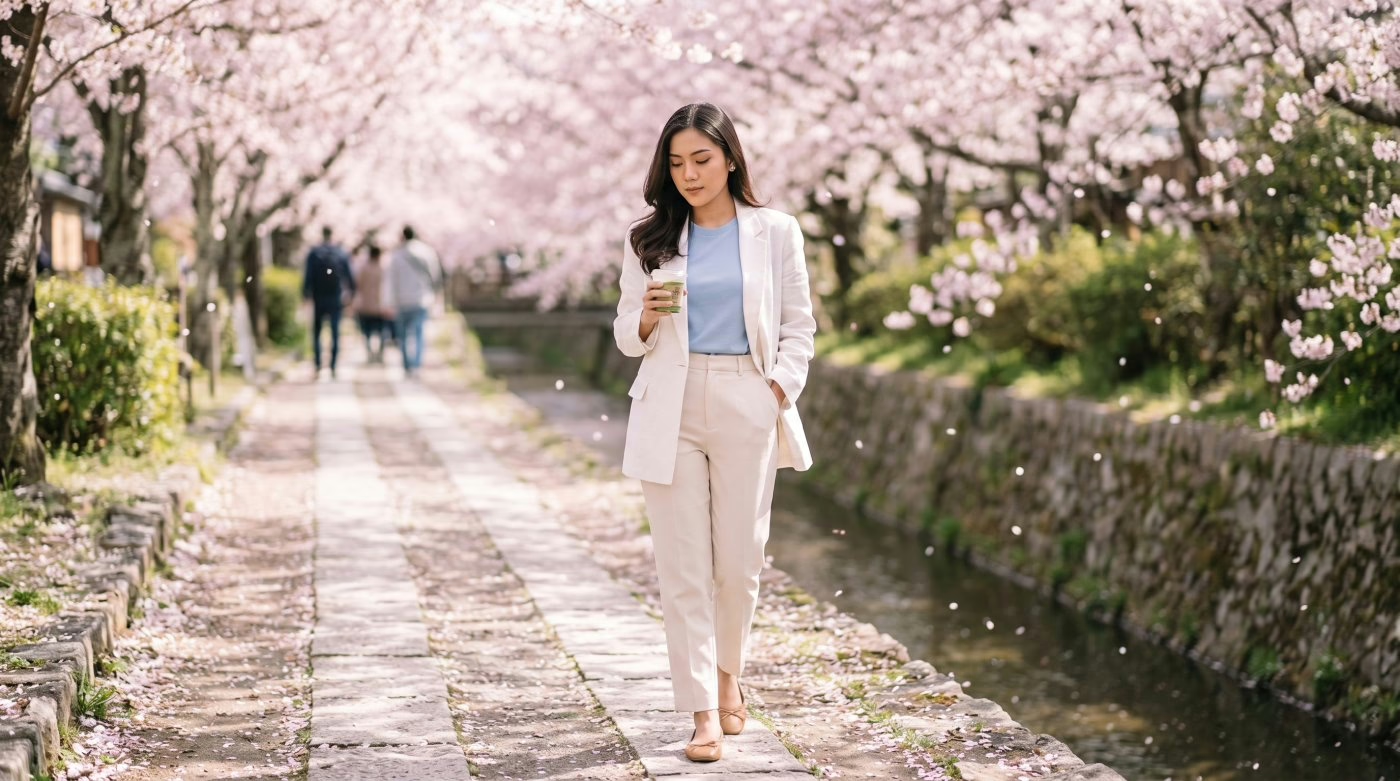
A realistic Kyoto day trip from Osaka usually lands around ¥5,000-¥9,000 per person.
The lower end assumes you take the JR Special Rapid, pay for only a couple of major sights, and keep food simple.
The upper end appears quickly once you add local transport, extra snacks, a nicer lunch, or the shinkansen.
Your base cost is straightforward.
The JR Kyoto Line Special Rapid is ¥580 one way between Osaka Station and Kyoto Station, so the round trip is ¥1,160.
If you choose the shinkansen instead, expect about ¥1,450 one way between Shin-Osaka and Kyoto, which is fast but pricey for such a short hop unless your JR Pass is doing the heavy lifting.
Inside Kyoto, transport costs depend on how ambitious your route is.
A temple-heavy day that jumps between districts often means a mix of JR local trains, buses, and some walking, so budgeting another ¥600-¥1,200 for local rides is sensible.
You can trim that by clustering neighborhoods more tightly, though first-timers usually prefer convenience over heroic penny-pinching.
The passes worth buying before you land — curated for first-timers.
Osaka Amazing Pass
Unlimited subway + free entry to 40+ attractions. The only pass most visitors actually need.
Osaka e-Pass
Attractions-only digital pass. Pair with a Metro Pass if skipping the Amazing Pass.
Osaka Metro Pass
1 or 2-day unlimited Metro rides. Best standalone transit value if you already have an attractions pass.
JR West Kansai Area Pass
Unlimited JR trains for 1–4 days. Covers Kyoto, Nara, Kobe, and Himeji from Osaka.
JR Haruka Express
KIX to Umeda/Shin-Osaka in ~50 min. Best if staying in Umeda or heading straight to Kyoto.
Nankai Rapi:t Express
KIX to Namba in 34 min, reserved seat. Better if staying in Namba or Shinsaibashi.
Kyoto can be kind to your wallet if you mix paid and free sights.
Fushimi Inari is free, the Arashiyama Bamboo Grove is free, and walking old districts like Gion, Ninenzaka, and Sannenzaka costs nothing beyond the wear on your shoes.
Paid headline stops on the route above are Kiyomizu-dera at ¥500, Kinkaku-ji at ¥500, and Tenryu-ji’s garden at ¥500.
That means attraction fees for a full and satisfying day can stay around ¥1,000-¥1,500.
Compared with many city breaks, Kyoto’s big cultural sights are still fairly accessible, which is nice because the buses will be testing your spirit for free.
Book Osaka Attractions Now
Skip ticket lines and secure your spot at Osaka's top attractions. Reserve tours, day trips, and experiences in advance.
Food is where your day trip becomes either disciplined or opportunistic.
A casual lunch, a coffee, and one or two snacks can stay around ¥1,500-¥2,500 without much effort.
A nicer lunch in Gion, plus dessert, tea, and a few market bites, pushes you more into the ¥3,000-¥4,500 range.
Extras are usually small but they stack up.
A goshuin book, temple charms, sweets to take back to Osaka, or one taxi ride when your energy falls off a cliff can add another ¥500-¥2,000 before you notice.
Kyoto is subtle that way.
It empties your wallet politely.
For most readers, ¥6,000-¥7,500 is the comfortable middle ground for a first Kyoto day trip from Osaka.
That covers the JR Special Rapid round trip, a couple of paid sights, lunch, snacks, and enough local transport to keep the day smooth.
If you travel with a JR Pass or skip one paid temple, you can come in below that; if you add the shinkansen and a polished lunch, expect the total to climb toward ¥9,000.
Leave Osaka early. Not stylishly early, not morally early, but actually early.
A 7:00 departure from Osaka gives you a shot at Fushimi Inari before the crowds thicken and helps the rest of the day fall into place.
Late starts in Kyoto have consequences, and those consequences usually look like crowded buses and rushed sightseeing.
Pack for walking more than for weather.
Kyoto rewards people who can comfortably cover long stretches on foot, and even a carefully planned day can reach 15,000 to 20,000 steps once station transfers, temple grounds, slopes, and scenic detours start adding up.
Wear shoes you trust, bring water, and keep a small towel or handkerchief in warmer months because summer humidity has a way of making everyone look mildly betrayed.
A few practical decisions make the day easier.
If mobility is a concern, limit the route to one or two districts because Kiyomizu-dera involves uphill walking and Fushimi Inari has uneven steps.
If you are staying around Umeda, this day trip is almost laughably easy; if you are based farther south, read up on the Osaka neighborhoods first so you are not adding extra transit time without meaning to.
And if Kyoto is only one part of a larger Kansai plan, an Osaka itinerary helps you decide whether Kyoto belongs as one packed day or as an overnight split.
Yes, for most first-time visitors it absolutely is.
The transport is easy, the cultural payoff is immediate, and even a single day gives you a very different mood from Osaka.
You can eat breakfast in a modern business district, walk through shrine gates and old temple streets before lunch, and still be back in Osaka by dinner.
That is a strong use of one travel day.
Still, the honest answer depends on your travel style.
If you like structure, early starts, and days that move with purpose, Kyoto works beautifully as a day trip.
If you prefer slow mornings, spontaneous wandering, or places where one neighborhood can occupy you for hours without transit planning, Kyoto may feel rushed and you might be happier giving it a night or two instead.
For travelers who decide to skip Kyoto as a day trip, that is not a failure of taste.
It just means your energy might fit better with somewhere simpler or more compact.
For everyone else, Kyoto remains the classic choice because the classic choice, annoyingly, is classic for a reason.
The fastest option is the JR Tokaido-Sanyo Shinkansen from Shin-Osaka Station to Kyoto Station, which takes about 15 minutes and costs ¥1,450 one-way.
For most travelers, the better choice is the JR Kyoto Line Special Rapid from Osaka Station – it takes 30 minutes and costs only ¥580, with no need to go out of your way to Shin-Osaka.
If you’re staying near Umeda or Namba and heading toward central Kyoto or Gion, the Hankyu Kyoto Line Limited Express (45 min, ¥410 from Osaka-Umeda) is the cheapest option and drops you at Kyoto-Kawaramachi, which is closer to many sightseeing areas than Kyoto Station.
A Kyoto day trip from Osaka is one of the most rewarding side trips in Japan.
The journey takes just 30 minutes each way, leaving the bulk of the day free for sightseeing.
In a single day, you can realistically cover three or four major sites – for example Fushimi Inari in the morning, Higashiyama in the late morning, Kinkaku-ji after lunch, and Arashiyama in the afternoon.
The main trade-off is that Kyoto rewards slower travel.
If your itinerary allows two or more days in Kyoto, the experience deepens considerably.
But as a day trip from Osaka, it works well and is easy to execute without a tour.
The Japan Rail Pass covers both the JR Kyoto Line Special Rapid (Osaka Station to Kyoto Station, 30 min) and the JR Tokaido-Sanyo Shinkansen Hikari and Kodama services (Shin-Osaka to Kyoto, 15 min).
The Shinkansen Nozomi is not covered by the standard pass – but for the Osaka-Kyoto leg that doesn’t matter, since the Hikari and Kodama stop at both stations.
Private lines including Hankyu and Keihan are not covered by the JR Pass, so if you hold a pass, use the JR route to get the most value from it.
One full day is enough to see Kyoto’s highlights if you start early and plan your route efficiently – grouping nearby sites to minimize bus time.
Fushimi Inari, Higashiyama, Kinkaku-ji, and Arashiyama can all be covered in a single day with an early 7:30am start.
Two days allows a more relaxed pace and opens up areas like Nishiki Market, Nijo Castle, Philosopher’s Path, and the temples of Ohara or Uji.
If you’re based in Osaka, splitting it across two day trips is a practical option that avoids the cost of Kyoto accommodation.
Spring (late March to mid-April) and autumn (mid-November to early December) are when Kyoto is at its best – cherry blossoms in spring and maple foliage in autumn turn the temples and garden paths into genuinely striking scenery.
Both seasons are also the busiest and most expensive, with crowds at major sites like Fushimi Inari and Kinkaku-ji reaching peak levels by mid-morning.Summer (July-August) is hot and humid but features the Gion Matsuri festival in mid-July, which is one of Japan’s largest.
Winter is the quietest season and offers a completely different atmosphere, particularly when light snow falls on temple rooftops – a rare but memorable sight.