Osaka Tenmangu Shrine
Free to enter, over a thousand years old, and home to one of Japan's three greatest festivals every July.
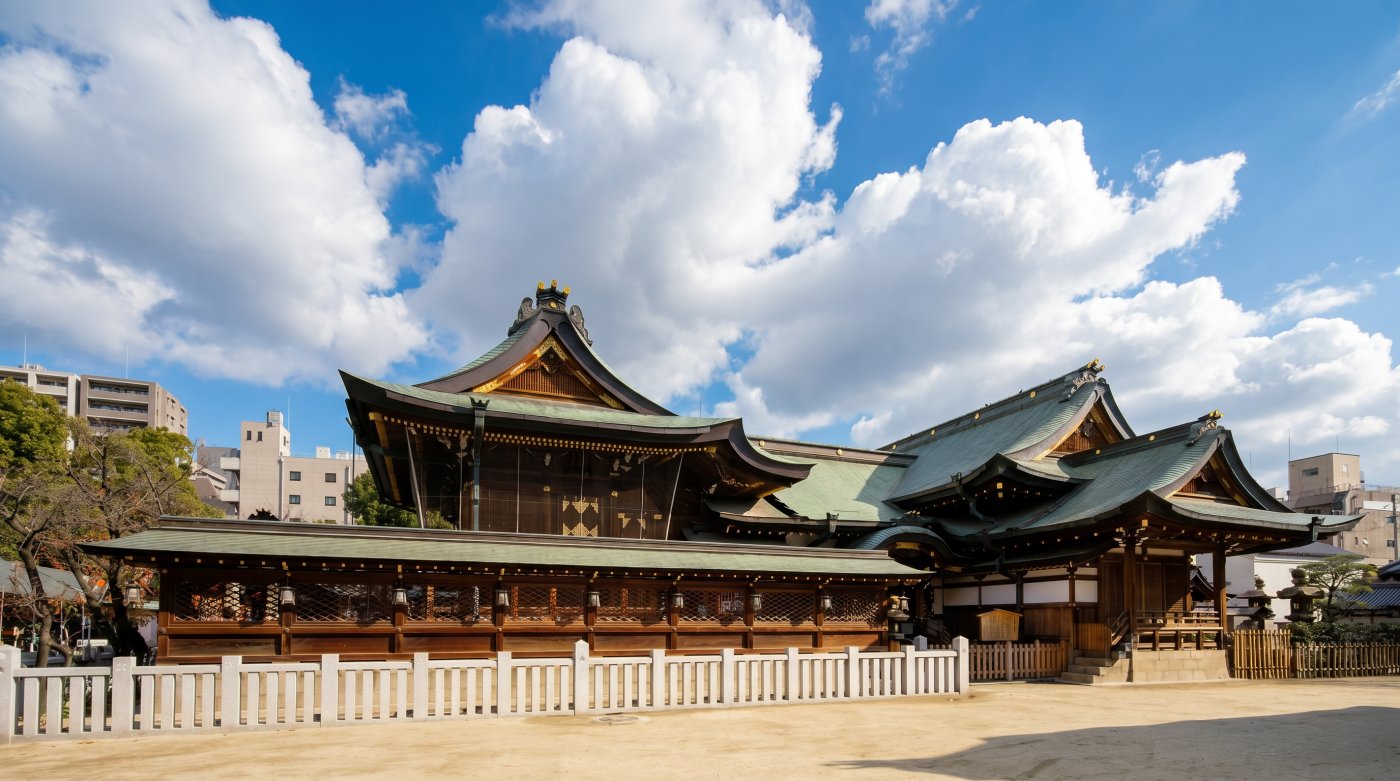








Osaka Tenmangu — formally written as Ōsaka Tenmangū (大阪天満宮) — is one of Osaka’s most historically significant Shinto shrines, founded in AD 949 in the Temma district of Kita Ward.
The shrine is dedicated to Sugawara no Michizane, a 9th-century scholar and politician who became deified as Tenjin, the god of learning, scholarship, and the arts.
Students from across Japan come here to pray before exams, and the grounds carry a quiet weight of history that the rest of Osaka’s frenetic energy somehow never fully penetrates.
Walking through the vermilion torii gate and into the main compound, you’ll find the honden (main hall), a Hoshiai Pond with a scenic bridge steeped in romantic legend, and a bronze ox statue — rubbing its head is said to bring good fortune.
The shrine’s architecture blends Edo-period craftsmanship with the understated elegance typical of Tenmangu shrines across Japan, and several of the original 1800s structures remain preserved on site.
The absolute peak time to visit is late July, when Osaka Tenmangu hosts the Tenjin Matsuri — one of Japan’s three great festivals, drawing over a million spectators.
On July 24 and 25, roughly 3,000 participants parade through the streets in historical costume before 100-plus boats carrying torch-lit processions traverse the Okawa River, capped by 5,000 fireworks.
For a quieter but equally atmospheric visit, the Ume Matsuri plum blossom festival in February fills the grounds with soft pink and white blooms.
February through March for plum blossoms, late July for the grand festival, and January for Hatsumōde (New Year shrine visits) are the standout seasons — though the shrine’s central location near Tenjinbashi-suji Shopping Street makes it a natural stop year-round.
A 10th-century Shinto shrine honouring Japan’s revered god of learning and scholarship.
Osaka Tenmangu Shrine is a living, breathing Shinto shrine founded in AD 949 in Osaka’s Temma district, dedicated to Sugawara no Michizane, the deified god of learning and scholarship.
Entry is free, the grounds are open year-round, and the shrine sits just a four-minute walk from Osakatemmangu Station on the JR Tozai Line.
Every July it hosts the Tenjin Matsuri, one of Japan’s three grand festivals, drawing over a million visitors across two days of street processions, river boat parades, and 5,000 fireworks over the Okawa River.
Osaka Tenmangu Shrine: Complete Visitor Guide (2026)
Osaka Tenmangu Shrine is a free, year-round Shinto shrine founded in AD 949 in the Temma district of Kita Ward, dedicated to Tenjin, the deified god of learning, scholarship, and the arts.
In this Explore Osaka guide, you’ll get everything you need to plan a visit well, including current hours, how to get there, what to actually look at once inside, and how to time your trip around the Tenjin Matsuri if you want to see one of Japan’s most spectacular festivals.
This is not the flashiest shrine in Japan, and that’s exactly what makes it worth your time.
Osaka Tenmangu Shrine at a Glance
Hide- Address: 2-1-8 Tenjinbashi, Kita Ward, Osaka, 530-0041
- Opening hours: 09:00-17:00 daily (grounds may open as early as 05:30 in summer)
- Admission: Free
- Nearest station: Osakatemmangu Station (JR Tozai Line, Exit 3), 4-minute walk
- Also accessible from: Minami-morimachi Station (Osaka Metro Tanimachi and Sakaisuji Lines, Exit 4-B), 5-minute walk
- Time needed: 30-60 minutes; allow 2-3 hours on Tenjin Matsuri festival days
- Best seasons: Late January (Hatsumode period), February-March (Ume Matsuri plum blossoms), July (Tenjin Matsuri)
- Official website: osakatemmangu.or.jp
Why Visit Osaka Tenmangu Shrine
Most historic sites in Osaka either charge you entry or have been rebuilt so many times the “history” is largely cosmetic.
Osaka Tenmangu sidesteps both problems.
Entry is completely free, you can walk in without booking anything, and several of the structures on the grounds date to the Edo period, giving the site a genuine architectural weight that reproduction timber rarely delivers.
The shrine is also the birthplace of the Tenjin Matsuri (天神祭), one of Japan’s three great festivals alongside Kyoto’s Gion Matsuri and Tokyo’s Kanda Matsuri.
On July 24 and 25 each year, roughly 3,000 participants in Heian-period dress parade through the streets of Temma, and over 100 torch-lit boats process along the Okawa River under a canopy of approximately 5,000 fireworks.
If your dates line up, this alone justifies the visit.
Beyond the festival, the shrine draws a steady stream of students and exam-season pilgrims. Ema
wooden wishing plaques inscribed with academic prayers cover the wooden racks in layers during January and February, which gives the shrine a particular energy that’s hard to describe and easy to feel.
The Japanese tradition of praying at Tenmangu shrines before exams is centuries old, and Osaka’s version is one of the most storied.
Trip Essentials
Osaka Travel Add-ons
Equip yourself for the ultimate Osaka adventure with the following add-ons, curated just for you.
Flights to Osaka
Airport Transfer
ICOCA IC Card
Suica IC Card
Osaka Tours
Luggage Storage
Travel Insurance
Data Security

Japan eSIM
Japan SIM Card
Pocket WiFi Rental
Japan eSIM
The Ume Matsuri: A February Bonus
If you happen to be in Osaka between late February and mid-March, the shrine hosts its Ume Matsuri, a plum blossom festival that turns the grounds soft pink and white.
It’s smaller and quieter than the July spectacle, but the combination of old shrine architecture and blooming ume trees in cold, clear winter air is genuinely beautiful.
The shrine’s plum trees are historically significant, too, since Sugawara no Michizane was famously fond of plum blossoms in life, a detail the shrine commemorates every year.
What to See and Do at Osaka Tenmangu Shrine
The grounds are compact, roughly ten minutes to walk through at a relaxed pace, but there’s more to notice than the footprint suggests.
Plan to slow down rather than speed through.
The Main Hall and Bronze Ox
The honden (main hall) is where worship happens, and it’s worth standing in front of it for a few minutes to watch.
Worshippers clap, bow, and make their silent requests at the offering box, and if you want to join the ritual, tossing a coin and making a wish is perfectly normal for non-Japanese visitors.
No one will look at you sideways.
Near the main hall, you’ll find the bronze ushi (ox) statue.
Rubbing the ox’s head is said to bring good fortune and, specifically, academic success, since the ox is the zodiac animal associated with Sugawara no Michizane’s birth year.
The statue’s head is noticeably shinier than the rest of its body, which tells you all you need to know about how seriously visitors take this.
Hoshiai Pond and the Legend Bridge
On the north side of the grounds sits Hoshiai Pond, a small, serene body of water crossed by a low arched bridge.
The local legend holds that if a man and woman meet on this bridge by chance, their relationship is fated.
It’s a pleasant bit of folklore that keeps the pond from feeling like incidental landscaping.
The reflections of the shrine buildings in the water on a clear morning are worth the short walk to see.
Ema Plaques and Omamori
The racks of ema wooden plaques near the main hall get dense and layered in the weeks before Japan’s high school and university entrance exams, typically January through February.
Reading the pleas written on them, mostly in Japanese but sometimes in other languages, is oddly moving.
If you want to leave one yourself, blank plaques are available to purchase at the shrine office for a few hundred yen. Omamori
good luck charms are also on sale, with versions specifically for academic success, health, and safe travel.
The Tenjin Matsuri: How to Experience It
The Tenjin Matsuri takes place on July 24 (the Yomiya or eve festival) and July 25 (the Honmiya or main festival day).
The street procession (Riku-togyo) moves through Temma during the afternoon of July 25, and the river procession (Fune-togyo) begins around 17:00.
The fireworks start after dark, typically around 19:45, and last roughly an hour.
The best spots to watch the river procession are along the Okawa River near Sakuranomiya Park or from the banks near Tenjinbashi.
Arrive early.
Crowds for the fireworks segment can reach several hundred thousand people, and spots along the riverbank fill up by mid-afternoon.
Getting to Osaka Tenmangu Shrine: Transportation Options
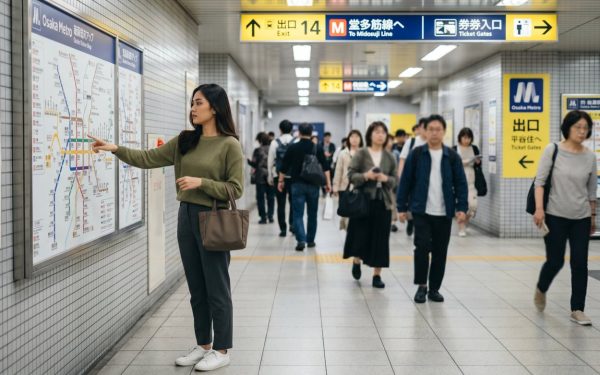
The most direct route is via the JR Tozai Line to Osakatemmangu Station.
Use Exit 3, and you’ll see the main torii gate in about four minutes on foot, heading south.
The JR Tozai Line connects directly to JR Osaka Station, making this a straightforward trip from Umeda without a transfer.
If you’re coming from the southern parts of the city, Minami-morimachi Station on the Osaka Metro Tanimachi Line or Sakaisuji Line gives you a five-minute walk from Exit 4-B.
Both routes are genuinely easy to navigate, even on your first day in Osaka.
The shrine is immediately adjacent to Tenjinbashi-suji Shopping Street (Tenjinbashisuji Shotengai), Japan’s longest covered shopping arcade at roughly 2.6 kilometers.
If you’re arriving by foot from the Umeda direction, walking through the arcade is a reasonable way to approach the shrine while seeing the neighborhood at street level.
Practical Tips When Visiting Osaka Tenmangu Shrine
The shrine itself is free to enter, and there’s no ticketing system, no queues, and no reservation required on regular days.
During the Tenjin Matsuri, the surrounding streets get extremely crowded, but the shrine grounds themselves remain accessible.
The fireworks on July 25 draw enormous crowds to the riverbank, so plan your exit route in advance and expect all nearby train stations to be packed from 20:00 onward.
For a quiet, unhurried visit, weekday mornings between 09:00 and 11:00 are ideal.
The grounds are calm, the light comes in at a good angle for photos, and you’ll have the ox statue to yourself.
Weekends see more foot traffic, particularly from families with children, but it rarely gets uncomfortably crowded outside of festival seasons.
Photography is generally fine throughout the shrine grounds.
Inside the main hall during active rituals or ceremonies, exercise discretion.
If a ceremony is in progress, wait or watch from a respectful distance rather than walking through.
The shrine has some wheelchair-accessible paths and barrier-free toilet facilities on site.
There’s also parking available nearby, though coming by train is faster from most parts of the city.
If you’re visiting in January for Hatsumode (the traditional New Year shrine visit), expect large crowds on January 1-3.
The shrine is one of the most popular Hatsumode destinations in Kita Ward.
Go early in the morning if you want to move through quickly, or embrace the crowd and the atmosphere if you have time.
Nearby Attractions Around Osaka Tenmangu Shrine
The Temma area around Osaka Tenmangu is dense with things worth doing, and none of them require much transit time.
- Tenjinbashi-suji Shopping Street starts practically at the shrine’s front gate and runs for 2.6 kilometers north through the Temma district. It’s not a tourist market, it’s a working neighborhood shopping arcade with everyday clothing stores, hardware shops, local bakeries, and cheap ramen counters alongside the inevitable souvenir stalls. Walking the whole length takes about 30-40 minutes at a stroll.
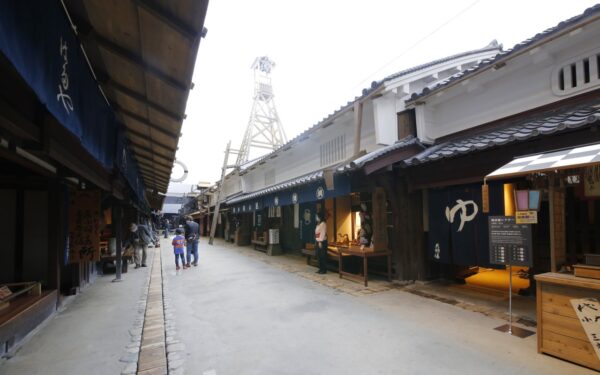
- Osaka Museum of Housing and Living sits on the eighth floor of a building along the shopping street (entrance at the north end near Tenjinbashisuji-6-chome Station). The museum recreates full-scale street scenes from Edo-period Osaka, including a period pharmacy, a soba shop, and a merchant’s house, all with lighting calibrated to simulate different times of day. The admission is around ¥600 for adults, and it’s genuinely good.
- Nakanoshima Park is about a 15-minute walk south of the shrine along the Dojima River. The park occupies a narrow island between two river channels and has rose gardens, a public library, and several museum buildings, including the Osaka City Museum of Fine Arts. It’s a useful place to decompose after the shrine and the shopping street.
Looking for more to add to your schedule?
The full list of things to do in Osaka covers everything from historic sites to day trips, organized by neighborhood and experience type.
And if you’re still figuring out where to base yourself while you’re here, the where to stay in Osaka guide breaks down every major area by budget, transit access, and atmosphere.
Osaka Tenmangu fits naturally into a morning that continues south toward Nakanoshima or northeast toward Osaka’s Kita district.
If you’re building out a full day or multi-day schedule, the Osaka itinerary section has pre-built routes that incorporate the shrine alongside the other landmarks in this part of the city.
The Temma area rewards slow exploration, and Osaka Tenmangu is a solid reason to start your day here.
What's Available
Frequently Asked Questions (FAQs)
Yes, entry to Osaka Tenmangu Shrine is completely free for general worship and sightseeing.
You can walk through the grounds, visit the main hall, and explore all the open-air areas without paying a single yen.
Some optional items like ema wooden wishing plaques or omamori charms are available for purchase if you want a tangible memento.
No. The current structure dates from 1931 and is a ferroconcrete reconstruction, not the original Toyotomi-era castle.
The original was destroyed during Japan’s feudal conflicts.
The reconstruction is historically detailed and houses a genuine museum, but it is not a surviving historic structure in the way that, for example, Himeji Castle is.
If original castle architecture matters to you, the day trip to Himeji from Osaka is worth adding to your itinerary.
The easiest access is via Osakatemmangu Station on the JR Tozai Line — use Exit 3 and walk about 4 minutes south to reach the main torii gate.
Alternatively, Minami-morimachi Station on the Osaka Metro Tanimachi Line and Sakaisuji Line (Exit 4-B) puts you about 5 minutes away on foot.
Both options are straightforward, and the shrine is immediately adjacent to Tenjinbashi-suji Shopping Street, so you won’t get lost.

Editor's Review
Osaka Tenmangu won’t overwhelm you with spectacle — that’s precisely what makes it worth your time.
The compound is compact, the atmosphere is genuinely serene, and the Edo-era main hall has a quiet dignity that you won’t find behind the glass of a replica.
The bronze ox, the Hoshiai Pond bridge, and the rows of ema wooden plaques all give you something specific to engage with rather than just posing for photos.
The honest caveat: outside of festival season, this is a relatively low-key shrine that rewards slow, curious visitors rather than box-checkers.
If you’re visiting in late July for Tenjin Matsuri, bump this to a five-star non-negotiable.
Otherwise, pair it with a walk down Tenjinbashi-suji Shopping Street immediately next door — Japan’s longest covered shopping arcade — to make the most of your time in the neighbourhood.
Related Attractions
Sumiyoshi Taisha
Himejima Shrine
Osaka Museum of Housing and Living
Kema Sakuranomiya Park
Shitennoji Temple
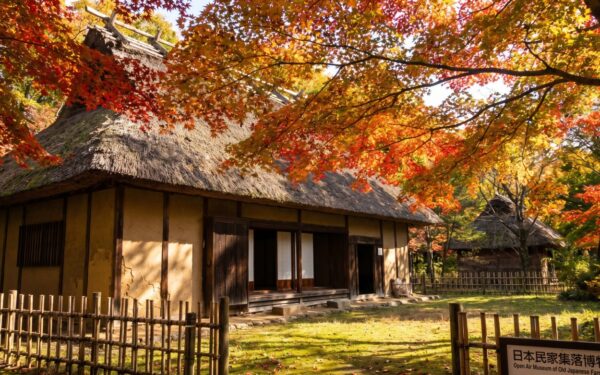
Open Air Museum of Old Japanese Farm Houses
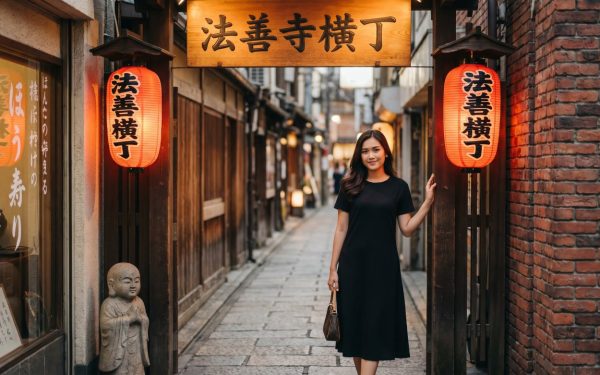
Hozenji Temple and Hozenji Yokocho
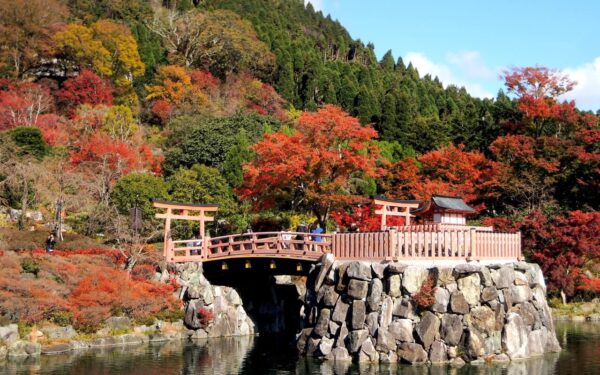
Katsuo-ji Temple