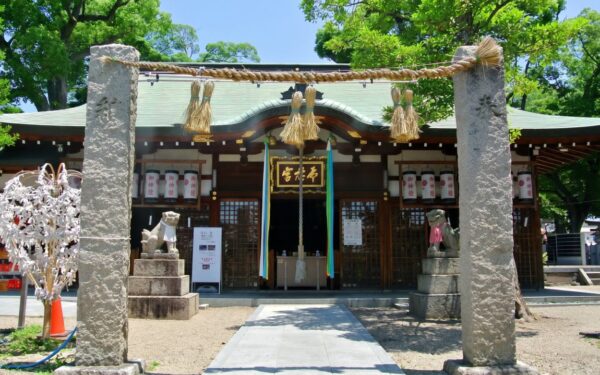
Senkoji Temple
Walk through a Buddhist judge's courtroom, a hall of punishments, and a stained-glass paradise - all in one free temple in Hirano.








Senkoji Temple (全興寺) is a Koyasan Shingon Buddhist temple in Hirano-ku, Osaka, with roots stretching back roughly 1,400 years to when Prince Shotoku enshrined a statue of Yakushi Nyorai, the Medicine Buddha, on this very site.
The current main hall dates to 1661, making it one of Osaka Prefecture’s oldest surviving wooden structures.
It sits as the 39th temple of the Settsu 88 Sacred Sites and the 7th of the Osaka 13 Buddhas pilgrimage circuit, drawing devoted pilgrims alongside curious tourists.
The real draw is the Jigokudo, the Hall of Hell, added in 1989 as an educational space to show visitors what Buddhist hell looks like — complete with Enma, the fearsome judge of the dead, and vivid depictions of punishments for various sins.
For ¥100, you pass through it and answer a short questionnaire that tells you how your soul is faring.
Afterwards, the Hotoke no Kuni (Buddha Land) offers a calmer counterpoint: a stairway lined with sand from 88 sacred Saigoku pilgrimage sites, leading to a meditative space with stunning stained glass mandala panels.
The temple grounds sit inside Hirano’s old shopping arcade, a neighbourhood that feels genuinely lived-in and unhurried compared to central Osaka’s tourist bustle.
Spring is lovely here, when the temple grounds are quiet and green.
Autumn brings mellower light that suits the weathered wooden architecture well.
Budget about 45 minutes to an hour to take in both halls and wander the arcade.
Senkoji Temple is one of the most genuinely unusual places you can visit in Osaka, and it costs almost nothing.
The main grounds are free, the Hall of Hell charges ¥100, and the whole experience takes about an hour.
Located in Hirano-ku, roughly 40 minutes from central Osaka, this Koyasan Shingon Buddhist temple dates back around 1,400 years and quietly sits inside a local shopping arcade that most tourists never find.
Senkoji Temple Osaka: A Free Walk Through Buddhist Hell and Paradise (2026)
Senkoji Temple is one of the few places in Osaka where Buddhist cosmology stops being abstract and becomes something you can physically walk through.
The temple, known in Japanese as Zenkoji or Senkoji (全興寺), sits in the Hirano-ku district of southeastern Osaka and packs a 1,400-year history, a literal Hall of Hell, and a meditative Buddha Land into a set of compact, deeply peculiar grounds.
In this Explore Osaka guide, you’ll find everything you need to decide whether it’s worth the trip from central Osaka, and how to make the most of your time when you go.
Senkoji Temple at a Glance
Hide- Address: 4-12-21 Hirano Honmachi, Hirano Ward, Osaka
- Nearest station: Hirano Station (Osaka Metro Tanimachi Line, Exit 4), 10 to 12 minutes on foot
- Opening hours: 8:30 to 17:30 daily (Jigokudo reception closes at 17:00)
- Admission: Free (Hall of Hell: ¥100 per person)
- Time needed: 45 minutes to 1 hour
- Best seasons: Spring, Autumn
- Official website: http://www.senkouji.net/
Why Visit Senkoji Temple
Osaka has no shortage of Buddhist temples, and many of them are genuinely beautiful without being all that distinctive.
Senkoji is different.
It earns your attention not through size or grandeur but through a kind of confident, theatrical commitment to the idea that Buddhist teaching should be felt, not just read on a signboard.
The temple holds real religious significance: it’s the 39th site on the Settsu 88 Sacred Sites pilgrimage route and the 7th on the Osaka 13 Buddhas circuit.
Devoted pilgrims have been making the journey to Hirano-ku for centuries, collecting their goshuin stamps and paying respects to Yakushi Nyorai, the Medicine Buddha enshrined here by Prince Shotoku roughly 1,400 years ago.
That lineage matters.
The Jigokudo, or Hall of Hell, added in 1989, is what most contemporary visitors come to see, but it sits on top of centuries of genuine religious practice rather than replacing it.
Trip Essentials
Osaka Travel Add-ons
Equip yourself for the ultimate Osaka adventure with the following add-ons, curated just for you.
Flights to Osaka
Airport Transfer
ICOCA IC Card
Suica IC Card
Osaka Tours
Luggage Storage
Travel Insurance
Data Security

Japan eSIM
Japan SIM Card
Pocket WiFi Rental
Japan eSIM
The Honest Case for Going
Senkoji is about 40 minutes from Namba by metro, which is a real commitment.
It’s not on the way to anywhere else on the standard Osaka tourist circuit.
So the honest question is: is it worth building a trip around?
For most visitors, yes, with one condition.
Pair Senkoji with a slow walk through the Hirano-hondori shopping arcade and the surrounding old-town streets.
Hirano was a self-governing merchant settlement during the medieval period, and its street layout still reflects that history.
The neighbourhood rewards an unhurried morning in a way that a standalone 45-minute temple visit does not.
Treat the temple as the destination and the neighbourhood as the journey, and you’ll leave feeling like you actually saw a part of Osaka that most itineraries skip.
What to See and Do at Senkoji Temple
The grounds are compact, but each section has a clearly different character.
Arriving with a rough map in mind means you won’t rush through in ten minutes and wonder what you missed.
The Jigokudo: Hall of Hell
The Jigokudo is the centrepiece.
You pay ¥100 at the reception desk, fill out a short questionnaire rating your own behaviour against a range of Buddhist virtues and conduct, and receive a verdict: which realm of hell you’d be consigned to, or whether you’d escape it entirely.
Inside the hall, Enma Dai-O, the king and judge of the dead in Buddhist cosmology, sits on his throne under dramatic lighting.
The surrounding murals and panels illustrate specific punishments for specific transgressions, rendered in a style that is vivid and deliberate rather than gratuitously grim.
Liars have their tongues pulled out.
People who wasted food face consequences.
The effect is educational and oddly compelling, somewhere between a moral storybook and a very serious theatre set.
What the Verdict Actually Tells You
The questionnaire outcome is not purely novelty.
It draws on Jodo (Pure Land) Buddhist concepts about karma, consequence, and the accumulation of merit across a lifetime.
You don’t need theological background to understand the room, but the design rewards anyone who pauses to read the explanations rather than just photographing the statues.
Each panel is a teaching about cause and effect, made concrete enough to remember.
Children, notably, find this section completely gripping.
The combination of dramatic imagery, a personalised verdict, and the low-key atmosphere of the hall tends to generate more genuine engagement than most of the larger, more famous temples in central Osaka do.
Hotoke no Kuni: Buddha Land
After the Jigokudo, you move through to Hotoke no Kuni, the temple’s representation of the Buddhist Pure Land, which is paradise rather than punishment.
The tonal shift is immediate and intentional.
Where the hell hall is dim, weighted, and sombre, the Buddha Land is warm, luminous, and quiet.
A stairway leads between chambers lined with sand collected from all 88 sites of the Saigoku Kannon pilgrimage.
Walking the path is itself a condensed form of pilgrimage, covering the symbolic ground of a journey that would take months to complete in full.
The visual anchor of the space is a large stained glass mandala, and it is genuinely striking.
The colours are rich and the light through the glass creates an atmosphere that’s calming in a way that’s hard to manufacture artificially.
This section is free and open to everyone.
Give it more than a couple of minutes.
The details in the glass and the logic of the sand-lined path become clearer the more slowly you move through it.
The Main Hall and Temple Grounds
The main hall of Senkoji was constructed in 1661, making it one of the oldest surviving wooden structures in Osaka Prefecture.
The facade is dark with age, solid, and carries the weight of the years visibly in the timber.
The hall is not open to visitors in the way that some temple interiors are, but standing in the courtyard in front of it gives you a sense of the site’s age that the newer sections of the grounds don’t quite replicate.
Across the grounds you’ll find a collection of stone ojizo figures, worn smooth by weather and time.
There’s also a stone monument where visitors symbolically wash away their sins by rubbing the surface, a practice that has a worn-smooth quality that tells you exactly how seriously people take it.
Various smaller shrine structures are scattered through the property, each with its own brief explanation.
The overall atmosphere of the grounds is informal and unhurried in a way that feels genuinely local.
Nobody is guiding you anywhere, and there’s no soundtrack.
You’re expected to wander and figure it out, which turns out to be its own kind of pleasure.
How to Get to Senkoji Temple
The most direct route from central Osaka is the Osaka Metro Tanimachi Line to Hirano Station.
Take Exit 4, walk south along the shopping arcade for 10 to 12 minutes, and the temple gate appears on your left.
The gate is modest and easy to walk past if you’re moving at a tourist pace rather than a neighbourhood pace.
From Tennoji, the Tanimachi Line runs directly from Tanimachi 9-chome Station to Hirano, taking about 10 minutes at a fare of ¥230.
From Namba, you’ll need to change lines at Tanimachi 9-chome; the total journey is 35 to 40 minutes including the walk from the station.
If you’re already exploring the Tennoji area, Senkoji makes a logical extension to the day rather than a separate trip.
Alternatively, the JR Yamatoji Line serves JR Hirano Station.
The South Exit puts you roughly 12 to 15 minutes on foot from the temple, which is slightly further but useful if you’re already on the JR network or combining the visit with a trip to Nara.
Getting Around Hirano
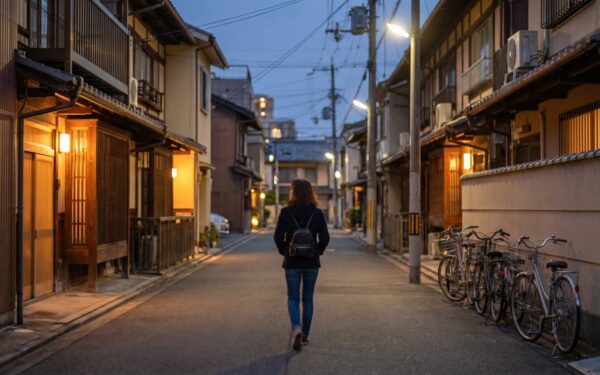
Once you’re in the neighbourhood, everything is walkable and the pace encourages it.
The Hirano-hondori covered shopping arcade runs through the heart of old Hirano, passing small temples, traditional shopfronts, and businesses that look like they haven’t changed their signage in forty years.
Walk it slowly.
The neighbourhood’s history as a self-governing merchant town during the Sengoku period is readable in the street patterns if you’re paying attention.
Practical Tips
Senkoji is open every day of the week, from 8:30 to 17:30, with the Jigokudo reception closing at 17:00.
Arriving after 16:30 risks missing the hall entirely, since the attendant needs time to process the questionnaire before closing.
Give yourself a comfortable margin.
Cash only for the ¥100 Jigokudo fee. IC card payment is not available, so carry coins or small notes.
The ¥100 is not negotiable and not waivable.
Crowds are not a problem here.
This temple does not attract tour buses or queues.
On weekdays you may have the grounds to yourself for stretches at a time, which is one of its quiet advantages over the more accessible central Osaka temples.
Weekends bring more foot traffic but nothing that disrupts the atmosphere.
Photography is permitted on the grounds and in the Buddha Land section.
Inside the Jigokudo, check with the attendant before taking photos; the policy can vary and the hall is small enough that a camera changes the atmosphere for everyone in it.
Spring is a genuinely good time to visit.
The neighbourhood greens up, the light is soft, and the temple grounds feel calm in a way that suits the pace of the visit.
Autumn suits the weathered dark timber of the main hall particularly well, and the cooler air makes the walk from the station pleasant rather than taxing.
Summer visits are possible but plan for the midday heat: the courtyard has limited shade and Hirano-ku is not air-conditioned.
If you collect goshuin (temple stamps), Senkoji offers one.
This places the temple on the Settsu 88 pilgrimage record and is a meaningful addition for anyone working through the circuit.
Nearby Attractions Around Senkoji Temple
Hirano-ku rewards exploration beyond the temple gates.
A few specific stops make a half-day trip significantly more satisfying than the temple alone.
- Dainenbutsuen Temple: A short walk from Senkoji, Dainenbutsuji Temple is home to the largest wooden structure in Osaka. The nenbutsu hall contains over 5,000 clay figurines of Buddhist saints, all arranged across a vast interior that takes several minutes to fully absorb. Entry is approximately ¥500, and the scale of the space is a meaningful contrast to Senkoji’s compact intensity.
- Hirano-go Historic District: Hirano was a self-governing community, or ji-so, from the medieval period through to the Edo era, which is unusual in Japanese history and left a distinct mark on the neighbourhood’s layout. Walking the old street grid, looking for surviving machiya townhouses and the residual signs of the district’s independent past, is a quiet pleasure that requires no ticket and no schedule.
- Tennoji Park and Zoo: About 15 minutes by metro from Hirano Station, Tennoji Park is one of Osaka’s most reliably pleasant green spaces. The adjacent zoo, established in 1915, is the third oldest in Japan and charges ¥500 for adult entry. It connects a morning in Hirano naturally to an afternoon in a more central part of the city.
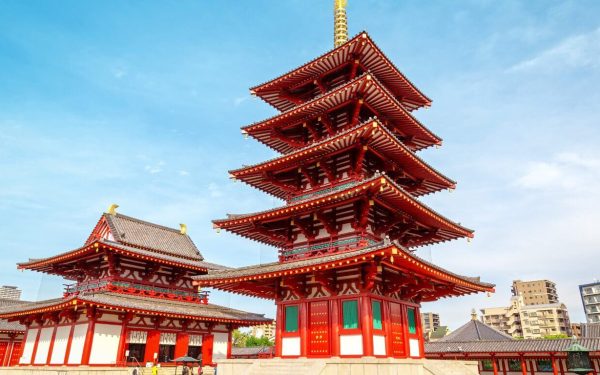
- Shitennoji Temple: One of the oldest officially administered Buddhist temples in Japan, Shitennoji was founded in 593 CE and sits in the Tennoji area, easily accessible from Hirano on the Tanimachi Line. The contrast between Senkoji’s intimate, neighbourhood-scale atmosphere and Shitennoji’s formal, expansive grounds makes for a rewarding thematic pairing.
Senkoji is the kind of place that earns its reputation through restraint rather than spectacle.
It doesn’t oversell itself, and it leaves the interpretation largely to you.
If a morning in Hirano has given you an appetite for more of what Osaka’s less obvious districts offer, the full things to do in Osaka archive spans everything from major landmarks to places like this one, organised by neighbourhood and interest.
When you’re ready to plan how Senkoji fits into a broader Osaka trip, building out an Osaka itinerary is the clearest way to balance the central highlights with the kind of neighbourhood-scale discovery that Hirano represents.
And if you haven’t sorted accommodation yet, the where to stay in Osaka guide covers every area, budget, and travel style to help you pick the right base.
What's Available
Frequently Asked Questions
The main temple grounds and Buddha Land are completely free to visit. The only paid section is the Jigokudo (Hall of Hell), which costs just ¥100 per person — essentially the best ¥100 you’ll spend in Osaka. Reception closes at 17:00, so aim to arrive by 16:30 if you want to see the Jigokudo.
No. The current structure dates from 1931 and is a ferroconcrete reconstruction, not the original Toyotomi-era castle.
The original was destroyed during Japan’s feudal conflicts.
The reconstruction is historically detailed and houses a genuine museum, but it is not a surviving historic structure in the way that, for example, Himeji Castle is.
If original castle architecture matters to you, the day trip to Himeji from Osaka is worth adding to your itinerary.
Take the Osaka Metro Tanimachi Line to Hirano Station (Exit 4) and walk about 10 to 12 minutes south through the shopping arcade — you’ll find the temple right next to the old Asahi Shinbun building. Alternatively, the JR Yamatoji Line stops at JR Hirano Station, from which the south exit puts you about 12 to 15 minutes on foot. From Namba or Tennoji, budget roughly 30 to 40 minutes total travel time.

Editor's Review
Senkoji earns its reputation as one of Osaka’s more peculiar detours, and that’s genuinely meant as praise.
The Jigokudo is theatrical and low-budget in the best possible way — Enma’s glowing eyes and the illustrated sin-punishments feel more like a pop-up picture book than a horror show, which makes it accessible rather than alarming.
The ¥100 entry is, frankly, one of the best-value experiences in the city.
The weakness is distance: getting to Hirano-ku from central Osaka takes 40 minutes, and the temple itself isn’t large enough to anchor a full half-day trip on its own.
Pair it with a wander through Hirano’s old townscape and shopping arcade to make the journey worthwhile.
Best suited for travellers who are curious about Japanese religious culture beyond the standard golden-pavilion circuit.
Related Attractions
Kema Sakuranomiya Park
Osaka Museum of History
Sumiyoshi Taisha
Katsuo-ji Temple
Ikukunitama Shrine
teamLab Botanical Garden Osaka
Shitennoji Temple
Isshinji Temple