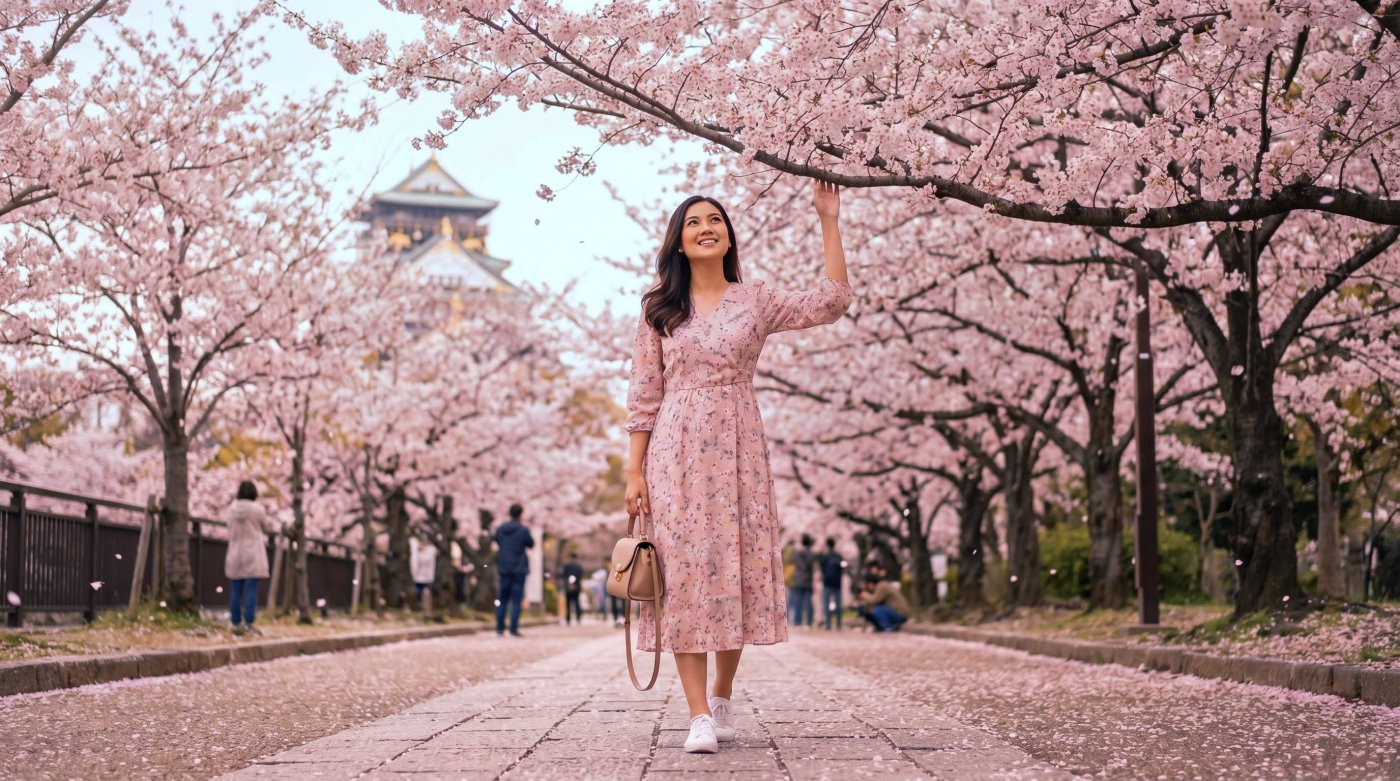





Spring and autumn are the clear sweet spots for visiting Osaka, but the city rewards travellers in every season if you know what to expect. March to May brings cherry blossoms and comfortable temperatures around 15-20°C. October and November deliver cooler air, autumn foliage, and noticeably thinner crowds than the sakura peak. Summer is brutal but culturally rich; winter is quiet, affordable, and occasionally dusted with frost. This guide breaks every month down so you can match your trip to your priorities.
Best Time to Visit Osaka: A Complete Month-by-Month Breakdown – Spring and autumn are the best times to visit Osaka, but the honest answer is more nuanced than that. Each season has a genuine case for it, and each has at least one reason to think twice.
In this Explore Osaka guide, you’ll find the full picture broken down month by month, so you can plan around your priorities rather than a generic “best time” headline.
Whether you’re chasing cherry blossoms, trying to avoid the crowds at Osaka Castle, or simply want weather that doesn’t ruin your appetite for street food in Dotonbori, this guide covers what actually matters.
Osaka September-December 2026 Weather: Climate Stats, Packing List & Travel Tips
HideOsaka from September to December runs the full spectrum: typhoon season heat, then the two best travel months of the year, then illumination season. September is the month most visitors get wrong. October and November are the months most visitors should be booking.
Key Climate Statistics: Temperature, Rainfall & Humidity
Here's what the numbers actually look like across this window:
| Metric | September | October | November | December |
|---|---|---|---|---|
| Avg High Temp | 28-30°C (83-86°F) | 22-24°C (72-75°F) | 16-18°C (61-64°F) | 11-13°C (52-55°F) |
| Avg Low Temp | 21-23°C (70-73°F) | 15-17°C (59-63°F) | 8-10°C (46-50°F) | 4-6°C (39-43°F) |
| Humidity | High, still sticky | Dropping noticeably | Comfortable | Low, dry |
| Rainy Days | ~14 days | Fewer, but wet spells | Many dry days | Driest stretch |
| Avg Rainfall | ~153 mm | ~136-161 mm | Drops sharply | ~44 mm |
| Typhoon Risk | Peak of the season | Tapering through mid-month | Effectively over | None |
| Crowds | Low | Low to moderate | Rising, peak by late month | Low to moderate |
September is low season in Osaka, and the reason is typhoons. October cools noticeably and humidity finally breaks. November is the single most comfortable month of the year. December is cold and dry, which is exactly why it works for illuminations.
One useful thing to know: rainfall during typhoon season in Osaka is generally lower than in Tokyo or Yokohama. The Seto Inland Sea location gives the city partial shelter. If you're choosing between Kansai and Kanto for an autumn trip, Osaka is the safer weather bet.
Autumn Foliage 2026: The Dates That Matter
The Japan Meteorological Corporation released its first 2026 forecast on September 2, predicting peak red foliage in Osaka on December 4, with Tokyo on November 29 and Kyoto on December 11.
Treat that as a planning anchor, not a guarantee. Recent autumns have run late because of extreme September heat. In 2024, Osaka's peak slipped to December 8 and 11 cities across Japan were forecast to hit their latest-ever dates. In 2025, Kansai ran one to two weeks behind average, and plenty of late-November visitors arrived to find green leaves in Kyoto.
Practical read for 2026:
- Mountain-fringe spots (Minoo Park, Katsuo-ji) peak earlier, mid to late November
- City spots (Osaka Castle Park, Midosuji ginkgo) hold colour into the first week of December
- Safest booking window: late November through the second week of December
- If your dates are fixed in mid-November, plan around ginkgo rather than maples. Ginkgo turns more reliably and Midosuji is spectacular regardless.
Basing in Osaka rather than Kyoto during foliage season is a genuinely smart move. Hotels are cheaper and more available, and Kyoto is 15 minutes away by train.
What to Pack for Osaka in September-December 2026
Four months, three completely different packing lists. Find your window.
September (still summer, plus storms):
- Lightweight, moisture-wicking tops. It is still 30°C and humid.
- Quick-dry shorts or lightweight pants
- A hooded waterproof jacket, not just an umbrella. Typhoon wind destroys umbrellas.
- Waterproof or water-resistant shoes, plus spare socks
- SPF 50+, portable fan, reusable water bottle. Heat exhaustion is still a real risk.
- A light layer for aggressive indoor air conditioning
October (the transition):
- Layers. Mornings are cool, afternoons still warm.
- Long-sleeve shirts, light jacket or cardigan
- Comfortable walking shoes. This is the best walking weather of the year.
- Compact umbrella. Rain still comes in spells.
November (peak comfort, peak foliage):
- Sweater or fleece plus a jacket
- Scarf for evenings, especially late in the month
- Proper walking shoes for foliage spots like Minoo, which involves an uphill trail
- Camera. Obvious, but November is why people come.
December (cold and dry):
- Warm coat, gloves, scarf, hat
- Thermal base layer for evening illumination walks
- Uniqlo Heattech is the local solution and cheaper bought in Japan than shipped
- Umbrella rarely needed. December is one of the driest months.
If you underpack, Uniqlo and GU are everywhere in Osaka and cheaper than most home markets. That remains honest advice year round.
Travel Tips for September-December 2026
September: manage the typhoon risk, don't avoid the month
- Keep your itinerary flexible. Flight delays and cancellations are the real risk, not ruined sightseeing days.
- Build a buffer day before any onward flight
- Check JMA (Japan Meteorological Agency) for English-language warnings, and tenki.jp for the best rain radar in Japan
- Konbini shelves empty fast once a storm warning is issued. Buy food and water the night before.
- The upside: lowest crowds and lowest prices of the autumn window
October: the best all-round balance
- Clear skies, dropping humidity, low to moderate crowds, early colour appearing
- Midosuji Illumination typically begins in late October, overlapping with ginkgo trees turning naturally golden. Verify current dates before publishing plans.
- USJ runs Halloween Horror Nights throughout the month, which is a genuine draw and books out
- Konbini seasonal rotation is at its best: chestnut desserts, sweet potato snacks, autumn-limited drinks
November: book early or lose the good hotels
- Most comfortable weather of the year with many dry days
- Crowds build sharply through the month as foliage season peaks
- Osaka hotel availability is far better than Kyoto's during this window, which makes Osaka the smarter base for a Kansai trip
- Weekdays at foliage spots are pleasant. Weekends at Minoo Park are packed. Arrive before 9am if you must go Saturday.
December: illuminations and value
- Midosuji Illumination stretches roughly four kilometres from Umeda through Shinsaibashi to Namba, and holds the world record for most illuminated trees on a single street
- City-centre foliage often lingers into the first week, so early December can give you both leaves and lights
- Avoid December 28 to January 3, when domestic travel peaks and prices spike
- Cold but dry, so walking tours and outdoor illumination routes are comfortable with the right layers
Umbrella culture, year round:
- Plastic umbrella sleeves sit at every store entrance so you don't drip inside. Use them, it's basic courtesy.
- Forgot yours? Konbini sell disposable umbrellas for roughly ¥500-700. In September wind, buy a jacket instead.
USJ specific note:
- Light rain works in your favour, since queues thin out
- Heavy rain and typhoon conditions may close outdoor attractions, so check the daily forecast before travelling
- October Halloween season and December holiday season are both peak crowd periods regardless of weather
Quick Verdict by Month
| Month | Best For | Avoid If |
|---|---|---|
| September | Lowest crowds, lowest prices, still-warm evenings | You have zero schedule flexibility or hate humidity |
| October | The best overall balance of weather, crowds and cost | You specifically want peak autumn colour |
| November | Foliage, comfortable walking weather, festivals | You want cheap hotels or empty attractions |
| December | Illuminations, dry air, hot pot season, good value | You dislike cold or want autumn leaves guaranteed |
- April and November are the two peak sweet spots. April delivers cherry blossoms and mild temperatures (15-20°C); November offers autumn foliage, Osaka’s lowest rainfall, and comfortable sightseeing weather without the spring-level crowds.
- October is the most underrated month. Temperatures sit around 18-24°C, humidity has dropped, skies are frequently clear, and tourist numbers are noticeably lower than both spring and late ovember. It’s the easiest month to enjoy Osaka without planning around crowds.
- Summer is hot but not skippable. July and August see temperatures of 28-34°C with high humidity. However, the Tenjin Matsuri (July 24-25) is one of Japan’s great festivals, and the trade-off of lower hotel prices and fewer international tourists makes summer viable for heat-tolerant travellers.
- Book early for spring and late November. Hotel prices during Golden Week (late April to early May) and the cherry blossom peak can be two to three times higher than low-season rates. Lock in accommodation two to four months ahead for these windows.
- January and February offer the best value. After the New Year holiday rush, mid-January to February is the cheapest period of the year in Osaka. Cold (4-10°C) but dry, with shorter queues at every attraction and the lowest hotel rates available in central Osaka.
- The rainy season (mid-June to mid-July) is not a dealbreaker. Tsuyu brings frequent moderate rain, not constant downpours. Covered arcades, indoor markets, and Osaka’s deeply food-centric culture make wet-weather days manageable, and prices dip noticeably compared to spring.
- Typhoon risk in September is real but manageable. One or two typhoons can affect the Kansai region each year between late August and mid-October. September is otherwise pleasant and affordable. Check forecasts a week out and have a flexible indoor itinerary as a backup.
Osaka at a Glance: The Four Seasons
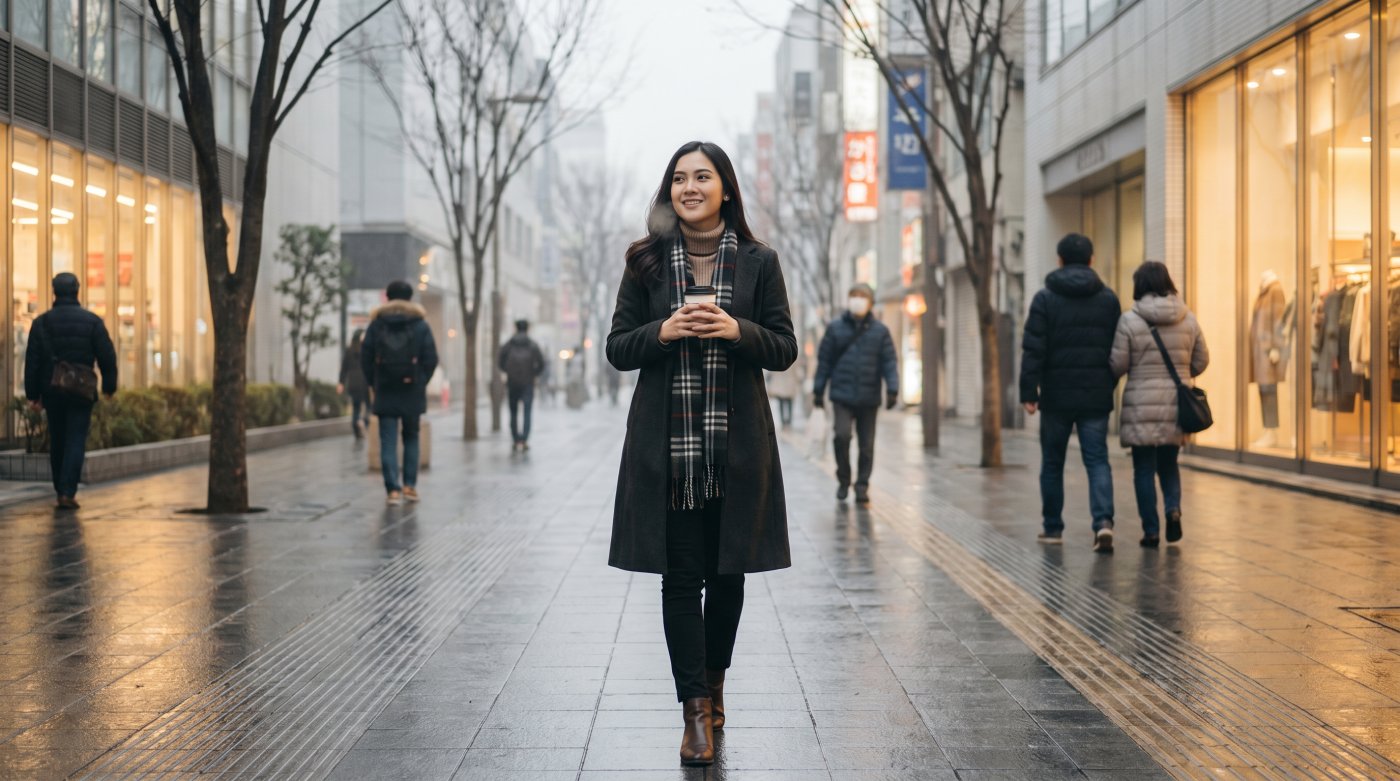
Osaka sits in the Kansai region of Honshu, Japan’s main island, at a latitude roughly equivalent to Tehran or Los Angeles. That means real seasons: cold dry winters, a brief but spectacular spring, a hot and humid summer, and a gentle, colourful autumn.
The city gets about 1,300 mm of rain annually, with the bulk falling during tsuyu (the rainy season, mid-June to mid-July) and a secondary spike in September from typhoon activity. Summers regularly hit 35°C with high humidity.
January and February are the coldest months, averaging around 5-7°C, though snow is rare in the city centre.
Understanding these patterns is the real foundation for trip planning. The sections below go month by month, with average temperatures, crowd levels, and the events worth knowing about.
Trip Essentials
Osaka Travel Add-ons
Equip yourself for the ultimate Osaka adventure with the following add-ons, curated just for you.
Flights to Osaka
Airport Transfer
ICOCA IC Card
Suica IC Card
Osaka Tours
Luggage Storage
Travel Insurance
Data Security

Japan eSIM
Japan SIM Card
Pocket WiFi Rental
Japan eSIM
Best Time to Visit Osaka for Cherry Blossoms
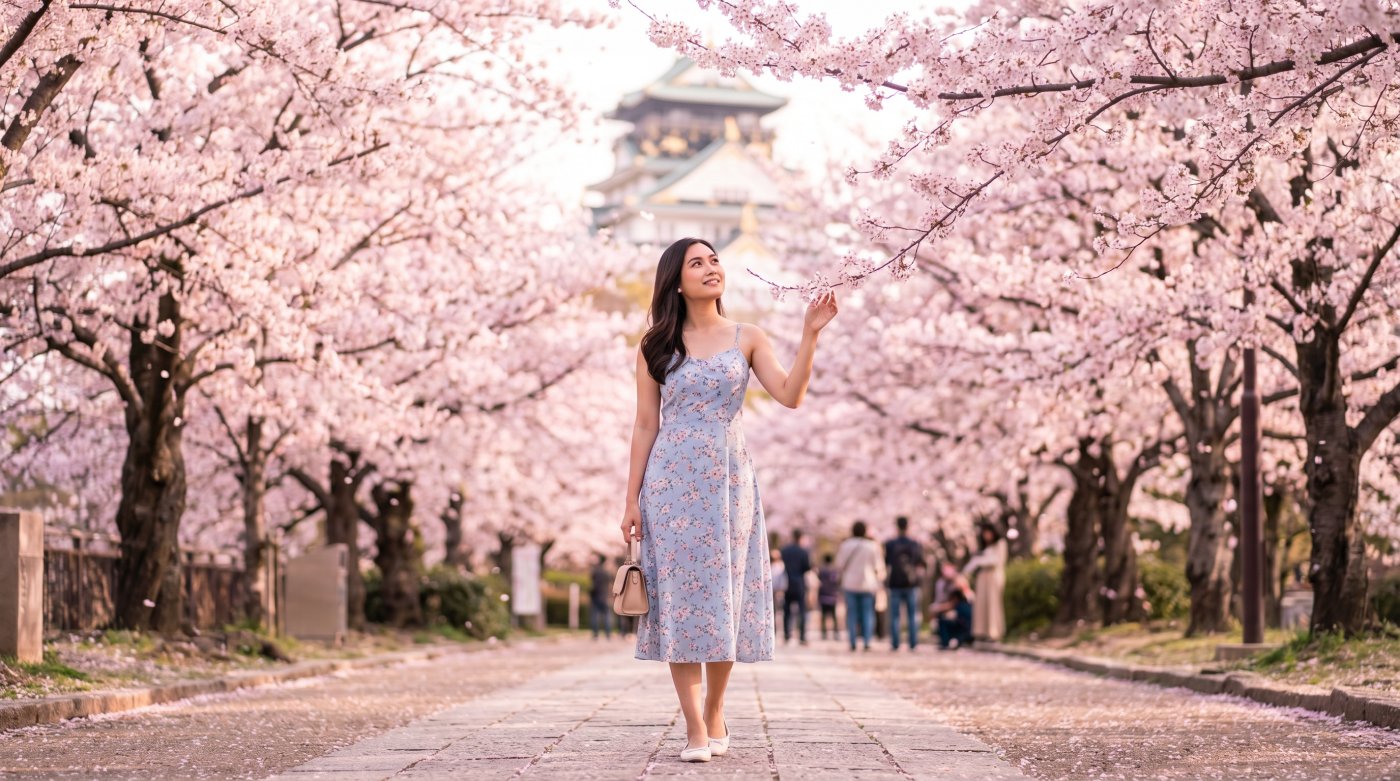
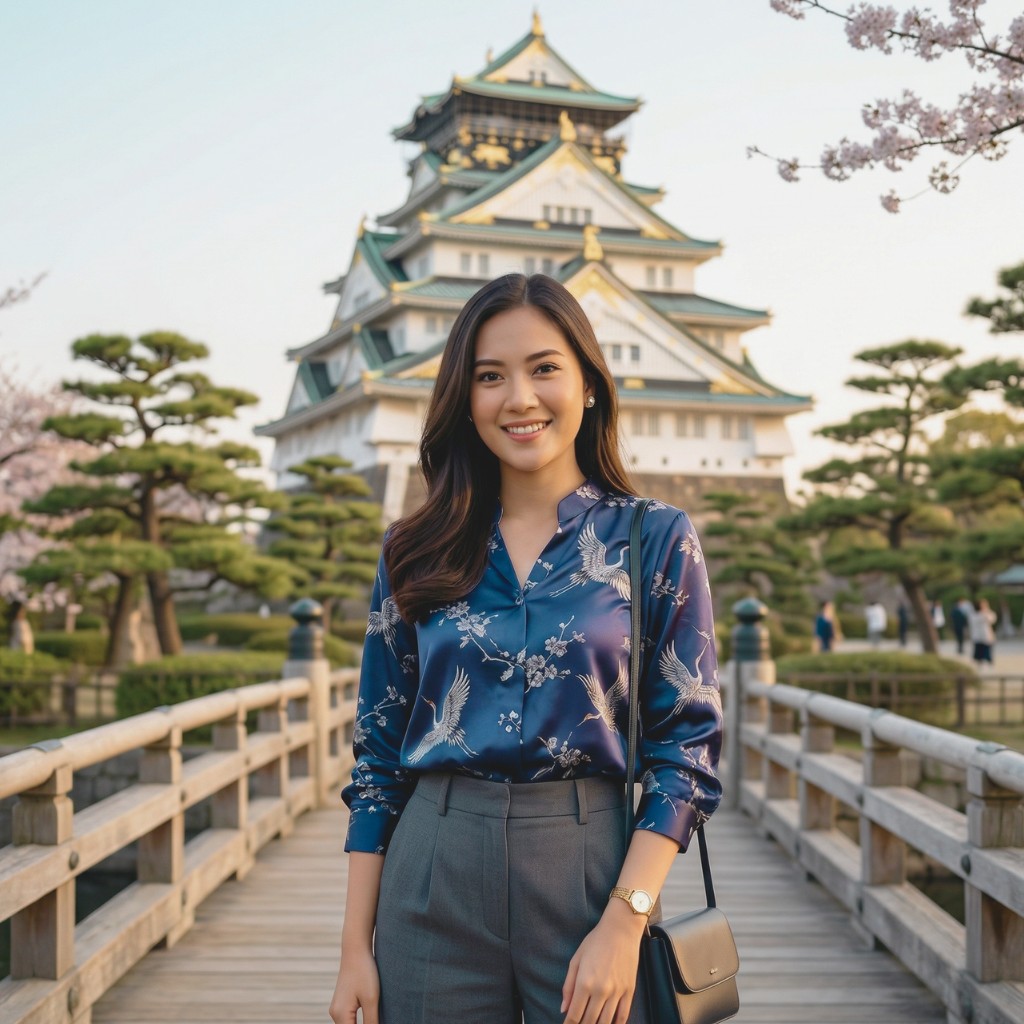
Cherry blossom season is Osaka’s most popular travel window, and for good reason. The sakura typically reach full bloom (mankai) between late March and early April, with the exact dates shifting year to year depending on winter temperatures.
In 2025, Osaka’s cherry blossoms hit full bloom around April 4-5, which is roughly on schedule for a typical year.
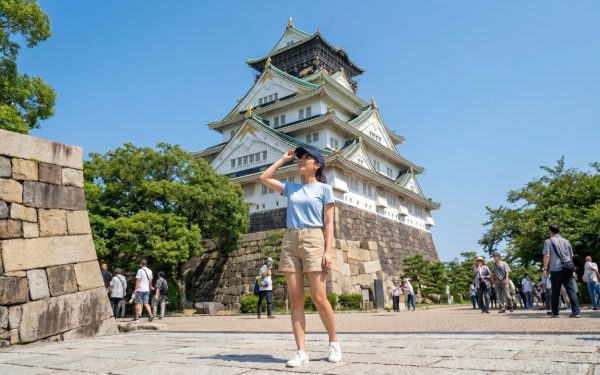
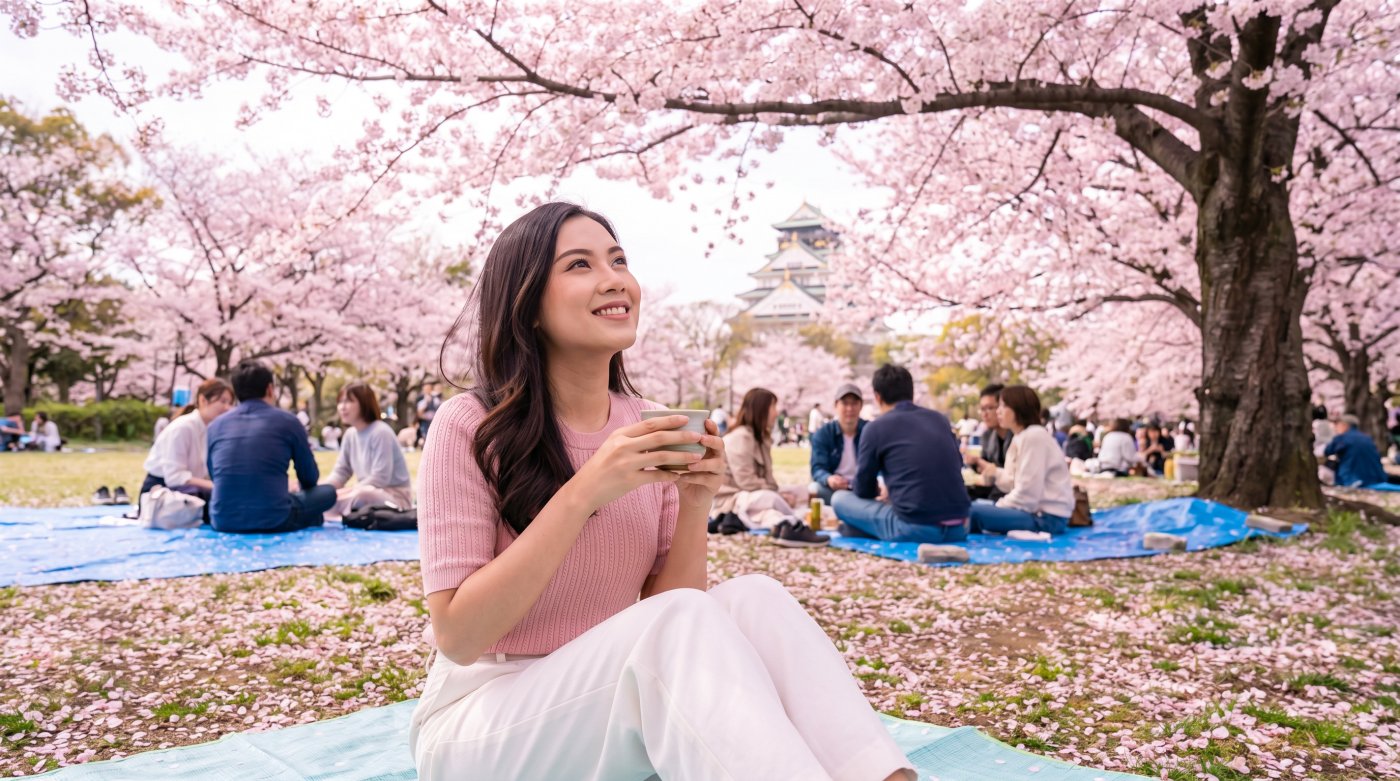
The best viewing spots are concentrated along the Okawa River at Kema Sakuranomiya Park, where roughly 4,800 trees line a 4.2 km stretch of riverside. Osaka Castle Park is the other essential stop, with over 600 cherry trees framing the castle tower in a scene that photographs well but draws enormous crowds.
Queues for the castle tower itself can reach 60 minutes or more on weekends in late March and early April, so either arrive before 9:00 AM or skip the interior and enjoy the park.
March
Average temperature: 8-14°C. Rainfall: ~110 mm.
March is a transitional month. The first two weeks still feel like winter, with mornings requiring a coat and evenings genuinely cold.
By the third week, temperatures climb toward double digits and the city begins to feel like spring.
Cherry blossoms typically start opening (kaika) in the final week of March in Osaka, making late March a genuine option for sakura viewing, especially in a warm year.
Crowds are moderate for most of the month, then spike sharply in the last week as cherry blossoms appear. Hotel prices rise accordingly.
If your dates are flexible, the last week of March gives you blossoms with slightly fewer visitors than April’s peak.
April
Average temperature: 14-20°C. Rainfall: ~105 mm.
This is peak season. Full bloom typically falls in the first week of April, and the city fills with both domestic and international visitors.
The weather is genuinely pleasant, around 15-20°C during the day, and the evenings are cool without being uncomfortable.
Golden Week, Japan’s cluster of national holidays running from late April through early May, brings the second surge of the season.
Hotels book out weeks or months in advance, and prices at popular areas like Namba can double compared to off-peak periods.
If you’re visiting in April, book accommodation at least two months ahead. Consider basing yourself in Umeda or Tennoji for slightly more availability and easier rail access without paying the full Namba premium.
May
Average temperature: 19-25°C. Rainfall: ~145 mm.
The first week of May is still Golden Week, which means crowds and elevated prices persist. After May 6, the city calms down noticeably.
Temperatures are warm, the greenery is lush, and the humidity has not yet turned oppressive. Late May is one of the quieter pleasant periods of the entire year, genuinely underrated for a first visit.
If you have flexibility and want decent weather without the April crush, the second or third week of May is worth serious consideration.
Summer in Osaka: What to Expect in June, July and August
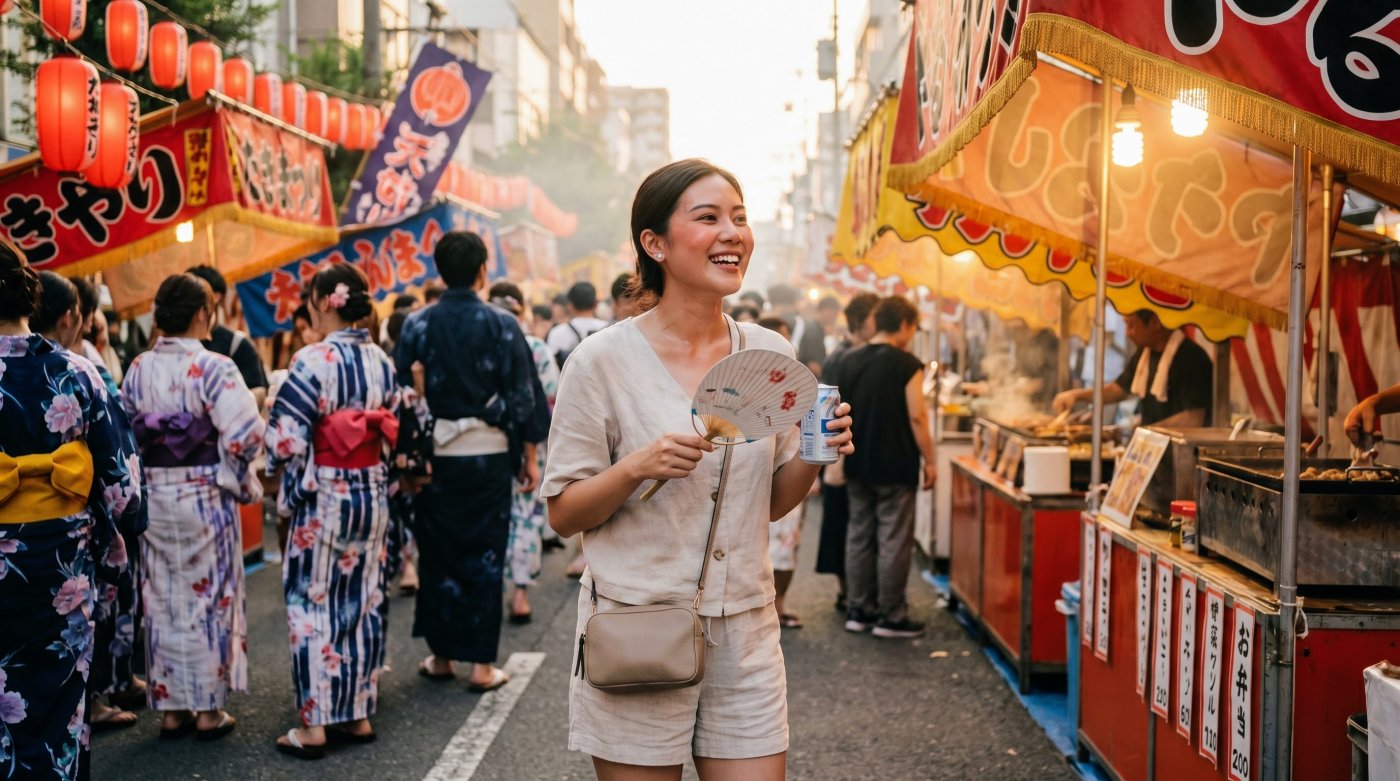
Summer in Osaka is hot, sticky, and culturally one of the richest seasons on the calendar. It is also the period that most first-time visitors find hardest.
Managing expectations here matters.
Tsuyu, Japan’s rainy season, typically runs from mid-June to mid-July in the Kansai region. Expect overcast skies, frequent moderate rain, and already-climbing humidity.
It is not a monsoon-style downpour every day, but you will want a compact umbrella permanently in your bag. The upside: tourist numbers drop relative to spring, and accommodation prices ease.
June
Average temperature: 23-28°C. Rainfall: ~185 mm.
Tsuyu dominates June. That said, the rain rarely cancels plans outright; most days have breaks in the weather.
The Osaka Aquarium Kaiyukan is particularly good value in June since outdoor attractions lose some of their appeal and indoor alternatives feel well-justified.
Restaurant queues in Dotonbori and Kuromon Market are shorter than in spring, which is its own reward.
July
Average temperature: 27-33°C. Rainfall: ~155 mm.
Tsuyu ends around mid-July and is replaced by full summer heat. Osaka in late July is genuinely intense, with temperatures touching 35°C and humidity making it feel warmer.
That said, July 24-25 is the Tenjin Matsuri (Tenjin Festival), one of Japan’s three great festivals alongside Kyoto’s Gion Matsuri and Tokyo’s Kanda Matsuri.
The main event on July 25 involves a river procession of over 100 decorated boats along the Okawa, followed by a fireworks display of approximately 3,000 shells.
It draws around 1.3 million spectators over the two days, so plan your route and accommodation with that in mind.
The festival is free to watch from the riverbanks, though ticketed viewing areas exist for unobstructed sight lines.
August
Average temperature: 28-34°C. Rainfall: ~90 mm.
August is the peak of summer heat and also Obon season (mid-August), when many Japanese residents return to their home regions.
This creates an unusual dynamic: some popular areas are less crowded than in spring, while transport hubs and shinkansen services are packed in the days around August 13-16.
Outdoor activities before 10:00 AM or after 6:00 PM are manageable; the middle of the day is best spent in air-conditioned spaces.
The Osaka food scene is well-suited to summer, with cold udon, chilled tofu, and kakigori (shaved ice) everywhere.
Best Time to Visit Osaka for Autumn Foliage
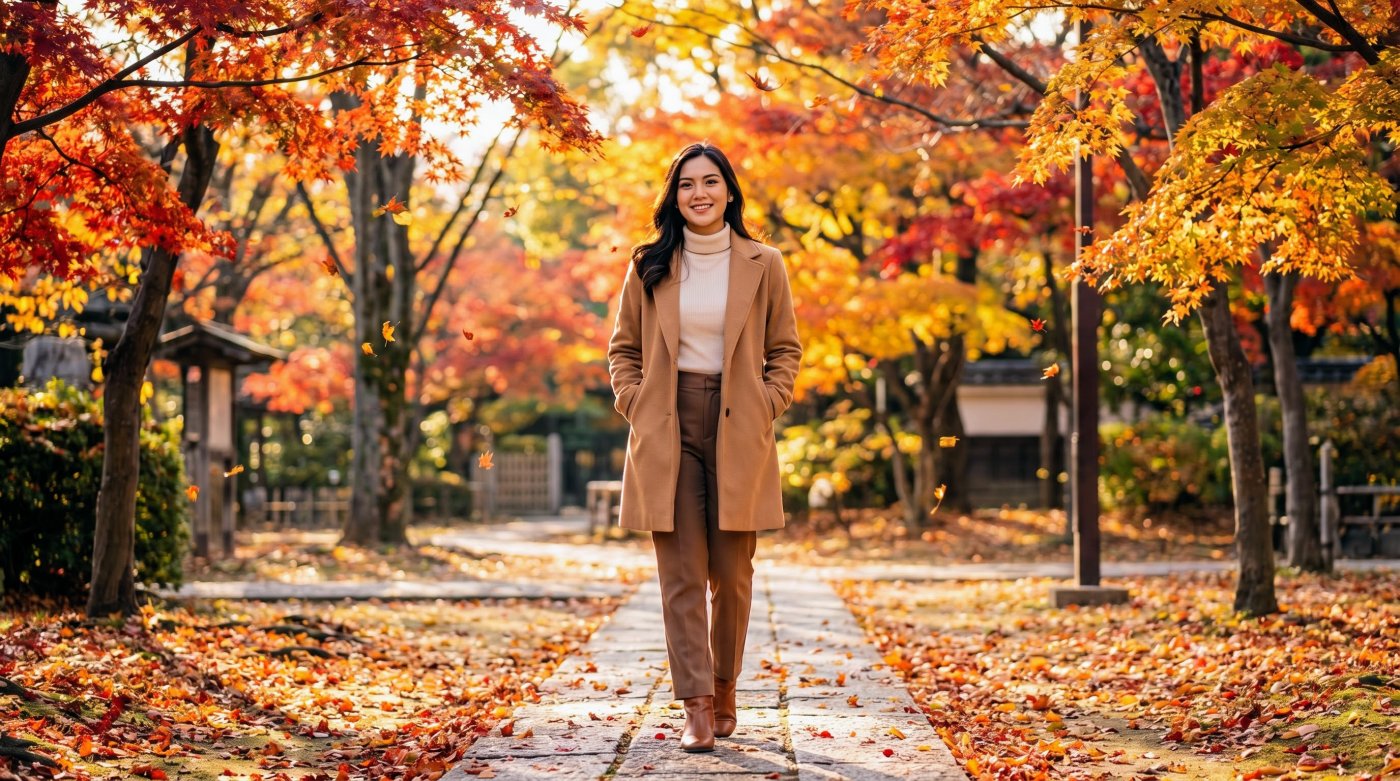
Autumn is the other peak season, and it’s a narrower window than most visitors expect. The koyo (autumn foliage) colour change in Osaka typically runs from mid-November to early December, roughly four to six weeks after Kyoto’s peak.
Because Osaka is lower in elevation and more urban than surrounding areas, the reds and oranges are less dramatic than in the hills of Minoh or the temples of Nara, but they are still genuinely worth seeing.
Minoh Park (Minoo Park), accessible by Hankyu rail in about 30 minutes from Umeda, is the most visited foliage spot near Osaka.
The trail leading to Minoh Falls is lined with maples that peak in mid-to-late November.
Alternatively, Tennoji Park and the gardens near Tennoji offer colour without leaving the city.
September
Average temperature: 25-30°C. Rainfall: ~165 mm.
September carries typhoon risk. Osaka is not in the most typhoon-prone corridor of Japan, but one or two significant systems can affect the Kansai region each year, typically between late August and early October.
Check forecasts closely if you’re travelling this month. When typhoons are absent, September is warm and occasionally humid, with the heat beginning to ease in the final week.
Crowds are lighter than spring and summer peak periods, and hotel rates are reasonable.
October
Average temperature: 18-24°C. Rainfall: ~105 mm.
October is arguably the most comfortable month of the year in Osaka. Temperatures sit in the high teens to low twenties, the humidity has dropped, and the sky is frequently clear and blue.
Crowds have not yet built up for the foliage season, so October offers a genuine sweet spot of good weather and manageable visitor numbers.
This is when the things to do in Osaka list starts to feel genuinely unlimited, because almost everything is pleasant in this weather.
November
Average temperature: 12-18°C. Rainfall: ~65 mm.
November is Osaka’s driest month and one of its most popular. Early November is still warm enough for light layers; by late November, a proper coat is useful in the evenings.
The koyo colour change peaks from mid-to-late November, drawing visitors to Minoh and Osaka Castle Park.
Crowds and prices tick upward through the month, though they stay below spring levels overall.
November is consistently recommended as one of the two best months to visit, alongside early April, and for most travellers that recommendation holds.
Winter in Osaka: December, January and February
Winter is Osaka’s quietest and most affordable season, and it is considerably more pleasant than its reputation suggests. The city does not get heavy snow; temperatures are cold but dry, typically 3-10°C in January and February.
The low season for tourism means hotels are cheaper, queues are shorter, and the Osaka neighborhoods feel more like a real city and less like a theme park.
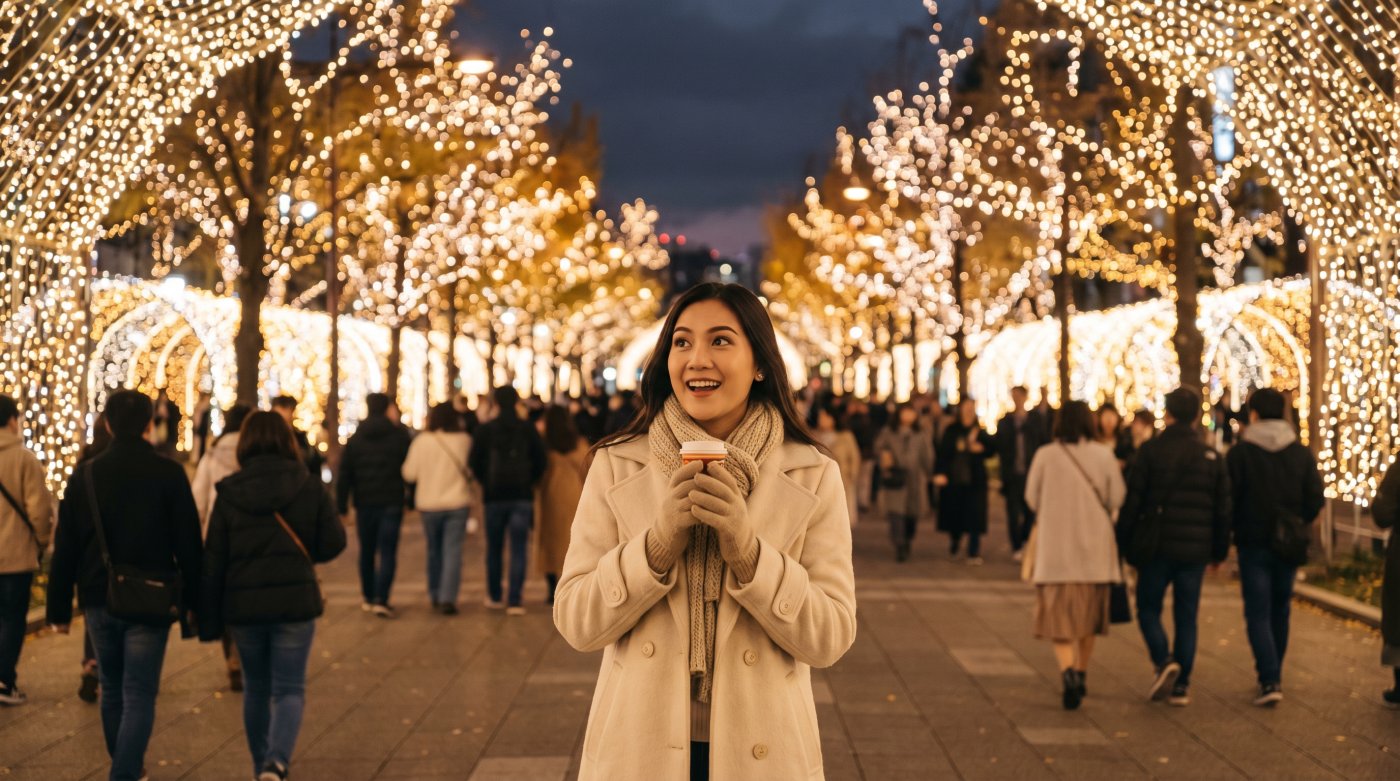
The Christmas illumination displays (illumination events) run from late November through December in areas like Midosuji Boulevard and Umeda, where the Grand Front Osaka hosts a large outdoor display. These are genuine events attended by locals, not tourist traps.
December
Average temperature: 7-12°C. Rainfall: ~55 mm.
December has two distinct halves. The first half is quiet post-autumn travel, cool and manageable.
The second half brings Christmas illuminations, year-end (bonenkai) gatherings, and New Year preparations. Restaurants and izakayas in Shinsekai and Namba are busy in the last two weeks of December.
December 31 and January 1 see long queues at major shrines and temples for hatsumode (the first shrine visit of the year). The Sumiyoshi Taisha Grand Shrine in southern Osaka is among the busiest spots for this.
January
Average temperature: 4-9°C. Rainfall: ~45 mm.
January is Osaka’s driest month and one of its coldest. The first week carries elevated prices due to New Year travel, then prices drop sharply.
Mid-January through early February is the true low season, with some of the lowest hotel rates of the year available in central Osaka. If budget is a primary factor in planning, this is your window.
Layering properly makes the cold manageable; daytime highs of 9-10°C are not extreme by European or North American standards.
February
Average temperature: 4-10°C. Rainfall: ~65 mm.
February stays cold but begins to show the first hints of late-winter warmth by the final week. Plum blossom (ume) season begins in February, with Osaka Tenmangu Shrine hosting the Tenjin Matsuri no Sato Ume Festival, typically in mid-February.
The blossoms are subtle compared to cherry season but attract considerably fewer visitors. This is also when the coming sakura season starts generating advance hotel bookings, so if you’re planning an early spring trip, February is when you should be locking in accommodation.
Month-by-Month Quick Reference
Here’s a concise snapshot of each month to help you make the call:
- January: Cold (4-9°C), dry, cheapest month. Best for budget travellers.
- February: Still cold, plum blossoms begin, very quiet. Book ahead if targeting late March/April.
- March: Temperature rising, late-month cherry blossoms begin, crowds build fast.
- April: Peak cherry blossom season (full bloom ~April 1-10), Golden Week from late April. Highest prices.
- May: Golden Week early May then quieter. Late May is an underrated sweet spot.
- June: Rainy season (tsuyu). Mild crowds, lower prices, indoor-friendly.
- July: Full summer heat, Tenjin Matsuri on July 24-25. Hot but festive.
- August: Hottest month (28-34°C), Obon mid-month. Manageable early mornings and evenings.
- September: Typhoon risk, heat easing by late month. Reasonable prices.
- October: Best all-round weather, comfortable crowds. Quietly excellent.
- November: Autumn foliage peaks mid-to-late month. Second peak season.
- December: Illuminations, year-end energy. New Year period gets busy and pricey.
Planning Around Crowds and Costs
The two peak periods, cherry blossom season (late March to early May) and autumn foliage (mid-November), come with predictable price spikes. A mid-range hotel in central Osaka that costs ¥12,000-15,000 per night in January can reach ¥25,000-35,000 during Golden Week.
Booking two to three months ahead for spring and six weeks ahead for November is a practical minimum.
For structured trip planning, the Osaka itinerary guides on this site cover how to sequence your days across different seasonal conditions. And if you’re still working out where to base yourself during your visit, the where to stay in Osaka guide breaks down every key area by budget and access.
The lowest-cost windows are mid-January through February and mid-June through early July (excluding the Tenjin Matsuri weekend). These periods offer the best value for money, though they require accepting cold or wet weather as part of the deal.
Given that Osaka’s covered shopping arcades (shotengai) and indoor food markets provide ample shelter, rainy or cold days rarely result in wasted time.