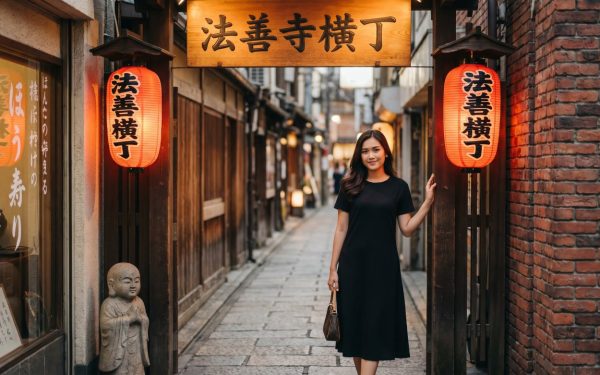
Tsuyunoten Shrine (Ohatsu Tenjin)
A 1,300-year-old Shinto shrine in central Umeda where a 1703 love tragedy still draws pilgrims, couples, and curious visitors every single day.
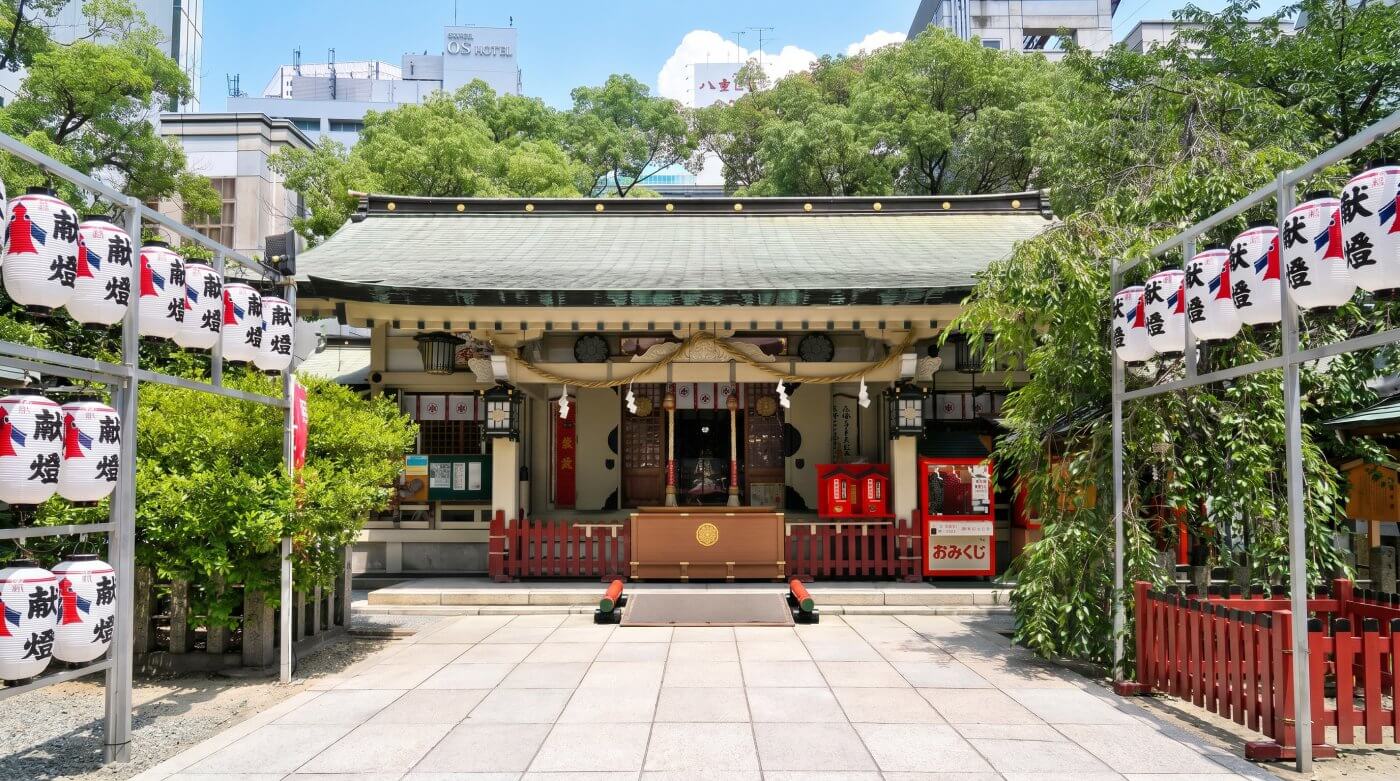





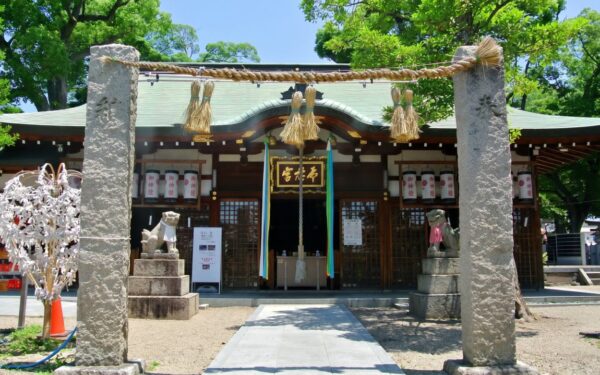
Tsuyunoten Shrine — far better known by its nickname, Ohatsu Tenjin — is one of Osaka’s most emotionally charged sacred sites.
Founded around 700 CE in what was once a marshy bay, it enshrines Sugawara no Michizane and Sukunahikona, but what really made this place famous is a love story.
In 1703, a courtesan named Ohatsu and her merchant lover Tokubei took their lives here when the world gave them no other way to stay together.
The bunraku puppet play that dramatised their story, The Love Suicides at Sonezaki, became an overnight sensation and turned this shrine into a pilgrimage site for lovers — a status it holds to this day.
Walking through the Ohatsu Tenjin-dori covered shopping arcade to reach the shrine gates is half the experience.
The grounds feel surprisingly intimate for central Osaka: ema votive plaques covered in heartfelt wishes crowd every available hook, bronze statues of Ohatsu and Tokubei stand eternally intertwined, and the air carries the faint smoke of incense.
Couples tie their wishes to the wooden frames; solo travellers come just to absorb the atmosphere, and it works.
On the first Friday of every month the grounds transform into a lively flea market, packed with antiques, vintage clothing, and bric-a-brac — a completely different energy from the shrine’s usual meditative mood.
The annual Reitaisai summer festival in July brings taiko drumming and lion dancing to the streets.
Visit early morning for quiet contemplation, or after dark when the lanterns cast the torii and bronze statues in a genuinely beautiful glow.
Tsuyuno Tenjinsya (Ohatsu Tenjin): Osaka’s Shrine of Tragic Love and Matchmaking Blessings (2026)
Where a real 18th-century love story left a permanent mark on a 1,300-year-old shrine in the middle of one of Osaka’s busiest districts.
Tsuyuno Tenjinsya (Ohatsu Tenjin) is one of Osaka’s most emotionally layered sacred sites, and in this Explore Osaka guide you’ll find every detail you need to visit it properly.
Officially named Tsuyuten Jinja (露天神社), this Shinto shrine sits at the end of the Ohatsu Tenjin-dori covered shopping arcade in Sonezaki, Kita Ward, a short walk from Osaka Station.
It’s free to enter, open daily until midnight, and the centuries-old story woven into its grounds gives it a quality that most Osaka shrines simply don’t have.
Tsuyuno Tenjinsya (Ohatsu Tenjin) at a Glance
Hide- Address: 2-5-4 Sonezaki, Kita Ward, Osaka, 530-0057
- Opening hours: 6:00 AM to midnight, every day of the year
- Admission: Free (optional goshuin ink stamp: ¥500)
- Nearest station: Higashi-Umeda Station (Osaka Metro Tanimachi Line), Exit 7, 3-4 min walk
- Also accessible from: Umeda Station (Midosuji or Yotsubashi Line, 5 min walk), JR Osaka Station (8-10 min walk), Kita-Shinchi Station (JR Tozai Line, 5 min walk)
- Time needed: 30 to 60 minutes; 2 hours if you arrive on a flea market morning
- Best season: Year-round; spring evenings and July summer festival season are particularly rewarding
- Official website: tuyutenjin.com
- Phone: 06-6311-0895
Why Visit Tsuyuno Tenjinsya (Ohatsu Tenjin)
It’s free, central, and historically specific in a way that earns your attention.
Those are three things you don’t always get at once in central Osaka.
Most Shinto shrines carry a general sense of age and ritual, which is valuable in its own right.
Ohatsu Tenjin carries something more pointed: a named, documented human story.
In 1703, a young courtesan named Ohatsu and her merchant lover Tokubei chose to die together on these grounds rather than live apart in a society that had no place for their relationship.
The playwright Chikamatsu Monzaemon wrote Sonezaki Shinju (The Love Suicides at Sonezaki) about their deaths, and the play became an immediate cultural sensation, still performed in bunraku puppet theatre today.
The shrine was eventually renamed Ohatsu Tenjin in the courtesan’s honour.
That history gives the place a texture you can actually feel.
You’re not standing in a reconstructed version of something; you’re on the ground where it happened, more than three centuries later, surrounded by couples who came specifically to ask for luck in their own relationships.
The ema wishing plaques that crowd every available hook in the grounds carry wishes in Japanese, Korean, English, and Chinese.
The volume of longing packed into a single small shrine in the middle of an office district is, honestly, a lot to absorb.
There’s also a practical case for visiting.
If you’re organising your days by geography, Umeda covers a lot of central Osaka ground, and Ohatsu Tenjin fits cleanly into a half-day that might also include Nakanoshima Park, the Umeda Sky Building, or the covered shopping arcades nearby.
It doesn’t require a dedicated trip, but it repays one if you give it time.
Trip Essentials
Osaka Travel Add-ons
Equip yourself for the ultimate Osaka adventure with the following add-ons, curated just for you.
Flights to Osaka
Airport Transfer
ICOCA IC Card
Suica IC Card
Osaka Tours
Luggage Storage
Travel Insurance
Data Security

Japan eSIM
Japan SIM Card
Pocket WiFi Rental
Japan eSIM
What to See and Do at Tsuyuno Tenjinsya (Ohatsu Tenjin)
The grounds are compact, which is part of their appeal.
Everything is within easy sight of everything else, and the intimacy of the space is deliberate.
The Main Hall and Ema Wishing Plaques
The honden (main hall) at the back of the grounds is dedicated to Sugawara no Michizane, the Shinto deity of learning and scholarship, alongside Sukunahikona no Mikoto, associated with medicine and matchmaking.
In front of the hall, rows of wooden ema plaques hang so densely they barely shift in the wind.
People write their wishes in marker and hang them here, and the sheer variety of handwriting, languages, and emotional register across those small wooden boards is genuinely touching to read through.
If you want to leave your own, blank ema are available at the shrine office from 9:00 AM for a small fee.
Writing one and adding it to the collection is a quiet, unhurried ritual that connects you to the place in a way that photographs alone don’t manage.
Bronze Statues of Ohatsu and Tokubei
Near the entrance, bronze statues of the two lovers stand together: Ohatsu resting her head against Tokubei, his arms around her.
The sculpture renders the tenderness of the story rather than its tragedy, which turns out to be the more affecting choice.
Most visitors spend a few minutes here, often quietly.
Couples photograph themselves beside the statues; solo visitors tend to linger a little longer.
Installed in 2008 and commissioned by the Umeda merchants’ association, these statues have become the most recognisable image of the shrine.
Worth a proper look, not just a quick photo.
The Ohatsu Tenjin Flea Market
On the first and third Friday of every month, 30 to 40 vendors set up across the shrine grounds from 8:00 AM to 4:30 PM, selling vintage ceramics, antique kimono fabric, Showa-era collectibles, retro homeware, and handmade accessories.
Entry is free.
The market runs under the stone lanterns and around the base of the trees, giving it a setting that distinguishes it from Osaka’s larger flea markets.
The best pieces go early, so arrive before 10:00 AM if you’re there to buy rather than browse.
Note that the market is cancelled in case of rain, sometimes without advance notice, so check conditions on the morning.
If your dates align with a market Friday, this is a compelling reason to visit Ohatsu Tenjin specifically rather than just passing through.
Goshuin: Collecting the Ink Stamp
The shrine office issues a goshuin (御朱印) for ¥500, a hand-stamped and hand-written ink seal that you carry home in a dedicated booklet, and the design at Ohatsu Tenjin incorporates motifs from the Sonezaki Shinju story.
It shifts slightly by season, which gives regular visitors a genuine reason to come back.
Getting Your Goshuin at the Shrine Office
The shrine office issues goshuin (御朱印), a hand-stamped and hand-written ink seal in a dedicated booklet, for ¥500.
The design incorporates motifs from the Sonezaki Shinju story and shifts subtly by season.
If you’re collecting goshuins across Osaka’s shrines and temples, this one has specific design value tied to the site’s literary history.
The office opens at 9:00 AM, while the shrine grounds open at 6:00 AM.
Bring cash; ¥500 in exact change makes the transaction easier.
The limited-edition goshuincho booklet sold at the shrine is worth picking up as a keepsake if you’re collecting stamps at multiple sites across your trip.
Evening at the Shrine
Come after dark if your schedule allows.
The stone lanterns along the approach are lit from early evening, and the torii gate glows warmly against the surrounding office towers.
The contrast of ancient cedar and lacquered wood framed by modern Umeda architecture is one of those quietly striking visual moments that central Osaka does remarkably well.
The grounds stay open until midnight, so there’s no need to rush out before the city’s lighting reaches its full effect.
How to Get to Tsuyuno Tenjinsya (Ohatsu Tenjin)
The most direct route is the Osaka Metro Tanimachi Line to Higashi-Umeda Station.
Take Exit 7, turn south, and you’ll reach the shrine gate in 3 to 4 minutes.
If you’re arriving from any of the Umeda transport hubs (Hankyu Osaka-Umeda, Hanshin Osaka-Umeda, or the Midosuji Line’s Umeda Station), walk south down the Ohatsu Tenjin-dori covered arcade and the torii appears at the far end in 5 to 8 minutes.
From JR Osaka Station, use the Midosuji South Exit and walk southeast for about 8 to 10 minutes.
From Kita-Shinchi Station on the JR Tozai Line, the shrine is roughly 5 minutes heading east through Sonezaki.
All of these routes are straightforward without a map once you know to follow the covered arcade south.
There is no on-site parking, and driving into this part of central Umeda is genuinely not worth the time.
Load your IC card (Suica, ICOCA, or the Osaka Metro card) and use the rail network.
The Osaka-Station-Mae city bus stop is about 5 to 8 minutes on foot if you prefer buses.
Essential Osaka Travel Passes
Powered by KlookThe passes worth buying before you land — curated for first-timers.
Osaka Amazing Pass
Unlimited subway + free entry to 40+ attractions. The only pass most visitors actually need.
Osaka e-Pass
Attractions-only digital pass. Pair with a Metro Pass if skipping the Amazing Pass.
Osaka Metro Pass
1 or 2-day unlimited Metro rides. Best standalone transit value if you already have an attractions pass.
JR West Kansai Area Pass
Unlimited JR trains for 1–4 days. Covers Kyoto, Nara, Kobe, and Himeji from Osaka.
JR Haruka Express
KIX to Umeda/Shin-Osaka in ~50 min. Best if staying in Umeda or heading straight to Kyoto.
Nankai Rapi:t Express
KIX to Namba in 34 min, reserved seat. Better if staying in Namba or Shinsaibashi.
Practical Tips for Visiting Ohatsu Tenjin
- Go early or go late. Weekday mornings between 6:00 AM and 9:00 AM are the quietest window, with the grounds largely to yourself and the incense freshly lit. Weekends between 10:00 AM and 2:00 PM are the busiest periods, when tour groups and couples arrive in clusters. Tuesday or Wednesday morning is the most reliably peaceful time slot.
- Bring ¥500 in cash if you want the goshuin. The shrine office does not reliably accept IC card payment for stamp services, and having exact change is cleaner for everyone.
- Respect the space. This is an active place of worship, not a themed attraction. Couples come here with genuine intentions around their relationships. Keep noise low near the ema racks and the main hall. Photography is fine in the open grounds.
- Layer up for autumn and winter evenings. The Ohatsu Tenjin-dori approach arcade is covered, so rain won’t ruin the walk in. The shrine grounds themselves are open-air, and a light jacket handles autumn evenings; proper layers from December onward if you’re visiting after dark.
- Don’t rush the arcade. The covered shopping street leading to the shrine has around 100 establishments, from long-running lunch counters with Showa-era interiors to craft beer spots. Treat the return walk as part of the experience. Slow down, look at the signage, and eat something. The area around Ohatsu Tenjin has some of the more characterful izakaya (informal pub dining) culture in Umeda; the Osaka food guide covers the standing bars, ramen spots, and late-night options nearby in full detail.
Nearby Attractions Around Tsuyuno Tenjinsya (Ohatsu Tenjin)
Ohatsu Tenjin’s position in Kita Ward makes it a natural anchor for a broader half-day in the area.
These four places are all within 15 to 20 minutes on foot.
- Sonezaki Ohatsu Tenjin Street Shopping District is the covered arcade itself, and it deserves more than the 90 seconds most visitors give it on the way to the torii. Around 100 shops line the street, from old-school kissaten (coffee shops) that have been running since the 1960s to cocktail bars and specialist food stalls. The daytime and evening atmospheres are completely different; both are worth experiencing on the same visit if your timing allows.
- Nakanoshima Park is about 15 minutes south on foot, sitting on a narrow island where the Dojima River and Tosabori River converge. The park has a rose garden, tree-lined riverside paths, and the Osaka City Central Public Hall (built 1918) at its heart. It’s one of the calmer half-hours available in central Osaka, and the architecture along the Nakanoshima waterfront is genuinely worth pausing for.
- Osaka Tenmangu Shrine is 15 to 20 minutes east on foot, one of the city’s most significant Shinto sites and home to the Tenjin Matsuri, held every July 24 and 25. The festival involves thousands of people parading through the streets and along the Okawa River in traditional dress, making it one of Japan’s three great matsuri. Outside festival season, the grounds are quieter and the plum blossoms in February are worth a separate visit.
- Umeda Sky Building is about 15 minutes northwest, two 40-floor towers connected at the top by the Floating Garden Observatory. Admission is ¥1,500 for adults, and the views across Osaka’s grid on a clear evening are among the best available in the city without the queues that the Harukas 300 tower draws in Tennoji.
Ohatsu Tenjin rewards more than one visit.
The flea market version, the quiet dawn version, and the after-dark lantern version are almost three different places layered on top of each other, and the seasonal shifts in ema plaques and shrine decorations mean the grounds never look exactly the same twice.
If you’re building a Kita-area day around this shrine, the Osaka itinerary guides include suggested sequences that pair Ohatsu Tenjin with Nakanoshima and the Umeda skyline without unnecessary backtracking.
For the full picture of things to do in Osaka beyond the Kita district, there’s a lot more worth your time, and the cultural depth of this city tends to surprise first-time visitors.
And if you haven’t yet decided where to base yourself, the where to stay in Osaka guide breaks every major neighbourhood down by budget, character, and transit access.
What's Available
Frequently Asked Questions (FAQs)
Yes, entry to the shrine grounds is completely free and open every day of the year.
The shrine opens at 6:00 AM and closes at midnight, so you have a wide window to visit at whatever pace suits you.
If you want a goshuin (an ink stamp in a special booklet as a keepsake of your visit), the shrine office charges ¥500 — a small, optional cost that’s very much worth it.
No. The current structure dates from 1931 and is a ferroconcrete reconstruction, not the original Toyotomi-era castle.
The original was destroyed during Japan’s feudal conflicts.
The reconstruction is historically detailed and houses a genuine museum, but it is not a surviving historic structure in the way that, for example, Himeji Castle is.
If original castle architecture matters to you, the day trip to Himeji from Osaka is worth adding to your itinerary.
The easiest route is to take the Osaka Metro Tanimachi Line to Higashi-Umeda Station (Exit 7) — from there it’s roughly a 3 to 4 minute walk.
If you’re already at Osaka (JR) or Umeda Station, just head south along Ohatsu Tenjin-dori Shopping Street; you’ll see the torii gate at the end in about 8 to 10 minutes on foot.
The covered arcade leading to the shrine is easy to navigate even if it’s raining.



Editor's Review
Ohatsu Tenjin punches well above its physical size.
The grounds are compact — you could walk through in ten minutes — but the layered history, the sheer density of wishes on those ema plaques, and the surprisingly atmospheric evening lighting keep you longer than you expect.
It’s not a grand, sweeping shrine; it’s an intimate one, which is exactly the point.
The location inside Umeda’s urban grid is both its charm and its limitation: city noise bleeds in, and on weekends it can feel crowded for such a small space.
It suits couples, solo wanderers with an interest in Japanese literary history, and anyone who wants a genuine cultural pause between Umeda’s shopping streets.
Come on a weekday morning for the best experience, or on the first Friday of the month when the flea market adds a whole other dimension.
Related Attractions
Katsuo-ji Temple
Ikukunitama Shrine
Sumiyoshi Taisha
Senkoji Temple
Shitennoji Temple

HEP FIVE Ferris Wheel
Himejima Shrine
Nunose Shrine