Tsutenkaku Tower
Osaka's retro 103-metre landmark and the cultural heartbeat of Shinsekai district.
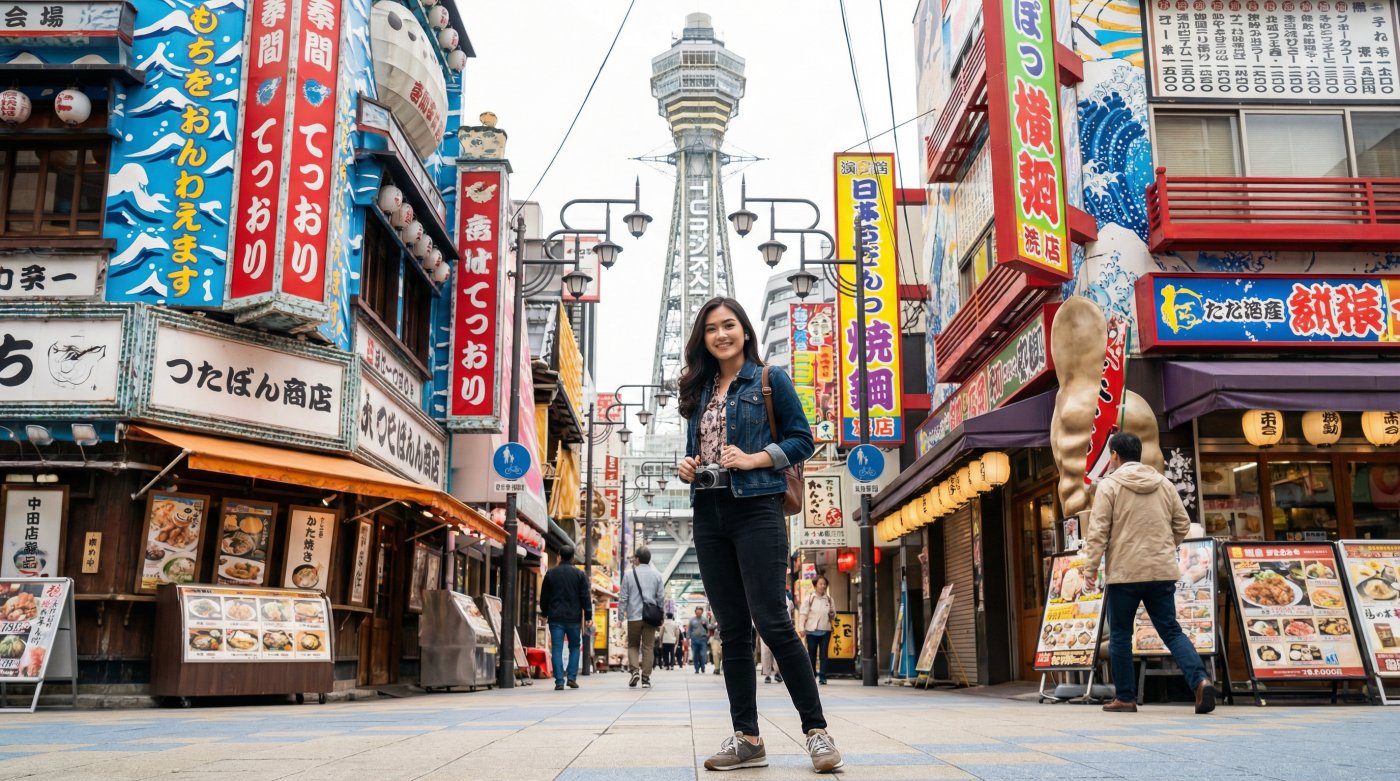
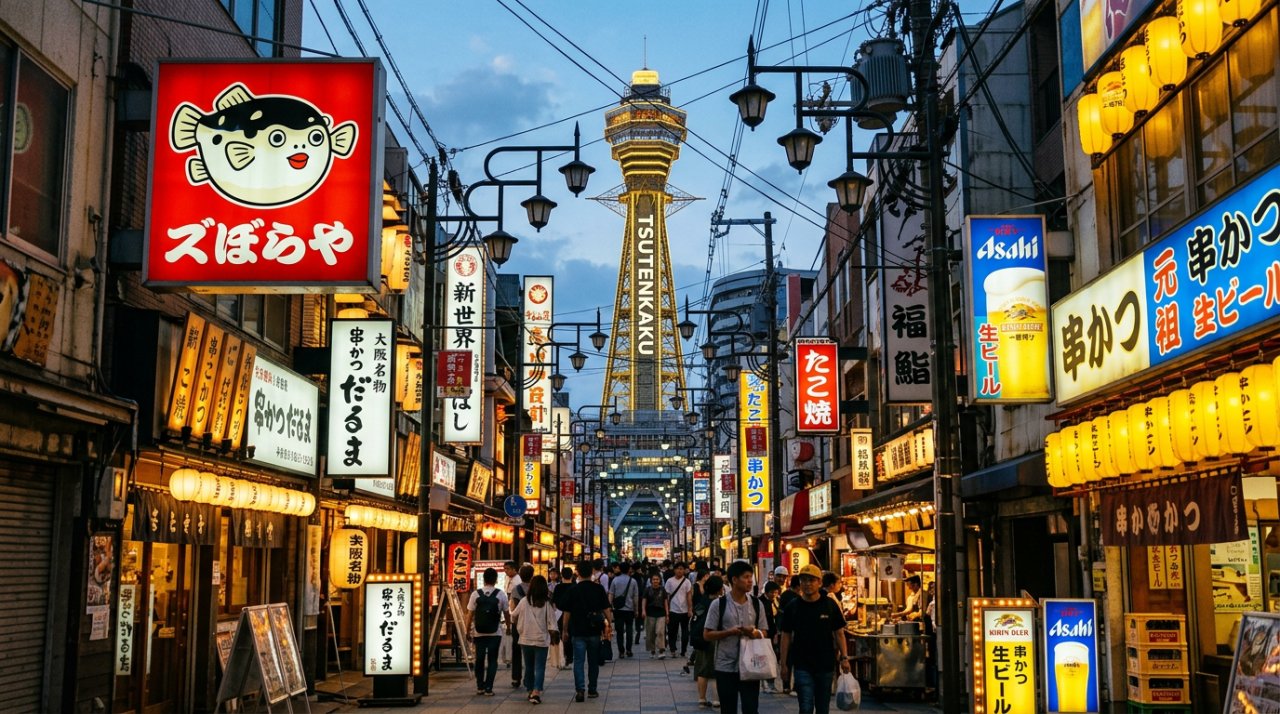
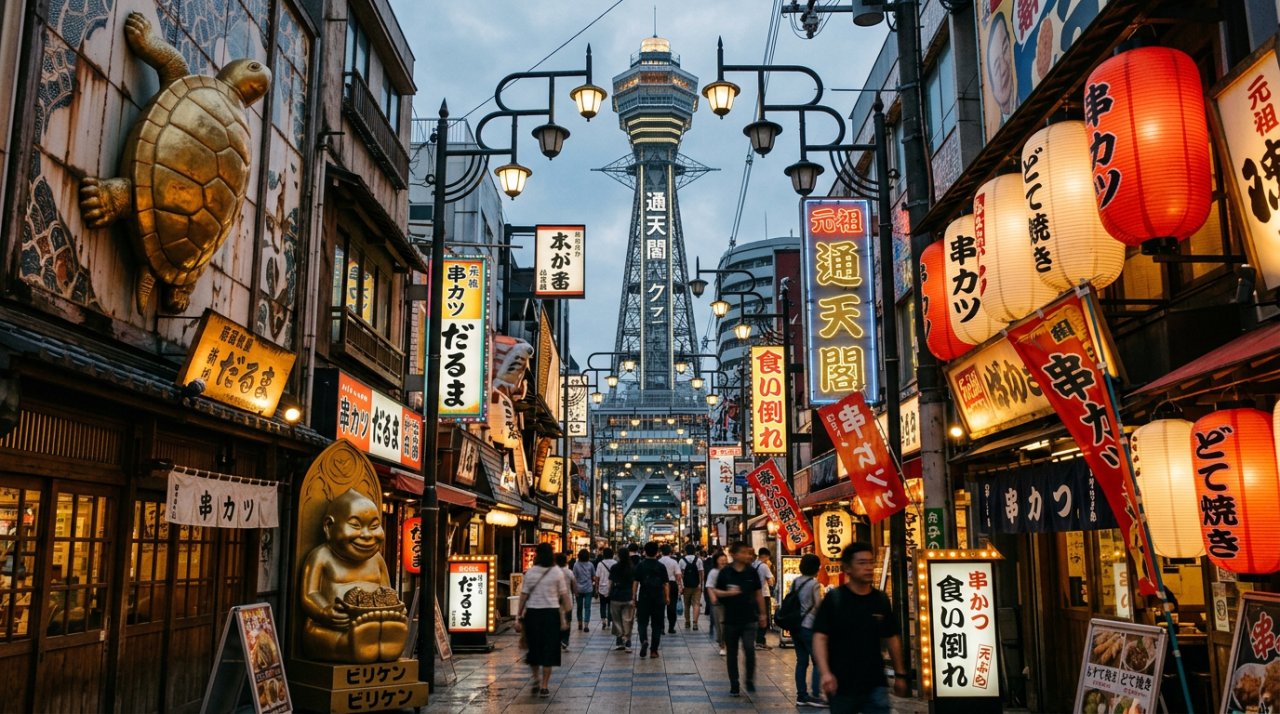
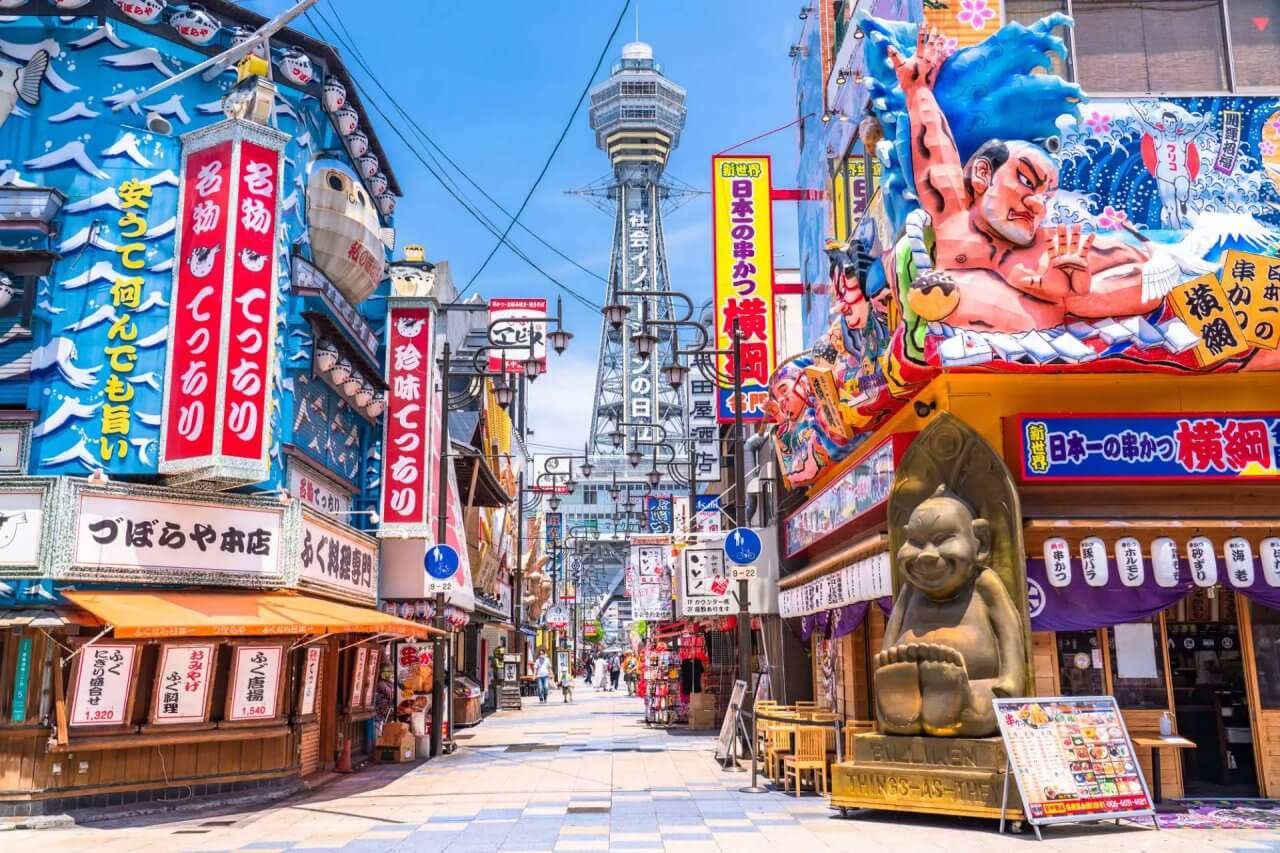
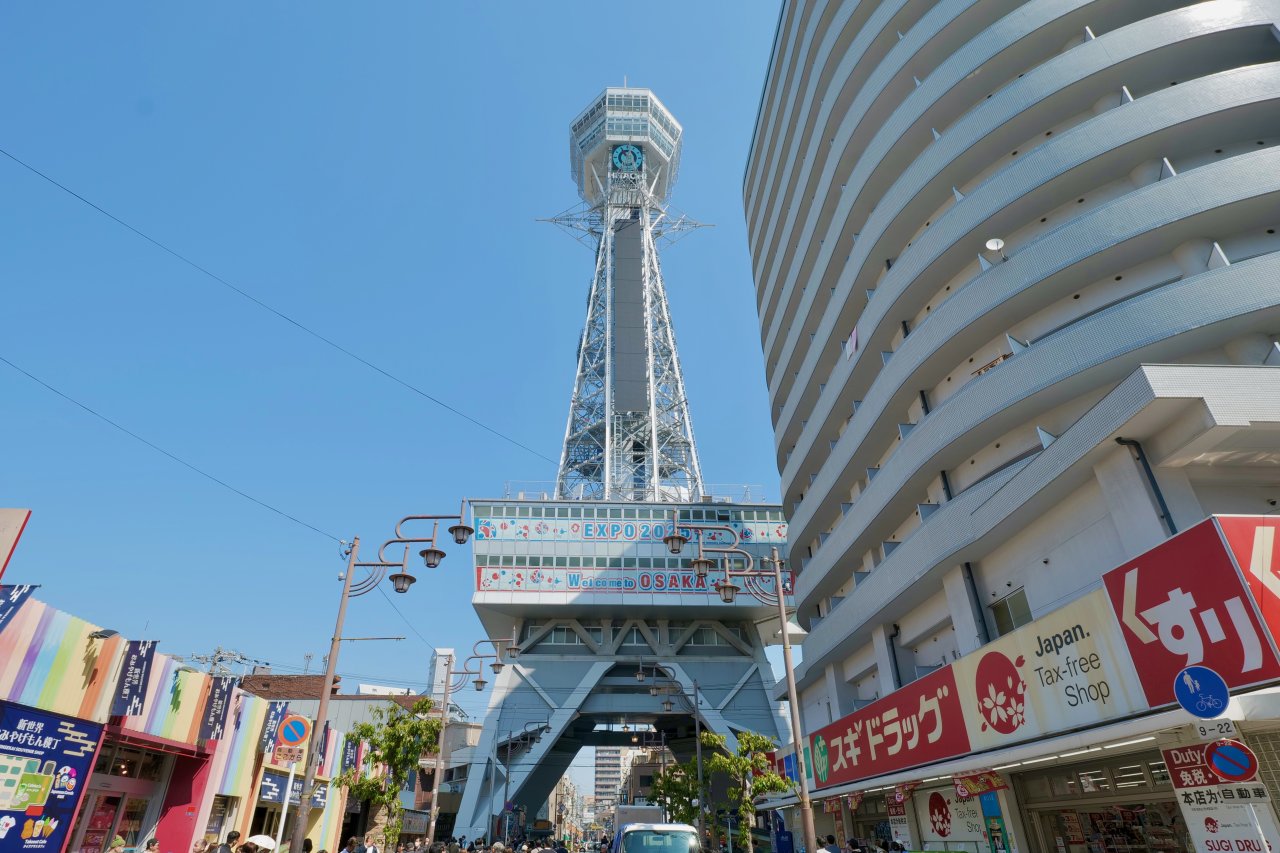









Tsutenkaku Tower, literally “tower reaching heaven,” is the 103-metre steel landmark that has watched over Osaka’s Shinsekai district since 1956.
Built as the second incarnation of a tower first erected in 1912, it was registered as a national tangible cultural property in 2021, cementing its status not as a tourist novelty but as a genuine piece of the city’s DNA.
The main draw is the fifth-floor observatory, where you get unobstructed 360-degree views stretching from Osaka Bay to Abeno Harukas, Japan’s tallest skyscraper.
On that same floor you’ll find Billiken, the American-designed “god of things as they ought to be” who became an unlikely icon of Shinsekai: rub the soles of his feet and your wish, according to local lore, is as good as granted.
For the thrill-seekers, the Tower Slider sends you plummeting through a 60-metre transparent tube from the second floor to the basement in roughly ten seconds.
Come at dusk, when Shinsekai’s neon signs flicker to life and the tower ignites in colour; the contrast between the retro street scene below and the electric glow overhead is genuinely hard to replicate anywhere else in Osaka.Weekday mornings are quietest, and arriving right at 9:00 AM lets you experience the observatory before tour groups claim the windows.
The surrounding streets of Shinsekai deserve at least an hour of your time, with kushikatsu restaurants, vintage game arcades, and the lingering sense that time paused somewhere around 1970.
Tsutenkaku Tower Osaka: Retro Views, Billiken, and the Soul of Shinsekai (2026)
Tsutenkaku Tower is the 103-metre steel icon that defines Osaka’s retro Shinsekai district, and it’s one of the few attractions in the city that delivers genuine atmosphere alongside its views.
Built in 1956 as the second incarnation of a tower first erected in 1912, it was registered as a national tangible cultural property in 2021.
In this Explore Osaka guide, you’ll find a floor-by-floor breakdown, current prices, transport options, and practical advice to make the visit worth your time without any guesswork.
Tsutenkaku Tower at a Glance
Hide- Address: 1-18-6 Ebisuhigashi, Naniwa Ward, Osaka 556-0002
- Opening hours: 09:00 to 22:00 daily (last entry 21:30, year-round)
- Admission: ¥1,200 adult; ¥400 children (elementary to junior high); free for children under 5
- Nearest station: Ebisucho Station (Osaka Metro Sakaisuji Line), 4-min walk
- Time needed: 45 to 90 minutes inside the tower; allow extra for Shinsekai streets
- Best season: Year-round
- Osaka Amazing Pass: Observatory entry included (1-day and 2-day pass)
- Official website: tsutenkaku.co.jp
Why Visit Tsutenkaku Tower
Let’s be honest about the view first.
The observatory is good, not transcendent.
Osaka’s skyline lacks the dramatic density of Tokyo or Hong Kong, and a few taller buildings clip the sightlines on the northern side.
If pure panoramic height is your goal, Abeno Harukas through the famous Harukas 300 Observatory clears Tsutenkaku by nearly 200 metres.
So the tower isn’t really about the view.
It’s about what stands around it.
The Shinsekai district was designed in 1912 as an entertainment zone split symbolically between Paris and New York, with the tower at the axis.
That original cosmopolitan ambition dissolved over the decades, replaced by something more organic: a dense grid of kushikatsu joints, retro game arcades, blinking neon signs, and a working-class energy that no urban planning committee would deliberately design.
Walking Shinsekai after visiting the tower is an exercise in understanding how a neighbourhood can become genuinely itself rather than a curated version of itself.
Tsutenkaku’s designation as a national tangible cultural property in 2021 confirms what locals already knew: this isn’t just a nostalgia prop.
The tower was dismantled during World War II and rebuilt by the Shinsekai community’s own fundraising efforts in 1956, which is why it carries a different kind of weight than most tourist structures.
People here feel ownership over it, and that shows in how the neighbourhood treats it.
If you’re still building a broader Osaka schedule and want to see what else the city offers, the things to do in Osaka archive covers the full range, but Tsutenkaku earns its place in the first two days of any trip south of the river.
What to See and Do at Tsutenkaku Tower
The tower has five main floors above ground and a basement.
Each level has a distinct character, and knowing what’s where saves you from randomly pressing buttons in the elevator.
The Fifth-Floor Observatory
The tenbodai (展望台) sits at 87.5 metres and offers unobstructed 360-degree views across Naniwa Ward.
To the south, you can see the green expanse of Tennoji Park and the slim tower of Tennoji‘s Abeno Harukas, Japan’s tallest skyscraper at 300 metres.
To the north, the low-rise density of Shinsekai tapers into Namba, and on clear days the Ikoma Mountains are faintly visible to the east.
Tsutenkaku Tower Observatory: Timing and Window Tips
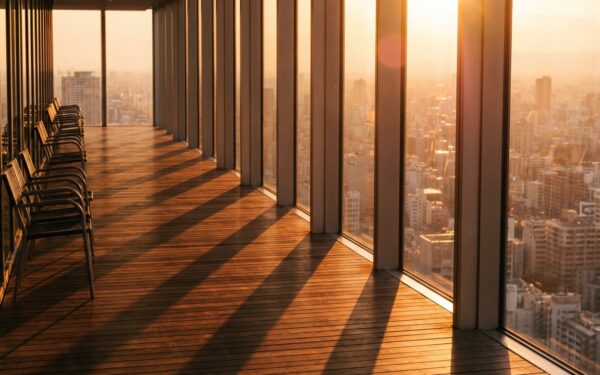
The eastern windows get the best morning light between 9:00 and 10:30, which also happens to be the quietest window before tour groups arrive.
The southern windows give you the sharpest view of Abeno Harukas, and the contrast between a 1950s steel structure and a 2014 glass skyscraper makes for an unusual photograph.
Weekday mornings are the clear choice for thin crowds; weekend afternoons between 13:00 and 16:00 are the busiest, with waits at the elevator common during peak season.
Billiken, the Lucky Figurine
Billiken (ビリケン) is the grinning figurine on the fifth floor, and he’s arguably the most culturally significant object in the entire tower.
Originally designed by American art teacher Florence Pretz in 1908 and described as the “god of things as they ought to be,” Billiken was adopted by Shinsekai residents and became the mascot of the district’s identity over the following decades.
The ritual is simple: reach up and rub the soles of his feet to have your wish granted.
The current Billiken is the third version, installed in 2012 after the second was retired to a local museum.
What makes the whole thing work is the levity of it.
There’s no solemnity here, no incense or reverence, just a slightly absurd American figurine grinning at tourists from a Japanese observation deck.
It’s the right note for Shinsekai.
The Tower Slider
The Tower Slider (タワースライダー) is a 60-metre transparent tube that drops you from the second floor to the basement in approximately ten seconds.
It’s a separate ticket from general admission, purchased at the counter.
Whether it justifies the extra cost is a personal calculation, but it’s genuinely fast and the glass tube gives you a blurred view of the surrounding streets on the way down.
Children are enthusiastic about it; adults pretend to be indifferent, then usually ask to go again.
The Lower Floors and Basement
The second and third floors house rotating exhibitions and a Billiken-themed souvenir shop with the kind of cheerful merchandise you either fully commit to or politely pass.
There’s a café on the lower levels, comfortable for a coffee stop between the observatory and the streets outside.
The basement is where the Tower Slider deposits you, alongside a small gift area and direct access to Shinsekai’s main street level.
Getting to Tsutenkaku Tower Osaka
Here’s the easiest way to visit Tsutenkaku Tower:
By Train
The fastest approach is via Ebisucho Station on the Osaka Metro Sakaisuji Line, about 4 minutes on foot heading south.
If you’re coming from Namba, take the Midosuji Line two stops south to Dobutsuen-mae Station and walk 7 minutes northwest along Shinsekai’s covered shopping arcade.
From Osaka Station in Umeda, the JR Osaka Loop Line to Shin-Imamiya Station is the most direct option, also around 7 minutes’ walk to the tower entrance.
IC cards (ICOCA, Suica, PiTaPa) work on all three lines, so there’s no need to buy paper tickets at the machines.
The combined journey from Umeda takes roughly 25 minutes including walk time, which makes Tsutenkaku a natural afternoon destination from anywhere in central Osaka.
Getting Around the Neighbourhood
Once you’re in Shinsekai, the tower sits roughly at the centre, and most of the surrounding restaurants, arcades, and stalls are within a 3-minute radius.
The neighbourhood is compact and pleasant to walk, but it doesn’t connect cleanly to the broader Osaka street grid.
Plan your exit route before you arrive rather than navigating by instinct, especially if you’re heading somewhere specific afterward.
Practical Tips for Your Visit
- Tickets and the Amazing Pass: Standard adult admission is ¥1,200. With the Osaka Amazing Pass (1-day or 2-day), observatory entry is included at no extra charge. The Tower Slider is a separate purchase at the counter and is not covered by the pass.
- Opening hours: Since March 2026, the tower operates 09:00 to 22:00 daily, with last ticket sales at 21:30. Seasonal adjustments are possible, so check the official site before your visit if you’re planning around specific hours.
- Photography: Cameras and phones are permitted on the observatory floor. Tripods are not allowed. The low-light quality through the glass windows is reasonable with a modern phone camera, but direct midday sun creates significant glare on the southern side.
- Crowds: Weekend afternoons are the most congested. Mornings before 11:00 on weekdays are reliably quiet, and the lighting is better for photography. If you’re visiting on a national holiday or during Golden Week (late April to early May), expect noticeably longer elevator queues.
- Payments: The ticket counter accepts IC cards and major credit cards. However, most of the kushikatsu and street food restaurants in the surrounding Shinsekai arcade are still largely cash-based. Withdraw before you arrive.
- Accessibility: The tower is fully accessible via elevator. Wheelchair users can reach all floors, and English signage is present throughout the building.
Nearby Attractions Worth Your Time
Tsutenkaku works best as part of a half-day in this part of the city.
These four spots are all within easy walking distance.
Shinsekai Kushikatsu Street
The covered shotengai (shopping arcade) beneath the tower is the obvious first stop after the observatory.
Dozens of kushikatsu restaurants line both sides of the street, each serving deep-fried skewers of meat, seafood, and vegetables with a shared dipping sauce.
The cardinal rule: no double-dipping the sauce.
A full meal here runs ¥1,000 to ¥2,000 per person.
For a broader view of what to eat across the whole city, the Osaka food guide is the right next read.
Tennoji Zoo (Tennoji Dobutsuen)
A 10-minute walk east takes you to one of Japan’s oldest zoos, founded in 1915 and spread across an 11-hectare site adjacent to Tennoji Park.
Adult admission is ¥500.
It’s a solid afternoon option if you’re travelling with children, or if you want to extend the visit without heading back to the centre.
Spa World (Supaa Warudo)
Just south of the tower, Spa World is a large multi-floor bathhouse with themed bathing areas styled after European and Asian designs.
Entry starts around ¥1,000 depending on the day and time.
It’s open until late and makes a natural end point to a day in this part of the city, particularly in cooler months.
Den Den Town (Nipponbashi)
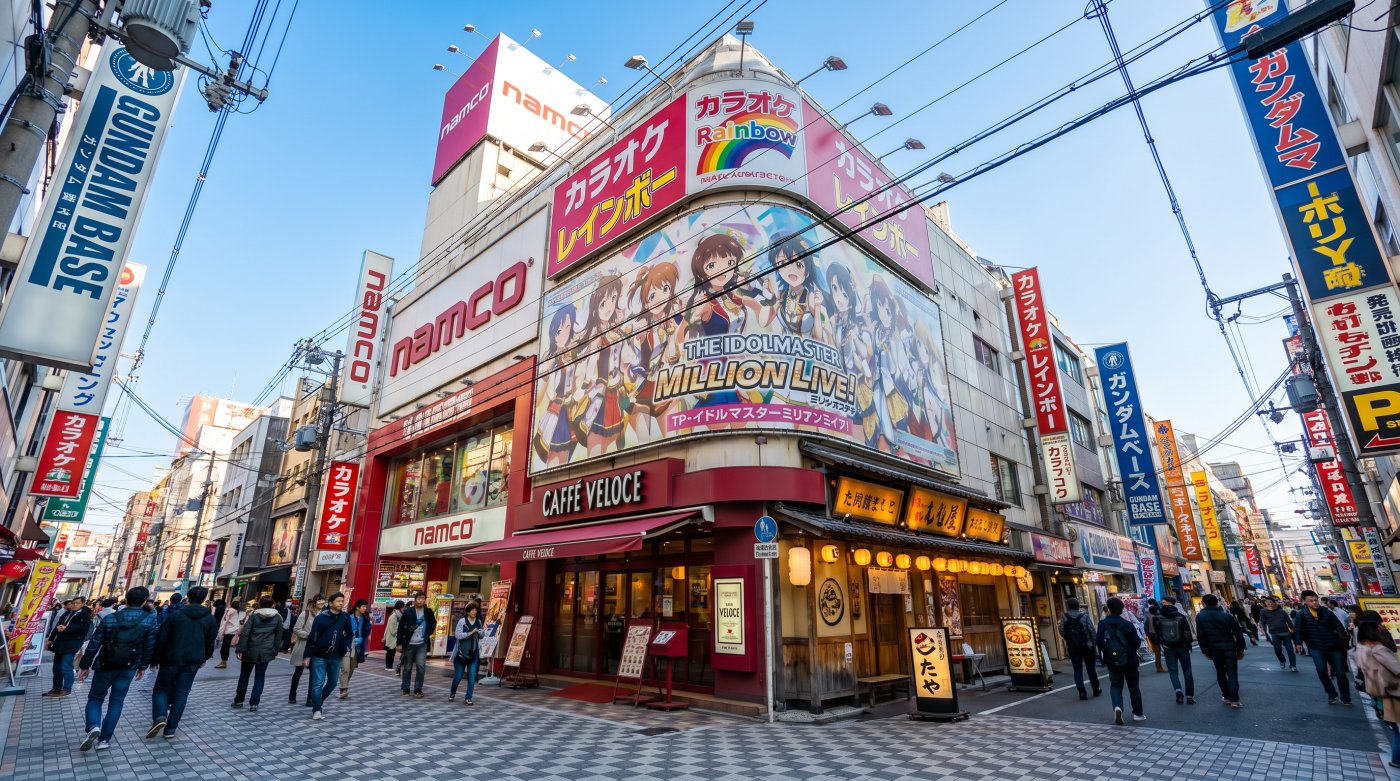
Den Den Town is about 15 minutes northeast on foot, Nipponbashi is Osaka’s electronics, anime, and retro gaming district.
It draws a specific kind of visitor, but if vintage electronics or niche manga are your thing, it rounds out this southern pocket of the city nicely.
Plan Your Time Around Tsutenkaku
Tsutenkaku sits in one of Osaka’s most characterful pockets, and the experience is genuinely stronger when you treat the tower as one part of a Shinsekai half-day rather than a standalone tick.
Spend an hour inside, walk the kushikatsu arcade, sit down for a meal, and you’ll leave with a clear sense of what makes this district different from the more polished circuits around Dotonbori and Namba.
If you’re still figuring out how to structure the rest of your days, the Osaka itinerary section has structured plans that fold Shinsekai naturally into a multi-day visit.
What's Available
Frequently Asked Questions
Standard adult admission is ¥1,200, and children aged five to junior high school age pay ¥400. If you’re travelling with the Osaka Amazing Pass, entry to the observation deck is included at no extra charge, making it excellent value when combined with other city attractions.The Tower Slider is a separate ticket on top of general admission, so factor that in if you’re planning to take the 60-metre plunge to the basement. Booking tickets online in advance can help you secure a preferred time slot during busy periods.
No. The current structure dates from 1931 and is a ferroconcrete reconstruction, not the original Toyotomi-era castle.
The original was destroyed during Japan’s feudal conflicts.
The reconstruction is historically detailed and houses a genuine museum, but it is not a surviving historic structure in the way that, for example, Himeji Castle is.
If original castle architecture matters to you, the day trip to Himeji from Osaka is worth adding to your itinerary.
The quickest route is via Ebisucho Station on the Osaka Metro Sakaisuji Line, which puts you at the tower in about four minutes on foot. If you’re coming from Namba or anywhere along the Midosuji Line, get off at Dobutsuen-mae Station and walk roughly seven minutes north into Shinsekai.From Osaka (Umeda) Station, take the JR Loop Line to Shin-Imamiya Station and walk seven minutes from there. IC Cards are accepted at all these stations, so there’s no need to queue for paper tickets at the machines.
Editor's Review
Tsutenkaku earns its place on the Osaka itinerary more for the neighbourhood it anchors than the views from the top.
Umeda Sky Building this is not.
The observatory is compact, the sightlines are decent, and ¥1,200 is a fair but unspectacular deal on its own.That said, the Billiken ritual has a peculiar charm, the Tower Slider is genuinely good fun for all ages, and the cultural weight of the place settles on you once you understand what Shinsekai meant to working-class Osaka.
Best suited to first-timers and anyone who values retro atmosphere over sheer panoramic height.Insider tip: walk the Shinsekai streets and sit down for kushikatsu immediately after your visit.
Most restaurants are within three minutes on foot, and they complete the experience in a way the tower alone simply cannot.