





Osaka Metro Fares & Tickets 2026: How to Pay, What It Costs & Which Pass to Buy – The Osaka Metro is one of the most efficient and tourist-friendly subway systems in Japan, covering the entire city across nine lines and over 130 stations.
Fares start at ¥190 for adults, most major sights are within a 10-minute walk of a station, and the English signage is clear enough that getting genuinely lost takes real effort.
Load an IC card, learn two or three key interchange stations, and you’re set.
The Osaka Metro covers the city with nine color-coded subway lines, 130 stations, and fares from ¥190 to ¥420 for adults as of 2026.
A short central trip like Namba to Umeda costs ¥240 and takes about seven minutes.
In this Explore Osaka guide, you’ll get a clear breakdown of every line, how the fare system works, exact prices for the routes people actually ask about, which pass saves you money, and the practical station knowledge that keeps first-time visitors from spinning around in underground corridors.
Whether you’re heading to Namba for dinner or catching a morning train to a museum, the metro is almost always the right call.
If you’re still in the early planning stage, our overview of what to sort out before you arrive in Osaka pairs well with this guide.
Osaka Metro Co., Ltd. has operated the network as a private corporation since April 2018, when the city government privatized what was formerly the Osaka Municipal Subway.
The system handles roughly 2.37 million passenger trips per day, making it one of the busiest urban rail networks in Japan.
That volume is worth knowing, because it tells you that peak-hour trains (roughly 7:30 to 9:00 a.m. and 5:30 to 8:00 p.m.) will be crowded in a way that makes boarding with large luggage genuinely awkward.
Key Takeaways: Osaka Metro at a Glance
Hide- Nine color-coded lines, 130+ stations: The network covers every major tourist area in the city, with English signage and alphanumeric station codes (e.g., M20 for Namba on the Midosuji Line) that make finding your way manageable even on your first trip.
- Fares start at ¥190 for adults: The system is distance-based, with prices stepping up gradually to a maximum of ¥420. Children aged 6–11 pay half fare on weekdays and ride free on weekends and public holidays.
- Three ways to tap through the gate: An IC card (ICOCA, Suica, PASMO), your own contactless Visa or Mastercard, or a phone with a transit card loaded all work at Osaka Metro gates. No paper ticket required.
- The Enjoy Eco Card is the best value for heavy metro days: At ¥620 on weekends and public holidays, you break even after just three rides. It also unlocks discounts at over 50 attractions across the city.
- The Midosuji Line (red, M) is the line that runs your trip: It connects Umeda, Shinsaibashi, Namba, and Tennoji on a single straight north-south route. Learn it first; work the others around it.
- Escalator etiquette is reversed from Tokyo: In Osaka, you stand on the right and leave the left free for walkers. Getting this wrong will not cause a scene, but it will earn you the full force of Osaka's polite disapproval.
- Last trains run around midnight: The Osaka Metro does not operate overnight. Check last-train times before an evening out, particularly on the Midosuji Line from Namba, or factor in taxi costs if you plan to stay out late.
The Nine Lines of Osaka Metro at a Glance
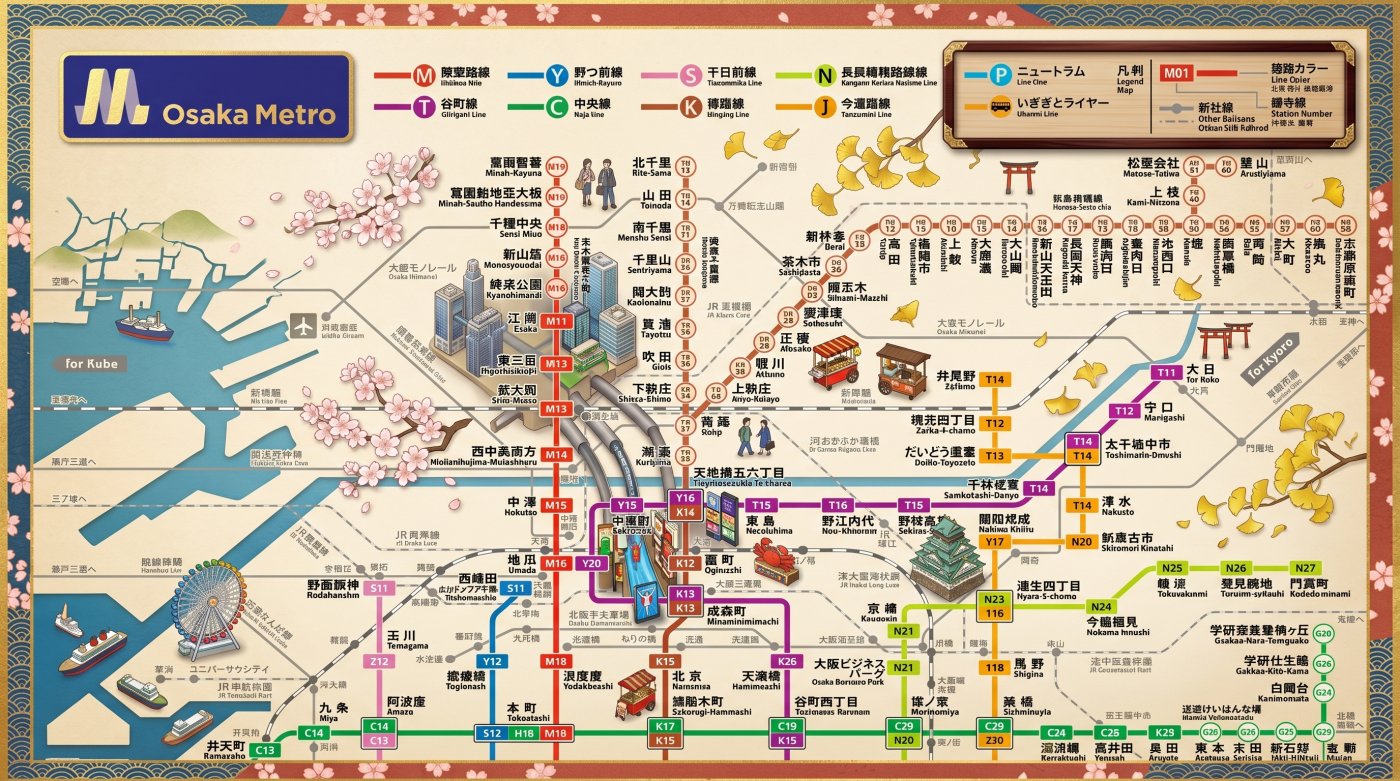
The network is color-coded, numbered, and labeled in English at every station.
Each line has a letter code used on signs and ticketing machines, which removes a lot of the guesswork.
Here is a quick reference for all nine lines:
- Midosuji Line (M) — Red: The backbone of the network. Runs north-south from Esaka to Nakamozu, stopping at Umeda, Shinsaibashi, Namba, Tennoji, and several other major hubs. If you only learn one line, learn this one.
- Tanimachi Line (T) — Purple: Runs diagonally from Dainichi in the north to Yaominami in the south, passing through Tanimachi 4-chome and Tennoji. Useful for Osaka Castle (Tanimachi 4-chome Station) and Tennoji.
- Yotsubashi Line (Y) — Blue: Runs parallel to the Midosuji Line on its west side, from Nishiumeda to Sumiyoshi. Good for Dotonbori via Yotsubashi Station.
- Chuo Line (C) — Green: East-west line connecting Osaka Bay to Kadoma-Minami, stopping at Honmachi. In January 2025, the Chuo Line was extended west under the bay to the new Yumeshima Station, built as the main subway access to the Expo 2025 site. Expo 2025 closed on October 13, 2025, and Yumeshima Island is now undergoing redevelopment — the station remains on the map but there is currently no public destination served there. For most visitors, the practical western terminus is Osakako Station, which still connects directly to Osaka Bay for the Osaka Aquarium Kaiyukan.
- Sennichimae Line (S) — Pink: Runs east-west through the middle of the city, from Nishitanabe to Minami-Tatsumi. Intersects most north-south lines at useful transfer points.
- Sakaisuji Line (K) — Brown: Runs north-south from Tenjimbashisuji 6-chome to Tengachaya. Has a through-service agreement with the Hankyu Kyoto and Senri Lines, which can take you further north without switching trains.
- Nagahori Tsurumi-ryokuchi Line (N) — Yellow-green: East-west line from Taisho to Tsurumi-ryokuchi. Stops at Shinsaibashi and Horie.
- Imazato Liner (BRT) — Orange: A Bus Rapid Transit line, not a traditional subway. Runs from Imazatosuji to Taiko-dori. Uses dedicated bus lanes and shares the metro fare and payment system.
- Nankōport Town Line (New Tram, P) — Light blue: An automated, driverless line running from Cosmosquare around the Nanko waterfront. Locals call it the New Tram, and it uses the same IC cards and passes as the subway.
Essential Osaka Travel Passes
Powered by KlookThe passes worth buying before you land — curated for first-timers.
Osaka Amazing Pass
Unlimited subway + free entry to 40+ attractions. The only pass most visitors actually need.
Osaka e-Pass
Attractions-only digital pass. Pair with a Metro Pass if skipping the Amazing Pass.
Osaka Metro Pass
1 or 2-day unlimited Metro rides. Best standalone transit value if you already have an attractions pass.
JR West Kansai Area Pass
Unlimited JR trains for 1–4 days. Covers Kyoto, Nara, Kobe, and Himeji from Osaka.
JR Haruka Express
KIX to Umeda/Shin-Osaka in ~50 min. Best if staying in Umeda or heading straight to Kyoto.
Nankai Rapi:t Express
KIX to Namba in 34 min, reserved seat. Better if staying in Namba or Shinsaibashi.
The Midosuji Line: Why It Runs Your Day
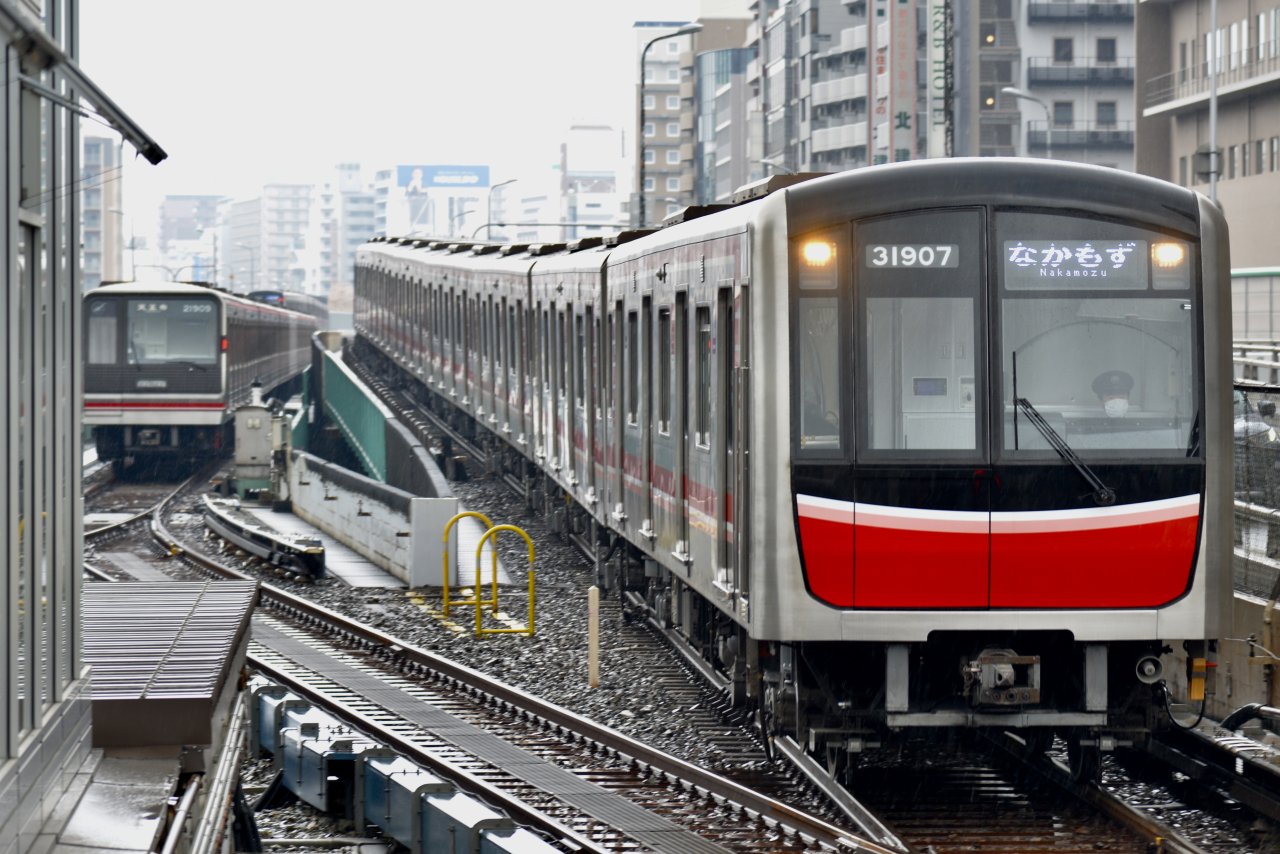
Every visitor to Osaka ends up on the Midosuji Line multiple times per trip, usually without planning to.
The red line connects Umeda in the north to Namba and Shinsaibashi in the south, with Tennoji further down, and the stations in between cover most of where tourists spend their time.
Trains run every 2 to 4 minutes during peak hours and every 4 to 8 minutes in off-peak windows.
End-to-end from Esaka to Nakamozu takes about 48 minutes.
The one thing to know about Midosuji trains: the first and last cars are designated women-only during morning rush hours (7:00 to 9:00 a.m., weekdays only).
Signs on the platform mark these car positions clearly.
Key Interchange Stations
Three stations function as major hubs where multiple lines converge.
Learning them saves a lot of confused backtracking.
- Umeda / Higashi-Umeda / Nishi-Umeda: These are technically three separate stations for three different lines (Midosuji, Tanimachi, and Yotsubashi), but they’re all within walking distance underground and count as one interchange zone. This area also connects to JR Osaka Station and multiple private rail terminals.
- Tennoji: Where the Midosuji and Tanimachi Lines cross. Also connects to JR lines and the private Kintetsu and Nankai railways. Good base station if you’re heading to Shinsekai.
- Honmachi: Where the Midosuji, Yotsubashi, and Chuo Lines intersect. Central location, useful for east-west and north-south transfers without going all the way to a terminus.
Osaka Metro Fares, Tickets, and How to Pay
Osaka Metro uses a distance-based fare structure for single-journey tickets.
The starting fare is ¥190 for adults and ¥100 for children (ages 6 to 11), rising to a maximum of ¥420 for the longest trips across the network.
Children under 6 travel free when accompanied by a fare-paying adult.
Fares increase based on distance traveled:
| Distance | Adult Fare | Child Fare (Ages 6–11) |
|---|---|---|
| Up to 3 km | ¥190 | ¥100 |
| 3 to 7 km | ¥240 | ¥120 |
| 7 to 13 km | ¥290 | ¥150 |
| 13 to 19 km | ¥340 | ¥170 |
| 19 to 24 km | ¥390 | ¥200 |
| Over 24 km | ¥420 | ¥210 |
For quick budgeting in your own currency, ¥190 is roughly $1.30 / €1.15 and ¥420 is about $2.85 / €2.55, depending on the exchange rate.
Tickets are purchased at the vending machines inside every station, and the machines have English interfaces.
Select your destination on the map above the machine, tap the matching fare amount, insert cash or an IC card, and collect your ticket and change.
One-way tickets must be used within the same day and are not transferable.
Types of Fares: Adult, Child, and Infant
Osaka Metro sets fares by passenger age, and the rules are simple once you know them.
- Adult (12 and over): Pays the full distance-based fare, from ¥190 to ¥420.
- Child (6 to 11): Pays half the adult fare on weekdays and rides free on weekends and public holidays, a detail that genuinely matters if you’re traveling with kids.
- Infant (under 6): Travels free when accompanied by a fare-paying passenger.
- Maximum fare: No single subway journey costs more than ¥420 for an adult, no matter how far you ride.
Residents and long-stay visitors can also buy a commuter pass (teiki-ken) for unlimited travel on one fixed route over one, three, or six months.
For a short trip, the day passes further down this page are the better play.
How Much Is the Osaka Metro Fare Between Stations?
The most-searched trip, Namba to Umeda on the Midosuji Line, costs ¥240 for an adult and takes about eight minutes.
Most central trips land between ¥190 and ¥290.
Because the machines price by distance, it helps to see real station pairs rather than abstract kilometer bands.
Here are the routes visitors ask about most:
| Route | Line | Adult | Child | Time |
|---|---|---|---|---|
| Namba → Umeda | Midosuji (M) | ¥240 | ¥120 | ~8 min |
| Namba → Shinsaibashi | Midosuji (M) | ¥190 | ¥100 | ~1 min |
| Namba → Daikokucho | Midosuji (M) / Yotsubashi (Y) | ¥190 | ¥100 | ~2 min |
| Tengachaya → Namba | Sakaisuji (K) + transfer | ¥240 | ¥120 | ~10 min |
| Shin-Osaka → Namba | Midosuji (M) | ¥290 | ¥150 | ~16 min |
| Shin-Osaka → Hommachi | Midosuji (M) | ¥240 | ¥120 | ~12 min |
| Shitennoji-mae Yuhigaoka → Tennoji | Tanimachi (T) | ¥190 | ¥100 | ~1 min |
| Hommachi → Cosmosquare | Chuo (C) | ¥290 | ¥150 | ~15 min |
| Umeda → Tennoji | Midosuji (M) | ¥290 | ¥150 | ~17 min |
To check any pair not listed here, type both station names into the official fare finder at subway.osakametro.co.jp or into Google Maps, which shows the fare alongside the platform and travel time.
Osaka City Bus Fares
Osaka City Bus charges a flat fare of ¥210 for adults and ¥110 for children on almost every route, regardless of how far you ride.
The buses are run by an Osaka Metro subsidiary, so they share the same IC cards, contactless payment, and day passes as the subway.
The one detail that saves you money: when you transfer between the subway and a city bus using an IC card or contactless card, the system automatically takes ¥100 off the connecting fare (¥50 for children).
The Imazato Liner BRT follows the same flat-fare structure.
How Do You Pay for the Osaka Metro?
You can pay for the Osaka Metro four ways: a paper ticket, a rechargeable IC card, your own contactless credit card tapped at the gate, or a phone with a transit card loaded.
For most visitors, tapping a card beats buying paper tickets every time.
IC Cards: ICOCA, Suica, or PASMO
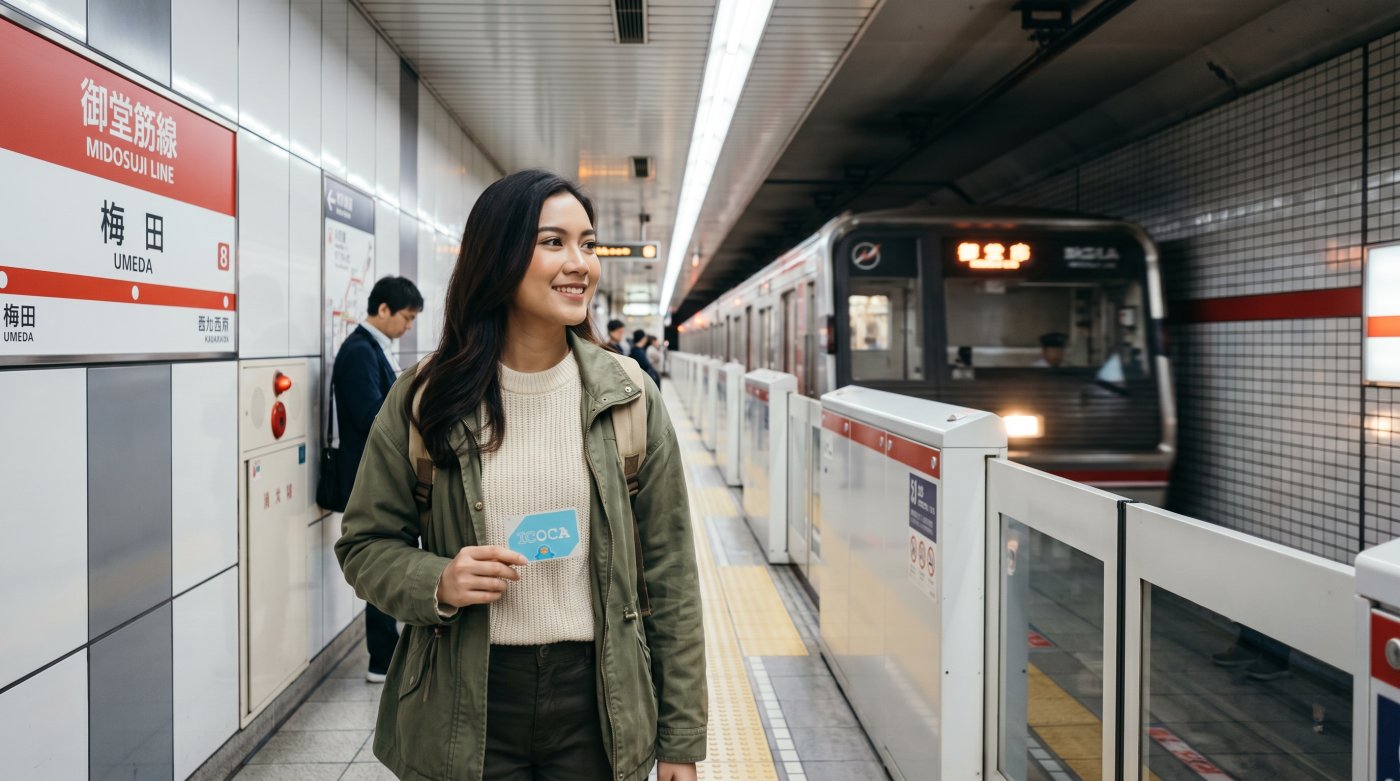
The simplest traditional method is a prepaid IC card: tap in at the entry gate, tap out at the exit gate, and the correct fare is deducted automatically.
No ticket, no fumbling with machines mid-trip.
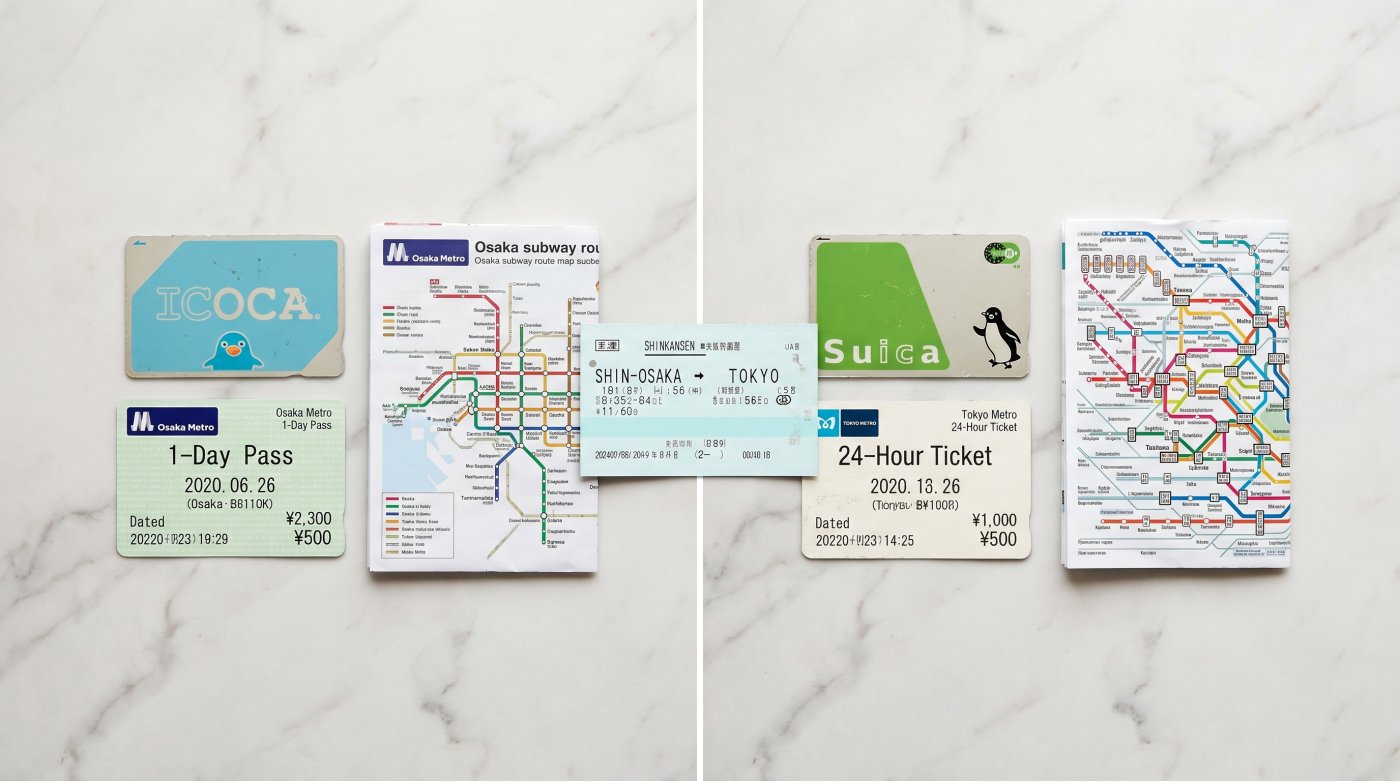
Osaka Metro accepts all major IC cards, including ICOCA (issued by JR West and the most common card in the Kansai region), Suica (issued by JR East), PASMO, and PiTaPa.

If you’re arriving from Tokyo, your existing Suica or PASMO works here without any setup.
ICOCA cards are available at JR West ticket machines at Shin-Osaka Station and Osaka Station for ¥2,000, which includes a ¥500 refundable deposit.
If you’re weighing whether a rechargeable card or a sightseeing pass fits your trip better, our side-by-side look at the Amazing Pass and the ICOCA card breaks down who each one suits.
Using an IC card also eliminates the most common tourist mistake: buying the wrong-value ticket and having to use the fare adjustment machine on the way out.
Contactless Credit Cards (Tap-to-Ride)
You can now tap your own contactless credit or debit card directly on the reader at Osaka Metro gates, with no IC card, no app, and no registration.
This is the single biggest change for short-stay visitors, who no longer need to buy or top up an ICOCA at all.
Accepted brands include Visa, Mastercard, JCB, American Express, Diners Club, Discover, and UnionPay, along with phones and smartwatches that have one of those cards loaded.
Tap the dedicated contactless reader (separate from the IC card panel), and the regular adult fare is charged to your card.
The system covers the subway and the New Tram, and since November 1, 2025, it also works on Osaka City Bus and the Imazato Liner.
One caveat worth knowing: tap-to-ride charges the standard fare, so for a heavy sightseeing day a day pass can still be cheaper.
Mobile IC Cards and Digital Tickets
Apple Pay (with Suica, ICOCA, or PASMO) and Google Pay are accepted at every gate.
If you have an iPhone or Android phone with a Japanese transit card loaded, you won’t need a physical card at all.
Several passes are now available as digital QR tickets, though the options differ by pass.
The Enjoy Eco Card (¥820 on weekdays, ¥620 on weekends and holidays for adults; ¥310 for children) remains a physical-only ticket sold exclusively at station vending machines — there is no digital version of this pass.
The digital-first alternatives include the Osaka Metro/Osaka City Bus 1-Day Pass, the Osaka Metro 26-hour and 48-hour tickets, and the Osaka Amazing Pass (1-day and 2-day).
These are purchased and used entirely via smartphone through SURUTTO QRtto — Osaka Metro’s official QR-based mobile ticketing platform — which requires a free account registration.
The Osaka Amazing Pass and select other passes are also sold through third-party resellers such as Klook and KKday, which link through to the same QRtto system.
The ONE KANSAI Osaka Smart Access Pass, a broader regional option, is handled separately through the KANSAI MaaS app.
Klook Pass Kansai
Save on the best of your destination with one simple purchase & decide your plans later, valid for 30 days.
Once purchased, all QR passes are scanned directly at QR-compatible ticket gates — no physical exchange or pickup is needed.
Here is how the four payment methods compare:
| Method | Best for | Setup needed | Discount vs paper |
|---|---|---|---|
| Paper ticket | One-off rides, cash users | Buy per trip | None |
| IC card (ICOCA/Suica/PASMO) | Multi-day trips, trains + buses | Buy + top up | Small on some routes |
| Contactless credit card | Short visits, no top-ups | None — tap your own card | None |
| Mobile / digital ticket | Phone-first travelers | SURUTTO QRtto account or KANSAI MaaS app | Pass discounts apply |
Are Osaka Metro Day Passes Worth It?
A day pass beats paying per ride once you make more than three or four metro trips in a day.
For most sightseeing days packed into the central wards, that threshold is easy to cross before lunch.
The Enjoy Eco Card
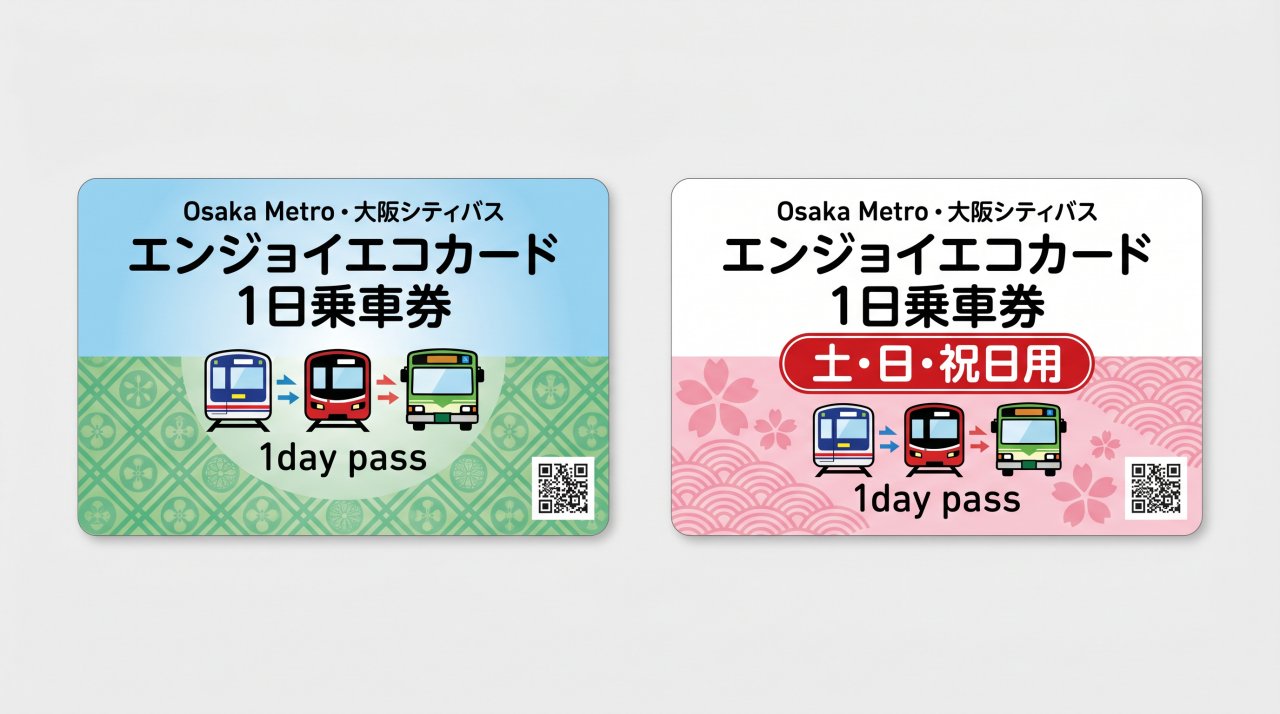
The Enjoy Eco Card is Osaka Metro’s standard one-day unlimited pass for the subway and Osaka City Bus.
Pricing is:
- Weekdays: ¥820 for adults, ¥310 for children
- Weekends and public holidays: ¥620 for adults, ¥310 for children
The weekend price is the standout deal.
At ¥620, you break even after just three standard ¥240 rides.
Beyond that, every additional trip is free.
The pass also comes with discounts at over 50 facilities across the city, including reduced entry at the Osaka Museum of History, Tennoji Zoo, and Osaka City Museum.
You can buy the Enjoy Eco Card at any station ticket machine.
Tap the “One Day Pass” option on the English interface.
Osaka 1-Day / 2-Day Pass (Tourist Version)
Osaka Metro Pass
Enjoy unlimited access to Osaka Metro Lines and Osaka City Bus for one or two days.
Osaka Metro also offers a tourist-specific pass sold at major stations and some travel agencies.
The one-day version costs ¥1,500 and includes unlimited subway rides plus discounts at around 40 Osaka attractions.
The two-day version costs ¥2,000.
These passes are designed for heavier sightseers who plan to visit paid attractions on the same days they’re using the metro heavily.
Run the numbers based on your actual itinerary before buying, because the Enjoy Eco Card is often cheaper for metro-only travel.
If you’re tallying the whole trip, our breakdown of what a few days in Osaka actually costs puts these pass prices in context.
The Osaka Amazing Pass
Trip Essentials
Osaka Travel Add-ons
Equip yourself for the ultimate Osaka adventure with the following add-ons, curated just for you.
Flights to Osaka
Airport Transfer
ICOCA IC Card
Suica IC Card
Osaka Tours
Luggage Storage
Travel Insurance
Data Security

Japan eSIM
Japan SIM Card
Pocket WiFi Rental
Japan eSIM
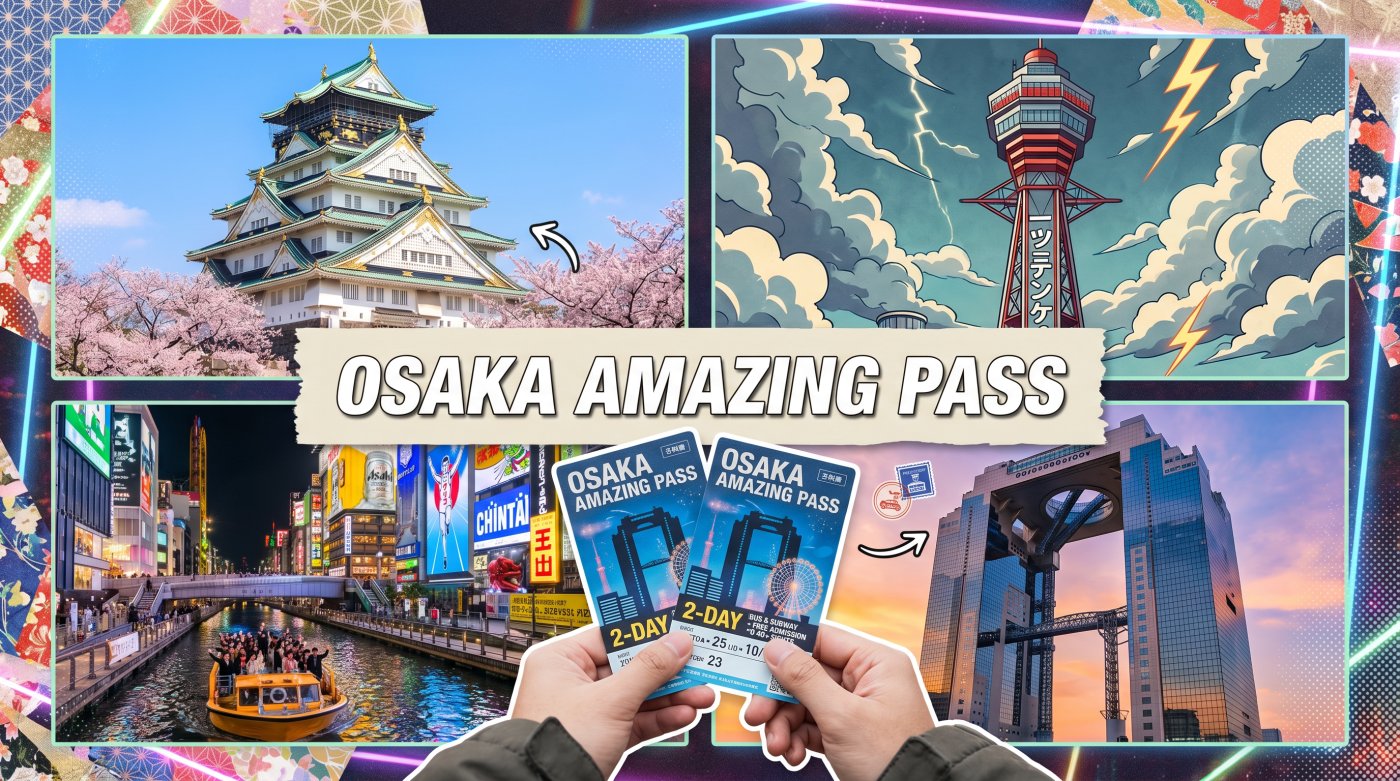
The Osaka Amazing Pass is the most complete tourist pass available and covers unlimited rides on Osaka Metro, Osaka City Bus, and the New Tram, plus free entry to approximately 40 attractions.
The one-day version costs ¥3,500 and the two-day version ¥5,000. Pricing is the same for adults and children.
An airport-linked variant, the Osaka Amazing Pass Osaka Itami Airport (ITM) version is priced slightly higher at ¥3,800 for one day and ¥5,400 for two days, and is sold through the same SURUTTO QRtto platform.
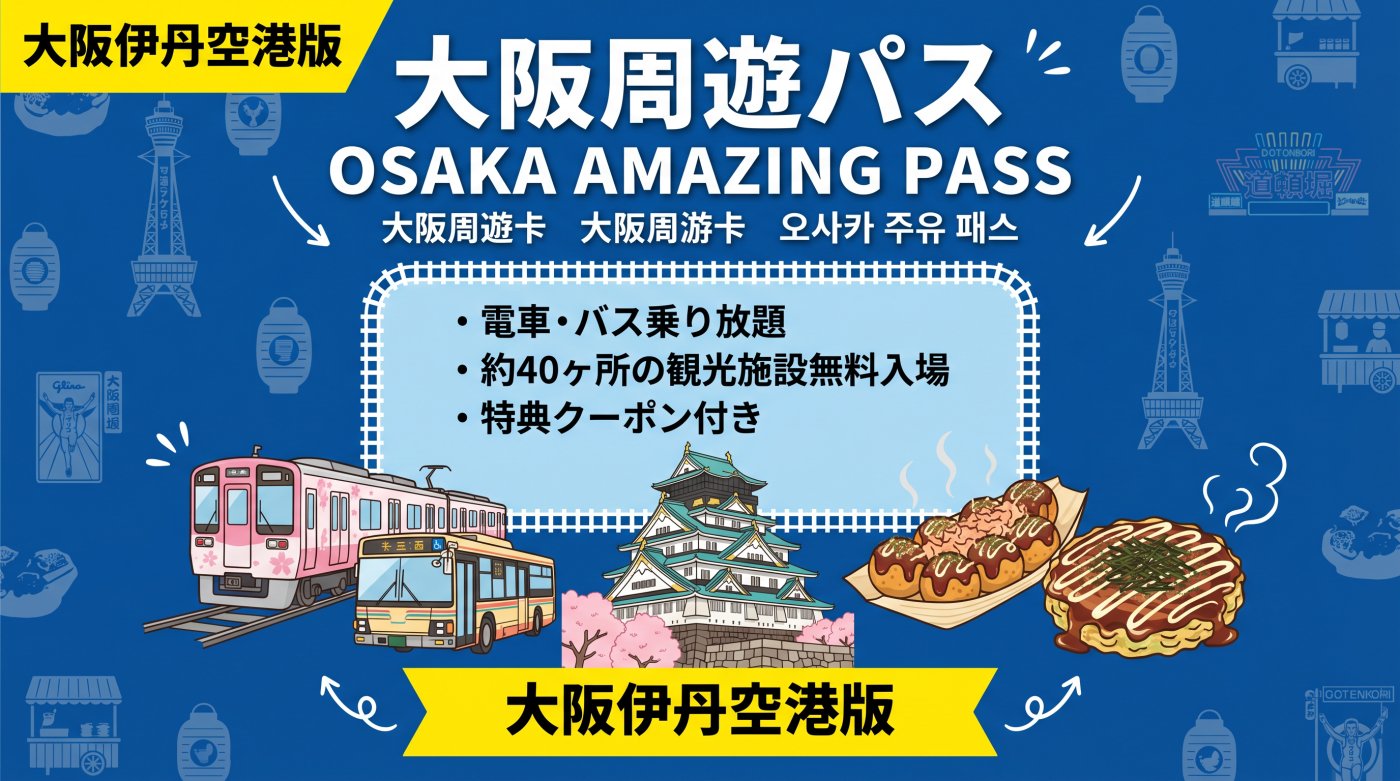
If your Osaka itinerary includes Tempozan Ferris Wheel, the Osaka Museum of Housing and Living, Tsutenkaku Tower, and other paid sights on the same day, the Amazing Pass pays for itself fast.
What Time Does the Osaka Metro Close?
The Osaka Metro runs from roughly 5:00 a.m.
to just after midnight every day, and it does not operate 24 hours.
The exact first and last train depends on your line, station, and direction.
On the Midosuji Line, first trains leave between 5:03 a.m. and 5:30 a.m. depending on direction, and the last trains run past midnight.
Here are the confirmed weekday times for the busiest line:
| Station | First train | Last train |
|---|---|---|
| Umeda (southbound to Nakamozu) | 5:15 a.m. | 0:06 a.m. |
| Namba (southbound to Nakamozu) | 5:23 a.m. | 0:17 a.m. |
| Tennoji (northbound to Minoh-kayano) | 5:03 a.m. | 0:03 a.m. |
If you miss the last train, the only option is a taxi, and Osaka taxis are metered and not cheap.
Plan evening plans backward from the last Midosuji departure at your nearest station.
Finding Your Way Around Osaka Metro Stations
The station numbering system is the clearest tool on the network.
Every station has a two-part code: a letter indicating the line and a number indicating position on that line.
Namba on the Midosuji Line is M20. Shinsaibashi is M19. Tennoji is M23.
These codes appear on maps, signs, gate areas, and ticketing machines, so even if you can’t read the Japanese station name, matching a two-digit code is easy.
Reading the Signs Underground
Inside the stations, color-coded ceiling signs match the line color.
Exit signs use the standard green-and-white format common across Japanese transit systems.
Platform signs list upcoming stations in both English and Japanese, with the station code displayed prominently.
Each exit from a station is numbered.
This matters more in Osaka than in many other cities because some stations have 20 or more exits spread across a wide underground area.
Knowing that Kuromon Ichiba Market is a short walk from Exit 10 of Nippombashi Station (S17/K17) is more useful than just knowing you’re at the right station.
Using Google Maps and Navitime
Google Maps works reliably for Osaka Metro routing and gives you the platform number, the number of stops, the fare, and estimated journey time.
Navitime’s Japan Travel app gives more detailed Japanese transit information, including platform car positions for the best exit placement.
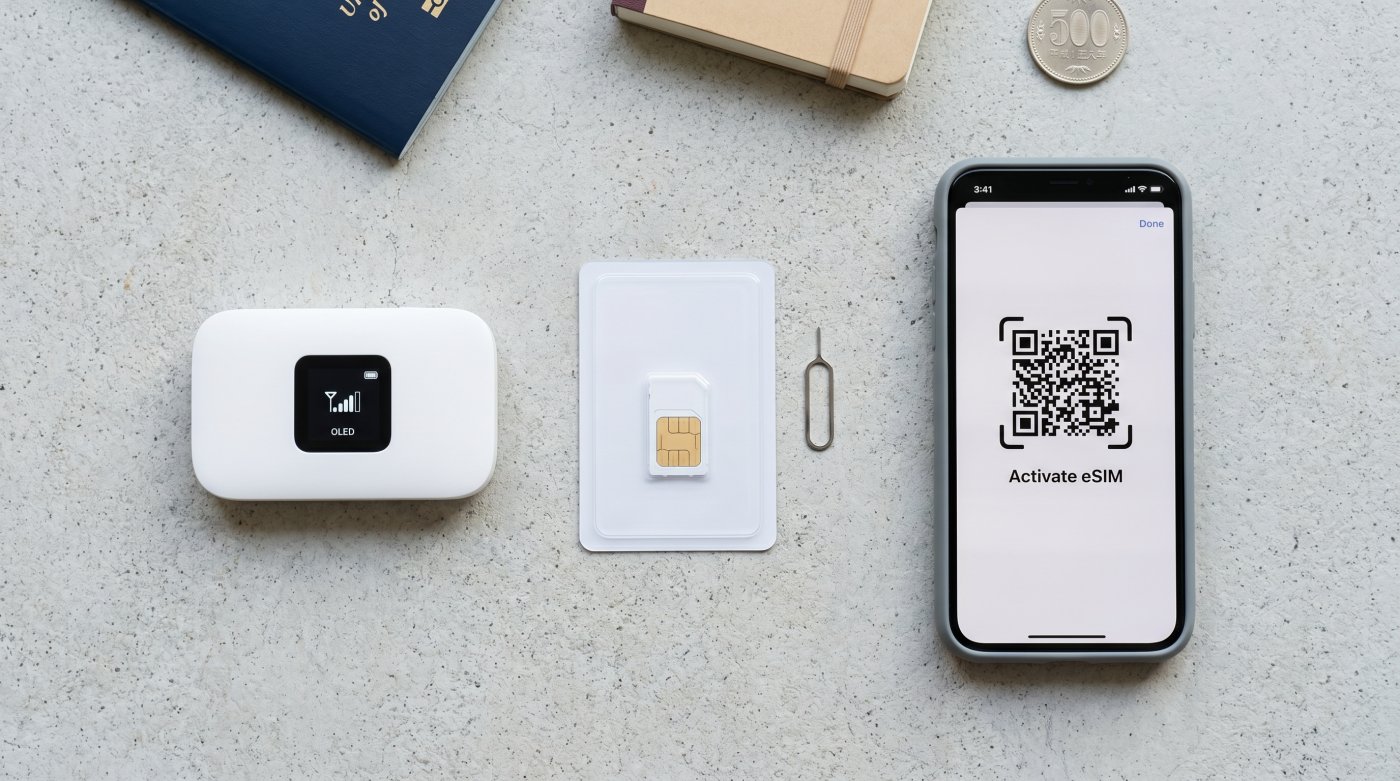
Both work best with a live connection, so sort out pocket WiFi, a SIM, or an eSIM before you start hopping between stations.
Onboard and Station Wi-Fi
Osaka Metro stations have mobile phone and cellular data coverage throughout — including in the tunnels between stations — thanks to antenna installations made in cooperation with Japan’s major carriers (NTT DoCoMo, SoftBank, KDDI, and AU).
This means your Japanese SIM card, eSIM, or pocket Wi-Fi device will stay connected even while the train is moving underground.
Select stations also offer public wireless LAN access through those same carrier networks, but this requires a subscription or data plan with the relevant provider rather than a free open connection.
The branded “Osaka Free Wi-Fi” tourist network that previously operated at Osaka Metro stations was permanently terminated in March 2023 when NTT DoCoMo withdrew the service.
There is no replacement free Wi-Fi network for tourists at Osaka Metro stations or onboard trains as of 2026.
For reliable connectivity throughout your trip, a prepaid data SIM, eSIM, or pocket Wi-Fi router is the recommended option and widely available at Kansai International Airport on arrival.
Stay Connected
Japan eSIM & Pocket WiFi Rentals
Skip the SIM card queue at the airport. Buy a Japan eSIM before you fly and connect the moment you land.

Klook
5G / 4G LTE coverage on Softbank and DOCOMO networks.

Airalo
Multiple data plans available. Good choice if continuing to other Asian countries.

Saily
Built-in ad blocker and hotspot tethering. Better value at higher data tiers.
NINJA WiFi (eSIM)
Japan eSIM with 4G LTE coverage. Instant activation, no physical SIM required.
NINJA WiFi (SIM Card)
Physical SIM card for Japan. Delivered to your hotel or collected at the airport.
NINJA WiFi (Pocket WiFi)
Pocket WiFi rental with unlimited 4G data. Share with your group, no SIM swap needed.

Pelago
5G unlimited data on KDDI. Worth checking for KrisFlyer-linked perks.
Klook
Pocket WiFi rental with unlimited 4G LTE. Airport pickup, free power bank included.

KKday
Pocket WiFi rental with unlimited 4G data. Collect at Japan airports on arrival.

Holiday.com
Global eSIM from the ExpressVPN team. One eSIM covers Japan plus your next destinations.
The Fare Adjustment Machine
If you accidentally buy a ticket for less than your actual fare, you’ll be stopped at the exit gate.
Don’t panic.
Every exit has a seisan-ki (fare adjustment machine) in green or yellow.
Insert your ticket, pay the difference in cash or tap your IC card, and you’ll get an updated ticket that lets you through.
This is common enough that station staff are completely unsurprised when it happens.
Luggage and Large Bags
Osaka Metro does not ban large bags, but during peak hours, bringing a large wheeled suitcase onto the Midosuji Line will make you unpopular in a way the Japanese are too polite to say out loud and will instead convey entirely through positioning.
Use coin lockers at major stations if you’re checking out of your hotel and want to explore before your evening train.
Shin-Osaka, Namba, and Tennoji all have coin lockers in multiple sizes.
Store your bags and actually enjoy Osaka
100+ storage spots across Osaka -- train stations, cafés, shops, and delivery lockers. Book online, drop off in minutes, and spend the day walking Dotonbori without a 10kg backpack slowing you down.
Practical Tips for Using the Network
These are the points that first-time visitors to Osaka consistently wish they’d known before their first ride.
Stand on the Right, Walk on the Left
Osaka escalator etiquette is the reverse of Tokyo.
In Osaka, you stand on the right and leave the left side free for people walking.
This is one of the most visible cultural differences between the two cities’ metro cultures, and getting it wrong will earn you looks.
Quiet Carriages and Phone Etiquette
Talking on the phone while on a train is considered bad form across all of Japan’s transit systems.
Most carriages have signs asking passengers to set phones to silent and to avoid calls.
The priority seating areas near the doors have stricter requests, including turning mobile devices to airplane mode, to avoid interference with pacemakers and similar medical devices.
For more on the unspoken rules, our guide to Osaka etiquette covers the do’s and don’ts beyond the train.
Which Station for Which Neighborhood?
This is the question most visitors are actually asking when they look at the map.
Here’s a quick reference:
- Umeda and the Kita area: Umeda Station (M16), Higashi-Umeda (T20), Nishi-Umeda (Y11)
- Dotonbori and Namba: Namba Station (M20/Y15/S16), Shinsaibashi (M19/N15)
- Shinsaibashi shopping: Shinsaibashi Station (M19/N15)
- Osaka Castle: Tanimachi 4-chome (T23/C18)
- Tennoji and Shinsekai: Tennoji Station (M23/T27)
- Universal Studios Japan: Universal City on the JR Yumesaki (Sakurajima) Line, transferring from the metro at Nishikujo
- Osaka Bay and Kaiyukan: Osakako Station (C11) on the Chuo Line
Connecting to JR and Private Railways
Osaka Metro stations at Umeda, Tennoji, Namba, and Shin-Osaka connect to JR lines operated by JR West.
These are separate fare systems, so your Osaka Metro ticket or pass does not cover JR trains and vice versa.
Your IC card and contactless card, however, work across both without any issue, because the card simply deducts the correct fare for whichever network you use.
The private Nankai Railway runs south from Namba Station toward Kansai International Airport, taking about 40 minutes on the limited express.
If you’re mapping out arrival or departure day, our comparison of every way to get between Kansai Airport and the city lays out the options and costs.
The Hankyu and Hanshin railways depart from Umeda and open up easy day trips out to Kyoto and beyond.
None of these private lines are covered by the Enjoy Eco Card, but IC and contactless payment work on all of them.
Essential Osaka Travel Passes
Powered by KlookThe passes worth buying before you land — curated for first-timers.
Osaka Amazing Pass
Unlimited subway + free entry to 40+ attractions. The only pass most visitors actually need.
Osaka e-Pass
Attractions-only digital pass. Pair with a Metro Pass if skipping the Amazing Pass.
Osaka Metro Pass
1 or 2-day unlimited Metro rides. Best standalone transit value if you already have an attractions pass.
JR West Kansai Area Pass
Unlimited JR trains for 1–4 days. Covers Kyoto, Nara, Kobe, and Himeji from Osaka.
JR Haruka Express
KIX to Umeda/Shin-Osaka in ~50 min. Best if staying in Umeda or heading straight to Kyoto.
Nankai Rapi:t Express
KIX to Namba in 34 min, reserved seat. Better if staying in Namba or Shinsaibashi.
Getting the Most Out of the Metro as a Tourist
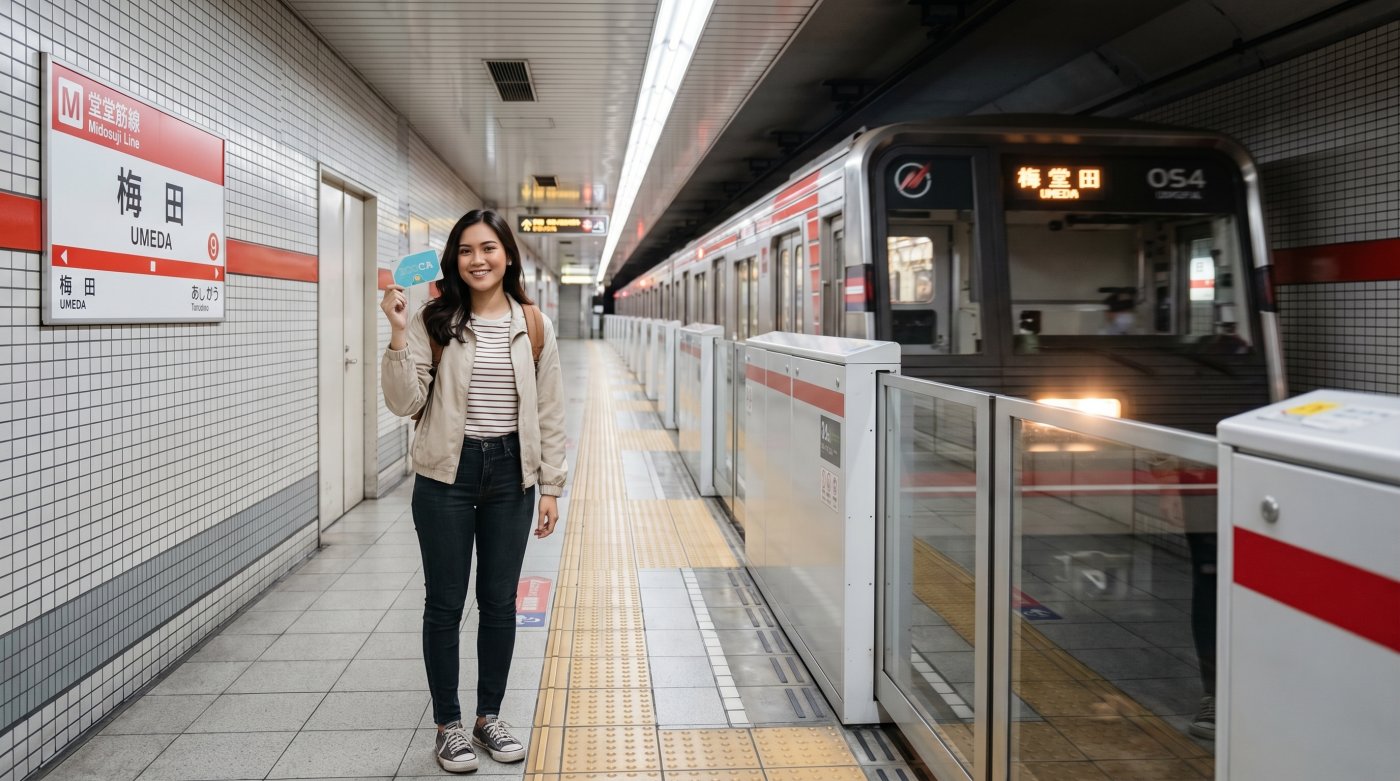
The Osaka Metro is genuinely one of the easier big-city subway systems to use as a first-timer, but a few structural choices will make the difference between a smooth day and an hour of unnecessary doubling back.
Stay on one side of the Midosuji Line for a morning or afternoon if your sights cluster that way.
The line runs true north-south, so if your hotel is in Umeda and your plans are in Tennoji and Namba, a single straight line covers the day.
Cross-town trips on the Sennichimae or Nagahori Tsurumi-ryokuchi Lines are fine, but they require more transfers and add time.
Plan your things to do in Osaka geographically when possible, and the metro becomes almost invisible as a logistical layer.
One genuinely useful habit: check the last train time before you go out in the evening.
The final Midosuji Line trains from Namba run around midnight, depending on the direction.
Missing the last train means a taxi, and Osaka taxis are metered and not cheap.
The last train schedules are posted at every station and on the Osaka Metro official app.
If you’re still figuring out which part of the city suits your trip best, the Osaka neighborhood guide lays out each area’s character, station access, and what’s within walking distance.
All fares and times quoted are as of 2026 and may vary slightly by station, direction, and date.
Osaka Metro reserves the right to adjust prices.
Always confirm current fares and schedules at subway.osakametro.co.jp before travel.