








Osaka Itinerary Guide: 1-Day, 2-Day, 3-Day Plans and More
An Osaka itinerary lives or dies on sequencing.
The city’s main attractions spread across four distinct zones that don’t share subway lines, and the travel time between them compounds quickly if you plan by interest category rather than geography.
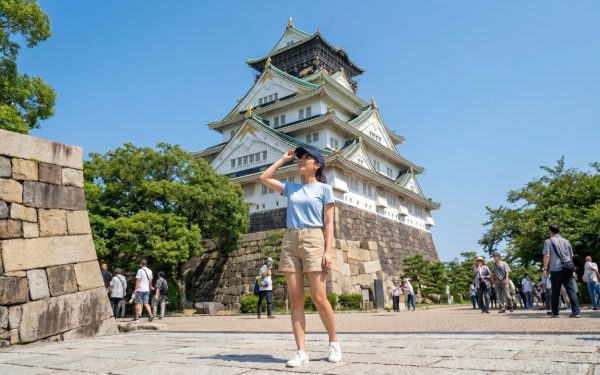
Osaka Castle is in Chuo Ward.
The waterfront is 20 minutes west.
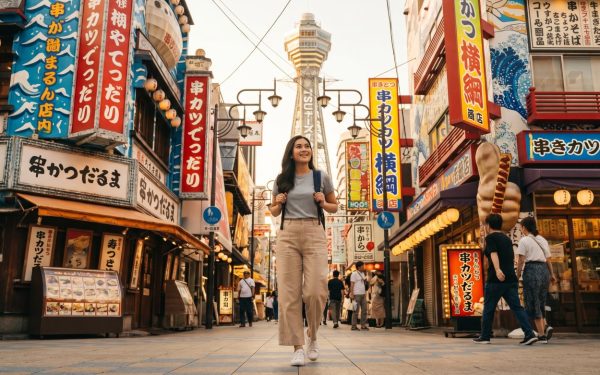
Shinsekai is 10 minutes south.
USJ is 30 minutes from central Namba.
Getting those distances wrong on a one-day plan means spending a third of your time in transit.
The three itineraries here — one day, two days, and three days — are built to avoid that.
How to Choose Your Osaka Travel Plan

The right itinerary is the shortest one that covers what you actually care about.
One day is the hard version: enough for the castle, Dotonbori, and one or two shrines if you move efficiently.
It is the plan for people passing through Osaka as part of a wider Japan trip.
Two days is the practical minimum for a proper first visit — you can separate the south (temples, Shinsekai, Tennoji) from the center (Namba, Dotonbori, the waterfront) without rushing either.
Three days introduces USJ as a standalone full-day option, adds room for a day trip to Nara or Kyoto, and lets the food side of the trip — izakayas, Kuromon Market, the Horie cafe strip — become part of the plan rather than an afterthought.
Anything beyond three days in Osaka itself tends to benefit more from a day trip than from filling additional time in the same central circuit.
The 1-Day Osaka Itinerary
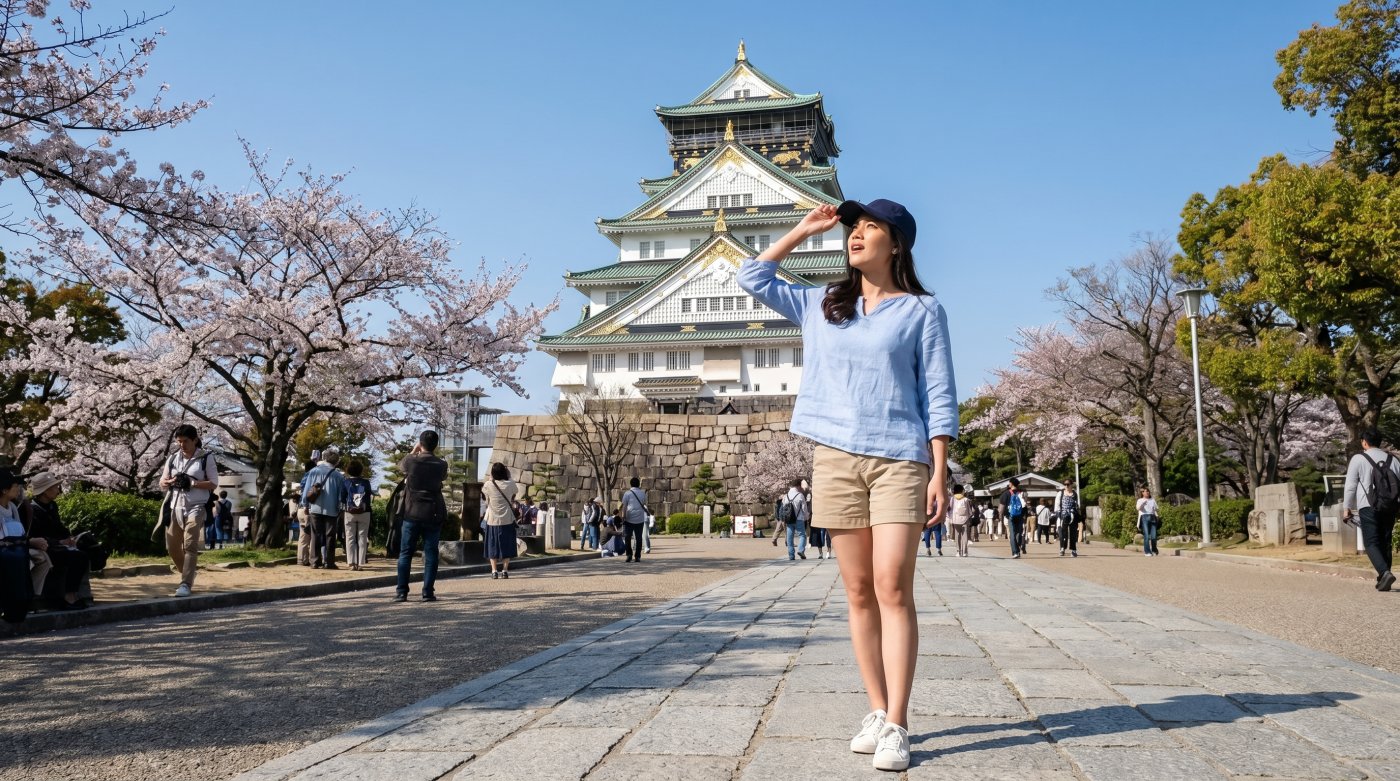
The 1-day Osaka itinerary is built around a single geographic logic: start north-central, move south, finish in Namba.
Morning at Osaka Castle is the right call for a 24-hour visit.
The castle park is free and the tower museum (1,200 JPY for adults) covers the city’s foundational history efficiently in about 90 minutes.
Arriving at opening (9:00) puts you ahead of the midday queue, which reaches 45 to 60 minutes on weekends.
From the castle, a short subway ride south toward Tennoji and Shitennoji Temple covers Japan’s oldest officially established Buddhist temple (founded 593 CE) in a neighborhood that is genuinely walkable.
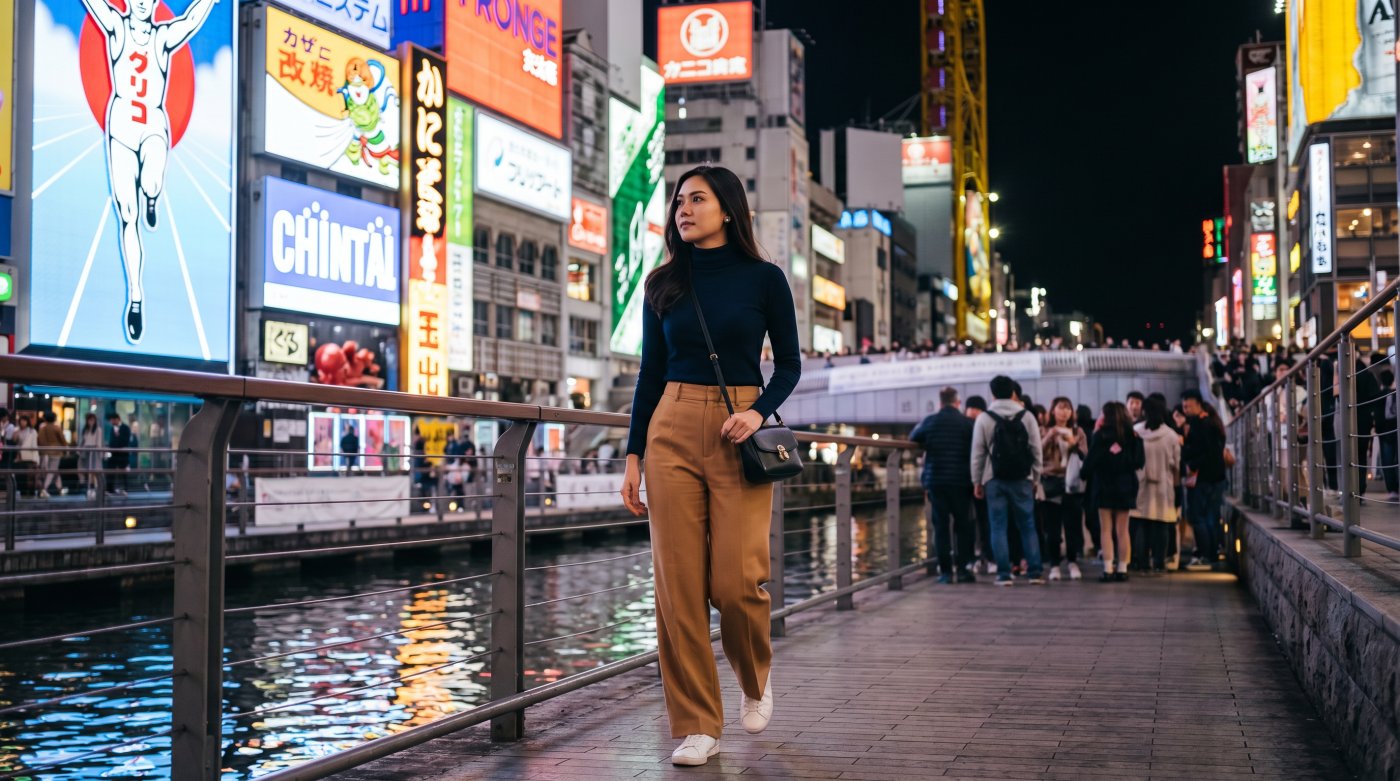
Afternoon in Namba: Hozenji Temple and Hozenji Yokocho, Kuromon Ichiba Market, and the Dotonbori canal strip cover the sensory peak of the city in a compact 2-kilometer radius.
Evening on Dotonbori is when the neon comes on and the Tombori River Cruise makes the most sense: the 20-minute boat ride passes the Glico Man sign and canal facades at their most photogenic.
The full plan, with timed stops, transit directions, and eating recommendations, is in the one-day guide.
The 2-Day Osaka Itinerary

The 2-day Osaka itinerary adds the southern temple quarter and the waterfront to the core one-day circuit, giving each zone enough time to breathe.
Day one concentrates on the center and north: Osaka Castle in the morning, Umeda Sky Building and the Floating Garden Observatory in the afternoon (700 JPY, open until 22:30), then Dotonbori and Shinsaibashi-suji Shopping Arcade in the evening.
This keeps you on the Midosuji Line spine and eliminates unnecessary cross-city transit.
Day two shifts to the south and the waterfront.
The morning sequence through Tennoji works well as a cluster: Tennoji Park, Isshinji Temple, and Harukas 300 Observatory (2,000 JPY, 300 meters above Tennoji Station) are all within 15 minutes on foot of each other.
Afternoon pivots west to the waterfront: Osaka Aquarium Kaiyukan at Tempozan (2,700 JPY for adults, allow 90 to 120 minutes for a full circuit from the 8th floor down) and the Tempozan Harbor Village Ferris Wheel (800 JPY, 112 meters tall, runs until 22:00) round out the afternoon before returning to Namba for dinner in Shinsekai.
The full 48-hour plan with exact timing is in the two-day Osaka itinerary.
The 3-Day Osaka Itinerary
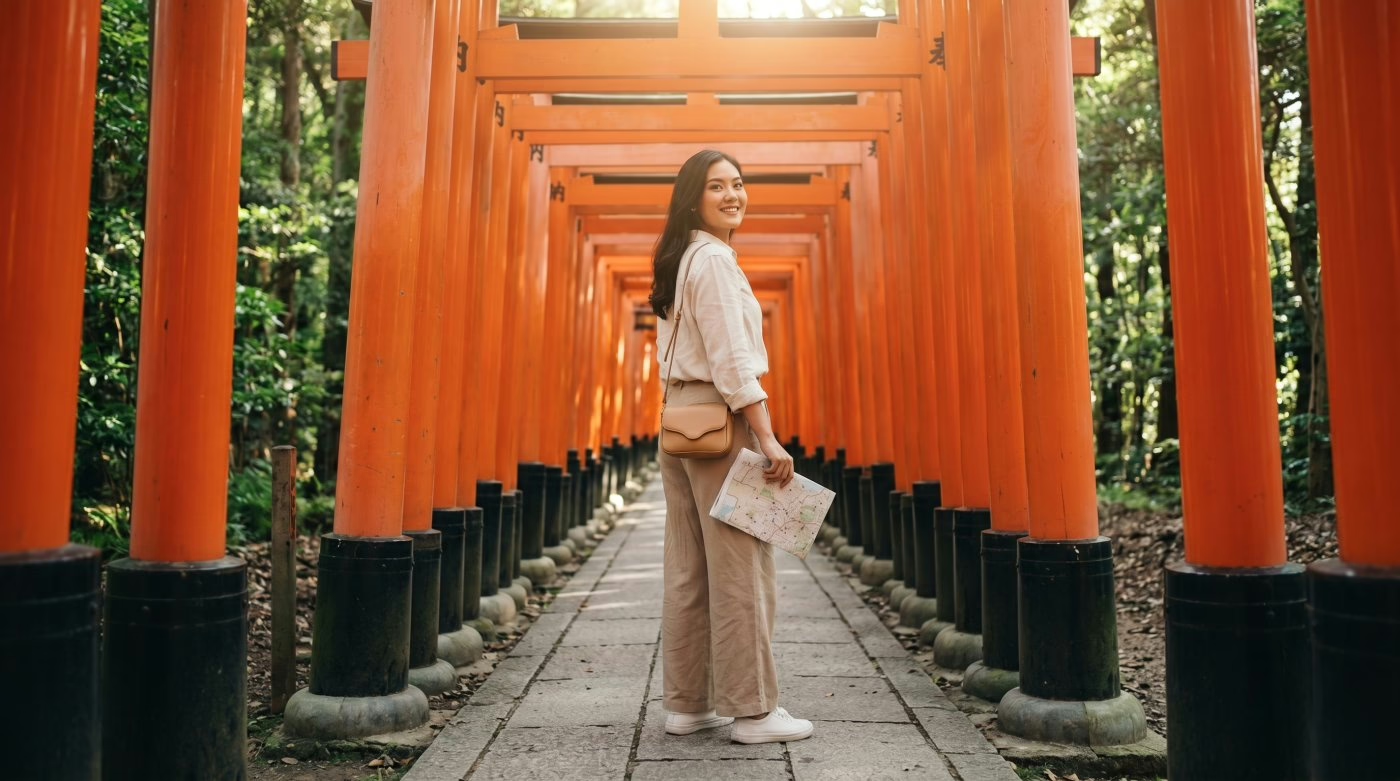
The 3-day Osaka itinerary is the most complete first-visit plan and the one that makes room for the aspects of Osaka that shorter plans have to cut: a full day at USJ, a day trip out of the city, and the slower, food-first pace that makes the city worth lingering in.
The structure works best with USJ on day two, bookended by the cultural circuit on day one and a day trip or waterfront day on day three.
Day one follows the two-day structure for the center and south: castle, Tennoji temples, Dotonbori, and a kushikatsu dinner at Ganso Kushikatsu Daruma Shinsekai Sohonten in Shinsekai.
The Daruma main store, open since 1929, sets the neighborhood context before Tsutenkaku Tower closes out the evening.
Day two is a full day at Universal Studios Japan in Sakurajima.
Standard tickets run 8,600 to 10,400 JPY.
The Wizarding World of Harry Potter and Super Nintendo World are the two areas with the longest queues (60 to 90 minutes on busy days), so reaching the park at opening (typically 9:00) is the most effective crowd management strategy available without purchasing an Express Pass.
Day three opens up based on pace preference.
A day trip to Nara — 45 minutes from Namba by Kintetsu Line — works well as a change of pace after two high-intensity days.
A day trip to Kyoto is 15 minutes from Shin-Osaka by shinkansen and suits travelers who want to see the two major Kansai cities in a single trip.
If you’d rather stay in Osaka, the waterfront at Tempozan, Minoo Park (a 2.7-kilometer forest trail ending at a 33-meter waterfall, 28 minutes from Umeda by Hankyu Minoh Line), and Sumiyoshi Taisha in the far south are all places that shorter plans have to skip.
The full three-day plan with day-by-day schedules, eating stops, and transit notes is in the complete three-day guide.
Practical Decisions That Affect Every Osaka Itinerary
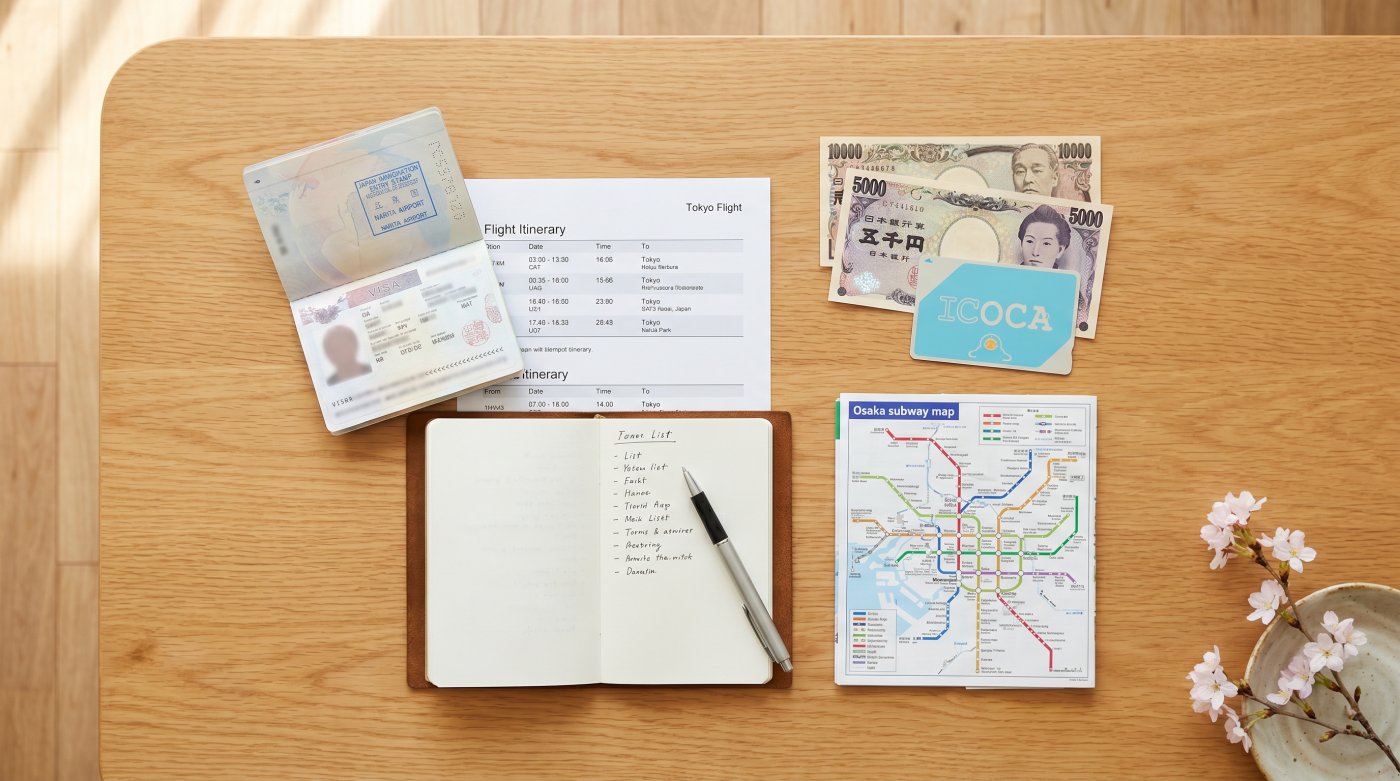
- Transit pass or IC card? The Osaka Amazing Pass covers unlimited Metro rides plus free entry to around 40 attractions and costs 3,500 JPY for one day or 5,000 JPY for two. On a day that includes Harukas 300 (2,000 JPY), the Tempozan Ferris Wheel (800 JPY), and multiple subway trips, the math works out clearly in the pass’s favor. On a day of free shrines and walking, it doesn’t. The Osaka Amazing Pass vs ICOCA card comparison maps this against common itinerary types if you want to run the numbers before you buy.
- How to get to Osaka first? If you’re arriving at Kansai International Airport (KIX), the KIX to Osaka city guide covers every transfer option with journey times and current fares. If you’re coming through Itami Airport, the Itami to Osaka city guide is the equivalent resource.
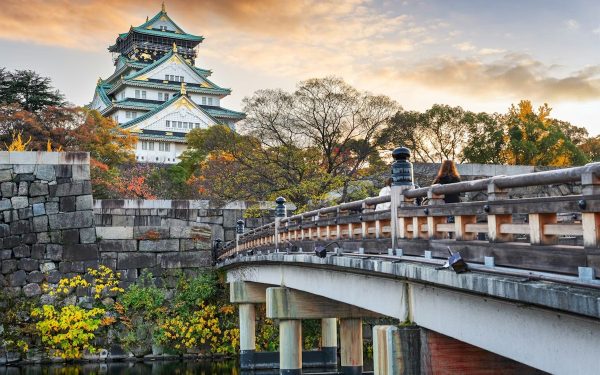
- When to visit? Cherry blossom season in late March to early April and autumn foliage in November both transform the park-heavy sections of any itinerary, especially the castle grounds and Kema Sakuranomiya Park. The best time to visit Osaka page covers the seasonal tradeoffs month by month, including the periods when hotel prices spike and when crowds are lightest.
- Is Osaka safe? For solo travelers, first-timers, and women traveling alone, the short answer is yes. The Osaka safety guide covers the specifics including what to watch for around Dotonbori late at night and which neighborhoods to avoid after midnight.
Building Your Own Version of Osaka Itinerary
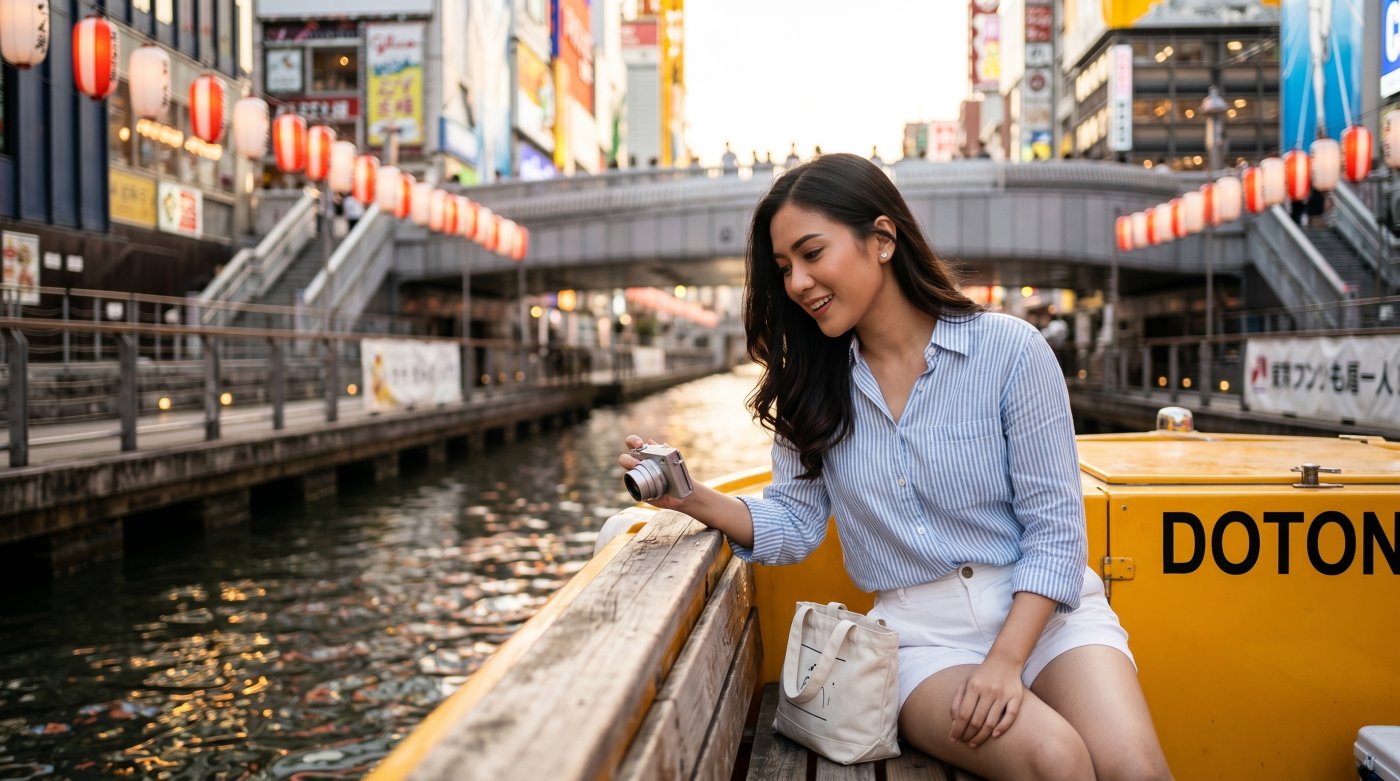
The three plans here are starting frameworks, not fixed scripts.
A one-day visitor who has already seen Kyoto’s temples can skip Shitennoji and spend the same time at Namba Yasaka Shrine and the Horie cafe strip instead.
A two-day visitor whose priority is food over sightseeing can replace the Harukas observatory slot with an evening at Izakaya Toyo in Kyobashi.
A three-day visitor skipping USJ can use that full day for a slower pace through Den Den Town, teamLab Botanical Garden Osaka in the evening, and the neighborhoods around Osaka Tenmangu Shrine that the main plan skips entirely.
For the full list of attractions available to swap in or out, the things to do in Osaka hub covers all 33 published attraction pages organized by area.
The Osaka neighborhoods guide is the companion resource for understanding which areas connect logically in a single half-day block and which require a dedicated transit leg.