




The airport sits on a man-made island in Osaka Bay, roughly 40 kilometers from central Osaka, and you have four realistic choices: the JR Haruka Express, the Nankai Line (either the Rapi:t limited express or the standard Airport Express), the limousine bus, or a taxi.
Kansai Airport to Osaka: Every Transport Option, Compared – Getting from Kansai Airport (KIX) to Osaka city center is straightforward once you know which option fits your situation.
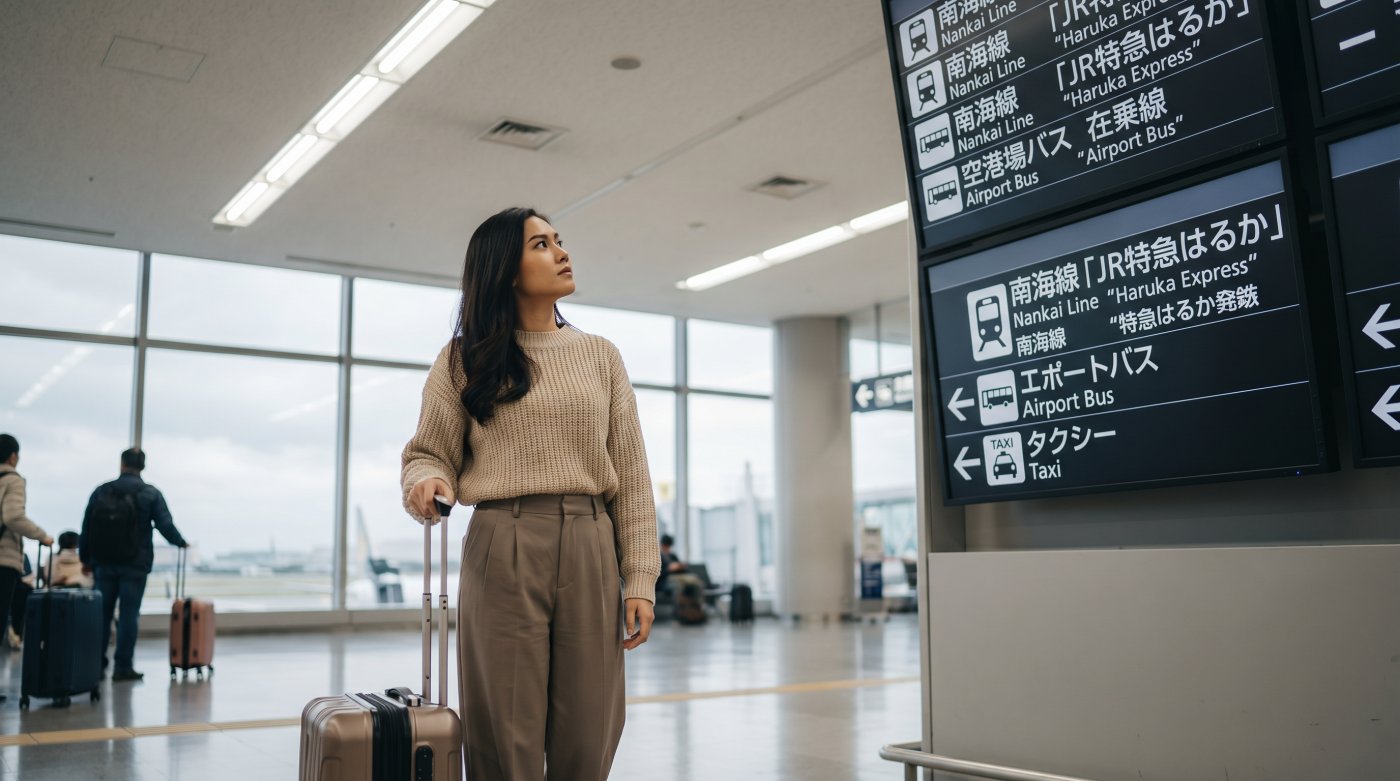
The airport sits on a man-made island in Osaka Bay, roughly 40 kilometers from central Osaka, and you have four realistic choices: the JR Haruka Express, the Nankai Line (either the Rapi:t limited express or the standard Airport Express), the limousine bus, or a taxi.
In this Explore Osaka guide, you’ll find real fares, honest travel times, and the specific reasons to pick one over another.
No single option is best for everyone. It comes down to where you’re staying, how much luggage you’re carrying, whether you have a JR Pass, and how many people are splitting the cost.
Quick Facts
Hide- Airport code: KIX (Kansai International Airport)
- Distance to central Osaka: approx. 40 km
- Opened: 1994
- Terminals: 2 (Terminal 1 has the train station; Terminal 2 is LCC only, with a free shuttle to Terminal 1)
- Train station access: directly connected to Terminal 1, 2nd floor
- Fastest option to Namba: Nankai Rapi:t, 34 minutes, from ¥1,520
- Fastest option to Umeda/Osaka Station: JR Haruka Express, 45 minutes, from ¥1,800 (discount ticket for foreign visitors)
- Cheapest train option: Nankai Airport Express, ¥970 to Namba, 45-50 minutes
The JR Haruka Express: Best for Umeda, Shin-Osaka, and JR Pass Holders
The Haruka Express is operated by JR West and runs directly from Kansai Airport Station to Tennoji (30 minutes), Osaka Station in Umeda (45 minutes), Shin-Osaka (50 minutes), and Kyoto (75 minutes). It does not stop at Namba.
If you’re staying in Umeda or near Osaka Station, the Haruka is your most sensible option. Trains run roughly every 30 minutes, starting from 6:33am, and the ride is comfortable with reclining seats, luggage racks, and onboard Wi-Fi.
Haruka fares for foreign visitors (2026)
Foreign tourists visiting on a short-term visa can purchase the discounted Haruka One-way Ticket, which is significantly cheaper than the standard fare:
- KIX to Tennoji: ¥1,200
- KIX to Osaka Station: ¥1,800
- KIX to Shin-Osaka: ¥1,800
These prices apply to reserved seats. The ICOCA and Haruka combo deal (which bundled an ICOCA card with a discounted Haruka ticket) ended in September 2023, but you can still buy an ICOCA card separately at the airport and purchase the Haruka One-way Ticket at the JR ticket office.
You’ll need to show your passport to buy the discounted ticket. Purchase it at the JR ticket office inside Kansai Airport Station, or book online through JR-West’s reservation system or platforms like Klook in advance.
Haruka with a JR Pass
If you have a Japan Rail Pass or a JR West regional pass (Kansai Area Pass, Kansai-Hiroshima Pass, etc.), the Haruka is fully covered. Just reserve a seat when activating your pass at the airport.
For JR Pass holders, this makes the Haruka essentially free to Osaka or Kyoto, which is hard to argue with.
Essential Osaka Travel Passes
Powered by KlookThe passes worth buying before you land — curated for first-timers.
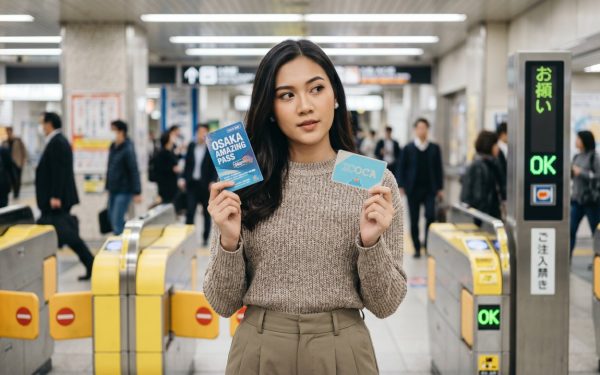
Osaka Amazing Pass
Unlimited subway + free entry to 40+ attractions. The only pass most visitors actually need.
Osaka e-Pass
Attractions-only digital pass. Pair with a Metro Pass if skipping the Amazing Pass.
Osaka Metro Pass
1 or 2-day unlimited Metro rides. Best standalone transit value if you already have an attractions pass.
JR West Kansai Area Pass
Unlimited JR trains for 1–4 days. Covers Kyoto, Nara, Kobe, and Himeji from Osaka.
JR Haruka Express
KIX to Umeda/Shin-Osaka in ~50 min. Best if staying in Umeda or heading straight to Kyoto.
Nankai Rapi:t Express
KIX to Namba in 34 min, reserved seat. Better if staying in Namba or Shinsaibashi.
How to Get from Kansai Airport to Namba: The Nankai Line
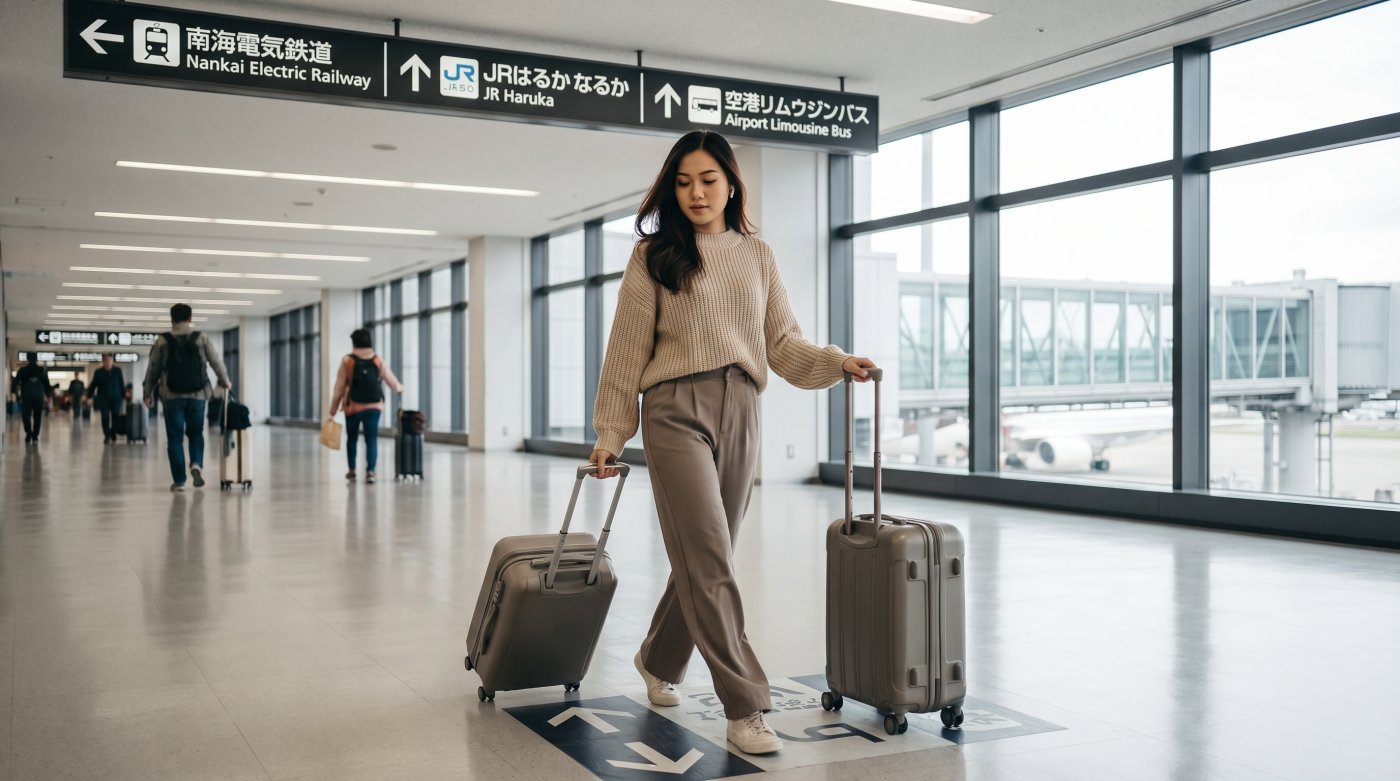
The Nankai Electric Railway runs two services from KIX directly to Namba Station in the heart of Namba: the premium Rapi:t limited express and the standard Airport Express.
Nankai Rapi:t (ラピート)
The Rapi:t is the faster, more comfortable option. It’s a reserved-seat limited express with distinctive retro-futurist styling that makes it look like it arrived from a different decade.
Travel time from KIX to Namba Station is 34 minutes (Rapi:t α) or 37 minutes (Rapi:t β, which makes two additional stops at Kishiwada and Sakai).
Fares:
- E-ticket (recommended): ¥1,520
- Paper ticket at the counter: ¥1,670
Seat reservations are mandatory. You can book online via the Nankai website or third-party platforms.
This is the right call if you’re heading to Dotonbori, Shinsaibashi, or anywhere in the Minami district, since Nankai Namba Station puts you right in the thick of it.
Nankai Airport Express
No reserved seats, no premium surcharge, just a straightforward train that gets you to Namba in 45 to 50 minutes for ¥970. You can use an IC card (ICOCA, Suica, or Pasmo) to tap in and out, which is convenient if you’ve already got one loaded.
It’s the right pick if budget matters more than speed or comfort.
A word on the Namba confusion: there are six different stations in the Namba area across multiple rail and subway lines. When taking the Nankai Line, you want Nankai Namba Station, not JR Namba or Osaka Namba (Kintetsu).
They’re close to each other, but if you exit from the wrong one with heavy luggage, you’ll notice.
Kansai Airport Limousine Bus: Best for Families and Heavy Luggage
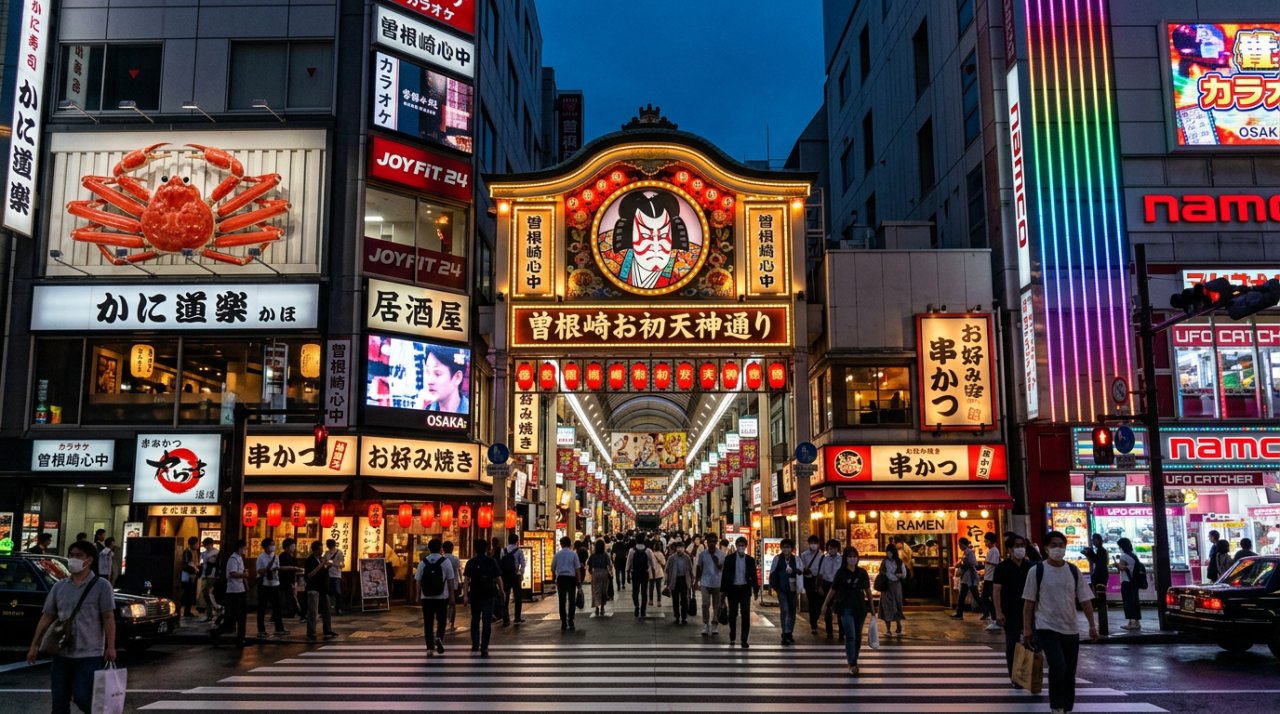
The airport limousine bus isn’t the fastest option, but it’s the most forgiving one if you’re traveling with large suitcases, young kids, or elderly family members. Staff at the airport will help load bags, and the buses drop off at a range of destinations in central Osaka without requiring you to drag luggage through train stations.
Key routes:
- KIX to Osaka Station (Umeda): ¥1,800, approx. 60 minutes
- KIX to Namba (OCAT): ¥1,300-1,600, approx. 45 minutes
- KIX to Tennoji: service available, similar pricing
- KIX to Shinsaibashi, USJ, and select hotels: routes vary
Buy tickets at the English-friendly counters or machines in the arrivals hall of Terminal 1. The main downside is traffic.
During peak hours on the expressway, “approximately 60 minutes” can stretch considerably. If you’re arriving at a predictable off-peak time, the bus is comfortable and stress-free.
If you’re landing during morning rush or on a Friday evening, build in buffer.
Terminal 2 passengers (arriving on LCC flights like Peach) need to take the free shuttle bus to Terminal 1 first, which adds 7 to 9 minutes before you can board the limousine bus or catch a train.
Taxis and Private Transfers from KIX to Osaka
Taxis are available 24 hours outside the arrivals hall, and they’re genuinely useful in specific situations: very late arrivals, early-morning departures, or when you have more bags than hands. The catch is cost.
A regular taxi from KIX to Namba runs roughly ¥15,000 to ¥20,000, depending on traffic and time of day. Late-night rides between 22:00 and 5:00 add a surcharge of approximately 10 to 20%.
That’s a lot of takoyaki.
For groups of four, though, the math shifts. Splitting ¥16,000 four ways is ¥4,000 per person, which is comparable to two limousine bus tickets.
If it’s midnight and you’re exhausted, the door-to-door convenience starts looking reasonable.
Private transfer services (pre-booked through Klook or similar platforms) offer 7-seater and 10-seater vehicles with drivers who’ll assist with luggage. Prices typically start around ¥16,000 to ¥20,000 for a private sedan, making them competitive with a standard taxi for individuals but potentially good value for larger groups or families.
Uber operates at KIX as well, with estimated fares around ¥23,000 to ¥24,000 for the trip to central Osaka.
Which Option Should You Choose? A Quick Decision Guide
The right choice really does depend on your situation. Here’s the honest breakdown:
Choose the Haruka Express if: you’re staying near Umeda or Osaka Station, you have a JR Pass or JR West regional pass, or you plan to continue on to Kyoto. It’s the most flexible option for the north of the city, and with the foreign visitor discount, the fare is competitive.
Choose the Nankai Rapi:t if: you’re heading to Namba, Dotonbori, or anywhere in Minami. Thirty-four minutes, comfortable seat, direct station access.
This is the call most first-time visitors staying near Dotonbori should make.
Choose the Nankai Airport Express if: budget is the priority and you don’t mind a slightly slower, unseated ride. The ¥970 fare is genuinely hard to beat.
Choose the limousine bus if: you have a lot of luggage, you’re traveling with young children or seniors, or your hotel is close to one of the direct drop-off points. The lack of stairs and transfers matters more than most people expect until they’re actually navigating a large station with bags.
Choose a taxi or private transfer if: it’s late at night, you’re in a larger group, or you genuinely value the door-to-door simplicity more than the cost difference.
One useful detail: if you’re arriving at Terminal 2 (common with Peach Aviation flights), you’ll need to take the free shuttle bus to Terminal 1 before accessing the train station or the main bus boarding areas. Factor in an extra 10 minutes.
Once you’re in the city and sorted, you’ll want an IC card for getting around. The Osaka Metro connects most tourist areas efficiently, and tapping in and out with an ICOCA or Suica card is the easiest way to manage daily transport.
If you’re still putting together your Osaka itinerary and figuring out where to base yourself, that decision will affect which arrival route makes the most sense.
Once you’ve landed and made it into the city, the real trip begins. For help planning what to do once you’re there, the things to do in Osaka archive is a good starting point, and if you’re deciding between neighborhoods for your hotel, the where to stay in Osaka guide breaks down each area by budget, location, and travel style.