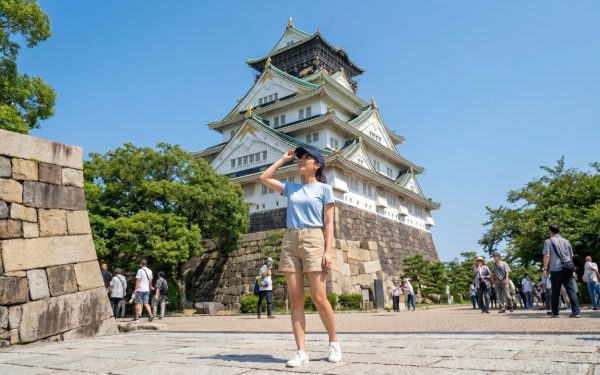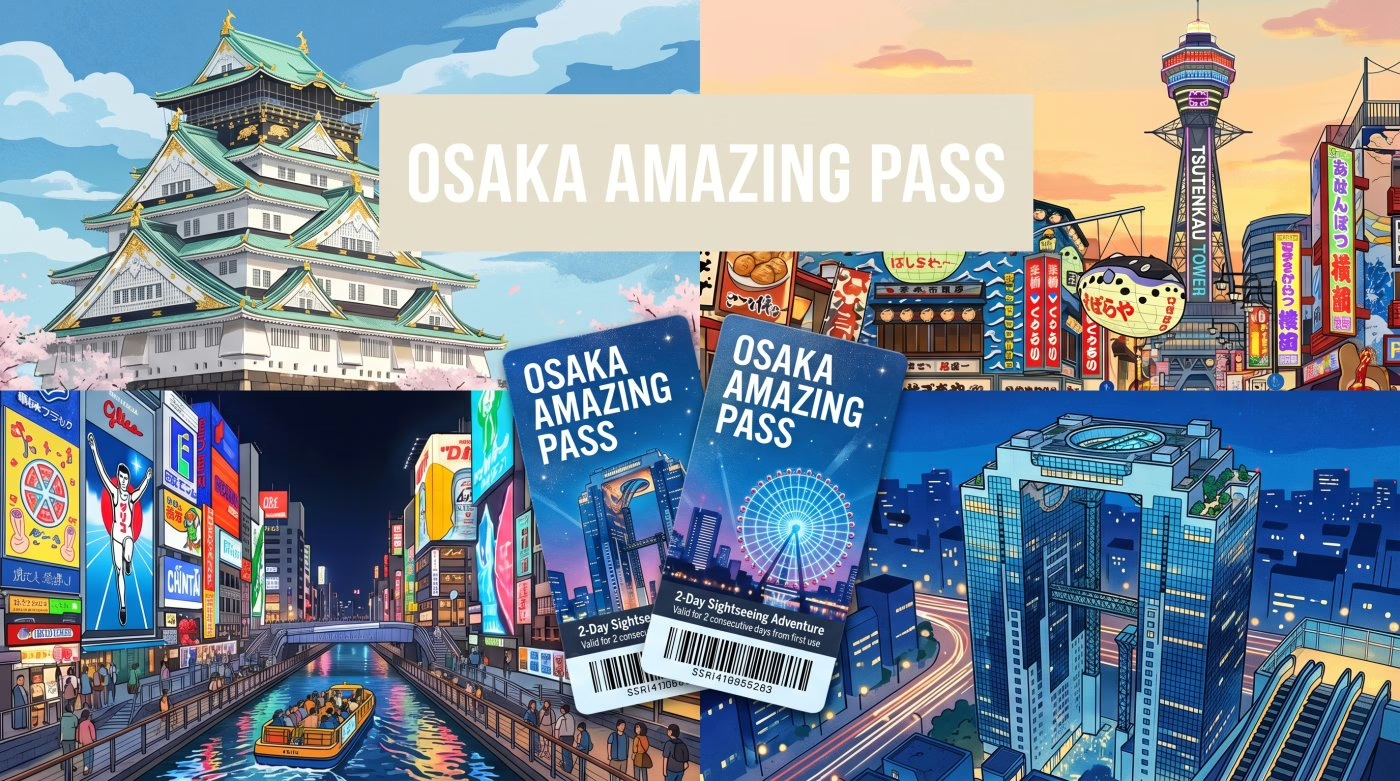





The Osaka Amazing Pass is a combination sightseeing card and unlimited public transport pass that gives you free entry to around 40 attractions across the city, plus unlimited rides on Osaka Metro, city buses, the New Tram, and several private railway lines. The 1-day pass costs ¥3,500 and the 2-day pass costs ¥5,000. For a tourist visiting three or more paid attractions in a single day while moving between them by metro, the math almost always works out in your favour.
Get Osaka Amazing Pass
One entry pass, over 40 free attractions, and unlimited metro rides. You can purchase it through these selected platforms.






Osaka Amazing Pass: Your Complete 2026 Guide to Prices, Attractions, and Getting the Most from Every Yen – The Osaka Amazing Pass gives you unlimited rides on Osaka Metro, city buses, and selected private railways, plus free entry to more than 40 attractions across the city, all on a single digital pass.
In this Explore Osaka guide, you’ll find everything you need to plan your days around it: exact prices, the full attractions list, an honest take on whether it’s worth the cost for your trip, and practical tips for squeezing the most value out of each day.
This guide is for first-time visitors who want to see Osaka’s highlights without paying separately at every gate, and for returning travelers wondering whether the pass has improved since their last visit. The short answer: yes, it has.
The 2025 update added Osaka Monorail coverage and new attractions, making it a stronger option than ever heading into 2026.
Key 2026 data confirmed from the official site
Hide- The standard 1-day pass is ¥3,500, the 2-day is ¥5,000 for the March 2026 to March 2027 sales period Osaka Amazing Pass
- The Itami Airport version runs ¥3,800 and ¥5,400 respectively Osaka Amazing Pass
- The physical 2-day card has been discontinued LIVE JAPAN, though the digital 2-day pass still exists
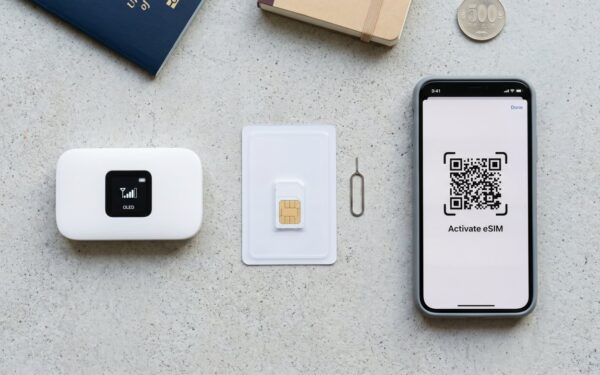
- The pass is now available only as a digital QR-code ticket, since the physical card version ended in June 2024
What the Osaka Amazing Pass Actually Covers?
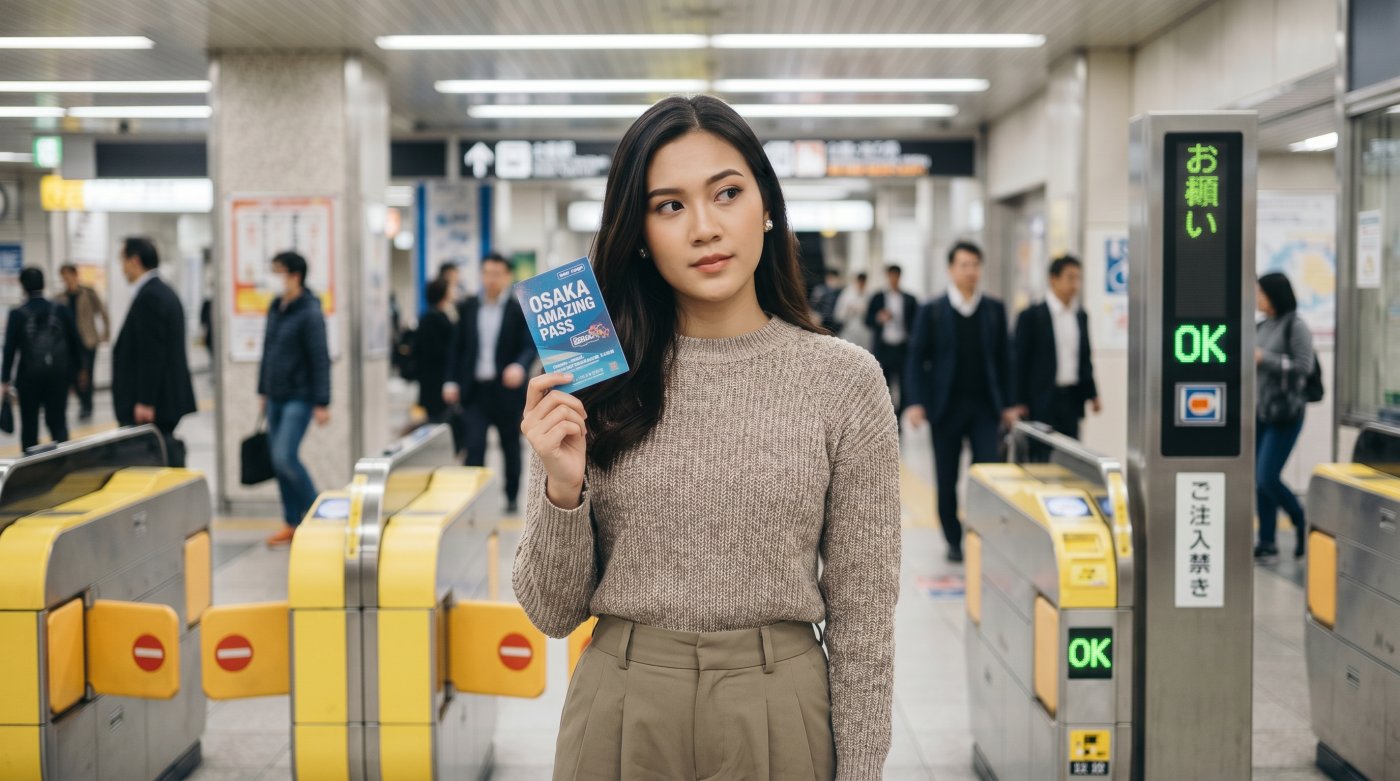
The pass has two core benefits that work together: transport and attraction entry. Understanding both is essential before you decide which version to buy.
On the transport side, the pass gives you unlimited rides for the duration of your chosen option on all Osaka Metro lines (Midosuji, Tanimachi, Yotsubashi, Chuo, Sennichimae, Sakaisuji, Nagahori Tsurumi-ryokuchi, Imazatosuji), Osaka City Bus (most routes), and the New Tram connecting the Osaka Bay area.
It also covers selected routes on five major private railways: Hankyu, Hanshin, Keihan, Kintetsu, and Nankai, operating within Osaka City.
One important caveat: coverage only applies within Osaka City limits. If you board a Nankai train toward Kansai Airport or a Hankyu service heading into Kobe or Kyoto, you’ll pay separately for the portions outside the covered zone.
Express reserved-seat trains on all four private lines also require a supplemental limited express ticket.
Osaka Amazing Pass — the one pass worth buying
Unlimited subway rides plus free entry to 40+ attractions including Osaka Castle, Umeda Sky Building, and the Dotonbori River Cruise. If you're spending more than a day sightseeing, it pays for itself before lunch.
On the Osaka attractions side, the pass covers free entry to more than 40 sightseeing spots, plus discounts at around 50 additional shops and facilities. You can enter each attraction once per day of use.
With the 2-day pass, that means once per facility across the entire two-day period.
| Pass Variant | 1-Day Price | 2-Day Price | Transport Coverage | Unique Inclusions |
|---|---|---|---|---|
| Standard | ¥3,500 | ¥5,000 | Osaka Metro (all lines), city buses, New Tram, + Hankyu / Hanshin / Keihan / Kintetsu / Nankai within Osaka City limits | All 40+ standard attractions |
| Monorail Version | ¥4,300 | — | Everything in Standard + Osaka Monorail (ITM ↔ Bampaku-kinen-koen), Kita-Osaka Kyuko, additional Hankyu lines | + Expo’70 Commemorative Park, Osaka Wheel (Redhorse) |
| Itami Airport (ITM) | ¥3,800 | ¥5,400 | Everything in Standard + extended routing from Itami Airport into central Osaka | Same 40+ standard attractions as Standard pass |
| Osaka e-Pass (alternative) | From ¥2,400 | — | No transport included | ~25 attractions only; no Metro coverage — pair with a Metro Day Pass (¥820) if needed |
Full Osaka Amazing Pass Attractions List (2026)
Most guides just say “40+ attractions” and leave you to figure out the rest.
Here’s the full list, grouped by area, with standard admission prices and the fine print that actually matters — time restrictions, reservation requirements, and the two big exclusions people always ask about.
| Attraction | Area | Standard Admission | Pass Status |
|---|---|---|---|
| Umeda Sky Building Kuchu-Teien Observatory | Umeda / Kita | ¥2,000 (adults) | Free — entry before 15:00 only; 10% discount after 15:00 |
| Umeda Sky Building Koji Kinutani Tenku Art Museum | Umeda / Kita | ¥1,300 (adults) | Free |
| HEP FIVE Ferris Wheel | Umeda / Kita | ¥1,000 | Free — confirm reopening status before visiting |
| Osaka Museum of Housing and Living | Umeda / Kita | ¥600 (permanent exhibition) | Free — closed Tuesdays |
| The National Museum of Art, Osaka | Umeda / Kita | ¥430 | Free (collection exhibition only) — closed Mondays |
| Entrepreneurial Museum of Challenge and Innovation | Umeda / Kita | ¥500 | Free — closed weekends and holidays |
| Tombori River Cruise | Namba / Dotonbori | ¥2,000 (adults) | Free — exchange for time-slot ticket on the day; evening slots sell out early |
| Wonder Cruise | Namba / Dotonbori | ¥2,000 | Free — advance reservation strongly recommended |
| Kamigata Ukiyoe Museum | Namba / Dotonbori | ¥700 | Free — closed Mondays |
| Tsutenkaku Tower (observation deck) | Shinsekai / Tennoji | ¥1,500 | Free — time-slot booking required at the attraction |
| Tsutenkaku Tower Slider | Shinsekai / Tennoji | Included with tower entry | Free — limited slots; arrive early |
| Osaka Tennoji Zoo | Shinsekai / Tennoji | ¥500 | Free |
| Shitennoji Temple | Shinsekai / Tennoji | ¥300 (inner precinct) | Free |
| Keitakuen Garden | Shinsekai / Tennoji | ¥150 | Free |
| Osaka Castle Museum | Osaka Castle | ¥1,200 | Free — includes Toyotomi Stone Wall Museum |
| Nishinomaru Garden | Osaka Castle | ¥200 | Free |
| Osaka Castle Yagura (turrets) | Osaka Castle | Seasonal | Free — special opening periods only; check dates |
| Osaka-jo Gozabune Boat Cruise | Osaka Castle | ¥1,800 | Free — time-slot ticket required; sells out on peak days |
| Osaka Museum of History | Osaka Castle | ¥600 | Free |
| Peace Osaka | Osaka Castle | ¥250 | Free — closed Mondays |
| Tempozan Giant Ferris Wheel | Osaka Bay | ¥1,000 | Free — check schedule for transparent gondola availability |
| Santa Maria Day Cruise | Osaka Bay | ¥1,600 | Free — advance reservation required via official website |
| Captain Line Ferry | Osaka Bay | ¥1,500 | Free |
| LEGOLAND Discovery Center Osaka | Osaka Bay | ¥2,800 | Free — adults 16+ must be accompanied by a child aged 15 or under |
| GLION Museum | Osaka Bay | ¥1,200 | Free |
| Sakishima Cosmo Tower Observatory | Osaka Bay | ¥800 | Free |
| Osaka Museum of Natural History | Other | ¥300 | Free — closed Mondays |
| Nagai Botanical Garden | Other | ¥200 | Free |
| Sakuya Konohana Kan | Other | ¥200 | Free |
| Sakai City Museum | Other | ¥200 | Free |
| Osaka Wheel (Redhorse) ⚠️ | Osaka Bay (Monorail version only) | ¥1,000 | Free — currently closed (lightning damage); reopening date unconfirmed |
| Expo’70 Commemorative Park | Other (Monorail version only) | ¥260 | Free — Monorail version only |
| Osaka Aquarium Kaiyukan — not included. ¥2,700 standard admission; pass gives a discount only. | |||
| Universal Studios Japan — not included. Separate ticket required. | |||
The Standard 1-Day and 2-Day Pass
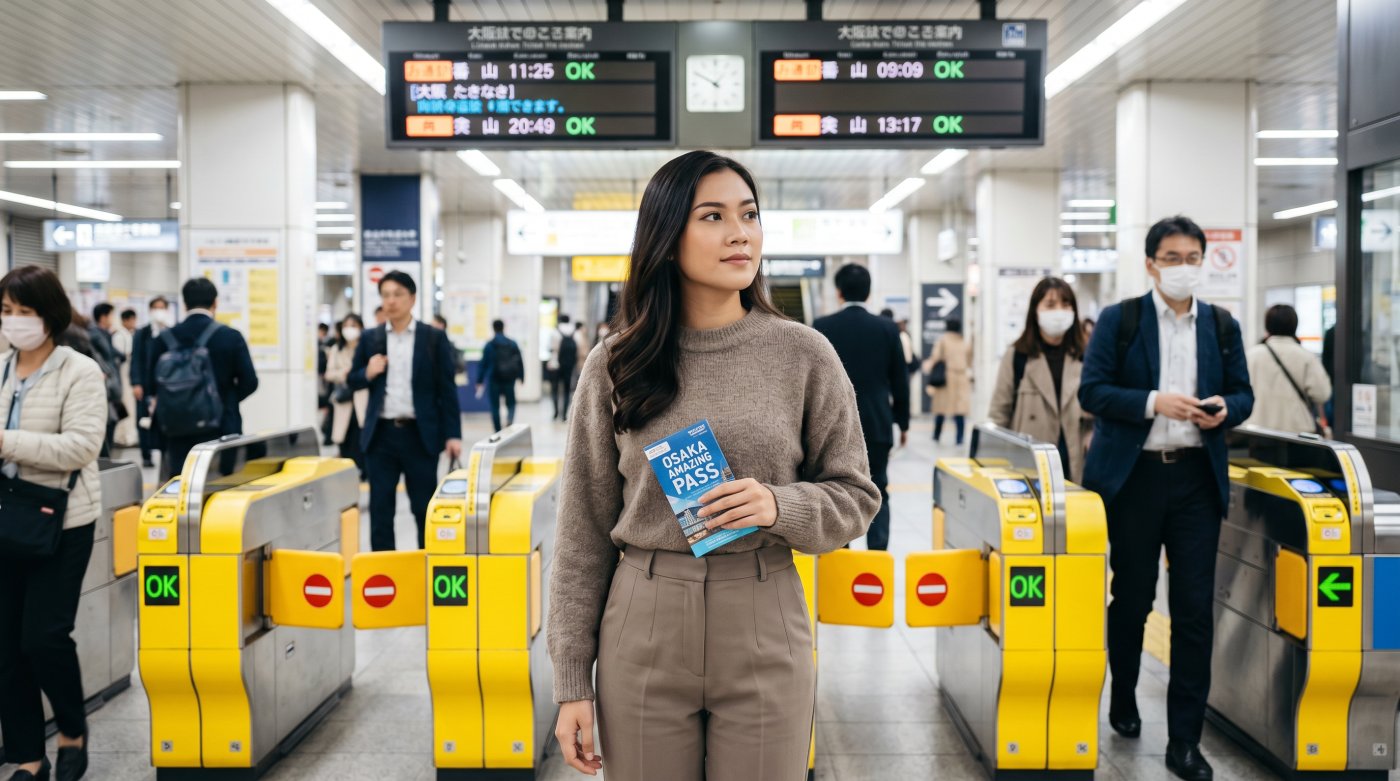
The standard pass comes in two durations. The 1-day pass costs ¥3,500 and the 2-day pass costs ¥5,000.
Both are valid for calendar days, not rolling 24-hour windows. If you activate a 2-day pass on a Tuesday afternoon, it covers Tuesday and Wednesday in full, from first train to last train, regardless of what time you started.
There is no child version of the pass. Children under 6 typically enter most attractions for free, and children aged 6 to 11 pay a reduced rate directly at each venue.
Most families simply buy adult passes and pay children’s admission separately at the gate.
Buy the Standard 1-Day and 2-Day Pass
Unlimited subway rides plus free entry to 40+ attractions.
The Osaka Monorail Version
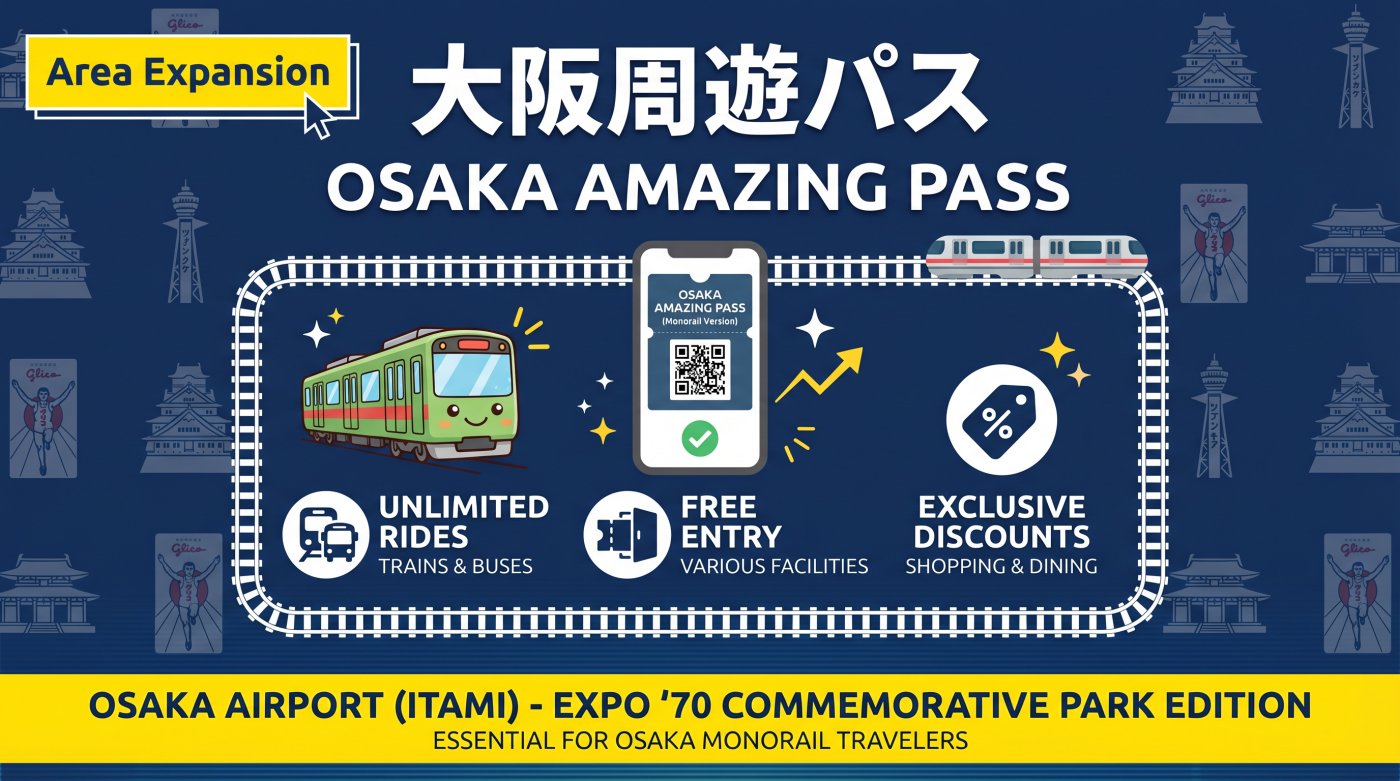
A third option launched in 2025: the Osaka Monorail version, priced at ¥4,300. This pass extends transport coverage to include Osaka Monorail (running between Itami Airport and Bampaku-kinen-koen station), Kita-Osaka Kyuko (Esaka to Senri-Chuo), and additional Hankyu lines.
It also unlocks two attractions not accessible on the standard pass: Expo’70 Commemorative Park and the Osaka Wheel (Redhorse Osaka Wheel, a giant Ferris wheel at the former World Expo site). If you’re combining your Osaka trip with a visit to the Expo Memorial Park area, this is the version to pick.
The Osaka Itami Airport Version
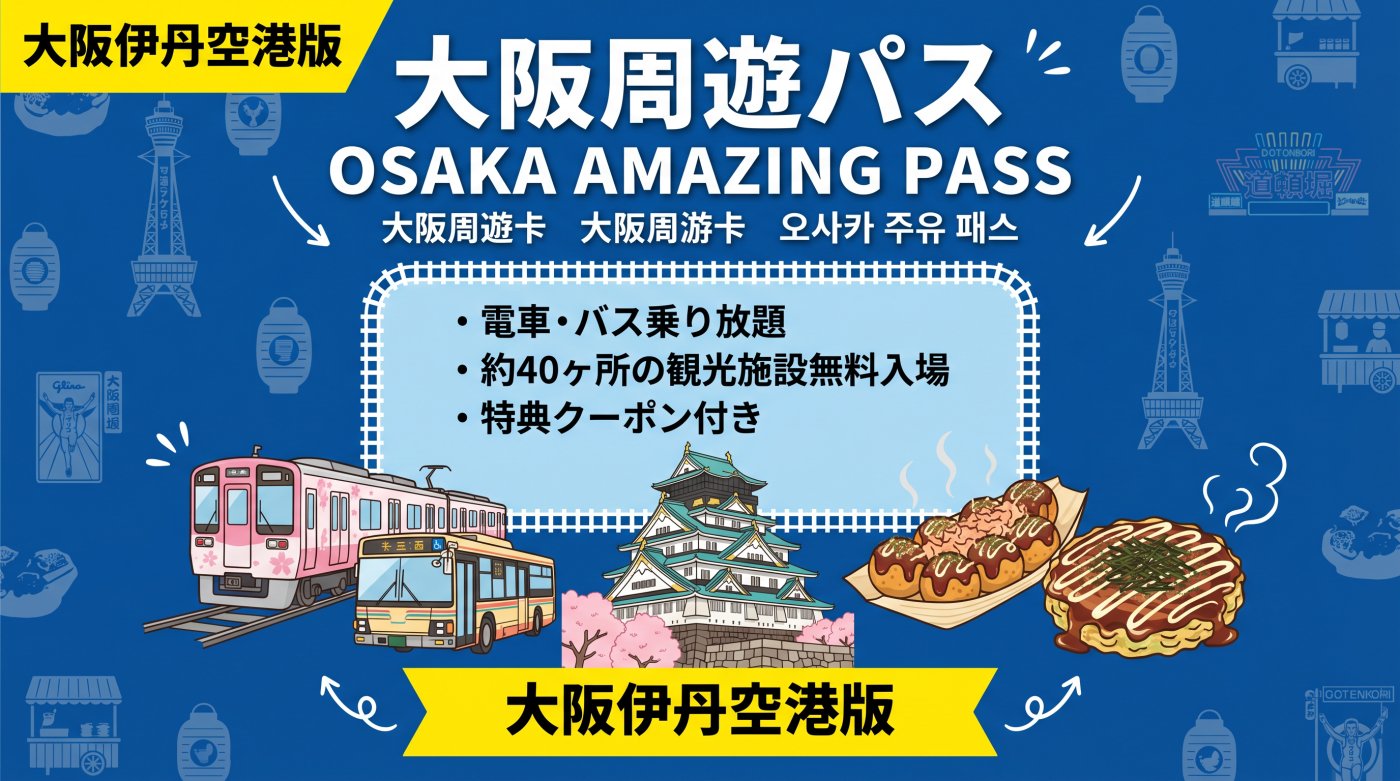
A fourth option covers travelers arriving into Osaka Itami Airport (ITM). The ITM version is priced at ¥3,800 for 1 day and ¥5,400 for 2 days.
It includes the same central Osaka coverage as the standard pass, with extended transport routing to connect the airport directly. If you’re arriving via Kansai International Airport (KIX), use the standard pass instead.
What the Pass Does Not Cover
The pass does not include Universal Studios Japan, Osaka Aquarium Kaiyukan (a discount is available but not free entry), or the Shinkansen.
Premium experiences like the Tsutenkaku Tower outdoor observation deck and certain night cruise upgrades require a supplemental fee, though the standard Tsutenkaku observation floor is included.
Osaka Amazing Pass vs. ICOCA Card: Which One Should You Actually Buy?
The Osaka Amazing Pass and the ICOCA card are not competing products. They solve two different … Read More
The Full Osaka Amazing Pass Attractions List (2026)

The pass covers more than 40 sightseeing spots grouped across Osaka’s main tourist zones. Here’s a practical breakdown by area so you can plan routes without backtracking across the city.
Umeda and the Kita Area
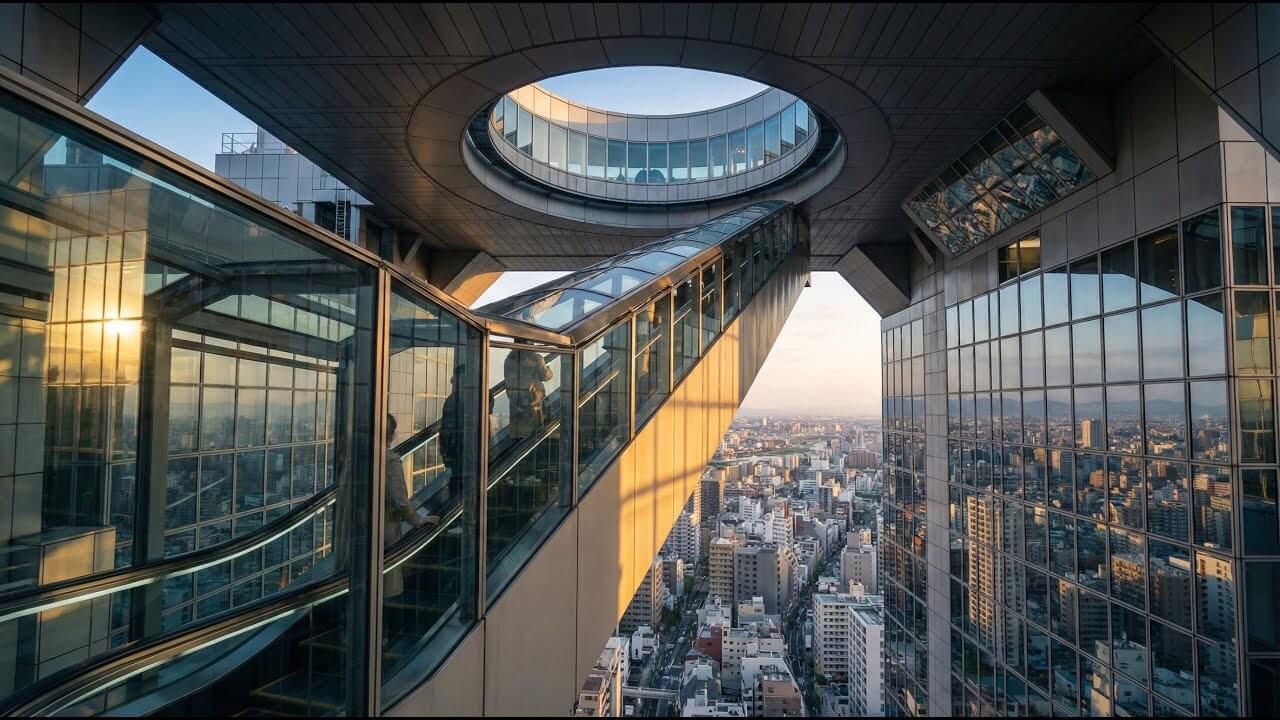
Umeda delivers some of the pass’s highest-value inclusions. The Umeda Sky Building Kuchu-Teien Observatory regularly costs ¥2,000 per adult on its own, making it one of the quickest ways to recoup the pass fee.
Note that free admission with the pass applies until 15:00 only; after that, you receive a 10% discount rather than free entry. Also included here: the Umeda Sky Building Koji Kinutani Tenku Art Museum, the HEP FIVE Ferris Wheel (¥1,000 standard; closed for renovation until April 21, 2026, so check before visiting), and the Osaka Museum of Housing and Living, an unusual open-air museum built inside a shopping complex that recreates Edo-period Osaka streetscapes.
Osaka Castle Area
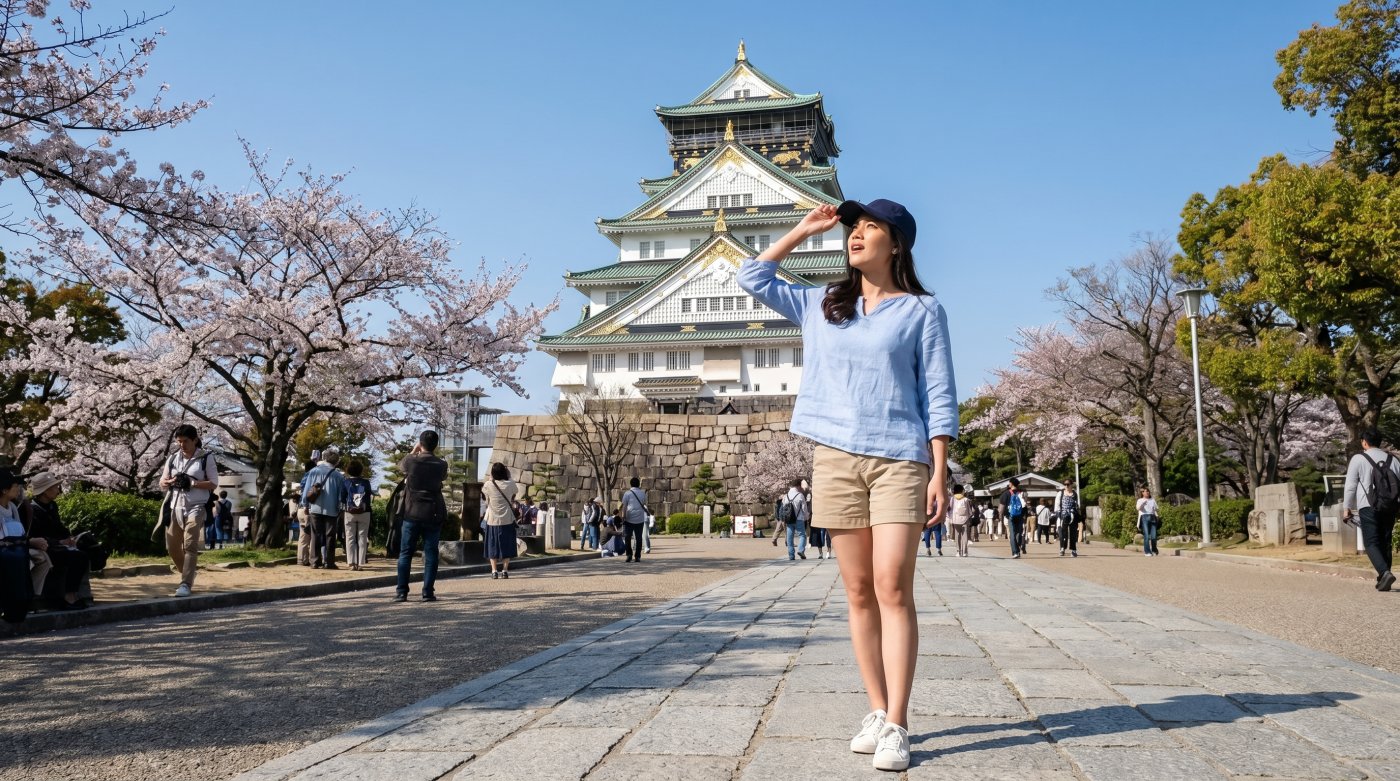
The castle precinct offers a strong cluster of pass inclusions. Osaka Castle Museum (¥1,200 standard admission), the Nishinomaru Garden, the castle Yagura turrets, the Osaka-jo Gozabune Boat cruise (¥1,800 standard), and the Osaka Museum of History are all covered.
If you visit the castle museum plus the Gozabune cruise in one morning, you’ve already covered ¥3,000 in admission value, nearly the full cost of a 1-day pass.
Namba, Dotonbori, and the Minami Area
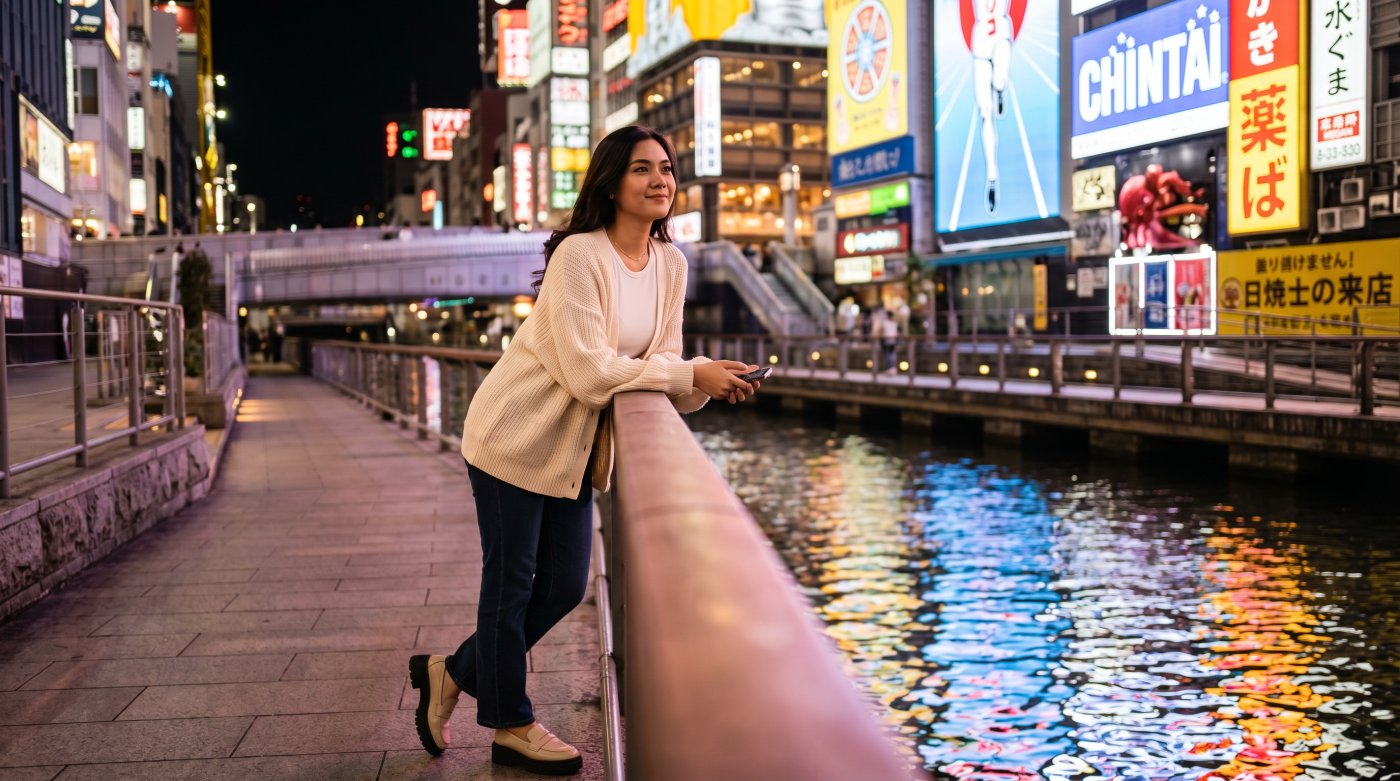
In the southern part of the city, the Tombori River Cruise (¥2,000 standard for adults) and the Wonder Cruise are both included. The Kamigata Ukiyoe Museum, dedicated to traditional woodblock prints from the entertainment districts of old Osaka, is also covered.
These work well as shorter visits slotted between other activities in Dotonbori and Namba.
The Tombori River Cruise departs every 30 minutes from 11:00 to 21:00. On the day of boarding, exchange your pass for a designated time-slot ticket at the reception desk, which opens one hour before the first departure.
Evening slots sell out quickly, so exchange your boarding pass earlier in the day if you want a night-time cruise.
Tennoji, Shinsekai, and the South
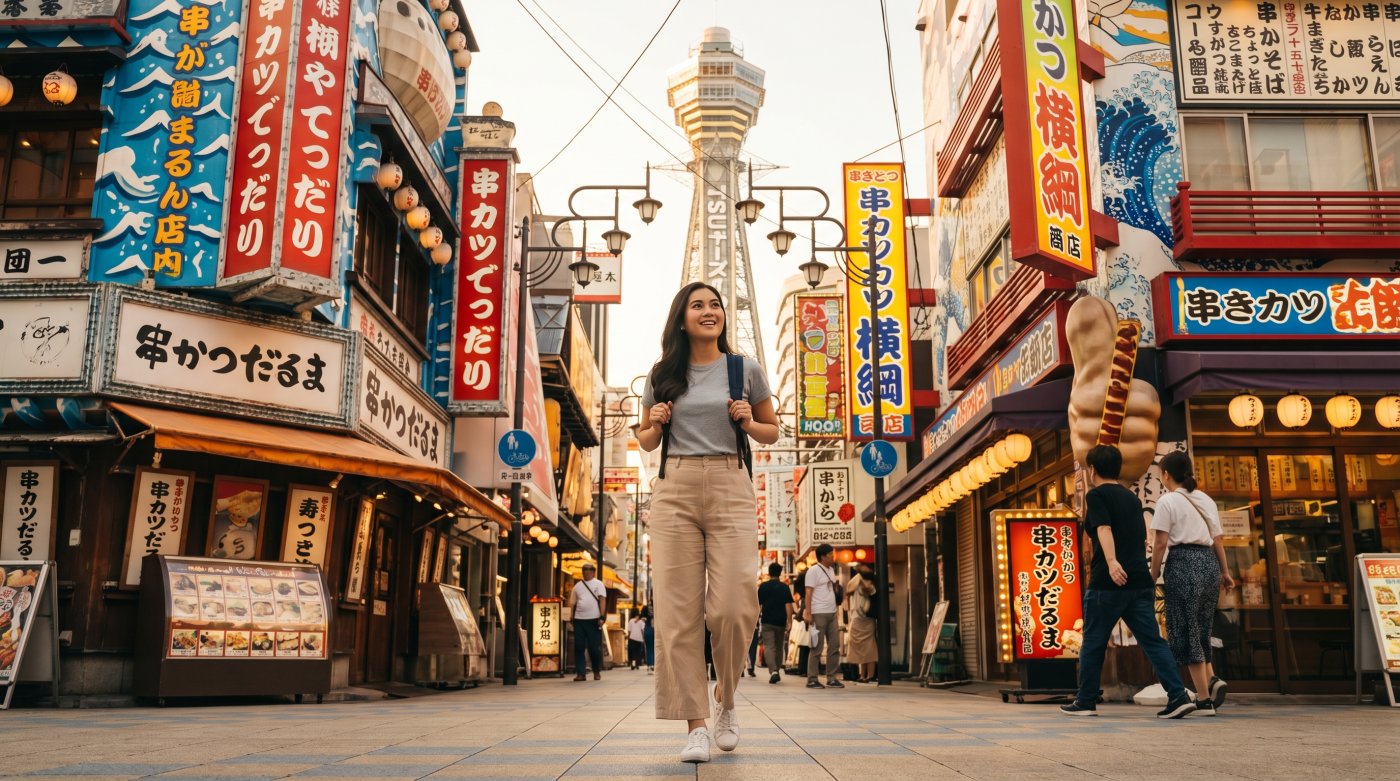
Tennoji and Shinsekai together offer some of the pass’s most recognizable inclusions. Tsutenkaku Tower (standard observation deck, ¥1,200), Osaka Tennoji Zoo (¥500), and Shitennoji Temple are all included.
Keitakuen Garden, a traditional Japanese stroll garden adjacent to Tennoji Park, is a quieter stop worth adding if you have time.
Tsutenkaku Timing Note
The Tower Slider and Dive and Walk experience at Tsutenkaku are covered by the pass but operate with limited time slots. Arrive early or book ahead through the Tsutenkaku website.
The standard observatory does not require advance booking, but queues on weekends and public holidays can run 30 to 45 minutes.
Osaka Bay Area
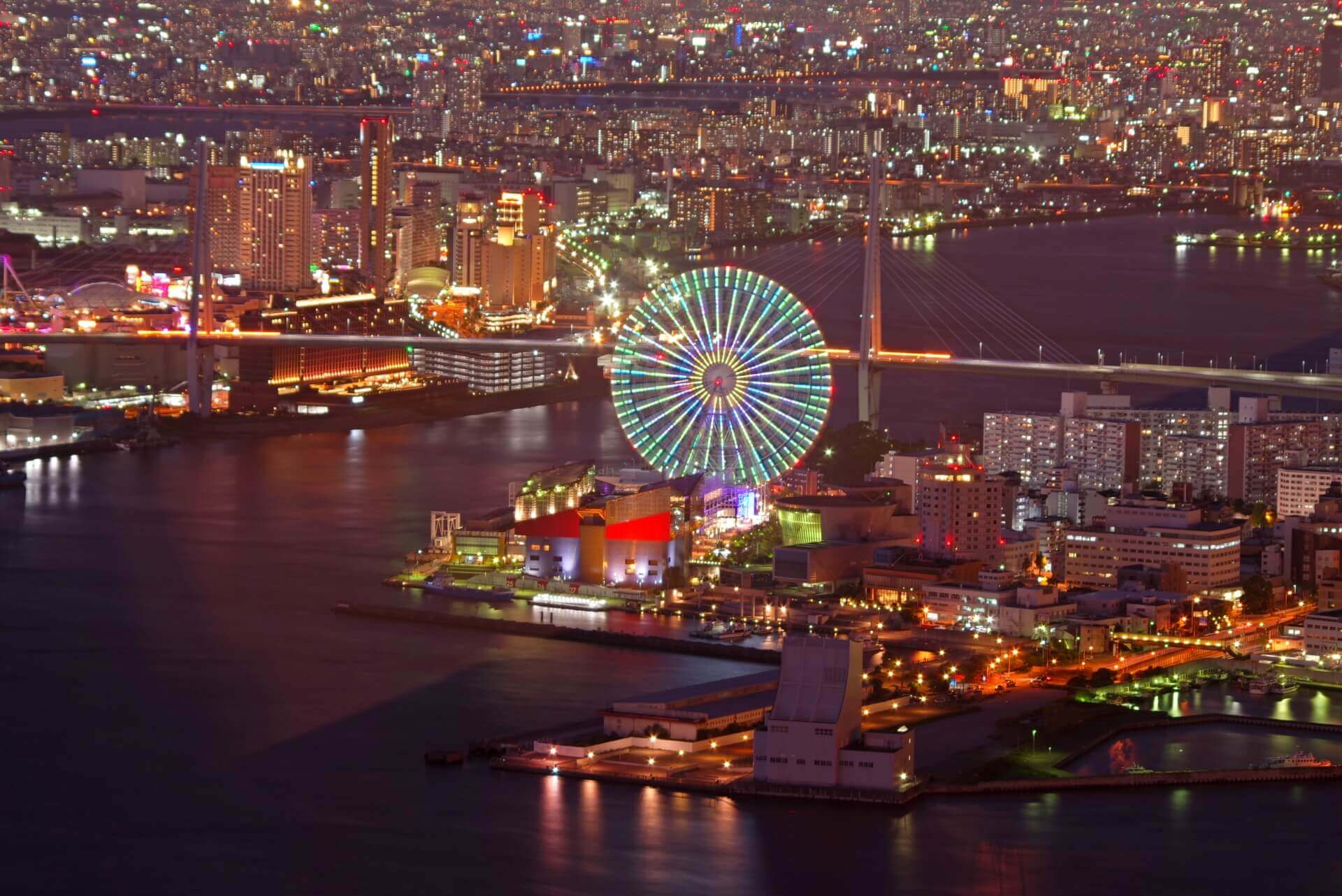
Out at Osaka Bay, the pass covers the Tempozan Giant Ferris Wheel, the Santa Maria Day Cruise (a replica of Columbus’s ship), the Captain Line Ferry, LEGOLAND Discovery Center Osaka (¥2,800 standard), the GLION Museum (a classic car and motorcycle collection in a renovated warehouse), and the Sakishima Cosmo Tower Observatory.
The Bay Area works well as a half-day trip on its own for those who want to experience Osaka day trips.
If you’re traveling with children, LEGOLAND alone justifies a significant chunk of the pass cost.
Other Areas
Rounding out the list: Sakuya Konohana Kan (a botanical garden on Sakishima artificial island), the Osaka Museum of Natural History in Nagai Park, Nagai Botanical Garden, and the Sakai City Museum slightly south of the city center.
Is the Osaka Amazing Pass Worth It?
This is the question most people actually want answered before purchasing, so here’s an honest breakdown.
Using the 1-day pass at ¥3,500, visiting Osaka Castle Museum (¥1,200) plus Umeda Sky Building (¥2,000) plus Tombori River Cruise (¥2,000) already totals ¥5,200 in saved admission before you factor in a single Metro ride.
That’s a net saving of ¥1,700 on attractions alone, plus unlimited transport for the day.
A single subway ride in Osaka costs between ¥190 and ¥370 depending on distance, and six rides in a day, which is realistic when moving between Umeda, Namba, Tennoji, and Osaka Castle, adds up to roughly ¥1,400 more.
When the Pass Makes Clear Sense
The pass is worth it if you plan to visit three or more paid attractions per day, use public transport frequently (five or more rides per day), and your itinerary concentrates on central Osaka and the Bay Area.
The combination of Osaka Castle, the Sky Building, and either a river cruise or a Ferris wheel covers the pass price with room to spare.
Add a museum or two and you’re well into positive territory. For help building a full itinerary around it, the Osaka itinerary section has day-by-day structures for different trip lengths.
When It Probably Doesn’t
Be honest about your pace. If you travel slowly, prefer lingering at one or two spots per day, or plan to spend significant time in free areas like Kuromon Market, Shinsaibashi shopping streets, or parks, the pass may go underused.
The pass has no benefit for restaurant entry or shopping.
Osaka Aquarium Kaiyukan costs ¥2,700 for adults and is one of the most popular single attractions in the city, but it is not included. You get a discount with the pass, not free entry.
If Kaiyukan is your main reason for visiting the Bay Area, factor that in separately.
The Two-Day Pass Math
At ¥5,000 for two days, the 2-day pass works out to ¥2,500 per day, cheaper per day than the 1-day option.
If you have two full sightseeing days planned, this is the stronger buy.
Since you can only enter each attraction once across the entire two-day period, spread different attractions across each day rather than trying to repeat favorites.
Osaka Amazing Pass 2026: Key Changes to Know

The pass has gone through meaningful changes in recent years that older guides don’t reflect accurately.
The physical card version ended in June 2024. The pass is now entirely digital, accessed via QR code on your smartphone.
You’ll need a working internet connection when scanning at station gates. For older gates without QR compatibility, show your screen to a staff member.
Screenshots and printed copies are not accepted.
The 2-day pass still exists for 2026, despite some confusion online. Both the 1-day and 2-day standard options are available for the full 2026-2027 sales period, running from March 25, 2026, through March 31, 2027.
Passes are valid for three months from purchase but must be activated by March 31, 2027.
The pass day runs from 3:00 a.m. to 2:59 a.m.
the following day, not 24 hours from activation. If you accidentally activate between midnight and 2:59 a.m., your pass clock starts from midnight and you lose several usable hours.
Activate after 3:00 a.m. on the morning you plan to use it.
How and Where to Buy the Osaka Amazing Pass
The easiest route for most visitors is purchasing online before leaving home.
Buying Online Before You Travel
Klook, KKday, and Traveloka all sell the pass at or near the official price, sometimes with small discounts or bundled offers. The official website at osaka-amazing-pass.com also allows direct purchase.
After buying, you receive a QR code that activates on the day you first use it. Payment requires a credit card.
Debit cards are not accepted. You can buy up to four tickets per transaction, and passes can be transferred to someone else after purchase, making advance group purchases practical.
One firm rule: don’t buy from auction sites or resellers. Surutto Kansai takes no responsibility for passes purchased outside official channels.
Refunds on unused, still-valid passes are available through the original purchase platform with no refund fee, but the pass becomes non-refundable the moment any use is recorded.
Buying in Osaka
If you prefer to sort it out after landing, the pass is available at station masters’ offices at Osaka Metro stations and at selected counters for Hankyu, Hanshin, Keihan, Kintetsu, and Nankai railways. The Kansai Tourist Information Center also sells it.
Counter sales previously issued a physical card, but since June 2024 the pass is digital-only.
Staff at the counter will process your purchase and provide a QR code, either printed on a receipt or sent to your phone, which works identically to the online version at all attraction entrances and fare gates.
Osaka Amazing Pass — the one pass worth buying
Unlimited subway rides plus free entry to 40+ attractions including Osaka Castle, Umeda Sky Building, and the Dotonbori River Cruise. If you're spending more than a day sightseeing, it pays for itself before lunch.
A Practical One-Day Route Built Around the Pass
Planning routes by geographic cluster is more efficient than jumping between areas. Here’s a route that works well for a single-day pass.
Start at Osaka Castle (Osakajo-koen station on the Chuo Line). Visit the castle museum before 10:00, when crowds are thinnest.
The eighth-floor panorama over the park and city is worth the climb. Allow 1.5 to 2 hours.
From there, take the Metro to Namba via the Yotsubashi or Midosuji Line and join the Tombori River Cruise for a 20-minute float along the Dotonbori canal. Exchange your boarding pass for a time-slot ticket on arrival, then grab takoyaki from one of the stalls around Dotonbori before moving on.
Head north on the Midosuji Line to Umeda for the Floating Garden Observatory at the Umeda Sky Building. Arrive before 15:00 to use the pass for free entry.
The 360-degree open-air ring at the top gives a clean view across the city. Allow one hour.
If time and energy remain, take the Chuo Line from Namba to Osakako station (about 15 minutes) for the Bay Area. The Santa Maria Day Cruise or the Tempozan Ferris Wheel at Tempozan Harbor Village work well as a late-afternoon finish.
For deeper detail on every attraction along this route, things to do in Osaka covers each spot with seasonal tips and access notes.
Osaka Amazing Pass vs. Other Osaka Tourist Passes
Several passes compete for your wallet in Osaka, and they’re not all equivalent.
- Osaka e-Pass starts at ¥2,400 and covers 25+ attractions, but does not include transport. It’s a better fit if you’re walking between sights and only need attraction entry without the Metro coverage.
- Osaka Metro 1-Day Pass costs ¥880 and covers all Metro lines. If you only need transport and aren’t visiting paid attractions, this is the smarter, cheaper buy.
- Kansai Railway Pass Lite (rebranded April 2026) covers a wider geographic area including Kyoto and Kobe but costs significantly more and excludes Osaka attraction entry. Relevant only if your trip is explicitly multi-city.
- JR Pass: not useful for Osaka City travel. JR trains don’t serve most central Osaka attractions, and the pass doesn’t cover Osaka Metro. Its value is in long-distance Shinkansen travel.
For a first-time visitor doing one active day in Osaka, the Amazing Pass is the most practical option. For visitors who’ve already seen the main landmarks, the e-Pass or Metro Pass may be a better fit depending on what remains on the list.
Essential Osaka Travel Passes
Powered by KlookThe passes worth buying before you land — curated for first-timers.
Osaka Amazing Pass
Unlimited subway + free entry to 40+ attractions. The only pass most visitors actually need.
Osaka e-Pass
Attractions-only digital pass. Pair with a Metro Pass if skipping the Amazing Pass.
Osaka Metro Pass
1 or 2-day unlimited Metro rides. Best standalone transit value if you already have an attractions pass.
JR West Kansai Area Pass
Unlimited JR trains for 1–4 days. Covers Kyoto, Nara, Kobe, and Himeji from Osaka.
JR Haruka Express
KIX to Umeda/Shin-Osaka in ~50 min. Best if staying in Umeda or heading straight to Kyoto.
Nankai Rapi:t Express
KIX to Namba in 34 min, reserved seat. Better if staying in Namba or Shinsaibashi.
If you’re still planning which nights to spend where, the where to stay in Osaka guide breaks down each neighborhood by location and transit access, which matters when you’re trying to maximize a day pass.
Tips for Getting the Most Value from the Pass
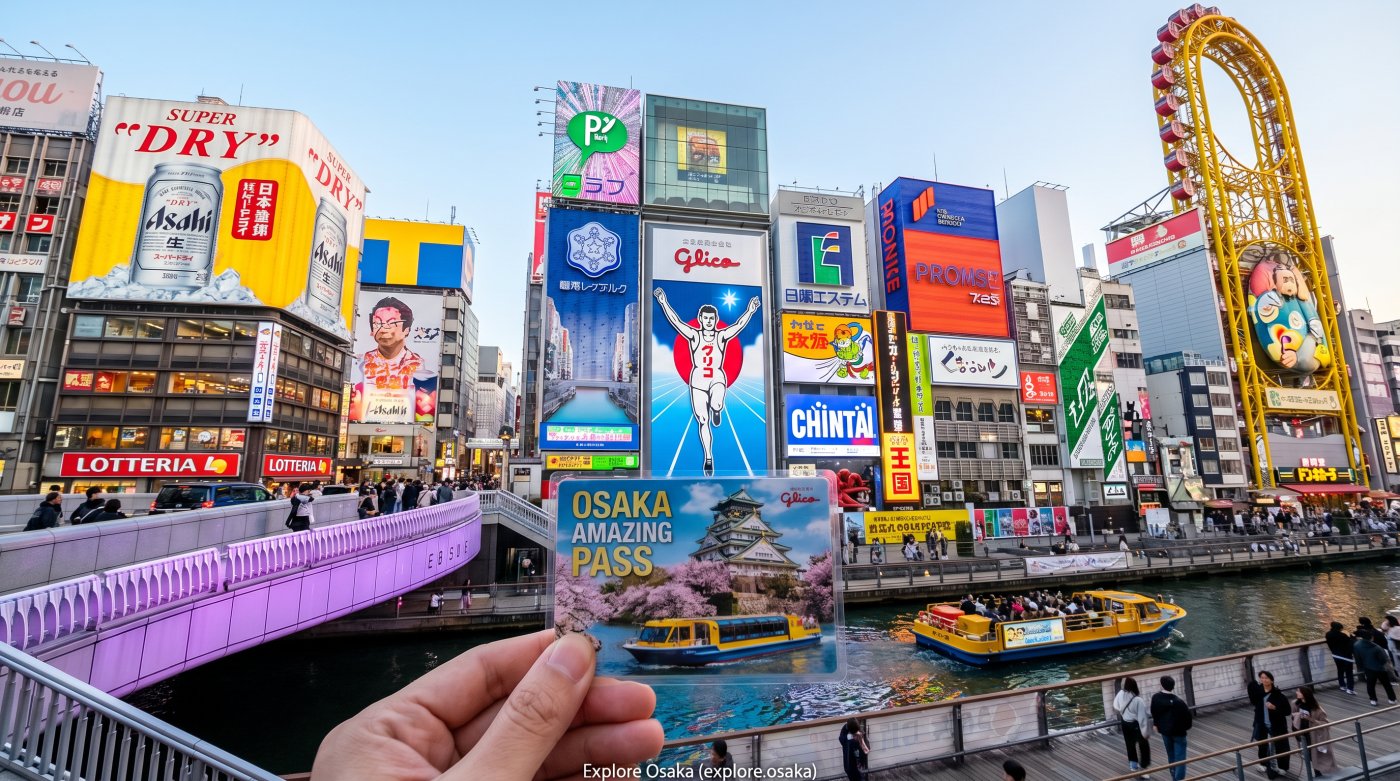
A few practical points that make a real difference on the day.
- Plan by geography, not attraction ranking. Jumping from Tennoji to Umeda to the Bay Area and back wastes time. Group nearby attractions together and cover one zone in the morning, another in the afternoon.
- Start with the highest-cost attractions. Osaka Castle Museum (¥1,200), Umeda Sky Building Observatory (¥2,000), and the Tombori River Cruise (¥2,000) together add up to ¥5,200. Get those done before noon and the pass has already paid for itself.
- Book timed-entry attractions in advance. The Tsutenkaku Tower Slider and the Tombori River Cruise both use time slots. Sorting these out before you arrive saves queuing on the day.
- Arrive at the Umeda Sky Building before 15:00. Free admission with the pass ends at that time. After 15:00, the pass gives only a 10% discount.
- Check which attractions are closed on your visit day. The Osaka Museum of Housing and Living closes Tuesdays. The National Museum of Art closes Mondays. Confirm HEP FIVE Ferris Wheel status if visiting in early 2026.
- Bring a charged phone and a backup power bank. A digital pass on a dead screen is unusable. Japanese convenience stores (konbini) sell reasonable power banks if you’re caught short.
The Osaka Amazing Pass is a genuinely useful tool for active sightseeing days. It won’t save you money if you spend the day eating and shopping.
But plan your days around two or three major paid attractions plus regular Metro use, and it more than pays its way.