




Osaka Etiquette: What Tourists Get Wrong (and How to Fix It) – Osaka operates on an unwritten social code that blends warmth with quiet, firm expectations.
Tourists routinely stumble over basics: eating while walking (only acceptable in Dotonbori), tipping servers (genuinely offensive here), and chatting on trains (an absolute no).
Stand on the right side of escalators, place cash on the tray at registers, and never stick chopsticks upright in rice.
Master these fundamentals, and Osaka rewards visitors generously, especially if you’re traveling to Osaka from Tokyo.
Key Highlights
Hide- In Osaka, stand on the right side of escalators and keep the left lane clear for walking.
- Tipping is considered rude in Japan; show appreciation by returning to the establishment instead.
- Avoid eating while walking except in designated areas like Dotonbori and Kuromon Market.
- On trains, keep phones on silent, avoid aromatic food, and avoid priority seats unless the car is empty.
- At shrines, follow the cleansing ritual: wash your left hand first, then your right, then bow twice, clap twice, bow once.
Why Osaka Etiquette Is Both Stricter and More Forgiving Than You Expect
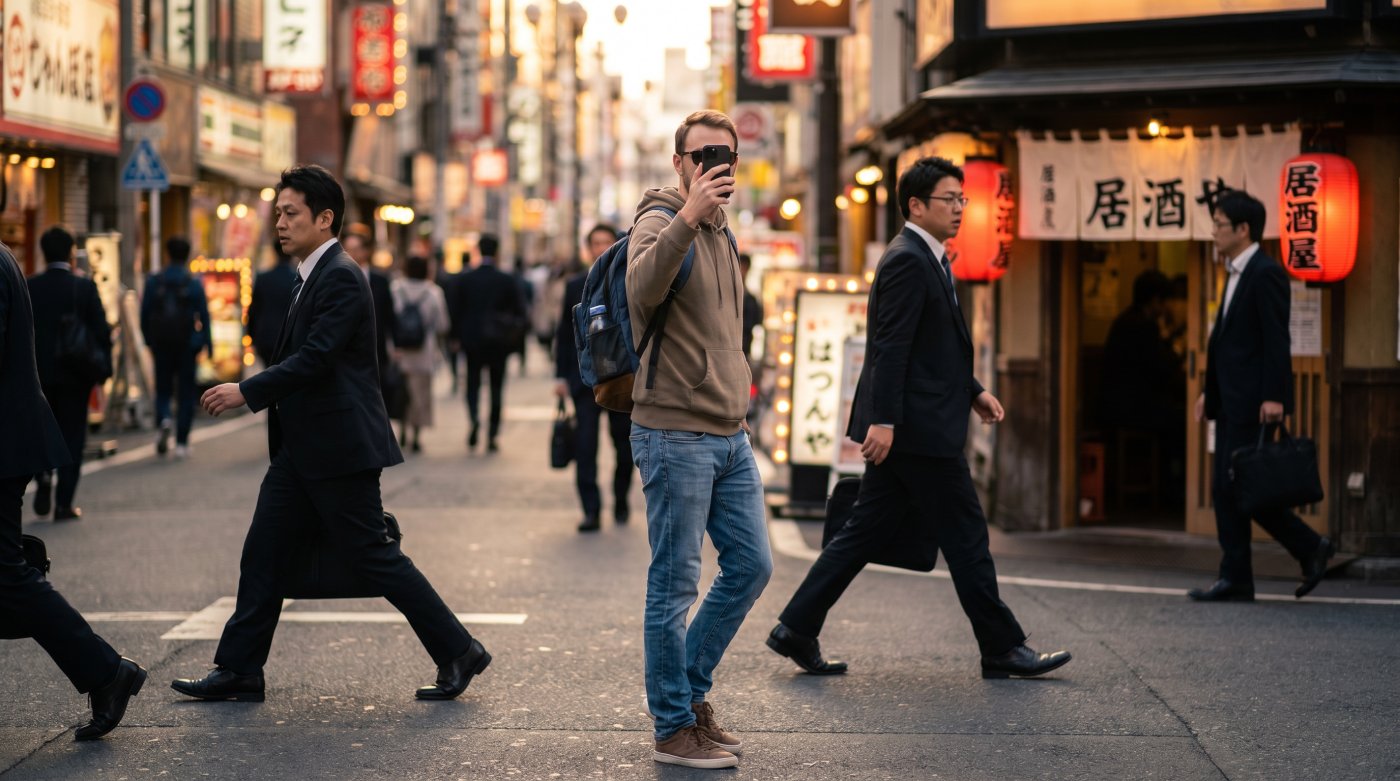
Osaka operates by its own cultural rulebook — one that surprises even seasoned Japan travelers who arrive armed with Tokyo-tested habits.
The city is famously warmer and more forgiving toward confused tourists fumbling with chopsticks or bowing at the wrong angle, yet surprisingly rigid about unwritten rules that most generic guides never mention.
This guide exists for anyone who wants to move through Osaka like they actually belong there, not just survive it.
How Osaka Etiquette Differs from Tokyo Etiquette
While Tokyo operates like a finely tuned machine — quiet, orderly, and governed by unspoken rules that feel almost ceremonial — Osaka runs on a completely different social frequency.
Locals here are famously warm, loud, and refreshingly candid.
Strangers strike up conversations. Vendors joke with customers. The social atmosphere breathes.
For more detailed etiquette guide in Tokyo, read the detailed guide on Tokyo etiquette.
Is the Right Side of the Escalator Really Different in Osaka?
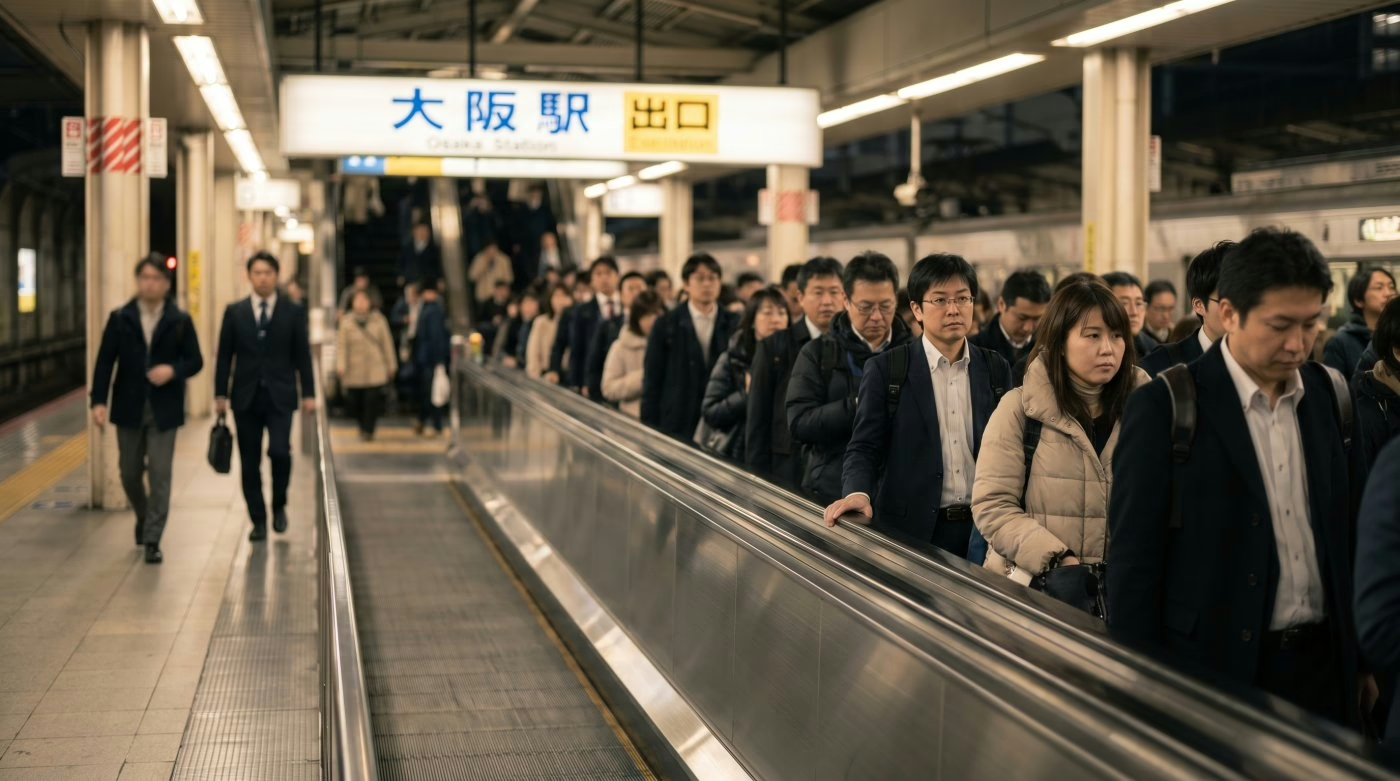
Yes — stand on the right in Osaka, left in Tokyo. This single rule trips up thousands of travelers every year who autopilot their Tokyo habits straight into Osaka’s subway system.
Standing on the wrong side genuinely disrupts commuter flow and draws visible irritation — one of the few moments Osaka’s legendary friendliness evaporates instantly.
Who This Osaka Etiquette Guide Is Actually For
This guide is built for first-timers who’ve read the generic Japan etiquette articles and still feel unprepared, repeat visitors who learned Tokyo’s rules and assume Osaka works the same way, and seasoned travelers who want to move through the city like they actually belong there.
| Traveler Type | What They Need Most |
|---|---|
| First-timers | Core rules without overwhelm |
| Tokyo veterans | Osaka-specific unlearning |
| Repeat Osaka visitors | Nuance and local texture |
| Seasoned Japan travelers | The gaps generic guides miss |
Osaka operates on a fascinating paradox: stricter about certain communal spaces, looser about personal expression.
Understanding which rules carry real social weight separates confident navigation from constant second-guessing.
For further guide, read our comprehensive article about visiting Osaka.
Trip Essentials
Osaka Travel Add-ons
Equip yourself for the ultimate Osaka adventure with the following add-ons, curated just for you.
Flights to Osaka
Airport Transfer
ICOCA IC Card
Suica IC Card
Osaka Tours
Luggage Storage
Travel Insurance
Data Security

Japan eSIM
Japan SIM Card
Pocket WiFi Rental
Japan eSIM
General Public Etiquette in Osaka
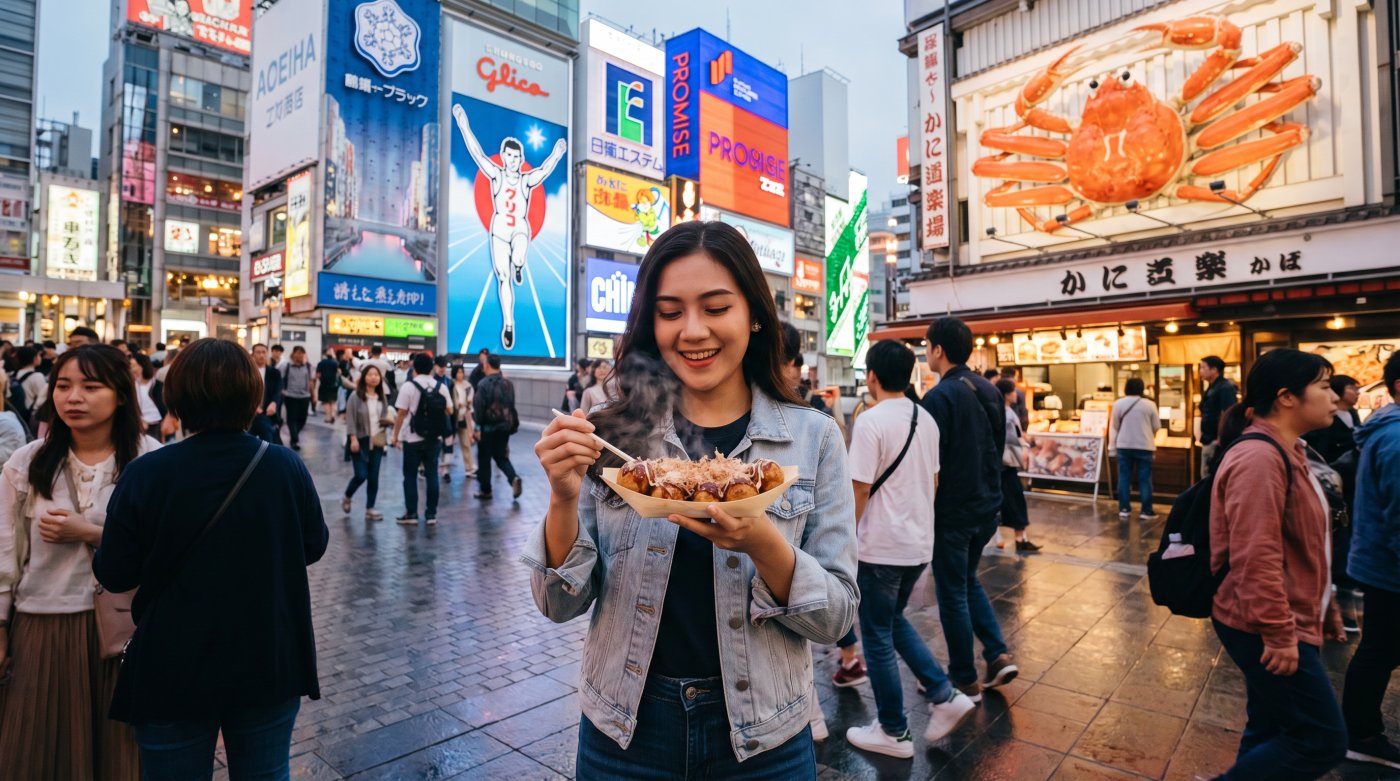
Osaka’s public spaces run on an unspoken code that catches plenty of tourists off guard — phone calls on the subway, wandering snacks in hand, a lit cigarette outside a konbini can all draw quiet but pointed disapproval.
The city’s quirks run deeper than the standard “be quiet, bow often” advice, from the near-total absence of street trash cans to freshly tightened smoking laws rolling out in 2026.
Reading the room here is a genuine skill, and getting it right is the difference between blending in like a seasoned Osaka regular and marking oneself as someone who clearly skipped the briefing.
Talking on Your Phone in Public Places in Osaka
The unwritten rule is straightforward: keep calls short, quiet, or take them outside.
Locals treat public spaces as shared sanctuaries, not personal broadcast zones.
Step outside a convenience store, duck into a building lobby, or find a quiet corner — nobody polices this aggressively, but the social awareness is palpable.
| Situation | Expected Behavior |
|---|---|
| Train or subway | No calls; silent mode only |
| Restaurant | Step outside or speak softly |
| Shopping mall | Move toward exits or quiet corridors |
| Convenience store | End calls before entering |
| Busy street | Acceptable, but keep volume down |
Texting, browsing, and earphone calls fly completely under the radar.
Osaka rewards travelers who read the room, and phone etiquette is one of the easiest wins available.
Eating and Drinking While Walking in Osaka: Where It’s Fine, Where It Isn’t
Osaka is famously the exception to Japan’s strict no-eating-while-walking norm — but only in specific zones. Dotonbori and Kuromon Market are practically open-air dining rooms; grab that takoyaki, eat it standing right there, no judgment whatsoever.
Step outside those designated street food corridors, however, and the calculus shifts dramatically.
Residential neighborhoods, train stations, and shopping arcades expect visitors to stop, eat, then move.
Eating while strolling through a quiet covered shotengai feels noticeably out of place to locals nearby.
The golden rule: if street vendors are actively selling food for immediate consumption in that exact spot, eating there is almost certainly welcome.
Public Trash Bins in Osaka: Why There Aren’t Any and What to Do With Your Rubbish
Most visitors make the same rookie mistake: they finish a steaming skewer of kushikatsu, look around for a bin, and find absolutely nothing.
Post-1995 security concerns eliminated nearly all public rubbish bins citywide, and locals simply adapted.
Tourists must do the same.
Smart spots to look include:
- Convenience stores (konbini), which have small bins near the entrance
- Food stalls and restaurants, which typically accept packaging from their own products
- Train station platforms, which occasionally have recycling receptacles
Stuffing rubbish into random gaps or leaving it on benches genuinely offends locals.
A small zip-lock bag tucked into a daypack transforms this inconvenience into a completely manageable habit.
Is Smoking Allowed on Osaka Streets?
No — Osaka’s municipal ordinance bans street smoking citywide, pushing smokers into designated kitsuenjo (marked smoking zones) near major stations and entertainment districts.
Getting it wrong can mean an on-the-spot fine of up to ¥1,000.
Dotonbori and Shinsaibashi have several smoking zones, so they’re not impossible to find.
The 2026 updates tighten restrictions further, expanding no-smoking perimeters around schools, hospitals, and public parks, with enforcement patrols increasing significantly in tourist-heavy corridors.
Most restaurants are now fully smoke-free.
Smokers visiting Osaka aren’t being punished; they’re simply being redirected.
Respect the zones, pocket cigarette butts properly, and everyone breathes easier.
Volume and Noise in Public Spaces: How to Read the Room
Osaka has a well-earned reputation as Japan’s loudest, most exuberant city — but even here, volume operates on an unwritten dial that locals instinctively understand.
Restaurants, street food alleys, and izakayas invite genuine noise.
Trains, temples, and residential neighborhoods absolutely do not.
- Trains and subways demand near-silence — phone calls draw sharp, disapproving glances
- Dōtonbori and Kuromon Market welcome animated conversation and enthusiastic reactions
- Residential side streets after 9 p.m. call for noticeably lowered voices
The golden rule: mirror the energy around you.
If locals are hushed, match that.
If they’re laughing loudly over takoyaki, relax and join in — Osaka genuinely means it.
Train and Subway Etiquette in Osaka
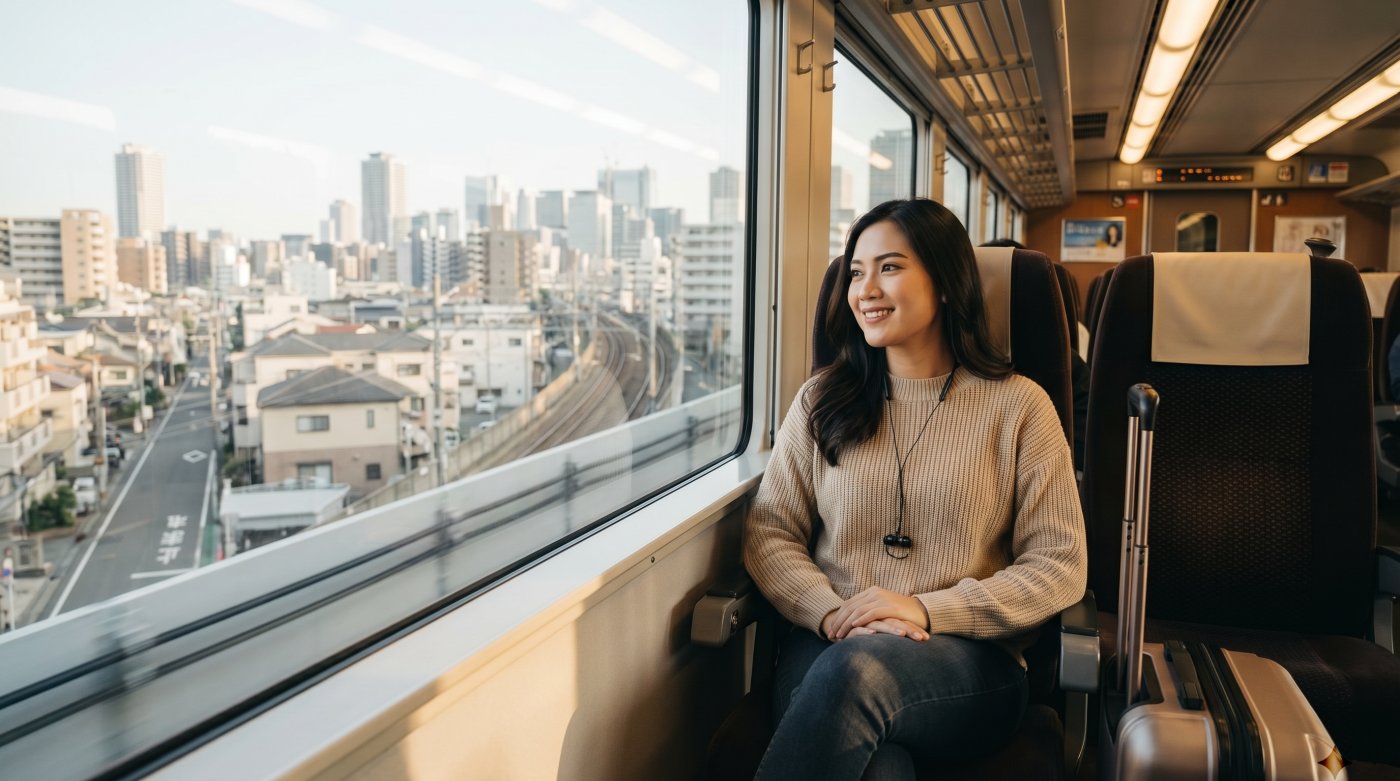
Osaka’s train and subway system is a masterpiece of efficiency, but maneuvering it like a local means picking up a handful of unwritten rules fast.
From which side of the escalator to stand on, to whether that bento box stays in the bag until the destination, the etiquette here has its own distinct Osaka flavor — sometimes surprising even to visitors coming straight from Tokyo.
Get these right, and commuters will barely notice a tourist in their midst; get them wrong, and the silent, collective side-eye of an Osaka rush-hour crowd is an experience worth avoiding.
Standing on the Right on Osaka Escalators: The One Rule That Flips Tokyo
Osaka escalators follow one rule that catches Tokyo veterans completely off guard: stand on the right, walk on the left — the exact opposite of what Tokyo trains have conditioned most visitors to do.
Step onto the left-hand standing side in Osaka’s Namba or Umeda stations and the ripple of impatient shuffling behind you will make the mistake immediately, unmistakably clear.
Why Osaka Stands Right and Tokyo Stands Left
- Tokyo: stand left, walk right
- Osaka: stand right, walk left
- Everywhere else in Japan: follow Tokyo’s lead
It’s a small flip with a surprisingly big social weight, and getting it right signals to locals that a visitor actually did their homework.
What Happens When You Get It Wrong
Nobody gets confrontational — they simply endure it, quietly.
The silent, slightly exasperated look of someone stuck behind a stationary foreigner blocking the left lane speaks volumes without a single word being exchanged.
Talking on Trains in Osaka: Volume, Phone Calls, and Group Conversations
Trains in Osaka operate under an unspoken social contract that most tourists accidentally violate within their first ride.
The cars run genuinely, impressively quiet — and locals treat that silence like shared property worth protecting.
Here’s what actually matters:
- Phone calls are considered rude; step off at a station or wait
- Group conversations are fine but should stay at a hushed, conspiratorial volume
- Speakerphone is fundamentally a social crime on any Osaka train car
Nobody will confront a tourist directly.
But matching the ambient hush signals genuine respect for the city’s rhythms.
Eating and Drinking on Osaka Trains: When It’s Fine and When It Isn’t
The rules around food and drink on Osaka’s trains are genuinely nuanced — not a hard ban, but definitely not a free-for-all.
Sealed water bottles and coffee cups with lids?
Generally fine.
Crinkly snack bags, aromatic street food, or anything that requires unwrapping?
That’s where eyebrows start rising.
Long-distance shinkansen rides operate under entirely different norms — bento boxes and beers are practically expected.
But on the city subway and local lines, eating draws quiet disapproval fast.
The unspoken rule: if it smells, makes noise, or creates mess, save it for the platform.
Priority Seats in Osaka: Who They’re For and Phone Use Rules
Those blue-marked seats near the doors aren’t just suggestions — they’re reserved spaces carrying genuine social weight.
Priority seats belong to:
- Elderly passengers and pregnant women
- People with disabilities or injuries
- Anyone holding a young child
Avoid using priority seats, and always yield them immediately to those in need.
Even on a quiet car, using a regular seat sidesteps any social friction entirely.
Phone use adds another layer.
Near priority seating areas, calls are a firm no; the concern centers on pacemaker interference.
Texting and browsing?
Completely fine throughout the entire network.
Queueing on the Platform in Osaka: How the Lines Actually Work
Yellow painted lines on the platform floor mark exactly where passengers should form two parallel queues per door.
These aren’t suggestions — they’re sacred geometry as far as locals are concerned.
Arriving passengers exit first, always.
Boarding before the exiting crowd has fully cleared is a genuine social misstep that draws immediate, disapproving notice.
Find the correct marked queue, slot yourself in naturally, and let the system flow around you.
Once a traveler surrenders to this elegant, unspoken choreography, it starts feeling genuinely liberating rather than restrictive.
Essential Osaka Travel Passes
Powered by KlookThe passes worth buying before you land — curated for first-timers.
Osaka Amazing Pass
Unlimited subway + free entry to 40+ attractions. The only pass most visitors actually need.
Osaka e-Pass
Attractions-only digital pass. Pair with a Metro Pass if skipping the Amazing Pass.
Osaka Metro Pass
1 or 2-day unlimited Metro rides. Best standalone transit value if you already have an attractions pass.
JR West Kansai Area Pass
Unlimited JR trains for 1–4 days. Covers Kyoto, Nara, Kobe, and Himeji from Osaka.
JR Haruka Express
KIX to Umeda/Shin-Osaka in ~50 min. Best if staying in Umeda or heading straight to Kyoto.
Nankai Rapi:t Express
KIX to Namba in 34 min, reserved seat. Better if staying in Namba or Shinsaibashi.
Restaurant and Izakaya Etiquette in Osaka
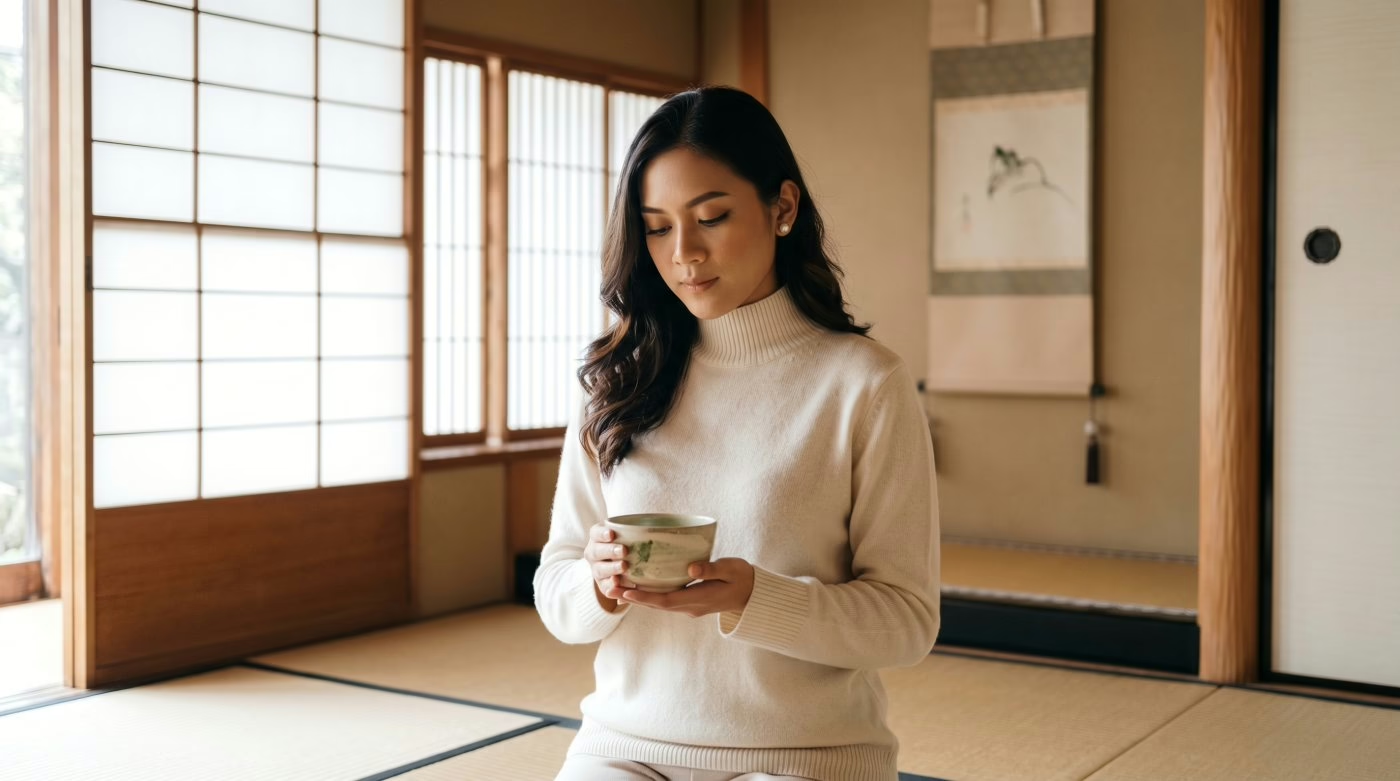
Osaka’s restaurant scene runs on its own unwritten rulebook, and knowing it before sitting down separates confident diners from confused ones.
From reading the noren curtain on the door to maneuvering chopstick customs, pouring drinks for everyone but yourself, and splitting checks without awkwardness, the rituals here are specific, practical, and genuinely worth learning.
For a deeper dive into where to eat, our guide to the best izakayas in Osaka covers the top spots worth booking in advance.
Entering a Restaurant in Osaka: How to Read the Door, the Curtain, and the Greeting
Watch for these three visual cues before entering:
- Noren displayed: Open for business, step right in
- Plastic food models or photo menus in the window: A standing invitation to browse freely
- Darkened entrance, absent noren: Don’t knock — they’re genuinely closed
Once inside, wait for staff to seat guests rather than self-selecting a table.
When someone calls out a warm greeting, a simple nod acknowledges the welcome perfectly.
Chopstick Etiquette in Osaka
Chopstick etiquette carries genuine social weight, and Osaka’s izakayas are exactly the kind of lively, communal settings where small missteps become very visible, very fast.
Three habits in particular will mark a tourist as uninformed: stabbing chopsticks upright into a bowl of rice, passing food directly from chopstick to chopstick, and using chopsticks to point at people or spear food.
Each carries its own cultural baggage, ranging from funeral symbolism to associations with deeply uncomfortable rituals.
Sticking Chopsticks Vertically in Rice: Why This Is the Worst Mistake
Of all the chopstick missteps a visitor can make, sticking them upright in a bowl of rice ranks as the most culturally jarring.
- It mirrors Japanese funeral rituals
- It signals death and misfortune to everyone watching
- It immediately marks someone as deeply disrespectful
Rest chopsticks flat across the bowl instead — simple, respectful, and easy to remember.
Passing Food Chopstick to Chopstick: The Other Mistake Worth Avoiding
Passing food directly from one set of chopsticks to another mirrors the bone-passing ritual performed at Japanese cremations, and it genuinely unsettles locals.
Simply place the food on a small plate instead.
One small adjustment, zero awkwardness.
Pointing, Spearing, and Other Chopstick Habits to Drop
- Pointing at people or dishes with chopsticks reads as aggressive
- Spearing food signals laziness and disrespect toward the chef
- Waving chopsticks mid-air while talking unnerves fellow diners
Drop these habits fast — locals notice immediately.
Slurping Noodles in Osaka: Yes, You’re Supposed To
Few sounds in Osaka’s bustling ramen shops are as musically satisfying as the aggressive, unapologetic slurp of noodles being devoured at full volume.
Silence here signals indifference, not politeness.
Slurping aerates the broth, cools the noodles, and honestly?
It tastes better loud.
| Noodle Dish | Slurp Encouraged? |
|---|---|
| Ramen | Absolutely |
| Udon | Yes |
| Soba | Yes |
| Sōmen | Yes |
| Rice noodles | Yes |
Lean in, let loose, and slurp with conviction.
The locals around you will barely glance up — because they’re already doing it louder.
Pouring Drinks at an Osaka Izakaya: Why You Pour for Others, Not Yourself
Settle into any Osaka izakaya and the unwritten rule reveals itself almost immediately: nobody pours their own drink.
It’s a beautifully communal ritual — watching, anticipating, and reaching for the bottle before someone’s glass runs dry.
Here’s the playbook:
- Watch glasses, not your own — the moment a neighbor’s drink dips low, grab the bottle and fill it
- Hold your glass up when someone pours for you; it’s gracious, not passive
- Wait for the kampai before taking that first glorious sip
Pouring for others signals respect and warmth — two currencies Osaka locals trade freely.
Splitting the Bill in Osaka: How It’s Usually Handled
Osakans are famously flexible and warm about money conversations — nobody’s getting side-eyed for suggesting a more precise split.
One practical heads-up: many smaller izakayas and restaurants prefer a single payment at the register rather than multiple cards.
Carry cash, confirm payment preferences early, and embrace the communal spirit that makes Osaka dining genuinely electric.
Is Tipping Expected at Osaka Restaurants?
No — tipping in Osaka is not just unnecessary, it’s genuinely considered rude. Leaving cash on the table signals that the server needs charity, which can cause real embarrassment.
The logic becomes clear fast:
- Service charges are already baked into the restaurant’s pricing structure
- Chasing a departing server with forgotten bills creates awkward confusion
- Exceptional service is honored through return visits, not monetary additions
Pocket that cash for Dotonbori street food instead.
Freedom from calculating 15–20%?
That’s a genuine gift.
Temple and Shrine Etiquette in Osaka
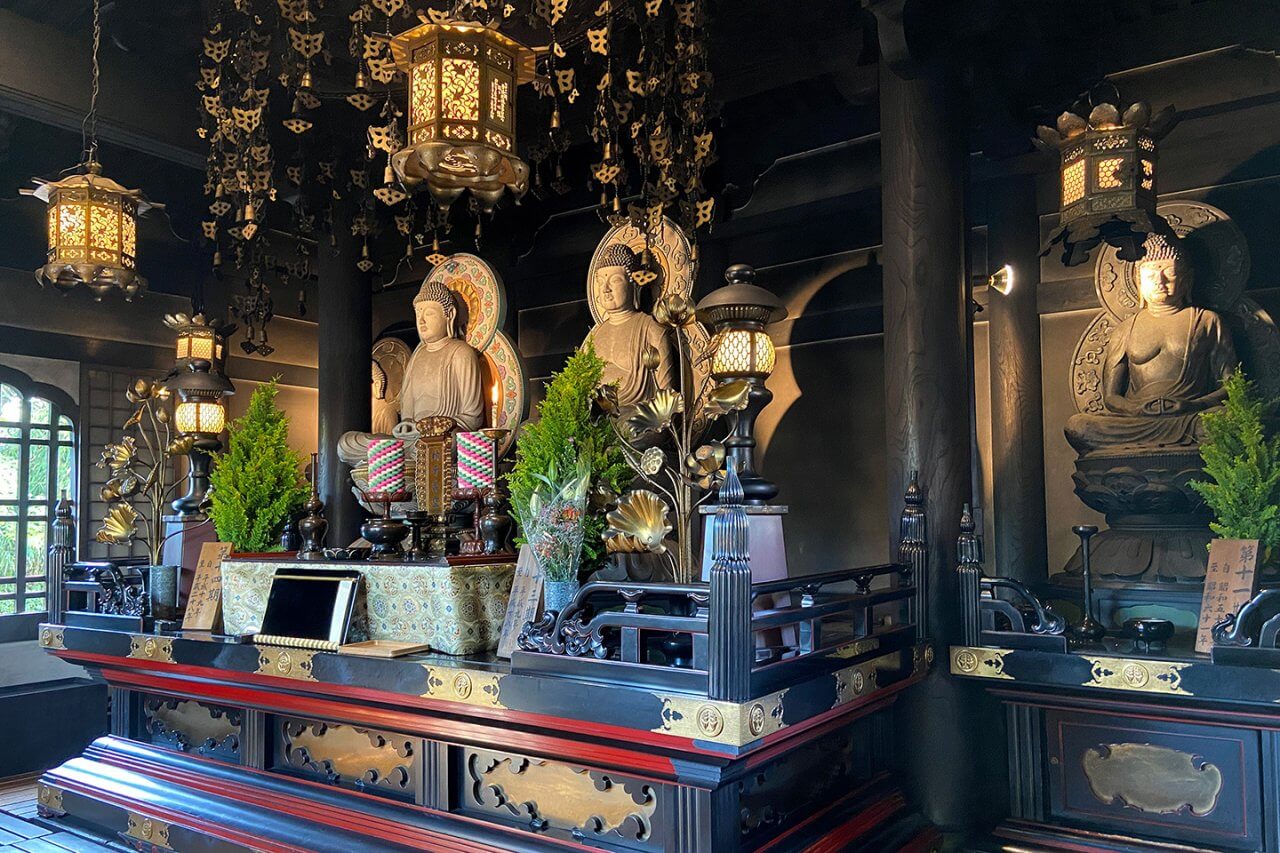
Osaka’s temples and shrines are among the city’s most rewarding experiences, but they come with their own distinct sets of rules, rituals, and unspoken expectations.
A Shinto shrine and a Buddhist temple are not the same place, they don’t work the same way, and walking into one while behaving as if it’s the other is a surprisingly common misstep.
Our guide to visiting Sumiyoshi Taisha shrine covers one of Osaka’s most important sacred sites in full detail.
The Difference Between a Shrine and a Temple in Osaka
Spotting the difference is easier than most visitors expect, and the architecture itself does the heavy lifting:
- Shrines feature a torii gate at the entrance — that iconic freestanding structure marking sacred Shinto ground
- Temples typically display a sanmon (main gate), incense burners, and Buddha statues front and center
- Shrines honor Shinto kami (spirits); temples follow Buddhist tradition, often housing elaborate pagodas or meditation halls
Approaching a temple expecting shrine protocols — or vice versa — creates awkward missteps.
Read the entrance architecture like a local and arrive already knowing where you are.
How to Pray at an Osaka Shrine: The Two Bows, Two Claps, One Bow Rule
Once a visitor steps past the torii gate and approaches the main hall, a simple four-step ritual takes over.
Toss a coin into the offering box, bow deeply twice, clap twice with purpose, then close with one final bow.
That’s it — clean, elegant, and genuinely meaningful.
The two bows signal respect; the claps invite the deity’s attention; the closing bow expresses gratitude.
Five-yen coins are considered particularly lucky.
Master this ritual, and Sumiyoshi Taisha or Namba Yasaka Shrine transforms from a tourist backdrop into something far more personal and alive.
How to Behave at an Osaka Temple: Quieter, Slower, Different Rules
Step inside a Buddhist temple like Shitennō-ji or Isshin-ji and the entire atmosphere shifts — quieter, slower, more contemplative.
No clapping here.
Buddhist protocol runs differently.
The core temple courtesies to absorb before visiting:
- Incense offering: Waft the smoke toward yourself — it’s considered purifying, not performative
- No loud conversations: Monks may be actively worshipping nearby; silence signals genuine respect
- Photography restraint: Many inner halls prohibit cameras entirely; look for posted signs before shooting
The invitation here is simply stillness — move deliberately, speak softly, absorb the atmosphere.
Photography at Osaka Temples and Shrines: When It’s Allowed and When It Isn’t
Inner sanctuaries are almost always off-limits; outer grounds are almost always fair game.
Spot a rope, a closed gate, or a sign bearing a crossed-out camera symbol, and that’s the universe clearly saying “put it away.” Main halls and interior altar spaces are nearly universally restricted.
Outer courtyards, garden paths, and iconic torii gates?
Shoot freely.
Sumiyoshi Taisha’s famous arched bridge makes for a genuinely spectacular frame.
The golden rule: if worshippers are praying nearby, lower the camera regardless of what signage permits.
Discretion earns more respect than any rule ever could.
Cleansing at the Temizuya: How the Water Pavilion Actually Works
The sequence matters — and the correct order is left hand first:
- Left hand first: Hold the ladle in your right hand and rinse your left hand.
- Switch hands: Transfer the ladle to your left hand and rinse your right hand.
- Final rinse: Pour remaining water over both hands together.
Nobody expects perfection from tourists, but making the attempt earns immediate goodwill from locals.
The water flows continuously for a reason — it symbolizes purification before entering sacred space.
Onsen and Sento Etiquette for Osaka Visitors
Osaka’s onsen and sentō scene is one of the city’s most rewarding cultural experiences — but walking in unprepared is a fast track to an awkward moment.
The rules here are specific, genuinely enforced, and a little different from what most travel guides bother to explain: tattoo policies, the mandatory pre-soak scrub-down, and the strict etiquette around towels, hair, and jewelry all demand attention before anyone so much as dips a toe in.
The No-Tattoo Rule at Osaka Onsens: How Strict It Actually Is
Most establishments still enforce a strict no-tattoo policy, and they mean it.
The cultural reasoning runs deep — tattoos carry historical yakuza associations in Japan.
Here’s what tattooed visitors actually encounter:
- Private rental baths (kashikiri) offer a brilliant workaround — book the whole bath, bring your crew, no judgments
- Some progressive establishments now permit small, coverable tattoos with waterproof patches
- Staff will check — don’t assume nobody’s watching
Osaka’s scene is slowly shifting, but assuming leniency is a gamble not worth taking.
Washing Before You Enter the Bath: The Non-Negotiable Step
Before entering any communal bath, every bather must thoroughly wash their entire body at the seated shower stations lining the room’s edges.
This isn’t optional, and it isn’t symbolic — it’s a genuine cleansing ritual that keeps the shared water clean for everyone.
Grab a wooden stool, sit at a station, and scrub properly before stepping one foot into that glorious steaming pool.
Locals notice immediately when someone skips this step, and the silence that follows speaks volumes.
Towels, Hair, and Jewelry in an Osaka Onsen
Three small rules govern the final layer of onsen etiquette:
- Towels stay out of the water entirely — fold yours small and rest it on your head or the pool’s edge
- Long hair must be tied up securely before entering, keeping stray strands from floating freely
- Jewelry and accessories come off completely; metal corrodes, and locals will notice
These aren’t suggestions — they’re silent contracts every bather honors.
What to Do If You Make a Mistake: Recovery Etiquette
Mistakes happen — and in an Osaka onsen or sentō, the recovery matters far more than the slip itself.
Forgot to rinse before entering?
Step out calmly, rinse thoroughly at the shower station, and re-enter without drama.
A small, sincere bow goes an enormous distance here.
Osaka’s bathing culture prizes harmony over confrontation — staff aren’t hunting for infractions, they’re preserving the experience for everyone.
Stay calm, correct the misstep swiftly, and the moment dissolves almost instantly.
- Best Time to Visit Osaka: Month-by-Month Guide
- Osaka Metro Guide 2026: Interactive Map, Fares, and How Not to Get Lost
- Osaka Safety Guide: What Solo Travelers, Women, and First-Timers Should Know
- Osaka Travel Budget: How Much Does a Trip to Osaka Actually Cost?
- Visiting Osaka: Everything You Need to Know Before You Go
- Pocket WiFi vs SIM Card vs eSIM in Osaka: Which One to Get?
Shopping and Convenience Store Etiquette in Osaka
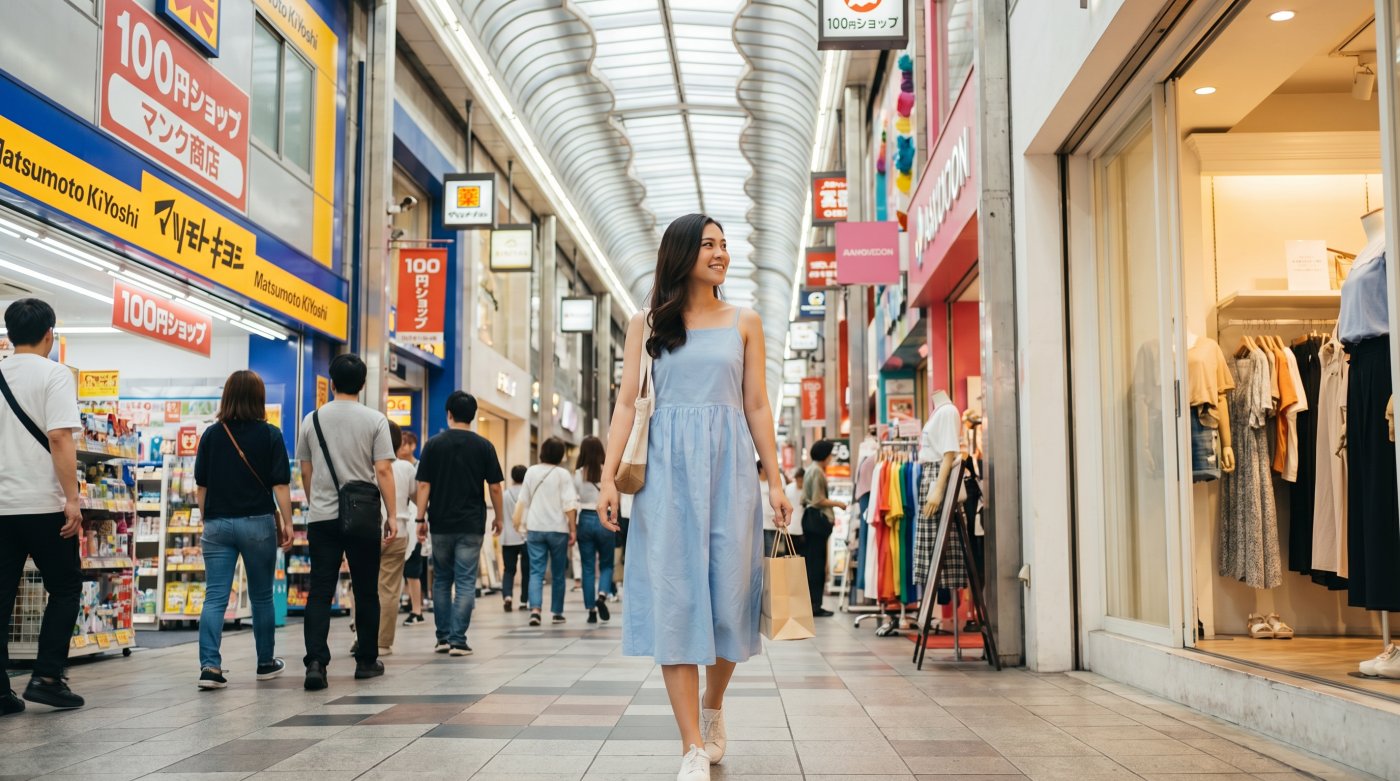
Shopping in Osaka is a genuinely delightful experience, but a few unspoken rules separate the confident visitors from the confused ones hovering awkwardly at the register.
From the small ceramic tray sitting beside every cash register, to the etiquette around fitting rooms, plastic bags, and snacking outside the local konbini, Osaka’s retail culture runs on a quietly efficient social contract.
The Money Tray at the Register: Why Cashiers Don’t Take Cash from Your Hand
In Osaka’s shops and convenience stores, cashiers won’t pluck money directly from an outstretched hand.
Instead, a small tray sits at every register — that’s exactly where payment belongs.
This practice reflects deeper cultural values:
- Hygiene matters — direct hand-to-hand contact transfers germs, and cashiers handle hundreds of transactions daily
- Precision counts — trays let both parties visually confirm the correct amount without ambiguity
- Dignity is preserved — neither party feels rushed or physically imposed upon
Simply place payment on the tray, step back slightly, and let the cashier work.
Change returns the same way.
Taking Off Shoes in Osaka Boutiques and Fitting Rooms
Stepping into certain Osaka boutiques — particularly smaller, traditional shops or those with tatami-floored fitting rooms — means shoes come off before crossing the threshold.
A small step up, called a genkan, signals the boundary between outside and inside space.
Look for a built-in shelf or a basket near the entrance — that’s where shoes belong, neatly placed and facing outward.
Socks are absolutely expected, so sandal-wearers should plan accordingly before a serious shopping day.
Bag Bringing and Plastic Bag Charges in Osaka in 2026
Since Japan rolled out mandatory plastic bag charges in 2020, Osaka’s convenience stores and shops have quietly made the reusable bag an everyday essential.
By 2026, arriving without one feels genuinely out of step with local rhythm.
Here’s what to expect:
- Convenience stores (konbini): Bags cost ¥3–¥5; cashiers will ask if you need one
- Department stores: Some premium floors still offer complimentary bags for purchases
- Markets and specialty shops: Charging varies wildly — assume nothing is free
Carrying your own bag signals environmental awareness and cultural fluency simultaneously.
Drinking and Eating Outside Convenience Stores in Osaka
Unlike the rigid etiquette of Tokyo’s convenience store culture, Osaka operates with a pleasantly relaxed attitude toward eating and drinking outside its konbini.
Locals routinely crack open a cold canned coffee or tear into an onigiri right there on the pavement.
Nobody’s judging, nobody’s staring.
That said, one rule stands firm across all of Japan: clean up after yourself.
Bin your wrappers, pocket your empty cans, and leave that little patch of pavement exactly as you found it.
Osaka’s easygoing spirit thrives because locals actively protect it.
Accommodation Etiquette in Osaka
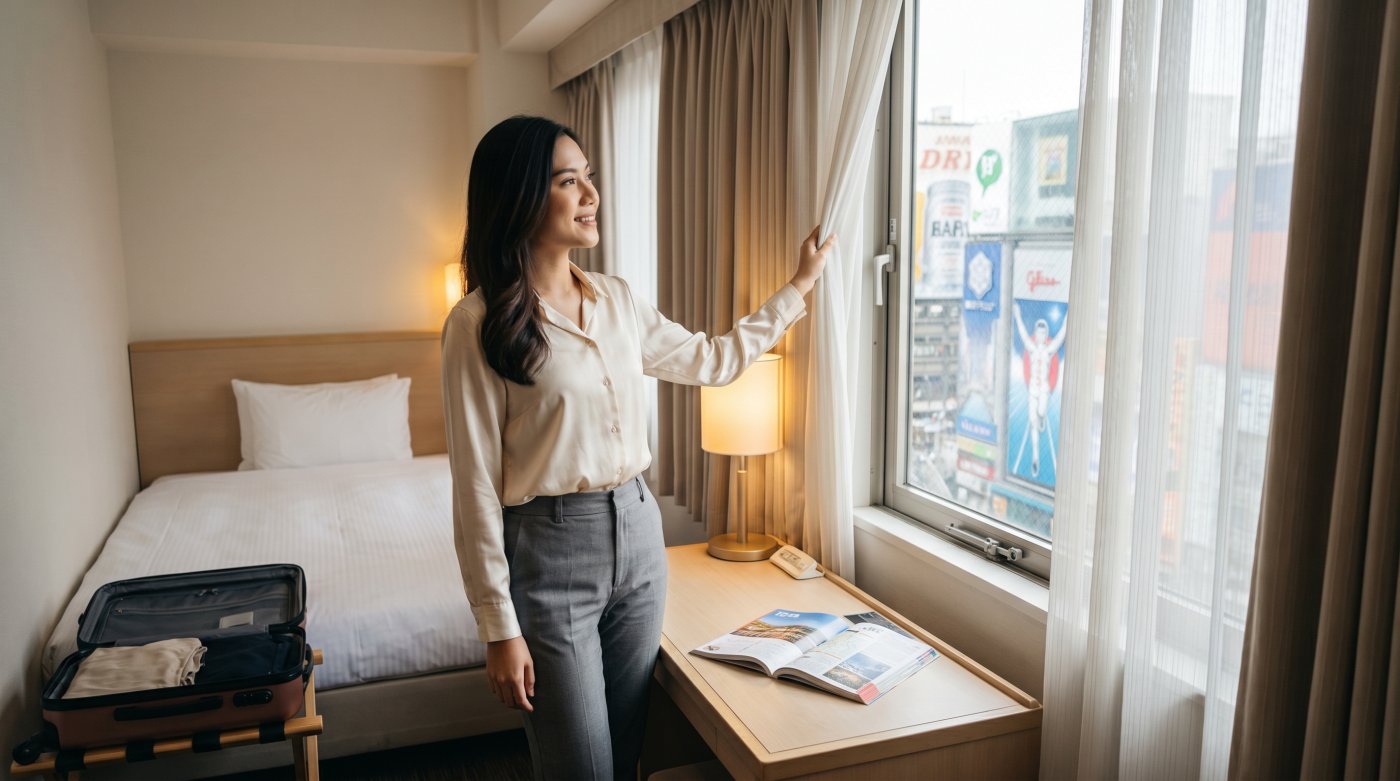
Accommodation etiquette in Osaka shifts considerably depending on whether a traveler is staying in a sleek city hotel or a traditional ryokan.
Getting those distinctions wrong can make for some genuinely awkward moments.
For travelers considering a traditional stay, our guide to ryokan experiences near Osaka covers what to expect from arrival to checkout.
Shoes in Hotel Rooms vs Ryokans: Where the Line Is
The rules shift dramatically based on where you’re sleeping:
- Western-style hotels: Shoes stay on throughout. No removal required at the entrance.
- Ryokans (traditional inns): Shoes come off at the genkan — the recessed entryway — immediately upon arrival. Slippers are provided beyond that threshold.
- Guesthouses and hybrid accommodations: Watch for the genkan signal. If the floor level drops near the entrance, that’s the cue.
Ryokan rooms with tatami flooring add another layer — those provided slippers stay outside the tatami area entirely.
Padding across tatami in slippers is a classic misstep that locals notice immediately.
Slippers, Bathroom Slippers, and Tatami Mats: A Quick Hierarchy
Three distinct slipper rules govern most traditional accommodations in Osaka, and mixing them up is the fastest way to earn a politely horrified look from ryokan staff.
General slippers wait at the entrance, ready for hallways and common areas. Bathroom slippers
live exclusively inside the toilet room — step in, handle business, step out, swap back.
Tatami mats operate under their own sacred principle: no slippers whatsoever.
Bare feet or socks only on those woven surfaces, because slippers compress and damage the delicate fibers.
Quiet Hours in Osaka Hotels and Hostels
Most Osaka hotels and hostels enforce quiet hours between 10 p.m.
and 7 a.m., and staff take this seriously.
Here’s what that means practically:
- Keep corridor conversations to whispers — sound bounces off narrow hallways like a megaphone
- Shower before 10 p.m. if possible — pipes rattle loudly in older machiya-style guesthouses
- Set phone alarms to vibrate — early-morning buzzing bleeds straight through shared walls
Respecting these hours means everyone wakes up actually rested and ready to devour Osaka’s next adventure.
Tipping the Ryokan Staff: The One Time a Tip Is Acceptable
Almost every corner of Japan operates on a strict no-tipping culture — but ryokan stays carve out one notable, ceremonially significant exception.
Travelers staying at a traditional ryokan may offer a tip, called kokorozuke, to their personal attendant, the okami or nakai-san.
Presentation matters enormously — cash placed loosely on a table reads as careless and even rude.
Instead, wrap the money in a small envelope or fold it neatly in paper, then offer it with both hands upon arrival in the room.
Think of it less as a transaction and more as an elegant expression of gratitude.
Book Your Osaka Stay Today
Browse curated hotels, guesthouses, and machiya stays from our partner platforms. Best prices, verified reviews, instant booking.








The Osaka-Specific Etiquette Most Guides Skip
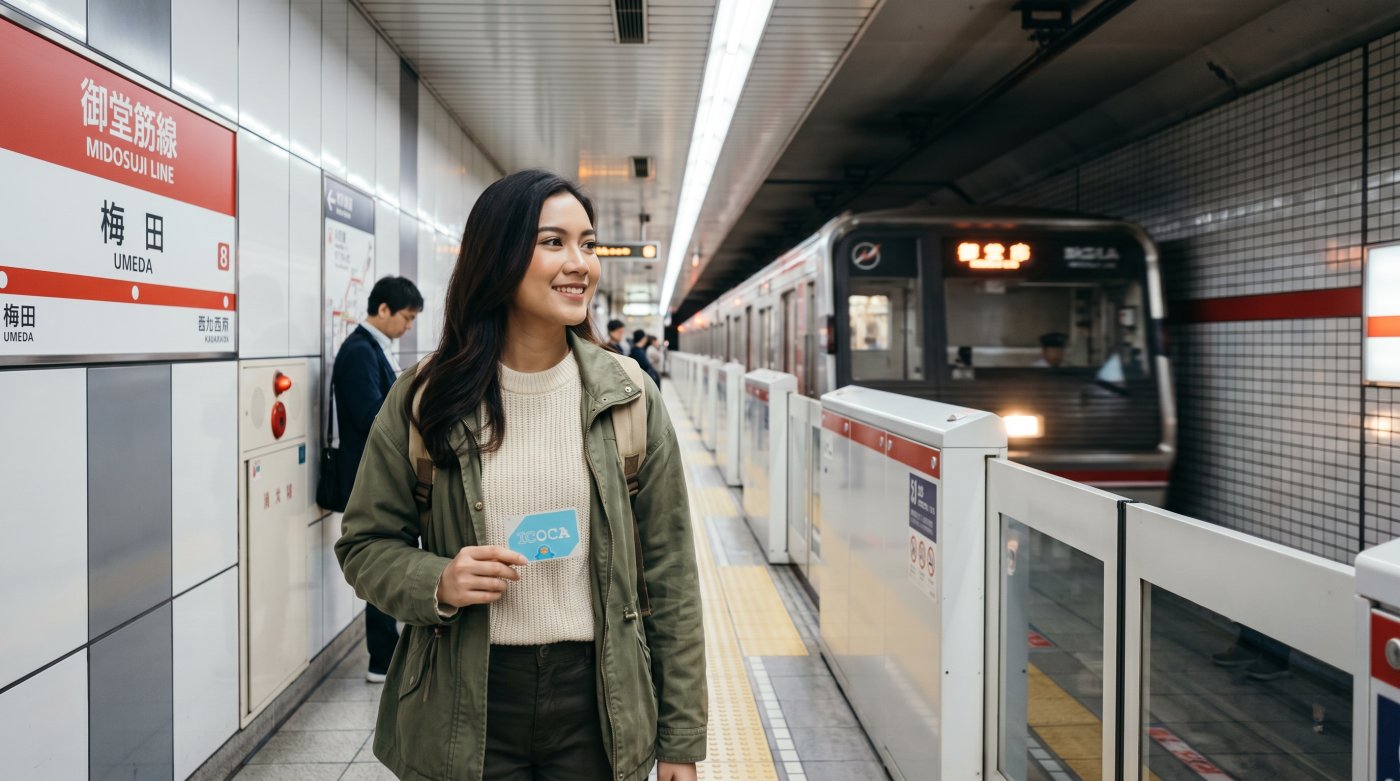
Osaka has a well-earned reputation for warmth and spontaneity, but mistaking “friendlier than Tokyo” for “anything goes” is the classic tourist misstep that locals quietly clock every single day.
Underneath the laughter and the street food chaos, there’s a distinct social code governing everything from how you interact with a takoyaki vendor to whether you point your camera at a stranger’s face in Dotonbori.
The Friendly Osaka Stereotype: Why Locals Are Looser Than Tokyo But Not Without Rules
While Osaka has earned its reputation as Japan’s friendliest, most boisterous city, that warmth comes packaged with its own unspoken rulebook — one that’s distinctly different from Tokyo’s rigid formality but no less real.
Watch for these distinctly Osaka social nuances:
- Banter is welcome, but complaints aren’t — Osaka humor runs self-deprecating and playful, never confrontational
- Enthusiasm reads as respect — showing genuine excitement about food or neighborhoods earns immediate local approval
- Loud doesn’t mean rude — boisterous conversation is culturally normal here, but disruptive behavior in confined spaces remains completely unacceptable
Think of Osaka’s social code as jazz: expressive, improvisational, but still playing recognizable notes within an understood structure.
Joking and Banter With Restaurant Staff in Osaka: When It’s Welcome and When It Isn’t
No city in Japan makes a tourist feel more invited to loosen up than Osaka — and nowhere is that invitation more literal than inside its restaurants.
Staff here genuinely enjoy a quick exchange, a surprised reaction, even a playful complaint about portion sizes.
But “looser” doesn’t mean boundless.
| Situation | Banter Welcome? | Why |
|---|---|---|
| Standing ramen counter | Yes | Fast, casual, built for it |
| Izakaya after first drink | Yes | Social rhythm expects it |
| Formal kaiseki restaurant | No | Ceremony overrides personality |
| Busy lunch rush | No | Speed is the priority |
| Small family-run shotengai shop | Often | Owners love curious regulars |
Read the room, match the energy, and Osaka’s restaurant culture rewards tourists who engage authentically rather than performing polite distance.
Photographing Strangers in Dotonbori and Kuromon Market: The Quiet Rule of Asking First
Dotonbori’s neon-drenched chaos and Kuromon’s vendor-packed aisles practically beg for a camera — but pointing a lens at someone without asking first carries genuine social weight here.
The unspoken rules worth knowing:
- Vendors mid-transaction are working, not posing — wait until they’re free
- Street performers typically welcome photos after their set, rarely during
- Elderly market regulars often find unsolicited photography deeply uncomfortable
A simple gesture toward your camera and a questioning look communicates respect instantly, no language barrier required.
That small pause before shooting transforms a stolen snapshot into a genuine human exchange — which honestly makes for a far better photograph anyway.
Speaking English Loudly in Crowded Osaka Areas: Why Volume Matters More Than Language
The issue was never about speaking English — it was always about the volume.
Osaka’s packed subway cars, narrow Kuromon Market aisles, and temple grounds operate on an unspoken agreement: keep the noise intimate, keep the space shared.
Locals speak softly here, not because rules demand it, but because consideration runs deep in Osaka’s social fabric.
Tourists who match that energy — dropping their voices in crowded trains, stepping aside before continuing a conversation — blend in beautifully.
Think of it as tuning your instrument to the room’s existing frequency.
Common Etiquette Mistakes Tourists Make in Osaka
Even seasoned travelers stumble into a handful of predictable traps in Osaka, and the city’s locals notice every single one.
Standing on the left side of an escalator at Umeda Station, chomping on takoyaki while weaving through Dotonbori’s shoulder-to-shoulder crowds, jabbing a finger at people or storefronts instead of gesturing with an open hand — these are the rookie moves that quietly mark someone as an outsider.
Standing on the Left of an Escalator at Umeda Station
Keep this cheat sheet locked in memory:
- Stand on the right — that’s the Osaka-standard waiting lane
- Keep the left lane open — hurrying locals will glide past without a word
- Don’t freeze mid-escalator — smooth, decisive movement signals confidence
This escalator rule surprises even seasoned Japan travelers who’ve memorized Tokyo habits.
Osaka runs on its own logic, and respecting that rhythm earns instant, unspoken respect from locals.
For more detailed write-up about the differences between Osaka and Tokyo, read our detailed comparison guide on Osaka vs Tokyo.
Eating Takoyaki While Walking Through Dotonbori
| Situation | Local Expectation |
|---|---|
| Eating near the stall | Completely acceptable |
| Walking while eating | Generally tolerated in Dotonbori |
| Eating on trains/subways | Always avoid this |
The golden rule is simple: pause, eat, enjoy.
Dotonbori’s crowds are dense, and a distracted tourist juggling a takoyaki tray becomes a collision waiting to happen.
Read the space, find a railing, and savor every scalding bite properly.
Pointing at Things or People Instead of Gesturing With an Open Hand
Pointing a single finger at a person or object can instantly read as rude or aggressive in Osaka’s social landscape.
Locals use an open hand, palm facing upward, to indicate direction or draw attention to something.
When traversing Osaka, swap that pointed finger for these smoother alternatives:
- Open palm gesture — extend your whole hand toward the intended direction
- Subtle head nod — tilt toward the subject when words aren’t needed
- Eye contact plus hand wave — guides attention without singling anyone out uncomfortably
Mastering this small adjustment signals genuine cultural respect, and Osaka’s warm, expressive locals will absolutely notice the difference.
Tipping a Taxi Driver and Insisting When They Try to Refuse
Generosity becomes a genuine source of awkwardness the moment a tourist slides extra yen toward an Osaka taxi driver.
Japanese taxi service operates on a strict no-tipping culture — drivers aren’t being modest when they refuse; refusing is literally the professional expectation.
Pressing the money forward anyway transforms a kind gesture into something uncomfortably close to an insult.
Osaka taxis are metered, reliable, and priced to include full service already.
Accept the exact change, offer a polite nod, and walk away feeling like someone who actually gets it.
Wrapping Up
Mastering Osaka etiquette does not merely prevent awkward moments — it reveals an entirely different city.
Locals who might have offered only polite tolerance suddenly transform into the warmest, most enthusiastic guides imaginable, pulling travelers into conversations, recommending hidden restaurants in Osaka, and treating them like honorary Osakans.
The difference between a tourist who stumbles through and one who genuinely connects comes down to these small, deliberate choices.
Osaka rewards the respectful with experiences no guidebook can manufacture.
Before your trip, it’s also worth checking our complete Osaka first-timer’s itinerary to plan your days around these cultural rhythms from the start.