

DAY TRIP
Day Trip to Tottori from Osaka: The Complete Guide 2026
Just 2.5 hours from Osaka and you're standing on Japan's only sand dunes with the Sea of Japan behind you
Read more →A direct Kintetsu train from Osaka covers the distance in 75 minutes, then the real work begins uphill.
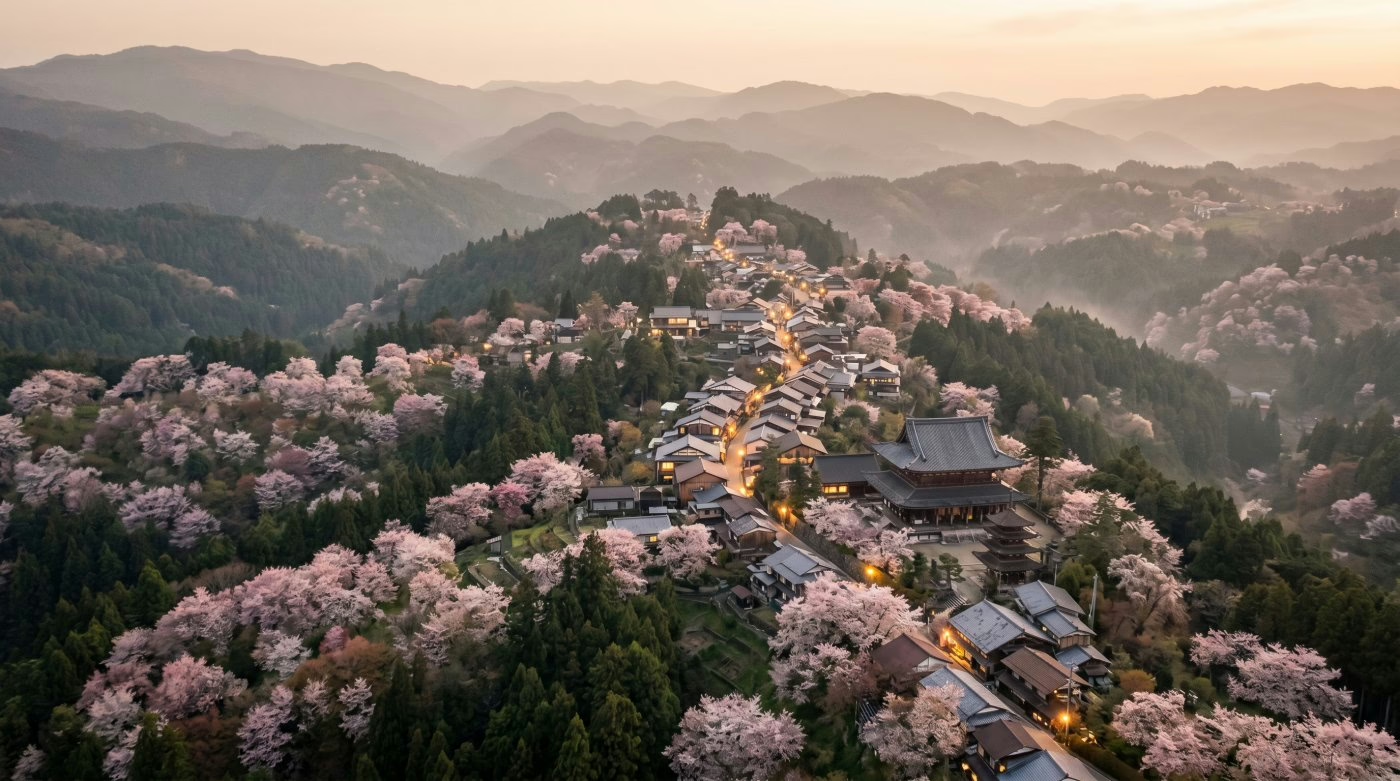
Yoshino is one of the more rewarding day trips from Osaka, but it asks more from your legs than most. Take the Kintetsu limited express from Osaka-Abenobashi and you are there in about 75 minutes for ¥1,690 one way. The day runs uphill through temple grounds and ridge paths, with the mountain switching between cherry blossoms in spring and foliage in autumn. Budget a full day and wear real shoes.
Kintetsu limited express from Osaka-Abenobashi: 1 hr 15 min, ¥1,690
Kintetsu express from Osaka-Abenobashi: 1 hr 30 min, ¥1,170
JR Yamatoji Line plus Kintetsu Yoshino Line via Yoshino-guchi: 1 hr 30 min, ¥1,320
Arrive at the base of Mt. Yoshino and sort out your uphill strategy before charging off heroically. You can walk the steep first section, take the ropeway when it is running, or use seasonal buses during busy blossom periods. Budget 10 to 15 minutes to get oriented.
This lower section is where many first-time visitors get their first proper view of Yoshino's layered slopes. It is also where the incline politely informs you that this is not a flat old-town stroll. Spend 30 to 45 minutes easing into the area and taking the slower backstreets where possible.
Kinpusenji is Yoshino's headline temple and the main cultural stop you should not skip just because the hillside is pretty. Budget about 40 minutes for the grounds and the main hall, which has a separate admission fee. The temple sits close enough to the main walking route that it fits naturally into a one-day circuit.
Yoshimizu Shrine adds some history without demanding a huge detour, which is nice because Yoshino already supplies enough uphill walking on its own. Stop for 20 to 30 minutes and use the area for one of the better viewpoints over the mountain. In blossom season, this is one of the more photogenic pauses on the route.
The Naka Senbon area is a practical lunch stop and a good midpoint if you want views without committing to the longest uphill push. Give yourself 60 to 75 minutes for lunch and a short wander. During cherry blossom season, shuttle buses often connect this area with Yoshino Station, which can save time and knees.
Chikurin-in works well as a quieter stop after the busier central slope. The temple and garden area make a good 25 to 35 minute break, especially if the main paths feel crowded. It also sits near seasonal transport connections, so it is a useful decision point for going farther uphill or turning back.
If your legs are still cooperating, continue to Kami Senbon for broader mountain views and a less compressed feel than the lower slopes. Budget 45 to 60 minutes here. Outside peak season, this upper section is where Yoshino starts feeling less like an event and more like a mountain settlement with actual breathing room.
Head back down with enough buffer for the return train, because missing the one you planned for is a fast way to add unnecessary station time to your spiritual mountain day. If the ropeway is not operating, allow extra time for the descent on foot or by substitute bus. Aim to be back at the station 15 to 20 minutes before departure.
| Route | Line | Duration | Cost | Book |
|---|---|---|---|---|
| Kintetsu Yoshino Line Limited Express RECOMMENDED | Kintetsu Railway | 1 hr 15 min | ¥1,690 | |
| Kintetsu Yoshino Line Express | Kintetsu Railway | 1 hr 30 min | ¥1,170 | |
| JR Yamatoji Line plus Kintetsu Yoshino Line via Yoshino-guchi | JR West and Kintetsu Railway | 1 hr 30 min | ¥1,320 |
All stops on this itinerary pinned for easy reference.
Yoshino Day Trip from Osaka: Transport, Temples, and the Real Trade-Off – Yoshino is a solid day trip from Osaka when you want something less urban and a bit more leg-powered.
The fastest route is a Kintetsu limited express from Osaka-Abenobashi to Yoshino in about 75 minutes, then a steep approach into the lower mountain.
Most visitors come for cherry blossom season, but the temple cluster, ridge views, and autumn colors give the place enough substance outside the pink frenzy.
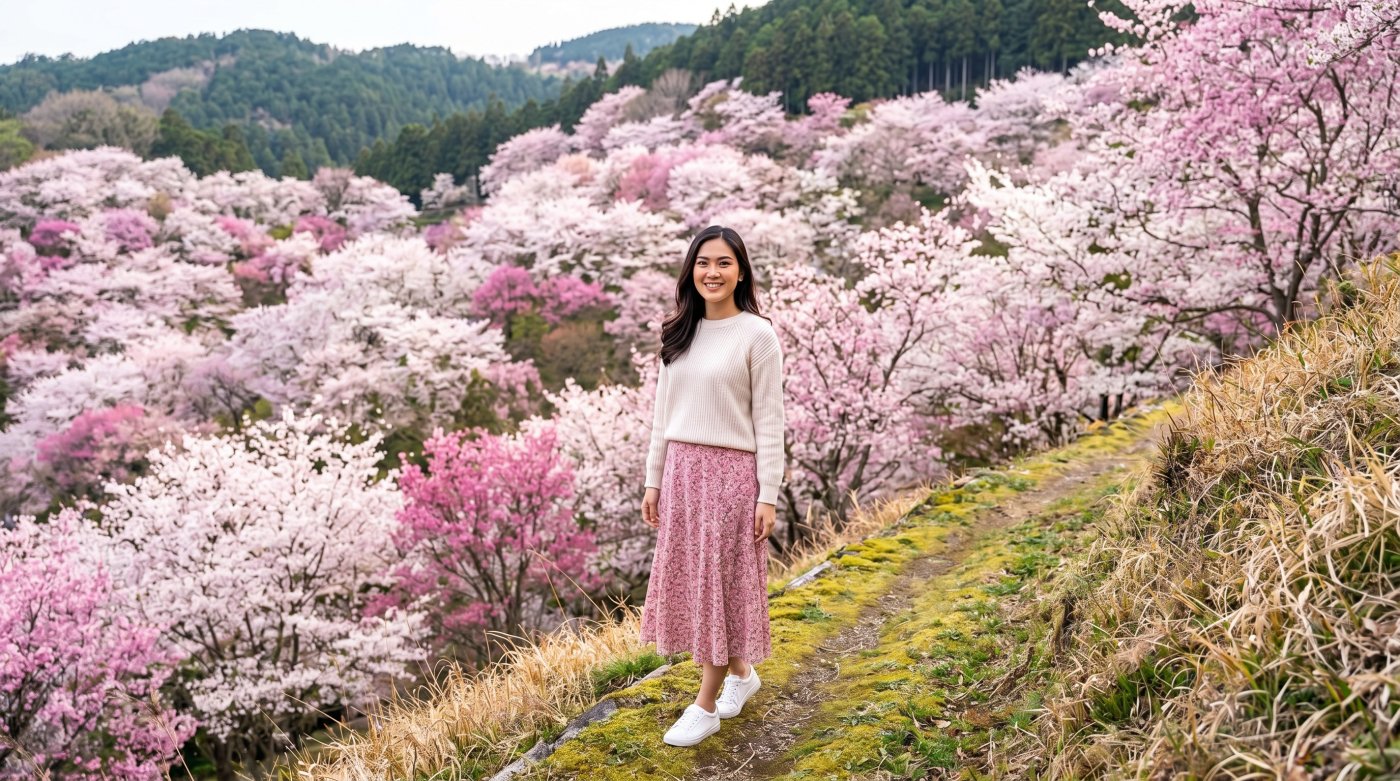
Yoshino works best for travelers who want a day trip that feels properly separate from Osaka, not just another city with a famous building near the station.
Once you arrive, the pace changes fast.
Streets get narrower, the slope starts doing its thing, temple roofs appear between trees, and the whole day feels more like moving through a mountain settlement than ticking off urban sights.
It suits people who do not mind walking uphill for the payoff.
If your ideal side trip is all about ease, shopping, and a neat station-to-attraction stroll, Nara as a day trip from Osaka is simpler, and Himeji from Osaka is more efficient if you want one iconic sight with less physical effort.
Yoshino is for travelers who like scenery, old religious sites, and the mild satisfaction of earning the view.
The place is most famous for cherry blossoms, and fair enough, the mountain is ridiculous in spring.
Still, reducing Yoshino to a sakura-only destination sells it short.
Outside blossom season, you still get Kinpusenji Temple, quiet lanes, old inns, layered ridgelines, and a sense that the day has texture instead of just photo spots.
Yoshino is easiest to reach from the Tennoji side of Osaka, specifically Osaka-Abenobashi Station next to Tennoji Station.
That matters because many first-time visitors assume Osaka Station or Shin-Osaka must be the natural starting point for everything, which is how people accidentally add extra transfers to an already uphill day.
For Yoshino, Kintetsu is the cleanest answer, and the main choice is whether you pay extra to save time.
This is the fastest practical route and the one most readers should pick.
From Osaka-Abenobashi Station, the Kintetsu limited express reaches Yoshino Station in about 1 hour 15 minutes, and the one-way fare comes to about ¥1,690 with the limited express surcharge included.
You get a direct ride, fewer decisions, and a better shot at arriving before the mountain starts filling up.
The biggest advantage is not just speed.
It is energy management.
Yoshino is a moderate-effort day trip with slopes, stairs, and a lot of standing around admiring the view while pretending your calves are fine, so saving 15 minutes and avoiding transfers is more useful than it sounds.
The cheaper direct option is the regular express from Osaka-Abenobashi to Yoshino.
It takes about 1 hour 30 minutes and costs around ¥1,170 one way, which makes it a good fit if you are traveling on a tighter budget or if the limited express timing does not line up with your morning plans.
You are giving up a bit of speed, not changing the whole trip.
For many travelers, that trade is perfectly sensible.
If you leave Osaka early, the extra 15 minutes is not a disaster, and the money saved can disappear nicely into lunch, temple admission, or one more coffee than you technically needed.
Most travelers should take the limited express going out and decide later whether to use the cheaper express on the return.
That gives you the best chance of arriving fresh and early, which matters more in Yoshino than in flatter day-trip destinations.
If you have a standard JR Pass, it does not fully cover the fastest route, so this is one of those days when the pass stops being the hero of the story.
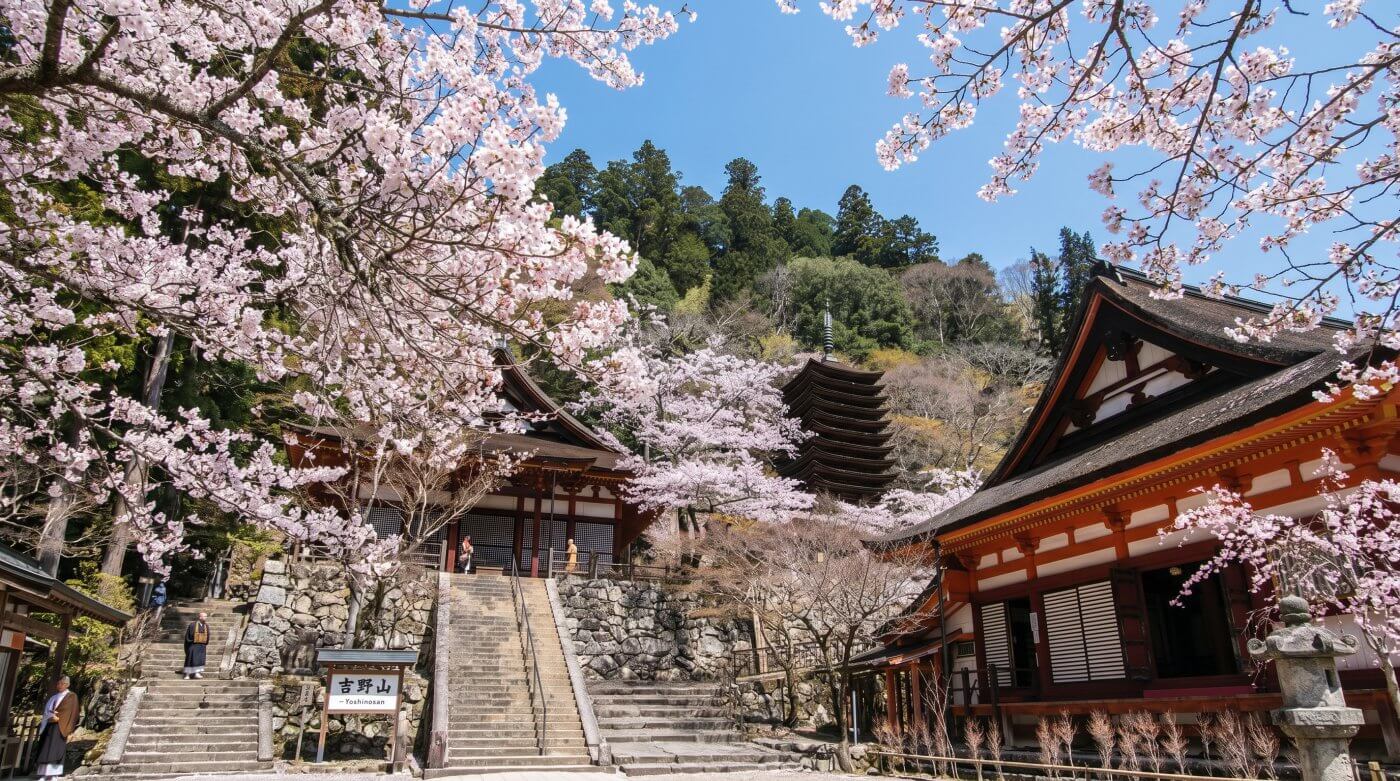
Spring is the obvious headline season, and yes, it earns the hype.
Yoshino’s mountain is famous for thousands of cherry trees spread across different elevations, which means the bloom tends to move uphill in stages rather than peak all at once.
That can work in your favor if your dates are fixed, but it also means blossom timing is more complicated here than in a flat city park such as Kema Sakuranomiya Park.
Autumn is the strongest non-spring option.
The mountain colors look excellent, the temple setting makes more sense in cooler weather, and the crowds are usually less punishing than peak sakura season.
If your trip is in November and you want a nature-heavy outing without the spring lottery, Yoshino and Minoo Park are both smart calls, though Yoshino feels more historic and more demanding.
Summer can be green and atmospheric, but it is humid, and the uphill walking gets sweaty fast.
Winter is quieter and has a certain spare, almost monastic mood, though some visitors may find the mountain a little too subdued if they came expecting seasonal drama.
If your whole Osaka trip is still taking shape, the best time to visit Osaka month by month helps put Yoshino into the wider calendar.
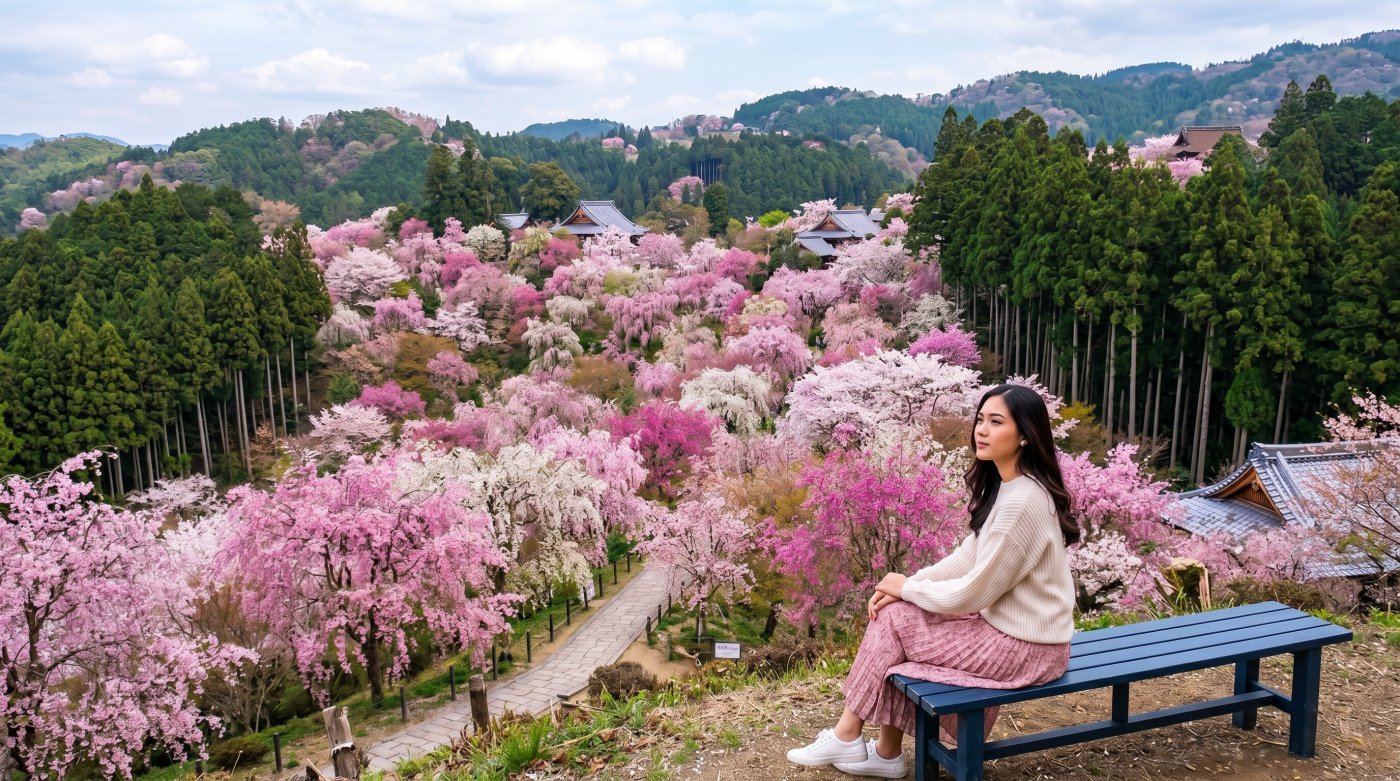
This itinerary assumes you leave Osaka in the morning on a direct Kintetsu train, keep a steady pace uphill through the main Yoshinoyama area, and return before dinner.
It is built for first-time visitors who want the classic route without turning the day into a forced march.
You will still do a fair amount of walking, but the sequence keeps the climb logical and leaves room for lunch, viewpoints, and the occasional pause to stare at the landscape like that was totally the plan all along.
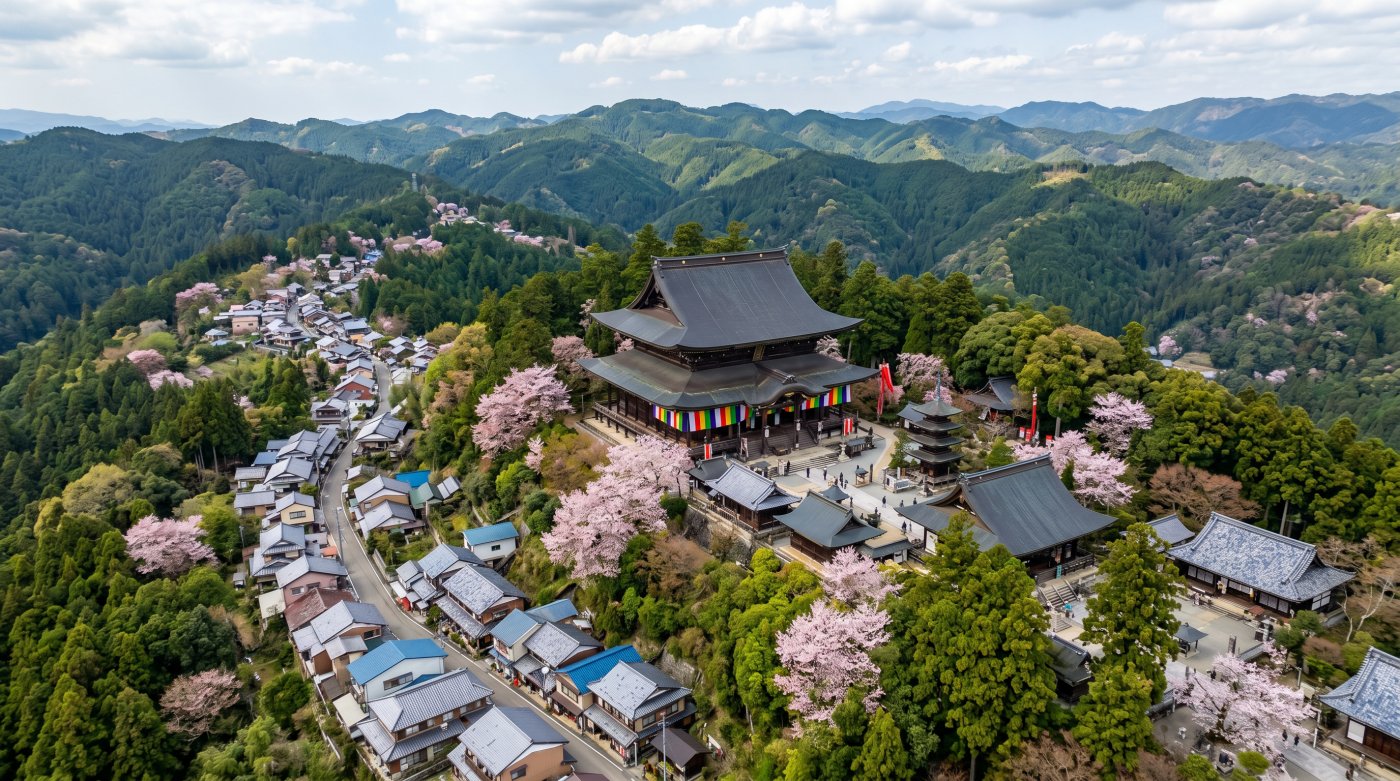
Aim to arrive at Yoshino Station around 9:15 or 9:30.
From there, get clear on the terrain immediately.
The first stretch above the station is steep enough to punish overconfidence, so this is the moment to decide whether you will walk, use the ropeway if it is operating, or rely on seasonal buses during crowded blossom periods.
None of these options make you lazy.
They make you realistic.
From the lower slope, ease into Shimosenbon rather than racing for the upper mountain.
This section gives you your first proper sense of Yoshino’s layered setting, with buildings clinging to the hillside and views opening behind you as you climb.
The pace here should be unhurried, because once you reach Kinpusenji Temple, the mountain’s cultural side comes into focus and the day stops being just a scenic walk.
Kinpusenji is the anchor stop of the morning.
Give it around 40 minutes, longer if the grounds are quiet and you want to slow down a bit.
The main hall has a separate admission fee, and it is worth budgeting for because this is the kind of place that gives Yoshino substance, not just decoration.
If Osaka’s temple stops like Shitennoji Temple gave you a taste for older religious sites, Yoshino offers a more mountainous, less urban version of that experience.
After Kinpusenji, continue toward Yoshimizu Shrine.
It is a manageable stop that adds historical depth without wrecking your schedule, and the viewpoints nearby are some of the best on the route.
In cherry blossom season, this part of the mountain feels especially theatrical, with slopes layered in pale pink and visitors trying very hard to act normal in front of absurdly good scenery.
By around 12:15, you should be in or near the Naka Senbon area, which is the right place to pause for lunch.
This is not Osaka street-food territory, and that is part of the charm.
You are here for a slower meal, mountain air, and dishes that feel tied to the region rather than engineered for neon-lit grazing like Kuromon Ichiba Market.
Give yourself an hour or a little more, especially if the weather is clear and the views are doing half the work.
In the early afternoon, continue to Chikurin-in and then decide whether to push onward to Kami Senbon.
If your legs still feel cooperative, the upper slope is worth the extra effort for the broader views and quieter atmosphere.
If not, stopping around the middle sections is still a complete day, not a failure of character.
Yoshino has a way of making small distance gains feel heroic because almost all of them happen vertically.
Start making your way downhill by around 16:00 unless you are traveling in long daylight and know your return schedule well.
The descent can be faster than the climb, but it still takes time, especially if the ropeway is not running or if buses are busy.
Build in a buffer so you are back at Yoshino Station at least 15 to 20 minutes before your train.
Back in Osaka, you will likely re-enter the city through Tennoji feeling pleasantly wrecked.
If you still have energy, the area around Harukas 300 Observatory makes an easy add-on for dinner views or a last look over the city.
If you do not, that is fine too.
Yoshino is the sort of day trip that earns a quieter evening.
Food in Yoshino is less about culinary spectacle and more about place.
Local specialties often include kakinoha-zushi, sushi wrapped in persimmon leaves, along with simple noodle dishes, mountain vegetable preparations, and sweets that make sense with tea and a hillside pause.
It is a calmer food experience than central Osaka, where meals often compete with flashing signs, queues, and the very serious business of deciding which snack is worth your remaining stomach space.
A practical lunch plan is to eat around Naka Senbon or near one of the traditional inns and temple-adjacent restaurants along the main route.
Menus may be limited, and that is not a problem unless you expected the mountain to perform like Dotonbori.
If you have dietary restrictions, carry backup snacks from Osaka because rural day-trip options can narrow quickly once you move away from major stations.
This is also a good day for modest expectations and good timing.
Lunch with a view and a warm bowl of noodles will probably hit better than hunting for a perfect review-score restaurant.
Save your harder-core Osaka eating agenda for the city itself, then return to your regular program of excess on another day.
A realistic Yoshino day trip usually lands around ¥6,000-¥9,000 per person.
That range covers round-trip transport, one paid temple visit, lunch, and a snack or small extra such as ropeway fare.
The exact total depends less on admission fees and more on which train you choose, whether you use uphill transport, and how enthusiastically you treat lunch.
The fastest and most convenient route is the Kintetsu limited express from Osaka-Abenobashi to Yoshino at about ¥1,690 one way, or roughly ¥3,380 round trip.
The direct express brings that down to about ¥2,340 round trip if you skip the surcharge.
You can also patch together a JR and Kintetsu route via Yoshino-guchi, but it is not the fastest choice, and it does not magically turn the day into a JR Pass win.
Yoshino is not a high-ticket destination.
Kinpusenji Temple’s main hall admission is around ¥800, which is the main paid cultural stop most day-trippers include.
If the ropeway is running and you use it, add about ¥360 one way or ¥610 round trip for adults.
Lunch can be fairly reasonable, especially if you stick to noodles, set meals, or simple local specialties.
A sensible range is about ¥1,200-¥2,500 for lunch, then another ¥300-¥800 for tea, sweets, or a snack.
If you are still planning the wider trip budget, our Osaka travel budget breakdown gives helpful benchmarks for how a day like this fits into total trip costs.
For most readers, ¥6,000-¥9,000 is the right planning number.
Budget travelers can land near the low end with the cheaper express train and a simple lunch, while anyone taking the limited express, paying temple admission, riding the ropeway, and lingering over food will move toward the upper end without trying very hard.
Leave Osaka early.
Really early by normal holiday standards, not the fake early where you exit your hotel at 10:15 and call it an efficient start.
Reaching Yoshino in the morning gives you cooler walking weather, lighter crowds, and more flexibility if transport uphill gets busy.
It also helps if Yoshino is part of a broader Kansai plan built around one to four days of Osaka itineraries, where wasting half a day on late starts adds up fast.
Wear proper walking shoes and bring water, cash, and one extra layer in cooler months.
The mountain terrain is manageable for most reasonably mobile travelers, but it is still a moderate day trip with gradients, uneven stretches, and more walking than many people expect after looking at a map for twelve casual seconds.
If you need a very low-effort outing, Yoshino is not the one.
Pay attention to seasonal transport and blossom timing before you go.
Ropeway operations and shuttle bus patterns can vary, and peak sakura periods bring heavy demand on trains and mountain paths.
If this is your first Japan trip and you are still sorting out connectivity, payments, and station logistics, things to know before traveling to Osaka and Pocket WiFi vs SIM vs eSIM in Osaka can save you from small but irritating mistakes.
Yes, for the right traveler.
Yoshino is worth it if you want a day with scenery, temples, and a stronger sense of escape than the easier classics provide.
It feels different from Osaka in a meaningful way, not just in branding, and the route through the mountain has enough variation to keep the day engaging from arrival to return.
That said, it is not the default best day trip for everyone.
If you want flat walking, simple logistics, and maximum payoff with minimal effort, pick Nara.
If you want a clear landmark and a tidier schedule, pick Himeji.
Yoshino asks more from your legs and your planning, especially in peak blossom season when everyone else has had the same apparently original idea.
For travelers who like temple towns, seasonal landscapes, and a bit of friction in the day, that extra effort is exactly the point.
Yoshino is less polished than the easiest Osaka side trips, but it is also more atmospheric, more varied, and more memorable once the train back starts rolling.
Sometimes the best day out is the one that feels slightly inconvenient for all the right reasons.
Yoshino is worth a day trip from Osaka if you want a more atmospheric, hillier outing than the usual city-to-city run. The direct Kintetsu limited express from Osaka-Abenobashi takes about 75 minutes, and the mountain combines temples, viewpoints, and seasonal scenery rather than just one headline attraction.
It makes the most sense in spring for cherry blossoms and in autumn for foliage, but the temple area still works outside peak seasons if you do not mind some uphill walking.
The fastest practical route takes about 1 hour 15 minutes by Kintetsu limited express from Osaka-Abenobashi Station to Yoshino Station. A cheaper direct express option takes about 1 hour 30 minutes, while a JR route requires a transfer to Kintetsu at Yoshino-guchi and ends up around the same total time.
For a full day trip, plan on roughly 9 to 10 hours including transport, walking the mountain, lunch, and your return to Osaka.
Yoshino is straightforward to visit without a car because the main approach is built around train access to Yoshino Station. From the station, you can walk uphill, take the ropeway when it is operating, or use seasonal buses that connect the lower and middle sections of the mountain.
Public transport is enough for a one-day visit, although the area works best if you are comfortable with slopes, stairs, and a fair amount of walking between stops.
The ropeway is useful but not essential. It helps you skip the first steep section above Yoshino Station, but many visitors simply walk, and seasonal buses can also reduce the climb during busy blossom periods.
Check operating status before you go because the ropeway does not always run daily outside the main cherry blossom and autumn seasons. When it is operating, it is a convenience decision, not a survival requirement.
Yoshino still works outside cherry blossom season, especially in autumn when the mountain picks up color again and the crowds are usually more manageable. The temple cluster, ridge views, and traditional mountain-town layout give the area enough structure for a satisfying day even when the sakura are not doing their annual celebrity appearance.
If spring flowers are your whole reason for going, timing matters a lot because bloom progress moves uphill through different sections of the mountain over several weeks.