

DAY TRIP
Day Trip to Amanohashidate from Osaka: The Complete Guide 2026
Two and a half hours from Osaka, a pine-covered sandbar stretches across a bay that Japan has called one of its three greatest views for over a millennium.
Read more →Just 2.5 hours from Osaka and you're standing on Japan's only sand dunes with the Sea of Japan behind you
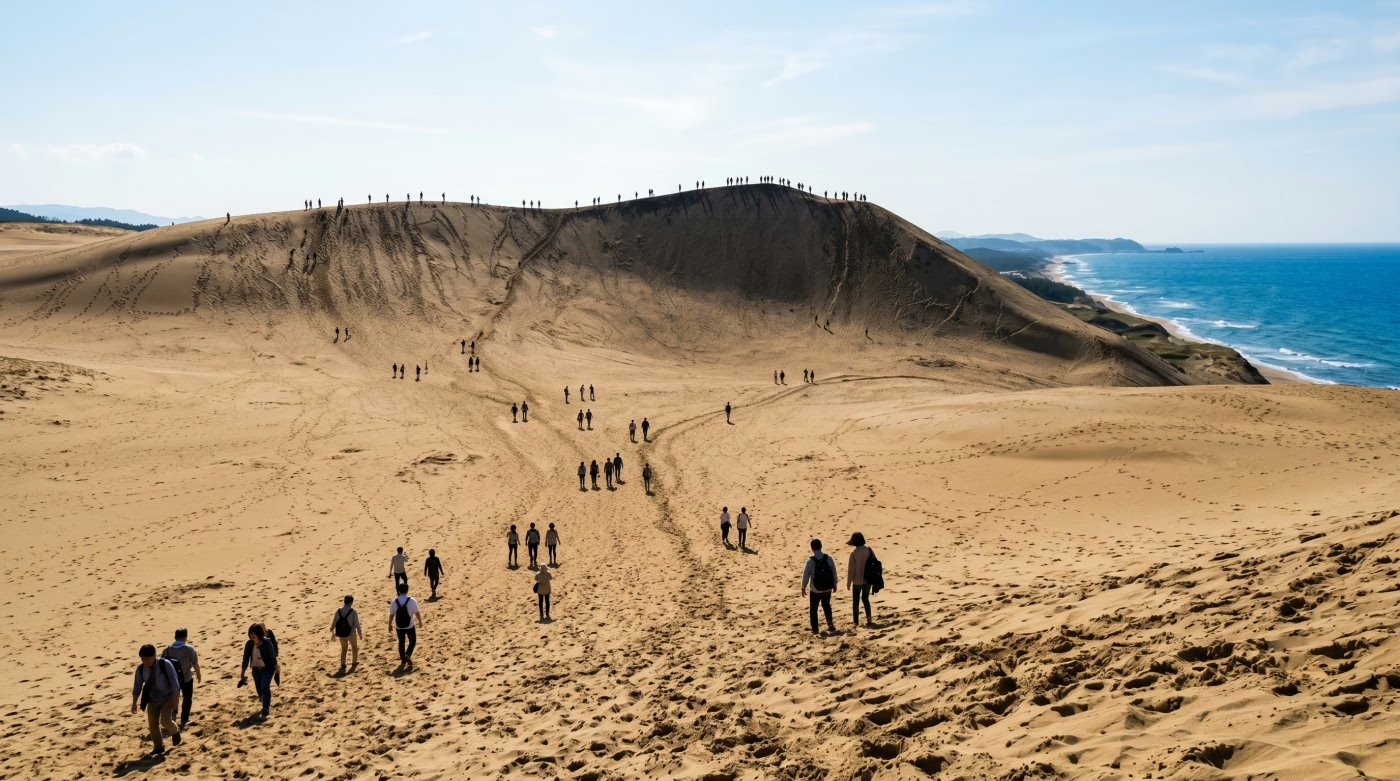
Tottori is the least obvious day trip from Osaka, and that's exactly why it works. Around 2 hours and 30 minutes on the JR Super Hakuto limited express puts you at Tottori Station, from which a 20-minute bus ride deposits you at a genuine sand dune system - 16 square kilometres of it - on the Sea of Japan coast. Add the free castle ruins above the city and a bowl of Tottori's celebrated crab at lunch, and you have a day that looks nothing like Kyoto or Nara. Budget the full day: the last Super Hakuto back to Osaka departs Tottori in the early evening.
JR Super Hakuto Limited Express (Osaka - Tottori): 2 hr 30 min, ¥7,500
Highway Bus (Osaka Namba OCAT - Tottori): 3 hr, ¥4,200
JR + Chizu Express local transfer (Osaka - Chizu - Tottori): 2 hr 45 min, ¥5,720
Board the JR Super Hakuto Limited Express from Osaka Station. Trains depart roughly every two hours, so check the timetable and book the earliest practical service. Reserved seats are strongly recommended - the train fills up on weekends.
Arrive at Tottori Station and head immediately to Bus Stop 0 on the north side of the station. The city bus to the sand dunes departs roughly every 30 minutes on weekdays and more frequently on weekends via the Kirin Jishi Loop Bus. The ride takes about 20 minutes.
Entry is free and the dunes are open around the clock, so there is no queue to worry about. The dune system stretches 16 km along the coast and rises up to 90 metres - budget 60 to 90 minutes to walk to the ridge, take in the Sea of Japan view, and walk back. Wind patterns shift the surface daily, so the landscape genuinely looks different each visit.
A 5-minute walk from the dune entrance brings you to the Sand Museum, the world's only permanent large-scale sand sculpture exhibition. The annual theme changes each season (the current exhibition runs April 2026 through early January 2027). Admission is ¥800 for adults, ¥400 for students. Budget 45 to 60 minutes inside.
Take the bus back to Tottori Station for lunch. Tottori Prefecture is the crab capital of Japan's San-in coast - matsuba crab in winter and early spring, and Tottori wagyu beef year-round. The covered shopping arcade north of the station has a mix of local seafood restaurants at mid-range prices (¥1,500-¥3,000 per head for a proper set meal).
The castle ruins sit on a hill above the city and are free to enter at all times. The stone foundations and remaining ramparts date from the 16th century, and the hilltop lookout gives a clear view over the city to the sand dunes and sea beyond. Allow 60 to 75 minutes for the climb and a proper look around. Note: Jinpukaku, the adjacent Meiji-era villa, is closed for renovation until 2028.
A short walk from the castle ruins, this museum holds over 15,000 folk craft objects from Japan and across the world. Admission is ¥700 for adults. It is a quiet, unhurried space that functions well as a final stop before heading back to the station. Closes at 17:00.
Head back to Tottori Station and board the Super Hakuto return service to Osaka. Evening departures run around 17:00 and 19:00 - confirm the exact time before you leave the station at the start of the day. You will arrive back at Osaka Station around 19:45 on the 17:00 train.
| Route | Line | Duration | Cost | Book |
|---|---|---|---|---|
| JR Super Hakuto Limited Express RECOMMENDED | JR West / Chizu Express | 2 hr 30 min | ¥7,500 | |
| Highway Bus (Namba OCAT - Tottori) | Hinomaru Bus / Willer Express | 3 hr 00 min | ¥4,200 | |
| JR Special Rapid + Chizu Express Local | JR West / Chizu Express | 2 hr 45 min | ¥5,720 |
All stops on this itinerary pinned for easy reference.
Tottori Day Trip from Osaka: Sand Dunes, Trains, Itinerary and Costs – Tottori is the least obvious day trip from Osaka, and that’s exactly why it works.
Around 2 hours and 30 minutes on the JR Super Hakuto limited express puts you at Tottori Station, from which a 20-minute bus ride deposits you at a genuine sand dune system – 16 square kilometres of it – on the Sea of Japan coast.
Add the free castle ruins above the city and a bowl of Tottori’s celebrated crab at lunch, and you have a day that looks nothing like Kyoto or Nara.
Budget the full day: the last Super Hakuto back to Osaka departs Tottori in the early evening.

Tottori works best for travelers who want a day trip that does not feel like Osaka with a different station sign.
You are not going for lantern-lit old streets, a famous shrine gate, or another castle keep with a souvenir shop at the exit.
You are going for wind, wide space, and a stretch of coastline that feels faintly absurd in Japan, which is part of the appeal.
That makes Tottori a smart pick for second-time visitors, couples who want something less obvious, photographers, and anyone whose Osaka plan already includes the city’s classic hits.
If your trip already has Osaka Castle, Dotonbori, and perhaps a day in Kyoto penciled in, Tottori gives you a completely different texture without asking you to commit to an overnight stay.
It also suits travelers who enjoy the journey itself, because this is one of those routes where the train ride feels like part of the outing rather than a tax you pay to get to the fun part.
It is not for everyone, naturally.
If you want the easiest possible day out, Nara from Osaka is simpler, closer, and far more forgiving if you start late.
If what you really want is a classic landmark payoff with minimal planning, Himeji from Osaka is the cleaner answer.
Tottori asks for an early start, a bit of timetable awareness, and enough curiosity to enjoy a destination whose main attraction is, bluntly, sand.
Trip Essentials
Osaka Travel Add-ons
Equip yourself for the ultimate Osaka adventure with the following add-ons, curated just for you.
Flights to Osaka
Airport Transfer
ICOCA IC Card
Suica IC Card
Osaka Tours
Luggage Storage
Travel Insurance
Data Security

Japan eSIM
Japan SIM Card
Pocket WiFi Rental
Japan eSIM
Tottori is far enough from Osaka that the route matters, but not so far that the planning becomes a small administrative crisis.
Most travelers should treat Osaka Station as the natural departure point because it gives you the fastest through service, and because changing from local lines with coffee in one hand and a half-zipped daypack in the other is nobody’s ideal morning.
There are two realistic choices for a day trip: the limited express train if you value time, and the highway bus if you value money.
The fastest option is the Super Hakuto limited express from Osaka Station to Tottori Station.
The ride takes about 2 hours and 30 minutes, trains run roughly every two hours, and reserved seats are mandatory, so book as soon as you know which departure you want.
This is the route that makes a same-day Tottori trip feel reasonable rather than faintly unhinged.
The one-way fare sits around ¥7,500, so it is not a cheap ride, but it buys you a real morning in Tottori instead of a rushed half-day.
One small gotcha: the service uses Chizu Express tracks for part of the route, so the standard Japan Rail Pass does not fully cover the trip.
If you are staying near Namba, Tennoji, or elsewhere in the city and need to get to Osaka Station without wasting time, our Osaka Metro guide is useful pre-coffee reading.
The budget option is the highway bus from Osaka Namba OCAT to Tottori, which takes about 3 hours and usually costs far less than the train.
On paper, that sounds like an easy win.
In practice, it works best for travelers who are price-sensitive, comfortable with a longer seated ride, and fine with having less margin if traffic decides to become the main character.
For a day trip, the bus is workable but not elegant.
You save money, then give back some of the day you were trying to enjoy in the first place.
If Tottori is one stop inside a wider Kansai trip and you are already balancing your spend against a bigger Osaka travel budget, the bus makes sense.
If Tottori is the whole point of the day, the train still wins.
The passes worth buying before you land — curated for first-timers.
Osaka Amazing Pass
Unlimited subway + free entry to 40+ attractions. The only pass most visitors actually need.
Osaka e-Pass
Attractions-only digital pass. Pair with a Metro Pass if skipping the Amazing Pass.
Osaka Metro Pass
1 or 2-day unlimited Metro rides. Best standalone transit value if you already have an attractions pass.
JR West Kansai Area Pass
Unlimited JR trains for 1–4 days. Covers Kyoto, Nara, Kobe, and Himeji from Osaka.
JR Haruka Express
KIX to Umeda/Shin-Osaka in ~50 min. Best if staying in Umeda or heading straight to Kyoto.
Nankai Rapi:t Express
KIX to Namba in 34 min, reserved seat. Better if staying in Namba or Shinsaibashi.
Most readers should take the train both ways.
It gets you into Tottori early enough to do the dunes, the Sand Museum, lunch, and the castle ruins without moving like you are late for a final exam.
The bus is the right answer only if cost is your first filter or if you happen to be staying near Namba OCAT and do not mind a slower day.
Spring and autumn are the sweet spots.
In spring, the air is cool enough to walk the dunes without feeling roasted from the ankles up, and the city side of Tottori is easier to enjoy when you are climbing up to the castle ruins instead of melting on the steps.
Autumn has the same practical appeal, with cleaner skies, comfortable temperatures, and enough breeze to make the dunes feel dramatic instead of punishing.
Summer is still very doable, especially if your tolerance for heat is decent and your plan starts early.
The dunes heat up fast under direct sun, and the lack of shade is not subtle, so this is not the place for flimsy shoes or the sort of hat people buy only after they have already made the mistake.
The upside is that the sea views look sharp, the long daylight hours help, and the coast has a broad, open feel that is hard to fake elsewhere.
Winter is more complicated.
Tottori’s food scene gets a lift from crab season, and if you are lucky with weather the dunes can look stark and beautiful in a way that photographs extremely well.
The catch is obvious: wind off the Sea of Japan can turn a casual walk into a character-building exercise, and the Sand Museum closes between exhibitions from early January until late April.
If you are comparing seasons for your wider trip, our guide to the best time to visit Osaka helps place Tottori in the larger Kansai calendar.
The best Tottori day trip has a simple rhythm: leave Osaka early, use your energy on the dunes first, move back toward the station for lunch, then finish with the hilltop city views before catching an evening train home.
That order keeps the long-distance transport tidy, avoids wasting time zigzagging across town, and gives you the biggest visual payoff while the day still feels fresh.
It also leaves enough slack for a slow lunch or a missed local bus, because these things happen and Japan, despite the myths, does not personally rearrange itself around your schedule.

Start at Osaka Station on the earliest practical Super Hakuto you can catch, ideally around 7:30 or soon after.
Arriving in Tottori around 10:00 still gives you a proper day, and from Tottori Station’s north side you can head straight to the local bus or the weekend Loop Kirinjishi Bus for the dunes.
The local ride takes about 20 to 25 minutes, which is mercifully short given that everyone on board is trying to get to the same sand pile.
Make the Tottori Sand Dunes your first real stop and give them a full hour, or 90 minutes if you actually like walking instead of merely claiming to on holiday.
The appeal is not complicated: climb the ridge, look back at the sculpted sand, turn toward the Sea of Japan, and enjoy the fact that the landscape feels wildly out of place.
This is where Tottori earns the train fare.
The dunes are free, always open, and large enough that a short walk away from the busiest entry area makes the whole scene feel calmer.
If you hit the dunes early, you also avoid the worst mix of heat, glare, and tour-bus timing.
Shoes matter more here than almost anywhere on a normal Japan city itinerary, and a bottle of water matters nearly as much.
The walk is not technical, but it is tiring in the mildly insulting way that loose sand always is.
From the dunes, walk a few minutes to the Sand Museum.
Even travelers who are skeptical at first usually come around once they are inside, because the scale of the sculptures is the point and photos do not quite sell it.
The museum is indoors, admission is modest by Japan attraction standards, and it gives the day a second act that is very different from simply marching across more sand in a different direction.
After that, head back toward Tottori Station for lunch.
The area around the station is the easiest place to eat without burning time, and this is the right moment to settle in for crab, a seafood set meal, or whatever looks like the kitchen actually cares.
Tottori does not hit you with the sensory overload of Kuromon Ichiba Market, but that is also the relief.
You are trading Osaka’s noise and sheer choice for something quieter and more local.
Once fed, make your way to Tottori Castle Ruins in Kyusho Park.
The ruins themselves are free, the climb is manageable for most reasonably mobile travelers, and the reward is a broad view over the city that helps you understand the geography of the day.
You can literally see how close the dunes are to town, which makes Tottori feel less like a random outpost and more like a place where coast, hill, and city were always meant to sit together.
If you still have time and energy after the castle, the Tottori Folk Crafts Museum is a calm final stop before the ride back.
It is not flashy, which is probably why it works.
After dunes, bus stops, stairs, and lunch crowds, a quieter indoor hour can feel oddly luxurious.
From there, head back to Tottori Station and board an early evening Super Hakuto to Osaka.
This is not the day to improvise your return.
Reserved seats can fill on weekends, and the last useful buses back from the dunes area leave early enough that a lazy sunset plan can backfire fast.
Lock in your return train when you arrive in the morning, then spend the rest of the day acting relaxed because your logistics already are.
If food is one of the reasons you travel, Tottori gives you a different kind of win from Osaka.
Osaka is all appetite, energy, and crowds pressed shoulder to shoulder around grills, counters, and market lanes.
Tottori is more restrained.
The focus is often on seafood from the Sea of Japan, cleaner flavors, and meals that feel tied to the coast rather than to urban spectacle.
Crab is the headline item, especially in the colder months when Matsuba crab shows up on menus and people start making very serious faces about shellfish.
Outside winter, seafood bowls, grilled fish, and straightforward Japanese set meals are easy, sensible choices near Tottori Station.
This is not the day to chase novelty for novelty’s sake.
Eat something regional, sit down for longer than you meant to, and accept that lunch is part of the trip, not a gap between attractions.
You may also notice that prices feel fairer than equivalent seafood meals in more famous tourist cities.
That does not mean dirt-cheap, sadly, because Japan still knows what good crab is worth.
It does mean your money tends to buy a meal that feels less processed for visitors and more like what locals would order on purpose.
A realistic Tottori day trip usually lands around ¥18,000-¥25,000 per person, and that range makes sense once you remember how much of the budget goes on the long-distance ride.
The good news is that the destination itself is not expensive once you get there.
The bad news is that trains remain very committed to charging money for trains.
The biggest fixed cost is the return trip from Osaka.
A round trip on the Super Hakuto is about ¥15,000, and then you should add local transport between Tottori Station and the dunes.
On weekdays, that often means a regular city bus at ¥380 each way.
On weekends and public holidays, the Loop Kirinjishi Bus can be better value if you are also visiting the castle area, though fares and passes are worth checking before you board because local transport prices do occasionally get adjusted.
If you choose the highway bus from Osaka, your transport cost drops sharply, but your time budget gets tighter.
That trade-off is fine for some travelers.
It just changes the character of the day from spacious to scheduled.
The Tottori Sand Dunes cost nothing to enter, which helps a lot.
The Sand Museum is modestly priced, and the castle ruins are also free, so your paid sightseeing can stay low unless you start adding extras.
Camel rides, taxis, and impulse souvenir decisions are where the numbers creep upward in the sneaky way they always do.
That balance is one reason Tottori works despite the train fare.
You spend to get there, then avoid the death-by-a-thousand-tickets problem that some day trips quietly create.
A sensible lunch runs around ¥1,500 to ¥3,000 depending on what you order and how strongly seafood is calling your name.
Add coffee, a snack, bottled water, or a soft-serve break and you are usually looking at another ¥500 to ¥1,500 over the course of the day.
If you miss a bus and need a taxi to save your return train, your budget can jump quickly, so this is one of those trips where a little timing discipline saves real money.
Cash is also handy in Tottori, especially for local buses and small purchases around the dunes.
Nothing kills holiday momentum quite like discovering your payment method is less universal than you were led to believe.
For most travelers using the train, the honest total is around ¥18,000 to ¥25,000 per person once you combine round-trip transport, the Sand Museum, lunch, snacks, and local buses.
Budget travelers can cut that down with the highway bus and a cheaper lunch.
Couples or small groups who take even one or two taxis for convenience should expect the top end of the range.

Leave Osaka early and reserve your return seat before you do anything fun.
That sounds boring because it is boring, but it is the kind of boring that protects your evening.
Tottori is not a place where you want to discover too late that the next good train is full and the last bus from the dunes left while you were admiring the sky like a poet with no timetable.
Pack for exposure, not just for temperature.
The dunes have very little shade, wind can be stronger than you expect, and sand has a talent for turning ordinary walking into more effort than the map suggests.
Good shoes, water, sunscreen, and a light layer make a bigger difference here than on a city day built around arcades and subway transfers.
Bring some cash for buses and small purchases, and check local bus departure times when you arrive at Tottori Station.
If your Osaka base is still coming together, slotting this trip into one of the plans on our Osaka itineraries hub can help you avoid stacking too many heavy travel days back to back.
Tottori pairs well with a longer Osaka stay, especially if your main city sightseeing already fills a three-day Osaka itinerary and you want one day that feels wide open.
Accessibility is mixed.
The station area and museum are straightforward, but the dunes and castle ruins are not ideal for travelers with mobility limitations, prams, or anyone who dislikes uneven ground and stairs.
If a smoother day is the priority, Tottori may not be your best day trip match.
Yes, for the right traveler.
Tottori is worth it if you want a day trip that feels genuinely different from Osaka and from the other obvious Kansai choices.
The sand dunes are memorable, the city is manageable, and the whole day carries a slightly off-script energy that many repeat visitors end up valuing more than another famous checklist stop.
Skip it if this is your first full trip to Japan and your schedule is already tight.
In that case, Kyoto from Osaka or Himeji from Osaka usually give a cleaner payoff for less transport effort.
If you want something coastal but a bit more scenic and polished in a classic postcard sense, Amanohashidate from Osaka is the more elegant alternative.
If you want mountain atmosphere and temple gravitas, Koyasan from Osaka scratches a completely different itch.
For travelers who have already done the big hitters and want a day that feels spacious, a little strange, and rewarding without being overproduced, Tottori lands well.
It takes more effort than Nara and more commitment than Himeji, but that is also why it feels less interchangeable.
Some day trips are efficient.
Tottori is memorable, which is the better trick.
The fastest route is the JR Super Hakuto Limited Express, which runs directly from Osaka Station to Tottori Station in approximately 2 hours and 30 minutes. Trains depart roughly every two hours throughout the day.
The highway bus from Osaka Namba OCAT takes around 3 hours but costs significantly less at ¥4,200 one-way. For a day trip, the train is the better choice to maximise time on the ground.
Tottori is a solid day trip if you want something genuinely different from the temple-and-castle circuit around Kansai. The sand dunes are unlike anything else in Japan – free to enter, open all day, and about 20 minutes by bus from Tottori Station.
The travel time (2.5 hours each way) is longer than Nara or Himeji, so you need to depart early and use the day efficiently. If you leave Osaka by 08:00 and catch the 17:00 or 19:00 return Super Hakuto, you have a comfortable six to seven hours on the ground.
The Super Hakuto runs partly on Chizu Express tracks, which are not covered by the standard Japan Rail Pass. JR Pass holders can ride the JR sections but must pay a supplement fare for the Chizu Express portion.
In practice, the supplement makes the effective cost similar to buying a full ticket, so the JR Pass offers minimal savings on this route. Check current supplement fares at a JR ticket window before travelling.
Entry to the Tottori Sand Dunes is completely free. The dunes are open 24 hours with no ticketing or access restrictions. The adjacent Sand Museum charges ¥800 for adults and ¥400 for students (elementary through high school). The Sand Museum runs its annual exhibition from April through early January each year.
Spring (March to May) and autumn (September to November) offer the most comfortable walking conditions at the dunes and around the castle ruins. Summer is viable but the dune surface heats up significantly underfoot by midday – start early if visiting in July or August.
Winter brings Tottori’s famous matsuba crab season (November to March), which makes the food side of the trip more compelling, though the dunes can be cold and windy. The Sand Museum is closed for its annual changeover in late January through late April.