

DAY TRIP
Day Trip to Tottori from Osaka: The Complete Guide 2026
Just 2.5 hours from Osaka and you're standing on Japan's only sand dunes with the Sea of Japan behind you
Read more →Two and a half hours from Osaka, a pine-covered sandbar stretches across a bay that Japan has called one of its three greatest views for over a millennium.
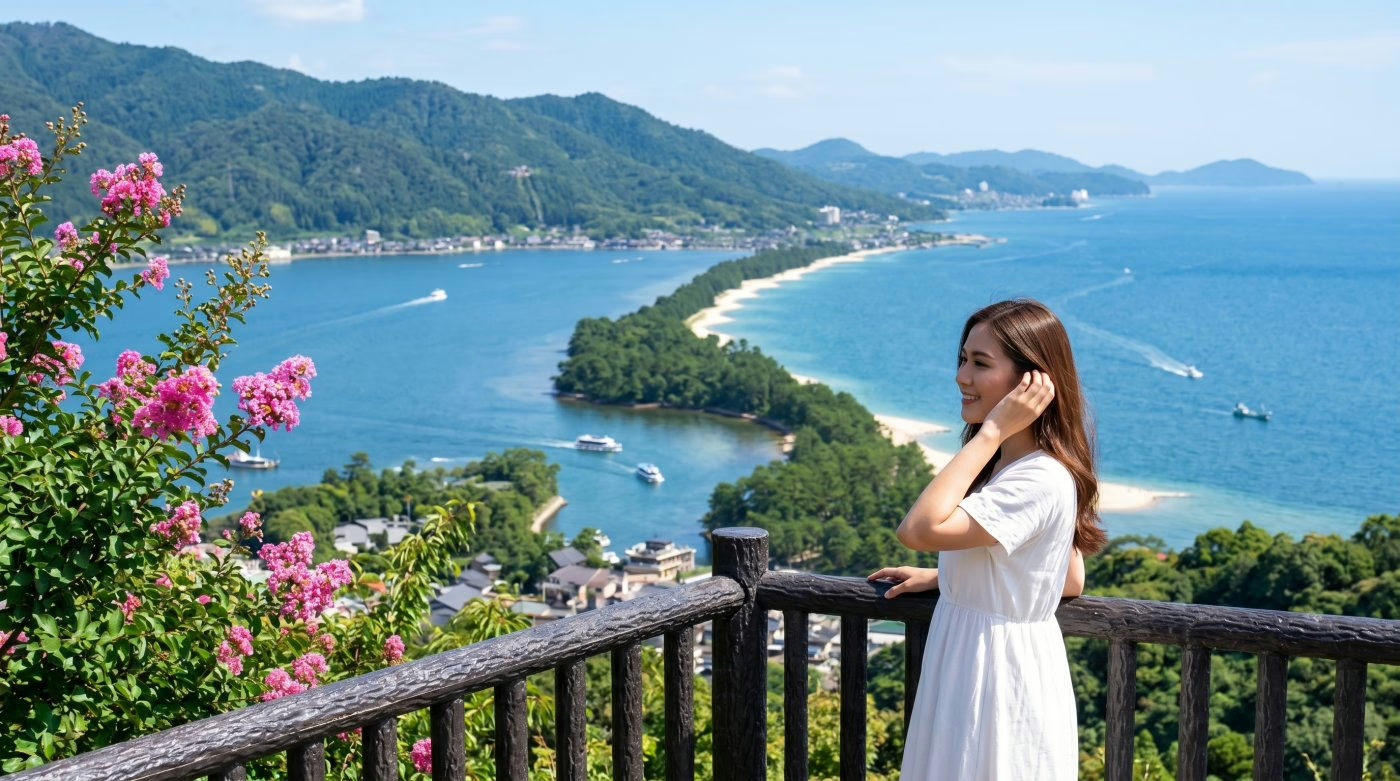
Amanohashidate is a 3.6-kilometer pine-covered sandbar in northern Kyoto Prefecture and one of Japan's Three Scenic Views, ranked alongside Matsushima and Miyajima. From Osaka Station, take the JR Konotori Limited Express to Fukuchiyama, transfer to the Kyoto Tango Railway, and you're there in about 2 hours 30 minutes. Four to five hours on the ground covers both elevated viewpoints, a sandbar walk or cycle, and a seafood lunch - and you can be back in Osaka by dinner.
JR Konotori Limited Express + Kyoto Tango Railway: 2 hr 30 min, ¥5,000-6,500
Tankai Highway Bus (Osaka Umeda): ~3 hr, ¥2,650
Guided Day Tour (depart Osaka): ~10 hr, from ¥10,849
Board the JR Konotori Limited Express from Osaka Station toward Fukuchiyama. Seat reservations are mandatory, so book in advance - you cannot simply board. The ride takes roughly 90 minutes through the Tamba highlands.
At Fukuchiyama Station, transfer to the Kyoto Tango Railway toward Amanohashidate. The journey takes 40 to 60 minutes depending on service type. The coastal track along Yura Bay makes this leg genuinely scenic - window seat on the right side heading north.
Start at the southern viewpoint before the day-trip crowds thicken. A six-minute chairlift or eight-minute monorail (¥850 round trip) takes you to the observation deck on Mt. Monju. This is the 'flying dragon' angle you see in every photo of the sandbar. Try matanozoki - bending over and viewing the sandbar upside down through your legs - it genuinely does look like it's floating in the sky.
Walk five minutes from the station to Chion-ji, dedicated to Monju, the bodhisattva of wisdom. Entry is free. The two-story pagoda dates to 1501 and the grounds are quiet in the morning. Pick up chie-no-mochi (wisdom rice cakes with red bean paste) from the tea houses along the approach - they are the local snack to eat here.
The 3.6-kilometer sandbar takes 45 minutes to walk end to end or about 15 minutes by bicycle. Bike rentals cluster around the station at ¥400-500 per hour or ¥1,500 for the day. The path is flat, pine-shaded, and has small beaches on both sides. Most people cross one way on foot or bike and return by sightseeing boat (¥800 one way, boats every 30 minutes).
Ajikobo Mamaya, near the rotating bridge, is the reliable lunch option - asari-don (clam rice bowl with local clams over kelp-broth rice) is the dish worth ordering. Window seats look out onto the water. Budget ¥1,500-2,500 for lunch. The area has several restaurants within a short walk of the station, most serving local seafood.
Cross to the northern side of the bay by sightseeing boat (¥800) or on foot across the sandbar, then take the cable car or chairlift up to Kasamatsu Park (¥660 round trip). The view from the north is more distant and quieter than Viewland - many visitors prefer it, especially in the afternoon light. Note: the cable car is suspended from May 7 to August 8, 2026 for maintenance; the park is still reachable on foot or by bus, adding 30-40 minutes.
Head back to Amanohashidate Station for the Kyoto Tango Railway to Fukuchiyama, then JR Konotori Limited Express back to Osaka. The return journey is the same 2 hours 30 minutes. Book your return seat reservation when you book your outbound ticket - peak season trains fill up, particularly on autumn weekends.
| Route | Line | Duration | Cost | Book |
|---|---|---|---|---|
| JR Konotori Limited Express + Kyoto Tango Railway RECOMMENDED | JR West / Kyoto Tango Railway | 2 hr 30 min | ¥5,000-6,500 | |
| Tankai Highway Bus (Umeda - Amanohashidate) | Tankai Bus | 3 hr | ¥2,650 | |
| JR Hashidate Limited Express via Kyoto | JR West | 2 hr 45 min (inc. Osaka to Kyoto) | ¥5,700-6,400 |
All stops on this itinerary pinned for easy reference.
Amanohashidate Day Trip from Osaka: Complete Guide – Amanohashidate is a 3.6-kilometer pine-covered sandbar stretching across Miyazu Bay in northern Kyoto Prefecture, and it is one of Japan’s Three Scenic Views alongside Matsushima and Miyajima.
From Osaka, the trip takes about 2 hours 30 minutes: JR Konotori Limited Express to Fukuchiyama, then the Kyoto Tango Railway to Amanohashidate Station.
Budget a full day – four to five hours on the ground gets you both viewpoints, a sandbar walk or cycle, and a seafood lunch – and you can be back in Osaka by dinner.
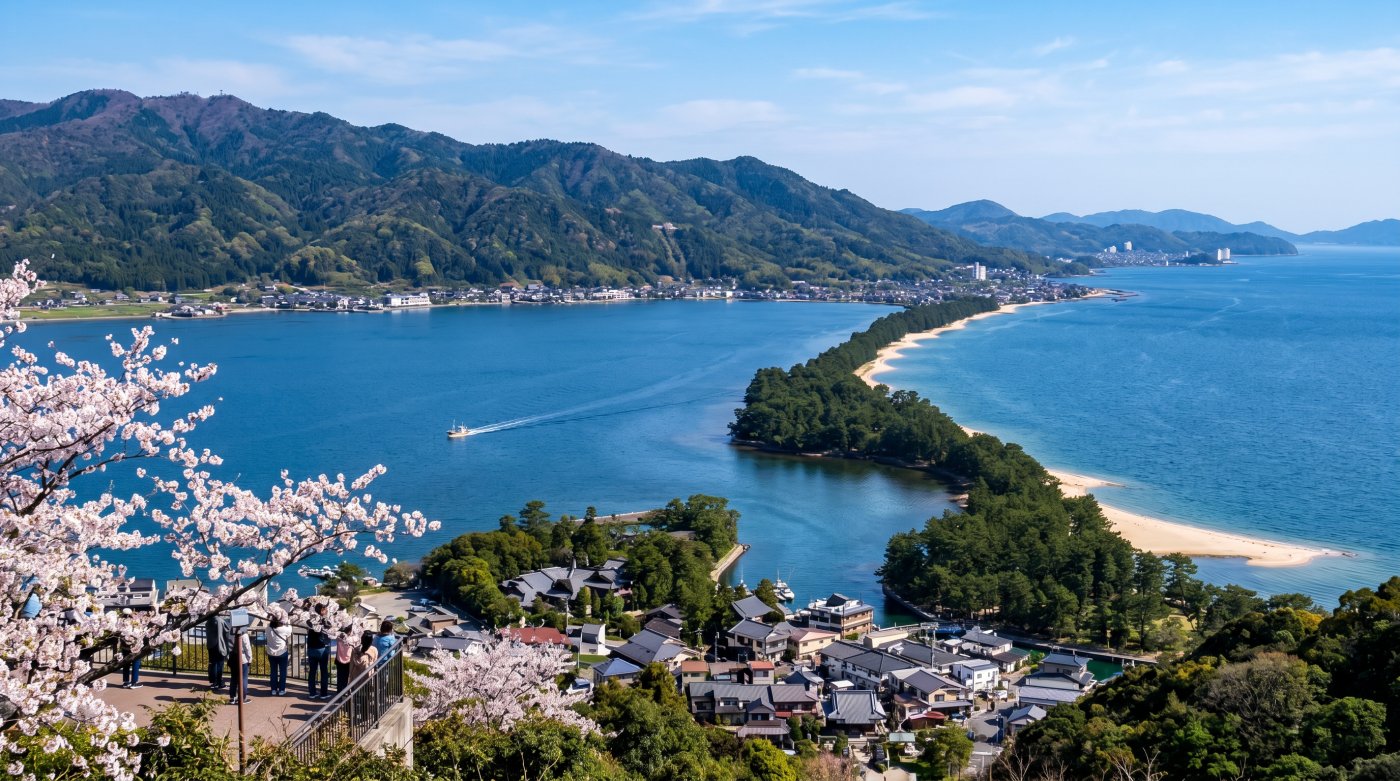
Most Osaka day-trippers default to Kyoto, Nara, or Himeji.
Amanohashidate sits further north in Kyoto Prefecture, and that extra hour of travel is precisely why it stays quieter, more atmospheric, and genuinely different from the well-trodden Kansai temple circuit.
You’re trading convenience for a coastal landscape that has been celebrated in Japanese art and poetry for over a thousand years.
The destination works best for travelers who want texture in their Japan trip – something that isn’t a castle, a bamboo grove, or a shrine-dense walking street.
The sandbar itself is free to walk, the viewpoints require nothing more than a chairlift ticket (¥850), and the surrounding bay is the kind of scenery that makes you feel like you’ve actually left the city behind.
Photographers, cycling enthusiasts, and anyone craving a quieter pace will find Amanohashidate delivers on that front.
If you’re after packed-in highlights and maximum efficiency, this is probably not your day.
Where Amanohashidate might disappoint: travelers on a five-day itinerary who haven’t yet seen Kyoto’s major temples, Koyasan, or Hiroshima should prioritize those first.
The travel-to-ground-time ratio is less favorable here than on shorter day trips.
But if you’ve already done the Kansai circuit and want a day that feels genuinely off-script, Amanohashidate is hard to beat.
Trip Essentials
Osaka Travel Add-ons
Equip yourself for the ultimate Osaka adventure with the following add-ons, curated just for you.
Flights to Osaka
Airport Transfer
ICOCA IC Card
Suica IC Card
Osaka Tours
Luggage Storage
Travel Insurance
Data Security

Japan eSIM
Japan SIM Card
Pocket WiFi Rental
Japan eSIM
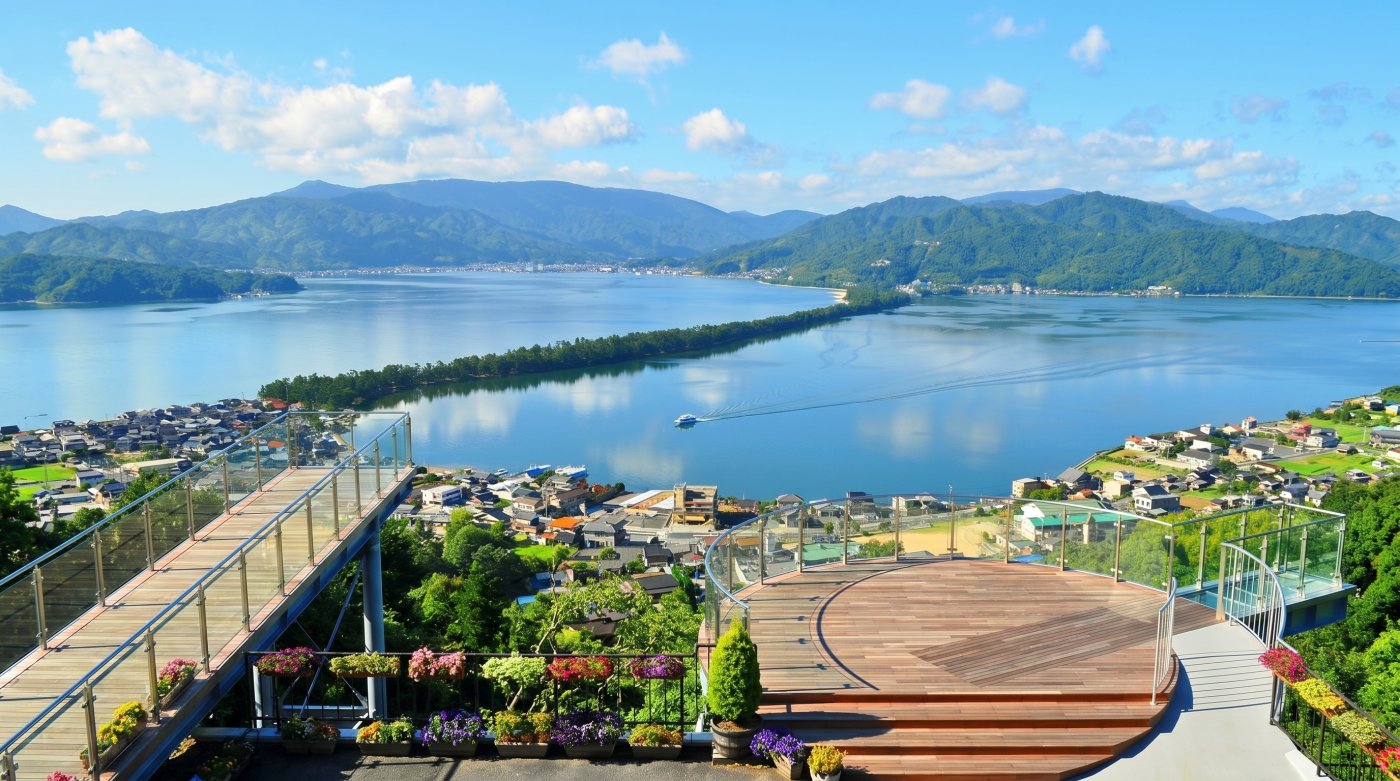
Amanohashidate is about 100 kilometers north of Osaka, and the route requires two separate train legs with a transfer at Fukuchiyama.
There’s also a direct highway bus option if you prefer a single vehicle.
All prices below are one-way per adult.
This is the fastest and most convenient route.
From Osaka Station, board the JR Konotori Limited Express (operated by JR West) heading toward Kinosaki Onsen or Toyooka – the train stops at Fukuchiyama in about 90 minutes.
Fares vary by day: ¥4,170 on weekdays, ¥4,770 on weekends and holidays.
Seat reservations are mandatory, not optional – book ahead through JR ticket offices, the JR West app, or any Midori-no-madoguchi counter.
At Fukuchiyama, transfer to the Kyoto Tango Railway (KTR) for the remaining leg to Amanohashidate Station, which takes 40 to 60 minutes depending on the service.
KTR fares to Amanohashidate run ¥800 to ¥1,750 one way.
Combined, you’re looking at ¥5,000 to ¥6,500 each way.
Keep in mind that the standard Japan Rail Pass does not cover the Kyoto Tango Railway leg – you pay the KTR fare separately regardless of what JR pass you hold.
The one exception is the JR West Kansai Wide Area Pass, which covers the entire journey including the KTR section.
If you’re planning multiple day trips from Osaka, that pass can pay for itself quickly – you can compare it against other options in the Osaka Amazing Pass vs ICOCA guide.
Tankai Bus operates a direct highway bus service from Osaka Umeda (Hankyu Bus Terminal) to Amanohashidate.
The ride takes around 3 hours and costs ¥2,650 one way.
It’s slower, but if you’re traveling without a rail pass and want a simple, single-vehicle option, the savings are real.
Buses also run from Kyoto, which is useful if you’re combining stops.
The trade-off is that buses are less frequent than trains and can be delayed during peak travel periods.
If you’re already spending time in Kyoto, the JR Hashidate Limited Express departs directly from Kyoto Station and reaches Amanohashidate in about 2 hours (¥3,670 to ¥4,500 from Kyoto).
From Osaka, add the Osaka-Kyoto leg (about 15 minutes on the JR Special Rapid, ¥580), making total travel time around 2 hours 45 minutes.
This route also requires you to check JR Pass coverage carefully – the Hashidate is JR West, but KTR still applies on some service combinations.
For most travelers coming from central Osaka, the JR Konotori + Kyoto Tango Railway route is the right call.
It’s the fastest combination, departure times are more frequent than buses, and trains run reliably.
If budget is the primary concern and you don’t mind adding 30 extra minutes each way, the highway bus from Umeda cuts the transport cost nearly in half.
Hold the Kyoto-routing option for days when you want to combine Amanohashidate with a morning stop in Kyoto on the way up.
The passes worth buying before you land — curated for first-timers.
Osaka Amazing Pass
Unlimited subway + free entry to 40+ attractions. The only pass most visitors actually need.
Osaka e-Pass
Attractions-only digital pass. Pair with a Metro Pass if skipping the Amazing Pass.
Osaka Metro Pass
1 or 2-day unlimited Metro rides. Best standalone transit value if you already have an attractions pass.
JR West Kansai Area Pass
Unlimited JR trains for 1–4 days. Covers Kyoto, Nara, Kobe, and Himeji from Osaka.
JR Haruka Express
KIX to Umeda/Shin-Osaka in ~50 min. Best if staying in Umeda or heading straight to Kyoto.
Nankai Rapi:t Express
KIX to Namba in 34 min, reserved seat. Better if staying in Namba or Shinsaibashi.
Amanohashidate is genuinely worth visiting in spring and autumn – the two seasons when both the scenery and the logistics work in your favor.
In late March to early April, cherry blossoms line the Chion-ji temple approach and the slopes around Amanohashidate View Land turn a soft pink.
The sandbar pine forest stays evergreen year-round, so the contrast between the pale blossoms and the deep green trees is particularly sharp.
Crowds are heavier during peak sakura weekends, so weekday visits in late March or the first week of April give you the blooms without the tour-bus traffic.
Autumn runs October through mid-November, with foliage at Nariai-ji Temple on the hillside above Kasamatsu Park peaking in mid-to-late November.
The air is clearer in autumn than any other season, which directly affects how the viewpoints read – the sandbar looks sharper, the bay color is richer, and the distant mountains hold definition.
Temperatures are mild enough (12-18°C) that the sandbar walk and cycling are genuinely pleasant rather than a chore.
This is the strongest season for photography and is worth planning around if your travel window is flexible.
Summer (July-August) brings beach visitors from Kyoto and the wider Kansai region.
The area is livelier, festivals pop up along the bay, and boats are running at full frequency – but the heat and humidity make the 3.6-kilometer sandbar walk uncomfortable between 11am and 3pm.
If you visit in summer, start early.
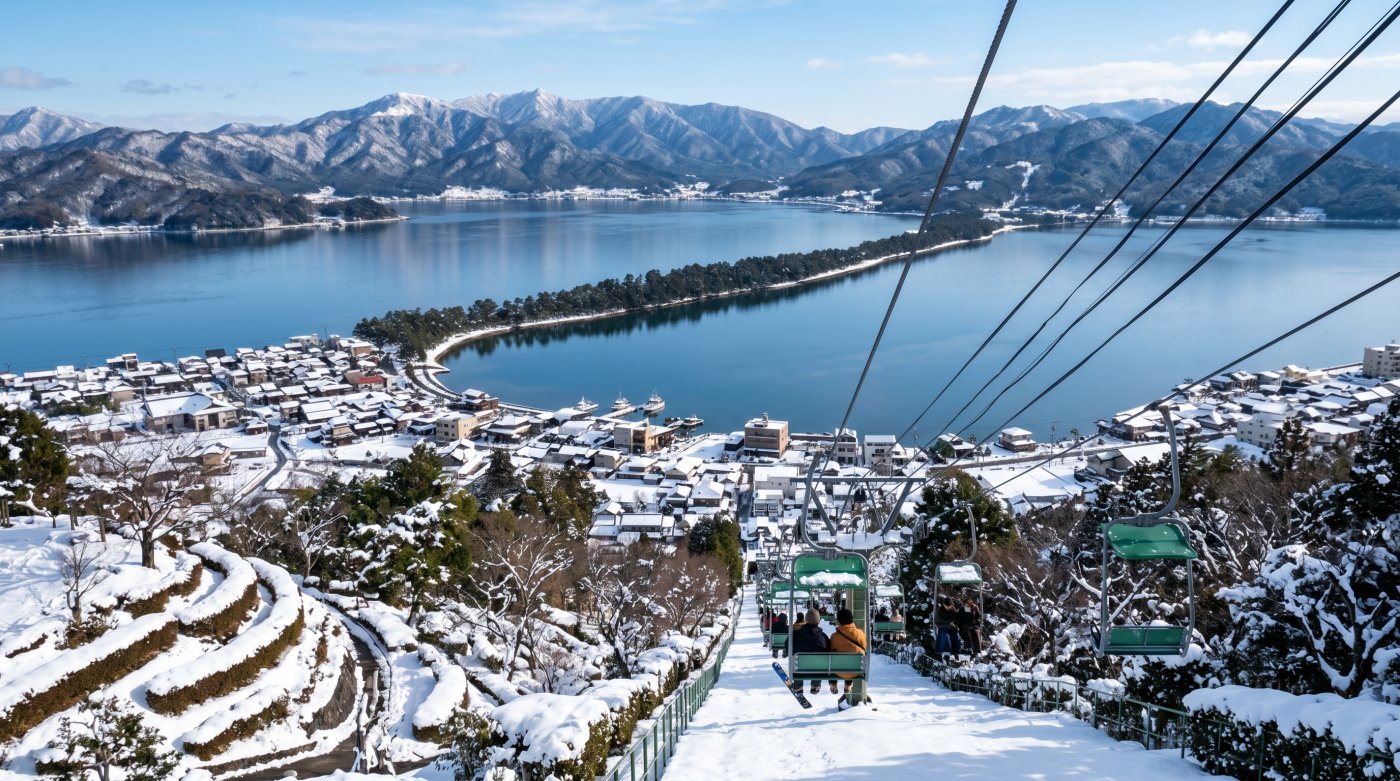
Winter brings a quieter, colder experience, but it coincides with matsuba-gani (snow crab) season from November through March.
Local restaurants along the bay serve the crab in hot pot and grilled preparations that you simply will not find in Osaka at the same quality or price.
For food-focused travelers, that alone makes a winter trip a legitimate option.
A well-structured day at Amanohashidate follows a simple logic: start at the southern viewpoint before the crowd thickens, cross the sandbar mid-morning when the light is best, and work your way to the quieter northern viewpoint in the afternoon.
Getting this sequence right means you spend about five hours on the ground and still catch the return Konotori with time to spare.
Here’s how the day breaks down.
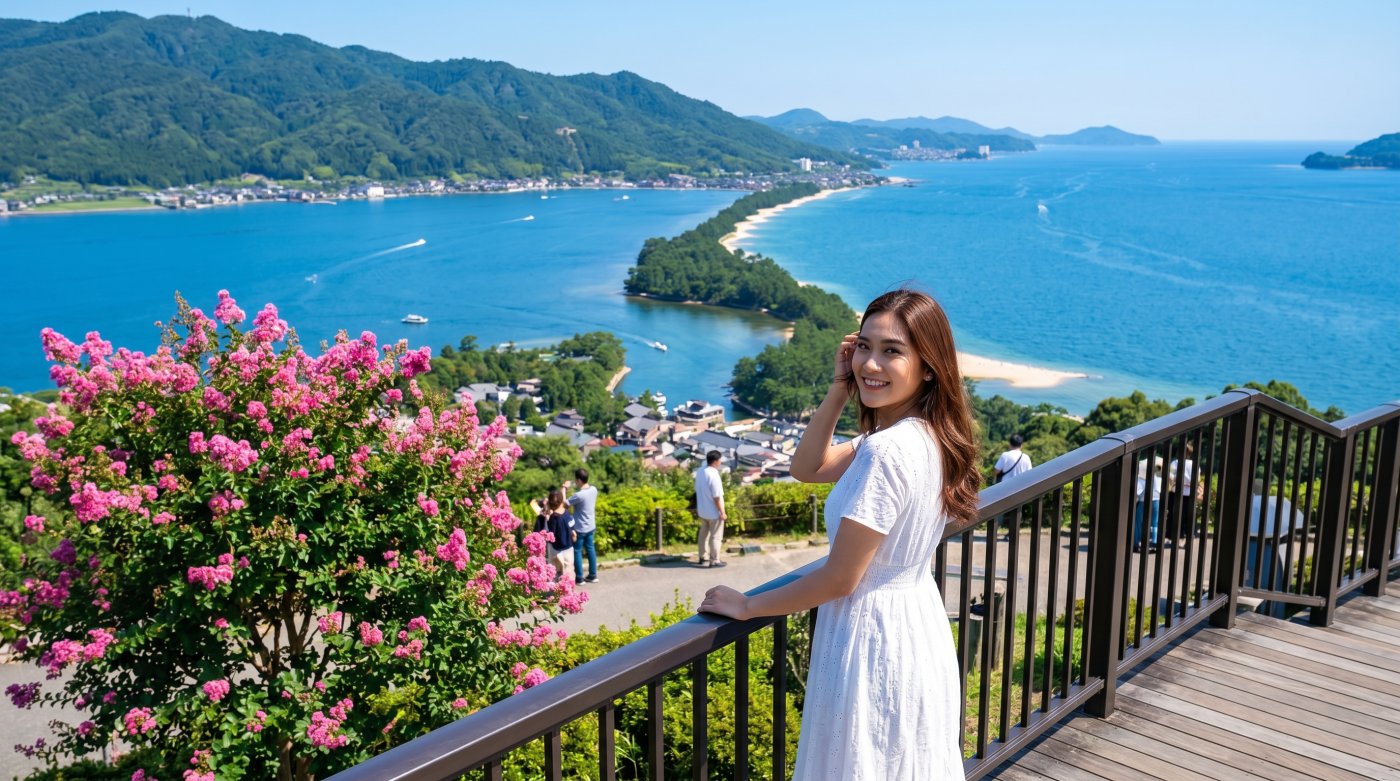
Leave Osaka Station by 7:30am to arrive at Amanohashidate around 10:00am.
Board the JR Konotori from Osaka and settle in – the route through the Tamba highlands is pleasant and the KTR connection from Fukuchiyama brings the coast into view as you approach Miyazu Bay.
Your first stop off the train is Amanohashidate View Land, the southern observation park sitting on the slopes of Mt.
Monju, about a five-minute walk from the station.
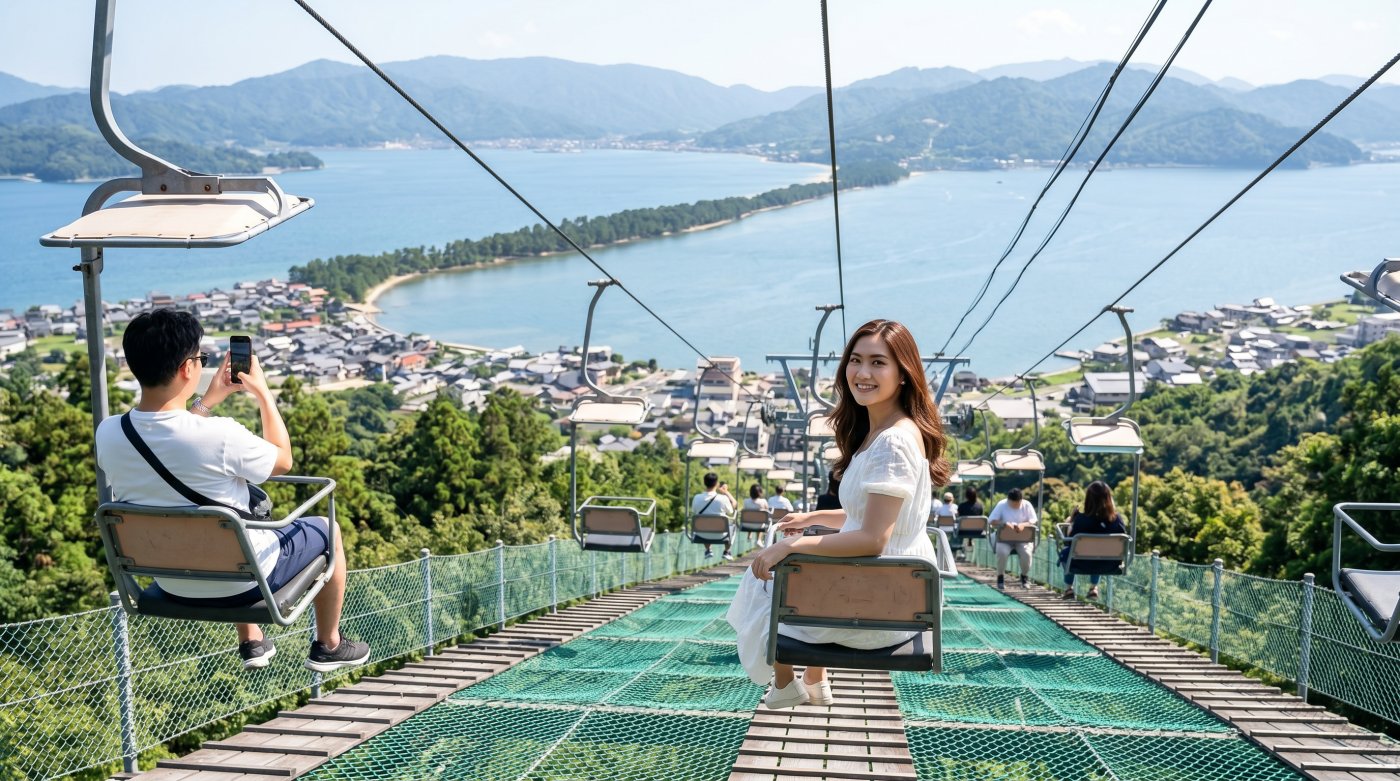
A six-minute chairlift or eight-minute monorail (¥850 round trip, monorail is wheelchair accessible) carries you to the deck.
This is where the “flying dragon” angle everyone photographs comes from – the full 3.6-kilometer sandbar visible below, stretching the width of the bay.
Once you’re up there, try matanozoki: bend over and look at the sandbar through your legs while facing away from it.
It genuinely looks like it’s floating in the sky.
Ride the monorail up and the chairlift down for two different perspectives on the descent.
Back at ground level, walk five minutes to Chion-ji Temple.
Entry is free.
The temple is dedicated to Monju, the bodhisattva of wisdom, and the two-story pagoda on the grounds dates to 1501.
It’s quiet and compact, and the tea houses along the approach sell chie-no-mochi – small rice cakes filled with red bean paste, named after wisdom.
Buy one.
They’re worth the detour even if you’re not much of a temple person.
From Chion-ji, the sandbar entrance is a short walk past the rotating bridge.
Rent a bicycle near the station (¥400-500 per hour, or ¥1,500 for the day) and ride the full 3.6 kilometers to the northern end.
The path is flat, shaded by thousands of pine trees, with small sand beaches visible on both sides.
The ride takes about 15 minutes at a relaxed pace.
If walking is more your speed, the end-to-end walk takes 45 minutes, and the path is pleasant enough that it doesn’t drag.
Once across the sandbar, pick up the sightseeing boat (¥800 one way, departing every 30 minutes) back to the southern side rather than backtracking the same route.
This gets you a third viewing angle on the sandbar from the water and shaves 30-40 minutes off your afternoon.
On the northern side, it’s also worth noting: most visitors arrive from the south and never cross, which means the northern shore is noticeably quieter even on busy days.
Lunch lands naturally around 1:00pm.
The cluster of restaurants near the station and rotating bridge covers most preferences.
Asari-don – a rice bowl topped with local clams in a kelp-broth base – is the regional dish to order.
Ajikobo Mamaya, just north of the rotating bridge, serves a solid version with window views over the water.
Budget ¥1,500 to ¥2,500 for a full meal.
After lunch, head north to Kasamatsu Park via cable car or chairlift (¥660 round trip).
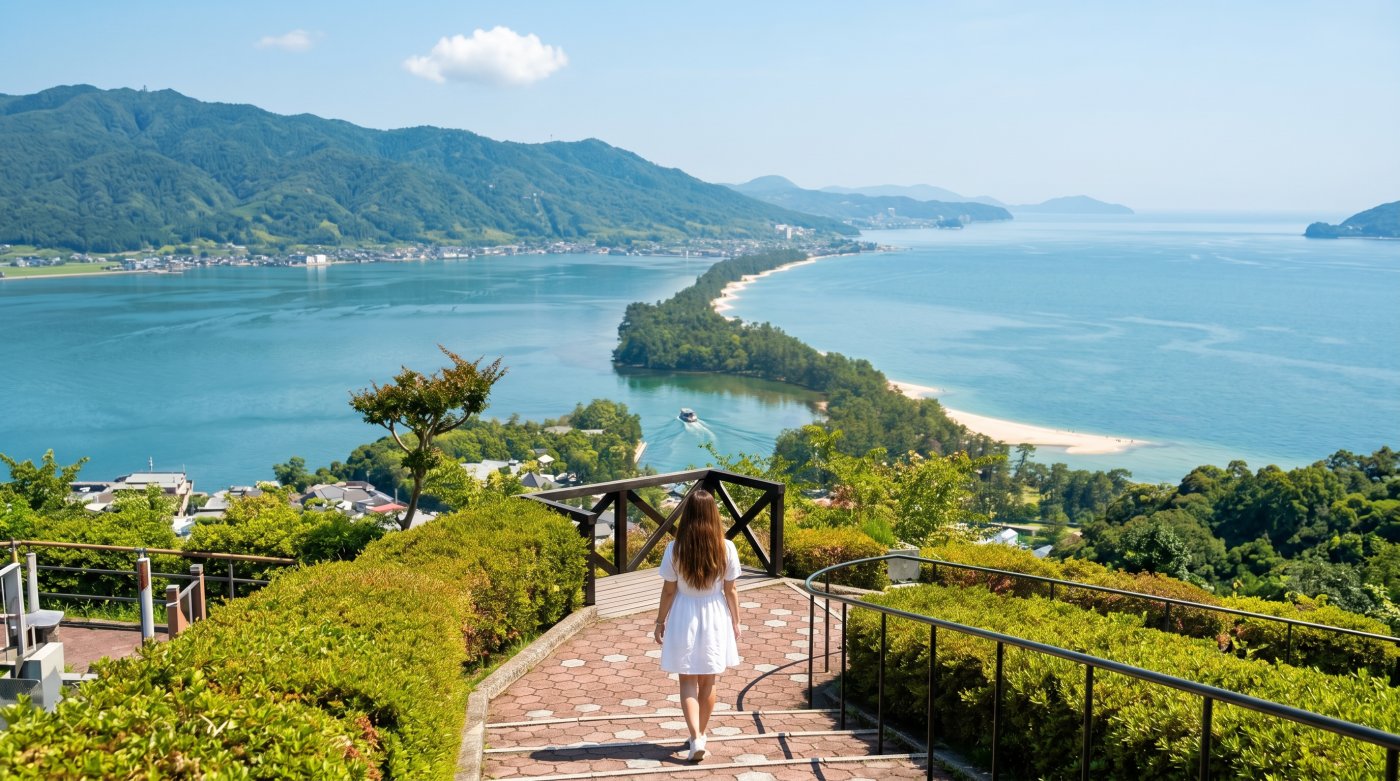
The view from the north is wider and more distant than View Land, you see the sandbar as a thin line across the full width of the bay, framed by the mountains behind you.
Many experienced visitors actually prefer this perspective in the afternoon light.
One current note: the cable car at Kasamatsu is suspended from May 7 to August 8, 2026 for maintenance.
The park is still accessible on foot or by local bus, but add 30-40 minutes to your schedule if you’re visiting during that window.
Aim to leave Amanohashidate Station by 4:30pm to arrive back in Osaka by around 7:00pm – early enough for dinner in Dotonbori or anywhere in the city center.
The return journey is the same 2 hours 30 minutes in reverse: Kyoto Tango Railway to Fukuchiyama, then JR Konotori back to Osaka.
Book your return seat reservation when you buy your outbound ticket – autumn weekend trains fill up, particularly the late afternoon Konotori services.
If you miss your reserved train, you can usually get on a later service standby, but it adds uncertainty to the end of an otherwise smooth day.
Before leaving the area in the morning, check the Konotori return schedule at the tourist information desk inside Amanohashidate Station.
Services run roughly hourly, so knowing your last viable train before you start the afternoon makes the day easier to pace.
Amanohashidate sits on Miyazu Bay, and the cooking here reflects that geography directly.
The area’s signature ingredient is asari (short-neck clams), harvested from the bay and served in rice bowls, miso soup, and light broths.
Asari-don is the dish to try if you only eat one thing – clams over rice with a soy-and-kelp broth that tastes nothing like anything you’d find in Osaka’s restaurants.
Some shops along the sandbar approach also sell clam skewers grilled to order.
The other standout is Kyoto Prefecture’s coastal seafood, distinct from the Osaka food scene in that it leans on the Sea of Japan catch rather than Osaka Bay.
Ama-ebi (sweet shrimp), nodoguro (blackthroat seaperch), and the crab preparations in winter are all available from the restaurants clustered near the station and the northern bay area.
Prices are higher than Osaka equivalents – expect ¥1,500 to ¥3,000 for a full lunch – but the freshness justifies it.
This is not a destination to bring your own convenience-store lunch to.
For a quick break without sitting down, the tea houses near the Chion-ji approach sell chie-no-mochi (wisdom rice cakes), anmitsu (jelly desserts with sweet toppings), and soft serve made with local milk.
None of these are exclusive to Amanohashidate, but they pair well with the morning temple visit and give you something in hand while you walk toward the sandbar.
The day trip sits in the mid-range tier for Osaka day trips, not as cheap as Nara (shorter travel, low entry fees) but less expensive than Hiroshima.
A realistic per-person budget runs ¥10,000 to ¥16,000, with transport as the largest single cost.
Here’s how it breaks down.
Round-trip JR Konotori + Kyoto Tango Railway: ¥10,000 to ¥13,000 (wide range due to weekday vs.
weekend Konotori pricing and KTR service type).
If you’re using the JR West Kansai Wide Area Pass, the entire transport cost is absorbed by the pass.
The highway bus costs ¥5,300 round trip, making it the cheapest option if you have no rail pass.
A typical visitor doing both viewpoints, the boat, and a bike rental spends around ¥3,800 to ¥4,600 on activities.
Budget ¥2,000 to ¥3,500 for lunch, snacks, and a drink stop.
Souvenir shopping around the station and temple approach can add another ¥500 to ¥2,000 depending on restraint.
Without a rail pass: ¥16,000 to ¥21,000 per person for a comfortable day (transport + activities + food).
With the JR West Kansai Wide Area Pass covering transport: ¥6,000 to ¥8,000 on-the-ground.
For a detailed look at how day-trip costs fit into the wider Osaka budget picture, the Osaka travel budget guide breaks it down by trip length and traveler type.
Leave Osaka by 7:30am.
It sounds early for a day trip, but Amanohashidate’s best hours are before noon – the morning light on the sandbar, the quiet at View Land before tour groups arrive, and the option to pace the afternoon without feeling rushed.
A 9:00am departure technically gets you there, but you’ll lose the calm morning window and be sandwiching all activities into a compressed afternoon.
Book both your outbound and return Konotori seat reservations together, ideally a few days in advance during spring and autumn.
Pack for weather variability.
Miyazu Bay sits on the Sea of Japan side of the Tansen Range, and conditions can shift independently of Osaka.
A light jacket is useful even in summer, and an umbrella handles the brief coastal showers that roll in during spring.
Comfortable walking shoes are a given – the sandbar path is packed gravel and flat, but you’ll cover 5 to 7 kilometers total across the day.
Cyclists should check tyre condition on rental bikes before leaving the station; the rental lots are well-maintained but it’s worth a quick look.
On language: tourist infrastructure at Amanohashidate is modest compared to Kyoto or Osaka.
The tourist information office inside the station has English-speaking staff and bilingual maps, but restaurant menus in the side streets away from the main tourist cluster may be Japanese-only.
Google Translate’s camera function handles menu reading reliably, and pointing at pictures works fine in most places.
There are no major accessibility barriers on the main tourist circuit – the monorail to View Land is wheelchair accessible – but the hillside path to Nariai-ji above Kasamatsu involves stairs and is not suitable for mobility aids.
The honest answer is: it depends entirely on where this day trip sits in your larger Japan trip.
If you’ve already covered the main Kansai circuit – Kyoto’s big temples, Nara’s deer park, Himeji Castle, and at least a full day in Osaka – then Amanohashidate is one of the most genuinely distinctive day trips you can add.
The sandbar, the bay, the coastal food, the relative quiet: these are hard to replicate anywhere else within a 2-3 hour radius of Osaka.
If you’re on a five-day first trip and haven’t yet seen Kyoto or Koyasan, spend those days there first.
The 2.5-hour journey each way demands a full dedicated day, and the payoff – while real – requires a certain appetite for slower travel and natural scenery rather than landmark-density.
Someone who’s primarily motivated by Japan’s historical architecture and temple culture will probably feel the day is lightly programmed compared to a full Kyoto or Nara run.
For solo travelers, couples, and small groups on 8+ day itineraries, the day works well.
It’s one of the few Kansai day trips where the journey itself – the coastal Kyoto Tango Railway leg in particular – is part of the experience rather than just a commute.
Amanohashidate is the kind of place you remember not because of a single landmark but because of the combination of things: the pine smell on the sandbar, a bowl of clams by the water, a view that’s been considered one of Japan’s best for over a millennium.
That’s a harder thing to sell than a castle, but it’s also harder to forget.
The fastest practical route from Osaka takes about 2 hours 30 minutes.
Take the JR Konotori Limited Express from Osaka Station to Fukuchiyama (roughly 90 minutes), then transfer to the Kyoto Tango Railway for the remaining 40 to 60 minutes to Amanohashidate Station.
Seat reservations are mandatory on the Konotori, so book ahead.
A highway bus from Osaka Umeda (operated by Tankai Bus) takes around 3 hours and costs ¥2,650 one way – slower but cheaper if you’re watching your budget.
Amanohashidate rewards travelers who want something different from the standard Kyoto-Nara circuit.
The sandbar, two elevated viewpoints, a free temple, and decent seafood lunch make for a full and varied day.
The trade-off is roughly 5 hours of total travel time round trip, so it works best when you have 8 or more days in Japan and want a coastal counterpoint to the city days.
On a tight 5-day itinerary, the travel-to-payoff ratio is less favorable.
On a longer trip, it’s a genuinely distinctive stop that most Western visitors skip.
The nationwide Japan Rail Pass does not cover the full journey.
JR trains run from Osaka to Fukuchiyama, but the final leg on the Kyoto Tango Railway is a private operator and falls outside JR Pass coverage.
You will pay the Kyoto Tango Railway fare (¥800 to ¥1,750 one way) separately regardless of which JR pass you hold.
The exception is the JR West Kansai Wide Area Pass, which covers the entire journey including the Kyoto Tango Railway section and is worth considering if you’re doing multiple day trips in the Kansai region.
The sandbar is 3.6 kilometers long and takes about 45 minutes to walk end to end.
By bicycle (rentals available near the station for ¥400-500 per hour), the crossing takes around 15 minutes.
The path is flat, pine-shaded, and has small beaches on both sides.
A practical combination: cross one way on foot or by bike and return by sightseeing boat (¥800, departing every 30 minutes).
This gives you three different perspectives on the sandbar without backtracking the same route.
Autumn (October to November) is the strongest season for Amanohashidate.
Clear air, mild temperatures, and foliage peaking around Nariai-ji Temple in mid-to-late November make it the best combination of views and weather. Spring (late March to early April)
is a close second, with cherry blossoms at Viewland and along the Chion-ji approach peaking in the first week of April.
Summer is beach and festival season, but heat and humidity make the sandbar walk less pleasant mid-day.
Winter is the quietest window and coincides with matsuba-gani (snow crab) season from November through March, which is worth knowing if food is a priority.