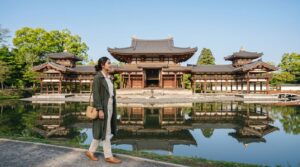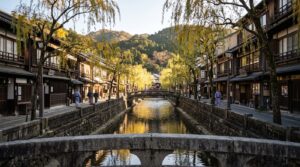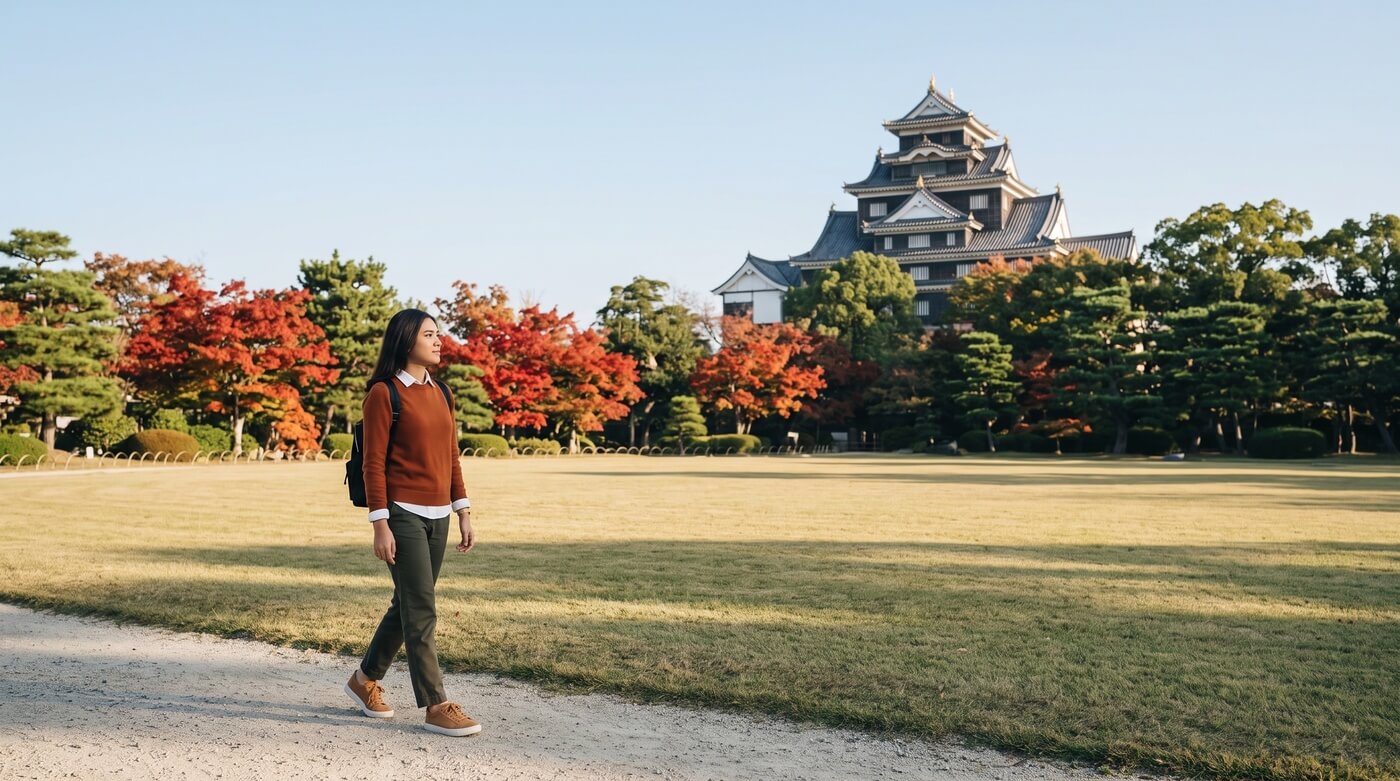









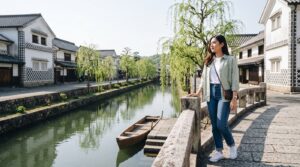
An Okayama day trip from Osaka takes about 45 minutes each way on the JR Sanyo Shinkansen from Shin-Osaka, for ¥5,610 one way unreserved. Okayama Korakuen and Okayama Castle face each other across the Asahi River, and the pair fills a morning. Ride 17 minutes on to Kurashiki for the afternoon, and the day earns its fare.
Getting There (at a glance)
- Sakura45 min, ¥5,610, JR Pass valid
- Nozomi or Mizuho45 min, ¥5,610, no JR Pass
- JR locals from Osaka Station via Himeji3 hr, ¥3,080
Okayama Day Trip Itinerary from Osaka
07:30
Shin-Osaka Station
07:30
Shin-Osaka Station
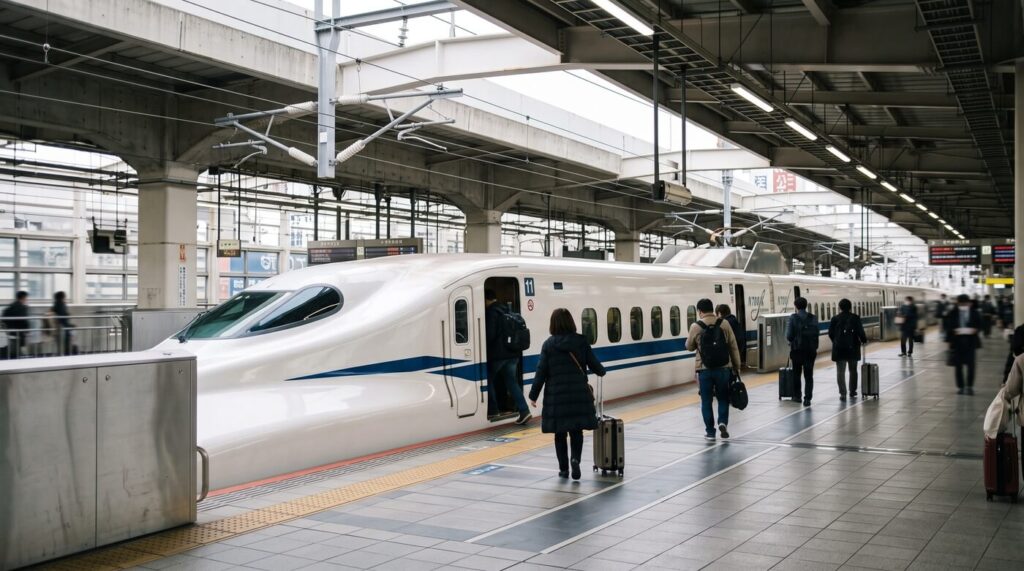
Take a Sakura on the JR Sanyo Shinkansen to Okayama, about 45 minutes, for ¥5,610 unreserved. Sakura trains leave once or twice an hour and keep unreserved cars even on peak holidays. Buy the ticket to Okayama only, because the ¥330 onward leg costs the same bought later.
TIP
A reserved Sakura seat costs ¥530 more and sits two plus two, wider than any Nozomi row.
08:20
Okayama Station East Exit
08:20
Okayama Station East Exit
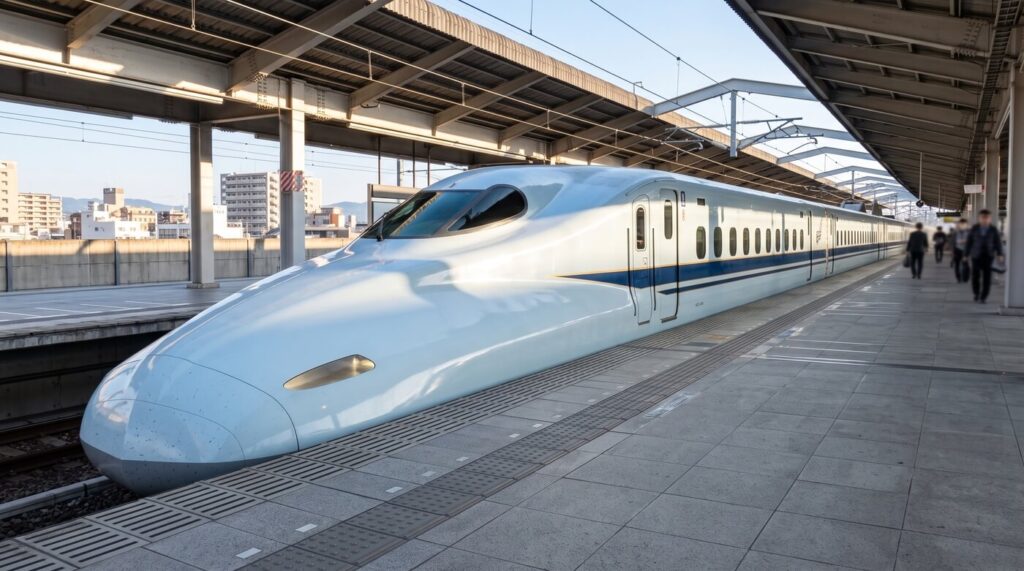
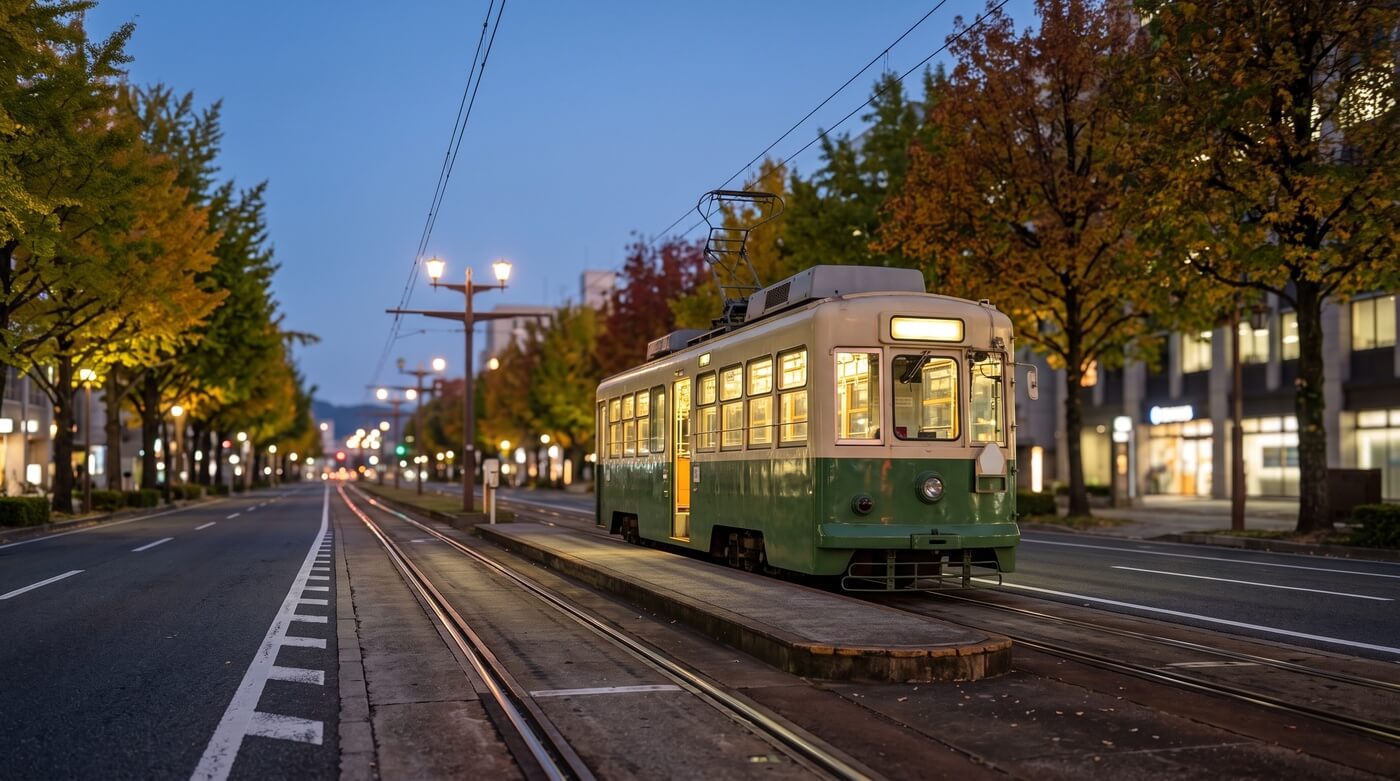
Leave by the east exit and ride the Okaden tram toward Higashiyama to Shiroshita, about 5 minutes for a flat ¥160. Board at the rear and pay at the front as you get off, by coin or IC card. The Korakuen main gate is a 10 minute walk from Shiroshita.
TIP
Building work on the east plaza has moved the tram stop, so follow the tram signs from the exit.
08:40
Okayama Korakuen
08:40
Okayama Korakuen
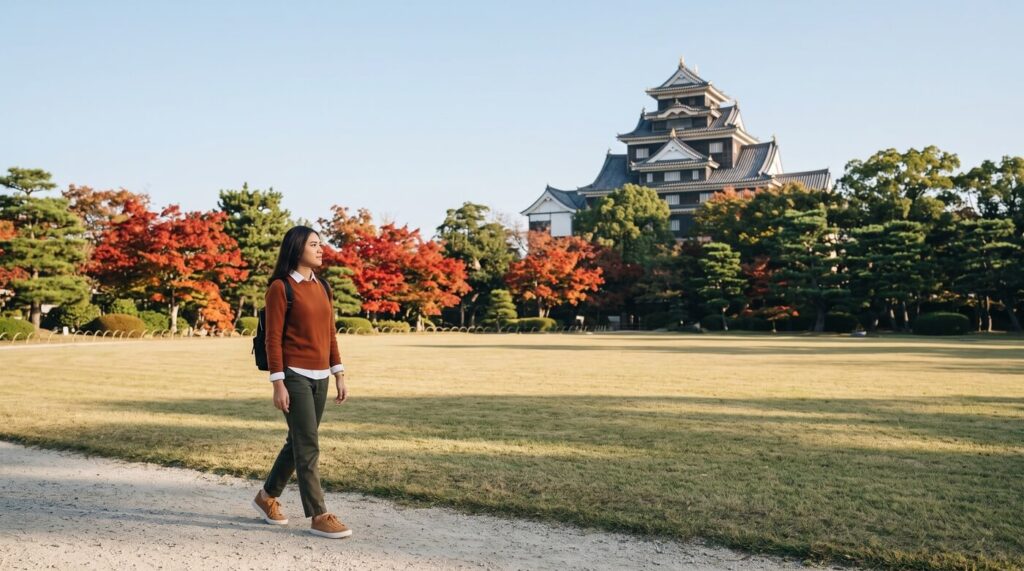
Buy the ¥800 ticket that covers the garden and Okayama Castle, then walk one loop past Sawa-no-ike pond, the tea field, and the rice field. Climb the small hill Yuishinzan for the view back over the lawns. Ninety minutes covers it at an easy pace.
TIP
The main gate lends wheelchairs and pushchairs free, and its coin lockers cost ¥100 to ¥300.
10:15
Okayama Castle
10:15
Okayama Castle
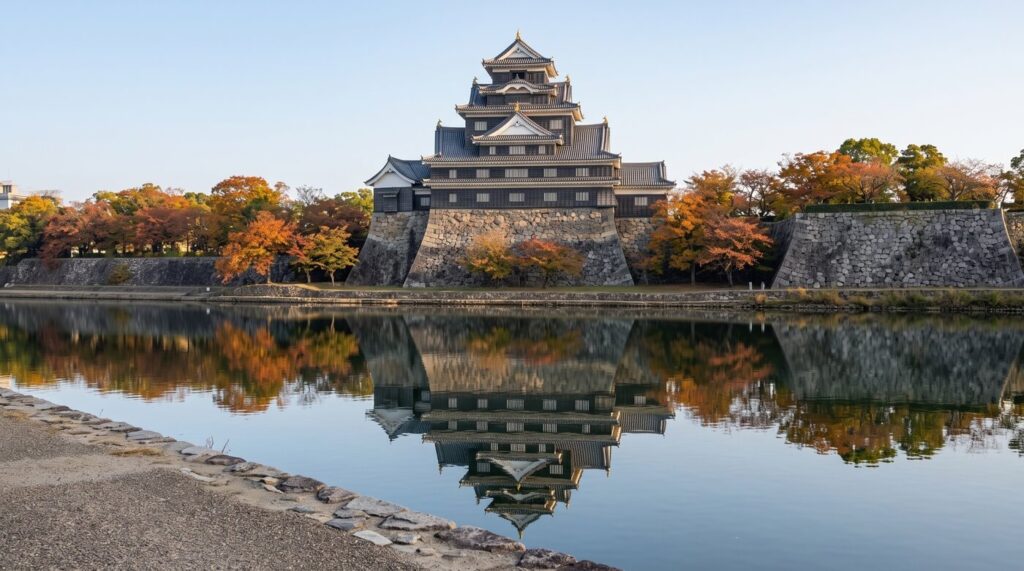
Leave Korakuen by the south gate and cross the Tsukimi Bridge over the Asahi River, about five minutes on foot. The black keep is a 1966 concrete rebuild with a museum inside, and an elevator runs from the basement to the fourth floor. Allow an hour.
TIP
The Tsukimi Turret near the keep survived 1945 and is an Important Cultural Property.
11:30
Katsudon Nomura
11:30
Katsudon Nomura
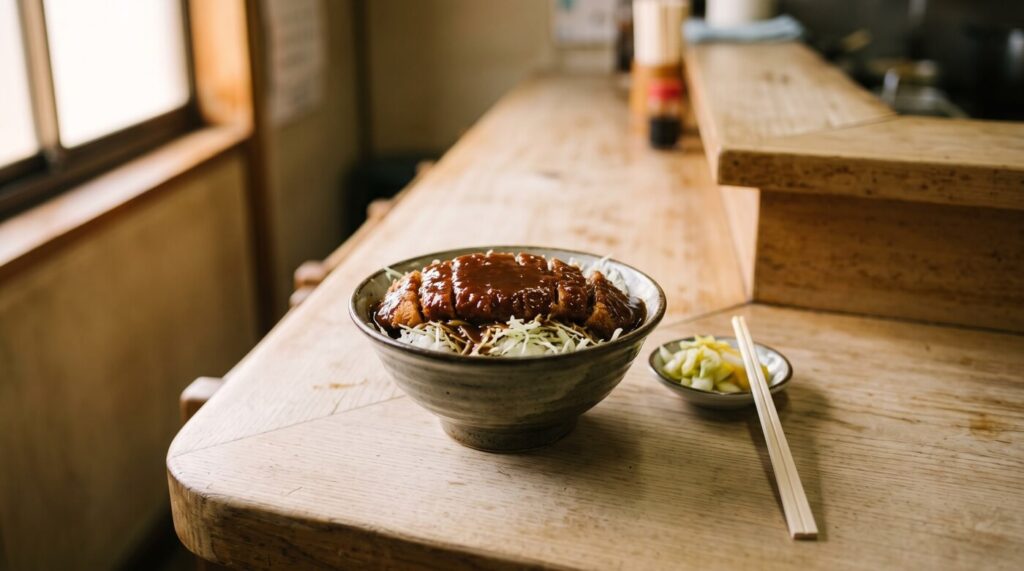
Walk back toward the station for demi-glace katsudon at the shop credited with starting the dish in 1931. Buy a ticket from the machine inside the door, in cash. A regular loin bowl costs ¥1,100.
TIP
It closes on Mondays, and from Tuesday to Friday it serves lunch only, until 15:00.
13:15
Ohara Museum of Art
13:15
Ohara Museum of Art
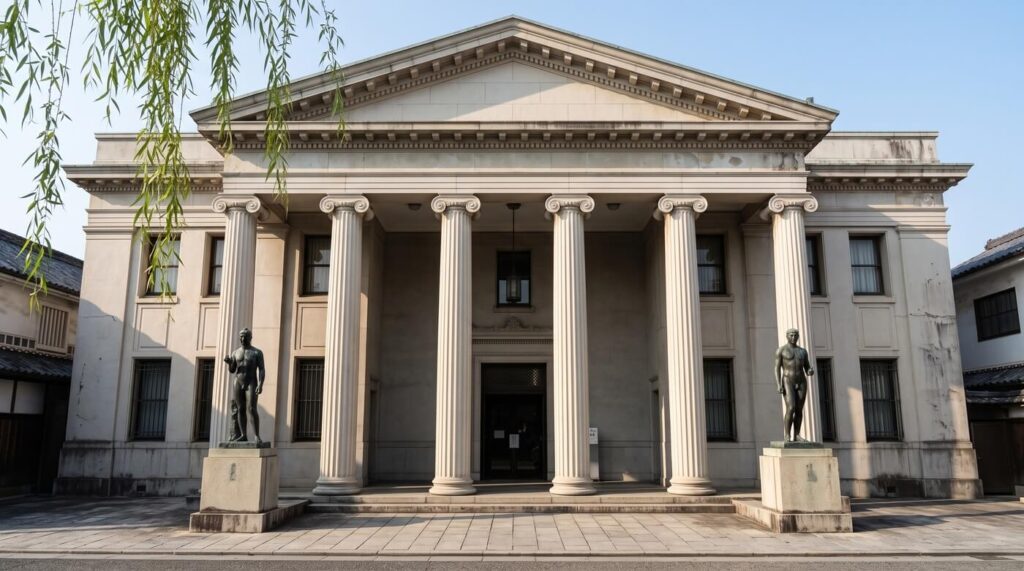
Ride the JR Sanyo Line 17 minutes from Okayama to Kurashiki for ¥330, then walk 13 minutes south to the canal. The ¥2,000 museum ticket covers three buildings, and two hours is enough before the 16:30 last entry.
TIP
From December to February the museum closes at 15:00, so see Kurashiki first on a winter day.
15:30
Kurashiki River Boat
15:30
Kurashiki River Boat
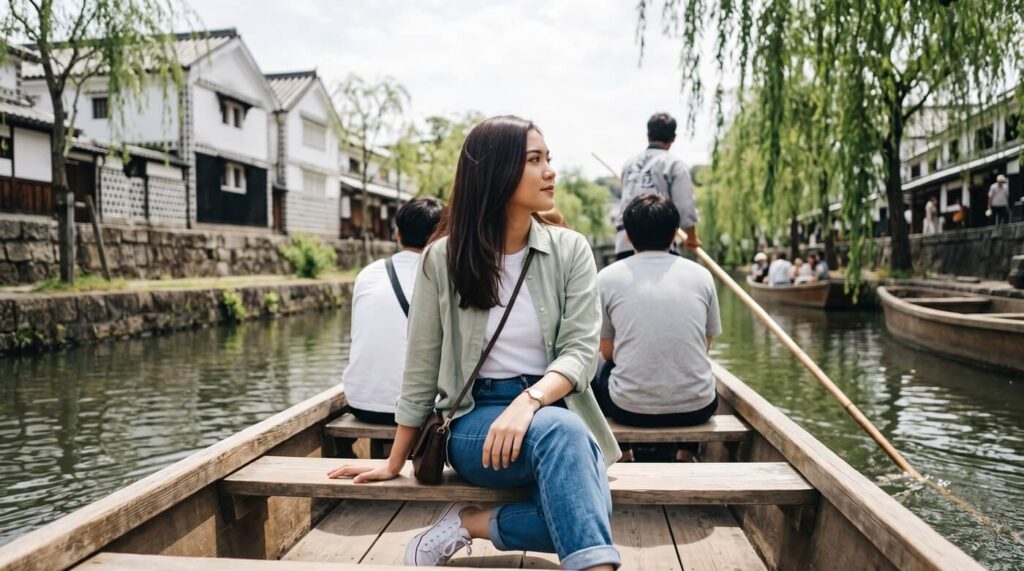
The flat wooden boat runs about 20 minutes along the canal for ¥1,000. Afternoon seats go early, so book one boat online by 17:00 the day before.
TIP
From July to September the last boat leaves at 15:00, so walk the canal instead.
16:30
Kurashiki Ivy Square
16:30
Kurashiki Ivy Square
Walk east along the canal to the ivy covered red brick of Kurashiki's 1889 spinning mill, now a hotel and shops. From October to March the canal lights come on at sunset and stay on until 21:00.
TIP
Shinkansen leave Okayama for Shin-Osaka through the evening, so the lights cost only a later dinner.
How to Get from Osaka to Okayama
| Route | Line | Duration | Cost |
|---|---|---|---|
| JR Sanyo Shinkansen (Sakura) RECOMMENDED | JR West Sanyo Shinkansen | 45 min | ¥5,610 |
| JR Sanyo Shinkansen (Nozomi or Mizuho) | JR West Sanyo Shinkansen | 45 min | ¥5,610 |
| JR Sanyo Shinkansen (Hikari) | JR West Sanyo Shinkansen | 60 min | ¥5,610 |
| JR Special Rapid Service and JR Sanyo Line locals | JR Kobe Line, then JR Sanyo Line via Himeji | 3 hr | ¥3,080 |
JR Sanyo Shinkansen (Sakura)
RECOMMENDED
Line
JR West Sanyo Shinkansen
Duration
45 min
Cost
¥5,610
JR Sanyo Shinkansen (Nozomi or Mizuho)
Line
JR West Sanyo Shinkansen
Duration
45 min
Cost
¥5,610
JR Sanyo Shinkansen (Hikari)
Line
JR West Sanyo Shinkansen
Duration
60 min
Cost
¥5,610
JR Special Rapid Service and JR Sanyo Line locals
Line
JR Kobe Line, then JR Sanyo Line via Himeji
Duration
3 hr
Cost
¥3,080
Day Trip Navigation Map: Osaka → Okayama
All stops on this itinerary pinned for easy reference.
🗺️ Okayama 岡山
8 stops
An Okayama day trip from Osaka takes about 45 minutes each way on the JR Sanyo Shinkansen from Shin-Osaka, for ¥5,610 one way unreserved. Okayama Korakuen and Okayama Castle face each other across the Asahi River, and the pair fills a morning.
Ride 17 minutes on to Kurashiki for the afternoon, and the day earns its fare.
Okayama Korakuen ranks with Kenrokuen in Kanazawa and Kairakuen in Mito as one of Japan’s three great gardens. Okayama Castle, called the crow castle for its black walls, stands five minutes’ walk away on the far bank.
This Explore Osaka guide treats Okayama as the morning half of a two stop day. On its own, the city runs out of sights by lunch.
Most people get three things wrong here. They give Okayama a whole day and find themselves done by one o’clock.
They expect an original castle and find a 1966 concrete keep. And they come on a Monday, when Okayama’s best known katsudon shop and Kurashiki’s art museum both close.
Key Takeaways
Hide- The JR Sanyo Shinkansen reaches Okayama from Shin-Osaka in about 45 minutes, for ¥5,610 one way unreserved.
- The Sakura is as fast as a Nozomi, and unlike the Nozomi, it needs no special ticket with a Japan Rail Pass.
- Okayama Korakuen and Okayama Castle sit five minutes apart across the Asahi River, and one ¥800 ticket covers both.
- Korakuen opens every day, at 07:30 from 20 March to 30 September and at 08:00 the rest of the year.
- Okayama Castle's keep is a 1966 concrete rebuild, with an elevator to the fourth floor and stairs above it.
- Kurashiki is 17 minutes further on the JR Sanyo Line for ¥330, so adding it costs ¥660 more in fares.
- Avoid Mondays, when Katsudon Nomura and Kurashiki's Ohara Museum of Art both close, though Korakuen and the castle stay open.
Trip Essentials
Osaka Travel Add-ons
Equip yourself for the ultimate Osaka adventure with the following add-ons, curated just for you.
Flights to Osaka
Powered by Expedia
Airport Transfer
Powered by Klook
ICOCA IC Card
Powered by Klook
Suica IC Card
Powered by Klook
Osaka Tours
Powered by Klook
Luggage Storage
Powered by Radical Storage
Travel Insurance
Powered by VisitorsCoverage
Data Security
Powered by NordVPN

Japan eSIM
Powered by NINJA WiFi
Japan SIM Card
Powered by NINJA WiFi
Pocket WiFi Rental
Powered by NINJA WiFi
Japan eSIM
Powered by Airalo
When an Okayama Day Trip From Osaka Pays Off
An Okayama day trip from Osaka pays off in two cases. Either you add Kurashiki for the afternoon, or Korakuen is in blossom or autumn colour.
Outside those, the ¥11,220 round trip buys about three hours of sights and one good bowl of rice.
The other day trips from Osaka cost less. A day in Kyoto holds more gardens than one visit can cover, for a fraction of this fare.
Nara and Kobe sit closer still.
So Okayama has to earn its place with Korakuen. It is a lord’s garden laid out for walking, with open lawns, a tea field, and a rice field inside it.
Castles are the other draw, and Himeji wins that contest. Himeji sits about 30 minutes from Shin-Osaka on the same line, and its keep is the original.
Okayama’s keep is a rebuild.
Weather matters more here than in Kurashiki. Korakuen is an open garden, and a wet day takes most of the value out of the morning.
The castle keep and Kurashiki’s museum stay dry, so rain tips the day toward the afternoon half.
Skip Okayama on a first trip to Japan with Kyoto still unseen. Skip it too if a castle is all you want, or if Monday is your only free day.
Osaka to Okayama by Shinkansen or Local Train
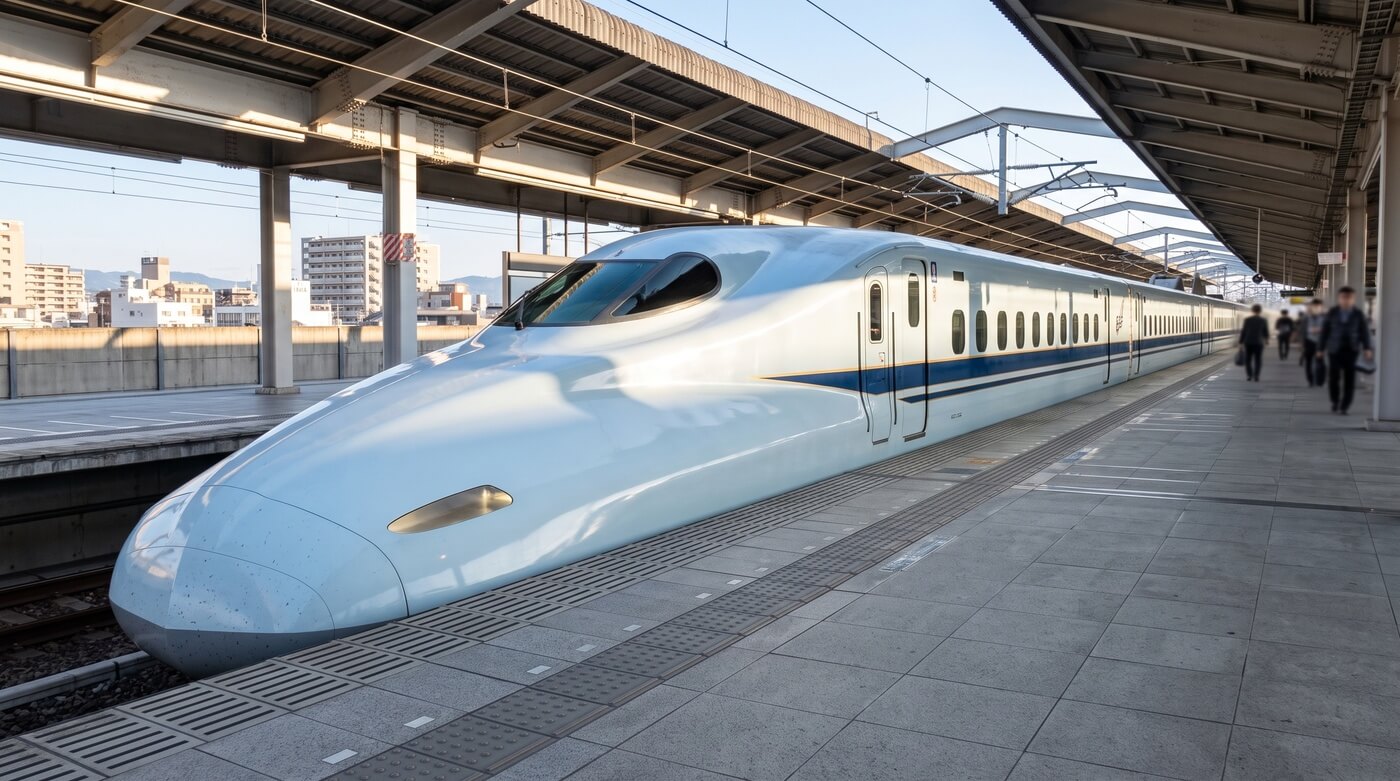
The JR Sanyo Shinkansen from Shin-Osaka is the way to Okayama: about 45 minutes and ¥5,610 one way unreserved. JR West runs the line, and the Sakura, Nozomi, and Mizuho all make the run in about the same time.
Shin-Osaka is the shinkansen station, and Osaka Station is not. JR calls the city’s main hub Osaka Station, while the Osaka Metro names its stop there Umeda.
They are the same place. From Umeda, the Osaka Metro Midosuji Line reaches Shin-Osaka for ¥240, and the Midosuji Line basics cover the rest.
| Route | Operator and line | From | Time | One way unreserved | Japan Rail Pass |
|---|---|---|---|---|---|
| Sakura | JR West, Sanyo Shinkansen | Shin-Osaka | 45 min | ¥5,610 | Covered |
| Nozomi or Mizuho | JR West, Sanyo Shinkansen | Shin-Osaka | 45 min | ¥5,610 | Special ticket needed |
| Hikari | JR West, Sanyo Shinkansen | Shin-Osaka | 60 min | ¥5,610 | Covered |
| JR Special Rapid Service, then locals via Himeji | JR West, Kobe Line and Sanyo Line | Osaka Station | 3 hr | ¥3,080 | Covered |
The Sakura is the train to take. It runs as fast as a Nozomi, leaves once or twice an hour, and the Japan Rail Pass covers it.
A reserved Sakura seat adds ¥530, against ¥850 on a Nozomi in the normal season. Its reserved rows also seat two plus two, where a Nozomi row seats three plus two.
On the busiest days, the Sakura also keeps its unreserved cars. JR runs every Nozomi as all reserved during Golden Week, Obon, the New Year holidays, and some long weekends.
On those dates an unreserved Nozomi ticket buys you a place to stand.
Local trains cost less and take about three hours. JR Special Rapid Service trains from Osaka Station connect with JR Sanyo Line locals at Himeji, for ¥3,080 and at least one change.
Highway buses from Osaka Station and Namba charge ¥3,600 and take three to four hours. Even the bus’s ¥3,000 early web fare saves only ¥80 over the JR locals, for a slower ride.
Osaka Passes
Essential Osaka Travel Passes
Powered by KlookThe passes worth buying before you land — curated for first-timers.
Top Pick
Osaka Amazing Pass
Unlimited subway + free entry to 40+ attractions. The only pass most visitors actually need.
Top Pick
Osaka e-Pass
Attractions-only digital pass. Pair with a Metro Pass if skipping the Amazing Pass.
Transit
Osaka Metro Pass
1 or 2-day unlimited Metro rides. Best standalone transit value if you already have an attractions pass.
Day Trips
JR West Kansai Area Pass (WEST QR)
Unlimited JR trains for 1 to 4 days. Covers Kyoto, Nara, Kobe, and Himeji from Osaka.
Airport
JR Haruka Express
KIX to Umeda/Shin-Osaka in ~50 min. Best if staying in Umeda or heading straight to Kyoto.
Airport
Nankai Rapi:t Express
KIX to Namba in 34 min, reserved seat. Better if staying in Namba or Shinsaibashi.
The Kansai WIDE Area Pass Beats the JR Pass Here
The Japan Rail Pass covers Okayama on the Sakura, Hikari, and Kodama, but the Nozomi and Mizuho need a special ticket on top. A seven day pass also costs more than four round trips to Okayama.
It only pays off if you are crossing the country.
The Kansai WIDE Area Pass suits this trip better. It costs ¥12,000 for five days in a row and covers the Sanyo Shinkansen from Shin-Osaka to Okayama, Nozomi and Mizuho included.
It also covers the JR Sanyo Line to Kurashiki, and seat reservations come free. You need a foreign passport and temporary visitor status to buy it.
One Okayama round trip uses ¥11,220 of that ¥12,000, so any second JR day that week puts you ahead. The pass does not cover the Okaden tram, which is a private line.
Two Osaka products do nothing on this route. The Osaka Amazing Pass covers Osaka Metro, the New Tram, Osaka City Bus, and about 40 attractions, all inside Osaka city.
The KANSAI RAILWAY PASS LITE excludes JR entirely, so it cannot get you onto the shinkansen or the Sanyo Line.
Korakuen in One 90 Minute Loop
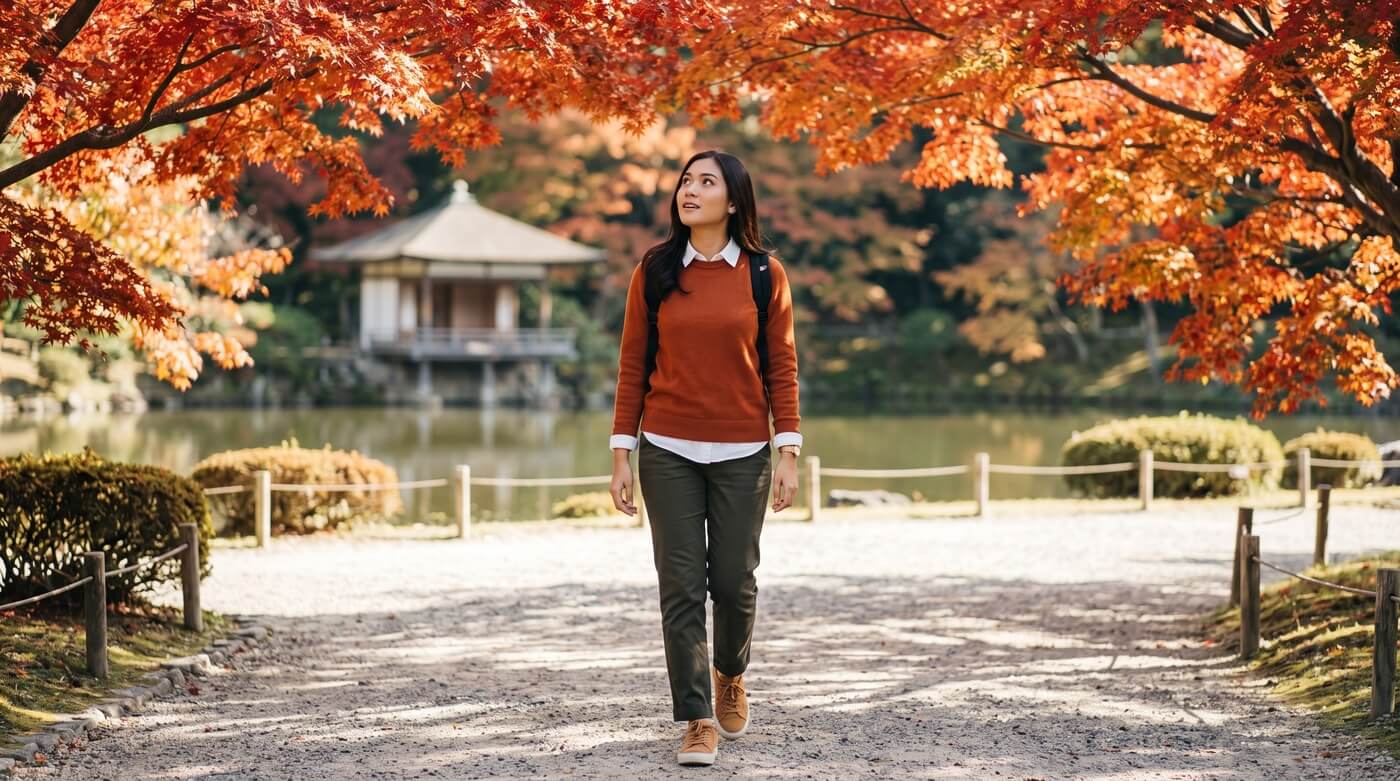
Okayama Korakuen takes about 90 minutes to walk in one loop, and the morning is the time to do it. The garden opens every day, at 07:30 from 20 March to 30 September and at 08:00 the rest of the year.
Adults pay ¥500, over 65s pay ¥200, and high school students and younger enter free.
Ikeda Tsunamasa, the second lord of the Okayama domain, had his retainer Tsuda Nagatada start the garden in 1687. It was finished around 1700 and took the name Korakuen in 1871.
Floods in 1934 and air raids in 1945 both damaged it. Japan named it a Special Place of Scenic Beauty in 1952.
Korakuen is a kaiyu, or stroll, garden. You follow one path around ponds, lawns, and a hill, and the view changes every few minutes.
Most of the loop is level, and only the hill asks anything of your knees.
From the Station to the Main Gate
The Okaden tram is the easy way from Okayama Station to Korakuen. Leave by the east exit and ride toward Higashiyama as far as Shiroshita, about 5 minutes.
From there the main gate is a 10 minute walk. A direct bus from the east exit takes about 10 minutes, and the walk all the way takes about 25.
Every Okaden ride costs a flat ¥160. You board at the rear and pay at the front as you get off, by coin or by an IC card such as ICOCA.
Building work on the station’s east plaza has moved the tram stop, so follow the tram signs out of the exit.
Okaden also sells a ¥400 day ticket that cuts each garden and castle entry from ¥500 to ¥400. Skip it.
The ¥800 combined ticket plus two ¥160 rides comes to ¥1,120, less than the ¥1,200 the day ticket route costs.
The main gate lends wheelchairs and pushchairs free of charge. Its coin lockers cost ¥100 to ¥300, and the ticket office takes bags too big for them.
The garden also offers free volunteer guides, if you want the grounds explained as you walk.
Sawa-no-ike Pond and Yuishinzan Hill
Sawa-no-ike is the large pond at the centre of Korakuen, and the path circles it. Three small islands sit in the water.
Near the main gate stands Enyotei, the building the lord used as his rooms when he visited the garden.
Ryuten is the pavilion to look for. It is a small open building with a stream running through the middle of its floor, lined with stones.
Further round, the garden keeps a Noh stage, where the lords watched performances.
Yuishinzan is a small artificial hill, and it is the only climb in the garden. From the top you look down over the pond and the lawns.
The black keep of Okayama Castle shows above the trees to the south.
Farm Plots and Crane Pens Inside the Garden
Korakuen still grows its own tea and rice, which sets it apart from a temple garden. The tea bushes stand in clipped rows.
Ida, the rice field, is divided into a grid of plots in the shape of the kanji 井, the character for a well.
Red-crowned cranes, tancho in Japanese, live in pens inside the garden. On set days in autumn, the keepers walk them out across the grounds, and the garden posts those dates on its own site. Read our full Osaka in autumn post to find other spots to enjoy the best fall foliage spots and other activities.
My advice is to finish the loop at the south gate, the one nearest the castle. The path from that gate down to the river has a slope, though.
With a wheelchair or pushchair, leave by the main gate and take the flat path along the river instead.
Crow Castle and Its 1966 Concrete Keep
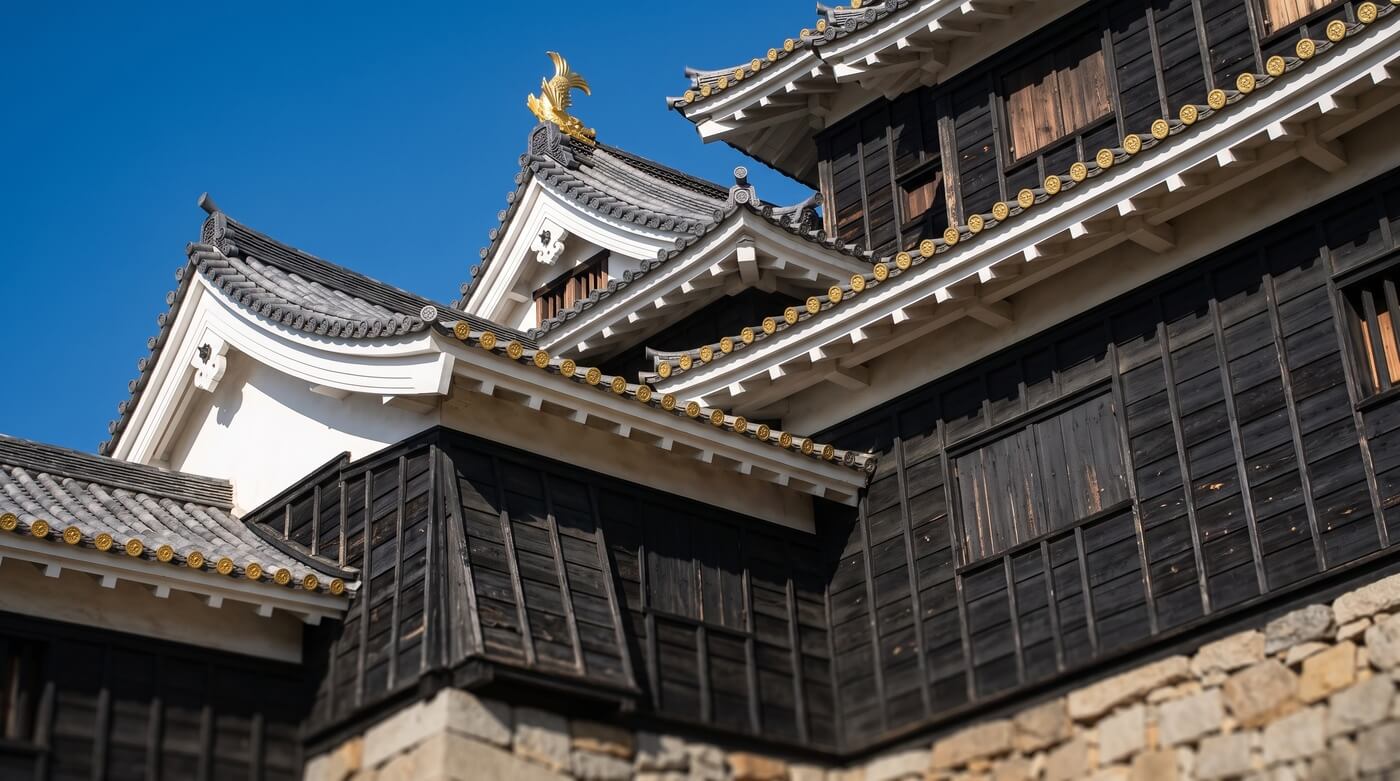
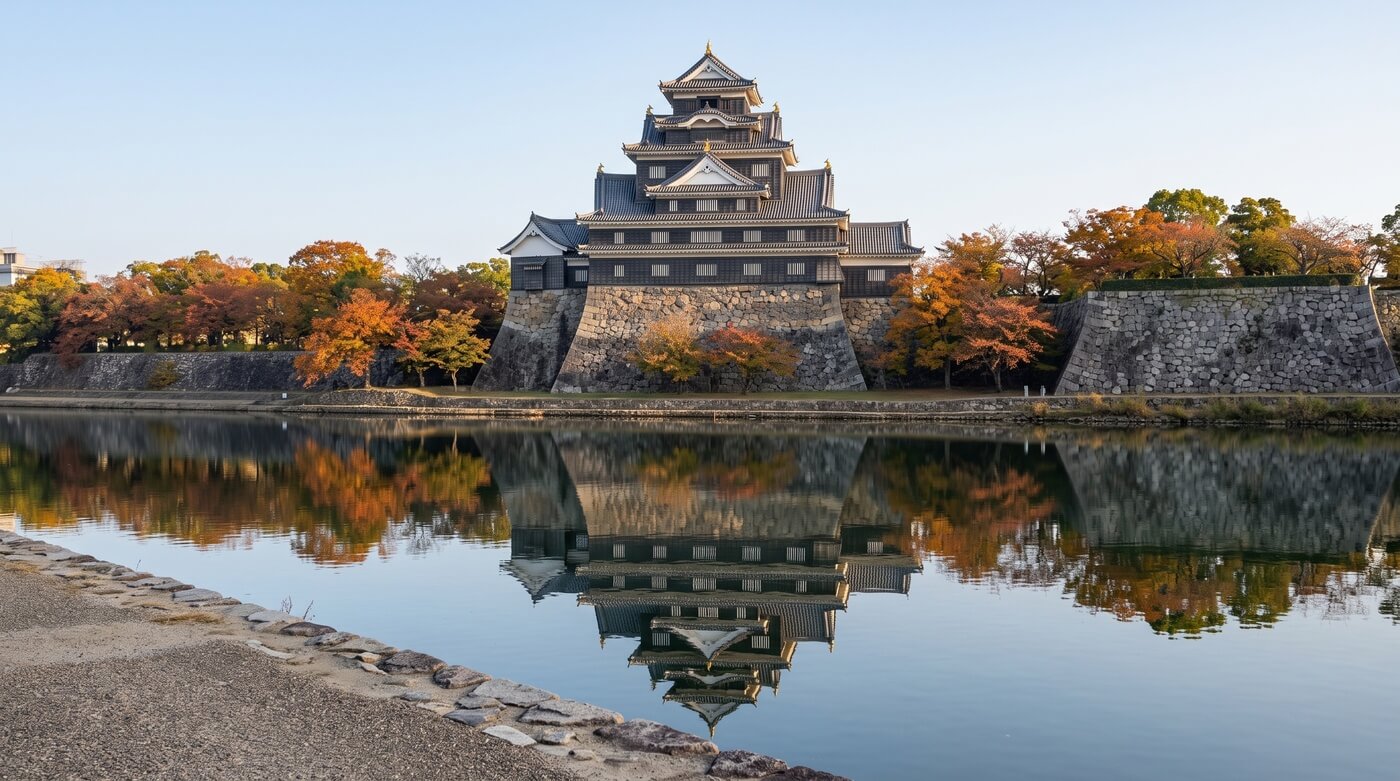
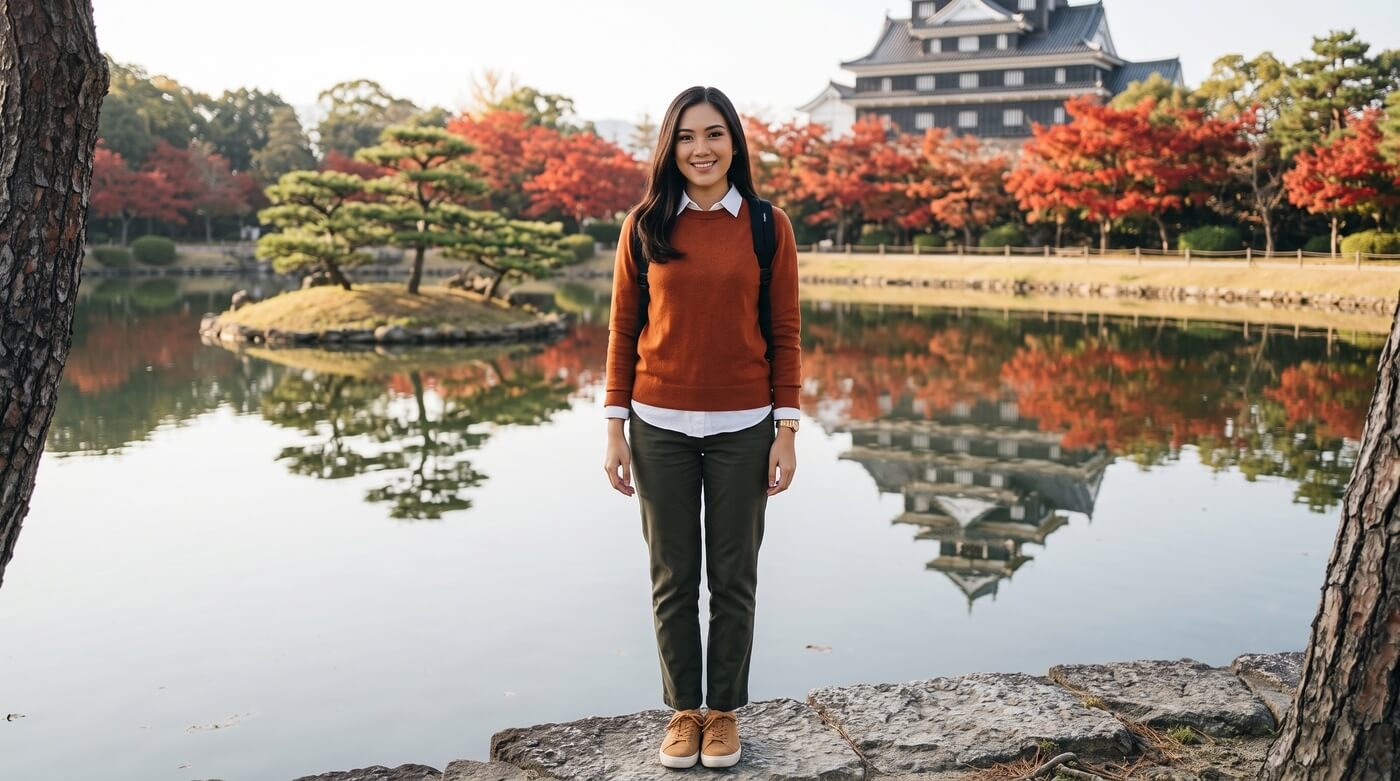
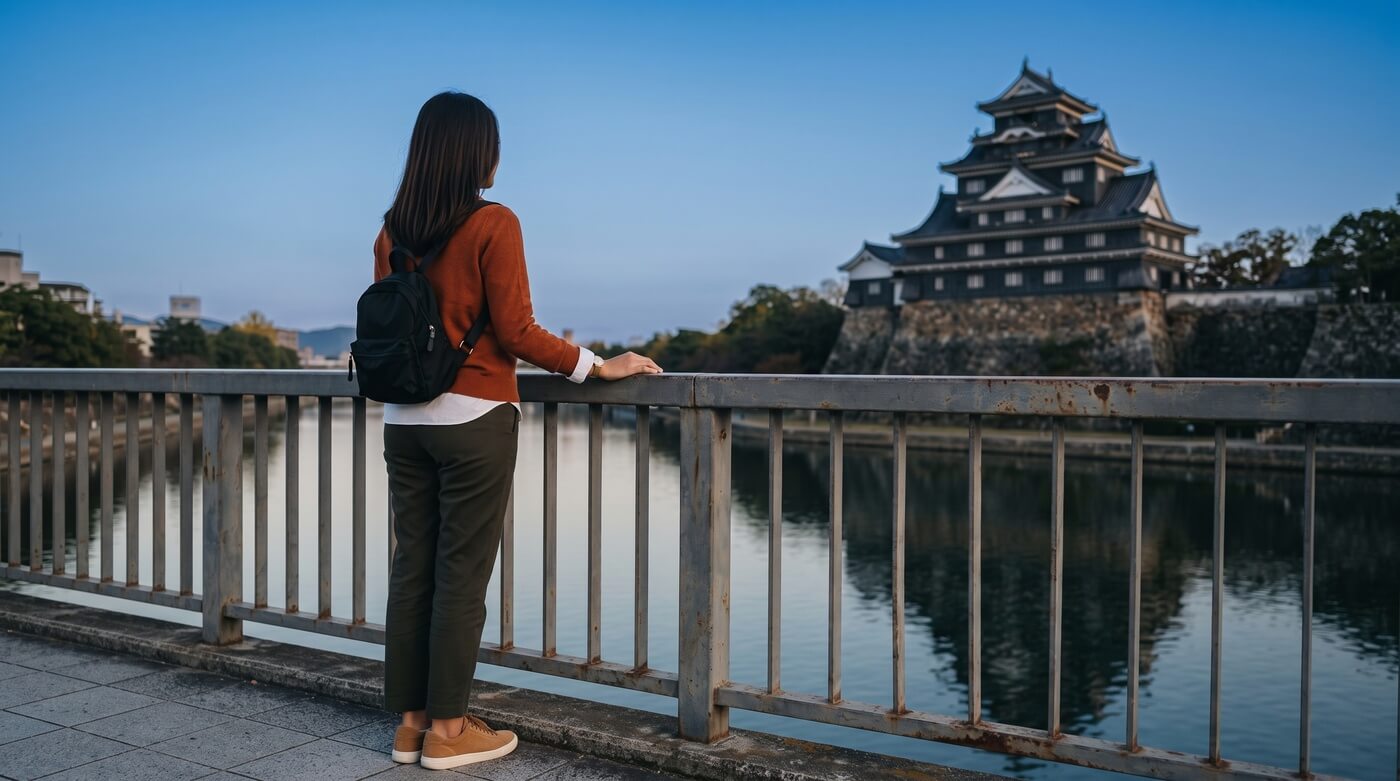
Okayama Castle’s keep is a 1966 concrete rebuild of the original, which burned in the 1945 air raids. Its black walls give the castle its nickname, Ujo, the crow castle.
The gold leaf on its roof tiles adds a second name, Kin-ujo, the golden crow.
From Korakuen’s south gate, cross the Tsukimi Bridge over the Asahi River, about five minutes on foot, and you reach the keep around 10:15. It opens from 09:00 to 17:30, with last entry at 17:00, and closes only from 29 to 31 December.
Adults pay ¥500, and children of middle school age and younger enter free.
Ukita Hideie built the castle in 1597. Two turrets survived the war, the Tsukimi and Nishite turrets, and both are Important Cultural Properties.
The keep reopened on 3 November 2022 after a major renovation, with new displays inside.
The keep has a basement and six floors above it. An elevator runs from the basement to the fourth floor, and the fifth and sixth floors are stairs only.
Allow about an hour. The Ujo Cafe sits on the first floor, and the castle also runs a Bizen pottery workshop.
Like Osaka Castle, this is a concrete keep with a museum inside. So the outside matters more than the rooms: the black walls above the river and the gold tiles in low sun.
Osaka’s keep is white with green roofs, which makes this one the stranger sight for anyone arriving from Osaka.
The castle has one wheelchair to lend and a coin locker that returns your ¥100. Give the keep an hour and the view from the bridge a few minutes, and you are done by late morning.
Nomura’s Demi-Glace Katsudon for Lunch
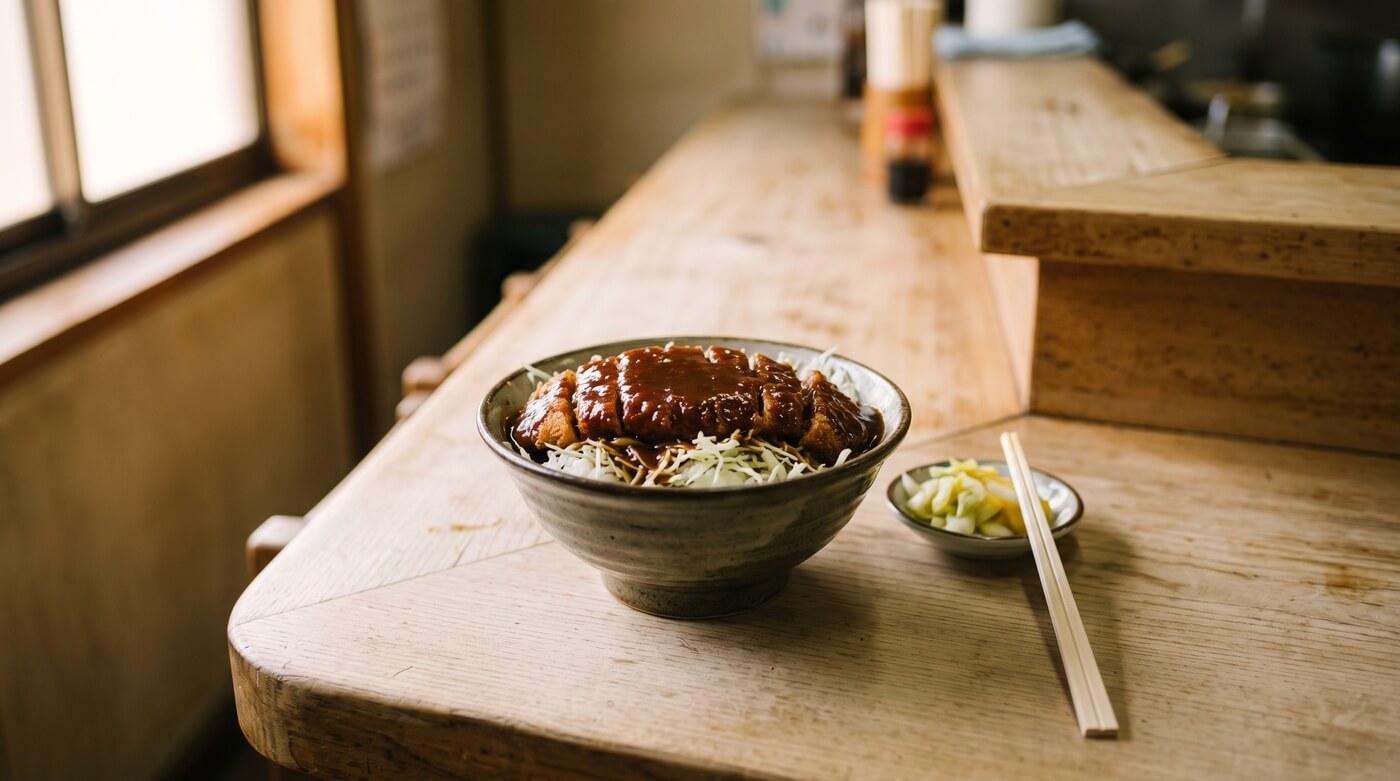
Demi-glace katsudon is the lunch to eat in Okayama, and Katsudon Nomura is credited with starting it in 1931. The shop sits about 10 minutes’ walk from Okayama Station, in Heiwacho, and around 11:30 is the time to arrive.
A regular loin bowl costs ¥1,100.
Most katsudon in Japan comes bound in egg and broth. The Okayama version lays a thin pork cutlet over rice and boiled cabbage, then covers it in dark demi-glace sauce.
Fillet costs ¥1,150. Smaller loin bowls, at two thirds and half the size, cost ¥900 and ¥750.
Buy a ticket from the machine just inside the door before you sit down. Nomura takes cash only, so carry a few thousand yen.
The shop closes on Mondays, and on the Tuesday after a holiday Monday. From Tuesday to Friday it serves lunch only, from 11:00 to 15:00.
At weekends and on public holidays it opens from 11:00 to 14:30, then again from 17:00 to 20:30, the only time it serves dinner.
This bowl is the one meal of the day that Osaka does not do better. Save dinner for Osaka, and if fried food is the theme, kushikatsu at Daruma in Shinsekai closes the day well.
For the train home, kibi dango, the soft sweet dumplings from the Momotaro folk tale, fill the station shelves.
Add a Day Trip to Kurashiki for ¥330 Each Way
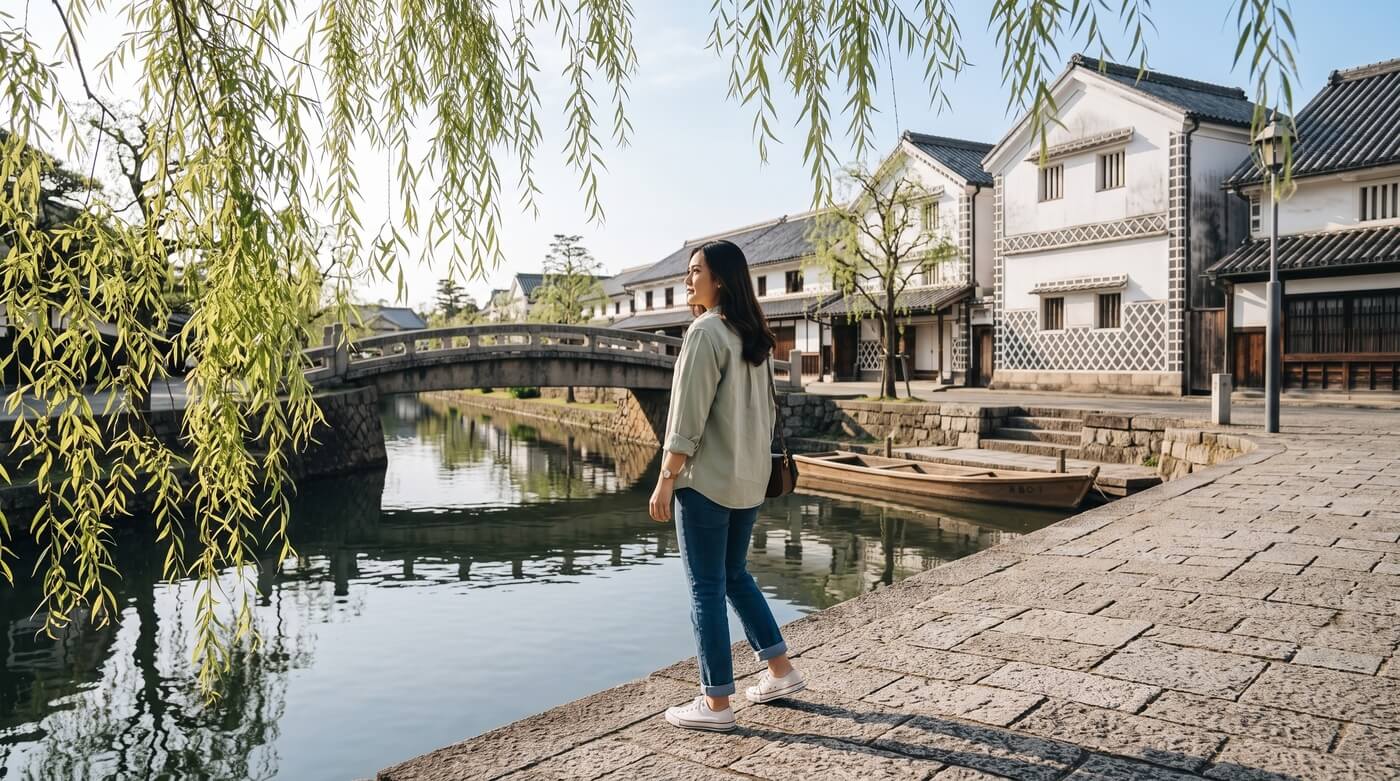
Kurashiki is 17 minutes past Okayama on the JR Sanyo Line and costs ¥330 each way. So it turns a short morning into a full day for ¥660 more.
A through ticket from Shin-Osaka to Kurashiki costs ¥5,940, which is the Okayama fare plus that local leg.
Buy your shinkansen ticket to Okayama only. For the local leg, tap an ICOCA or buy a ¥330 ticket, and get off at Kurashiki.
Shin-Kurashiki is a separate station 8 minutes further west, and it is the wrong one.
After lunch, a train around 12:30 puts you on the canal by about 13:15, after a 13 minute walk south from Kurashiki Station. Give the Ohara Museum of Art two hours.
Its ¥2,000 ticket covers three buildings, and last entry is 16:30. The museum closes on Mondays, except on public holidays and in August.
A seat on the Kurashiki River boat costs ¥1,000 for about 20 minutes. Kurashiki-kan, the tourist office, sells every departure from 09:00, so afternoon seats can be gone by the time you arrive.
Book one boat online instead, by 17:00 the day before. From July to September the last boat leaves at 15:00.
From October to March the canal lights come on at sunset and stay on until 21:00. An autumn afternoon ends with the lamps on the water and a train back from Okayama.
Flip the day from December to February. The Ohara Museum closes at 15:00 in those months, so go to Kurashiki first and return to Okayama for lunch.
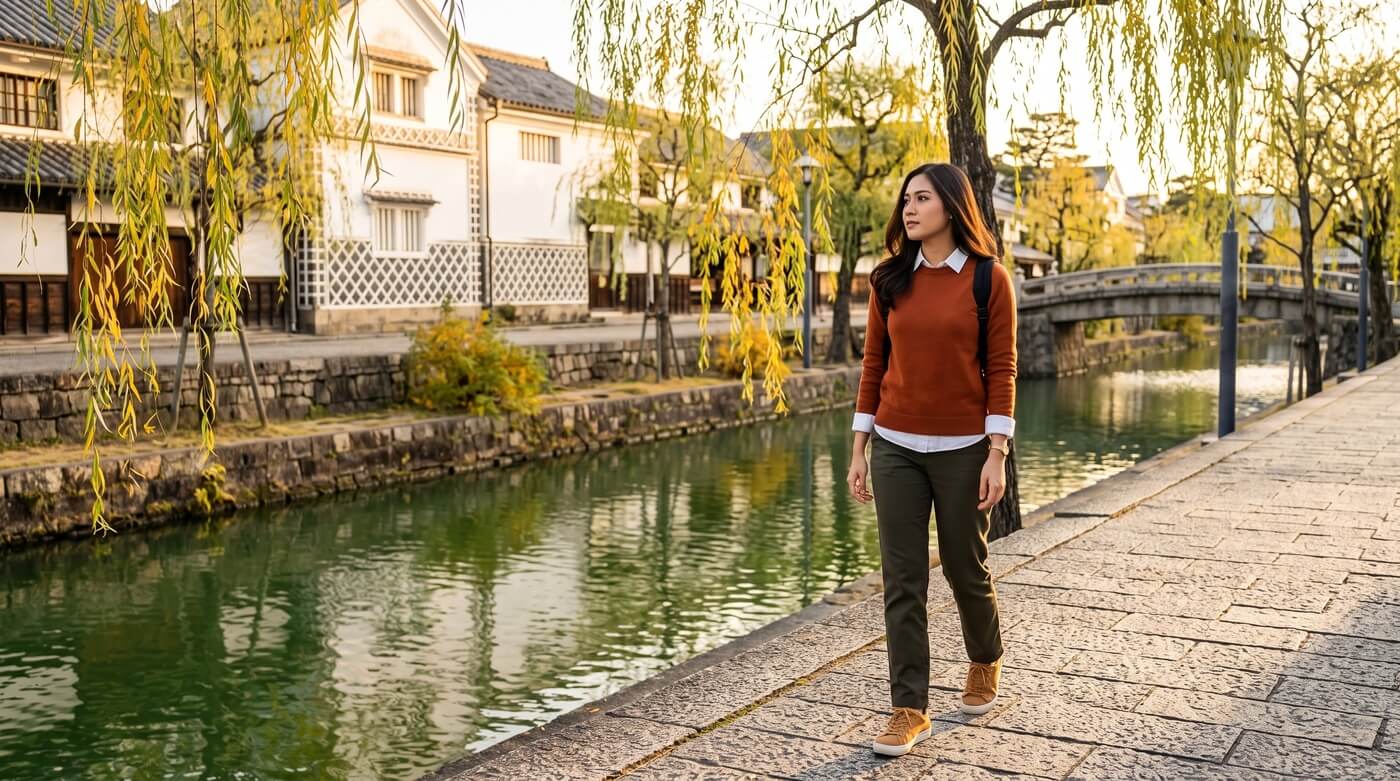
Korakuen takes last entry at 16:45 in winter and the castle at 17:00, so the afternoon still fits both. The Kurashiki day trip from Osaka, stop by stop, covers the museum rooms and the boat queue in full.
How Much Does a Day in Okayama Cost?
A day in Okayama costs ¥13,620 to ¥17,470 per person on its own, and ¥16,280 to ¥21,130 with Kurashiki. Most of either figure is the shinkansen round trip from Shin-Osaka.
| Item | Okayama only | With Kurashiki |
|---|---|---|
| Shinkansen round trip from Shin-Osaka | ¥11,220 to ¥12,920 | ¥11,880 to ¥13,580 |
| Okaden tram, two rides | ¥0 to ¥320 | ¥0 to ¥320 |
| Korakuen and Okayama Castle ticket | ¥800 | ¥800 |
| Ohara Museum of Art | ¥0 | ¥2,000 |
| Kurashiki River boat | ¥0 | ¥0 to ¥1,000 |
| Lunch at Nomura | ¥1,100 to ¥1,450 | ¥1,100 to ¥1,450 |
| Coffee and a snack | ¥500 to ¥1,500 | ¥500 to ¥1,500 |
| Osaka Metro from Umeda and back | ¥0 to ¥480 | ¥0 to ¥480 |
| Total | ¥13,620 to ¥17,470 | ¥16,280 to ¥21,130 |
Only the snack line is an estimate, and everything else is a posted fare or price. The high end uses a reserved Nozomi seat in the normal season, and busy dates add ¥200 to ¥400 a seat.
Nomura’s top fillet bowl sets the ¥1,450 lunch figure.
With a Kansai WIDE Area Pass, the shinkansen line drops out. The day then costs ¥2,400 to ¥7,550 on top of the pass.
So Okayama fits best in a week when you also ride JR to Himeji or Kyoto. The rest of your Osaka budget can then stay on the Metro.
Best Months for Korakuen
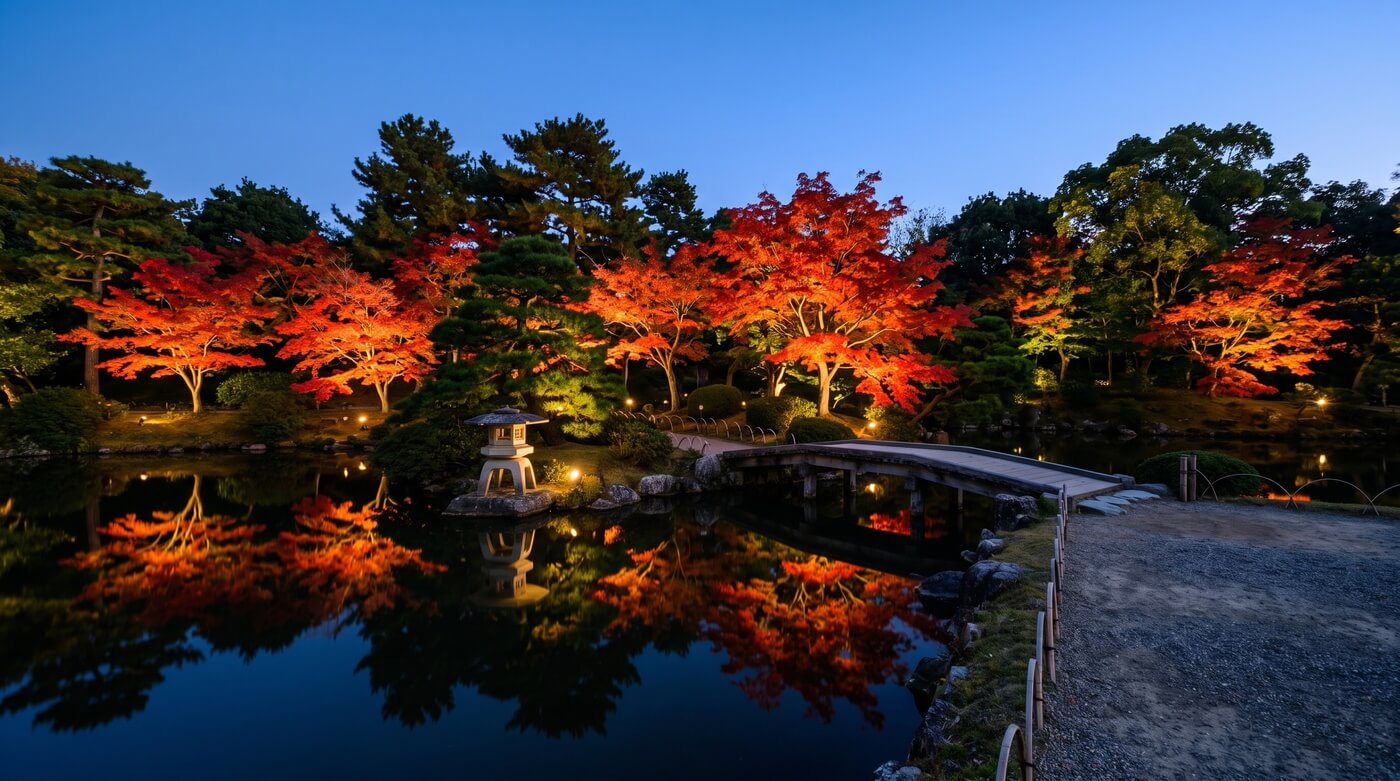
Late March to early April and mid November to early December are the best times for Korakuen. About 280 cherry trees flower in spring, and about 300 maples turn in autumn.
The garden changes every few weeks between those peaks. Plum blossom opens the year from February to early March, on about 100 trees.
About 260 azaleas follow from mid April to early May, and about 3,000 irises flower in early June. From late June to late July, about 1,800 lotus plants bloom in the ponds.
Summer is the hard season. July and August are hot, and the open lawns give little shade, so use the 07:30 summer opening and finish before noon.
Korakuen also opens at night as Genso Teien, on set dates in spring, summer, and autumn. The castle runs its own lighting in summer and autumn.
The dates change every year, so check both sites before you plan an evening around them.
Winter is quiet but thin. The lawns turn brown, and in January and February the Kurashiki boats run only at weekends and on holidays.
Two Monday Closures to Plan Around
Monday is the one day to avoid for this trip. Katsudon Nomura closes on Mondays, and so does the Ohara Museum of Art in Kurashiki.
Korakuen and the castle stay open.
The Ohara Museum opens on a Monday that is a public holiday, and every day in August. Nomura works the other way and shuts on the Tuesday after a holiday Monday.
So a holiday weekend needs checking against both.
Leave Shin-Osaka by 07:30 and you reach Korakuen before 08:45, soon after it opens. From Namba or Umeda, the Osaka Metro Midosuji Line runs straight to Shin-Osaka.
Leave time there for the walk from the Metro to the shinkansen gates.
Wear shoes that suit an hour on garden paths and the stairs to the top of the keep. Carry cash for Nomura, and bring a daypack rather than a suitcase.
Korakuen’s main gate and the castle both have coin lockers, but anything bigger belongs at your Osaka hotel.
A wheelchair or pushchair can manage most of this day. Korakuen lends both at the main gate, and the castle elevator reaches the fourth floor.
The hard parts are the slope near the garden’s south gate and the top two floors of the keep. Kurashiki’s canal quarter is flat.
Pick Himeji for a Castle and Korakuen for a Garden
An Okayama day trip from Osaka works when Korakuen is the reason and Kurashiki takes the afternoon. That pairing is the whole case for the fare.
On a Tuesday to Sunday in spring or autumn, the two together fill a day from 07:30 to dusk.
Skip Okayama if an original castle is the goal, because Himeji’s keep is original and closer on the same line. Skip it too on a first trip with Kyoto unseen, or on a rainy day, when the garden loses most of its pull.
If you are moving on west for good, Okayama also works as a stop on the longer ride to Hiroshima. Korakuen’s ticket office takes bags too big for its lockers, so even a suitcase need not stop you.
Frequently Asked Questions (FAQs)
Is Okayama worth a day trip from Osaka?
Okayama is worth a day trip from Osaka if you add Kurashiki, or if Korakuen is in plum, cherry, or maple season. Korakuen and Okayama Castle fill about three hours.
The unreserved shinkansen round trip from Shin-Osaka costs ¥11,220. Kurashiki adds ¥660 in fares and fills the afternoon with the Ohara Museum of Art.
How long do you need in Okayama?
Three to four hours covers Okayama’s two main sights and lunch. Okayama Korakuen takes about 90 minutes at an easy pace, and Okayama Castle takes about an hour.
Reach the garden by 08:40 and you finish by early afternoon. That leaves time for Kurashiki, 17 minutes away on the JR Sanyo Line.
How do you get from Osaka to Okayama?
Take the JR Sanyo Shinkansen from Shin-Osaka to Okayama. The Sakura, Nozomi, and Mizuho take about 45 minutes, and the fare is ¥5,610 one way unreserved.
JR local trains from Osaka Station cost ¥3,080 but take about three hours, with a change at Himeji. Shin-Osaka, not Osaka Station, is where the shinkansen leaves from.
Can you do Okayama and Kurashiki in one day?
Okayama and Kurashiki fit in one day, because Kurashiki is 17 minutes past Okayama on the JR Sanyo Line for ¥330. See Korakuen and the castle in the morning, then give the afternoon to the Ohara Museum of Art.
Avoid Mondays, when the Ohara Museum closes. Its last entry is 16:30.
Does the Japan Rail Pass cover Osaka to Okayama?
The Japan Rail Pass covers Osaka to Okayama on the Sakura, Hikari, and Kodama. It does not cover the Nozomi or Mizuho without a special ticket.
A seven day pass costs more than four round trips, so it loses money on a Kansai stay. The ¥12,000 Kansai WIDE Area Pass covers every JR train on this route.