

Namba Neighborhood Guide: What to Do, Eat, and Where to Stay – If you’re planning your first trip to Osaka, you’ll almost certainly end up in Namba at some point.
This isn’t by accident—the neighborhood functions as the city’s primary arrival hub, offering direct rail connections from Kansai International Airport and serving as the geographic heart of Osaka’s southern entertainment district.
While you might eventually gravitate toward quieter corners of the city, Namba delivers exactly what most first-time visitors need: proximity to major sights, an overwhelming number of dining options, and transport connections that make the rest of Osaka accessible.
The area itself is compact enough to explore on foot, with most major attractions clustered within a 15-minute radius of Namba Station.
You won’t find the atmospheric backstreets of Shinsekai or the design-focused calm of Horie here, but what Namba lacks in distinctive character, it compensates for with sheer functional efficiency.
What Is Namba?
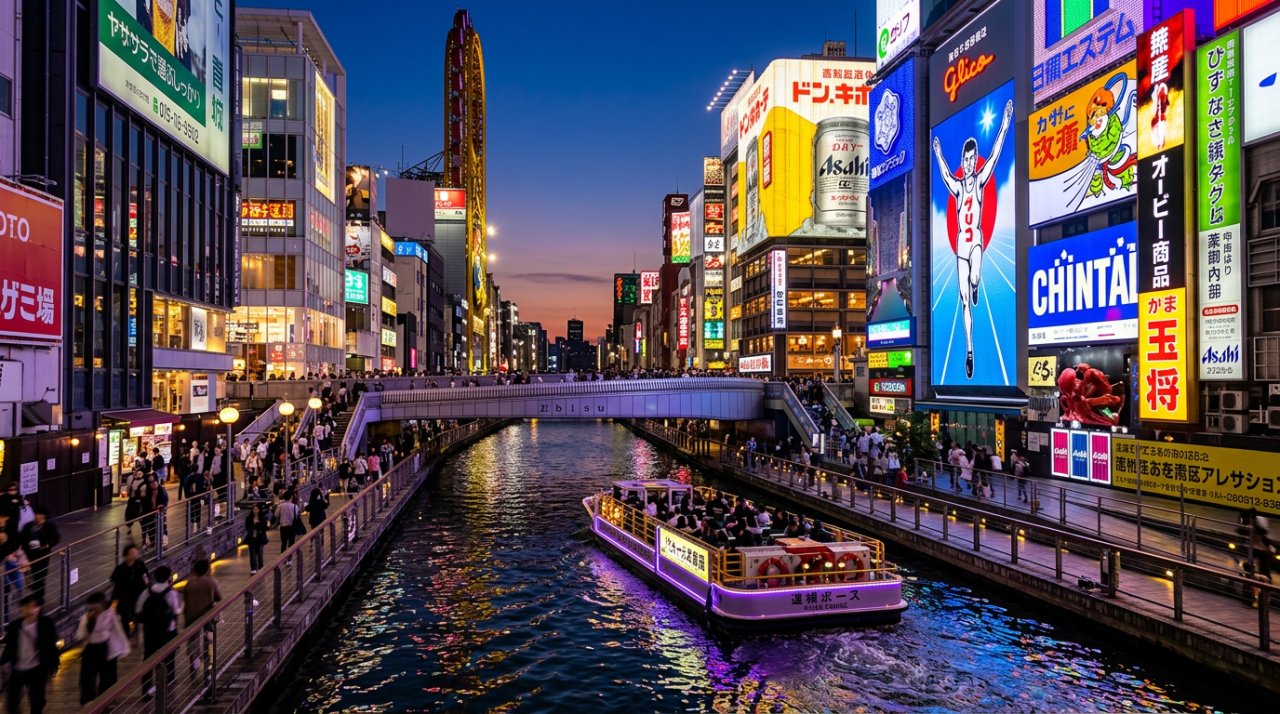
Namba sits at the center of Osaka’s Minami district, bounded roughly by Dotonbori canal to the north, Kuromon Market to the east, and Namba Parks shopping complex to the south.
The neighborhood is anchored by Namba Station, one of western Japan’s busiest transit interchanges, served by the Osaka Metro Midosuji Line, Nankai Railway, and Kintetsu lines.
This convergence of rail networks explains why accommodation density here surpasses anywhere else in Osaka—visitors can reach most major city destinations without transferring trains.
The district’s layout follows a logical pattern.
Shinsaibashi-suji and Namba Walk shopping arcades run north-south through the center, creating a covered pedestrian spine that connects Namba to Shinsaibashi.
Side streets branch east and west, packed with restaurants, bars, and smaller retail shops.
Unlike some Japanese neighborhoods where major streets have names, navigation here typically relies on nearby landmarks—the Glico sign, specific shopping complexes, or transit station exits.
What to Do in Namba
The practical reality of sightseeing in Namba is that most attractions occupy a relatively small geographic area, making this one of the more manageable neighborhoods to explore without detailed planning.
You can realistically hit the major spots in a single day, though the density of restaurants justifies returning for multiple meals.
Dotonbori
The canal strip one block north of Namba Station delivers exactly what the photographs promise: the Glico Running Man sign, the massive mechanical crab above Kani Doraku, and illuminated facades reflecting off the water.
This is the most photographed location in Osaka, and visiting at night when the neon signage is fully operational makes considerably more sense than arriving during daylight hours when you’re essentially looking at scaffolding and crowds.
The canal walk extends roughly 500 meters.
Food stalls along Dotonbori street (the road parallel to the water) present a quality control challenge—some deliver excellent street food, while many target tourists who don’t know better.
The practical sorting mechanism: establishments with English menus prominently displayed outside and staff aggressively recruiting passersby are generally avoidable.
Better options tend to have queues of local customers.
For a complete breakdown of navigating this area, check the full Dotonbori guide.
Shinsaibashi-suji Shopping Arcade
Japan’s longest covered shopping arcade stretches nearly 600 meters from Shinsaibashi Station in the north down to Namba, offering climate-controlled retail therapy regardless of weather conditions.
The southern half closer to Namba skews toward fast fashion chains, souvenir shops, and drugstores—the practical zone for Don Quijote runs and Japanese cosmetics purchases.
As you move north toward Shinsaibashi proper, the retail mix transitions into higher-end boutiques and specialty shops.
Budget at least one hour if you’re planning to walk the entire length, and considerably longer on weekends when crowd density slows pedestrian traffic to a shuffle.
The arcade’s main advantage over outdoor shopping districts is the ability to browse during rain without constant umbrella management.
Namba Parks
The stepped rooftop garden complex above Namba Station remains underutilized by most visitors, which works to your advantage if you need a break from street-level density.
Nine terraced levels of greenery ascend above the shopping complex, creating a surprisingly calm pocket of outdoor space.
The city views aren’t particularly dramatic, but the vertical separation from ground-level crowds provides enough psychological distance to feel like a genuine escape.
The food court inside the shopping complex houses several mid-range restaurants that draw significantly smaller crowds than comparable Dotonbori options.
If you’re looking for lunch with minimal queue time, this is a practical backup option.
Hozenji Yokocho
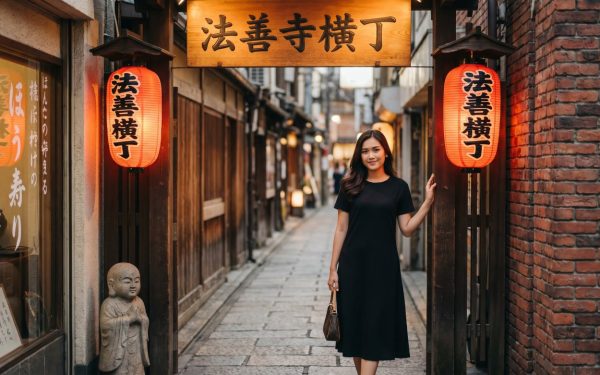
This narrow stone-paved alley tucked between Dotonbori and Namba contains one of the few genuinely historical elements remaining in the immediate area.
The small moss-covered Fudo Myoo statue and surrounding row of traditional kappo restaurants and bars feel disconnected from the neon-lit streets just meters away.
Most visitors walk past the entrance without noticing it exists.
The restaurants here operate in the mid-to-high price range, and reservations are expected at most establishments.
Even if you’re not planning to eat here, walking through the alley takes less than five minutes and provides useful atmospheric contrast to the surrounding commercial zone.
Namba Yasaka Shrine
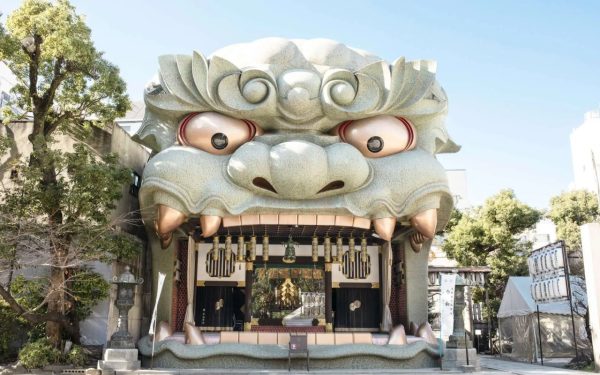
The giant lion-head stage at this shrine—nearly 12 meters tall with open jaws forming the stage platform—ranks among the more peculiar architectural features in central Osaka.
The shrine sits just five minutes’ walk south of Namba Station, yet remains almost completely unknown to first-time visitors despite occupying prime tourist territory.
Admission is free, the shrine operates daily, and crowd levels are remarkably low considering the proximity to Dotonbori.
The lion head itself serves as a stage for traditional performances during festivals, though most days you’ll find it simply sitting there looking wonderfully absurd.
Photography is permitted.
Where to Eat in Namba
Restaurant density in Namba creates both opportunity and risk.
You’ll find genuinely excellent dining here, but you’ll also encounter expensive, mediocre establishments designed specifically to extract money from tourists who can’t distinguish quality from location.
The following guidance should help sort one from the other.
Street Food Essentials
Takoyaki (octopus balls), okonomiyaki (savory pancake), and kushikatsu (deep-fried skewers) constitute the trinity of Osaka street food, and Namba offers strong representatives of all three.
For takoyaki, Wanaka in Namba and several stalls along Dotonbori maintain solid reputations among both tourists and locals.
Mizuno on Dotonbori handles okonomiyaki and comes with the queues to prove it—arriving before noon or after 2pm helps avoid the worst wait times.
For kushikatsu, the superior options are actually in Shinsekai rather than Namba, though Daruma operates a Namba branch if you’re not making the trip south.
The Shinsekai restaurants generally offer better value and more authentic atmosphere, but convenience sometimes outweighs optimal experience.
Izakaya Options
The side streets east of Dotonbori and south toward Namba Station contain a dense network of izakayas ranging from standing bars to proper sit-down dinner establishments.
Price variation is substantial, and the exterior presentation usually signals what you’re getting.
Plastic food displays outside plus laminated picture menus inside indicate budget izakayas—typically fine for beer and yakitori, but don’t expect culinary sophistication.
Establishments with no visible menu outside and reservation systems generally occupy the mid-range or above.
Budget ¥2,000–4,000 per person for a proper izakaya dinner including drinks.
The quality ceiling is genuinely high if you choose carefully, but the floor is also quite low for places banking on tourist foot traffic.
Ramen Stops
Ichiran’s Dotonbori location operates one of the area’s most distinctive dining experiences—the solo-booth system where you order via form and eat facing a curtained counter eliminates social interaction entirely, which is either appealingly meditative or slightly sad depending on your perspective.
The ramen itself is solid, and the system isn’t just gimmickry.
Expect queues during peak hours.
Kinryu Ramen on Dotonbori represents the opposite end of the spectrum: open-air seating, budget pricing, a giant dragon facade, and 24-hour operation that performs best at 2am after extended drinking.
Both establishments are worth visiting for different reasons—Ichiran for the experience design, Kinryu for late-night functionality.
Higher-End Dining
Namba supports several excellent kaiseki and kappo restaurants for travelers interested in moving beyond street food.
Nishiya in Namba provides an approachable entry point to omakase kaiseki without requiring a Michelin-starred budget.
Reservations are mandatory at most higher-end establishments, and some require a Japanese-speaking intermediary or hotel concierge booking—factor this into your planning if formal dining is a priority. Browse all restaurants in Namba
for additional options across all price ranges.
Where to Stay in Namba
Namba functions as Osaka’s most popular accommodation area for first-time visitors, offering the widest selection across every budget category.
The concentration of hotels here exceeds any other Osaka neighborhood, largely due to the direct Nankai Railway connection from Kansai International Airport making this the most convenient landing point for international arrivals.
Budget Accommodations (Under ¥5,000/Night)
Capsule hotels and hostels cluster densely in the immediate Namba area, with quality varying significantly across price points.
Capsule options range from purely functional spaces—small pod, shared facilities, minimal amenities—to thoughtfully designed properties with private curtained bunks, individual lighting, and quality common areas.
Hostels have improved considerably in Osaka over recent years, with better properties offering private rooms that undercut mid-range hotels on price while matching them on cleanliness and location.
Location matters more in the budget category than brand recognition.
Properties within three minutes’ walk of Namba Station exits command premium pricing but save subway fares and simplify late-night returns.
Establishments five to ten minutes’ walk offer better value if you don’t mind the extra distance.
Mid-Range Hotels (¥8,000–18,000/Night)
Business hotels dominate this price tier—Dormy Inn, APA, Toyoko Inn, and their competitors operate multiple properties within walking distance of Namba Station.
Rooms are compact by Western standards (typically 15-20 square meters), but cleanliness standards are high and locations are generally excellent.
Dormy Inn properties specifically earn their slight premium through superior breakfast buffets that often include local specialties alongside standard Western options.
The mid-range category represents the sweet spot for most travelers: reliable quality, predictable amenities, and locations that minimize transport time.
Don’t expect design innovation or generous space, but functionality is virtually guaranteed.
Luxury Properties (¥20,000+/Night)
The Conrad Osaka and W Osaka are both accessible from Namba within 15 minutes via Metro, offering full international luxury hotel service.
For Namba-specific luxury, The Strings by InterContinental and several smaller boutique properties deliver significantly more space and personalized service than business hotel equivalents.
The Waldorf Astoria Osaka (opened 2024) sits in Umeda rather than Namba, though the 8-minute Metro connection makes proximity less critical if the property itself is your priority.
Browse all hotels in Namba to compare current rates and availability across all categories.
Booking three to four months in advance is recommended for cherry blossom season (late March to early April) when demand peaks.
Getting To and Around Namba
Transport accessibility defines Namba’s popularity with visitors.
The neighborhood serves as a natural orientation point for Osaka exploration, with rail connections extending to every major district and the airport connection eliminating the complexity that often characterizes international arrivals.
From Kansai International Airport (KIX)
The Nankai Rapi:t express train runs directly from KIX to Namba Station in approximately 38 minutes, with frequent departures throughout the day.
This is the single most convenient airport connection in Osaka for anyone staying in the Namba area, and the primary structural reason why Namba dominates first-time visitor accommodation choices.
No transfers, no luggage complications, no navigating unfamiliar transit systems after a long flight.
The standard Nankai Limited Express (non-reserved seating, lower price point) covers the same route in roughly 50 minutes.
For a complete comparison of all airport transport options including JR and bus alternatives, see the KIX to Osaka transport guide.
By Osaka Metro
Namba Station sits on the Midosuji Line (red), which functions as the main north-south spine of the Osaka Metro network. Umeda
is four stops north (8 minutes).
Shinsaibashi is one stop north.
Tennoji is three stops south.
For day trips requiring Shinkansen access, the Midosuji Line connects directly to Shin-Osaka Station in the northern part of the city.
An ICOCA card (rechargeable transit card) or day pass covers all Metro travel and represents the practical way to move around Osaka.
Single-trip tickets work but become tedious if you’re making multiple journeys daily.
ICOCA cards can be purchased at any major Metro station and function across most Japanese transit systems.
Walking Distances
Most major Namba attractions fall within comfortable walking range.
Dotonbori is two minutes from Namba Station.
Shinsaibashi is 15 minutes north on foot. Shinsekai
is 20 minutes south.
Hozenji Yokocho is three minutes.
Kuromon Market is 10 minutes east.
For anything beyond this radius, the Metro is faster than walking and costs under ¥300 per trip.
The entire central Namba area is flat, which eliminates the exhausting hill climbs that characterize some Japanese neighborhoods.
Street signage includes English translations at major intersections, though Google Maps remains more reliable for navigation than attempting to read street signs.
Namba vs. Umeda: Choosing Your Base
This represents the most common accommodation decision for first-time Osaka visitors, and the answer depends on what you prioritize.
Stay in Namba if your trip centers on food, nightlife, and the classic tourist circuit.
Choose Umeda if you want more space, quieter surroundings, and easier access to Shinkansen connections.
The price difference between neighborhoods is modest across comparable hotel categories.
The atmospheric difference is significant.
Namba is denser, louder, and more immediately stimulating—you step out of your hotel directly into the action.
Umeda feels more corporate and modern, with larger hotels and calmer streets that may or may not appeal depending on your tolerance for urban intensity.
Both neighborhoods sit on the Midosuji Line, making switches between them take 8 minutes on the Metro.
You won’t make a genuinely wrong choice, but most travelers who’ve experienced both tend to prefer Namba for a first visit and Umeda for return trips when the initial novelty of density has worn off.
Practical Notes for Your Visit
Several operational details will improve your Namba experience if you’re aware of them before arrival.
These aren’t the kind of things that appear in promotional materials, but they affect daily functionality.
Best time to visit: Namba operates at full capacity year-round, but cherry blossom season (late March to early April) brings the heaviest crowds and highest hotel prices.
Book accommodation three to four months in advance if you’re visiting in April.
Golden Week (late April to early May) combines peak crowds with elevated prices—avoid this period if you have schedule flexibility.
Cash requirements: Many restaurants in Namba, including several well-known establishments, operate on a cash-only basis.
Carry yen in sufficient quantities.
7-Eleven and Japan Post ATMs reliably accept international cards if you need to withdraw additional funds.
Credit card acceptance is improving but remains inconsistent across smaller restaurants and shops.
Late-night food: Namba is one of the few Japanese neighborhoods where you can reliably eat a proper meal at 2am.
Ramen shops, convenience stores (which offer better food quality than you’re expecting), and several 24-hour izakayas keep the area functional around the clock.
This late-night accessibility is unusual in Japan and represents a genuine advantage if you’re adjusting to jet lag or keep irregular hours.
Don Quijote operations: The flagship Don Quijote store on Dotonbori operates 24 hours and proves genuinely useful for snacks, toiletries, drugstore items, and tax-free shopping on Japanese cosmetics.
The multi-floor layout is intentionally chaotic by design—allow more time than you think you need to find specific items.
The tax-free counter on the upper floor processes refunds but queues can extend to 20-30 minutes during peak tourist months.
Managing crowds: Dotonbori specifically gets very crowded on weekend evenings and during peak tourist periods.
If crowds bother you, the canal area is significantly calmer on weekday mornings.
Streets one block removed from Dotonbori in any direction see substantially lower foot traffic at all times while remaining perfectly accessible to major attractions.
Final Thoughts
Namba won’t be the most memorable neighborhood you visit in Osaka, but it will likely be the most useful.
The direct airport connection, accommodation density, and restaurant concentration create a functional base camp that simplifies the logistical challenges of exploring an unfamiliar city.
You might eventually prefer the quieter corners of Horie or the retro atmosphere of Shinsekai, but starting in Namba gives you time to orient yourself before making those discoveries.
The neighborhood’s popularity with first-time visitors isn’t accidental—it genuinely delivers what most people need on their first trip to Osaka.
Whether you’ll want to return here on a second visit is a different question, but that’s a problem worth having.
What aspects of Namba are you most looking forward to exploring, and which neighborhood will you visit next once you’ve gotten oriented?