Namba Yasaka Shrine
Osaka's ancient guardian shrine, famous for its colossal lion-head performance stage.

Namba Yasaka Shrine (難波八阪神社) is a Shinto shrine with roots stretching back to the reign of Emperor Nintoku in the 4th century, making it one of Osaka’s oldest places of worship.
It served as the guardian shrine for the entire Namba area, and while the original complex was largely destroyed in wartime air raids, what was rebuilt after the war is arguably more memorable than anything that came before it.
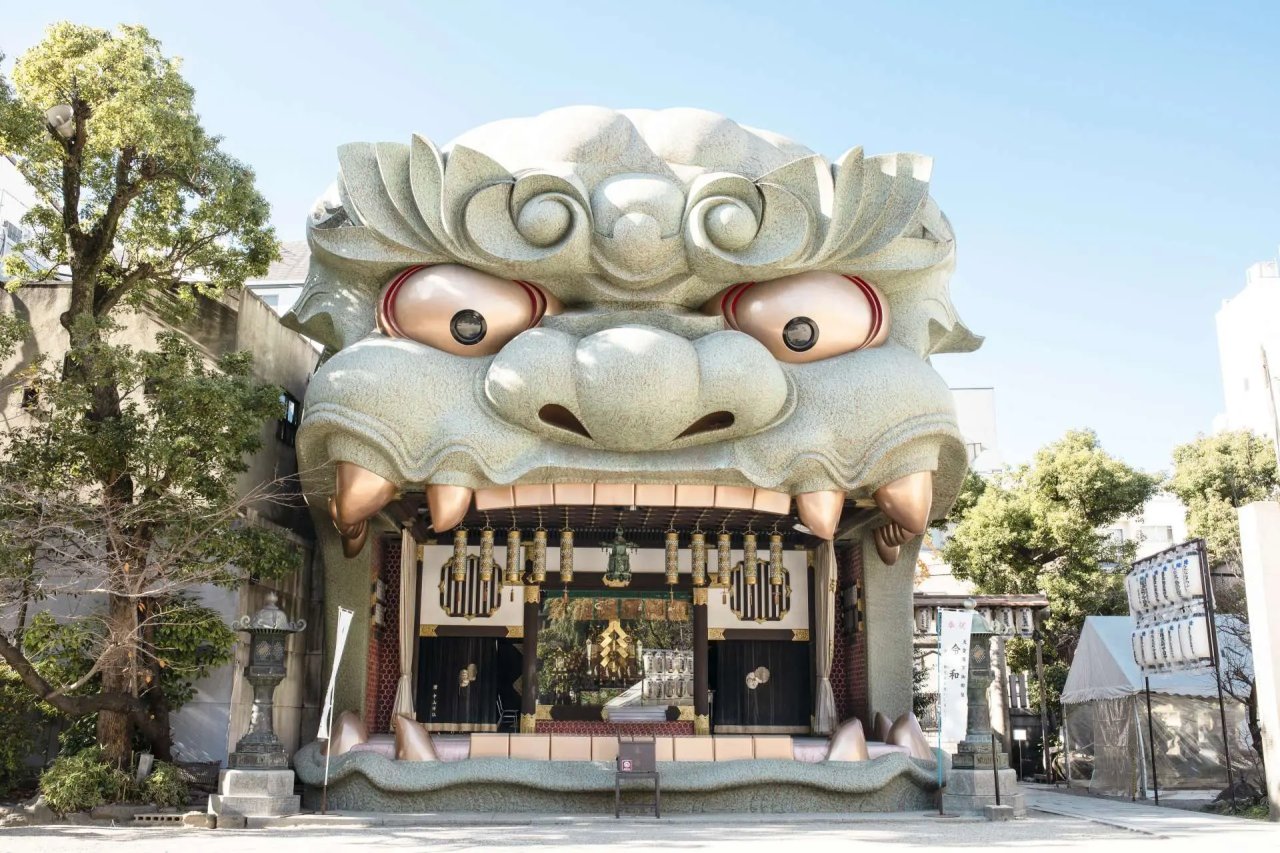
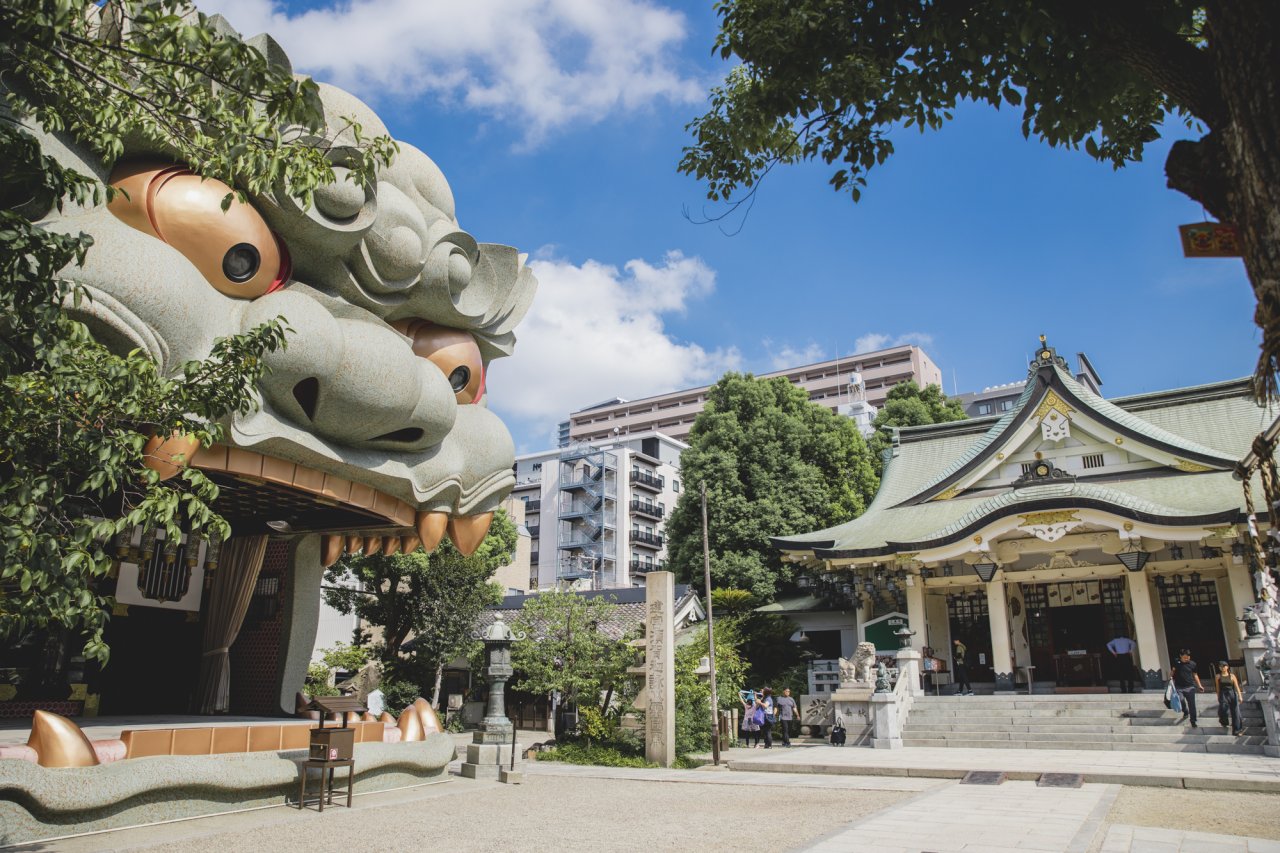
The centrepiece is an enormous lion-head structure — 12 metres high, 11 metres wide — that doubles as a ceremonial stage called the Ema-den.
The lion’s gaping mouth faces outward, and the entire thing looms over the compact grounds with theatrical confidence.
Locals believe the lion swallows evil and invites good fortune, so you’ll see visitors clapping and bowing with genuine conviction.
The shrine is also venerated for blessings related to matchmaking, victory, and protection from illness.
The Namba Yasaka Festival, held annually on the third Sunday of January, is the event that originally put this shrine on the map — it was designated Osaka City’s first intangible folk cultural property.
Outside of festival season, the grounds are peaceful and uncrowded in the early morning, which is when the lion-head photograph looks most dramatic.
The shrine sits about a seven-minute walk from Namba Station, tucked into a quiet residential pocket that feels a world away from the Dotonbori chaos just up the road.
Namba Yasaka Shrine: Osaka’s Giant Lion Head Shrine
Namba Yasaka Shrine is one of Osaka’s oldest and most visually arresting Shinto shrines, and it won’t cost you a single yen to walk through the gates.
In this Explore Osaka guide, you’ll find everything you need to plan your visit: what the shrine actually looks like up close, how to get there, when to go, and what else to do in the surrounding neighbourhood.
The centrepiece is an enormous lion-head structure that dominates a compact courtyard in the quiet backstreets of Naniwa Ward, around seven minutes on foot from Namba Station.
Key Highlights
Hide- Address: 2-9-19 Motomachi, Naniwa Ward, Osaka 556-0016
- Opening hours: Daily, 06:00 to 17:00 (inner office 09:00 to 16:50)
- Admission: Free
- Nearest station: Namba Station (Osaka Metro Midosuji, Yotsubashi, and Sennichimae lines) - approx. 7 min walk
- Time needed: 20 to 40 minutes
- Best season: Year-round; January for the Namba Yasaka Festival; spring for a quieter alternative to busier cherry blossom parks
- Official website: https://nambayasaka.jp/
Why Visit Namba Yasaka Shrine
Osaka has plenty of shrines. Most of them are pleasant, serene, and pretty much interchangeable to a first-time visitor.
Namba Yasaka Shrine is different, and the reason is immediately obvious the moment you step through the torii gate.
The Ema-den, the ceremonial lion-head stage at the far end of the grounds, is 12 metres tall and 11 metres wide.
It stares back at you with an open mouth designed, according to Shinto tradition, to swallow evil and draw in fortune.
Standing at the base of it and looking up is one of those genuinely disorienting moments that Osaka occasionally produces when you’re not expecting it.
More Than Just a Photo Opportunity
The shrine has real historical weight behind that theatrical exterior. Its origins trace back to the reign of Emperor Nintoku in the 4th century, making it one of the oldest sacred sites in the city.
The Namba Yasaka Festival (Nanba Yasaka Matsuri), held every year on the third Sunday of January, was the first festival in Osaka to be designated an intangible folk cultural property by the city government.
During the festival, the Ema-den stage comes alive with traditional performances that fill the otherwise quiet courtyard with taiko drums and ceremony.
The shrine is particularly popular with students before exams and athletes before competitions, both seeking blessings from a deity associated with victory and the expulsion of bad luck.
That adds a layer of lived purpose to the place that you don’t always feel at more touristic shrines.
The Lion Mythology: Why a Lion Head?
The lion figure in Japanese shrine tradition is called a shishi, and it carries protective symbolism across many Shinto and Buddhist contexts.
At Namba Yasaka Shrine, the shishi is positioned as a devourer of calamity.
The wide-open mouth is the key visual element, and it’s not decorative. The idea is that evil enters the mouth and is consumed, leaving the worshipper protected.
When you see locals pause in front of it, bow, and clap with real focus, that context is what gives the gesture its weight.
What to See and Do at Namba Yasaka Shrine
The grounds are compact. You can walk the full perimeter in under ten minutes, but most people find themselves slowing down considerably once they actually look around.
The Ema-den Lion Head Stage
This is the reason most people come, and it earns the attention.
The structure was built as part of the postwar reconstruction of the shrine, after the original complex was largely destroyed in World War II air raids.
What the architects produced in its place is genuinely unusual for a Japanese religious site, a monumental lion face that doubles as a functioning ceremonial performance stage, with eyes that light up at night.
The best angle is from directly across the courtyard, roughly 15 metres back from the base. That’s where the full scale registers properly.
Up close, you notice the craftsmanship: painted wooden details, the deliberate expression, the way the whole structure is sized to command its surroundings without overwhelming the other shrine buildings.
Photography Tips
Early morning, before 08:00, gives you the courtyard almost entirely to yourself. Soft morning light from the east catches the lion’s face at an angle that eliminates the harsh shadows you get later in the day.
If you’re visiting in January, come during the Namba Yasaka Festival weekend for a completely different atmosphere, colour, movement, crowds, and the stage actually in use.
The Main Hall and Subsidiary Shrines
The haiden (worship hall) sits at the base of the lion-head structure, and the honden (main hall) is directly behind it.
Both are standard Shinto architecture, well-maintained, and worth a moment of quiet attention.
The chozuya (ritual hand-washing basin) near the entrance follows the traditional form: ladle, stone basin, running water.
Several smaller subsidiary shrines are distributed around the grounds, each dedicated to different deities.
The Ebisu-sha, dedicated to the god of commerce and fishermen, sees regular visits from local business owners.
If you’re there early enough on a weekday morning, you’ll likely see suited workers stopping in before heading to the office.
Omamori and Ema
The shrine office, open from 09:00 to 16:50, sells omamori (protective charms) and ema (wooden wishing plaques).
The lion-themed designs are specific to this shrine and make for an unusual souvenir compared to the generic options you find elsewhere in Namba.
Prices are modest, typically 500 to 1,000 yen for most items.
Getting to the Namba Yasaka Shrine
Namba Yasaka Shrine sits in Motomachi, a quiet residential pocket of Naniwa Ward that most tourists pass straight through on the way between Dotonbori and Shinsekai. That’s actually part of its appeal.
From Namba Station
Use Exit 32 from Osaka Metro Namba Station and walk south for approximately six to seven minutes.
The street grid in this part of Naniwa Ward is straightforward, and Google Maps handles the navigation without any drama.
The address is 2-9-19 Motomachi; drop that into your maps app and follow it directly.
Namba Station is served by three Osaka Metro lines (Midosuji, Yotsubashi, and Sennichimae), the Nankai Main Line, and the Kintetsu Osaka Namba Line. If you’re coming from Shin-Osaka or central Umeda, take the Midosuji Line to Namba in around 10 minutes and walk from there.
From Daikokucho Station
Daikokucho Station on the Midosuji and Yotsubashi lines is roughly equidistant, about seven minutes on foot heading northwest.
This route works well if you’re combining the shrine visit with a walk through Shinsekai to the south.
Getting Around Without a Train
If you’re already in the Namba area on foot, the shrine is reachable from the Dotonbori canal in about 12 to 15 minutes walking south along Midosuji Boulevard and then turning into the quieter side streets.
The transition from the commercial chaos of Dotonbori to the calm of the shrine grounds takes under a quarter of an hour, which is a genuinely pleasant contrast.
Practical Tips For Visiting Namba Yasaka Shrine
The shrine is free, the walk is short, and the main structure is immediately visible from the entrance, so there’s no real way to have a disappointing visit here.
That said, a few specifics are worth knowing before you go.
Crowds and Best Times
Weekday mornings before 09:00 are the calmest. The grounds are quiet, the light is good, and you’ll share the space with a handful of locals going about their devotional routines rather than tour groups.
Weekends between 10:00 and 15:00 bring more visitors, though the space never gets uncomfortably packed outside of the January festival weekend.
The January festival draws significant crowds to what is otherwise a very small space. If you’re visiting during that third Sunday in January, arrive early, before 10:00, if you want any room to move freely.
Seasonal Considerations
The shrine works in every season. In spring, the quiet grounds offer a low-key alternative to the crowded cherry blossom parks nearby.
Summer evenings can be pleasant as the heat drops and the lion’s eyes are illuminated. Autumn brings cooler air and good light for photography.
In winter, especially around New Year, the atmosphere carries a particular weight, with incense, quiet prayer, and the occasional sound of a handbell.
What to Bring and Wear
No dress code applies. Comfortable walking shoes matter more than anything else, since you’ll likely combine this with walking through the wider Namba area.
The grounds are compact and mostly paved, so no special footwear is needed.
Cash is useful if you want to purchase omamori or ema at the shrine office, as card payment is not always available at smaller Shinto offices. A 1,000-yen note covers most options.
Accessibility
The main courtyard and pathways are generally flat and paved, making the site reasonably accessible for visitors using wheelchairs or pushchairs. The inner shrine areas involve a few steps.
Nearby Attractions
The shrine sits at the edge of a productive cluster of things to see and do in this part of Osaka. A half-day circuit is easy to put together without needing any additional transport.
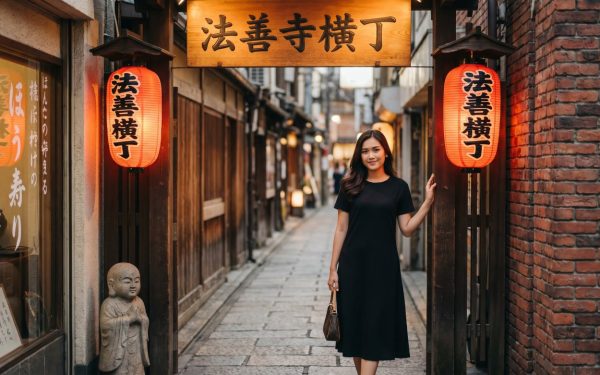
- Hozenji Yokocho is a narrow stone alleyway about 15 minutes north on foot, lined with traditional izakaya and lit by stone lanterns. The mossy Fudo Myoo statue at its centre is one of Osaka’s quieter sacred spots, tucked into the middle of what is otherwise a dining and entertainment strip.
- Kuromon Ichiba Market, around 15 minutes northeast of the shrine, is Osaka’s most famous covered market and the logical first stop if hunger sets in after your visit. Fresh seafood, yakitori, grilled wagyu beef, and seasonal produce fill around 170 stalls along a 580-metre covered arcade. It opens early and draws both tourists and local chefs stocking up for the day.
- Sumiyoshi Taisha, further south on the Nankai Line, is Osaka’s oldest and most important shrine complex, dating to the 3rd century. If Namba Yasaka Shrine has sparked an interest in Osaka’s religious history, Sumiyoshi Taisha is the logical next step, a much larger site with its own architectural style that predates the standard Buddhist influence on Shinto shrine design.
- Shinsekai is a short walk or one subway stop south, a retro entertainment district built around the Tsutenkaku Tower. The area carries a distinctly 1950s energy, with kushikatsu (deep-fried skewers) restaurants and pachinko parlours lining its covered arcades. It’s a different register entirely from the refined quiet of the shrine, which is exactly why the juxtaposition works well.
Namba Yasaka Shrine takes about 30 minutes at an easy pace, making it one of the more efficient cultural stops in central Osaka.
Pair it with a walk through Dotonbori to the north or a meal in Shinsekai to the south, and you’ve got a solid half-day without setting foot on a train.
If you’re still putting together the bigger picture for your trip, the Osaka itineraries section has structured plans across two, three, and five days that pull the city’s highlights into a sensible order.
For everything else the area has on offer, the full guide to things to do in Osaka is a good next stop.
What's Available
Frequently Asked Questions
Yes, entry to Namba Yasaka Shrine is completely free. You can walk in, explore the grounds, and photograph the famous lion-head structure without paying a single yen.
The shrine is open daily from 6:00am to 5:00pm, and the inner office operates from 9:00am to 4:50pm for omamori charms and prayer services, which do have a small cost if you choose to participate.
The lion head is the Ema-den, a ceremonial stage and symbolic structure built in the postwar reconstruction of the shrine.
At 12 metres tall and 11 metres wide, it represents a lion swallowing evil and drawing in good fortune — which is why the shrine is popular with students before exams and athletes before competitions.
The structure is unique to this shrine and has no direct equivalent anywhere else in Japan, which is a large part of why it’s become one of Osaka’s most photographed spots.
From Namba Station, use Exit 32 on the Osaka Metro lines and walk south for about six to seven minutes.
The shrine sits in Motomachi, a quieter side street in Naniwa Ward, so follow the signs or drop the address — 2-9-19 Motomachi — into Google Maps and it’ll get you there without any drama.
You can also walk from Daikokucho Station in roughly the same time, which is useful if you’re already on the Midosuji or Yotsubashi lines heading south.
Editor's Review
Namba Yasaka Shrine punches well above its size.
The grounds are compact — you could walk the whole thing in ten minutes — but that lion-head structure stops you cold.
It’s genuinely unlike anything else in Osaka’s shrine circuit, and the sheer scale of it in a quiet residential street creates an odd, pleasing dissonance.It works best for travellers who appreciate atmosphere over spectacle.
There’s no gift shop to linger in, no interactive exhibit to read through — just incense, stone lanterns, and a very large lion staring back at you.
Go before 8am if you want it mostly to yourself, and face the lion from the far end of the courtyard to get the full visual impact.
Perfect for photography, quick cultural immersion, or a calm start before the Dotonbori crowds wake up.