

![[Departing from Osaka|Kyoto Nara Classic & Mountain Secrets Small Group Tour] Fushimi Inari・Nara Park or Arashiyama・Sanzenin・Kifune Shrine Dual Plans Available](https://i0.wp.com/res.klook.com/image/upload/w_500,h_313,c_fill,q_85/activities/jxvwwkzs3hdvnuzisavn.webp)

Shinsaibashi is a major commercial and retail district in Chuo Ward, Osaka, centered on the Shinsaibashi-suji shopping arcade, one of Japan’s oldest and longest covered shopping streets with a history stretching back to the Edo period.
The district spans a broad range of retail formats, from luxury international brands along Midosuji Boulevard to independent boutiques and streetwear shops in the Amerika-Mura (American Village) area to the west.
The surrounding streets also contain a dense concentration of cafes, restaurants, and bars that make Shinsaibashi a viable dining and nightlife destination in its own right.
Shinsaibashi Station on the Osaka Metro Midosuji and Nagahori Tsurumi-ryokuchi lines serves as the area’s primary transit hub, with direct connections to Namba to the south and Umeda to the north.
The neighborhood sits within comfortable walking distance of Dotonbori, Horie, and Namba.
Shinsaibashi Guide: Shopping, Food, and Hidden Gems
If you want to understand Osaka’s downtown energy in a single afternoon, Shinsaibashi is where to start.
This Shinsaibashi Guide covers the covered arcade of Shinsaibashi-suji (心斎橋筋), the counterculture pocket of Amerika-mura, the quieter boutique lanes of Horie, and enough food options to fill a week of meals.
The neighborhood sits in Chuo Ward, roughly in the center of Osaka’s Minami district, with Dotonbori directly to its south and Namba a short walk beyond that.
For a broader sense of what the city offers, the full Osaka neighborhood guide puts Shinsaibashi in useful context.
Shinsaibashi at a Glance
- Best for: Shoppers, food lovers, first-time visitors to Osaka
- Nearest stations: Shinsaibashi Station (Osaka Metro Midosuji Line M19 / Nagahori Tsurumi-ryokuchi Line N15)
- Walkability: Excellent — the entire area is designed for foot traffic
- Best time to visit: Weekday mornings to avoid crowds; late October to early December for pleasant temperatures
Getting to Know Shinsaibashi
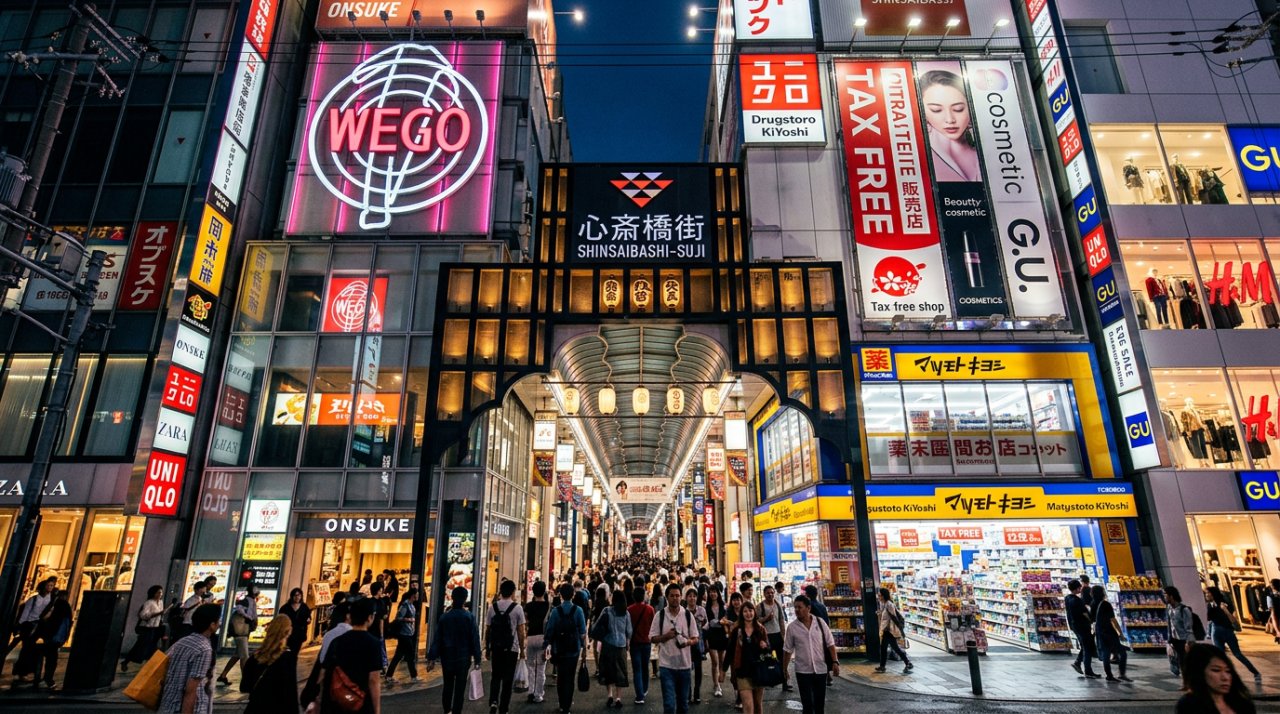
Shinsaibashi has been a commercial hub since the Edo period, when merchants set up along the waterways that once crisscrossed this part of Osaka.
The name itself translates loosely as “new Saibashi bridge,” a reference to an old canal crossing that no longer exists.
The modern arcade was rebuilt and roofed in the postwar era, and the covered Shinsaibashi-suji Shopping Street — approximately 600 meters long from end to end — became the backbone of the neighborhood as it exists today.
The vibe today spans a wider range than most visitors expect.
The eastern side of Midosuji Boulevard runs through the heart of the area with luxury brand flagships: Louis Vuitton, Cartier, and Chanel sit here alongside department store heavyweight Daimaru.
Step west of Midosuji and the tone shifts fast.
Amerika-mura (アメリカ村, often shortened to Amemura) was built around second-hand American imports in the 1970s and has since evolved into Osaka’s youth fashion and streetwear center.
Further west still, the residential-meets-cafe quarter of Horie carries a slower pace, with independent designers, specialty coffee shops, and restaurants that draw a local crowd more than a tourist one.
Shinsaibashi-suji Shopping Street
The Shinsaibashi-suji arcade is roughly 600 meters of covered retail running roughly north to south, with the full shopping district expanding to about 2 kilometers if you include adjacent connected streets.
The northern entrance sits near Shinsaibashi Station, and walking south takes you straight to Ebisubashi bridge and into Dotonbori.
It gets genuinely crowded on weekends and public holidays — Saturday afternoons in July and August can feel shoulder-to-shoulder, so if you want to browse at a comfortable pace, a Tuesday or Wednesday morning is a different experience entirely.
Amerika-mura (Amemura)
Amerika-mura sits on the west side of Midosuji, centered on Sankaku Koen (Triangle Park), a small concrete plaza that functions as the neighborhood’s gathering point.
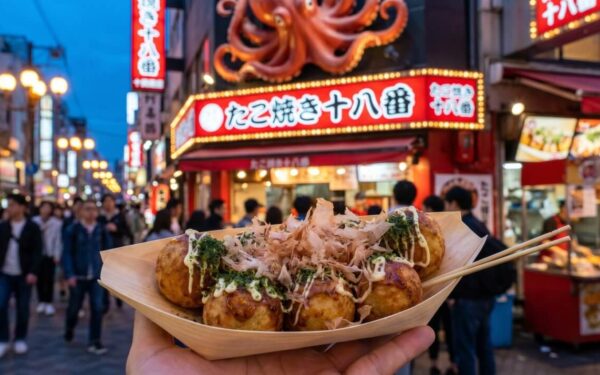
On weekends, the park fills with street performers, students in statement outfits, and at least one takoyaki queue.
The area has more than 2,000 shops selling vintage clothing, local streetwear, accessories, and record stores.
It’s about a 5-minute walk from Shinsaibashi Station’s Exit 7.
Top Things to Do in Shinsaibashi
Shinsaibashi rewards slow walking more than checklist tourism.
The area is genuinely compact: you can cover the main arcade, swing through Amemura, and loop back via the Midosuji boulevard in around two hours.
If you want to do the neighborhood properly, including Horie on the western edge and a detour south to Dotonbori, give it a full half-day.
For a structured plan covering Shinsaibashi alongside the wider city, the Osaka itinerary section has routes built around different trip lengths.
Shinsaibashi-suji Arcade
The arcade itself is the obvious starting point, and it earns that status.
The covered walkway keeps you out of rain and summer heat while connecting an unlikely mix of stores: 100-yen shops next to cosmetics chains like Shiseido and KOSE, fast fashion alongside traditional sweet shops selling yatsuhashi and manju.
Don Quijote (Donki), the chaotic multi-floor discount retailer, has a location here that stays open 24 hours and is worth a look at least once for its sensory overload alone.
Daimaru Shinsaibashi, one of Osaka’s flagship department stores, recently opened a food hall with 17 eateries and a fresh market on its lower floor, including Grill Harijyu, a Western-style meat restaurant founded in 1919.
Shinsaibashi PARCO
PARCO opened its Shinsaibashi location in 2020 and immediately became one of the more interesting shopping buildings in the area.
It’s heavy on pop culture, with official stores for Studio Ghibli, Pokémon, and Mofusand spread across its floors.
The basement-level Shinsaibashi Neon Dining Street runs from 11 AM to 11 PM daily and has a roster of restaurants and izakayas worth considering for dinner.
It’s not a traditional department store experience — it’s messier, louder, and more fun than that.
Amerika-mura (Triangle Park Area)
Beyond just shopping, Amemura is one of the better spots in Osaka to watch street fashion evolve in real time.
The shops range from serious vintage curation to deliberately chaotic streetwear, and prices are generally lower than equivalent stores in Tokyo.
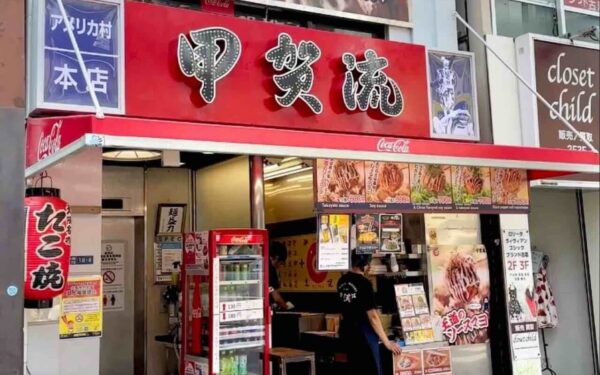
The takoyaki stand at the corner of Triangle Park is popular enough to have a queue on weekend afternoons — the lemon and black pepper variation is worth waiting for.
Surrounding streets have record stores, tattoo studios, and independent cafes tucked into older low-rise buildings.
Horie and the Western Fringe
Technically its own district, Horie bleeds naturally out of Shinsaibashi’s western edge and is worth including in any serious day here.
The area has a quieter, more design-conscious atmosphere: independent fashion boutiques, specialty coffee roasters, and small restaurants that open at 11 AM and close by 8 PM.
Most shops take one weekday off, often Monday or Tuesday, so check ahead if you have a specific place in mind.
Where to Eat in Shinsaibashi
Shinsaibashi sits at the edge of Osaka’s densest eating district, and the food options here are genuinely strong without being as overwhelming as Dotonbori two blocks south.
The Osaka food guide covers the full city picture, but this section focuses on what’s actually worth eating in and around the arcade.
A useful rule: the closer you are to the Dotonbori end of the arcade, the more tourist-facing the menus become.
Walk north or west and the crowd thins along with the prices.
Daimaru Shinsaibashi Food Hall
The recently renovated basement level of Daimaru is one of the better reasons to visit the department store.
Seventeen eateries share the floor alongside a fresh fish and produce market operated by a local fishmonger.
Uokumi Uo BAR serves seafood bowls and sushi; Grill Harijyu, which has been operating since 1919, does Western-style beef and omurice.
Hours run roughly 11 AM to 10 PM, though individual stalls vary.
It’s not cheap, but the sourcing is a cut above the average arcade lunch spot.
Izakayas and Kushikatsu
Kushikatsu, the Osaka specialty of deep-fried skewered meat and vegetables, is available across the Shinsaibashi area.
The rule at every reputable spot remains the same: no double dipping the shared sauce.
Prices per skewer typically run 100 to 200 yen, and a filling meal comes out to 1,500 to 2,500 yen per person with drinks.
The streets branching off the main arcade toward Amemura have several low-key izakayas that fill up from around 6 PM on weeknights.
Cafes and Street Food
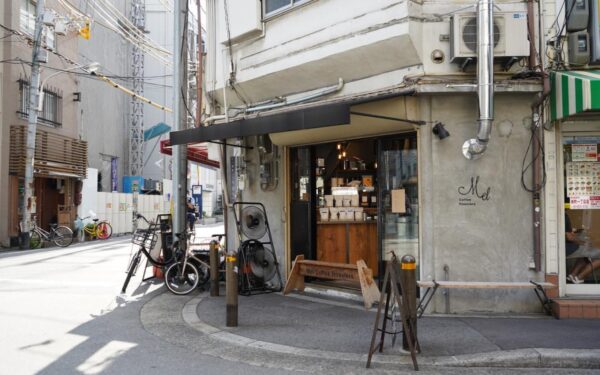
The coffee scene in the Shinsaibashi area has improved noticeably in recent years, particularly in Horie and along the smaller streets west of the arcade.
Several specialty roasters have opened compact spaces that do filter coffee and single-origin espresso for 600 to 800 yen.
On the street food side, the arcade and its surrounding alleys have reliable takoyaki, taiyaki (fish-shaped cake filled with red bean paste or custard), and soft-serve ice cream.
It’s all extremely accessible and won’t set you back more than a few hundred yen per item.
Department Store and Mall Dining
Both Shinsaibashi PARCO and the Daimaru building have upper-floor restaurant sections with a more formal sit-down option if you want air conditioning and a proper meal.
PARCO’s Neon Dining Street skews younger and louder, with izakayas and ramen alongside Osaka-style gourmet options.
The range is wide enough that a group with mixed preferences can usually find something that works without a reservation, though weekend dinner hours (after 6:30 PM) fill quickly.
Where to Stay in Shinsaibashi
The Shinsaibashi area has solid accommodation options across price brackets, and staying here puts you within walking distance of Dotonbori, Namba, and the arcade itself.
For broader options across the city, the where to stay in Osaka guide compares neighborhoods by budget and style.
Hotel Nikko Osaka (mid-range to upscale) sits directly on Midosuji Boulevard, about a 5-minute walk from the main arcade entrance.
Rooms are well-sized by Japanese standards, and the location is about as central as it gets in the Minami area.
Rack rates typically run 20,000 to 35,000 yen per night depending on season.
The Bridge Hotel Shinsaibashi (mid-range) is a smaller boutique property that consistently draws good reviews for its design and location.
Rates tend to sit in the 12,000 to 20,000 yen range per night, making it a reasonable choice if you want something with more personality than a chain hotel without the luxury pricing.
MIMARU Osaka Shinsaibashi North (budget to mid-range) is a serviced apartment-style option that works well for families or longer stays.
Units have kitchenettes, which matters if you’re staying more than a few nights and want the option to skip restaurant meals.
Prices start from around 8,000 to 14,000 yen per night depending on unit size and season.
Getting There and Getting Around
Shinsaibashi Station sits on two Osaka Metro lines: the Midosuji Line (red, M19) and the Nagahori Tsurumi-ryokuchi Line (green, N15).
From Shin-Osaka Station, take the Midosuji Line south for about 10 minutes (3 stops) and you’re there.
From Osaka/Umeda Station, it’s a direct Midosuji Line ride of around 7 minutes.
From Kansai International Airport (KIX), the fastest route is the Haruka limited express to Shin-Osaka, then the Midosuji Line south, totaling roughly 80 to 90 minutes.
Once you’re in Shinsaibashi, the neighborhood is entirely walkable.
The main arcade is pedestrianized, and the surrounding streets are low-traffic and easy to navigate on foot.
Dotonbori is about a 10-minute walk south via the arcade.
Namba Station is walkable in around 12 to 15 minutes. Namba
also connects to additional rail lines including Nankai and Kintetsu if you’re heading further afield.
An IC card (Suica, ICOCA, or PiTaPa) covers all Osaka Metro fares and is the most convenient payment method for getting around.
A single Metro ride within the central zone costs 180 to 230 yen depending on distance.
Practical Tips and Best Time to Visit
Weekday mornings between 10 AM and noon are the calmest time to walk the arcade.
After noon on weekdays, and essentially all day on weekends and public holidays, the main Shinsaibashi-suji gets crowded enough that browsing at a relaxed pace becomes difficult.
The Golden Week holiday period (late April to early May) and Obon (mid-August) are the two most congested windows of the year.
For weather, late October through early December offers the most comfortable temperatures for walking — cool enough for a jacket but not cold, and generally dry.
Late March and early April bring cherry blossoms to nearby parks, which bumps foot traffic significantly.
July and August are hot and humid, but the arcade’s roof provides shade, and the surrounding buildings are heavily air-conditioned.
Most shops in the main arcade open around 11 AM and close between 8 PM and 9 PM.
Convenience stores and Don Quijote operate around the clock.
A small number of specialty shops in Amemura and Horie open later, around noon, and some take a weekday off.
Cash is useful to carry.
Some smaller shops, kushikatsu counters, and street food vendors do not accept cards.
Convenience stores (7-Eleven, FamilyMart, Lawson) have ATMs that accept foreign cards.
Most mid-range and large chain retailers accept IC cards and major credit cards.
Shinsaibashi is the kind of place that changes depending on how you approach it.
Go in expecting to browse luxury brands and tick off the arcade, and you’ll do exactly that.
Slow down, drift west into Amemura and Horie, eat at the Daimaru food hall, and find a specialty coffee shop for the afternoon — and it becomes one of the more satisfying half-days Osaka offers.
For more ideas on how to structure your time across the city, the best things to do in Osaka section is a useful next stop.